Best Beef Cuts for Kabobs: 8 Cuts Ranked for Tender, Juicy Skewers
Best Beef Cuts for Kabobs: 8 Cuts Ranked for Tender, Juicy Skewers
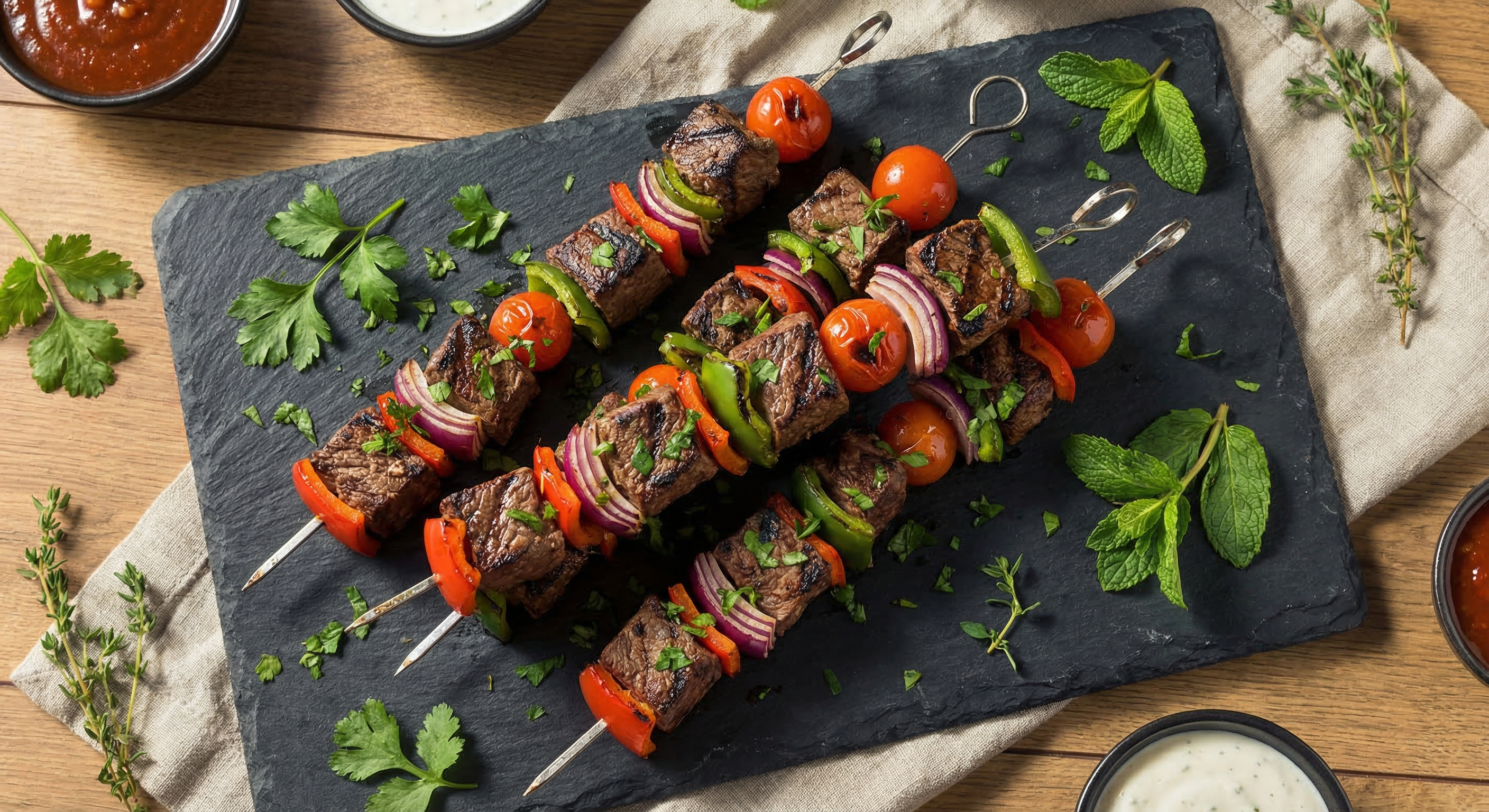
Kabobs look simple. Cube some beef, thread it on a skewer, grill it. But anyone who's bitten into a chewy, dried-out beef cube knows the truth: the cut makes or breaks the kebab.
The problem is straightforward. You're exposing small pieces of meat to intense, direct heat with no insulation. Fat renders out fast. Lean cuts seize up. Connective tissue doesn't have time to break down. The window between “perfectly juicy” and “overcooked rubber” is about 60 seconds.
That means you need cuts with the right combination of marbling, tenderness, and structural integrity to hold up on a skewer over high heat. Here are the 8 best — and why they work.
What Makes a Great Kabob Cut?
Not every steak cut works on a skewer. Before we rank the best options, here's what separates a great kabob cut from a bad one:
- Moderate marbling — Intramuscular fat keeps cubes moist during the 8–12 minutes of direct grilling. Too lean and they dry out. Too fatty and they flare up.
- Natural tenderness — Kabobs cook fast (high heat, short time). Tough cuts with heavy connective tissue need low-and-slow to become tender — the opposite of what a skewer provides.
- Uniform structure — You need to cut consistent 1–1.5 inch cubes. Cuts with lots of seams, silverskin, or irregular grain make this difficult.
- Flavor that holds up — Marinades help, but the beef itself needs to taste good. Bland cuts stay bland even after a 4-hour soak.
The cuts below hit all four criteria. They're listed from best overall to best value.
1. Top Sirloin — The Gold Standard for Kabobs
Why it works: Ask any butcher what to use for kabobs and they'll say top sirloin without hesitation. It's the Goldilocks cut — tender enough to stay juicy, flavorful enough to not need a heavy marinade, and affordable enough to buy in quantity for a crowd.
Top sirloin has moderate marbling with a firm, even grain that cubes beautifully. The fat content is enough to keep things moist without causing grill flare-ups. And because it comes from the hip, it has real beefy flavor — more than tenderloin, less gamey than flank.
How to prep it:
- Buy a whole top sirloin steak (1.5–2 inches thick) rather than pre-cut “kabob meat”
- Trim any exterior fat cap and silverskin
- Cut into 1.25-inch cubes — consistent sizing is critical for even cooking
- Marinate 2–4 hours or simply season with salt, pepper, and olive oil
- Grill over high heat (450–500°F), turning every 2–3 minutes, 8–10 minutes total for medium-rare
Price range: $8–$12/lb — the sweet spot between quality and value
2. Tenderloin (Filet Mignon) — Premium Melt-in-Your-Mouth
Why it works: Tenderloin is the most tender cut on the animal, period. On a kabob skewer, it produces cubes so soft you barely need to chew. If you're grilling for a special occasion and want to impress, this is the move.
The trade-off is flavor. Tenderloin is lean with mild beef taste, so it benefits from a robust marinade or a compound butter finish. It also costs 2–3x what sirloin does. But for sheer tenderness on a skewer, nothing else comes close.
How to prep it:
- Use the center-cut portion for the most uniform cubes
- Cut into 1.5-inch cubes — tenderloin can handle slightly larger pieces
- Season generously (this cut needs help in the flavor department)
- Grill over high heat, 6–8 minutes total — tenderloin cooks faster than fattier cuts
- Pull at 125°F internal for medium-rare — overcooked tenderloin is a waste of money
Price range: $25–$40/lb — special occasion territory
3. Tri-Tip — The West Coast Sleeper Pick
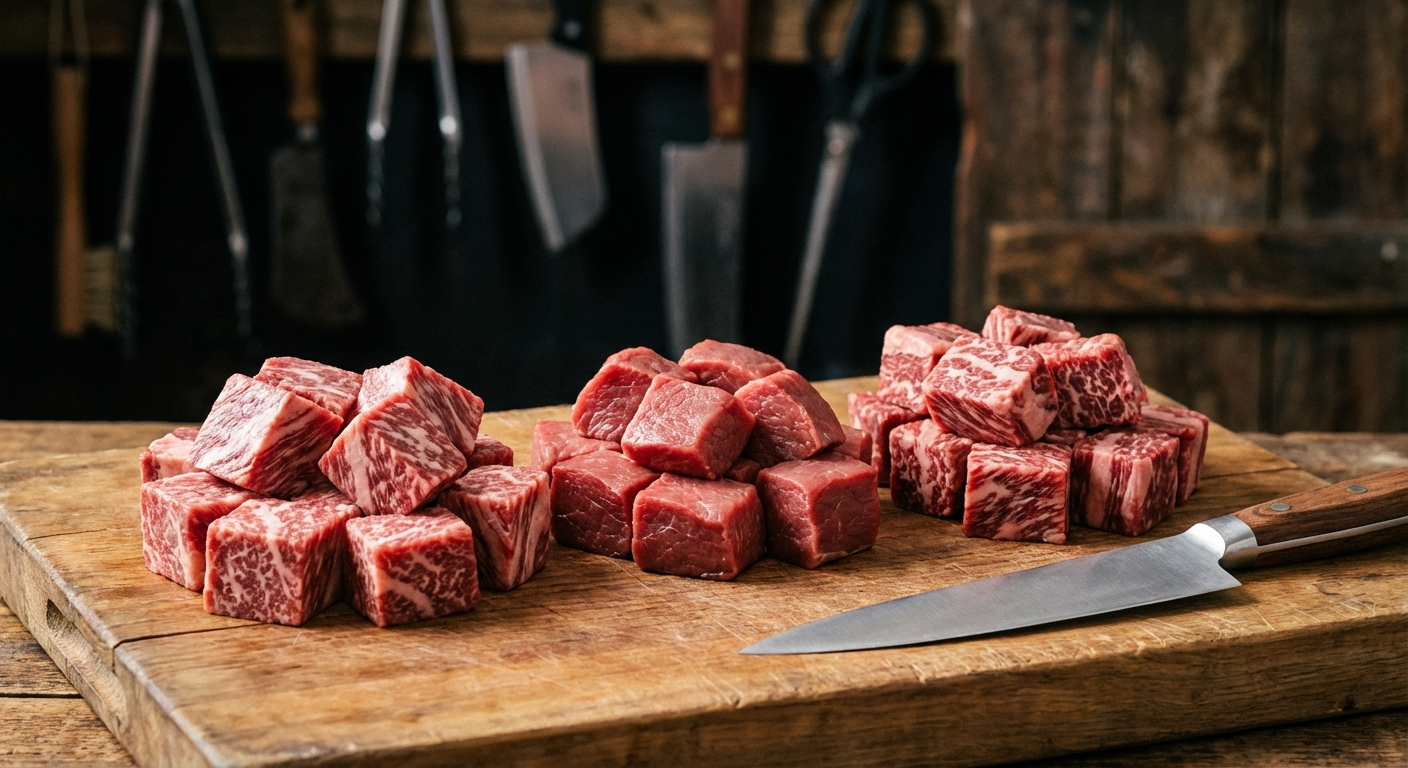
Why it works: Tri-tip is California's best-kept secret, and it's phenomenal for kabobs. It has excellent marbling, rich beefy flavor, and a tender texture that's somewhere between sirloin and ribeye. The triangular shape means you'll get cubes from different parts of the muscle with slightly different fat content — which actually makes for more interesting eating.
The only downside is availability. Tri-tip is standard at West Coast butcher shops but can be harder to find in the Southeast and Midwest. If your store carries it, buy it.
How to prep it:
- Trim the fat cap but leave a thin layer for basting during grilling
- Note the grain direction — it changes across the cut, which is fine for cubes
- Cut 1.25-inch cubes, working around the seam of fat that runs through the center
- Season with Santa Maria-style rub (salt, pepper, garlic powder) for the classic treatment
- Grill 8–10 minutes total, rotating skewers every 2 minutes
Price range: $9–$14/lb — slightly above sirloin, worth every penny
4. Ribeye — Maximum Flavor, Maximum Flare-Ups
Why it works: Ribeye has more marbling than any other steak cut, which means insane flavor and juiciness on a kabob. Every cube bastes itself as it grills. The fat renders into the meat, keeping things impossibly moist even at high heat.
The downside? All that fat drips onto the coals or burners and causes flare-ups. You need to manage your grill carefully — keep a cool zone to move skewers if flames get aggressive. Also, ribeye has the spinalis (cap) muscle separated by a fat seam, which can cause cubes to fall apart if you're not careful about where you cut.
How to prep it:
- Choose a well-marbled ribeye, at least 1.5 inches thick
- Remove the fat cap and the large chunks of intermuscular fat
- Cut cubes from the eye (center) of the steak for the most consistent pieces
- Keep marinade light — ribeye doesn't need help with flavor
- Grill over medium-high heat (not screaming hot) to manage fat rendering, 10–12 minutes total
Price range: $15–$25/lb — premium but delivers on flavor
5. New York Strip — The Balanced Choice
Why it works: New York strip sits between sirloin and ribeye in both price and marbling. It has a firm, satisfying texture with enough fat to stay juicy but not so much that it causes grill problems. The strip's tight, even grain cubes beautifully and holds together on a skewer better than most cuts.
Strip also has a pronounced beefy flavor that works well with Mediterranean, Middle Eastern, and Asian-style kabob marinades. It's the versatile all-rounder.
How to prep it:
- Trim the fat strip along one edge (leave a thin border for flavor)
- Cut 1.25-inch cubes perpendicular to the grain
- Marinate 1–3 hours with acid-based marinade (lemon, yogurt, or wine)
- Grill over high heat, 8–10 minutes total
Price range: $14–$20/lb — mid-premium range
6. Flat Iron — The Underrated Value Play
Why it works: Flat iron is the second most tender cut on the entire animal (after tenderloin), and it costs a fraction of the price. It has great marbling, intense beef flavor, and a uniform rectangular shape that makes cubing easy.
The challenge is the connective tissue seam that runs through the center of the original top blade roast. A good butcher removes this when fabricating flat iron steaks, but check your piece — if there's a tough line of gristle, trim it out before cubing.
How to prep it:
- Inspect for any remaining connective tissue and trim it out
- Cut 1-inch cubes (flat iron is typically thinner, so slightly smaller cubes work better)
- Season simply — flat iron has enough flavor on its own
- Grill over high heat, 6–8 minutes total — flat iron cooks faster due to thinner cubes
Price range: $8–$13/lb — incredible value for the tenderness level
7. Chuck Eye — The Budget Ribeye
Why it works: Chuck eye is cut from the same muscle group as ribeye, just a few inches further toward the shoulder. It shares ribeye's marbling and rich flavor at roughly half the price. For kabobs — where you're cubing the meat anyway and presentation doesn't matter as much — chuck eye is arguably the smartest buy on this list.
The trade-off is consistency. Chuck eye can have more connective tissue and irregular grain than ribeye. Trim carefully and you'll get cubes that taste 90% as good for 50% of the cost.
How to prep it:
- Trim any tough connective tissue or large fat deposits
- Cut 1.25-inch cubes from the most marbled sections
- Marinate 2–4 hours to help tenderize any tougher spots
- Grill over medium-high heat, 10–12 minutes total
Price range: $7–$11/lb — the best value-to-flavor ratio on this list
8. Sirloin Tip — The Lean Meal-Prep Pick
Why it works: Sirloin tip (not to be confused with top sirloin) comes from the round and is notably leaner. It's not the juiciest cut here, but it's extremely affordable, cubes well, and responds beautifully to marinades. For high-protein meal prep kabobs or when you're feeding a crowd on a budget, sirloin tip delivers.
The key is not overcooking. Pull sirloin tip kabobs at medium-rare (130°F) maximum. Beyond that, it dries out fast.
How to prep it:
- Trim silverskin and exterior fat
- Cut 1-inch cubes (smaller cubes cook faster, reducing dryness risk)
- Marinate 4–8 hours — this cut needs the moisture and flavor boost
- Grill over high heat, 6–8 minutes total — err on the side of underdone
Price range: $5–$8/lb — the most budget-friendly option
Cuts to Avoid for Kabobs
Not every beef cut belongs on a skewer. Here's what to skip and why:
- Brisket — Loaded with connective tissue that needs 8+ hours of low-and-slow to break down. On a kabob, it'll be tough and chewy. Save it for the smoker.
- Shank — Same problem as brisket. Beef shank is a braising cut, not a grilling cut.
- Eye of round — Extremely lean with almost no marbling. Eye of round dries out in minutes over direct heat.
- Bottom round — Tough, lean, and better suited for roasting or braising.
- Pre-cut “stew meat” — Usually random scraps from multiple cuts, inconsistent in size and tenderness. Buy a whole steak and cube it yourself.
The Universal Kabob Marinade Formula
Every kabob culture has its own marinade tradition, but they all follow the same basic formula:
- Acid (30%) — Lemon juice, yogurt, wine, vinegar, or pineapple juice. Tenderizes the surface and carries flavor.
- Fat (30%) — Olive oil, sesame oil, or melted butter. Keeps cubes moist and helps seasoning stick.
- Aromatics (30%) — Garlic, onion, ginger, herbs, spices. The flavor signature.
- Salt (10%) — Penetrates deepest. Season generously — you're flavoring the inside, not just the surface.
Timing matters: Tender cuts (tenderloin, flat iron) need 1–2 hours max. Firmer cuts (sirloin tip, chuck eye) benefit from 4–8 hours. Never exceed 12 hours — acid breaks down the surface texture and makes meat mushy.
Grilling Tips for Perfect Kabobs Every Time
The cut is half the battle. Here's how to nail the cooking:
- Don't crowd the skewer — Leave 1/4 inch between cubes. Touching pieces steam instead of sear.
- Use metal skewers — They conduct heat into the center of the cube, cooking more evenly. If using bamboo, soak 30 minutes minimum.
- Preheat aggressively — Grill grates should be 450–500°F before skewers go on. A hot sear prevents sticking.
- Separate proteins and vegetables — Beef cubes and bell peppers cook at different rates. Put them on separate skewers and pull each when done.
- Rotate, don't flip — Give each of the four sides 2–3 minutes. Quarter-turns produce the best all-around sear.
- Rest on the skewer — Let kabobs rest 3–5 minutes before serving. The juices redistribute just like with a whole steak.
Quick Reference: Kabob Cut Comparison
| Cut | Tenderness | Flavor | Price/lb | Best For |
|---|---|---|---|---|
| Top Sirloin | ★★★★ | ★★★★ | $8–$12 | All-purpose kabobs |
| Tenderloin | ★★★★★ | ★★★ | $25–$40 | Special occasions |
| Tri-Tip | ★★★★ | ★★★★★ | $9–$14 | Flavor-forward kabobs |
| Ribeye | ★★★★ | ★★★★★ | $15–$25 | Premium grilling |
| NY Strip | ★★★★ | ★★★★ | $14–$20 | Versatile marinades |
| Flat Iron | ★★★★★ | ★★★★ | $8–$13 | Value + tenderness |
| Chuck Eye | ★★★ | ★★★★★ | $7–$11 | Budget flavor bombs |
| Sirloin Tip | ★★★ | ★★★ | $5–$8 | Lean meal prep |
Frequently Asked Questions
What is the best cut of beef for kabobs?
Top sirloin is the best all-around choice. It has the ideal balance of tenderness, marbling, flavor, and price for kabobs. It cubes evenly, stays juicy over high heat, doesn't cause excessive flare-ups, and costs $8–$12 per pound — making it practical for feeding a crowd.
Is sirloin or ribeye better for kabobs?
Sirloin is better for most kabob situations. Ribeye has more marbling and flavor, but the excess fat causes flare-ups on the grill and the multiple muscle sections can cause cubes to fall apart. Sirloin holds its shape better, cooks more predictably, and costs significantly less.
Should you marinate beef for kabobs?
It depends on the cut. Lean cuts like sirloin tip and top sirloin benefit from 2–8 hours of marinating. Premium cuts like tenderloin and ribeye have enough natural fat and flavor that a simple salt-and-pepper seasoning is all they need. Never marinate longer than 12 hours — the acid breaks down surface proteins and makes meat mushy.
How big should beef kabob cubes be?
Cut 1 to 1.5 inch cubes. Smaller cubes (under 1 inch) overcook before developing a proper sear. Larger cubes (over 1.5 inches) remain raw in the center by the time the outside is charred. Aim for 1.25 inches as the sweet spot, and make every cube the same size so they cook at the same rate.
Can you use stew meat for kabobs?
We don't recommend it. Pre-cut stew meat is typically random scraps from multiple cuts — different sizes, different tenderness levels, different fat content. Some cubes will be perfect while others are chewy. Buy a whole top sirloin steak and cut your own cubes for consistent results.
Why are my beef kabobs tough?
Three common causes: wrong cut (braising cuts like brisket or shank don't work on a grill), overcooking (pull at 130–135°F for medium-rare), or uneven cubes (larger pieces undercook while small pieces turn to rubber). Start with the right cut, keep cubes uniform, and use an instant-read thermometer.
More Expert Guides
What Is Chateaubriand? (Cut, Cooking, & Best Sources)
Chateaubriand is a thick-cut roast from the center of the beef tenderloin, traditionally served for two. Learn what makes this classic French cut special and how to cook it.
14 min readWhat Is Round Steak? The Complete Guide to Beef's Most Versatile Budget Cut
Round steak comes from the rear leg of the cow — it's lean, affordable, and misunderstood. A master butcher breaks down every sub-cut, cooking method, and technique to turn this budget workhorse into genuinely delicious meals.
14 min readWhat Is Eye of Round? The Complete Butcher's Guide to This Lean Cut
Eye of round is one of the leanest, most affordable cuts in the entire beef case — and one of the most misunderstood. A butcher explains how to turn this budget-friendly roast into something genuinely delicious.