Chuck Eye Steak vs Ribeye: The Poor Man's Ribeye Explained
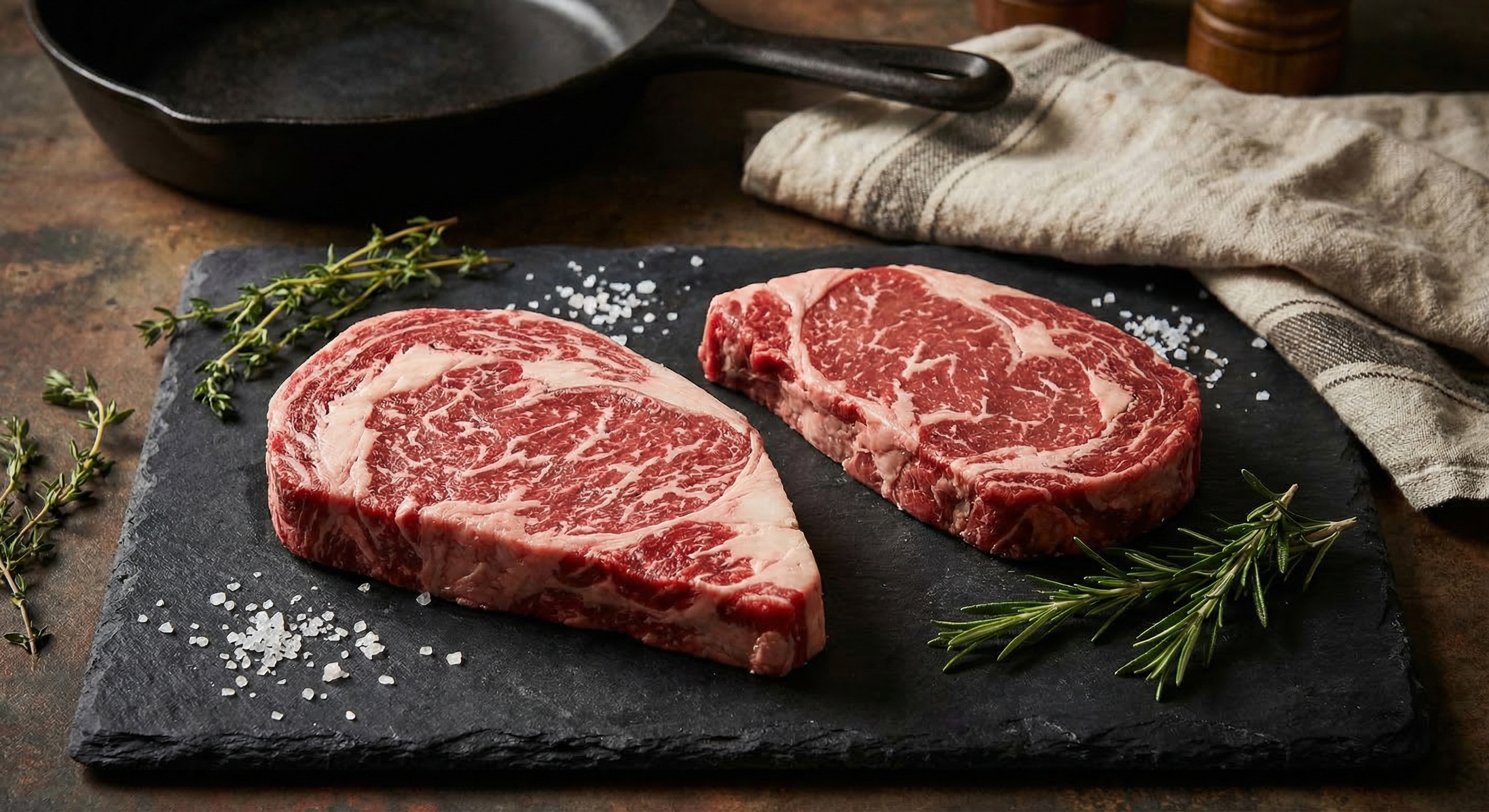
If you've ever watched a customer at my counter pick up a ribeye, look at the price, and put it back down, you've seen the exact moment where the chuck eye steak enters the conversation. "I've got something for you," I say. "Same muscle, half the price." And then I pull out a chuck eye.
The chuck eye steak is one of the best-kept secrets in the meat case — or it was, until the internet got hold of it. Now everyone calls it the "poor man's ribeye," which is both accurate and slightly insulting to a genuinely excellent steak. After 40 years of cutting both, let me give you the real comparison.
The Quick Answer
Choose chuck eye when: You want ribeye-like flavor and tenderness at roughly half the price, you're cooking for a weeknight dinner, or you're feeding a crowd on a budget.
Choose ribeye when: You want the most consistent marbling and tenderness, you're cooking for a special occasion, or you want a thicker cut (1.5 inches or more).
The chuck eye is a genuinely great steak — not a consolation prize. But it's not identical to a ribeye, and the differences matter depending on what you're doing with it.
Where Each Cut Comes From
This is where the "poor man's ribeye" nickname makes anatomical sense. The ribeye is cut from the rib primal (ribs 6–12), specifically the longissimus dorsi muscle along with portions of the spinalis (the cap) and complexus. These are lightly worked muscles along the upper back, which is why they're so naturally tender and well-marbled.
The chuck eye steak comes from the chuck primal — specifically from the area right where the chuck meets the rib section, around the 5th rib. The longissimus dorsi muscle extends into the chuck, and that's the center of the chuck eye. It's literally the same muscle, just a few inches forward on the animal.
Think of it this way: if you're cutting steaks from a whole boneless rib roast and keep going forward past the 6th rib into the chuck, those next two or three steaks are chuck eyes. The transition isn't dramatic — it's gradual.
The Real Differences
Marbling
Ribeyes, particularly from the center of the rib section (ribs 8–10), have some of the heaviest marbling in the entire carcass. The spinalis cap — that crescent-shaped outer muscle — is arguably the most marbled, most flavorful cut of beef that exists. The eye of the ribeye is consistently well-marbled across the full rib section.
Chuck eyes have good marbling — often comparable to the rib-end ribeyes — but it's less consistent. Some chuck eyes will rival a Choice ribeye in fat distribution. Others will be noticeably leaner. The spinalis cap, which is the glory of the ribeye, either disappears or becomes much smaller as you move into the chuck section.
This inconsistency is the biggest practical difference. When you buy a ribeye, you know what you're getting. When you buy a chuck eye, you're playing a lighter lottery — usually winning, but occasionally getting a leaner ticket.
Tenderness
The longissimus dorsi is a tender muscle regardless of which primal it's in. But the chuck eye includes portions of surrounding muscles that don't appear in a ribeye — specifically parts of the complexus and multifidus dorsi, plus occasional bits of connective tissue from the chuck shoulder area.
A center-cut chuck eye (mostly longissimus) will be nearly as tender as a ribeye. An off-center chuck eye with more surrounding musculature will have some tougher spots. This is manageable with proper cooking, but it's a real difference.
Size and Thickness
This matters more than most people realize. Ribeyes are cut from a larger-diameter section of the longissimus, so they're naturally wider and can be cut to any thickness — 1 inch, 1.5 inches, 2 inches, whatever you want. Thick-cut ribeyes are readily available.
Chuck eyes are typically smaller in diameter because the longissimus narrows as it enters the chuck. They're also usually cut thinner (3/4 to 1 inch) because there are only 2–3 chuck eye steaks per side of beef — they're a limited cut. Finding thick-cut chuck eyes at retail can be difficult.
Price
This is where the chuck eye shines. Current approximate prices for USDA Choice:
- Ribeye: $16–$25/lb (boneless)
- Chuck eye: $8–$13/lb
That's roughly 40–50% less for a steak that, in a blind tasting, many people can't distinguish from a ribeye. The value proposition is extraordinary.
Side-by-Side Comparison
| Factor | Chuck Eye Steak | Ribeye Steak |
|---|---|---|
| Primary muscle | Longissimus dorsi (same) | Longissimus dorsi (same) |
| Location | Chuck primal, ribs 4–5 | Rib primal, ribs 6–12 |
| Marbling | Good to very good (variable) | Very good to excellent (consistent) |
| Spinalis cap | Small or absent | Present and prominent |
| Tenderness | Good (can have tougher spots) | Excellent (consistently tender) |
| Typical thickness | 3/4–1 inch | 1–2+ inches |
| Steaks per animal | 4–6 total (limited) | 14–20+ (plentiful) |
| Price (Choice) | $8–$13/lb | $16–$25/lb |
| Best cooking | Pan sear, grill (hot and fast) | Any method (versatile) |
Cooking Chuck Eye Steak
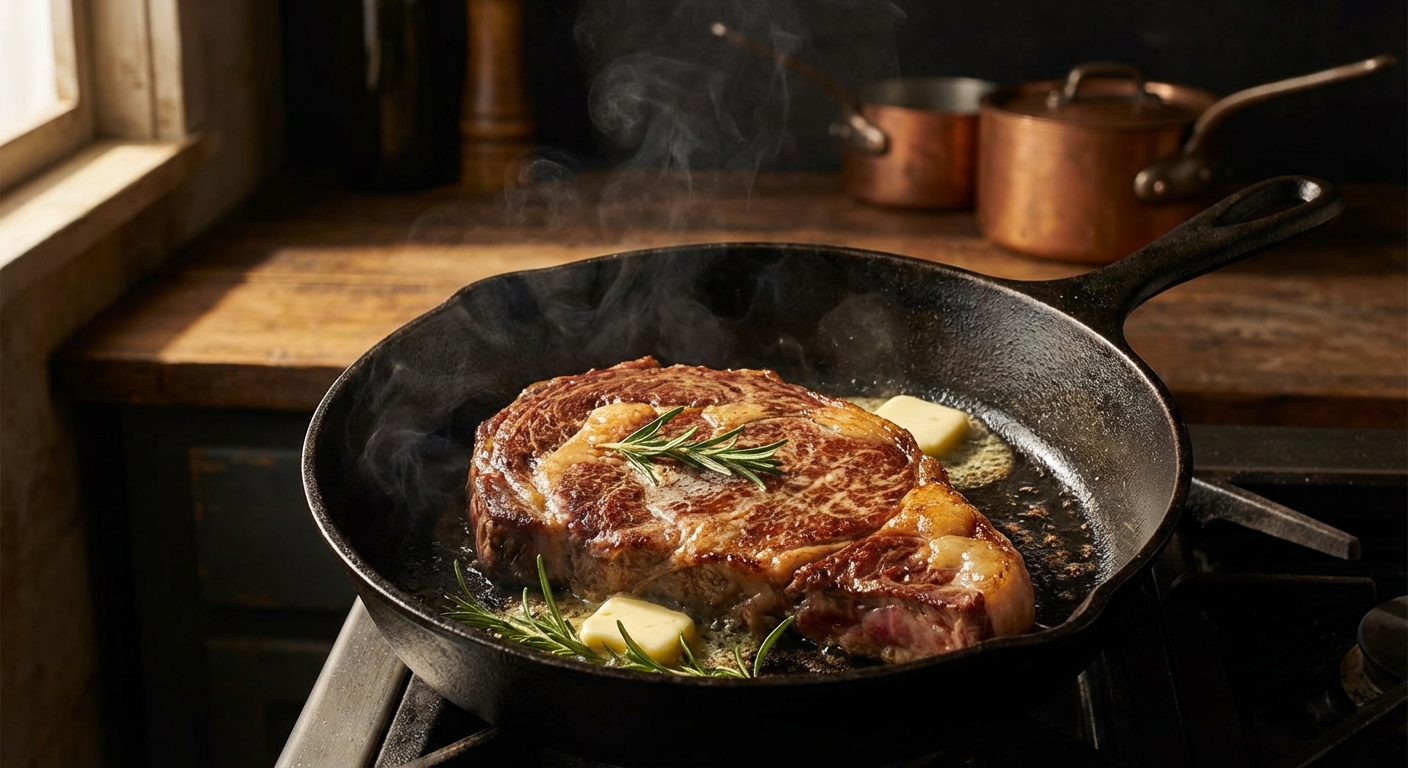
The chuck eye's thinner profile means it cooks differently than a thick ribeye. Here's how to nail it:
Pan Searing (Best Method)
- Dry the surface. Pat the steak thoroughly with paper towels. Surface moisture prevents browning.
- Season generously. Kosher salt and fresh cracked black pepper. That's all you need.
- Screaming hot pan. Cast iron, as hot as you can get it. Add a high-smoke-point oil (avocado or refined peanut).
- Sear 3 minutes per side. Don't touch it once it hits the pan. Let the crust form.
- Butter baste. In the last minute, add butter, crushed garlic, and a sprig of thyme. Tilt the pan and spoon the melted butter over the steak repeatedly.
- Rest 5 minutes. This is non-negotiable. A thinner steak loses proportionally more juice if cut too soon.
Target 125°F internal for medium-rare. The thinner cut means you have a narrower window — check temperature early and often.
Grilling
Chuck eyes work well on a hot grill, but watch them carefully. The thinner profile means they go from medium-rare to medium-well quickly. Use the hottest part of the grill, 3–4 minutes per side, and pull at 120–125°F internal (they'll carry over to 130°F during rest).
What Not to Do
- Don't reverse sear. The reverse sear is built for thick steaks (1.5 inches+). A 3/4-inch chuck eye will overcook in the oven phase before you ever get to sear it.
- Don't sous vide without a plan. You can sous vide a chuck eye, but the thin profile means the sear-to-interior ratio gets aggressive. If you do, keep the sear very brief (30–45 seconds per side).
- Don't cook past medium. Without the generous fat buffer of a premium ribeye, a chuck eye gets dry fast beyond 140°F internal.
When to Choose Chuck Eye Over Ribeye
Weeknight Dinner
This is the chuck eye's natural habitat. You want a great steak on a Tuesday without spending $30 on a single piece of protein. The chuck eye delivers ribeye-adjacent quality at a price that makes steak night possible twice a week instead of twice a month.
Feeding a Crowd
Grilling for six people? Six ribeyes at $22/lb is a $100+ protein bill. Six chuck eyes at $10/lb cuts that in half — and your guests won't know the difference, especially with the right seasoning and a confident sear.
Steak Sandwiches and Tacos
When the steak is getting sliced and layered with other flavors — cheese, peppers, chimichurri, pickled onions — the subtle differences between chuck eye and ribeye disappear entirely. Use the cheaper cut and put the savings toward better toppings.
Learning to Cook Steak
If you're still developing your steak-cooking skills, practice on chuck eyes. Making a mistake on an $8 steak stings a lot less than ruining a $25 ribeye. Cook a dozen chuck eyes and you'll have the technique dialed in for when you do splurge.
When to Choose Ribeye Instead
Special Occasions
Date night, birthday dinner, hosting the in-laws — this is where the ribeye's consistency and thickness justify the premium. A 2-inch bone-in ribeye, reverse-seared to a perfect medium-rare, is an experience that a chuck eye simply can't replicate.
Thick-Cut Applications
If you want a steak thicker than 1.25 inches, you need a ribeye. Chuck eyes aren't available in thick cuts because the muscle is smaller at that point in the carcass. Thick-cut changes everything about how a steak cooks and eats.
The Spinalis Cap
If you specifically love the ribeye cap — that outer crescent of incredibly marbled, almost buttery meat — you won't find it on a chuck eye. The spinalis dorsi is the ribeye's secret weapon, and it's absent or minimal on the chuck eye.
The Butcher's Secret: Finding the Best Chuck Eyes
Not all chuck eyes are created equal. Here's how to pick the winners:
- Look for a visible "eye." The best chuck eyes have a clear, round center of longissimus dorsi that looks just like the center of a ribeye. If the steak looks irregular with multiple muscle groups and connective tissue seams, it's cut from further into the chuck and will be tougher.
- Check the marbling. Just like with ribeyes, pick the chuck eye with the most visible white flecks throughout the lean. Within the same package price, the more marbled steak is always the better buy.
- Ask your butcher. Tell them you want "the first two steaks off the chuck roll." A good butcher knows exactly what you're after and will cut them from the rib end of the chuck, where they're most ribeye-like.
- Buy the whole chuck eye roll. If you have a vacuum sealer, ask for the whole boneless chuck eye roll (IMPS #116D). Cut your own steaks from the rib end and use the rest for pot roast or smoking. The per-pound savings are even better.
The Blind Taste Test Truth
I've done informal blind tastings at my counter more times than I can count. I'll cook a chuck eye and a ribeye side by side — same salt, same pepper, same cast iron, same temperature. I ask customers to tell me which is which.
The results? About 60% can identify the ribeye correctly. But 40% either can't tell the difference or actually prefer the chuck eye. When the steak is cooked properly and seasoned well, the gap between these two cuts is far narrower than the price gap suggests.
The people who consistently identify the ribeye are usually keying in on the spinalis cap or the overall tenderness consistency — not the flavor of the longissimus itself, which is effectively identical.
Frequently Asked Questions
Frequently Asked Questions
Is chuck eye steak the same as ribeye?
Not exactly, but close. Both contain the longissimus dorsi muscle, but the chuck eye is cut from the 5th rib area (chuck primal) while the ribeye comes from ribs 6-12 (rib primal). The chuck eye lacks the prominent spinalis cap and tends to be slightly less consistent in marbling and tenderness. The core flavor is very similar.
Why is chuck eye steak called the poor man's ribeye?
Because it comes from the same primary muscle (longissimus dorsi) as the ribeye but costs 40-50% less. The chuck eye is cut from the point where the chuck meets the rib section, so the first few chuck eye steaks are anatomically almost identical to the last few ribeyes. The nickname reflects the similar eating experience at a much lower price.
How many chuck eye steaks are in a cow?
Only 4-6 total (2-3 per side). Chuck eye steaks can only be cut from the rib end of the chuck roll, near the 5th rib. This limited supply is one reason they can be hard to find at grocery stores — there simply aren't many per animal.
What is the best way to cook chuck eye steak?
Pan searing in a screaming hot cast iron skillet is the best method. The chuck eye is typically thinner than a ribeye (3/4 to 1 inch), so it needs high heat and fast cooking — 3 minutes per side with a butter baste at the end. Target 125°F internal for medium-rare. Don't use the reverse sear method, which is designed for thicker steaks.
Can you tell the difference between chuck eye and ribeye in a blind taste test?
Many people can't. In informal blind tastings, roughly 40% of tasters either can't distinguish them or prefer the chuck eye. The main tells are the ribeye's spinalis cap and more consistent tenderness throughout. The core longissimus muscle flavor is effectively identical in both cuts.
Is chuck eye good for grilling?
Yes, chuck eye grills well but requires attention due to its thinner profile. Use the hottest part of the grill, cook 3-4 minutes per side, and pull at 120-125°F internal (it will carry over during rest). Watch carefully — the thin cut goes from perfect to overdone quickly.
More Expert Guides
What Is Chateaubriand? (Cut, Cooking, & Best Sources)
Chateaubriand is a thick-cut roast from the center of the beef tenderloin, traditionally served for two. Learn what makes this classic French cut special and how to cook it.
14 min readWhat Is Round Steak? The Complete Guide to Beef's Most Versatile Budget Cut
Round steak comes from the rear leg of the cow — it's lean, affordable, and misunderstood. A master butcher breaks down every sub-cut, cooking method, and technique to turn this budget workhorse into genuinely delicious meals.
14 min readWhat Is Eye of Round? The Complete Butcher's Guide to This Lean Cut
Eye of round is one of the leanest, most affordable cuts in the entire beef case — and one of the most misunderstood. A butcher explains how to turn this budget-friendly roast into something genuinely delicious.