What Is Beef Shank? The Ultimate Guide to This Underrated Cut
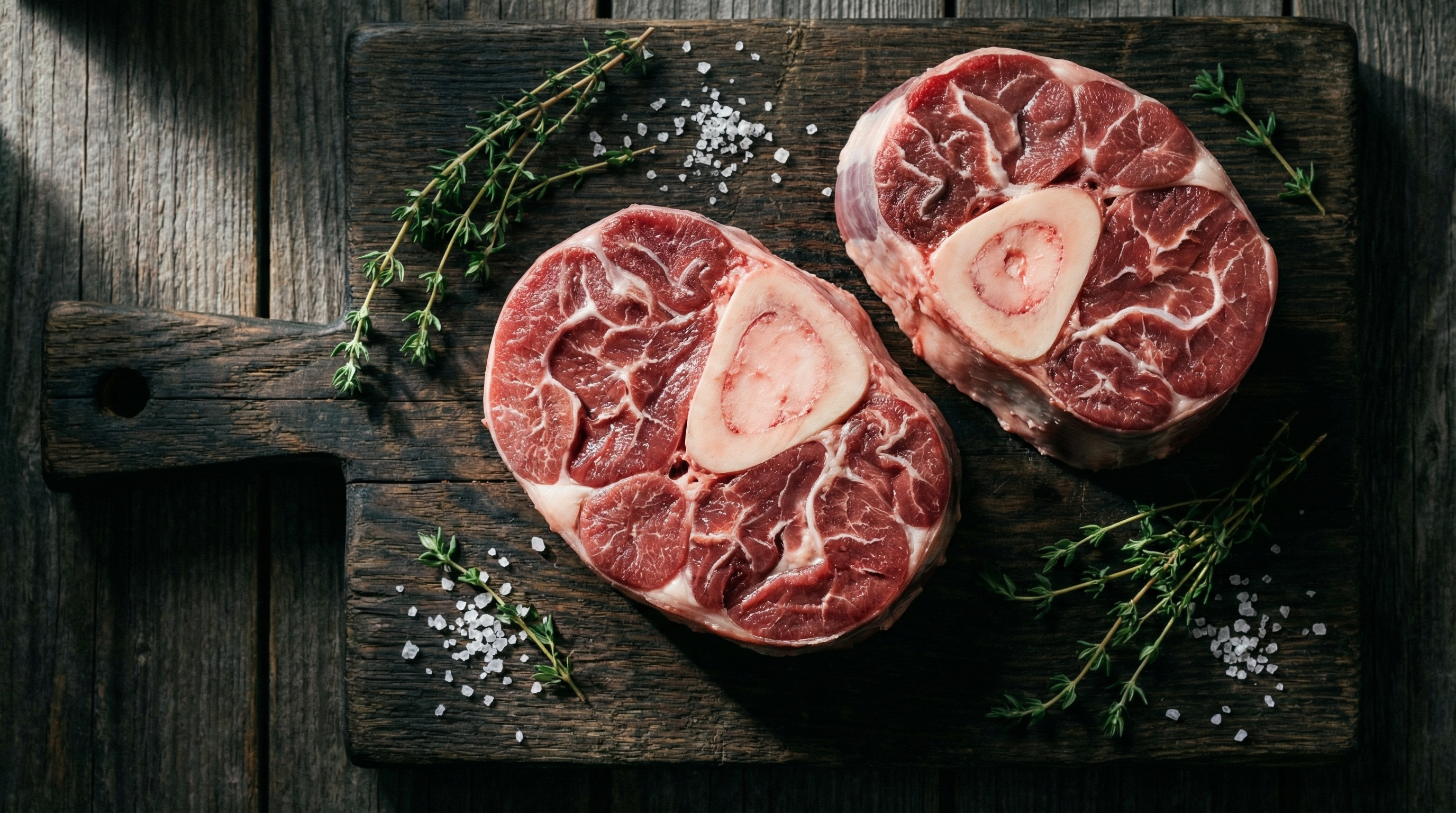
There's a cut of beef sitting in the bottom of your butcher's display case that most people walk right past. It's not pretty — thick, sinewy, with a round bone jutting out of the center. It doesn't look like a steak. It doesn't look like a roast. It looks like something you'd give the dog.
That cut is the beef shank, and it produces some of the most extraordinary dishes in the entire world of cooking. Italian osso buco. Vietnamese pho. Rich, gelatinous bone broth that sets up like Jell-O in the fridge. Falling-apart braised meat that melts on your tongue with a depth of flavor no tenderloin could ever dream of.
After 30 years behind the butcher block, I can tell you this without hesitation: beef shank is the most underrated cut in the entire case. And it costs a fraction of what you'd pay for premium steaks. Let me show you why this humble cut deserves a permanent spot in your kitchen rotation.
What Exactly Is Beef Shank?
The beef shank is the lower leg portion of the cow — both the front legs (foreshank) and the rear legs (hindshank). Anatomically, it's the section below the knee and above the hoof, encompassing the tibia and fibula bones surrounded by some of the hardest-working muscles on the animal.
Think about what a cow's legs do all day: they support 1,200 to 1,500 pounds of body weight, they walk, they stand for hours. These muscles never rest. That constant exercise creates dense, lean muscle fibers woven through with an extraordinary amount of connective tissue — collagen, tendons, and ligaments — plus a thick, round marrow bone running through the center.
That connective tissue is the beef shank's secret weapon. During long, slow cooking, all that collagen converts into gelatin — the same substance that gives bone broth its silky body and braising liquids their luxurious, lip-coating richness. No other cut on the animal produces as much natural gelatin per pound as the shank.
Foreshank vs Hindshank
There's a subtle difference between the front and rear shanks that most articles don't mention:
- Foreshank (front leg): Slightly smaller, with a higher ratio of connective tissue to meat. Produces more gelatin and richer broth. This is the traditional choice for stock and bone broth.
- Hindshank (rear leg): Larger, meatier, with a bigger marrow bone. Better for osso buco and braised dishes where you want more substantial meat portions. Most butchers prefer the hindshank for cross-cut preparations.
In practice, most retail shops don't distinguish between the two — they simply label everything "beef shank." If you're buying from a butcher who breaks down whole carcasses, ask for hindshanks when you want more meat, foreshanks when you're making stock.
How Beef Shank Is Cut
You'll find beef shank sold in two primary forms at the butcher counter:
Cross-Cut Shank (Osso Buco Cut)
This is the most common retail preparation. The shank is sliced perpendicular to the bone into rounds that are typically 1 to 2 inches thick. Each round features a cross-section of the marrow bone in the center, surrounded by a ring of meat and connective tissue, often held together by the periosteum (the membrane around the bone).
Cross-cut shanks are immediately recognizable — they look like thick, bony hockey pucks. The Italian name osso buco literally translates to "bone with a hole," referring to the hollow marrow cavity visible in each cross-cut slice. This is the cut you want for braises, stews, and any dish where individual portions need to look beautiful on the plate.
Whole Shank
Some butchers sell the shank whole — an entire lower leg segment weighing 4 to 8 pounds. This is less common at retail but preferred by some cooks for making stock (more bone surface area exposed during simmering) or for dramatic whole-braised presentations. A whole braised beef shank, falling off the bone and glazed with its reduced braising liquid, is one of the most impressive dishes you can put on a table.
Nutritional Profile
Beef shank is a nutritional powerhouse, particularly for anyone focused on protein and collagen intake:
- High protein: Approximately 28g of protein per 4-oz serving — higher than most cuts because the meat is so lean and dense.
- Low fat: Only 5-7g of fat per serving. The shank is one of the leanest cuts on the animal.
- Rich in collagen: The connective tissue provides a significant source of dietary collagen, which converts to gelatin during cooking. This is the same protein supplement people pay premium prices for in powder form.
- Bone marrow: The center bone contains marrow — rich in healthy fats, iron, and vitamins A and K.
- Minerals: High in iron, zinc, and B vitamins, particularly B12.
If you're making bone broth for health purposes, beef shank is the single best cut to use. The combination of collagen-rich connective tissue and marrow-filled bone produces the most nutritionally dense broth possible.
How to Cook Beef Shank
Let me be direct: there is exactly one way to cook beef shank well, and that's low and slow. This is not a cut you can grill, pan-sear, or quick-cook. The dense muscle fibers and heavy connective tissue will punish any attempt at high-heat, fast cooking with meat so tough you could resole shoes with it.
But give it time — 2.5 to 4 hours of gentle, moist heat — and something magical happens. The collagen melts into gelatin. The tough muscle fibers relax and separate. The marrow softens and enriches the braising liquid. What was the toughest cut on the animal becomes one of the most tender, most flavorful things you've ever eaten.
Method 1: Classic Braise (Osso Buco Style)
This is the gold standard for beef shank, and it's one of the great dishes of Italian cuisine.
- Season and flour: Pat the cross-cut shanks dry with paper towels. Season generously with salt and pepper. Dredge lightly in all-purpose flour — this helps build a crust and thickens the braising liquid.
- Brown hard: Heat oil in a heavy Dutch oven over medium-high heat. Sear the shanks for 3-4 minutes per side until they develop a deep, mahogany-brown crust. Don't crowd the pan — work in batches if needed. This Maillard crust is where a huge portion of the final flavor comes from.
- Build the base: Remove the shanks. In the same pot, sauté diced onion, carrot, and celery (the classic mirepoix) until softened, about 5 minutes. Add garlic, tomato paste, and cook until the paste darkens slightly.
- Deglaze: Pour in a generous cup of dry white wine (or red — both work). Scrape up every brown bit from the bottom of the pot. Those fond bits are concentrated flavor.
- Braise: Add beef stock until the shanks are about two-thirds submerged. Add a bay leaf, fresh thyme, and a strip of orange or lemon zest. Bring to a simmer, then cover and transfer to a 325°F oven.
- Wait: Cook for 2.5 to 3 hours, until the meat is fork-tender and pulling away from the bone. The braising liquid should be rich, glossy, and reduced to a sauce consistency.
- Finish with gremolata: The traditional Milanese finish is gremolata — finely minced parsley, lemon zest, and garlic mixed together. Sprinkle over the plated shanks. The bright, fresh flavors cut through the richness of the braise perfectly.
Serve each shank round on a bed of polenta, risotto, or mashed potatoes. Don't forget a small spoon for the marrow — scoop it out of the bone center and spread it on crusty bread. That marrow is liquid gold.
Method 2: Slow Cooker / Instant Pot
If you don't have time to babysit a Dutch oven, the slow cooker produces excellent results with beef shank:
- Slow cooker: Brown the shanks first (this step is worth the extra pot), then add everything to the slow cooker. Cook on LOW for 8-10 hours or HIGH for 5-6 hours.
- Instant Pot: Use the sauté function to brown, then pressure cook on HIGH for 45-60 minutes with natural release. The pressure cooker is remarkably effective at converting collagen to gelatin quickly.
The slow cooker won't give you quite the same depth of flavor as an oven braise (the lower temperature doesn't concentrate the liquid as effectively), but the convenience factor is hard to beat for a weeknight meal.
Method 3: Bone Broth and Stock
Beef shank is the single best cut for making rich, gelatinous bone broth. The combination of marrow bone and collagen-rich connective tissue produces a broth that sets up solid in the refrigerator — the hallmark of properly made stock.
- Roast first (optional but recommended): Place whole or split shanks on a sheet pan and roast at 425°F for 30-40 minutes until deeply browned. This adds color and depth of flavor to the final broth.
- Simmer long and low: Place the roasted shanks in a large stockpot. Cover with cold water by 2 inches. Add a splash of apple cider vinegar (helps extract minerals from the bones). Bring to a bare simmer — you want lazy bubbles, not a rolling boil.
- Skim and season: Skim any foam that rises in the first 30 minutes. Add aromatic vegetables (onion, carrot, celery, garlic) in the last 2-3 hours only — they turn bitter if cooked too long.
- Time: Simmer for a minimum of 6 hours, ideally 12-24 hours. The longer you simmer, the more collagen extracts and the more gelatinous your final broth will be.
- Strain and cool: Strain through a fine-mesh sieve. Cool quickly (ice bath) and refrigerate. The fat will solidify on top — remove it or leave it as a protective seal.
Good beef shank broth should jiggle like Jell-O when cold. That jiggle is pure gelatin — and it's why your broth has that incredible body and mouthfeel when heated. No amount of store-bought broth or bouillon cubes can replicate this.
Method 4: Pho and Asian Soups
Beef shank is a traditional protein in Vietnamese pho and many other Asian soup preparations. The shank is simmered whole in the broth for 2-3 hours until tender, then removed, sliced thin, and served in the soup. This dual-purpose approach uses the shank to build the broth's body AND provide the meat garnish — elegant efficiency.
For pho, the shank is often paired with oxtail and marrow bones to create the richest possible broth base. The sliced shank meat, with its distinctive connective tissue texture, is one of the most prized components in a proper bowl of pho.
Buying Guide: What to Look For
Shopping for beef shank is straightforward, but here are the details that separate a great purchase from a mediocre one:
At the Butcher Counter
- Thickness: For osso buco, request cross-cuts that are 1.5 to 2 inches thick. Thinner cuts dry out during braising; thicker cuts take too long to cook through and don't plate as elegantly.
- Meat-to-bone ratio: Look for cuts with a generous ring of meat around the bone. Some cross-cuts are mostly bone with a thin ring of meat — those are better for stock than for braised dishes.
- Marrow: The center bone should have visible marrow — pinkish-red and filling most of the bone cavity. Hollow or dried-out looking marrow indicates the cut has been sitting too long.
- Color: Deep red meat with visible white connective tissue running through it. The meat should look lean and dense, not fatty. Grayish or brownish meat has been in the case too long.
- Tied or untied: Some butchers tie butcher's twine around cross-cut shanks to keep them from falling apart during cooking. This is a nice touch but not essential — the periosteum and connective tissue usually hold the cut together during braising.
Price Expectations
Beef shank is one of the most affordable cuts available:
- Cross-cut shank: $4-$8/lb at most butcher shops
- Whole shank: $3-$6/lb (even cheaper because it requires less butcher labor)
- Organic/grass-fed: $7-$12/lb
At these prices, beef shank is one of the best values in the entire meat case. A $15-$20 purchase feeds a family of four a restaurant-quality osso buco that would cost $45-$65 per plate at a fine dining restaurant. The economics are absurdly good.
Beef Shank vs Other Braising Cuts
How does beef shank compare to other popular braising cuts? Here's the honest breakdown:
| Cut | Price/lb | Gelatin Production | Meat Yield | Best For |
|---|---|---|---|---|
| Beef Shank | $4-$8 | Highest | Moderate (bone weight) | Osso buco, broth, pho |
| Short Ribs | $8-$15 | High | Good | Braised ribs, Korean BBQ |
| Chuck Roast | $6-$10 | Moderate | Highest | Pot roast, stew |
| Oxtail | $8-$14 | Very High | Low (heavy bone) | Soups, stews, braises |
| Brisket | $6-$12 | Moderate | High | Smoking, braising |
Beef shank offers the best combination of gelatin production and value. Short ribs are fattier and more expensive. Chuck roast gives you more pure meat but less collagen richness. Oxtail rivals shank for gelatin but costs more and yields less meat. For a braise that's both luxurious and economical, shank is hard to beat.
Storage and Freezing
- Refrigerator: Fresh beef shank keeps for 3-5 days in the coldest part of your fridge, wrapped tightly in butcher paper or plastic wrap.
- Freezer: Wrap tightly in plastic wrap, then aluminum foil, or vacuum-seal for best results. Frozen beef shank keeps for 6-12 months without significant quality loss. The high collagen content actually makes shank one of the best cuts for freezing — it's more resistant to freezer damage than lean, tender cuts.
- Cooked leftovers: Braised beef shank improves the next day as flavors meld. Store in the braising liquid for up to 5 days refrigerated. The liquid will set into a solid gel — that's the gelatin, and it's a sign you did everything right.
Tips from 30 Years Behind the Counter
- Don't skip the sear. Browning the shank before braising adds an enormous amount of flavor through the Maillard reaction. Yes, it dirties an extra pan. Yes, it's worth it every single time.
- Don't boil — simmer. A hard boil will make the meat stringy and tough. A gentle simmer (tiny bubbles, barely moving) produces silky, tender meat. In the oven at 325°F, you get this automatically.
- Make it a day ahead. Braised beef shank is one of the rare dishes that's genuinely better the next day. The flavors deepen, the sauce tightens, and reheating is gentle enough to keep the meat perfect. This makes shank ideal for dinner parties — do the work Saturday, serve Sunday.
- Save the bones. After braising, the bones still have value. Freeze them and add to your next batch of stock for extra body.
- Eat the marrow. The bone marrow in the center of each cross-cut shank is a delicacy. Scoop it out with a small spoon and spread it on bread, or stir it into the braising liquid for extra richness. Don't waste it.
- The string matters. If your cross-cuts aren't tied, consider tying them yourself with butcher's twine before braising. This keeps the meat attached to the bone during the long cook and makes for a much prettier presentation on the plate.
Classic Beef Shank Recipes Worth Mastering
Osso Buco alla Milanese
The definitive beef shank dish. Cross-cut shanks braised in white wine with mirepoix, finished with gremolata (parsley, lemon zest, garlic). Served over saffron risotto. This is comfort food elevated to fine dining, and it costs about $5 per person to make at home.
Beef Pho (Phở Bò)
Shank simmered with charred onion, ginger, star anise, cinnamon, and cloves. The broth is strained and served with rice noodles, thin-sliced shank meat, fresh herbs, and lime. The shank does double duty — flavoring the broth AND providing the meat.
Caldo de Res (Mexican Beef Soup)
A hearty soup with whole shank pieces, corn on the cob, cabbage, potatoes, zucchini, and chayote. Simple, satisfying, and the shank's collagen makes the broth incredibly rich.
Persian Lamb Shank (adapted for beef)
Whole shanks braised with saffron, dried limes, turmeric, and onions. Served over basmati rice. The Middle Eastern spice profile works beautifully with beef shank's deep, meaty flavor.
Why Chefs Love Beef Shank
Professional chefs have known about beef shank's value for centuries. Here's why it appears on fine dining menus despite being one of the cheapest cuts:
- Extraordinary flavor development. The long cooking time creates depth and complexity that quick-cooking cuts simply can't match. A 3-hour braised shank has layers of flavor that a 10-minute seared steak never will.
- Natural sauce. The gelatin from the connective tissue creates a braising liquid that reduces into a glossy, rich sauce without any added thickeners. It coats the back of a spoon like velvet. No roux, no cornstarch — just collagen doing what collagen does.
- Dramatic presentation. A bone-in cross-cut shank on a plate looks impressive. That round bone with the marrow center, the falling-apart meat, the glossy sauce — it photographs beautifully and makes diners feel like they're getting something special.
- Incredible margins. A chef buying shank at $4/lb and selling an osso buco plate for $38 is making a killing. The long cook time is the only cost — and ovens are cheap to run.
You can exploit these same advantages at home. A $20 investment in beef shank produces a meal that looks, tastes, and feels like a $150 restaurant experience for four people. That's the power of knowing your cuts.
The Bottom Line on Beef Shank
Beef shank is proof that the best things in cooking don't have to be expensive. This humble, hard-working cut sits at the bottom of the price chart but produces dishes that rival anything from the premium case. The collagen-to-meat ratio is unmatched. The bone marrow is a built-in bonus. The braising liquid turns into silk.
All it asks for is time. Three hours in a low oven, and the toughest cut on the animal surrenders completely — falling off the bone, melting on the tongue, filling your kitchen with aromas that make your neighbors jealous.
Next time you're at the butcher counter, don't walk past the shank. Pick up four cross-cut rounds, go home, and make osso buco. I promise you'll be back for more. And your butcher will smile, because they've been waiting for you to discover the best-kept secret in the case.
For those who want to explore more about where every cut comes from, check out our complete beef cuts chart. And for premium cuts that showcase beef at its finest, browse The Meatery's beef collection.
Frequently Asked Questions
What is beef shank?
Beef shank is the lower leg portion of the cow, consisting of dense, lean muscle surrounding a marrow bone. It's one of the toughest raw cuts due to heavy connective tissue, but when braised for 2.5-4 hours, that collagen converts to gelatin, producing extraordinarily tender meat and rich, silky sauce.
How do you cook beef shank?
Beef shank must be cooked low and slow. The best method is braising: sear the shanks until deeply browned, then braise in liquid (wine, stock, or a combination) at 325°F for 2.5-3 hours until fork-tender. Slow cooker (8-10 hours on LOW) and Instant Pot (45-60 minutes on HIGH) also work well.
What is osso buco?
Osso buco is an Italian dish made from cross-cut beef (or veal) shanks braised in white wine with mirepoix (onion, carrot, celery). The name means "bone with a hole," referring to the marrow bone in the center. It's traditionally finished with gremolata (parsley, lemon zest, garlic) and served over risotto.
How much does beef shank cost?
Beef shank is one of the most affordable cuts, typically $4-$8/lb for cross-cut shanks and $3-$6/lb for whole shanks. Organic or grass-fed options run $7-$12/lb. At these prices, you can make a restaurant-quality osso buco dinner for a family of four for under $20.
Is beef shank good for bone broth?
Beef shank is the single best cut for bone broth. The combination of collagen-rich connective tissue and marrow-filled bone produces a broth that's rich in gelatin, minerals, and flavor. Properly made shank broth sets up like Jell-O when refrigerated — the hallmark of quality bone broth.
What is the difference between beef shank and oxtail?
Both are collagen-rich braising cuts, but shank comes from the lower leg (larger pieces, more meat per serving) while oxtail comes from the tail (smaller segments, higher bone-to-meat ratio). Shank is cheaper ($4-$8/lb vs $8-$14/lb) and yields more meat per pound. Both produce excellent gelatin-rich braises.
More Expert Guides
What Is Chateaubriand? (Cut, Cooking, & Best Sources)
Chateaubriand is a thick-cut roast from the center of the beef tenderloin, traditionally served for two. Learn what makes this classic French cut special and how to cook it.
14 min readWhat Is Round Steak? The Complete Guide to Beef's Most Versatile Budget Cut
Round steak comes from the rear leg of the cow — it's lean, affordable, and misunderstood. A master butcher breaks down every sub-cut, cooking method, and technique to turn this budget workhorse into genuinely delicious meals.
14 min readWhat Is Eye of Round? The Complete Butcher's Guide to This Lean Cut
Eye of round is one of the leanest, most affordable cuts in the entire beef case — and one of the most misunderstood. A butcher explains how to turn this budget-friendly roast into something genuinely delicious.