Filet Mignon vs Ribeye: The Complete Steak Comparison
If you've ever stood at the butcher counter trying to decide between filet mignon and ribeye, you're weighing two fundamentally different approaches to steak. One prioritizes tenderness above all else. The other bets everything on flavor and fat. Neither is objectively better — but one is almost certainly better for you, depending on what you value in a steak.
I've been cutting both of these steaks for over thirty years, and I can tell you that the people who love filets and the people who love ribeyes rarely switch sides. Understanding why comes down to anatomy, fat content, and how you like to cook.
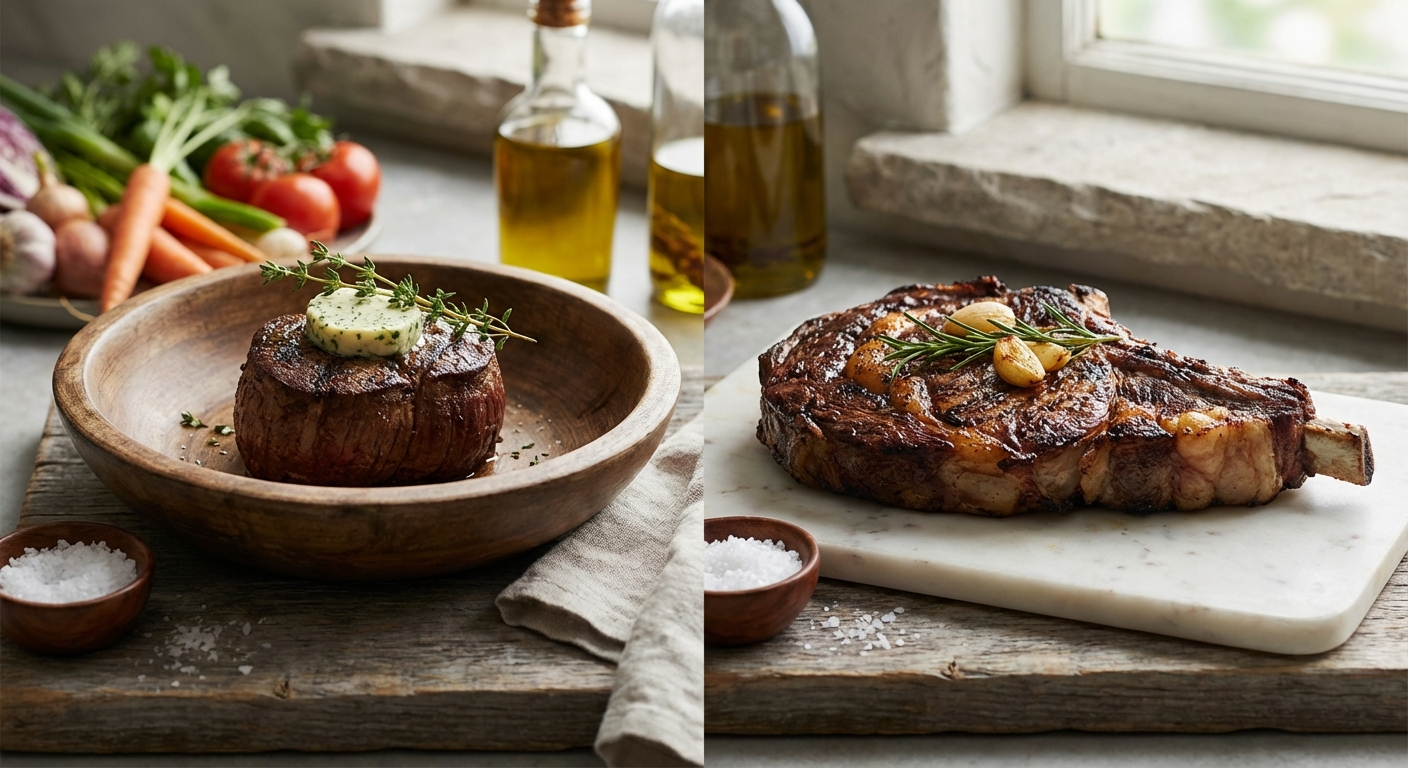
Where Each Cut Comes From
The filet mignon comes from the tenderloin (psoas major muscle), a long, narrow muscle that runs along the spine inside the ribcage and into the loin. This muscle does almost no work during the animal's life, which is why it's the most tender cut of beef on the entire carcass. The filet mignon specifically refers to the narrow tip end of the tenderloin — the most prized portion.
The ribeye comes from the rib primal (longissimus dorsi muscle, plus the spinalis and complexus), located between ribs 6 and 12. This area carries significantly more intramuscular fat than the tenderloin, which translates directly to flavor. The spinalis dorsi — that cap of meat around the outside of the ribeye — is often called the single most flavorful piece of beef on the animal.
Tenderness: Filet Wins, No Contest
The tenderloin earns its name honestly. On the Warner-Bratzler shear force scale (the standard measure of meat tenderness), filet mignon consistently scores as the most tender cut of beef. You can cut it with a butter knife. The texture is almost velvety — fine-grained, uniform, with no tough connective tissue or chewy fat pockets to navigate.
Ribeye is tender by steak standards, but it's a different kind of eating experience. The intramuscular fat creates pockets of richness between the muscle fibers. The spinalis cap has a different texture than the eye. If you get a ribeye with a large chunk of the complexus muscle, that section can be slightly chewier. Every bite of a ribeye is a little different from the last.
For people who prize a consistent, melt-in-your-mouth texture above all else, filet mignon is unmatched.
Flavor: Ribeye Wins by a Mile
Here's the trade-off: fat equals flavor. The ribeye's heavy marbling means more rendered intramuscular fat during cooking, which carries and amplifies beefy, buttery flavors. A well-marbled ribeye basically bastes itself as it cooks. The fat cap and spinalis deliver concentrated beef flavor that filet simply cannot match on its own.
Filet mignon has a milder, more subtle beef flavor. Some people describe it as "clean" or "delicate." Critics call it bland. The truth is somewhere in between — filet has genuine beef flavor, but it's quieter. That's why filet mignon is so often served with compound butters, béarnaise sauce, peppercorn cream, or wrapped in bacon. These accompaniments aren't just tradition — they're compensating for the cut's lower fat content.
If you want a steak that delivers powerful beef flavor with nothing more than salt and pepper, the ribeye is the obvious choice.
Marbling and Fat Content
The numbers tell the story clearly:
- Filet mignon: Approximately 7–10g of fat per 100g serving. Very little visible intramuscular marbling. Most of the fat is on the exterior, which is typically trimmed.
- Ribeye: Approximately 15–22g of fat per 100g serving. Heavy intramuscular marbling throughout, plus a distinct fat cap and seam fat between muscle sections.
For USDA Choice grade beef, a ribeye will typically show two to three times more visible marbling than a filet mignon from the same animal. At the Prime grade level, the difference becomes even more dramatic — a Prime ribeye can look almost white with fat, while a Prime filet simply has slightly more marbling than its Choice counterpart.
This fat difference is the single factor that drives every other difference between these two steaks: flavor, texture, cooking method, and price.
Size and Shape
Filet mignon steaks are typically 2–3 inches thick but only 2–3 inches in diameter. They're tall, compact cylinders — almost like a hockey puck. A standard portion weighs 6–8 ounces. Because the tenderloin tapers, steaks cut from different positions along it vary in diameter, which is why "center-cut" filets command a premium.
Ribeye steaks are wider and flatter, typically 1–1.5 inches thick and 4–6 inches across. A bone-in ribeye (sometimes called a cowboy steak) is even larger. Standard portions run 10–16 ounces, though 12 ounces is the most common restaurant size.
The shape difference matters for cooking. The filet's thickness means it takes longer to cook to the center and is more prone to overcooking on the outside before the interior reaches temperature. The ribeye's thinner, wider profile gives more surface area for crust development.
Price Comparison
Filet mignon is consistently the most expensive steak cut available:
- Filet mignon (USDA Choice): $30–$50 per pound retail
- Ribeye (USDA Choice): $16–$28 per pound retail
- Filet mignon (USDA Prime): $50–$80+ per pound retail
- Ribeye (USDA Prime): $28–$45 per pound retail
The price difference comes down to supply. There are only about 4–6 pounds of tenderloin on an entire 800-pound carcass. The rib section yields 15–20 pounds of ribeye steaks. Simple scarcity drives the premium.
At restaurants, the gap widens further. A filet mignon entrée at an upscale steakhouse typically runs $55–$85, while a ribeye ranges $45–$65. You're paying for exclusivity and perceived luxury as much as for the meat itself.
Best Cooking Methods
Filet Mignon
Because filet has so little fat, it needs help. The best methods are:
- Pan-sear in a cast iron skillet with butter, finishing in the oven (reverse sear works exceptionally well)
- Wrap in bacon to add fat and protect the lean exterior during cooking
- Sous vide to precisely control doneness — filet's uniform shape makes it ideal for this method
- Never cook past medium — without fat to keep it moist, an overcooked filet becomes dry and chalky
Target internal temperature: 125°F for rare, 130°F for medium-rare, 135°F for medium. Pull 5°F before target and rest for 5 minutes.
Ribeye
Ribeye's fat makes it more forgiving and opens up more cooking options:
- High-heat grill — the fat renders and creates incredible char and crust
- Cast iron sear — renders the fat cap beautifully, creates a Maillard crust
- Reverse sear — low oven first, then screaming hot sear. Best for thick-cut ribeyes
- More forgiving of slight overcooking — the marbling keeps it juicy even at medium
Target internal temperature: 130°F for medium-rare, 135°F for medium. Ribeye actually benefits from cooking to medium-rare or medium — the fat needs enough heat to render properly. A rare ribeye can taste waxy because the intramuscular fat hasn't softened.
When to Choose Filet Mignon
- You prioritize tenderness above all else
- You prefer leaner meat or are watching fat intake
- You enjoy pairing steak with rich sauces
- You're cooking for someone who doesn't like chewy or fatty textures
- It's a special occasion and presentation matters (filet looks elegant on the plate)
- You're serving someone who doesn't eat steak often — the tenderness is immediately impressive
When to Choose Ribeye
- You want maximum beef flavor with minimal seasoning
- You enjoy the richness and variety of a well-marbled steak
- You're grilling — ribeye handles an open flame better
- You want more steak for your money
- You're feeding steak enthusiasts who appreciate fat and flavor
- You want a more forgiving cut that's harder to ruin
The Butcher's Honest Take
Most butchers I know — myself included — eat ribeye at home and sell filet mignon to customers. That's not a knock on filet. It's a spectacular cut with a place on every menu. But when I'm cooking for myself and I want the best steak experience for the dollar, I'm reaching for a well-marbled ribeye every time.
That said, I've watched people take their first bite of a perfectly cooked filet mignon and their eyes go wide. The tenderness is genuinely shocking if you're not used to it. There's a reason it's been the prestige steak cut for generations.
The real answer isn't which cut is better — it's which cut is right for the meal you're making, the people you're feeding, and what you value most in a steak.
Frequently Asked Questions
Is filet mignon or ribeye more tender?
Filet mignon is significantly more tender than ribeye. The tenderloin muscle does almost no work during the animal's life, making it the most tender cut of beef available. Ribeye is tender by steak standards but has a more varied texture due to its multiple muscle sections and fat marbling.
Which has more flavor, filet mignon or ribeye?
Ribeye has substantially more flavor than filet mignon due to its higher fat content and heavy intramuscular marbling. The fat carries and amplifies beefy, buttery flavors. Filet mignon has a milder, more subtle flavor, which is why it's often served with sauces or compound butter.
Why is filet mignon so expensive?
Filet mignon is expensive primarily because of scarcity. There are only 4-6 pounds of tenderloin on an entire 800-pound beef carcass, compared to 15-20 pounds of ribeye. The limited supply, combined with high demand and the cut's reputation as a luxury item, drives the premium price.
Can you grill filet mignon?
Yes, but it requires more care than grilling a ribeye. Filet mignon's low fat content means it can dry out quickly over high heat. Use a two-zone setup: sear over direct high heat for 2-3 minutes per side, then move to indirect heat to finish. Wrapping in bacon helps add fat and protection.
What temperature should I cook filet mignon and ribeye to?
For filet mignon, target 125°F (rare) to 135°F (medium) — never cook past medium as it becomes dry without fat to keep it moist. For ribeye, target 130-135°F (medium-rare to medium). Ribeye actually benefits from slightly higher temperatures because the intramuscular fat needs heat to render properly.
More Expert Guides
What Is Chateaubriand? (Cut, Cooking, & Best Sources)
Chateaubriand is a thick-cut roast from the center of the beef tenderloin, traditionally served for two. Learn what makes this classic French cut special and how to cook it.
14 min readWhat Is Round Steak? The Complete Guide to Beef's Most Versatile Budget Cut
Round steak comes from the rear leg of the cow — it's lean, affordable, and misunderstood. A master butcher breaks down every sub-cut, cooking method, and technique to turn this budget workhorse into genuinely delicious meals.
14 min readWhat Is Eye of Round? The Complete Butcher's Guide to This Lean Cut
Eye of round is one of the leanest, most affordable cuts in the entire beef case — and one of the most misunderstood. A butcher explains how to turn this budget-friendly roast into something genuinely delicious.