Sirloin Tip vs Top Sirloin: A Butcher Explains What Most People Get Wrong
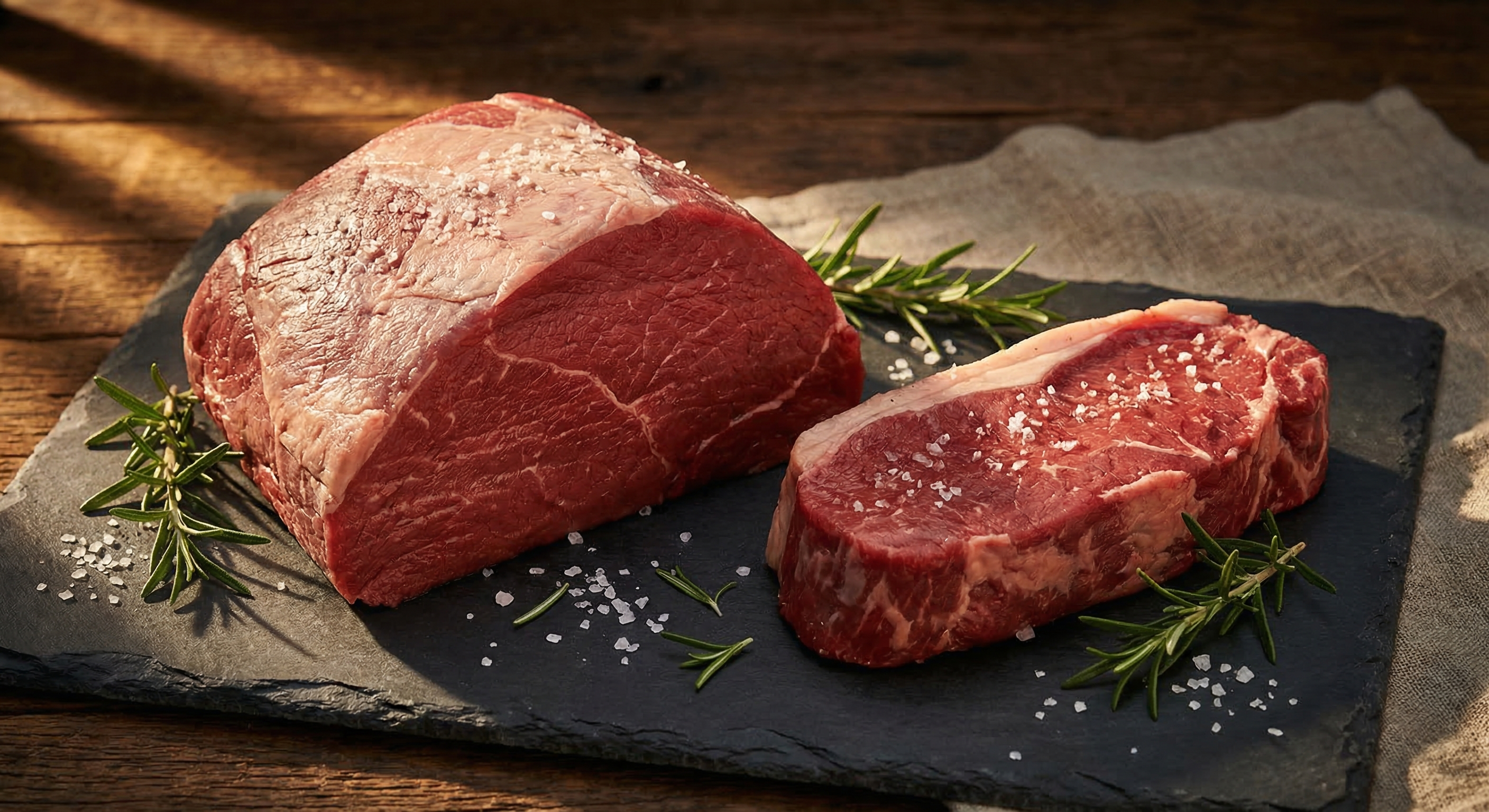
Here's the single most confusing naming problem in the entire butcher case: sirloin tip and top sirloin sound like they should be the same cut, or at least close relatives. They're not. They come from different primal cuts on entirely different parts of the animal, they have different fat content, different tenderness levels, and they need different cooking approaches. But grocery stores put them three inches apart in the same display case with nearly identical labels, and shoppers pick the wrong one every day.
I've been cutting meat for decades, and I've lost count of how many times someone comes back frustrated because their "sirloin" was tough. Nine times out of ten, they bought sirloin tip thinking it was top sirloin, cooked it the same way, and ended up with shoe leather. The names are misleading, and the industry has never bothered to fix it.
Let me clear this up once and for all. Where each cut actually comes from, what makes them different, and exactly how to cook each one so it actually delivers.
The Naming Problem: Why These Cuts Get Confused
The word "sirloin" appears in both names, which makes everyone assume they come from the sirloin primal. Only one of them does.
Top sirloin is a genuine sirloin cut. It comes from the sirloin primal — the upper portion of the loin behind the short loin and in front of the round. It sits in the hip area of the steer, above the bottom sirloin (which includes the tri-tip and flap meat).
Sirloin tip does not come from the sirloin. It comes from the round primal — the rear leg of the animal. Specifically, it's the quadriceps femoris muscle group at the front of the thigh, right where the round meets the sirloin. The name "sirloin tip" comes from its anatomical proximity to the sirloin — it's at the "tip" of the round that points toward the sirloin — but it's a round cut through and through.
This is like calling a house in New Jersey "Manhattan-adjacent" and then being surprised when the commute is 90 minutes. Geography doesn't equal identity, and being near the sirloin doesn't make you a sirloin cut.
Top Sirloin: The Real Sirloin Steak
Top sirloin is what most people picture when they think of a good, affordable steak. It's not as tender as a filet mignon or as richly marbled as a ribeye, but it's a legitimate steak cut with real beefy flavor and enough tenderness for dry-heat cooking. It's the everyday workhorse of the steak world.
The muscle is the gluteus medius — essentially the hip muscle. It gets moderate exercise compared to the leg muscles, which means the fibers are reasonably tender without the heavy connective tissue you find in working muscles. USDA Choice top sirloin will have some visible marbling — not ribeye-level, but enough to keep things juicy.
Key characteristics of top sirloin:
- Primal: Sirloin (loin section)
- Muscle: Gluteus medius (hip)
- Fat content: Moderate — visible marbling in Choice and above
- Tenderness: Moderate to good — suitable for grilling and pan-searing
- Flavor: Strong, beefy, concentrated
- Typical thickness: 1 to 1.5 inches as steaks
- Price: $8-$14/lb (2026 average)
- Also called: Top sirloin butt steak, center-cut sirloin, sirloin butt steak
The best top sirloin steaks are center-cut — meaning they come from the middle of the muscle where the grain is most uniform and the connective tissue is minimal. Some butchers sell "cap-off" top sirloin, which removes the small cap muscle and fat seam that runs through the upper portion. Cap-off gives you a cleaner, more consistent steak.
Best Cooking Methods for Top Sirloin
Grilling (the classic): Top sirloin is built for the grill. Season with coarse salt and pepper at least 45 minutes before cooking (or right before — never in between, as the salt draws moisture to the surface). Grill over high direct heat, 4-5 minutes per side for a 1-inch steak to hit medium-rare (130°F internal). Rest 8-10 minutes.
Pan-searing: Get a cast-iron skillet screaming hot with a high-smoke-point oil. Sear 3-4 minutes per side, baste with butter, garlic, and thyme in the last minute. This method gives you an incredible crust that compensates for the slightly lower fat content compared to a ribeye.
Reverse sear: For thicker cuts (1.5 inches or more), the reverse sear is unbeatable. Roast in a 250°F oven until internal temp hits 120°F, then sear in a blazing hot pan for 60-90 seconds per side. Edge-to-edge medium-rare with a crisp crust.
Kebabs and stir-fry: Top sirloin cubes beautifully for kebabs. Cut into 1.25-inch cubes, marinate briefly (30 minutes to 2 hours), and grill over direct high heat. The moderate tenderness holds up well on a skewer without falling apart.
Sirloin Tip: The Round Cut in Disguise
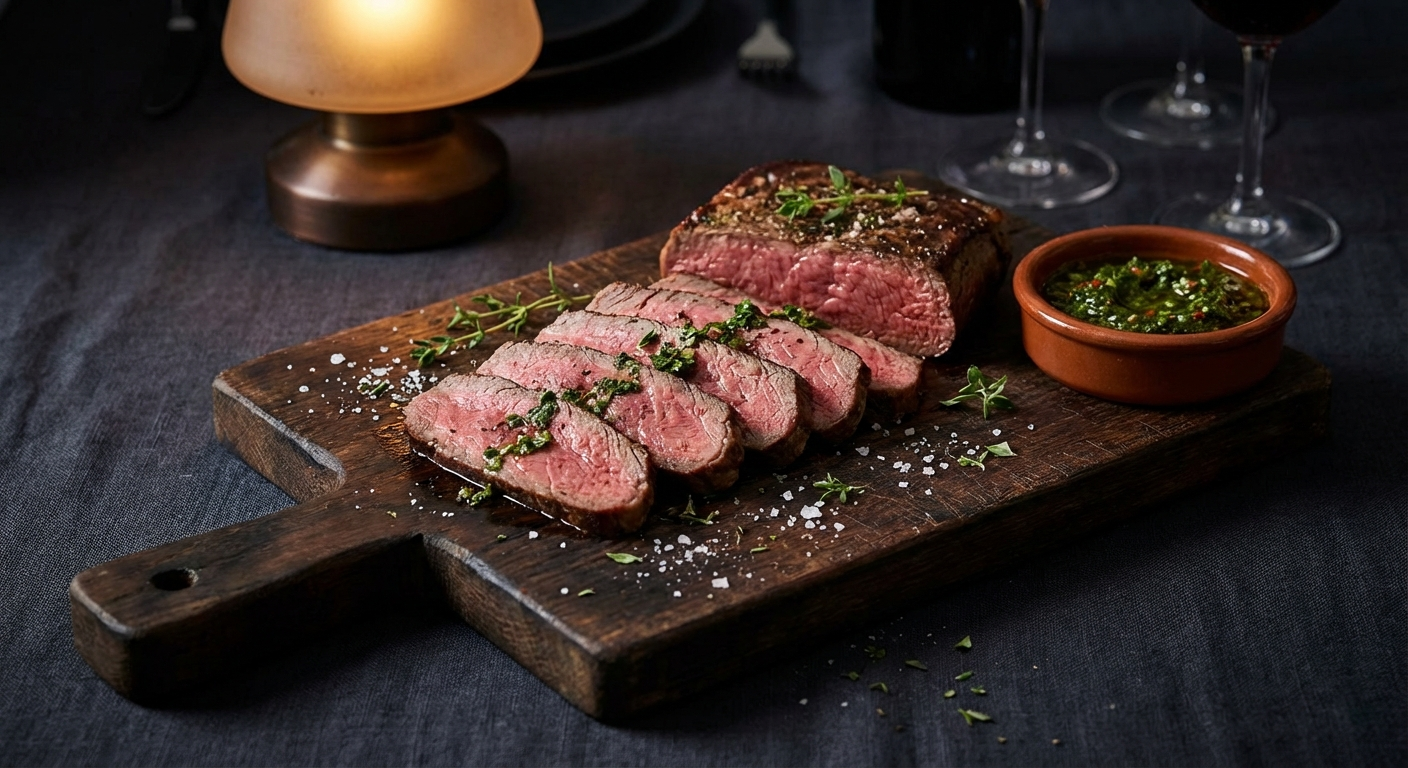
Sirloin tip is a round cut, and it behaves like one. The quadriceps muscle in the front of the steer's thigh is a hard-working muscle that supports the animal's weight with every step. That constant use builds dense, lean muscle fibers with significant connective tissue running through the grain. It's one of the leanest cuts you'll find in the case — great for your macros, challenging for your cooking skills.
Whole sirloin tip (also called "knuckle" in butcher shorthand) typically weighs 10-15 pounds and gets broken down into roasts and steaks at the retail level. The steaks are often labeled "sirloin tip steak," "round tip steak," or sometimes just "tip steak." Some stores also sell it as "breakfast steak" when sliced thin.
Key characteristics of sirloin tip:
- Primal: Round (rear leg)
- Muscle: Quadriceps femoris (front thigh)
- Fat content: Very lean — minimal marbling
- Tenderness: Low to moderate — requires proper technique
- Flavor: Mild, clean beef flavor
- Typical use: Roasts, thin-sliced steaks, stir-fry
- Price: $5-$9/lb (2026 average)
- Also called: Round tip, knuckle, tip roast, tip steak, breakfast steak
The sirloin tip is the most tender cut from the round primal — more tender than both top round and bottom round — but that's a relative statement. It's still significantly tougher than any loin or rib cut. Think of it as the best of the budget cuts rather than the worst of the premium cuts.
Best Cooking Methods for Sirloin Tip
Roasting (whole roast): This is where sirloin tip really shines. Season generously, sear on all sides in a Dutch oven, then roast at 275°F until internal temp reaches 130°F. The lower oven temperature gives the connective tissue more time to soften without overcooking the lean meat. Slice thin — always against the grain. This makes an excellent Sunday roast at half the price of a rib roast.
Marinated and grilled (steaks): Sirloin tip steaks need help. A 4-8 hour marinade with an acid component (vinegar, citrus, wine) breaks down surface fibers and adds moisture. Don't marinate longer than overnight — the acid turns the exterior mushy. Grill hot and fast, pull at 125°F internal (it'll carry over to 130°F), and slice thin against the grain.
Stir-fry: Slice paper-thin (partially frozen sirloin tip slices like a dream), and cook over the highest heat possible for 60-90 seconds. The extreme thinness negates the tenderness issue entirely. This is one of the best budget cuts for weeknight stir-fry.
Sous vide: Sirloin tip at 131°F for 24-36 hours is a revelation. The extended low-temperature cooking breaks down the connective tissue that makes this cut tough, producing results that rival cuts three times the price. If you have an immersion circulator, this is arguably the single best use of sirloin tip.
Braising (roast): Unlike top sirloin, sirloin tip responds well to slow, moist-heat cooking. Braise a tip roast in beef stock with aromatics at 300°F for 3-4 hours. The collagen converts to gelatin, and the lean meat absorbs the braising liquid for a pot roast that's both healthy and deeply flavorful.
Side-by-Side Comparison
Here's where the differences become crystal clear:
Origin: Top sirloin comes from the sirloin primal (hip). Sirloin tip comes from the round primal (front thigh). Different part of the animal entirely.
Tenderness: Top sirloin is noticeably more tender. You can grill or pan-sear it without any special preparation. Sirloin tip needs marinating, thin slicing, or low-and-slow methods to be tender.
Fat content: Top sirloin has moderate marbling — enough to stay juicy during dry-heat cooking. Sirloin tip is extremely lean with almost no intramuscular fat, which means it dries out fast if overcooked.
Price: Sirloin tip runs $2-5 per pound cheaper than top sirloin. That price difference reflects the tenderness gap. For a family of four, the savings add up fast if you know how to cook it properly.
Best as steak: Top sirloin wins decisively. It's a real steak that you can season, sear, and serve without apology. Sirloin tip steaks are workable but require more effort (marinating, thin slicing, precise temperature control).
Best as roast: Closer call. Top sirloin makes a great roast but costs more. Sirloin tip roast is the better value play — season and slow-roast to medium-rare, slice thin, and you've got Sunday dinner for under $30.
Versatility: Sirloin tip actually wins here. It works for roasting, braising, stir-fry, jerky, sous vide, and thin-sliced sandwiches. Top sirloin's moderate tenderness makes it best for dry-heat steak preparations — narrower range, but it excels in that range.
How to Tell Them Apart at the Store
Grocery store labeling is inconsistent, but here are reliable ways to identify each cut:
Look at the shape. Top sirloin steaks are typically cut 1-1.5 inches thick with a relatively uniform oval or triangular shape. Sirloin tip steaks are usually thinner (0.5-1 inch) and more irregularly shaped because they're cross-cut from a tapered roast.
Check the fat. Top sirloin will usually have a small strip of external fat along one edge and some visible marbling in the meat. Sirloin tip looks almost uniformly red with very little visible fat — it looks lean because it is lean.
Read the fine print. USDA labeling guidelines require the primal cut to be listed somewhere on the label. Look for "loin" (top sirloin) vs "round" (sirloin tip). If the label says "round tip" or "knuckle," that's definitely sirloin tip. If it says "loin, top sirloin butt," that's your top sirloin.
Ask the butcher. If there's a service counter, ask which muscle it is. Any butcher worth their apron knows the difference and will point you to exactly what you need. This takes 10 seconds and can save your entire meal.
When to Choose Each Cut
Choose top sirloin when:
- You want to grill steaks without fussing with marinades
- You're making kebabs and need cubes that hold together
- You want good steak flavor on a moderate budget
- The recipe calls for "sirloin steak" without further specification
- You're feeding guests who expect a traditional steak experience
Choose sirloin tip when:
- You need a budget-friendly roast for Sunday dinner
- You're making stir-fry (thin-sliced sirloin tip is ideal)
- You want lean protein for meal prep or macros-conscious cooking
- You're making beef jerky (the leanness is an advantage here)
- You have a sous vide setup (24-hour sirloin tip is transformative)
- Budget is the primary consideration and you're willing to adjust your technique
Common Mistakes to Avoid
Treating sirloin tip like a steak cut. The number one mistake. If you buy sirloin tip steaks and grill them like you would a ribeye or top sirloin — medium heat, salt and pepper, flip and serve — you'll get a tough, chewy, disappointing result. Sirloin tip steaks need marinading, high heat, and thin slicing to work.
Overcooking either cut. Both of these cuts punish overcooking, but sirloin tip especially. With almost no intramuscular fat to keep things lubricated, sirloin tip at medium-well or above becomes genuinely unpleasant. Keep both cuts at medium-rare to medium (130-140°F) for the best results.
Slicing with the grain. Always slice against the grain. This is important for every beef cut, but it's critical for sirloin tip. Slicing with the grain on sirloin tip gives you long, intact muscle fibers that resist your teeth. Slicing against the grain cuts those fibers short, making each bite dramatically more tender.
Skipping the rest. Both cuts need at least 8-10 minutes of resting after cooking. During rest, the muscle fibers relax and reabsorb some of the juices that got pushed toward the center during cooking. Cut too early, and those juices end up on the cutting board instead of in the meat. For lean cuts like sirloin tip, every drop of moisture matters.
Frequently Asked Questions
Can I substitute sirloin tip for top sirloin in a recipe?
You can, but you need to adjust your technique. If the recipe calls for top sirloin steaks, use sirloin tip but add a 4-8 hour marinade and plan to slice thinner. If the recipe calls for a top sirloin roast, sirloin tip actually substitutes well — just roast at a lower temperature (275°F vs 325°F) and pull it a few degrees earlier on the thermometer.
Which cut is healthier?
Sirloin tip is leaner with fewer calories and less saturated fat per serving. A 6-ounce serving of sirloin tip has roughly 200 calories and 6g of fat, while top sirloin runs about 240 calories and 10g of fat. Both are excellent protein sources — the difference is modest unless you're tracking macros strictly.
Is sirloin tip the same as tri-tip?
No. Tri-tip comes from the bottom sirloin — it's a genuine sirloin cut. Sirloin tip comes from the round. They look somewhat similar (both are triangular roasts) but tri-tip is significantly more tender and marbled. Tri-tip can be grilled like a steak; sirloin tip generally can't.
What's the best USDA grade for each cut?
For top sirloin, USDA Choice is the sweet spot — good marbling at a fair price. Prime top sirloin is excellent but harder to find. For sirloin tip, the grade matters less because there's minimal marbling in any grade. Choice sirloin tip will taste nearly identical to Select, so save your money and buy Select if that's all that's available.
Can I use either cut for beef jerky?
Sirloin tip is superior for jerky. Its extreme leanness means it dries evenly without greasy spots, and the uniform grain makes it easy to slice into consistent strips. Top sirloin works for jerky but the higher fat content can cause spoilage issues in long-term storage.
Why is sirloin tip sometimes labeled "sirloin" at the store?
Lazy labeling. Some grocery stores abbreviate "sirloin tip" to just "sirloin" to make it sound more appealing (and justify a higher price). Check the fine print for the primal cut designation — "round" means it's sirloin tip, "loin" means it's genuine sirloin. When in doubt, the price usually tells the truth: if "sirloin" steaks are under $8/lb, they're almost certainly sirloin tip from the round.
More Expert Guides
What Is Chateaubriand? (Cut, Cooking, & Best Sources)
Chateaubriand is a thick-cut roast from the center of the beef tenderloin, traditionally served for two. Learn what makes this classic French cut special and how to cook it.
14 min readWhat Is Round Steak? The Complete Guide to Beef's Most Versatile Budget Cut
Round steak comes from the rear leg of the cow — it's lean, affordable, and misunderstood. A master butcher breaks down every sub-cut, cooking method, and technique to turn this budget workhorse into genuinely delicious meals.
14 min readWhat Is Eye of Round? The Complete Butcher's Guide to This Lean Cut
Eye of round is one of the leanest, most affordable cuts in the entire beef case — and one of the most misunderstood. A butcher explains how to turn this budget-friendly roast into something genuinely delicious.