Chuck Roast vs Brisket: A Butcher's Complete Comparison
Chuck roast and brisket sit in the same general category: big, tough, affordable cuts that turn extraordinary with the right cooking. Walk into any barbecue joint and brisket is king. Walk into any grandmother's kitchen and chuck roast is the Sunday classic. Both deliver deep beef flavor that premium steaks can only dream about.
But swap one for the other in a recipe, and you'll notice the difference immediately. They come from different parts of the animal, have different fat structures, and respond to heat in fundamentally different ways.
After decades of breaking down whole carcasses, I can tell you the choice between these two cuts isn't about which is "better." It's about matching the right cut to the right cooking method — and understanding why.
The Quick Answer
Chuck roast comes from the shoulder, is loaded with intramuscular fat and connective tissue, and excels at braising and pot roast. It's forgiving, affordable, and shreds beautifully. Brisket comes from the chest, has a distinct two-muscle structure with a thick fat cap, and is the undisputed king of low-and-slow smoking. It's less forgiving but delivers unmatched bark and smoke ring when done right.
If you're braising in a Dutch oven, reach for chuck. If you're firing up the smoker for 12 hours, reach for brisket.
Where Each Cut Comes From
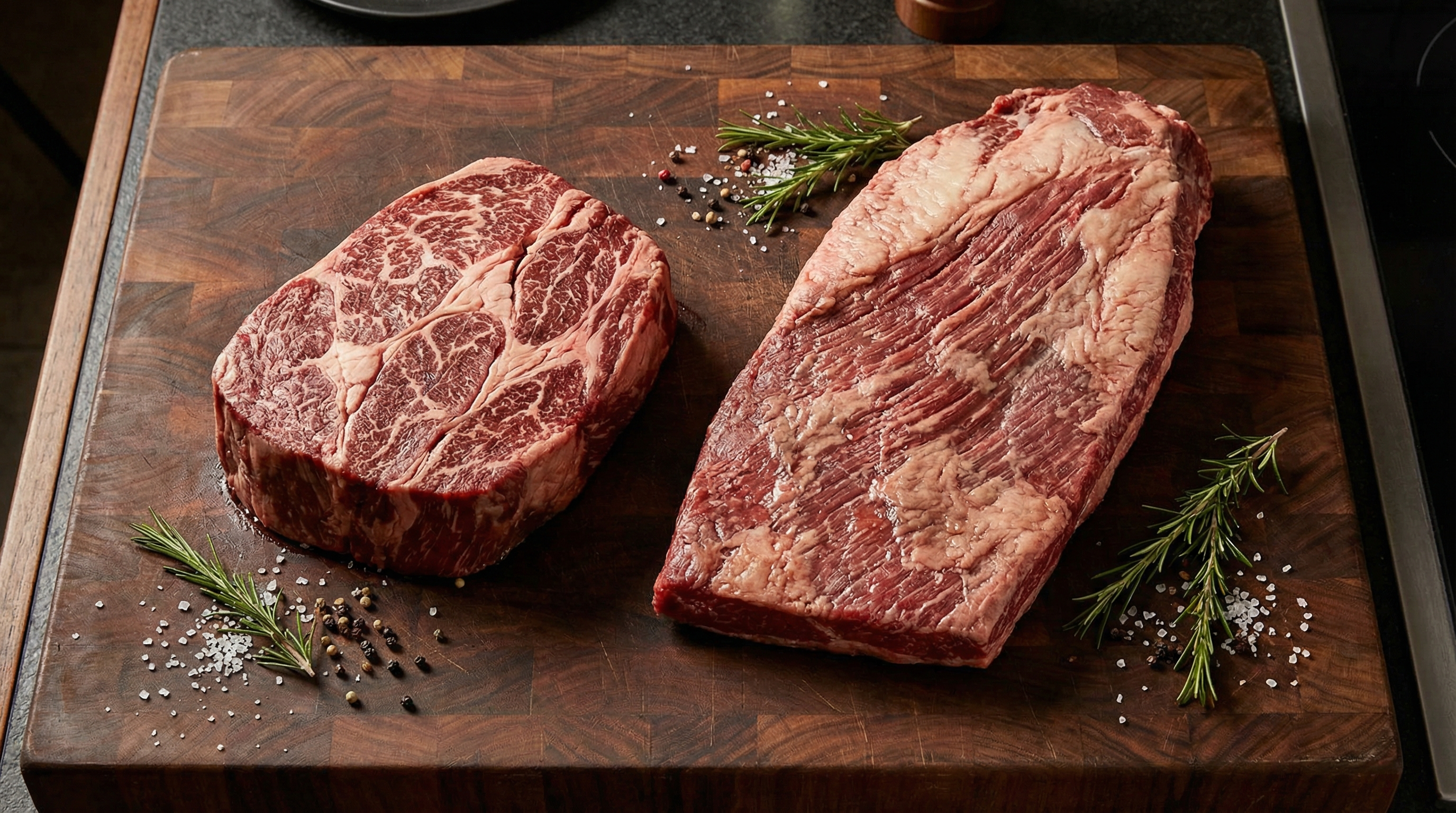
Understanding where each cut comes from on the animal explains almost everything about how they cook.
Chuck roast comes from the chuck primal — the front shoulder of the cow. This is the largest primal, accounting for about 26% of the animal's total weight. The shoulder does constant work: supporting the head, powering forward movement, engaging with every step. That constant use builds dense muscle fibers interlaced with collagen and intramuscular fat.
The chuck primal contains several subprimals, but most chuck roasts come from the chuck roll or shoulder clod. The result is a thick, compact piece of meat — typically 2 to 5 pounds — with fat distributed throughout the muscle in a web-like pattern.
Brisket comes from the breast or lower chest of the cow. It's one of the hardest-working muscles in the animal because it supports roughly 60% of the cow's body weight (cattle don't have collarbones). This extreme workload creates incredibly tough, dense muscle fibers with heavy connective tissue — but also enormous flavor potential when cooked correctly.
A whole brisket (called a "packer") weighs 12 to 20 pounds and consists of two distinct muscles:
- The flat (first cut): A leaner, more uniform muscle that's easier to slice. Most grocery store brisket is just the flat.
- The point (second cut): A thicker, fattier muscle that sits on top of the flat, separated by a layer of fat. This is where burnt ends come from.
These two muscles are connected but have different grain directions, different fat content, and cook at different rates — which is part of what makes brisket so challenging to master.
Fat Structure and Marbling
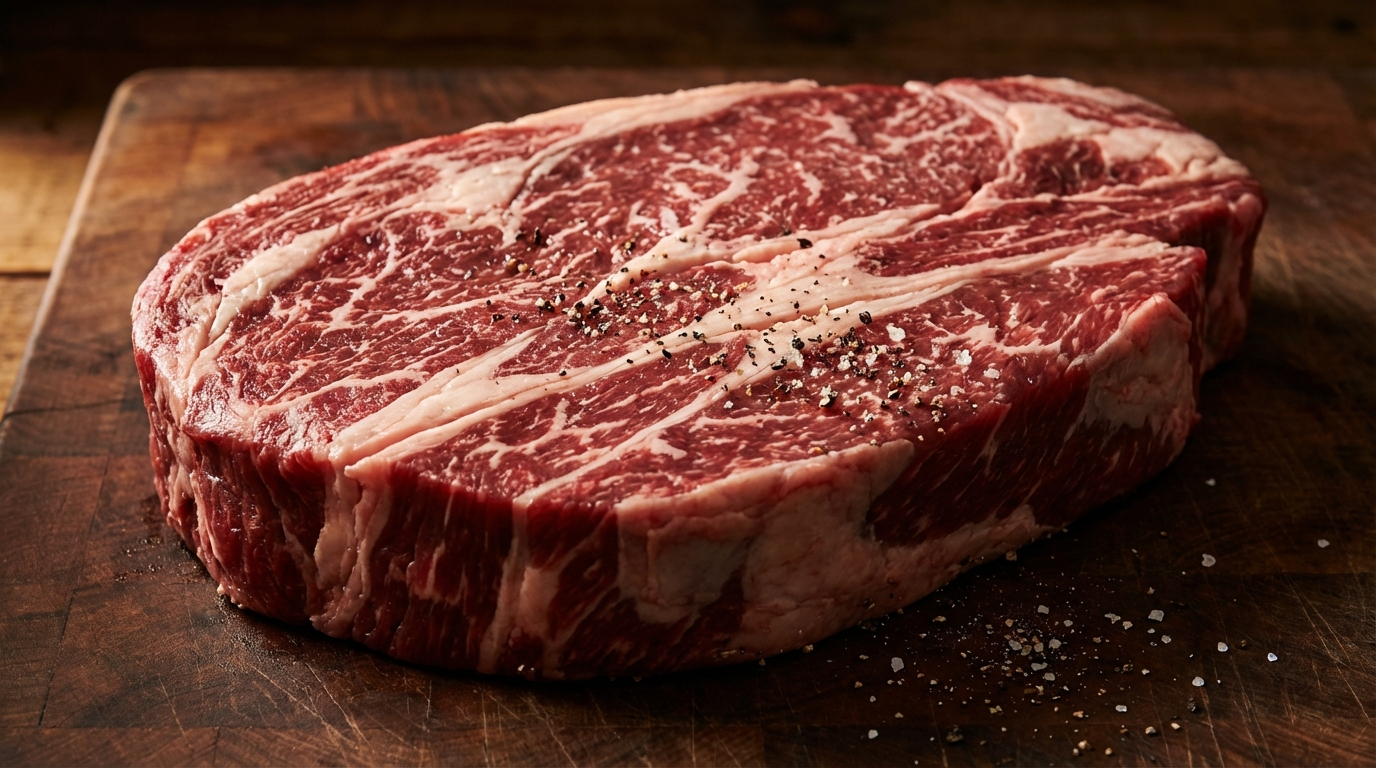
This is where the two cuts diverge most dramatically, and it's the single biggest factor in choosing between them.
Chuck roast has fat woven through the muscle. The intramuscular marbling is heavy and well-distributed, similar to what you'd see in a ribeye (they're actually neighboring primals). During cooking, this internal fat melts slowly, basting the meat from within. The connective tissue — primarily collagen — breaks down into gelatin, creating that silky, unctuous texture that makes pot roast so satisfying.
This fat distribution is why chuck is so forgiving. Even if you overcook it slightly, the internal fat keeps it moist. It's almost impossible to dry out a properly braised chuck roast.
Brisket has a fundamentally different fat architecture. The most prominent feature is the fat cap — a thick layer of external fat (sometimes half an inch to an inch thick) that sits on top of the meat. Inside, the flat is relatively lean compared to chuck, while the point is much fattier.
This means brisket's fat isn't self-distributing the way chuck's is. The fat cap renders during cooking and bastes the exterior, but the lean flat can dry out if the cooking isn't precise. The point, meanwhile, has enough internal fat to stay moist almost no matter what — which is why pitmasters prize it for burnt ends.
The practical takeaway: chuck roast is forgiving because its fat is everywhere. Brisket demands precision because its fat is concentrated in specific areas.
Flavor Profile
Both cuts deliver intensely beefy flavor — far more than tender cuts like filet mignon or even ribeye. But the character of that flavor is different.
Chuck roast tastes rich, beefy, and slightly sweet. The heavy marbling creates a buttery quality when the fat renders, and the broken-down collagen adds body and richness to any braising liquid. It absorbs surrounding flavors beautifully — onions, garlic, red wine, herbs — while contributing its own deep beef backbone.
If you've ever had a truly great pot roast and thought "this is what beef should taste like," that's chuck doing its thing.
Brisket has a more minerally, concentrated beef flavor. It's less buttery than chuck because there's less intramuscular fat in the flat, but the flavor is deeper and more intense. When smoked, brisket develops an additional layer of complexity: the bark (the seasoned, caramelized exterior crust) provides peppery, smoky, slightly bitter notes that contrast with the clean beef interior.
The point cut of brisket, with its higher fat content, tastes richer and more succulent than the flat. Many barbecue enthusiasts consider the point the best-tasting part of the entire animal.
Best Cooking Methods
This is where the rubber meets the road. Each cut has cooking methods where it truly excels and others where it merely performs adequately.
Chuck Roast: The Braising Champion
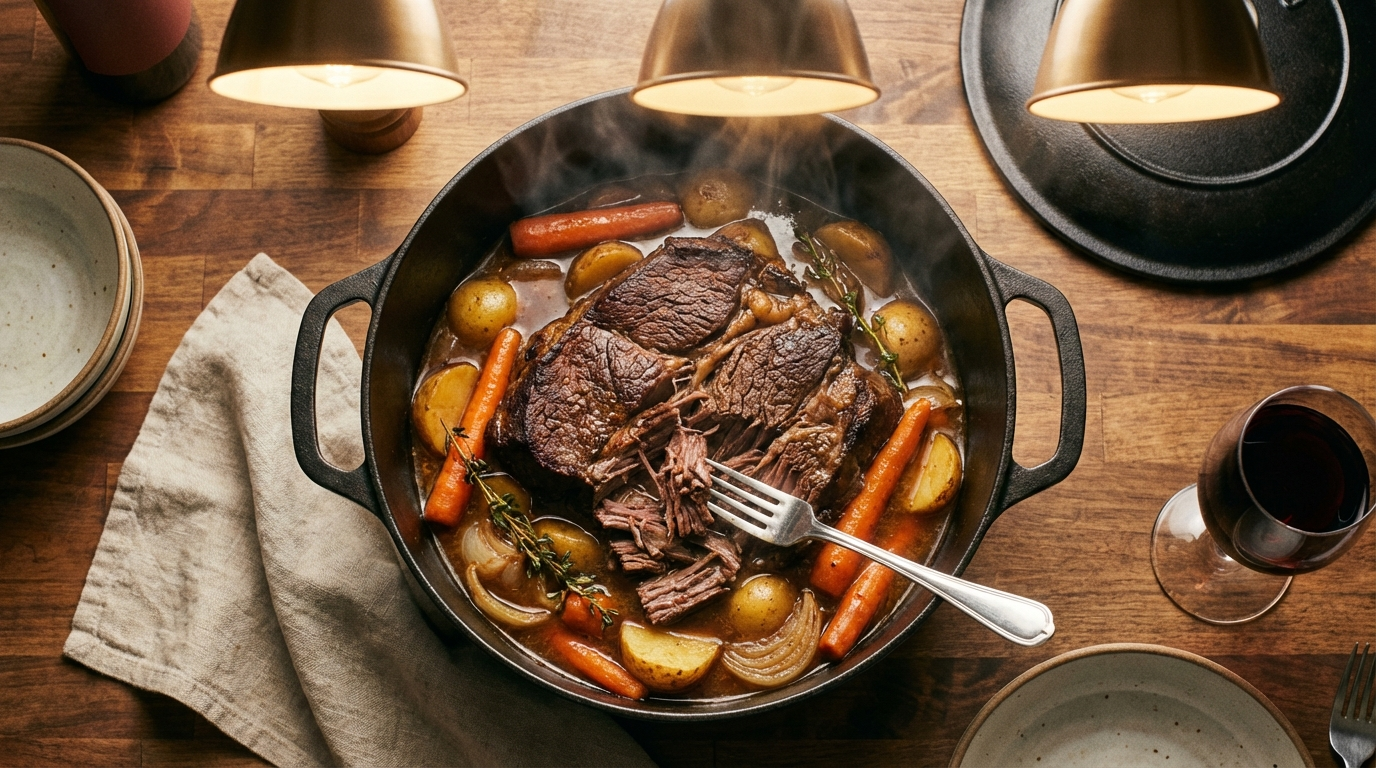
Chuck roast's ideal cooking methods all involve moist heat or a combination of dry and moist heat:
- Braising (pot roast): The classic. Sear on all sides, add liquid (broth, wine, beer), cover, and cook at 300-325°F for 3-4 hours. The connective tissue melts completely, the meat becomes fork-tender, and the braising liquid turns into an incredibly rich sauce.
- Slow cooker: Low for 8-10 hours, high for 5-6 hours. Less caramelization than oven braising, but nearly foolproof. One of the best slow cooker cuts available.
- Pressure cooker / Instant Pot: 60-90 minutes under pressure achieves results similar to hours of braising. The collagen breakdown happens faster under pressure.
- Stewing: Cut into 2-inch cubes, chuck becomes the gold standard for beef stew. The fat and collagen keep each piece moist while the exterior absorbs the stew flavors.
Chuck roast can be smoked, and some pitmasters use it as a "poor man's brisket." The results are good — the high fat content keeps it moist — but the texture is different. Smoked chuck tends to shred rather than slice cleanly, which makes it better for pulled beef sandwiches than traditional sliced barbecue.
Brisket: The Smoking King
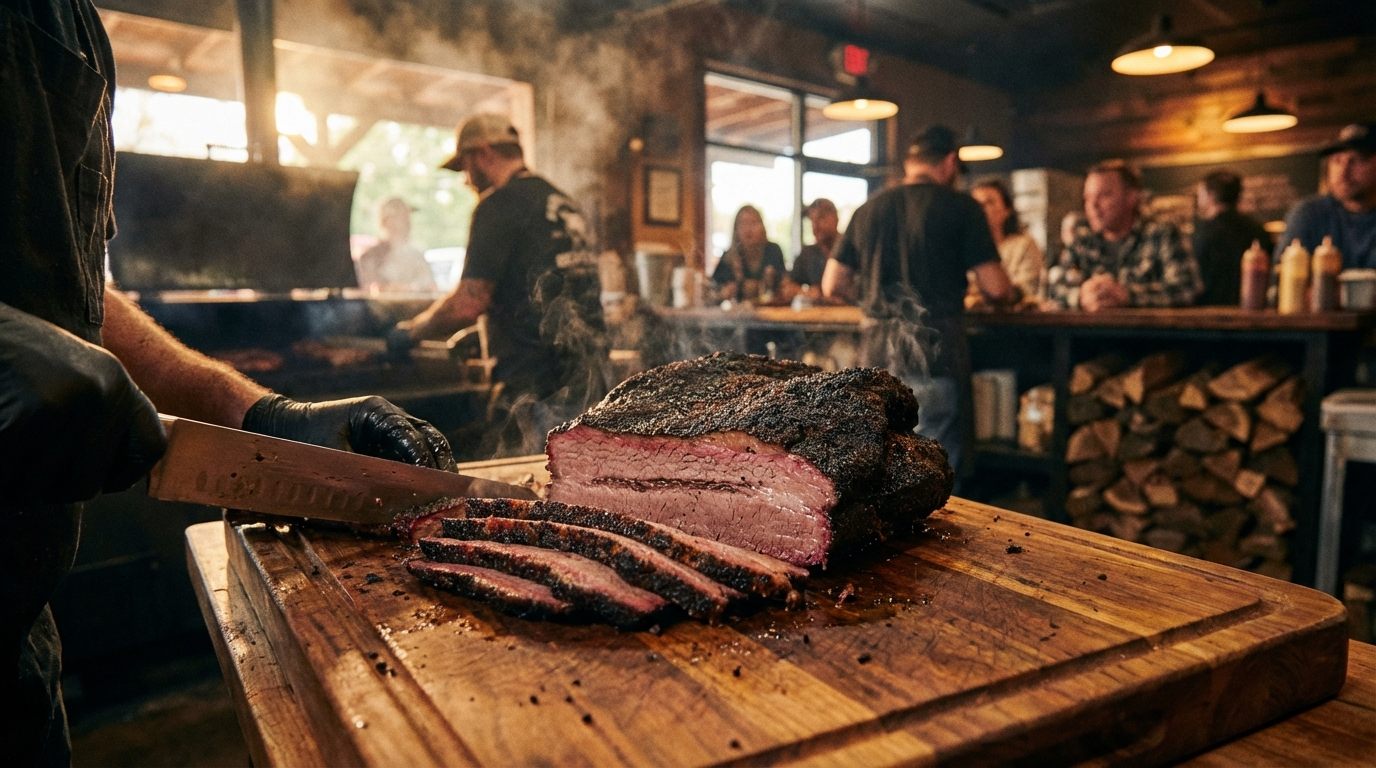
Brisket's ideal cooking methods lean toward dry heat, low and slow:
- Smoking: The gold standard. Cook at 225-250°F for 10-14 hours (for a full packer). The fat cap renders slowly, the collagen breaks down, the bark develops, and you get the characteristic smoke ring. This is what Texas barbecue is built on.
- Oven roasting (low and slow): 250-275°F for 6-8 hours, wrapped in butcher paper or foil after the bark sets. Not as flavorful as smoked, but produces excellent results for those without a smoker.
- Braising (flat only): Brisket flat can be braised successfully, especially in Jewish and Eastern European traditions (think classic braised brisket with onions). The results are different from chuck — leaner, firmer slices rather than shredding meat.
- Corning/curing: Brisket is the traditional cut for corned beef and pastrami. The flat's uniform shape makes it ideal for even curing.
Brisket is famously unforgiving. Cook it to 195°F internal and it might be tough. Cook it to 203°F and it could be perfect. Push it to 210°F and it might fall apart. The window for "perfect" brisket is narrow, which is why pitmasters spend years mastering it.
Price and Availability
Budget matters, and these two cuts sit at different price points.
Chuck roast is one of the most affordable beef cuts you can buy. Expect to pay $5-8 per pound at most grocery stores, sometimes less on sale. It's available everywhere — every supermarket, every butcher shop, year-round. You'll never have trouble finding a chuck roast.
Brisket pricing depends heavily on what you're buying:
- Flat only: $7-12 per pound at grocery stores. Widely available but often trimmed too thin.
- Full packer: $4-7 per pound at warehouse clubs (Costco, Sam's Club) or from butchers. Better value per pound but you're buying 12-20 pounds at once.
- USDA Prime or Wagyu brisket: $12-25+ per pound. Competition-grade quality.
Here's the catch with brisket: a full packer at $5/pound sounds cheap until you realize you're spending $60-100 on a single piece of meat. Add in the 30-40% weight loss from trimming and cooking, and the actual cost per serving is higher than it first appears.
Chuck roast wins on pure value. A 3-pound chuck roast at $7/pound costs $21 and feeds 4-6 people easily. A comparable amount of usable brisket costs significantly more.
Cooking Time and Difficulty
Your available time and skill level should factor into the decision.
Chuck roast is a beginner-friendly cut. A basic pot roast requires almost no technique: sear, add liquid, cover, wait. The cook time is 3-4 hours in the oven or 8 hours in a slow cooker. It's nearly impossible to ruin because the abundant fat and collagen protect against drying out. If you've never cooked a tough cut before, start with chuck.
Brisket is an intermediate to advanced cut. Smoking a full packer brisket requires:
- Fire management for 10-14 hours straight
- Understanding the "stall" (when internal temp plateaus around 150-170°F)
- Knowing when to wrap (the "Texas crutch")
- Judging doneness by probe feel, not just temperature
- Proper resting (at least 1 hour, ideally 2-4 hours in a cooler)
Even braised brisket takes longer than chuck because the muscle fibers are denser and the collagen is tougher. Where chuck might be tender at 3 hours, brisket flat often needs 4-5 hours of braising.
Texture When Cooked
The finished texture is strikingly different between these two cuts, even when both are cooked perfectly.
Chuck roast becomes shreddy and succulent. When fully braised, the meat falls apart into long, irregular strands. The collagen-turned-gelatin coats every fiber, giving it an almost silky mouthfeel. It's the texture of pulled pork's beef equivalent — rustic, comforting, impossible to slice cleanly (and that's a feature, not a bug).
Brisket becomes sliceable and tender. A properly cooked brisket flat holds together when sliced against the grain into pencil-thick slices. Each slice should bend without breaking — pitmasters call this the "bend test." The point, being fattier, has a more tender, almost creamy texture and can be cubed into burnt ends.
This texture difference determines their best applications:
- Chuck: Pulled beef sandwiches, tacos, stews, pot roast, beef bourguignon, ragu
- Brisket: Sliced barbecue, deli sandwiches (pastrami, corned beef), burnt ends, formal plated presentations
Nutritional Comparison
For a 6-ounce cooked serving (approximate values, USDA data):
- Chuck roast: ~380 calories, 28g protein, 29g fat, 0g carbs
- Brisket flat (lean, trimmed): ~310 calories, 36g protein, 17g fat, 0g carbs
- Brisket point: ~420 calories, 28g protein, 34g fat, 0g carbs
Brisket flat is the leanest option with the most protein per calorie. Chuck roast and brisket point are comparable in fat content. All three are excellent sources of iron, zinc, B12, and selenium.
If you're watching fat intake, brisket flat (trimmed of external fat) is the better choice. If you're prioritizing flavor and don't mind the calories, chuck roast or brisket point deliver more richness.
When to Choose Chuck Roast
Reach for chuck roast when:
- You want a weeknight or weekend braising project (3-4 hours, not 12+)
- You're making pot roast, stew, beef bourguignon, or ragu
- You want a forgiving cut that's hard to overcook
- You're feeding a family on a budget ($5-8/lb)
- You want shredded beef for tacos, sandwiches, or enchiladas
- You're cooking in a slow cooker or Instant Pot
- You're a beginner working with tough cuts for the first time
When to Choose Brisket
Reach for brisket when:
- You're smoking meat and want the classic Texas barbecue experience
- You need clean, sliceable portions for sandwiches or plating
- You're making corned beef or pastrami (brisket flat is traditional)
- You want burnt ends (brisket point only)
- You have 12+ hours and the patience to manage a long cook
- You're cooking for a crowd (a full packer feeds 15-20 people)
- You want the deep, minerally beef flavor that only brisket delivers
Can You Substitute One for the Other?
Sometimes, with adjustments.
Chuck as a brisket substitute: Works well for braised brisket recipes. Swap in chuck roast 1:1 and reduce cooking time by about 30 minutes. The texture will be shreddy instead of sliceable, but the flavor will be excellent. For smoking, chuck makes a decent "poor man's brisket" — just plan on pulling/shredding rather than slicing.
Brisket as a chuck substitute: Brisket flat can work in pot roast and braise recipes, but it won't shred the same way. The slices will be firmer and leaner. You may need to add more liquid and extend the cooking time. It's a workable substitution but chuck is genuinely better for these applications.
The honest answer: both cuts are affordable enough that there's rarely a reason to substitute. Buy the one that matches your cooking method and you'll get better results every time.
Frequently Asked Questions
Is chuck roast or brisket better for smoking?
Brisket is the superior choice for smoking. Its structure allows it to develop bark, smoke ring, and sliceable tenderness over a 10-14 hour cook. Chuck roast can be smoked but tends to shred rather than slice, making it better for pulled beef than traditional sliced barbecue.
Can I use brisket instead of chuck roast in a slow cooker?
Yes, but expect different results. Brisket flat in a slow cooker produces firmer, sliceable meat rather than the shreddy, fall-apart texture of chuck roast. Add extra liquid and cook 1-2 hours longer. Chuck roast is generally the better slow cooker choice.
Which is cheaper, chuck roast or brisket?
Chuck roast is typically cheaper at $5-8 per pound. Brisket flat runs $7-12 per pound, while a full packer brisket at a warehouse club can be $4-7 per pound — but you're buying 12-20 pounds at once.
Why is brisket so much harder to cook than chuck roast?
Brisket has denser muscle fibers, less intramuscular fat (especially in the flat), and a two-muscle structure that cooks at different rates. Chuck roast's abundant marbling makes it self-basting and forgiving, while brisket requires precise temperature control and timing.
What is the best internal temperature for chuck roast vs brisket?
Both cuts reach ideal tenderness between 200-205°F internal temperature, but they get there differently. Chuck roast in a braise typically reaches this in 3-4 hours. Smoked brisket takes 10-14 hours and often hits a "stall" at 150-170°F that can last for hours.
More Expert Guides
What Is Chateaubriand? (Cut, Cooking, & Best Sources)
Chateaubriand is a thick-cut roast from the center of the beef tenderloin, traditionally served for two. Learn what makes this classic French cut special and how to cook it.
14 min readWhat Is Round Steak? The Complete Guide to Beef's Most Versatile Budget Cut
Round steak comes from the rear leg of the cow — it's lean, affordable, and misunderstood. A master butcher breaks down every sub-cut, cooking method, and technique to turn this budget workhorse into genuinely delicious meals.
14 min readWhat Is Eye of Round? The Complete Butcher's Guide to This Lean Cut
Eye of round is one of the leanest, most affordable cuts in the entire beef case — and one of the most misunderstood. A butcher explains how to turn this budget-friendly roast into something genuinely delicious.