Bottom Round vs Top Round: A Butcher Explains the Real Differences
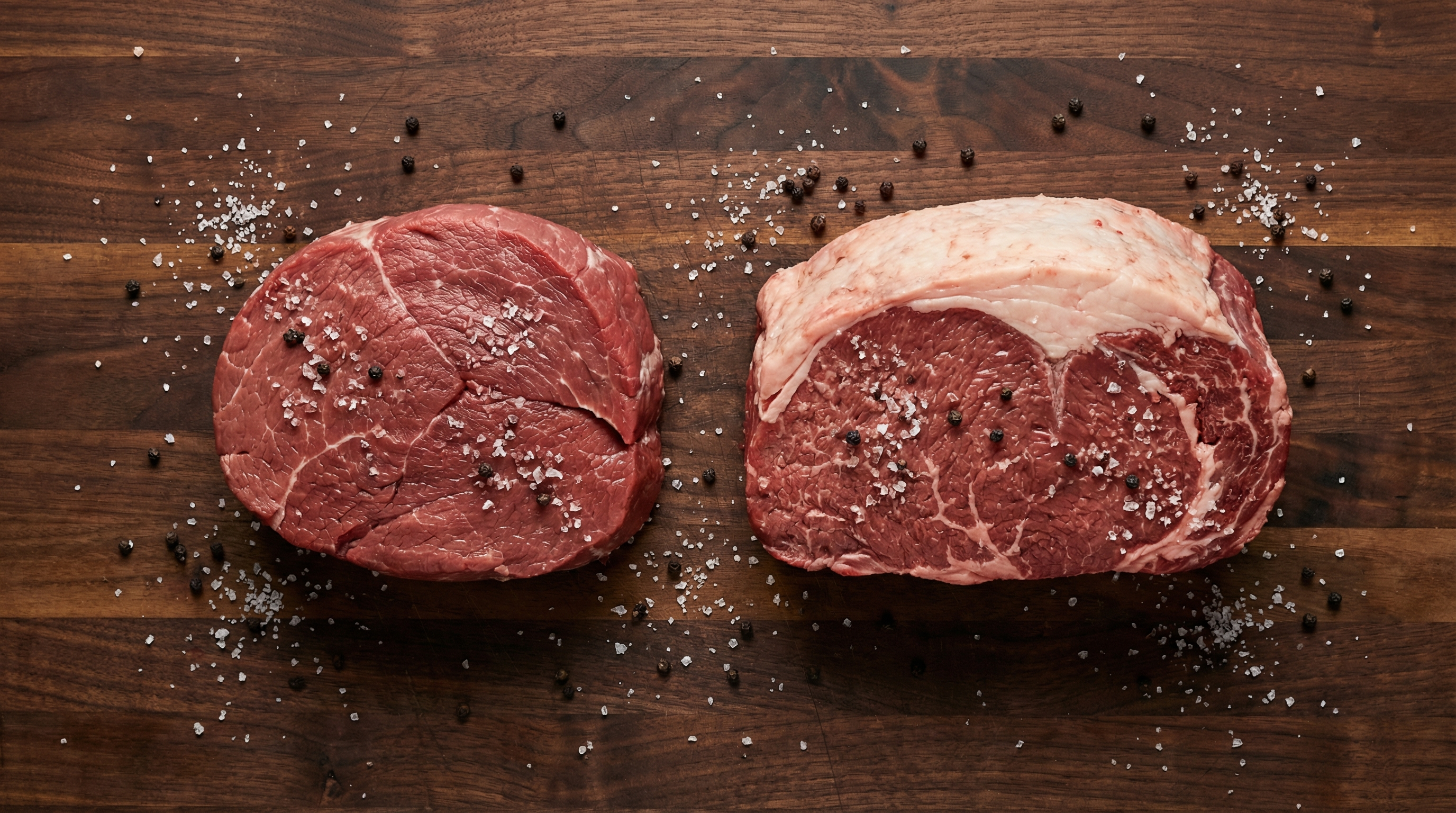
I've been cutting meat for over 30 years, and I still watch customers stare at the round section of the meat case like they're trying to solve a puzzle. Top round, bottom round, eye of round — the labels all sound the same, the prices are close, and the cuts look nearly identical behind that plastic wrap. But here's the thing: pick the wrong one for your recipe, and you'll end up with shoe leather instead of Sunday dinner.
Top round and bottom round are the two most commonly confused cuts in the entire butcher case. They both come from the rear leg of the steer, they're both lean, and they're both affordable. But they come from different muscles with different grain structures, different levels of tenderness, and — this is the part that matters most — they respond to completely different cooking methods.
I'm going to break down exactly what each cut is, where it sits on the animal, and how to cook each one so it actually tastes good. Because both of these cuts can be outstanding — you just have to know what you're working with.
Where Do These Cuts Come From?
Both cuts come from the round primal, which is the rear leg and rump of the steer. The round is one of the eight primal cuts of beef, and it's the most heavily exercised part of the animal. Every step that steer takes — and a beef steer walks miles every day — works the muscles in the round. That constant movement builds dense, lean muscle fiber with minimal intramuscular fat.
The round primal gets broken down into several subprimal cuts: top round (also called the inside round), bottom round (outside round), eye of round, and the sirloin tip. Think of the steer's hind leg like your own thigh. The top round sits on the inside of the leg — the inner thigh, anatomically called the semimembranosus muscle. The bottom round sits on the outside of the leg — the outer thigh, consisting primarily of the biceps femoris muscle.
That positioning matters more than you'd think. The inside muscles of the leg don't work as hard as the outside muscles. The outside of the leg bears more weight, stabilizes the animal during movement, and absorbs more impact. More work means more connective tissue, tighter muscle fibers, and a tougher result on the plate if you don't cook it right.
Top Round: The More Tender of the Two
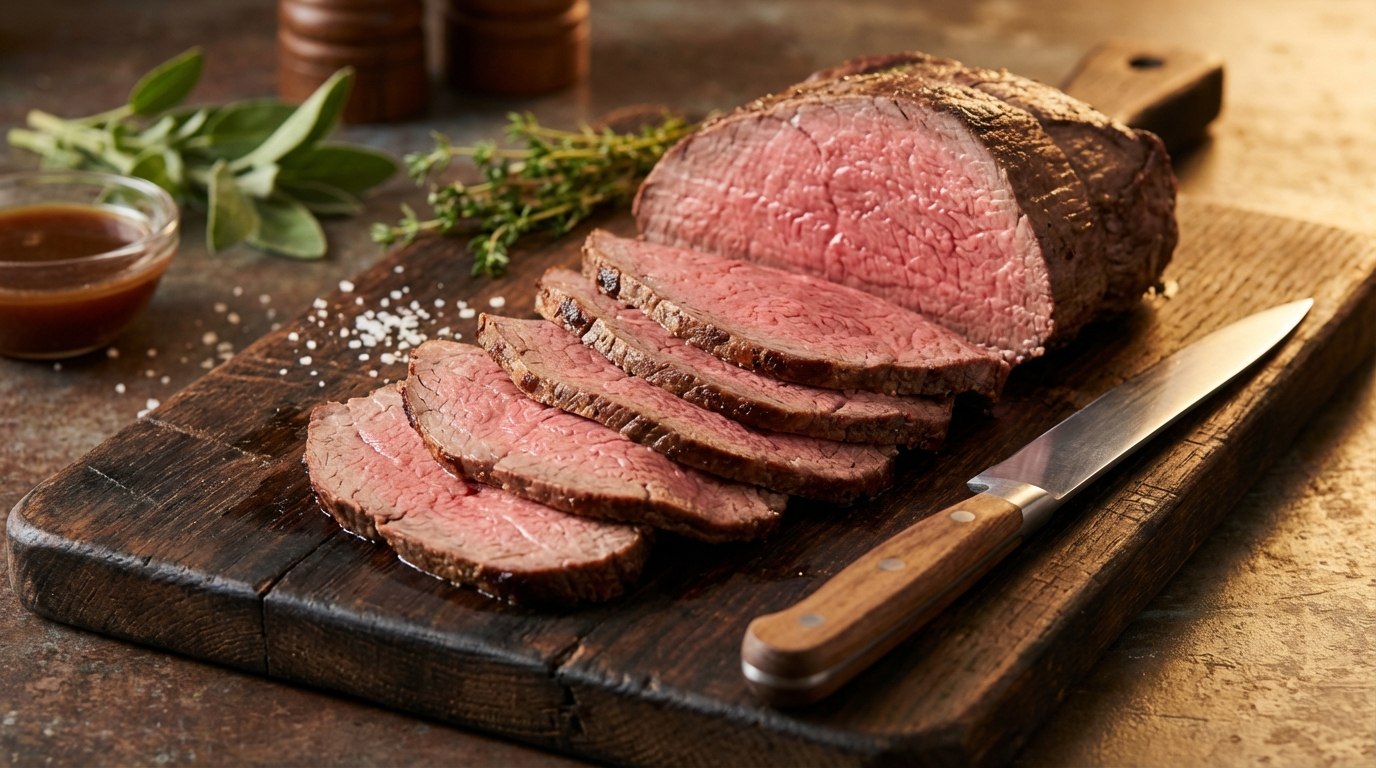
Top round is the single largest muscle in the entire round primal. A whole top round can weigh 15 to 25 pounds before it gets broken down into roasts, steaks, and cutlets. It's a single, uniform muscle with a relatively consistent grain that runs in one direction — which makes it easy to slice against the grain for maximum tenderness.
Compared to bottom round, top round is noticeably more tender. It's still a lean, working muscle — don't confuse it with a ribeye — but the fibers are slightly less dense, there's marginally more intramuscular moisture, and the connective tissue is less aggressive. You can actually cook a top round with dry heat methods (roasting, broiling, grilling) and get a good result, as long as you don't overcook it.
Key characteristics of top round:
- Muscle: Semimembranosus (inner thigh)
- Weight (whole): 15-25 lbs
- Fat content: Very lean, minimal marbling
- Grain: Uniform, runs in one direction
- Tenderness: Moderate — the most tender cut from the round
- Price: $5-$8/lb (2026 average)
Top round is the cut that most delis use for roast beef. When you buy sliced roast beef at the deli counter, odds are it's top round that was roasted low and slow, then sliced paper-thin on a commercial slicer. That thin slicing is the key — it breaks up the muscle fibers mechanically and makes an otherwise firm cut melt on your tongue.
Best Cooking Methods for Top Round
Oven roasting (the go-to): Season heavily, sear all sides in a screaming hot pan, then roast at 250°F until the internal temperature hits 130°F for medium-rare. Rest for 20 minutes — the internal temp will coast up to about 135°F. Slice thin against the grain. This produces classic deli-style roast beef at home.
London broil: Despite what the grocery store labels say, London broil is a cooking method, not a cut. But top round is the ideal cut for it. Marinate overnight in an acid-based marinade (red wine vinegar, Worcestershire, garlic), then broil or grill over high heat to medium-rare. Slice very thin on a sharp bias against the grain.
Stir-fry: Slice top round extremely thin (freeze it for 30 minutes first to make thin slicing easier) and stir-fry over the highest heat your stove can produce. The thin slices cook in seconds. This is how Chinese restaurants use round — flash-cooked with velveting technique.
Sous vide: Top round at 131°F for 24 hours transforms into something that rivals much more expensive cuts. The extended low-temperature cooking breaks down the connective tissue while keeping the meat pink and juicy throughout. This is arguably the best use of top round.
Bottom Round: Tougher, but Full of Flavor
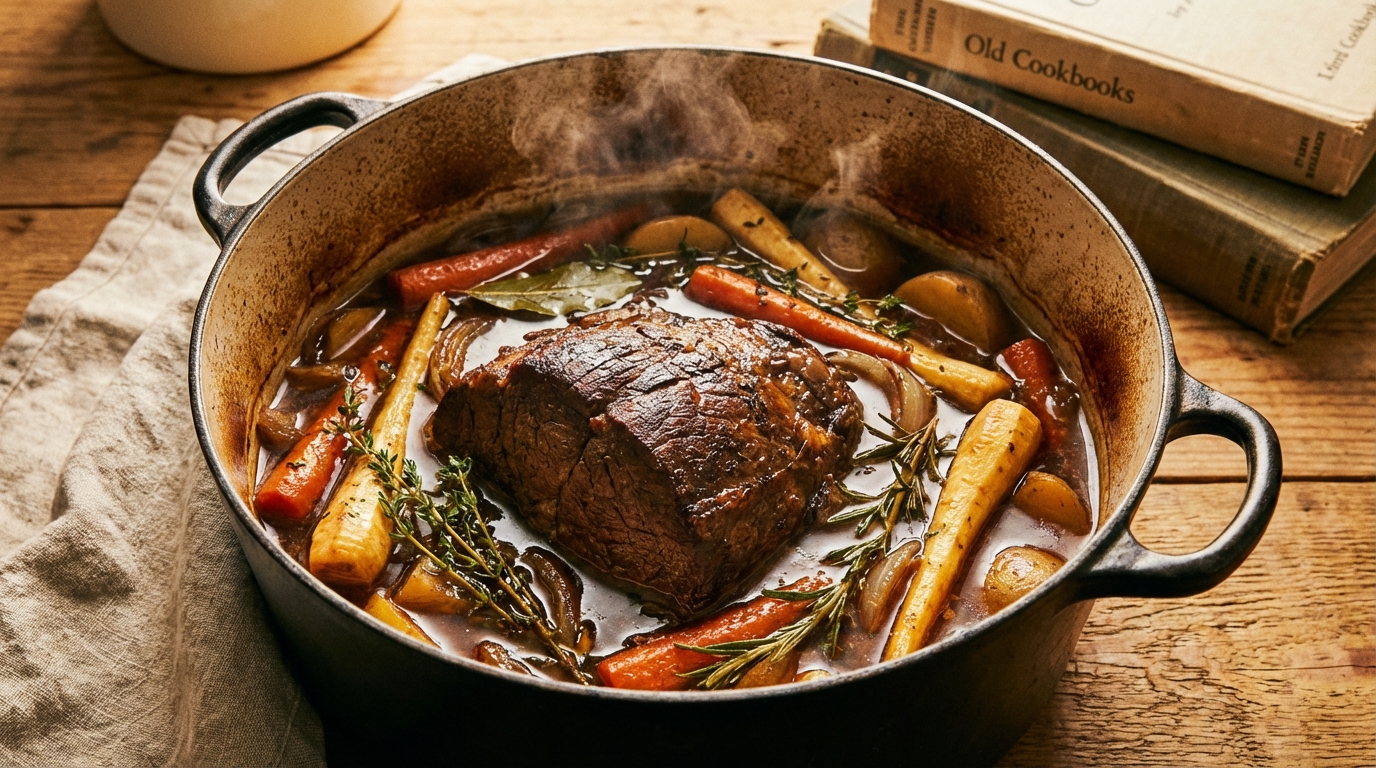
Bottom round comes from the outside of the leg — the biceps femoris and the muscles that surround it. It's a harder-working set of muscles than the top round, which means more connective tissue running through the meat. That connective tissue is collagen, and collagen is a double-edged sword: if you cook it with dry heat, it stays tough and chewy. But if you cook it low and slow with moisture, it converts to gelatin and creates that silky, fall-apart texture you get from a great pot roast.
Bottom round also has a slightly different grain structure than top round. Where top round has a fairly uniform, parallel grain, bottom round has muscles that run in multiple directions with seams of connective tissue between them. This makes it harder to slice evenly and means you need to pay closer attention to grain direction when you carve.
Key characteristics of bottom round:
- Muscle: Biceps femoris (outer thigh), plus surrounding muscles
- Weight (whole): 12-20 lbs
- Fat content: Very lean, often has an external fat cap
- Grain: Multiple directions, seams between muscle groups
- Tenderness: Less tender than top round — needs moist heat or very thin slicing
- Price: $4-$7/lb (2026 average, slightly less than top round)
The bottom round also includes a subcut called the bottom round rump roast (or rump roast), which comes from the upper portion near the hip. Rump roast is the classic Sunday pot roast cut — affordable, flavorful, and perfect for braising. If your grandmother made pot roast, she probably used a rump roast without knowing it was technically part of the bottom round.
Best Cooking Methods for Bottom Round
Braising (the best option): Brown the roast in a Dutch oven, add beef stock, red wine, aromatics, and root vegetables. Cover and cook at 300-325°F for 3 to 4 hours until fork-tender. The low, moist heat converts all that collagen into gelatin, and you end up with meat that falls apart at the touch of a fork and a rich, naturally thickened braising liquid.
Pot roast: Same principle as braising, but with more vegetables and less liquid. This is the quintessential American comfort food preparation. Bottom round is arguably the best cut for pot roast because of its high collagen content — more collagen means more gelatin, which means a richer, more unctuous sauce.
Slow cooker: Bottom round was basically designed for the slow cooker. Season it, sear it (this step is worth the extra pan — the Maillard reaction adds massive flavor), nestle it into the slow cooker with onions, garlic, stock, and whatever vegetables you like. Low for 8-10 hours. Set it before work, eat it when you get home.
Beef jerky: Bottom round is the preferred cut for homemade jerky. It's lean (fat goes rancid in jerky), it slices easily into uniform strips, and it's cheap enough to buy in bulk. Slice 1/4 inch thick against the grain, marinate overnight, dehydrate at 160°F for 4-6 hours.
Side-by-Side Comparison
Here's how these two cuts stack up against each other on the metrics that actually matter when you're deciding what to buy:
Tenderness: Top round wins. It's the more tender of the two, though neither will ever be confused with a tenderloin. Top round can handle dry heat cooking; bottom round really can't (unless you're making jerky or slicing it paper-thin).
Flavor: This one's close, but bottom round has a slight edge. The extra connective tissue and the external fat cap contribute to a deeper, more robust beefy flavor, especially when braised. Top round is clean and beefy but a little milder.
Versatility: Top round wins. You can roast it, broil it, grill it, stir-fry it, or sous vide it. Bottom round is best limited to braising, slow cooking, and jerky. Try to oven-roast a bottom round like you would a top round, and you'll be chewing for a while.
Price: Bottom round is typically $0.50-$1.00/lb cheaper than top round. Both are among the most affordable cuts in the case — excellent value for feeding a family.
Best single use: Top round for roast beef sandwiches. Bottom round for pot roast. If those are the two things you're deciding between, the choice is already made.
Common Mistakes to Avoid
After 30 years, I've seen every mistake there is with round cuts. These are the ones I see most often:
Overcooking top round: This is the number one mistake. Top round should never go past medium (140°F internal) when dry-roasting. Once it hits well-done, the limited intramuscular fat has completely rendered out and you're left with dry, gray, flavorless meat. Pull it at 130°F, rest it, slice it thin. If anyone in the family wants well-done beef, this is not the cut for them.
Dry-roasting bottom round: I watch people buy bottom round roasts, season them, throw them in a 350°F oven uncovered, and wonder why dinner tastes like cardboard. Bottom round needs liquid and time. It needs that moist, covered, low-temperature environment to convert its collagen. An uncovered bottom round in a hot oven is a recipe for disappointment.
Slicing with the grain: This applies to both cuts but especially top round. When you slice with the grain, every muscle fiber runs the full length of the slice — and you have to bite through every single one. Slice against the grain and those fibers are only as long as the slice is thick. It's the single biggest factor in whether a round cut feels tender or tough on the plate.
Skipping the sear: Whether you're roasting top round or braising bottom round, sear the outside first. The Maillard reaction creates hundreds of flavor compounds that don't exist in raw meat. Those compounds end up in your braising liquid, in your pan drippings, in every bite. Three minutes of searing adds more flavor than an hour of cooking without it.
Buying the wrong cut for the recipe: If a recipe calls for "round roast" without specifying top or bottom, it matters which one you grab. A braised beef recipe wants bottom round. A roast beef recipe wants top round. The recipe might work with either, but it will work better with the right one.
How to Buy Round Cuts Like a Butcher
When you're standing at the meat case, here's what to look for:
For top round: Look for a uniform shape with consistent color throughout. The surface should be a deep, cherry-red color — not brown or gray. Avoid packages with excessive liquid (purge) in the tray, which indicates the meat has been sitting too long or was previously frozen and thawed. If you can, ask the butcher for a center-cut top round roast — the middle section is the most uniform in thickness, which means it cooks more evenly.
For bottom round: A good bottom round will have a visible fat cap on one side. Don't trim it off before cooking — that fat cap bastes the meat during braising and adds flavor to your cooking liquid. You can remove it after cooking if you want. Look for meat that's firm to the touch, not soft or mushy. The color should be consistent dark red throughout.
Grades matter here: With well-marbled cuts like ribeye, the difference between Select and Choice is less dramatic because there's plenty of fat either way. With lean round cuts, the grade matters more. USDA Choice round will have slightly more intramuscular fat than Select, and that marginal difference is amplified when you're cooking a cut that's already lean. Spend the extra dollar per pound for Choice — it's worth it on round cuts.
Both cuts freeze well for up to 12 months in a vacuum-sealed bag. If you find a good sale, buy in bulk. I keep both in my freezer at all times — top round for quick weeknight dinners and bottom round for weekend braising projects.
The Bottom Line
Top round and bottom round are two of the best values in the entire meat case. They're lean, affordable, and packed with real beef flavor. The key is knowing which one to buy for what you're cooking:
- Top round for roast beef, London broil, stir-fry, sandwiches, and any recipe where you want to slice thin and serve pink
- Bottom round for pot roast, braising, slow cooker meals, beef jerky, and any recipe that involves liquid and long cooking times
Buy the right one, cook it the right way, and these "cheap" cuts will deliver meals that your family asks for again and again. I eat round cuts at home more than any other beef in my own kitchen — not because I can't get expensive steaks, but because a properly cooked round roast is one of the most satisfying things you can put on a plate.
Frequently Asked Questions
What is the difference between top round and bottom round?
Top round comes from the inner thigh (semimembranosus muscle) and is the more tender of the two. Bottom round comes from the outer thigh (biceps femoris) and has more connective tissue. Top round is best for dry-heat cooking like roasting and broiling, while bottom round excels with moist-heat methods like braising and slow cooking.
Which is more tender, top round or bottom round?
Top round is more tender than bottom round. It comes from the inner leg, which works less than the outer leg muscles. However, both are lean cuts that require proper technique — top round should be sliced thin against the grain, and bottom round should be braised or slow-cooked for tenderness.
Can you use bottom round for roast beef?
Bottom round is not ideal for traditional oven-roasted roast beef because it lacks the tenderness of top round. However, you can slow-roast it at very low temperature (225-250°F) to medium-rare and slice extremely thin. For classic deli-style roast beef, top round is the better choice.
What is the best way to cook top round?
The best way to cook top round is to sear it in a hot pan, then oven-roast at 250°F to an internal temperature of 130°F (medium-rare). Rest for 20 minutes, then slice thin against the grain. This produces tender, flavorful roast beef. Sous vide at 131°F for 24 hours is another excellent method.
Is bottom round good for pot roast?
Bottom round is one of the best cuts for pot roast. Its high collagen content converts to gelatin during long, slow braising, creating fork-tender meat and a naturally rich, thick sauce. Brown it first, then braise covered at 300-325°F for 3-4 hours with stock, wine, and vegetables.
How much do top round and bottom round cost?
Top round typically costs $5-$8 per pound and bottom round runs $4-$7 per pound (2026 averages). Bottom round is usually $0.50-$1.00/lb cheaper. Both are among the most affordable beef cuts available, making them excellent choices for feeding a family on a budget.
More Expert Guides
What Is Chateaubriand? (Cut, Cooking, & Best Sources)
Chateaubriand is a thick-cut roast from the center of the beef tenderloin, traditionally served for two. Learn what makes this classic French cut special and how to cook it.
14 min readWhat Is Round Steak? The Complete Guide to Beef's Most Versatile Budget Cut
Round steak comes from the rear leg of the cow — it's lean, affordable, and misunderstood. A master butcher breaks down every sub-cut, cooking method, and technique to turn this budget workhorse into genuinely delicious meals.
14 min readWhat Is Eye of Round? The Complete Butcher's Guide to This Lean Cut
Eye of round is one of the leanest, most affordable cuts in the entire beef case — and one of the most misunderstood. A butcher explains how to turn this budget-friendly roast into something genuinely delicious.