Best Beef Cuts for Meal Prep: A Butcher's Guide to Cooking Once, Eating All Week
Meal prep has become the way most busy people eat during the week, and beef is one of the best proteins you can cook in bulk. But here's the problem I see constantly: people buy the wrong cuts, cook them on Sunday, and by Wednesday they're chewing through dry, flavorless rubber. The microwave doesn't ruin beef — the wrong cut does.
After three decades behind the butcher counter and just as many years of packing my own lunches, I've learned exactly which cuts survive refrigeration and reheating with their flavor and texture intact. The answer isn't always what you'd expect. Some of the most expensive steaks at the counter are the worst meal prep choices, while some of the cheapest cuts are absolutely perfect for it.
Here's my definitive ranking of the best beef cuts for meal prep, from the most forgiving to the specialty picks.
What Makes a Good Meal Prep Cut?
Before we talk specific cuts, you need to understand what happens to beef when it sits in a container for three to five days and then gets reheated. This changes everything about which cuts you should buy.
Fat and collagen are your best friends. When you cook cuts with intramuscular fat and connective tissue low and slow, that collagen converts to gelatin. Gelatin acts like a built-in moisture barrier — it coats the muscle fibers and prevents them from drying out during storage and reheating. Lean cuts don't have this protection, which is why that reheated chicken breast tastes like cardboard.
Braised and slow-cooked cuts improve with time. This isn't a myth. When braised beef sits in the fridge overnight, the flavors continue to meld and concentrate. The gelatin firms up around the meat fibers, and when you reheat it, everything re-melts into tender, deeply flavored bites. Day-two braised beef is genuinely better than day-one.
Thin-sliced cuts hold up better than thick steaks. A reheated thick steak develops that characteristic warmed-over flavor (WOF) — a stale, oxidized taste caused by iron in the meat catalyzing fat oxidation. Thin slices reheat faster and more evenly, minimizing WOF. If you must prep steak, slice it thin before storing.
Sauce-based preparations win. Beef stored in sauce, broth, or its own cooking liquid stays exponentially moister than dry-stored meat. The liquid prevents surface dehydration and adds flavor back during reheating. Every great meal prep cut on this list works beautifully in a sauce or braising liquid.
Chuck Roast: The Meal Prep King
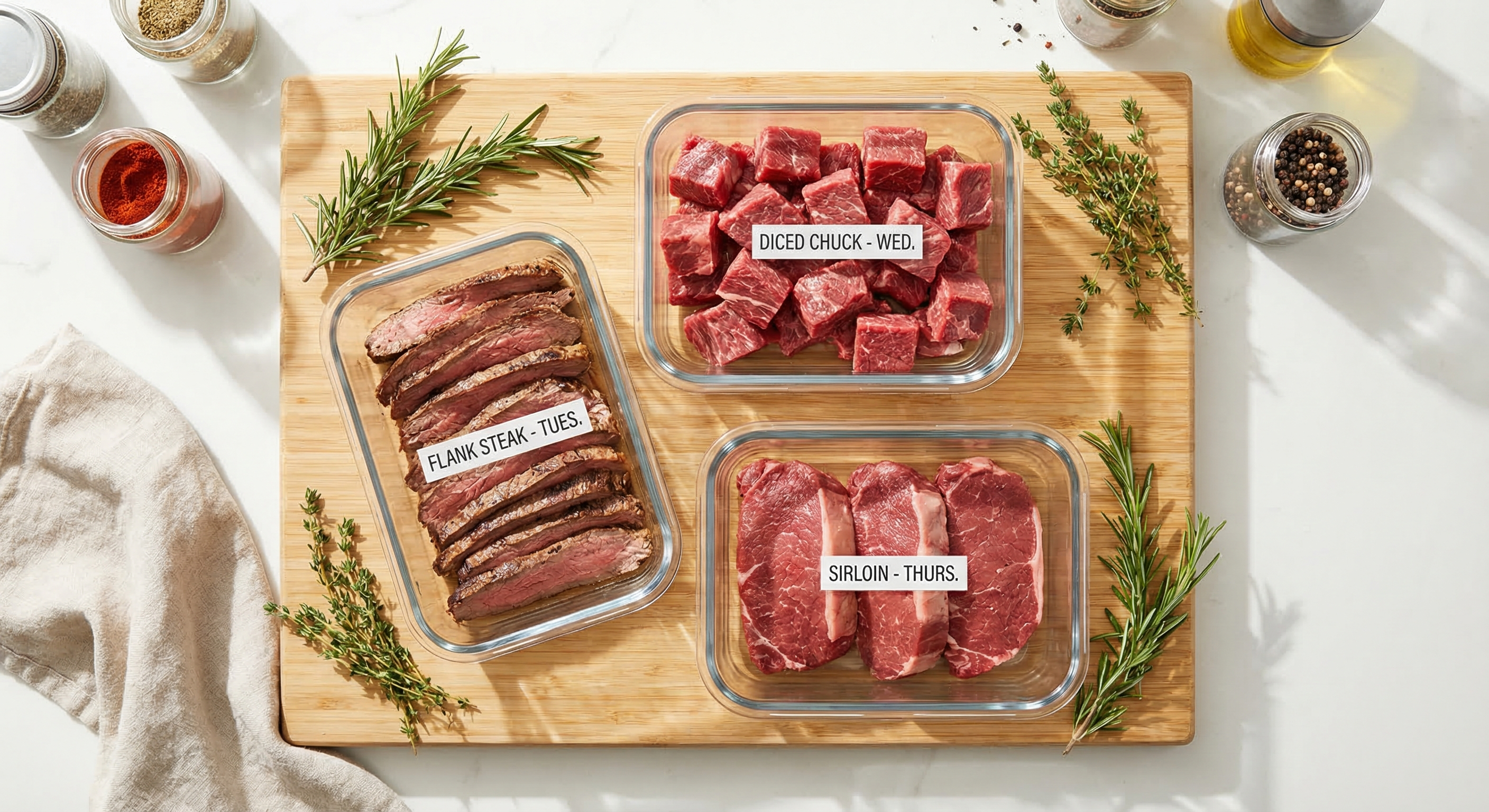
If there's one cut that was born for meal prep, it's chuck roast. This heavily worked shoulder muscle is loaded with collagen and intramuscular fat, which means it transforms into fall-apart tender beef when braised and actually improves after a night in the fridge.
A single 3-4 pound chuck roast yields enough shredded or cubed beef for 8-10 meal prep portions. At $6-9 per pound, you're looking at roughly $3-4 per serving of protein — less than a fast food burger and infinitely better nutrition.
Why it's #1 for meal prep:
- High collagen content creates self-basting gelatin that prevents drying
- Braised flavor actually improves over 3-5 days
- Incredibly versatile — bowls, tacos, sandwiches, pasta, soups
- Budget-friendly at $6-9/lb
- One roast feeds you all week
- Available at every grocery store
Best prep method: Season generously, sear all sides in a Dutch oven, then braise at 300°F for 3-3.5 hours with beef broth, onions, garlic, and aromatics. Shred with two forks, portion into containers with braising liquid. The liquid is non-negotiable — it's what keeps everything moist through Friday.
Reheat tip: Add a splash of broth before microwaving. Cover the container. Two minutes at 70% power beats one minute at full blast — lower power reheats more evenly and prevents those dried-out edges.
Flank Steak: The Lean Protein Star
For the high-protein, lower-fat meal preppers, flank steak is the answer. This flat belly muscle has the beefy flavor of more expensive cuts, a firm but tender texture when sliced correctly, and enough leanness to fit macro-tracking goals without being so lean it dries out.
The key with flank steak meal prep is slicing. Always cut against the grain into thin strips (1/4 inch or less) immediately after cooking and before storing. Those short muscle fibers stay tender even after reheating, while thick slices cut with the grain turn chewy by day two.
Why it works:
- High protein-to-fat ratio appeals to fitness-focused preppers
- Bold beef flavor that doesn't disappear after reheating
- Cooks in under 10 minutes (fast Sunday prep)
- Sliced thin, it reheats quickly and evenly
- Works in stir fry bowls, fajitas, salads, grain bowls
- $10-14/lb — mid-range pricing
Best prep method: Marinate for 2-4 hours (soy sauce, lime, garlic, cumin), then grill or pan-sear over high heat to medium-rare (130°F internal). Rest 10 minutes, slice thin against the grain. Store slices in a single layer with a drizzle of the marinade or a squeeze of lime to prevent oxidation.
Bottom Round: The Budget Powerhouse
Bottom round is one of the most underrated meal prep cuts. It's lean, affordable ($5-7/lb), and when prepared correctly, delivers solid beefy flavor across five days of lunches. The trick is managing expectations — this isn't going to be fork-tender like chuck. But sliced thin after roasting, it makes outstanding sandwich meat, grain bowl protein, and stir fry strips.
Think of bottom round as your homemade deli roast beef. A whole bottom round roast cooked to medium-rare and refrigerated overnight actually slices better cold than warm. This is one of the few cuts where cold storage is part of the technique, not a compromise.
Why it works:
- Cheapest cut on this list ($5-7/lb)
- Large roasts (4-6 lbs) yield 12+ portions
- Slices beautifully when cold — perfect for sandwiches
- Very lean — excellent macros for calorie-conscious preppers
- Mild flavor takes on marinades and seasonings well
Best prep method: Rub with salt, pepper, garlic powder, and a touch of smoked paprika. Roast at 250°F until internal temp hits 130°F (about 2-2.5 hours for a 4-lb roast). Rest, cool completely, then refrigerate whole overnight. Slice paper-thin the next morning against the grain. Portion into containers dry or with a small container of au jus on the side.
Beef Shank: The Collagen Bomb
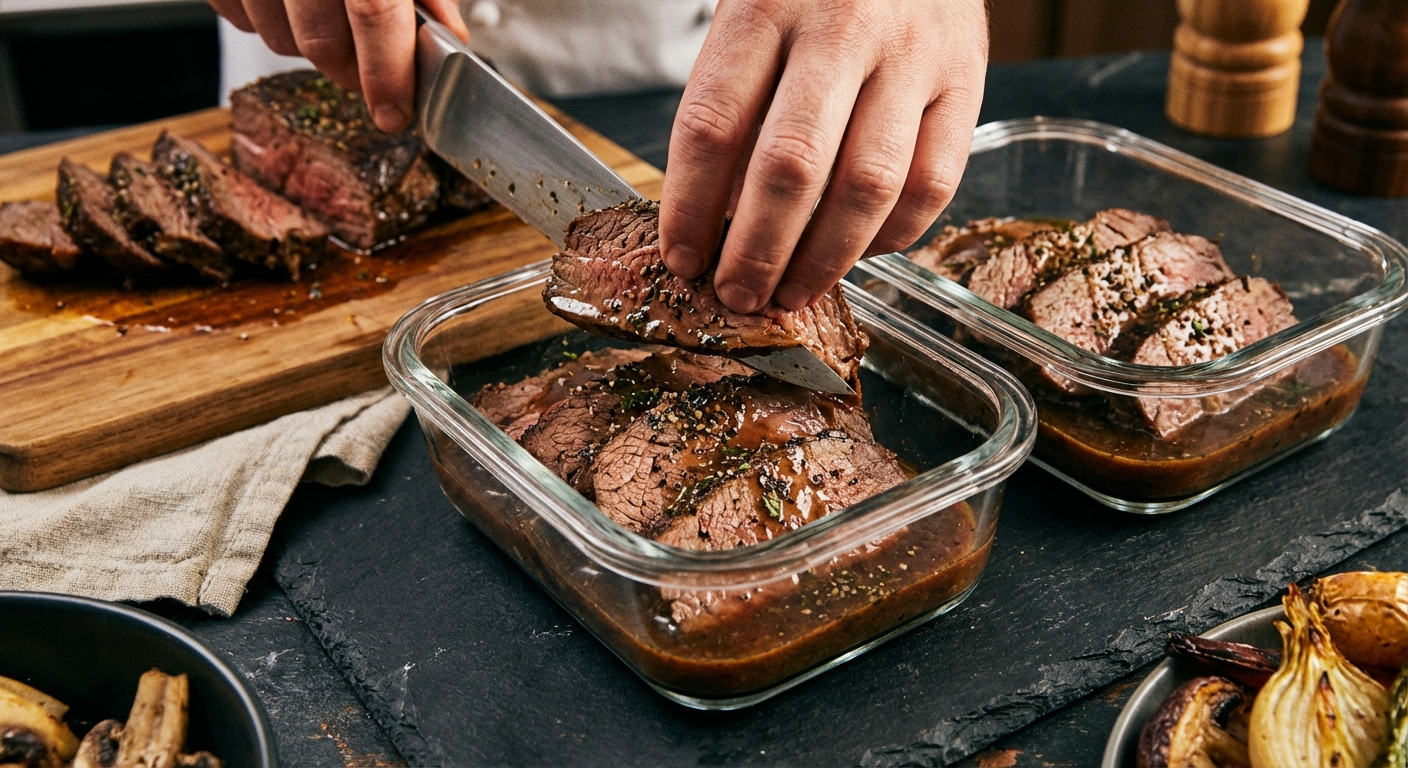
Beef shank is the most underappreciated meal prep cut in the entire case. Cross-cut shanks are loaded with collagen from the leg tendons, surrounded by a ring of marrow bone, and priced at $4-7/lb. When braised, they produce the richest, most gelatinous cooking liquid of any cut — and that liquid is meal prep gold.
The meat itself shreds into tender, deeply flavored strands. The marrow melts into the braising liquid, creating a bone-broth-level base that coats every fiber. Stored in this liquid, shank meat stays impossibly moist for a full week.
Why it works:
- Highest collagen content of any cut = maximum moisture retention
- Bone marrow enriches the braising liquid naturally
- Extremely affordable ($4-7/lb)
- Braised shank tastes better on days 2-4 than day 1
- Rich, beefy flavor that elevates simple rice and vegetable bowls
Best prep method: Sear cross-cut shanks (1.5-2 inches thick) in a heavy pot. Braise at 325°F for 2.5-3 hours with mirepoix, tomato paste, red wine, and beef stock. The meat should pull cleanly from the bone. Shred, discard bones, and portion meat with generous amounts of strained braising liquid.
Sirloin Tip: The Versatile Middle Ground
Sirloin tip sits in the sweet spot between expensive steaks and tough braising cuts. At $7-10/lb, it's affordable enough for bulk buying but tender enough to cook with dry heat methods that are faster than braising. It's the cut for preppers who want the speed of steak with the value of roast.
A sirloin tip roast works two ways for meal prep. Roast it whole and slice for sandwiches and grain bowls, or cube it raw and cook portions throughout the week in quick stir fries and fajitas. That flexibility is why it earns a spot on this list.
Why it works:
- Tender enough for quick-cook methods, affordable enough for bulk
- Works roasted whole OR cubed for quick weeknight cooking
- Good lean-to-fat ratio — satisfying without being heavy
- Mild flavor pairs with any cuisine (Asian bowls, Mexican, Mediterranean)
- Widely available at $7-10/lb
Best prep method: For roasting: sear, then cook at 275°F to 130°F internal. Cool, slice thin. For pre-cut cubes: portion into zip-lock bags with different marinades (teriyaki, fajita, Italian) and freeze. Pull one bag each morning — thaw in fridge, cook in 8 minutes at dinner.
Short Ribs: The Premium Pick
If you're willing to spend more for the best possible meal prep experience, bone-in short ribs are the answer. They combine the collagen richness of shank with the marbling of a ribeye. Braised short ribs are what restaurants charge $38 a plate for — and they're arguably even better reheated the next day.
Short ribs are the splurge pick at $8-14/lb, but the yield of tender, richly marbled meat per pound is impressive because the bones add flavor without adding to your per-serving cost. One batch of braised short ribs becomes the highlight of your entire meal prep week.
Why it works:
- Exceptional marbling + collagen = the most flavorful braised beef
- Restaurant-quality results with minimal effort
- Gelatin-rich braising liquid is incredible over rice or polenta
- Deeply satisfying — one portion feels like a real meal, not "prep food"
- Reheats beautifully for 5+ days
Best prep method: Season generously, sear hard on all sides. Braise at 300°F for 3-3.5 hours with red wine, stock, and aromatics (thyme, bay leaf, whole garlic). Meat should slide off bones. Remove bones, shred or portion meat into containers with reduced braising liquid.
Eye of Round: The Deli Counter at Home
If your meal prep revolves around sandwiches, eye of round is your cut. This ultra-lean, torpedo-shaped roast from the rear leg has the tightest grain structure of any beef cut, which means it slices into paper-thin, uniform rounds that look like they came from behind a deli counter.
Eye of round is the leanest cut on the animal, which normally would disqualify it for meal prep (lean = dry when reheated). But the sandwich application changes the equation — you're eating it cold or barely warmed, layered with condiments and toppings that add back the moisture lean meat lacks.
Why it works:
- Slices into perfect, uniform deli-style rounds
- Extremely lean — ideal for calorie-controlled meal prep
- Very affordable ($5-8/lb)
- Best eaten cold or room temperature — no reheating needed
- One 3-lb roast yields a week of sandwich protein
Best prep method: Salt heavily 24 hours ahead (dry brine). Roast at 225°F to exactly 125°F internal — do not overcook this cut. Rest, refrigerate whole overnight. Slice paper-thin against the grain with the sharpest knife you own (or ask your butcher to slice it on the deli slicer). Store slices layered with parchment paper.
Cuts to Avoid for Meal Prep
Knowing what NOT to buy saves you money and disappointment. These cuts are fantastic fresh but terrible after three days in a container:
- Tenderloin/Filet Mignon: Extremely lean with zero collagen. Dries out catastrophically when reheated. $30+/lb wasted on meal prep is painful.
- Thick-cut ribeye steaks: The marbling that makes ribeye incredible fresh turns waxy and greasy when cold. Warmed-over flavor hits hard. Save ribeye for fresh cooking.
- New York Strip: The fat cap renders beautifully fresh but congeals into an unappetizing white strip in the fridge. The lean meat portion dries out.
- Pre-ground beef (plain): Ground beef crumbles stored without sauce dry out quickly and develop strong warmed-over flavor. If you must use ground beef, store it in a sauce (bolognese, chili, taco meat with salsa).
Meal Prep Storage and Reheating Tips
Even the best cuts need proper handling to last the week:
Storage rules:
- Glass containers over plastic — they don't absorb odors and reheat more evenly
- Always store braised meats submerged in or topped with cooking liquid
- Cool beef to room temperature before refrigerating (within 2 hours of cooking)
- Consume within 5 days for optimal safety and quality
- If prepping for 6-7 days, freeze the last two portions and thaw as needed
Reheating rules:
- Add a splash of broth or water before microwaving — steam is your friend
- Use 70% microwave power for more even heating
- Cover containers to trap steam and prevent drying
- For sliced beef, reheat in a covered skillet with a tablespoon of broth — 2 minutes max
- Braised meats can go straight from fridge to a pot on the stove — reheat gently in their liquid
Building Your Meal Prep Week
Here's a practical approach that uses two cuts to cover an entire week:
Sunday cook session (2-3 hours):
- Braise one 3-4 lb chuck roast — yields ~8 portions of shredded beef + liquid
- Grill or sear one 1.5-2 lb flank steak — yields ~4-5 portions of sliced beef
Monday-Wednesday: Chuck roast bowls over rice with roasted vegetables. The braised beef gets better each day.
Thursday-Friday: Flank steak stir fry bowls or fajita plates. The pre-sliced beef reheats in 90 seconds.
Total cost: roughly $35-45 for 12-13 portions of protein. That's $3-4 per meal for beef that would cost you $15-20 at a restaurant. The math alone should convince you.
Frequently Asked Questions
Can I freeze meal-prepped beef?
Absolutely. Braised cuts (chuck, shank, short ribs) freeze exceptionally well for up to 3 months. Store them in their braising liquid in freezer-safe containers. Thaw overnight in the fridge. Sliced cuts like flank steak and bottom round also freeze well — lay slices flat in a zip-lock bag with parchment between layers.
How long does meal-prepped beef last in the fridge?
Safely 4-5 days when stored properly (below 40°F, in sealed containers). Braised meats with lots of gelatin tend to hold quality longer than dry-cooked cuts. If you're prepping for a full 7 days, freeze portions for days 6-7.
What's the best way to prevent warmed-over flavor?
Three strategies: choose high-collagen cuts that resist WOF naturally, store meat in sauce or liquid, and add acid (a squeeze of lemon, a splash of vinegar) when reheating. Acid counteracts the stale oxidized flavors that cause WOF.
Is beef meal prep safe for 5 days?
Yes, as long as you follow basic food safety: cool cooked beef within 2 hours, store below 40°F, use clean containers, and reheat to 165°F. The USDA confirms cooked beef is safe for 3-4 days; with proper handling, 5 days is standard practice for meal preppers.
What's the cheapest way to meal prep with beef?
Buy chuck roast or beef shank on sale — both frequently go for $5-6/lb. One 4-lb chuck roast at $6/lb costs $24 and yields 10 portions: $2.40 per serving of high-quality protein. Buy whole primals from warehouse stores for even better per-pound prices.
Can I meal prep steak?
You can, but with caveats. Cook steak to medium-rare (130°F), slice thin against the grain immediately, and store flat. Expect quality to drop noticeably by day 3-4. Flank steak and sirloin tip handle this better than premium cuts like ribeye or filet. For best results, use sliced steak in composed dishes (bowls, salads) rather than eating it plain.
More Expert Guides
What Is Chateaubriand? (Cut, Cooking, & Best Sources)
Chateaubriand is a thick-cut roast from the center of the beef tenderloin, traditionally served for two. Learn what makes this classic French cut special and how to cook it.
14 min readWhat Is Round Steak? The Complete Guide to Beef's Most Versatile Budget Cut
Round steak comes from the rear leg of the cow — it's lean, affordable, and misunderstood. A master butcher breaks down every sub-cut, cooking method, and technique to turn this budget workhorse into genuinely delicious meals.
14 min readWhat Is Eye of Round? The Complete Butcher's Guide to This Lean Cut
Eye of round is one of the leanest, most affordable cuts in the entire beef case — and one of the most misunderstood. A butcher explains how to turn this budget-friendly roast into something genuinely delicious.