What Is Flat Iron Steak? The Second Most Tender Cut Explained
For decades, one of the best steaks on the entire animal was being ground into hamburger. Not because it tasted bad — it's actually the second most tender cut of beef after filet mignon — but because nobody had figured out how to properly butcher it. That changed in 2002, and the result was the flat iron steak: a cut so good it upended everything we thought we knew about value in the meat case.
If you've seen flat iron steak at your butcher counter or on a restaurant menu and wondered what it actually is, you're not alone. This is a relatively new retail cut with an extraordinary story — one that starts with a university research project and ends with a steak that rivals cuts costing three times as much.
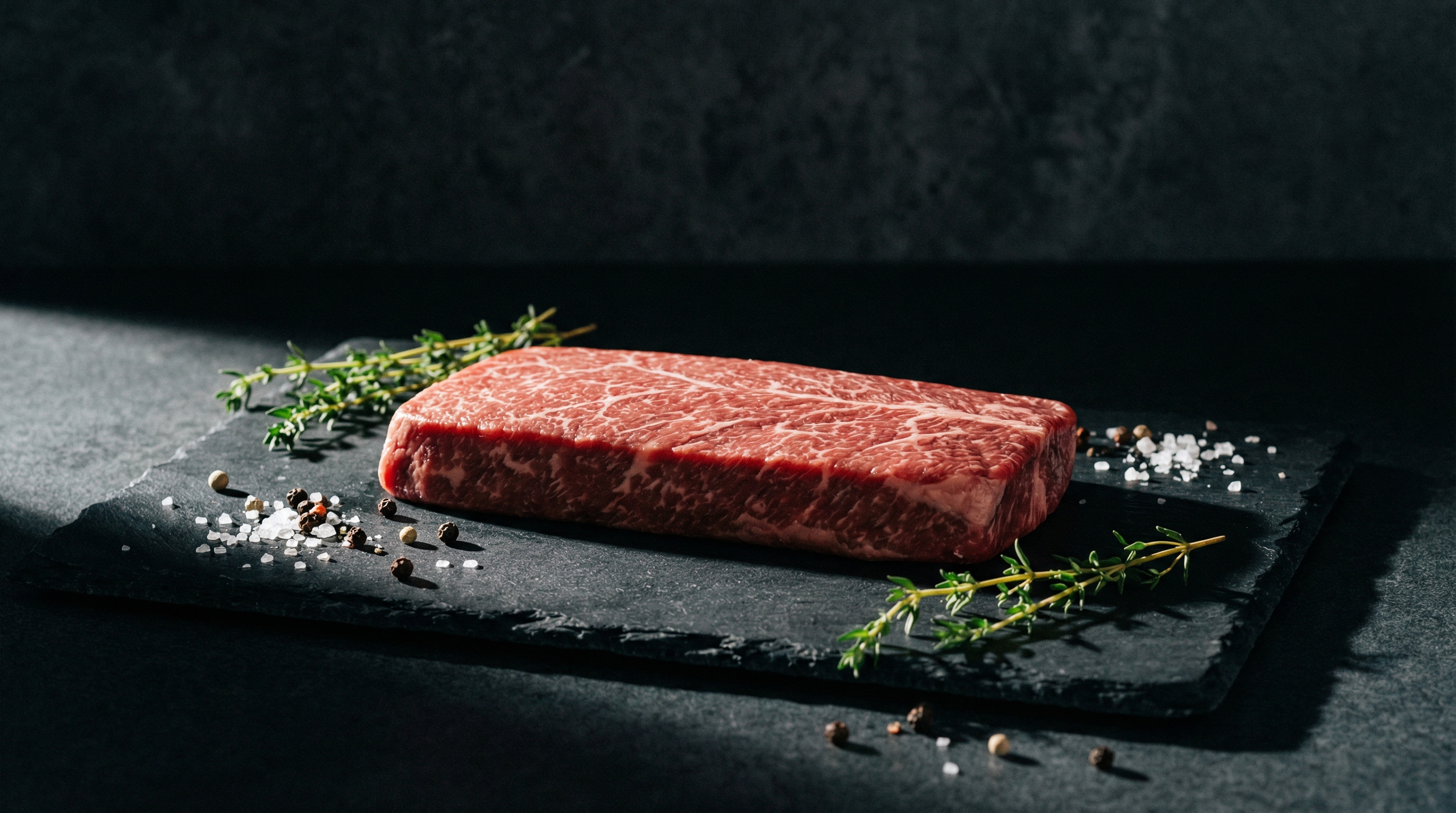
What Exactly Is Flat Iron Steak?
Flat iron steak comes from the chuck primal — the shoulder section of the cow. Specifically, it's cut from the top blade roast (infraspinatus muscle), which sits on the shoulder blade bone. The NAMP designation is #1114D, and in some markets you'll see it labeled as "top blade steak" or "butler's steak" in the UK.
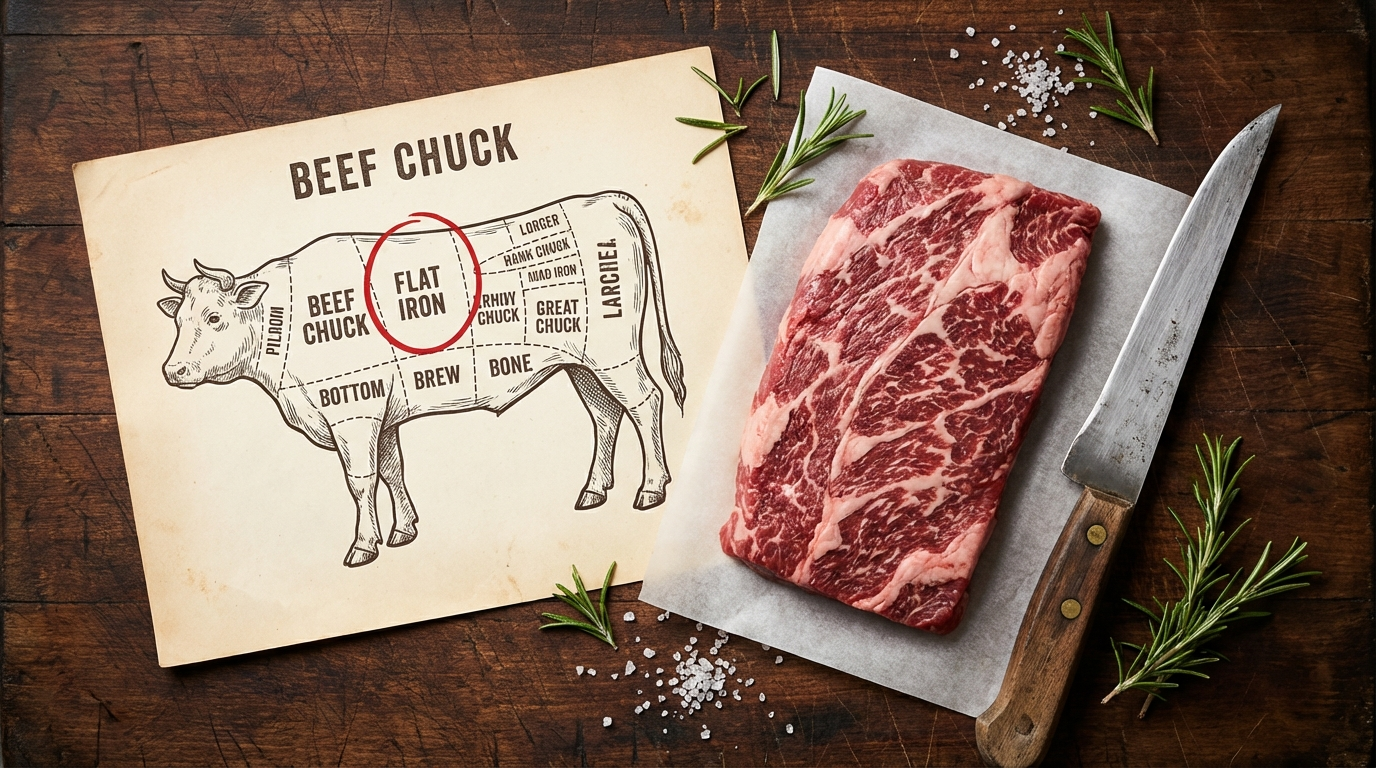
A whole flat iron typically weighs between 8 ounces and 1.5 pounds. It's remarkably uniform in shape — a flat rectangle roughly 8 to 10 inches long and about an inch thick. That consistent thickness is a huge advantage when cooking, because the entire steak reaches your target doneness at the same time. No thin edges overcooking while the center catches up.
The grain runs lengthwise through the steak, and the marbling is notably generous for a chuck cut. In fact, the infraspinatus muscle has been measured to contain more intramuscular fat than many loin cuts, which is a major reason it's so tender and flavorful.
The Discovery That Changed Butchery
Here's the remarkable part: flat iron steak didn't exist as a retail cut until 2002. Before that, the top blade was sold as a roast or — more commonly — ground into hamburger because of a tough connective tissue seam that runs through its center.
Researchers at the University of Nebraska and University of Florida conducted a landmark study funded by the National Cattlemen's Beef Association. Their goal was simple: find undervalued muscles in the beef carcass that could be fabricated into premium steaks. They tested 5,600 muscles for tenderness using Warner-Bratzler shear force measurements.
The top blade muscle ranked second in tenderness across the entire carcass — behind only the psoas major (tenderloin/filet mignon). The problem was that tough central connective tissue membrane. It's made of dense elastin and collagen that doesn't break down during normal cooking, so any steak cut straight across the muscle would have a chewy line running through the middle.
The solution was elegant: instead of cutting across the top blade (which creates top blade steaks with the membrane), they split the muscle horizontally along the membrane, peeling it away and yielding two flat, boneless steaks from each side. The top half became the flat iron steak. The bottom half is sometimes sold as a "petite tender" or simply included in the flat iron yield.
This single innovation transformed a $2-per-pound grind cut into a $10-per-pound steak — and launched the "muscle profiling" revolution that gave us other modern cuts like the hanger steak, Denver steak, and teres major.
Why Flat Iron Is So Tender
Tenderness in beef comes down to three factors: the amount of connective tissue, the muscle's workload during the animal's life, and the degree of intramuscular fat (marbling). Flat iron steak scores well on all three.
The infraspinatus muscle sits on top of the shoulder blade, essentially acting as a cushion. While the shoulder does plenty of work — the chuck is technically a heavily exercised area — the infraspinatus itself is positioned in a way that minimizes the stress it takes. It's a stabilizing muscle, not a primary mover. Think of it like the difference between your deltoid (which lifts your arm) and the muscle that sits on top of your shoulder blade (which keeps things in place). The stabilizer stays tender.
The marbling in flat iron steak is genuinely impressive. In USDA grading terms, the infraspinatus consistently marbles at or above the level of many ribeye and strip loin muscles. This intramuscular fat melts during cooking, lubricating the muscle fibers and delivering that buttery mouthfeel people associate with premium steaks.
Studies using the Warner-Bratzler shear test — the industry standard for measuring tenderness — consistently show flat iron ranking within 10% of filet mignon. That's remarkable for a cut that comes from the chuck, an area most people associate with pot roasts and stew meat.
How to Cook Flat Iron Steak
Flat iron steak is one of the most forgiving cuts to cook, but there are techniques that bring out its best qualities. The key principles: high heat, don't overcook, and always slice against the grain.
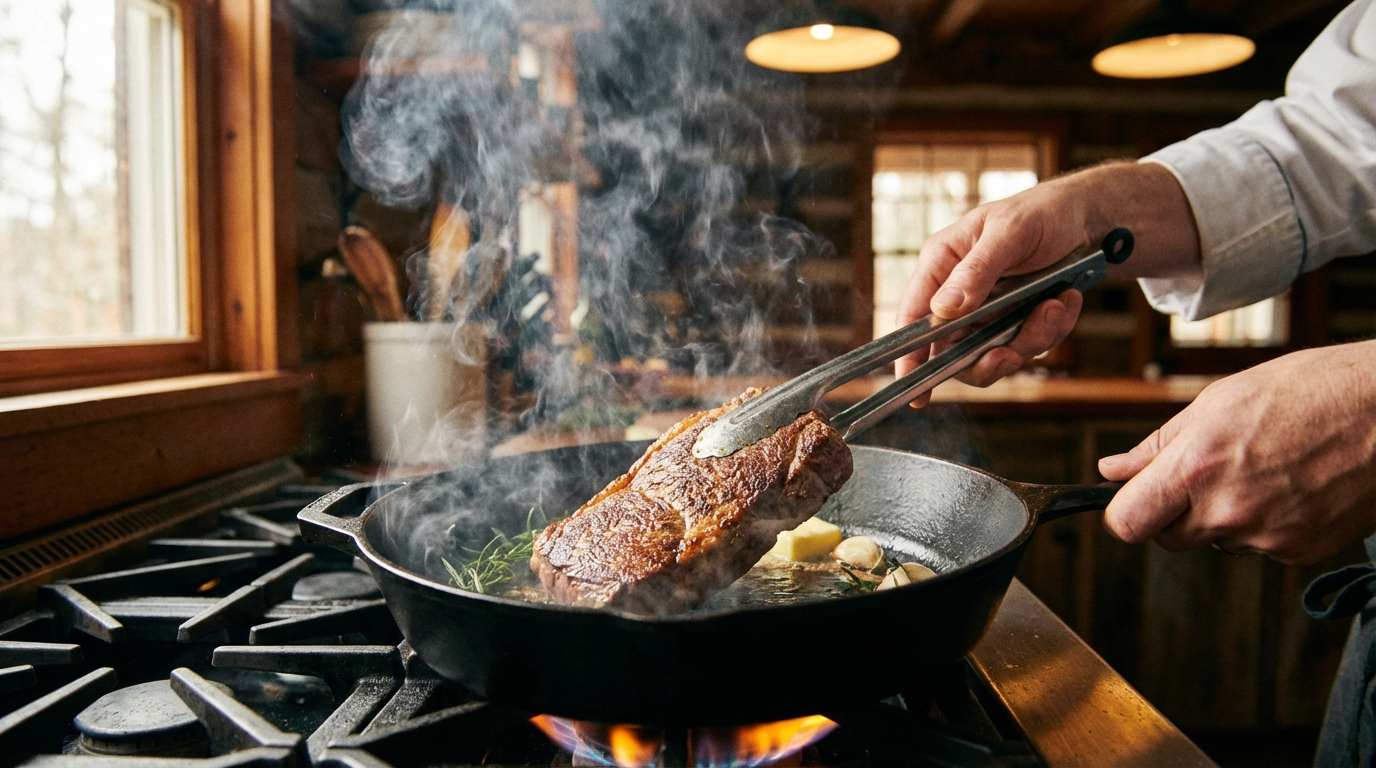
Cast Iron Sear (Best Method)
This is the gold standard for flat iron. The uniform thickness of this cut means a cast iron skillet delivers perfectly even results every time.
- Temper the steak: Pull it from the fridge 30–45 minutes before cooking. Season generously with kosher salt and freshly ground black pepper on both sides.
- Preheat the skillet: Get your cast iron smoking hot over high heat for at least 3 minutes. Add a high-smoke-point oil (avocado or refined canola) — it should shimmer immediately.
- Sear: Lay the steak away from you into the pan. Don't touch it for 3–4 minutes until a deep brown crust forms. Flip once and cook another 3–4 minutes for medium-rare (130°F internal).
- Butter baste (optional): In the last minute, add 2 tablespoons of butter, crushed garlic, and fresh thyme. Tilt the pan and spoon the foaming butter over the steak repeatedly.
- Rest: Transfer to a cutting board and rest for 5 minutes. The internal temperature will rise another 3–5°F from carryover cooking.
Grilling
Flat iron takes to the grill beautifully. Set up a two-zone fire — hot coals on one side, empty on the other. Sear over direct heat for 2–3 minutes per side, then move to indirect heat until you hit 130°F internal. Total cook time is usually 8–10 minutes.
The consistent thickness of flat iron means you won't get the common problem of thin edges charring while the center stays raw. It's one of the most grill-friendly steaks you can buy.
Sous Vide
Set your immersion circulator to 131°F and cook the sealed steak for 2–4 hours. The extended time at temperature breaks down what little connective tissue remains, making an already tender cut almost impossibly buttery. Finish with a 60-second sear per side in a blazing hot pan.
Temperature Guide
Flat iron steak is best served medium-rare to medium. The generous marbling keeps it moist even at slightly higher temperatures, but pushing past medium starts to render too much fat and tighten the muscle fibers.
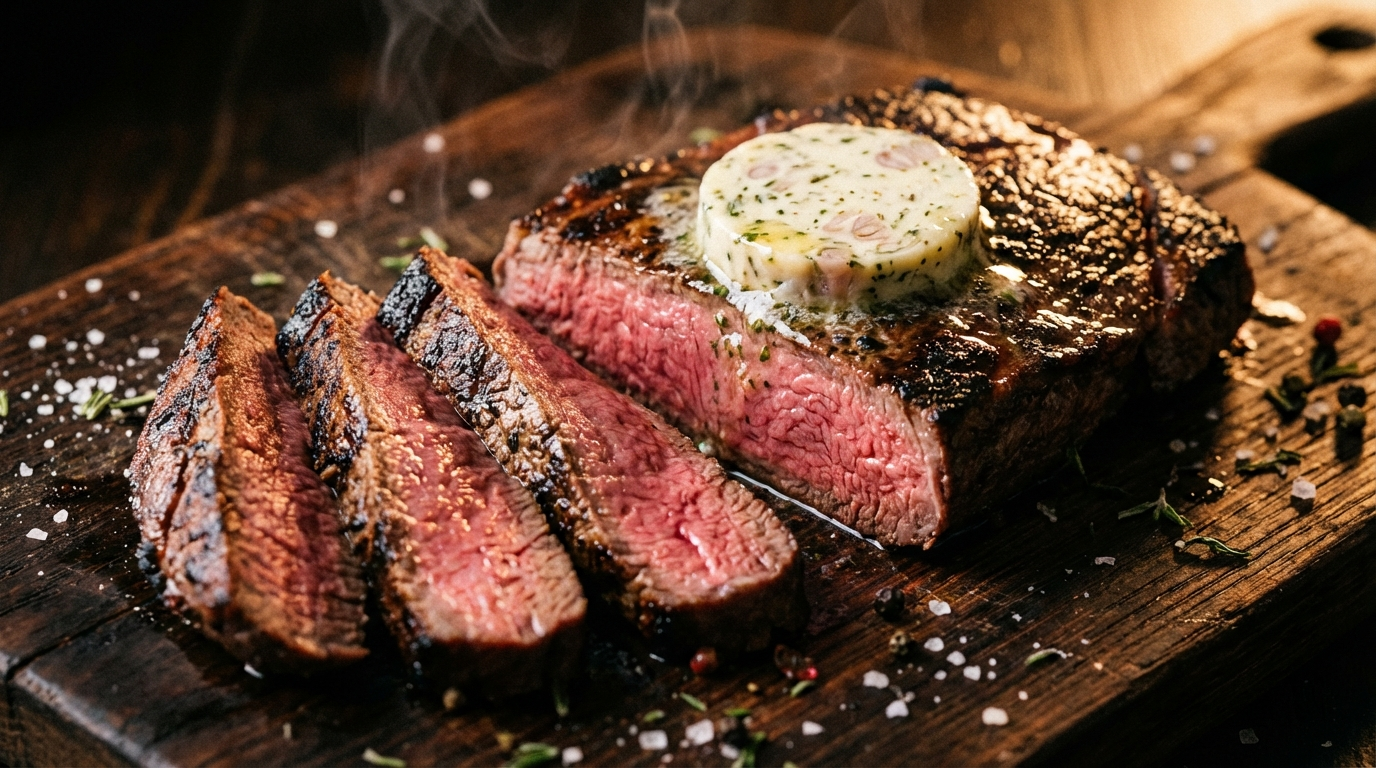
- Rare (120–125°F): Cool red center. Tender but the fat hasn't fully rendered — you miss some flavor.
- Medium-rare (130–135°F): Warm pink center. The sweet spot. Fat begins melting, maximum juiciness and beefy flavor.
- Medium (140–145°F): Pink center starting to fade. Still good — the marbling keeps it moist. Many steak lovers prefer flat iron at medium.
- Medium-well and above (150°F+): Not recommended. The steak tightens significantly and loses the buttery quality that makes it special.
Flat Iron vs Other Steaks
Understanding how flat iron compares to other popular cuts helps you know when to reach for it — and when something else is a better choice.
Flat Iron vs Filet Mignon
Both are extraordinarily tender, but they're fundamentally different eating experiences. Filet mignon is leaner with a delicate, mild flavor. Flat iron has noticeably more marbling and a stronger, more robust beefy taste. If you want tender beef with big flavor, flat iron wins. If you want the most refined, melt-in-your-mouth texture for a special occasion, filet mignon is the classic choice. The price difference is dramatic: flat iron runs $10–15/lb while filet mignon commands $30–50/lb.
Flat Iron vs Ribeye
Ribeye has more total fat, including larger pockets of intramuscular fat and the spinalis cap. Flat iron has finer, more evenly distributed marbling. The ribeye delivers a richer, fattier bite while flat iron is cleaner-tasting with comparable tenderness. Ribeye is typically $18–25/lb — still significantly more than flat iron.
Flat Iron vs Flank Steak
Flank steak is a lean, working muscle from the belly — it's flavorful but chewier and needs careful slicing against the grain. Flat iron is dramatically more tender and better marbled. Both work well in marinades and sliced preparations, but flat iron is the superior stand-alone steak.
Where to Buy Flat Iron Steak
Flat iron steak has become widely available over the past decade, but quality varies significantly depending on where you shop.
Butcher shops are your best bet. A good butcher fabricates flat iron from the whole top blade in-house, ensuring the tough membrane is completely removed. Ask them to cut it to your preferred thickness — 1 inch is ideal for most cooking methods.
Grocery stores increasingly stock flat iron in the beef case, often pre-packaged. Quality ranges from Select to Choice grade. Look for visible marbling throughout the steak and a bright cherry-red color. Avoid any with a thick line of gristle visible through the center — that means the membrane wasn't properly removed.
Online retailers like specialty beef purveyors offer USDA Prime and even Wagyu-cross flat irons. These premium versions showcase what this cut can really do when the marbling is exceptional.
At $10–15 per pound for USDA Choice, flat iron steak is one of the best values in the entire meat case. You're getting near-filet-mignon tenderness at a fraction of the price.
Common Mistakes to Avoid
Flat iron is forgiving, but a few mistakes will ruin even the best cut:
- Skipping the membrane check: If your flat iron has a thick band of gristle through the center, it wasn't butchered properly. Either remove it yourself by splitting the steak along the membrane, or return it to the butcher.
- Overcooking: Flat iron goes from perfect to tough quickly once you pass medium. Use an instant-read thermometer — don't guess.
- Slicing with the grain: The grain in flat iron runs lengthwise. Always slice across (perpendicular to) the grain for maximum tenderness. Each bite should show short, broken fibers, not long strings.
- Crowding the pan: If you're cooking multiple flat irons, leave at least an inch between them. Crowding drops the pan temperature and steams the steak instead of searing it.
- Skipping the rest: Five minutes of resting after cooking lets the juices redistribute. Cut into it immediately and you'll lose a tablespoon of liquid onto the cutting board.
Flat Iron Steak Recipes and Ideas
Beyond the classic sear-and-serve, flat iron steak excels in several preparations:
- Steak fajitas: Marinate in lime juice, cumin, garlic, and chili powder for 2 hours. Grill hot and fast, then slice thin against the grain. The marbling keeps it juicy even when sliced thin.
- Asian stir-fry: Freeze the steak for 20 minutes to firm it up, then slice paper-thin against the grain. Flash-cook in a screaming hot wok with soy sauce, ginger, and sesame oil.
- Steak salad: Cook to medium-rare, rest, slice thin. Fan over mixed greens with blue cheese, cherry tomatoes, and a red wine vinaigrette.
- Chimichurri flat iron: Grill the steak simply with salt and pepper, then top with fresh chimichurri (parsley, oregano, garlic, red wine vinegar, olive oil). The herbaceous sauce complements the beefy flavor perfectly.
- Reverse sear: Start in a 250°F oven until the internal temperature hits 120°F, then finish in a blazing hot cast iron for 60 seconds per side. This delivers edge-to-edge medium-rare with a perfect crust.
Frequently Asked Questions
What is flat iron steak?
Flat iron steak is a cut from the top blade muscle (infraspinatus) in the beef chuck primal. It's the second most tender cut of beef after filet mignon, with excellent marbling and a uniform rectangular shape that cooks evenly.
Why is it called flat iron steak?
The name comes from its resemblance to an old-fashioned metal flat iron used for pressing clothes. The steak is uniformly flat and rectangular, just like the household tool.
Is flat iron steak a good cut?
Flat iron is an excellent cut — it's the second most tender beef muscle, has generous marbling for rich flavor, and costs significantly less than comparable premium steaks like filet mignon or ribeye.
How do you cook flat iron steak?
The best methods are cast iron searing (3-4 minutes per side over high heat), grilling over direct heat, or sous vide at 131°F for 2-4 hours followed by a quick sear. Cook to medium-rare (130-135°F) for best results.
Is flat iron steak better than ribeye?
They're different experiences. Flat iron is nearly as tender with finer marbling and a cleaner beef flavor. Ribeye has more total fat and a richer, fattier bite. Flat iron costs about half the price of ribeye, making it an exceptional value.
More Expert Guides
What Is Chateaubriand? (Cut, Cooking, & Best Sources)
Chateaubriand is a thick-cut roast from the center of the beef tenderloin, traditionally served for two. Learn what makes this classic French cut special and how to cook it.
14 min readWhat Is Round Steak? The Complete Guide to Beef's Most Versatile Budget Cut
Round steak comes from the rear leg of the cow — it's lean, affordable, and misunderstood. A master butcher breaks down every sub-cut, cooking method, and technique to turn this budget workhorse into genuinely delicious meals.
14 min readWhat Is Eye of Round? The Complete Butcher's Guide to This Lean Cut
Eye of round is one of the leanest, most affordable cuts in the entire beef case — and one of the most misunderstood. A butcher explains how to turn this budget-friendly roast into something genuinely delicious.