The Best Cheap Beef Cuts: A Butcher's Guide to Budget Steaks
Let me tell you something I learned in my grandfather's butcher shop in Brooklyn when I was twelve years old: the most expensive cut is not always the best cut. He'd stand there behind the counter, watching customers pass over the chuck and the shanks to grab the tenderloin, and he'd shake his head. "They're paying for convenience, not flavor," he'd say. "The cuts that take work are the cuts that reward you."
Four decades later, I stand by that philosophy. Sure, a Prime ribeye is magnificent — I'm not going to lie to you. But some of the most flavorful, satisfying beef I've ever eaten came from cuts that most people walk right past because they don't know what to do with them. These are the cuts that built working-class cooking traditions around the world — pot roast in America, barbacoa in Mexico, osso buco in Italy, Vietnamese pho.
So let me walk you through the cheap beef cuts that deserve your attention, your time, and your money. When you know how to handle them, these cuts deliver better eating than a mediocre steak at three times the price.
Why Cheap Cuts Are Actually Better
Here's the truth most people don't understand: the harder a muscle works during the animal's life, the more flavor it develops. The chuck (shoulder), the shank (leg), the neck — these muscles are in constant motion. They build connective tissue, they build collagen, and they build taste.
The trade-off? They're tough. You can't just throw a chuck roast on a hot grill for five minutes like you would a strip steak. But when you apply the right cooking method — low heat, long time, moisture — that collagen converts to gelatin. The connective tissue melts. And what you're left with is beef so tender it falls apart at the touch of a fork, surrounded by a sauce or broth that's rich with body and depth.
The other advantage of cheap cuts: they're more forgiving. A $40 ribeye cooked ten degrees past your target is an expensive mistake. A $6/lb chuck roast braised for an extra hour? Still delicious.
The 10 Best Cheap Beef Cuts (And How to Cook Them)
1. Chuck Roast — The Pot Roast King
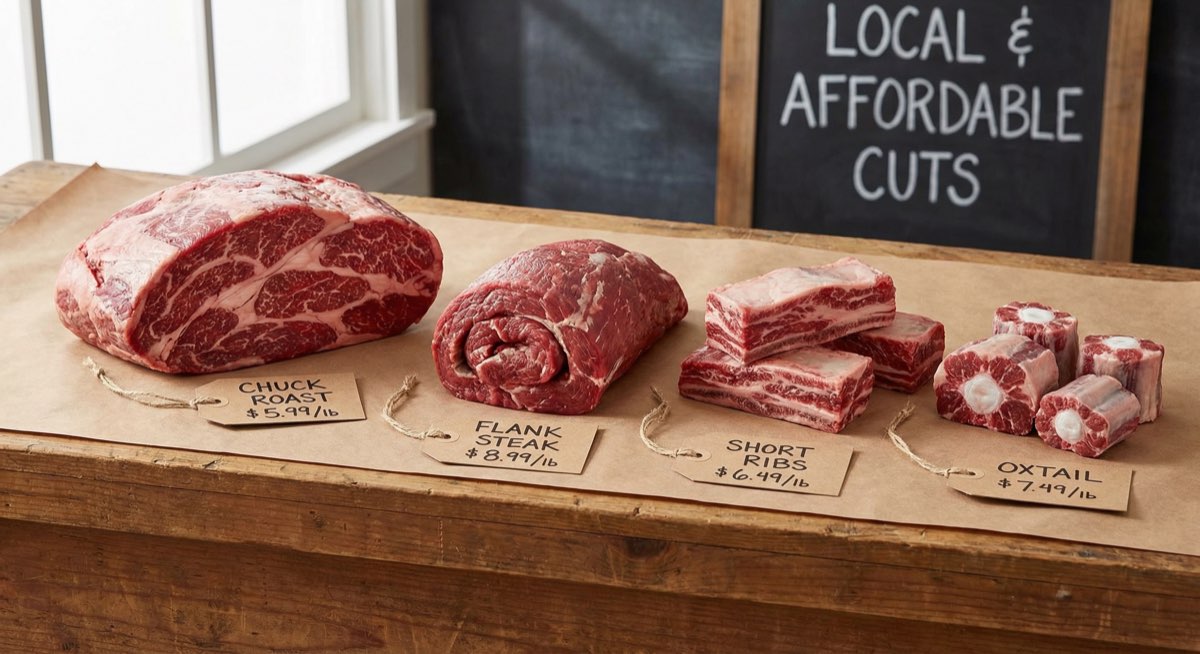
The chuck (shoulder) is the single most undervalued section of the steer. A whole chuck roast — whether it's a seven-bone roast, a shoulder roast, or a chuck eye roast — runs $5-$8/lb for USDA Choice. For that price, you're getting a cut with significant marbling, deep beefy flavor, and the kind of texture that becomes melt-in-your-mouth tender after a few hours of braising.
Why it's cheap: The chuck contains multiple muscles with different grain directions and significant connective tissue. It's not a "clean" cut like a tenderloin, so it requires skill to handle properly.
Why it's great: More flavor than any steak in the loin. When braised properly, it produces its own rich sauce.
How to cook it: Braise it. Brown the roast on all sides in a heavy pot, add aromatics (onions, carrots, celery), add liquid (beef stock, wine, beer), cover tightly, and cook at 300-325°F for 3-4 hours. The internal temp should hit 200-205°F — at that point, the collagen has converted and the meat will shred easily.
Classic dishes: Pot roast, Italian beef, Mississippi pot roast, beef stew.
My take: If you're cooking for a family on a budget, a chuck roast is your best friend. One $30 roast feeds six people with leftovers.
2. Flat Iron Steak — The Hidden Gem
The flat iron comes from the top blade muscle in the chuck. Researchers at the University of Nebraska identified it as the second most tender muscle in the entire carcass — yet it sells for $8-$12/lb (half the price of a strip steak). The catch? There's a tough piece of connective tissue running through the center of the whole top blade. When a butcher removes that sinew and separates the muscle, you get two flat iron steaks.
Why it's cheap: It requires butchery skill. Most retail operations don't want to deal with seam cutting, so the whole chuck gets ground or sold as roasts.
Why it's great: Excellent marbling, butter-tender texture, robust beef flavor. This is a legitimate steak-night option.
How to cook it: Treat it like a strip steak. Season with salt and pepper, sear in a hot cast-iron skillet or on a grill, pull it at 130-135°F internal (medium-rare). Let it rest five minutes, slice against the grain if desired.
My take: If I could only buy one "cheap" cut for the rest of my life, this would be it. It's that good.
3. Flank Steak — The Fajita Champion
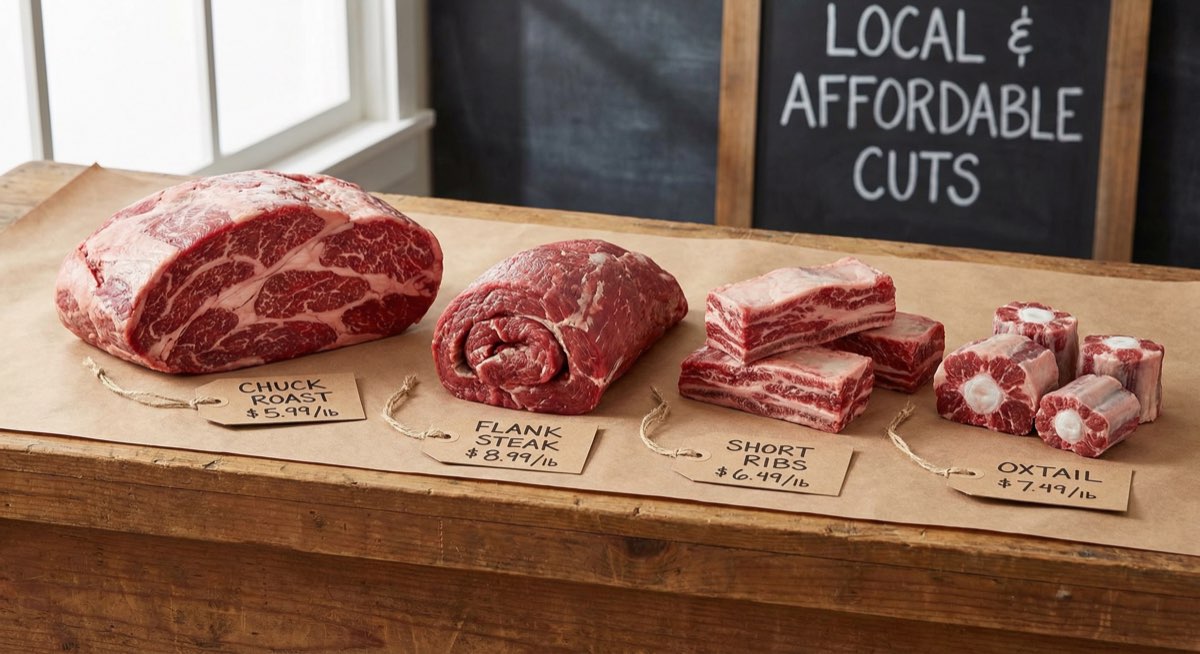
Flank steak is one of the few budget cuts that's actually gotten more expensive over the past twenty years thanks to the fajita boom. It used to be a throwaway cut at $3-$4/lb. Now it's $10-$14/lb for Choice. Still, compared to premium steaks, it's a value — and the flavor-per-dollar ratio is outstanding.
Why it's cheap (relatively): It's a single, flat abdominal muscle with pronounced grain and no marbling. Visually, it doesn't scream "premium steak."
Why it's great: Intensely beefy flavor, lean enough to absorb marinades beautifully, versatile enough for a dozen different preparations.
How to cook it: Marinate it (citrus, soy, garlic, chili — the classics work), grill or sear it hot and fast to medium-rare (130-135°F max), and — this is non-negotiable — slice it thin against the grain. If you cut with the grain, you'll be chewing leather. Against the grain, it's tender and delicious.
Classic dishes: Fajitas, carne asada, London broil, stir-fry, stuffed and rolled (braciole).
My take: Flank is the weeknight warrior. One steak feeds 3-4 people when sliced properly.
4. Skirt Steak — The Taco Truck Secret
There are actually two skirt steaks: the outside skirt (from the plate, thicker and more flavorful) and the inside skirt (from the flank area, thinner and tougher). Most of what you'll find at retail is inside skirt at $10-$15/lb. The outside skirt, when you can find it, is worth every penny — but most of it gets exported or goes to restaurants.
Why it's cheap: Thin, irregularly shaped, requires trimming, and has a loose texture that doesn't photograph well in the meat case.
Why it's great: Unbelievable beefy flavor — more intense than flank — and a loose grain that soaks up marinades like a sponge. This is what the best taco trucks use.
How to cook it: Marinate briefly (skirt is thin and absorbs fast — 30 minutes is plenty), grill screaming hot for 2-3 minutes per side max, rest briefly, slice thin against the grain. Don't go past medium-rare or it toughens significantly.
Classic dishes: Tacos, fajitas, Philly cheesesteaks (the real ones), churrasco.
My take: If you can get outside skirt, buy it immediately. Inside skirt is still excellent — just don't overcook it.
5. Round Cuts (Top Round, Bottom Round, Eye of Round) — The Roast Beef Trio
The round (rear leg) is massive, lean, and economical at $5-$8/lb for Choice. It's not glamorous, but it has its place. Top round is the most tender of the three; bottom round is a solid braise; eye of round is best sliced paper-thin or turned into jerky.
Why it's cheap: These are locomotion muscles — they're lean, they work hard, and they can be tough if mishandled.
Why it's worth it: When cooked properly (low and slow to rare or medium-rare, sliced thin), top round makes excellent roast beef. It's what most delis use.
How to cook it: For roast beef, season a top round roast, roast at 250°F to an internal temp of 125-130°F (rare to medium-rare), rest it thoroughly, slice it as thin as humanly possible (invest in a good knife or use a deli slicer). For bottom round, braise it like a pot roast.
My take: Top round is underrated. Most people overcook it and then blame the cut. Respect the leanness and it delivers.
6. Short Ribs — The Braise Master's Dream
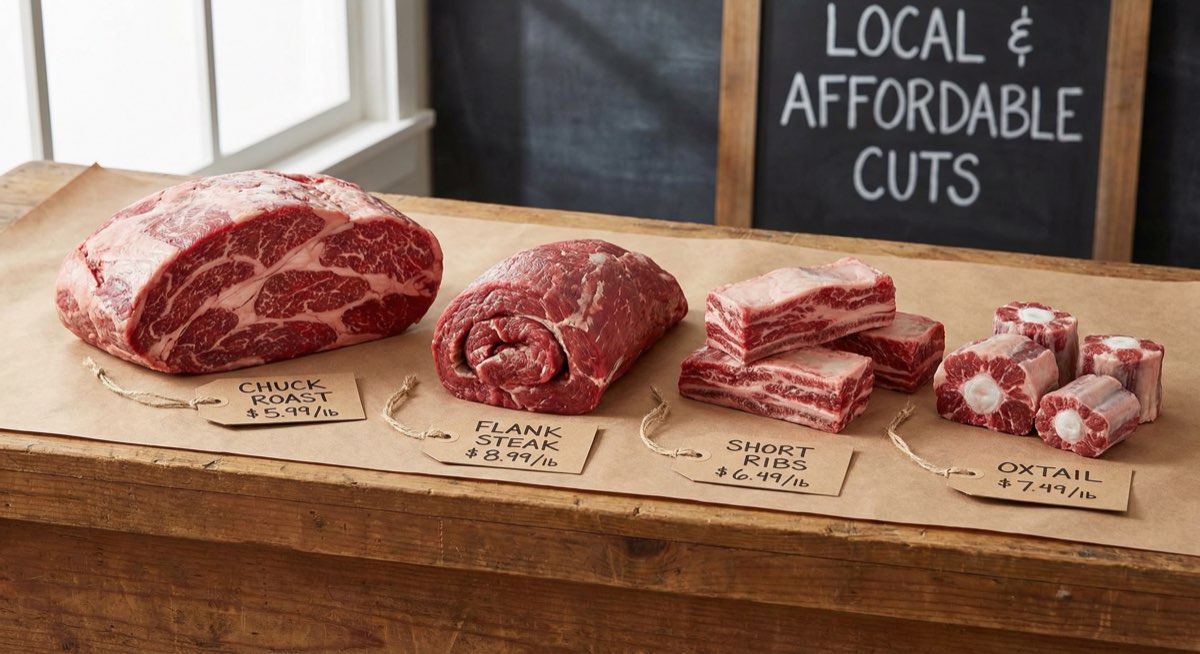
Short ribs have become trendy enough that they're not quite as "cheap" as they used to be, but at $8-$12/lb for Choice (bone-in), they're still a tremendous value compared to steaks. The meat-to-bone ratio is excellent, and the marbling in short ribs is some of the best in the carcass.
Why it's cheap (relatively): Bone-in cuts require more work to eat, and they don't fit the "steak on a plate" aesthetic.
Why it's great: Ridiculous marbling, fall-off-the-bone tender when braised, and the bones contribute body and richness to the braising liquid.
How to cook it: Brown them hard, braise them low (300°F) for 3-4 hours in wine, stock, or a combination. Korean-style (galbi) calls for thin-cut flanken ribs grilled quickly; that's a different animal but equally delicious.
Classic dishes: Braised short ribs, galbi (Korean BBQ), smoked plate ribs (Texas BBQ).
My take: If you want to impress dinner guests without breaking the bank, braised short ribs are your move.
7. Oxtail — The Soup King
Oxtail used to be a $2/lb throwaway. Now it's $6-$10/lb thanks to its popularity in soul food, Caribbean, and Asian cuisines. Still, for the depth of flavor and the gelatin-rich broth it produces, it's worth every penny.
Why it's cheap (relatively): High bone-to-meat ratio, requires hours of cooking, and looks intimidating to shoppers unfamiliar with it.
Why it's great: Unmatched gelatin content (the broth becomes almost viscous), deep beefy flavor, and meat that becomes impossibly tender.
How to cook it: Brown the pieces, cover with liquid (stock, wine, tomatoes), simmer low for 3-4 hours until the meat pulls away from the bone. Skim the fat, strain the liquid if desired, serve over rice or polenta.
Classic dishes: Oxtail soup, Jamaican oxtail stew, Vietnamese pho (when made with oxtail), ragu.
My take: Oxtail makes broths and sauces that are impossible to achieve with any other cut. If you've never cooked with it, fix that.
8. Beef Shanks — The Osso Buco Star
Beef shanks (the lower leg) are the hardest-working muscles on the animal. They're loaded with connective tissue, collagen, and a center bone filled with marrow. At $4-$7/lb, they're one of the best values in the entire meat case.
Why it's cheap: Extremely tough when raw, high bone content, and intimidating appearance.
Why it's great: When braised, the collagen converts to gelatin, the meat becomes spoon-tender, and the marrow adds unctuousness to the dish. Plus, the bone marrow is a delicacy on its own.
How to cook it: Cross-cut shanks (sliced perpendicular to the bone, 2-3 inches thick) are traditional for osso buco. Brown them, braise in wine and stock with aromatics (mirepoix, tomatoes, garlic, herbs) for 3-4 hours at 300°F. Serve with gremolata and polenta.
Classic dishes: Osso buco, Vietnamese pho, beef shank stew.
My take: If you want to understand what "nose-to-tail" cooking is about, start here. The marrow alone is worth the price.
9. Tri-Tip — The California Classic
Tri-tip (from the bottom sirloin) is a 1.5-2.5 lb triangular roast that you can grill or roast whole. It's affordable ($8-$13/lb), feeds 4-6 people, and has a wonderful beefy flavor. In California, it's a backyard BBQ staple. Outside California, many people still don't know it exists.
Why it's cheap: It's a small, oddly shaped muscle from a section (sirloin) that doesn't command ribeye prices.
Why it's great: Good marbling, tender enough to grill like a steak, large enough to serve like a roast, and affordable enough to feed a crowd.
How to cook it: Season heavily (salt, pepper, garlic), grill over medium-high heat (or smoke at 225-250°F until internal hits 130-135°F), rest 10 minutes, slice thin against the grain (note: the grain changes direction in tri-tip, so adjust your slicing angle).
Classic dishes: Santa Maria BBQ (California-style over red oak), sliced for sandwiches, tacos.
My take: If you're feeding 6-8 people on a budget, tri-tip is one of the smartest buys.
10. Hanger Steak — The Butcher's Steak
There's only one hanger steak per animal — about 1-1.5 lbs, hanging from the diaphragm. It's called "butcher's steak" because butchers used to keep it for themselves. The flavor is intense, almost organ-like in its depth, and the texture (when cooked properly) is tender and juicy.
Why it's cheap: Only one per animal, irregular shape, and a tough central sinew that must be removed.
Why it's great: No other steak tastes like hanger. It's profoundly beefy, borderline funky in the best way, and absolutely delicious.
How to cook it: Trim the central sinew if your butcher hasn't already (you'll get two lobes). Season simply, grill or sear hot and fast to medium-rare max (130-135°F). Past medium, it toughens. Slice against the grain, serve immediately.
Classic dishes: French bistro steak (onglet), fajitas, steak salad.
My take: If you see hanger at your butcher shop, buy it. It's becoming less "cheap" as more people discover it, but it's still a bargain for the flavor.
The Smart Buyer's Strategy
Here's how I shop for beef when I'm being price-conscious:
- Buy whole cuts and butcher them yourself. A whole flat iron (top blade) costs less per pound than pre-cut steaks. Same with whole flank, whole tri-tip, etc. Learn basic knife skills and save 30-40%.
- Buy family packs. Even at retail, buying the 3-pack of chuck roasts is cheaper per pound than the single roast.
- Look for manager's specials. Meat nearing its sell-by date gets marked down. If you're cooking it that day or freezing it immediately, it's a great deal.
- Don't fear the bone. Bone-in cuts are cheaper per pound than boneless, and the bones add flavor. Save them for stock.
- Master one or two braising recipes. Once you know how to braise properly, the entire world of cheap cuts opens up.
When to Upgrade
I've spent this whole article singing the praises of cheap cuts, but I'll be honest: there are times when you should spend more. Special occasions. Steakhouse-style dinners. When you want a steak you can cook in ten minutes. For those moments, The Meatery offers American Wagyu and other premium cuts that deliver an entirely different experience.
But for everyday cooking, for feeding your family, for learning how to actually cook beef — not just sear it — these cheap cuts will teach you more and reward you more than any tenderloin ever will.
My grandfather was right. The cuts that take work are the cuts that reward you. Forty years later, I still believe it.
Frequently Asked Questions
What is the cheapest cut of beef that tastes good?
Chuck roast ($5-$8/lb) is the best combination of affordability and flavor. When braised properly (3-4 hours at 300°F), it becomes melt-in-your-mouth tender with rich, beefy flavor that rivals expensive cuts. One $25-$30 roast feeds a family of six with leftovers.
What are the most underrated cheap beef cuts?
Flat iron steak is the most underrated — it's the second most tender muscle in the carcass at $8-$12/lb (half the price of strip steak). Beef shanks ($4-$7/lb) and hanger steak ($10-$16/lb) are also severely undervalued for the flavor they deliver.
Why are cheap beef cuts tough?
Cheap cuts come from hard-working muscles (shoulder, legs) that develop connective tissue and collagen. This makes them tough when cooked quickly. However, when braised low and slow (or smoked), the collagen converts to gelatin, making them incredibly tender and flavorful.
Can you grill cheap beef cuts?
Some cheap cuts grill beautifully: flat iron, flank steak, skirt steak, tri-tip, and hanger steak all work on the grill. The key is cooking to medium-rare max and slicing thin against the grain. Other cheap cuts (chuck roast, shanks, oxtail) require braising or slow-cooking.
Is USDA Choice worth it for cheap cuts?
For cheap cuts that you'll braise (chuck roast, short ribs, shanks), USDA Choice is worth it — the extra marbling adds flavor and moisture through long cooking. For lean cuts (round, flank), the grade difference is less impactful. Select works fine if you're on a tight budget.
More Expert Guides
What Is Chateaubriand? (Cut, Cooking, & Best Sources)
Chateaubriand is a thick-cut roast from the center of the beef tenderloin, traditionally served for two. Learn what makes this classic French cut special and how to cook it.
14 min readWhat Is Round Steak? The Complete Guide to Beef's Most Versatile Budget Cut
Round steak comes from the rear leg of the cow — it's lean, affordable, and misunderstood. A master butcher breaks down every sub-cut, cooking method, and technique to turn this budget workhorse into genuinely delicious meals.
14 min readWhat Is Eye of Round? The Complete Butcher's Guide to This Lean Cut
Eye of round is one of the leanest, most affordable cuts in the entire beef case — and one of the most misunderstood. A butcher explains how to turn this budget-friendly roast into something genuinely delicious.