Beef Short Ribs: The Complete Butcher's Guide to Buying and Cooking
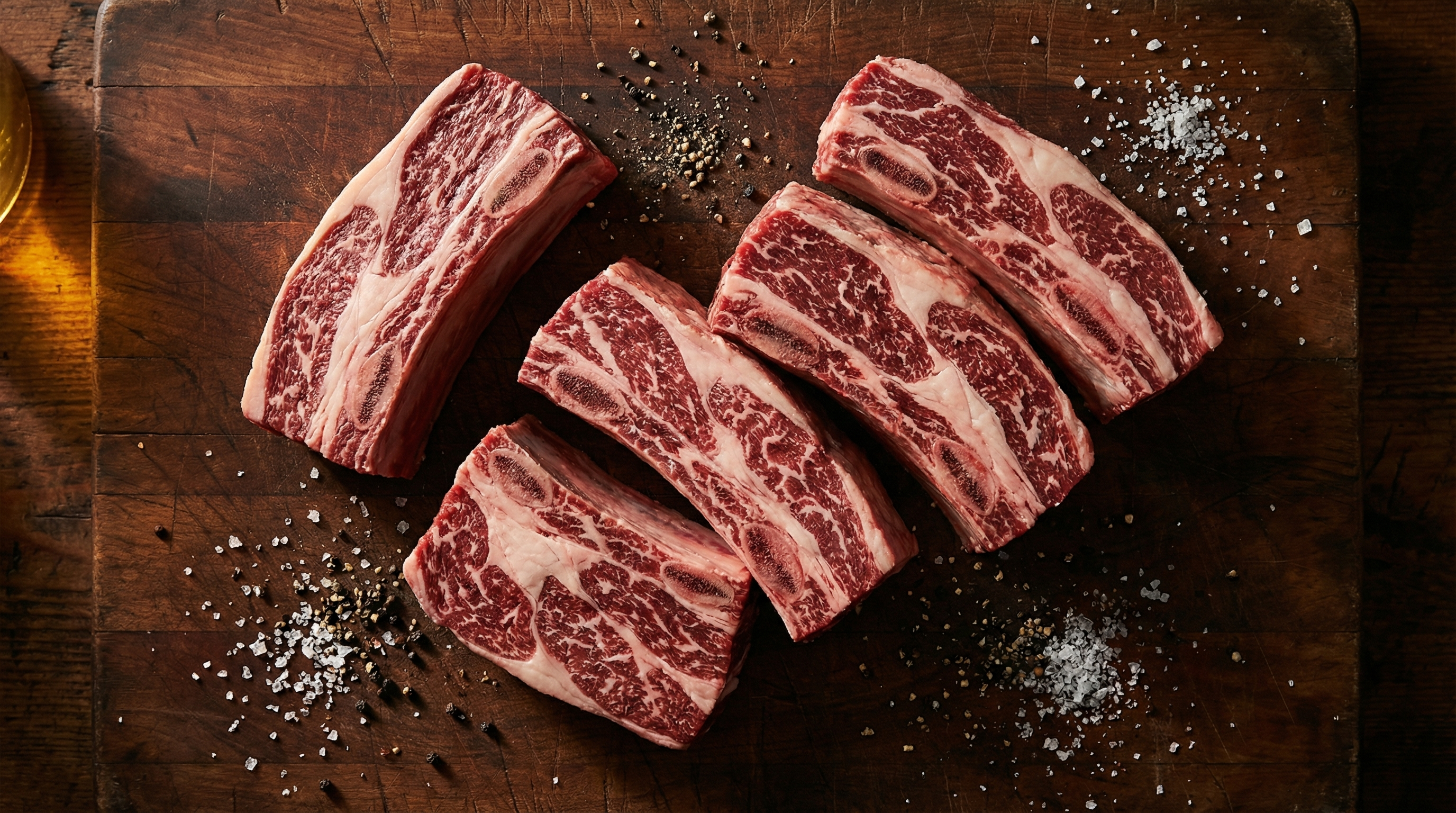
If I could only eat one braised dish for the rest of my life, it would be beef short ribs. No hesitation. After 30 years behind the butcher block, I've cooked every cut on the animal a hundred different ways, and nothing — nothing — delivers the combination of deep beefy flavor, fall-apart tenderness, and rich, unctuous texture that a properly cooked short rib does. Not brisket. Not chuck roast. Not even oxtail.
The problem is that most people walk right past short ribs in the meat case because they don't know what they're looking at. There are multiple cut styles with different names. The prices vary wildly. And unless you know what you're doing, you might end up with thin flanken-cut ribs when you wanted thick English-cut slabs, or vice versa. That confusion costs you money and dinner.
This guide fixes that. I'm going to walk you through every type of beef short rib, where they come from on the animal, how to buy them smart, and the three cooking methods that turn this tough, collagen-rich cut into something transcendent.
What Are Beef Short Ribs?
Beef short ribs come from the plate primal (belly area below the rib primal) and the chuck primal (shoulder). They're sections of rib bone with thick layers of meat and fat attached. The "short" in the name doesn't mean they're small — it refers to the fact that they're cut from the short plate, as opposed to the longer back ribs that come from the rib primal above.
Short ribs are a working muscle. The intercostal muscles between the ribs, along with the serratus ventralis and other chest wall muscles, work every time the animal breathes, walks, or moves. That constant use builds dense muscle fiber and heavy connective tissue — collagen and elastin that make the meat tough when raw but transform into gelatin during long, slow cooking.
That transformation is the magic. When collagen converts to gelatin at sustained temperatures above 160°F, it creates a silky, lip-coating richness that no lean cut can match. The intramuscular fat renders alongside it, basting the meat from within. The result is beef so tender you can cut it with a spoon, swimming in a sauce that's naturally thick and glossy from all that converted collagen.
Types of Beef Short Rib Cuts
This is where most people get confused, because the same ribs can be cut multiple ways. Understanding the cut styles is the difference between getting exactly what you want and ending up with something that doesn't fit your recipe.
English-Cut Short Ribs (Bone-In)
English-cut short ribs are the classic braising cut. Each piece is a single bone segment, about 3 to 4 inches long, with a thick slab of meat sitting on top. The bone runs along the bottom, and you get one bone per piece. Think of it as a cross-section through a single rib — bone on the bottom, 2-3 inches of meat on top, fat cap on the outside.
Weight per piece: 8-16 ounces depending on thickness and which rib position.
Best for: Braising (red wine braise, Korean galbi-jjim), smoking, and any long, slow cooking method. The bone adds flavor to the braising liquid, and the thick meat portion stays intact during hours of cooking. This is the cut you see on fine dining menus when the menu says "braised short rib."
What to look for: At least 2 inches of meat above the bone. Some butchers sell English-cut ribs with barely an inch of meat — those have been cut too close to the bone and won't give you the meaty, impressive result you're after. Also look for visible marbling in the meat and a fat cap on top — both contribute to flavor and moisture during braising.
Flanken-Cut Short Ribs
Flanken-cut ribs are sliced across the bones rather than between them. Each piece contains 3 to 4 cross-sections of rib bone (small oval-shaped bone discs) with thin strips of meat surrounding them. The typical flanken cut is 1/4 to 1/2 inch thick.
Weight per piece: 4-8 ounces.
Best for: Grilling (Korean galbi), quick high-heat cooking. The thin cross-cut exposes maximum surface area to the heat, which means fast cooking and excellent caramelization. Flanken ribs go from raw to done in 3-5 minutes per side on a hot grill — completely different from the hours required for English-cut.
What to look for: Consistent thickness across the strip. Uneven flanken cuts will overcook in the thin spots while the thick spots stay raw. A good butcher uses a band saw to get uniform slices. Also look for ribs with good meat-to-bone ratio — some flanken cuts are mostly bone with barely any meat between them.
Plate Short Ribs (Dinosaur Ribs)
These are the showstoppers. Plate short ribs come from the lower portion of ribs 6 through 8 on the plate primal, and they are massive. A single plate short rib can be 12 to 16 inches long with 3+ inches of meat sitting on top of the bone. They're called "dinosaur ribs" because they look prehistoric — and because they're the kind of thing you eat with both hands while making sounds you'd normally be embarrassed about.
Weight per bone: 1.5-3 pounds per individual rib.
Best for: Smoking. This is the cut that wins BBQ competitions in the beef rib category. Low and slow at 250-275°F for 6-8 hours until the internal temperature hits 200-205°F and the meat probes like warm butter. The thick meat cap stays moist through the entire cook because of the generous fat and collagen content.
What to look for: Thick meat cap (at least 2 inches), good fat coverage, and preferably from ribs 6-8 where the meat is most abundant. Ribs from positions 9-12 tend to be smaller and less meaty. Not every butcher carries plate ribs — you may need to special order them or buy online from a specialty source.
Boneless Short Ribs
Boneless short ribs are exactly what they sound like — short rib meat with the bone removed. The meat is usually tied or cut into rectangular blocks. You lose the bone's contribution to braising liquid, but you gain easier portioning and more consistent cooking.
Best for: Braising when presentation matters (restaurant-style plating), sous vide cooking, and when you need uniform portions. Boneless short ribs are also popular for grinding into premium burger blends — the high fat and collagen content makes for extraordinarily juicy, flavorful burgers.
Chuck Short Ribs vs. Plate Short Ribs
Not all short ribs are created equal. The two main sources produce different eating experiences:
Plate short ribs (ribs 6-8 from the plate primal) are the premium option. Larger, meatier, more marbling, and more intramuscular fat. These are what competition BBQ pitmasters and fine dining chefs seek out. They're also more expensive and harder to find.
Chuck short ribs (ribs 1-5 from the chuck primal) are smaller, with slightly less meat per bone. They have excellent flavor — the chuck is one of the most flavorful primals — but the individual ribs aren't as impressive in size. They're more commonly available at regular grocery stores and are typically less expensive than plate ribs.
For braising, either type works beautifully. For smoking, plate ribs are the clear choice — the extra size and meat thickness make them far more practical for a 6-8 hour cook.
How to Buy Beef Short Ribs
Armed with the knowledge of cut styles, here's how to shop smart:
At the Butcher Counter
- Be specific about what you want. Don't just say "short ribs." Say "English-cut bone-in short ribs, about 3 inches of meat above the bone" or "flanken-cut, half-inch thick for Korean grilling." Specificity gets you the right product.
- Ask which ribs they are. Chuck or plate? The answer affects size, meatiness, and price. Not every butcher will know (or differentiate), but a good one will.
- Check the meat-to-bone ratio. You're paying by the pound, and bone weight adds up. Look for ribs where the meat clearly dominates. A piece that's 60% bone and 40% meat is a bad deal no matter how cheap it is.
- Look for marbling. Short ribs should have visible intramuscular fat. Lean short ribs exist, but they produce a drier, less impressive result. The fat is the flavor.
Grade Considerations
Unlike premium steaks where the USDA grade dramatically affects the eating experience, short ribs are more forgiving. The long cooking times break down tough fibers regardless of grade, and the natural fat content in short ribs is generally high even at Choice level. That said:
- USDA Choice: The sweet spot. Excellent marbling for the price. This is what I recommend for most home cooks.
- USDA Prime: More marbling means an even richer result. Worth it for special occasions, but the improvement over Choice is less dramatic than with quick-cooking steaks.
- Wagyu: American Wagyu short ribs are extraordinary — the marbling is extreme and the rendered fat creates an almost obscenely rich braise. A luxury ingredient, but an unforgettable one.
How Much to Buy
Plan on 1 to 1.5 pounds of bone-in short ribs per person. That accounts for the bone weight and the shrinkage during cooking (short ribs lose about 30% of their weight during braising). For boneless short ribs, 8-12 ounces per person is sufficient.
How to Braise Beef Short Ribs
Braising is the definitive method for English-cut and boneless short ribs. It's simple, nearly foolproof, and produces results that taste like you spent all day in the kitchen. (You did spend all day, but 95% of it was the oven doing the work.)
The Basic Method
- Season and sear. Pat the ribs dry with paper towels. Season generously with salt and pepper. Sear in a hot Dutch oven with a thin layer of oil until deeply browned on all sides — 3-4 minutes per side. Don't rush this step. The Maillard crust is the foundation of your sauce's flavor. Remove the ribs and set aside.
- Build the aromatics. In the same pot (with all those browned bits on the bottom), sauté diced onion, carrot, and celery until softened, about 5 minutes. Add garlic, tomato paste, and whatever herbs you're using (thyme, bay leaves, rosemary). Cook until the tomato paste darkens slightly.
- Deglaze. Pour in your braising liquid — red wine is the classic choice, but beef stock, beer, or a combination all work. Scrape up every bit of fond (browned stuff) from the bottom of the pot. This is liquid gold.
- Add liquid and ribs. Return the ribs to the pot. Add enough stock to come 2/3 of the way up the sides of the meat. Don't submerge them completely — the exposed top portion will develop a slightly caramelized surface during braising.
- Braise low and slow. Cover and cook at 300-325°F for 3 to 3.5 hours. The ribs are done when a fork slides in and out with zero resistance and the meat is pulling away from the bone. Internal temperature should be 200-205°F.
- Rest and reduce. Remove the ribs carefully (they'll want to fall apart). Strain the braising liquid, skim the fat, and reduce it by half on the stovetop. That concentrated liquid becomes your sauce — naturally thick and glossy from all the converted collagen.
Pro tip: Braise a day ahead. Cool the ribs in their liquid, refrigerate overnight, and the fat solidifies on top for easy removal. Reheat gently the next day. The flavors meld and deepen overnight, and the result is significantly better than serving immediately. Every restaurant that serves braised short ribs does it this way.
Classic Red Wine Braised Short Ribs
This is the preparation that's earned short ribs a permanent place on fine dining menus. Use a full bottle of dry red wine (something bold — Cabernet, Malbec, or Côtes du Rhône), 2 cups of beef stock, a can of crushed tomatoes, and your standard aromatics. The wine reduces and concentrates during braising, creating a sauce so deeply flavored it's almost shocking that it started as a tough, relatively inexpensive cut of beef.
How to Smoke Beef Short Ribs
Smoked plate short ribs are one of the crown jewels of American barbecue. The technique is similar to brisket, but the higher fat content and bone insulation make short ribs more forgiving and, many pitmasters would argue, more rewarding.
The Method
- Trim minimally. Remove any loose fat or membrane from the bone side, but leave the fat cap on the meat side. That fat renders during the long cook and bastes the meat continuously.
- Season simply. A 50/50 mix of coarse salt and cracked black pepper is the Texas standard. Some pitmasters add garlic powder and onion powder. Don't overthink this — the beef and smoke do the heavy lifting.
- Set up your smoker. 250-275°F, hardwood (oak, hickory, or mesquite). Place the ribs bone-side down. The bones act as a natural heat shield, protecting the meat from direct heat.
- Cook to feel, not time. Expect 6-8 hours for full plate ribs. The stall (where internal temperature plateaus around 150-165°F) will happen. Don't panic, don't crank the heat, don't wrap (unless you want to — wrapping accelerates the cook but softens the bark). Just let it ride.
- Check for doneness. When the internal temperature hits 200-205°F and a probe slides into the meat like warm butter, they're done. The meat should jiggle when you shake the bone. Let them rest for 30-60 minutes before cutting.
The result: A thick, peppery bark on the outside. Beneath it, a smoke ring that penetrates a quarter-inch deep. And inside, meat so tender and beefy that it makes you wonder why brisket gets all the attention. Smoked short ribs are brisket's better-kept secret.
How to Grill Flanken-Cut Short Ribs
Flanken ribs on a hot grill are a completely different animal from braised or smoked ribs. The thin cross-cut cooks in minutes, developing a caramelized crust while the interior stays juicy. This is the preparation behind Korean galbi, one of the world's great grilled meats.
Korean-Style Galbi
- Marinate. Combine soy sauce, brown sugar (or Asian pear for authentic Korean flavor), sesame oil, garlic, ginger, and black pepper. Marinate the flanken ribs for at least 4 hours, ideally overnight. The sugar in the marinade is crucial — it caramelizes on the grill and creates that addictive sweet-savory crust.
- Grill hot and fast. Direct high heat (500°F+), 3-4 minutes per side. The thin cut means you're looking for color and caramelization, not internal temperature. The meat between the bones should be cooked through but still juicy.
- Serve immediately. Flanken ribs are best straight off the grill. Garnish with sesame seeds and sliced scallions. Serve with steamed rice, lettuce wraps, and kimchi for the full Korean BBQ experience.
The beauty of flanken-cut galbi is speed. From grill to table in under 10 minutes. It's a weeknight dinner that tastes like a weekend project.
Beef Short Ribs: Pricing and Value
Short ribs sit in an interesting pricing sweet spot. They're not as cheap as chuck roast, but they're a fraction of the cost of premium steaks — and the braised result rivals (I'd argue exceeds) many cuts that cost three times as much.
- English-cut bone-in (Choice): $7-$12/lb
- Flanken-cut (Choice): $7-$10/lb
- Plate ribs / dinosaur ribs (Choice): $8-$14/lb
- Boneless short ribs (Choice): $10-$16/lb
- Prime short ribs: $12-$20/lb
- Wagyu short ribs: $25-$50/lb
At $8-$12 per pound for bone-in Choice, short ribs deliver a dining experience that competes with $40-$60/lb steaks. The trade-off is time — you need 3+ hours of braising or 6+ hours of smoking. But if time is the only currency standing between you and one of the best meals of your life, that's a trade I'll make every time.
Common Short Rib Mistakes to Avoid
- Not searing before braising. Skipping the sear saves 15 minutes and costs you 50% of your sauce's depth. Always sear. The browning creates hundreds of flavor compounds through the Maillard reaction that no amount of braising liquid can replicate.
- Too much liquid. Short ribs should be braised, not boiled. The liquid should come 2/3 up the sides, not cover the meat completely. The exposed portion develops a richer surface during the braise.
- Cooking at too high a temperature. Braising above 325°F risks tightening the muscle fibers before the collagen fully converts. The sweet spot is 300-325°F. Patience is the primary ingredient.
- Not resting. Braised short ribs benefit from resting in their liquid for at least 20 minutes before serving. Overnight rest in the fridge, then gentle reheating, produces the best result of all.
- Confusing cut styles. Buying flanken when your recipe calls for English-cut (or vice versa) will give you a completely different result. Know what your recipe needs before you shop.
Short Ribs in World Cuisine
Short ribs are beloved across cultures, each bringing their own techniques and flavors:
- French: Boeuf braisé aux côtes courtes — red wine braise with root vegetables. The blueprint for most Western braised short rib recipes.
- Korean: Galbi (grilled flanken) and galbi-jjim (braised bone-in) are national treasures. The sweet soy marinade and tableside grilling make Korean short ribs one of the world's great meat dishes.
- Argentine: Tira de asado — flanken-cut ribs grilled over wood coals with nothing but salt. Simplicity at its finest, served at every Argentine barbecue (asado).
- Jewish: Braised short ribs are a cornerstone of Ashkenazi cuisine, traditionally served on the Sabbath. Often braised with onions, carrots, and sweet undertones from honey or dried fruit.
- Texas BBQ: Smoked plate ribs ("beef ribs") are the pinnacle of competition barbecue. Salt, pepper, post oak smoke, and 8 hours of patience.
The Bottom Line on Beef Short Ribs
Beef short ribs are the single most transformative cut in the butcher case. Raw, they look like nothing special — tough, heavily marbled, clinging to bone. Three hours in a Dutch oven or eight hours in a smoker later, they're the most tender, most flavorful, most deeply satisfying beef you've ever eaten. The collagen-to-gelatin conversion creates a richness that filet mignon can only dream about.
Know your cut styles. English-cut for braising. Flanken for grilling. Plate ribs for smoking. Sear before you braise. Be patient. And if you want to see what wagyu-level marbling does to an already extraordinary cut, The Meatery's American Wagyu selection will show you a side of short ribs that redefines what beef can be.
This cut made me fall in love with butchery. Give it the time it deserves, and it'll make you fall in love with cooking.
Frequently Asked Questions
What are beef short ribs?
Beef short ribs are bone-in cuts from the plate primal (belly) and chuck primal (shoulder). They feature thick, well-marbled meat attached to rib bones. The heavy connective tissue and intramuscular fat transform into fork-tender, richly flavored meat when cooked low and slow through braising or smoking.
What is the difference between English-cut and flanken-cut short ribs?
English-cut short ribs are cut between the bones, giving one thick bone segment with 2-3 inches of meat on top — ideal for braising. Flanken-cut ribs are sliced across the bones, producing thin strips with 3-4 small bone cross-sections — ideal for grilling, especially Korean-style galbi.
How long do you braise beef short ribs?
Braise English-cut beef short ribs at 300-325°F for 3 to 3.5 hours. They are done when a fork slides in with zero resistance and the meat pulls away from the bone. Internal temperature should reach 200-205°F. For best results, braise a day ahead and reheat gently.
What is the best way to cook beef short ribs?
The best method depends on the cut style. English-cut: braise in red wine and beef stock for 3+ hours. Flanken-cut: grill hot and fast (3-4 minutes per side) with a Korean-style marinade. Plate ribs (dinosaur ribs): smoke at 250-275°F for 6-8 hours. Always sear bone-in ribs before braising.
How much do beef short ribs cost?
USDA Choice bone-in short ribs typically cost $7-$12 per pound. Plate ribs (dinosaur ribs) run $8-$14/lb. Boneless short ribs cost $10-$16/lb. Prime grade adds a premium of $4-$8/lb. Despite the modest price, braised short ribs deliver a dining experience that rivals cuts costing 3-4× as much.
What are dinosaur ribs?
Dinosaur ribs are plate short ribs from ribs 6-8 on the plate primal. They are massive — 12 to 16 inches long with 3+ inches of meat — and are the preferred cut for smoking in competition BBQ. Cook at 250-275°F for 6-8 hours until the internal temperature reaches 200-205°F.
More Expert Guides
What Is Chateaubriand? (Cut, Cooking, & Best Sources)
Chateaubriand is a thick-cut roast from the center of the beef tenderloin, traditionally served for two. Learn what makes this classic French cut special and how to cook it.
14 min readWhat Is Round Steak? The Complete Guide to Beef's Most Versatile Budget Cut
Round steak comes from the rear leg of the cow — it's lean, affordable, and misunderstood. A master butcher breaks down every sub-cut, cooking method, and technique to turn this budget workhorse into genuinely delicious meals.
14 min readWhat Is Eye of Round? The Complete Butcher's Guide to This Lean Cut
Eye of round is one of the leanest, most affordable cuts in the entire beef case — and one of the most misunderstood. A butcher explains how to turn this budget-friendly roast into something genuinely delicious.