Best Beef Cuts for Burgers: A Butcher's Guide to the Perfect Patty
Best Beef Cuts for Burgers: A Butcher’s Guide to the Perfect Patty
Here’s a truth most backyard grillers never hear: the best burger you’ll ever eat won’t come from a tube of pre-ground beef. It’ll come from a specific cut — or a blend of cuts — that you chose on purpose, ground fresh, and formed by hand.
Pre-ground supermarket beef is fine for Tuesday night tacos. But if you want a burger that drips juice down your wrist, holds together on the grill, and tastes like actual beef instead of generic protein, you need to start at the cut level.
This guide covers the 7 best beef cuts for burgers, explains why fat ratio matters more than you think, and gives you blending formulas that professional burger joints guard like trade secrets.
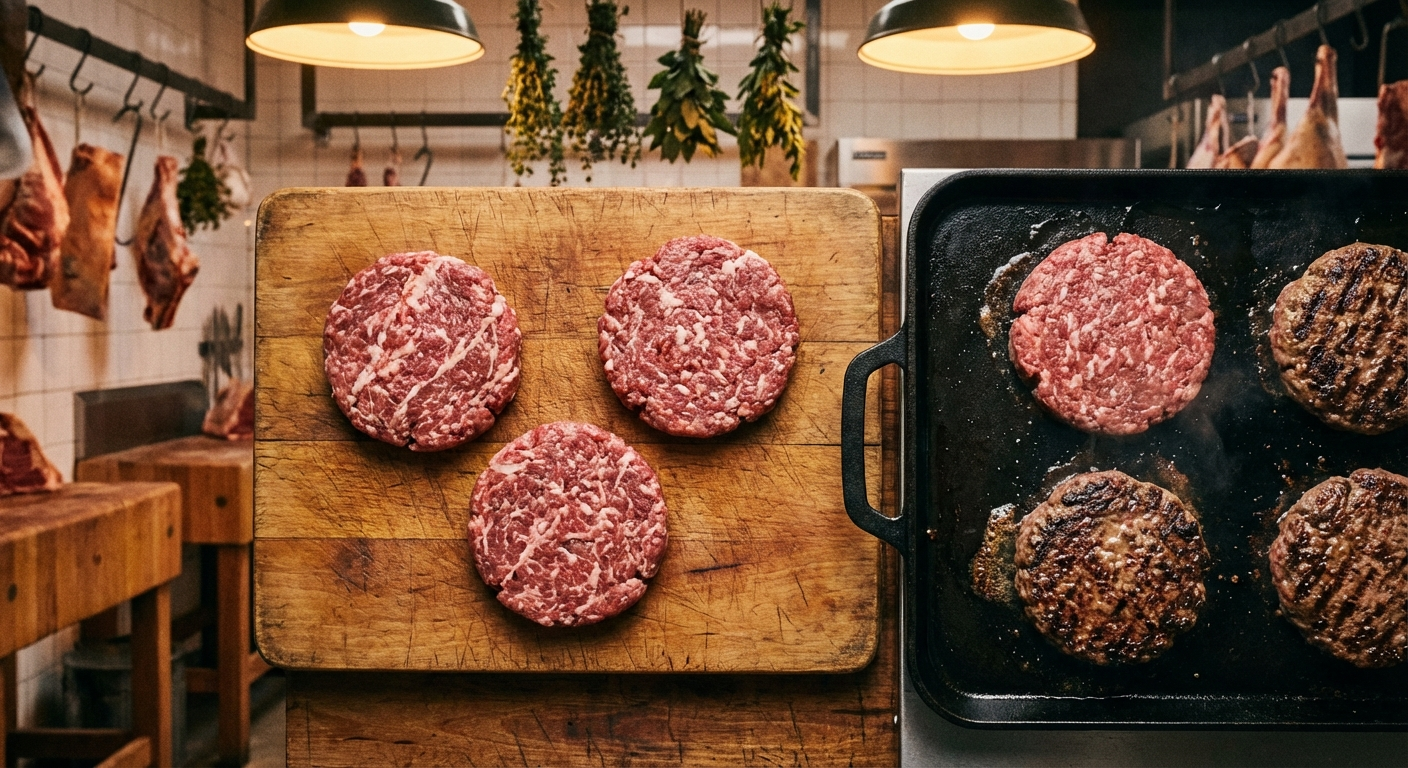
Why the Cut Matters for Burgers
When you buy pre-ground beef, the label tells you one thing: the fat percentage. “80/20” or “90/10.” What it doesn’t tell you is which cuts went into the grinder. That matters because different cuts bring different things to a burger:
- Flavor — Working muscles (chuck, short rib) taste beefier than loin cuts
- Fat distribution — Some cuts have fat evenly marbled; others have pockets that render unevenly
- Texture — Collagen-rich cuts create a juicier, more cohesive patty
- Binding — Cuts with more connective tissue hold together without fillers or eggs
The magic number for burgers is 20–25% fat. Go leaner and the patty dries out. Go fattier and it shrinks into a greasy puck. The cuts below all hit that sweet spot — either alone or in a blend.
1. Chuck — The Gold Standard
Why it works: Chuck is the default burger cut for a reason. It comes from the shoulder, a hardworking muscle group with deep beefy flavor and natural marbling that lands right around 80/20 without any blending. Every great burger joint in America starts with chuck.
What makes chuck ideal isn’t just the fat ratio — it’s the type of fat. Chuck has intramuscular marbling woven through the meat, which means the fat renders evenly as the patty cooks. You get consistent juiciness from edge to center, bite after bite.
Best sub-cuts:
- Chuck roll — the most marbled section, butcher’s first choice for grinding
- Chuck clod — leaner, better when blended with a fattier cut
- Chuck eye — technically “too good” for burgers, but makes an incredible patty if you can spare it
Fat ratio: 78–82% lean (perfect as-is)
Best for: Classic smash burgers, backyard grilling, any style where you want reliable, beefy flavor
2. Brisket — The Flavor Bomb
Why it works: Brisket brings something to burgers that no other cut can match: an almost smoky, deeply savory beef flavor that tastes like it’s been slow-cooking even when it hasn’t. The point end especially is loaded with fat and connective tissue that transforms into gelatin during cooking, giving the patty a rich, almost sticky juiciness.
Pure brisket burgers can be too fatty and loose. The move is to blend brisket with a leaner cut — usually chuck — at about a 30/70 ratio. That’s the formula behind most “gourmet burger” menus, even if they don’t advertise it.
Fat ratio: Brisket point runs 70/30; flat runs 85/15. Blend accordingly.
Best for: Blending with chuck (30% brisket / 70% chuck), smash burgers where you want maximum crust flavor
3. Short Rib — The Steakhouse Secret
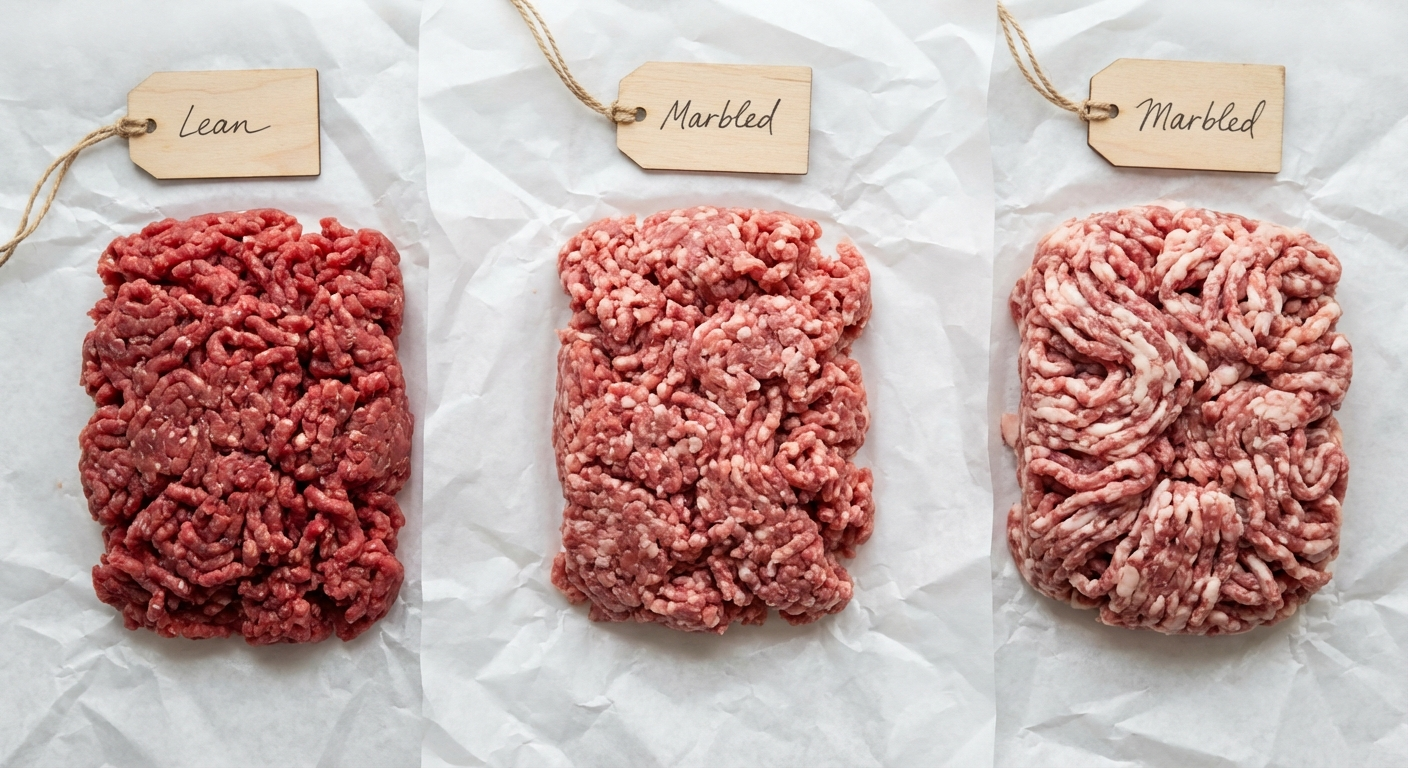
Why it works: Short rib is what separates a $22 steakhouse burger from a fast-food patty. It has the richest, most buttery beef flavor of any cut on this list. The fat in short rib is supremely well-marbled — think ribeye-level marbling in a cut that costs a fraction of the price when you buy it for grinding.
Like brisket, short rib is best used as a blending component. A 50/50 chuck and short rib blend is arguably the best burger formula in existence. Some high-end spots go 40% chuck, 30% short rib, 30% brisket — the “holy trinity” of burger blends.
Fat ratio: Boneless short rib runs about 70/30, so temper it with leaner cuts.
Best for: The “holy trinity” blend (chuck + brisket + short rib), thick pub-style burgers, any time you want steakhouse flavor in patty form
4. Sirloin — The Lean Backbone
Why it works: Sirloin is the workhorse cut for people who want a beefy burger without excess fat. It’s lean (around 90/10) with a clean, straightforward beef flavor and a firmer texture that holds its shape on the grill. Where chuck is juicy and forgiving, sirloin is precise and structured.
Don’t grind sirloin alone for burgers — it’ll be dry. Instead, use it as the lean backbone of a blend. Pair it with a fatty cut like short rib or brisket point to build a custom fat ratio. This gives you sirloin’s clean flavor with the juiciness of a fattier cut.
Fat ratio: 88–92% lean. Needs fat supplementation for burgers.
Best for: Blending with fattier cuts when you want a cleaner flavor profile, lean-forward patties for people watching fat intake
5. Brisket & Chuck Blend (The Classic 70/30)
Why it works: This isn’t a single cut — it’s the most popular burger blend in the craft burger world. Seventy percent chuck for structure and balanced fat, thirty percent brisket for depth and richness. The result is a patty that’s juicier than pure chuck, more flavorful than either cut alone, and holds together beautifully on a flat-top or grill.
How to make it:
- Cut chuck and brisket point into 1-inch cubes
- Spread on a sheet pan and freeze for 30 minutes (cold meat grinds cleaner)
- Grind through a coarse plate (⅜” or 6mm) — coarse grind means better texture
- Mix gently by hand — never overwork the meat
- Form into 5–6 oz patties with a thumbprint dimple in the center
Fat ratio: Lands around 78/22 — the sweet spot
Best for: Everything. Smash burgers, thick grilled burgers, flat-top diner style. This is the default “upgrade” blend.
6. Flat Iron — The Underrated Choice
Why it works: Flat iron is one of the most tender cuts on the cow, second only to tenderloin. When ground, that tenderness translates into a patty with an almost melt-in-your-mouth texture. Flat iron also has surprisingly good marbling for a shoulder cut, running around 80/20 naturally.
The catch: flat iron is increasingly popular as a steak cut, which drives up price. Grinding it into burgers feels extravagant — and it is. But if you’re making burgers for a special occasion and want the most tender patty possible, flat iron delivers.
Fat ratio: 78–82% lean (similar to chuck, slightly more tender)
Best for: Special-occasion burgers, sliders where tenderness matters, blending with chuck for an upgraded everyday patty
7. Hanger Steak — The Butcher’s Burger
Why it works: There’s a reason butchers historically kept hanger steak for themselves — it has more flavor per ounce than almost any other cut. Ground into burger meat, that intensity shines through. Hanger has a mineral, almost liver-adjacent richness that sounds off-putting but tastes incredible when balanced with fat.
Hanger is lean (about 85/15), so blend it with a fattier cut. A 40% hanger / 60% chuck blend creates a patty with extraordinary depth of flavor — the kind of burger where people stop chewing and say “what is this?”
Fat ratio: 83–87% lean. Blend with chuck or short rib fat.
Best for: Blending for flavor complexity, adventurous eaters who want something beyond standard chuck
The Fat Ratio Rules
Every cut above mentions fat percentage. Here’s why it’s the single most important variable in burger quality:
- 75/25 — Maximum juiciness. Great for smash burgers where fat renders onto the griddle. Too fatty for thick patties (shrinks significantly).
- 80/20 — The universal sweet spot. Works for every burger style. This is what “ground chuck” typically delivers.
- 85/15 — Leaner but still workable. Needs careful cooking — don’t go past medium or it dries out.
- 90/10 — Too lean for a great burger. If this is all you have, add diced bacon fat or beef tallow to the grind.
The rule: When in doubt, target 80/20. When blending, calculate the combined ratio. If you’re mixing 70% chuck (80/20) with 30% brisket point (70/30), your blend will land around 77/23 — perfect.
Grinding Tips That Actually Matter
How you grind matters as much as what you grind. Here are the rules that separate great from good:
- Keep everything cold. Meat, grinder parts, bowl — put it all in the freezer for 30 minutes before grinding. Warm fat smears instead of staying in distinct pieces, which kills texture.
- Coarse grind, once. A single pass through a ⅜” (6mm) plate gives you the best texture. Double-grinding creates a mushy, sausage-like consistency.
- Never overwork the meat. Once ground, gently form into patties. The more you handle it, the tougher it gets. No kneading, no packing, no squeezing.
- Season the outside, not the mix. Salt on the exterior creates a crust. Salt mixed into the grind creates a springy, sausage-like texture. Big difference.
- Thumbprint dimple. Press a shallow indent into the center of each patty. Burgers puff up as they cook — the dimple keeps them flat.
Three Blends Worth Trying
Ready to go beyond straight chuck? Here are three proven formulas:
The Classic Upgrade (best all-around):
- 70% chuck + 30% brisket point
- Target: ~78/22
- Rich, juicy, and noticeably better than straight chuck
The Steakhouse Blend (special occasions):
- 40% chuck + 30% short rib + 30% brisket
- Target: ~75/25
- Intensely beefy, buttery fat, steakhouse-caliber flavor
The Butcher’s Blend (for adventurous eaters):
- 50% chuck + 30% hanger + 20% short rib
- Target: ~79/21
- Deep, complex, mineral-rich flavor that surprises everyone
Frequently Asked Questions
What is the best single cut for burgers?
Chuck. It has the ideal fat ratio (80/20), deep beefy flavor, and enough connective tissue to hold a patty together. If you’re only grinding one cut, make it chuck.
Is 80/20 or 90/10 better for burgers?
80/20, without question. The extra fat keeps the patty juicy and creates better Maillard crust when searing. 90/10 dries out quickly and requires very careful cooking to avoid a hockey puck.
Should I grind my own burger meat?
If you care about burger quality, yes. Pre-ground beef sits in packaging losing moisture. Fresh-ground from whole cuts has better flavor, better texture, and you control exactly what goes in. A basic meat grinder attachment for a stand mixer costs under $50 and changes the game.
Can I use expensive steak cuts for burgers?
You can, but there’s no reason to grind a ribeye or filet mignon into burger meat. The qualities that make those cuts expensive — tenderness, leanness — aren’t what makes a great burger. Chuck, brisket, and short rib deliver better burger results at a fraction of the cost.
What’s the best fat ratio for smash burgers?
75/25 to 80/20. Smash burgers cook fast on a screaming-hot flat-top, and the extra fat renders into the griddle surface, creating that lacey, crispy edge that defines the style. Leaner blends won’t develop the same crust.
Frequently Asked Questions
What is the best single cut for burgers?
Chuck is the best single cut for burgers due to its ideal 80/20 fat ratio, deep beefy flavor, and enough connective tissue to hold a patty together without fillers.
Is 80/20 or 90/10 better for burgers?
80/20 is significantly better for burgers. The extra fat keeps the patty juicy during cooking and creates better Maillard crust when searing.
What is the best burger blend?
The most popular craft burger blend is 70% chuck and 30% brisket point, which delivers rich flavor, ideal juiciness, and a fat ratio around 78/22.
Should I grind my own burger meat?
Yes, grinding your own meat from whole cuts produces better flavor, fresher texture, and full control over fat ratio and cut selection.
What fat ratio is best for smash burgers?
75/25 to 80/20 fat ratio works best for smash burgers, as the extra fat renders onto the hot griddle surface to create crispy, lacey edges.
More Expert Guides
What Is Chateaubriand? (Cut, Cooking, & Best Sources)
Chateaubriand is a thick-cut roast from the center of the beef tenderloin, traditionally served for two. Learn what makes this classic French cut special and how to cook it.
14 min readWhat Is Round Steak? The Complete Guide to Beef's Most Versatile Budget Cut
Round steak comes from the rear leg of the cow — it's lean, affordable, and misunderstood. A master butcher breaks down every sub-cut, cooking method, and technique to turn this budget workhorse into genuinely delicious meals.
14 min readWhat Is Eye of Round? The Complete Butcher's Guide to This Lean Cut
Eye of round is one of the leanest, most affordable cuts in the entire beef case — and one of the most misunderstood. A butcher explains how to turn this budget-friendly roast into something genuinely delicious.