What is Hanger Steak? The Butcher's Secret Cut Explained
There's a cut of beef that professional butchers hoarded for generations, one so delicious they refused to put it in the display case. They'd set it aside at the end of the day, take it home, and cook it for their families. That cut is the hanger steak—and once you understand why butchers kept this secret, you'll never look at the meat counter the same way again.
Also called the "butcher's steak" or onglet in French, hanger steak is one of the most flavorful cuts on the entire animal. It hangs from the diaphragm between the rib and the loin—hence the name—and there's only one per cow, which is exactly why it stayed hidden for so long.
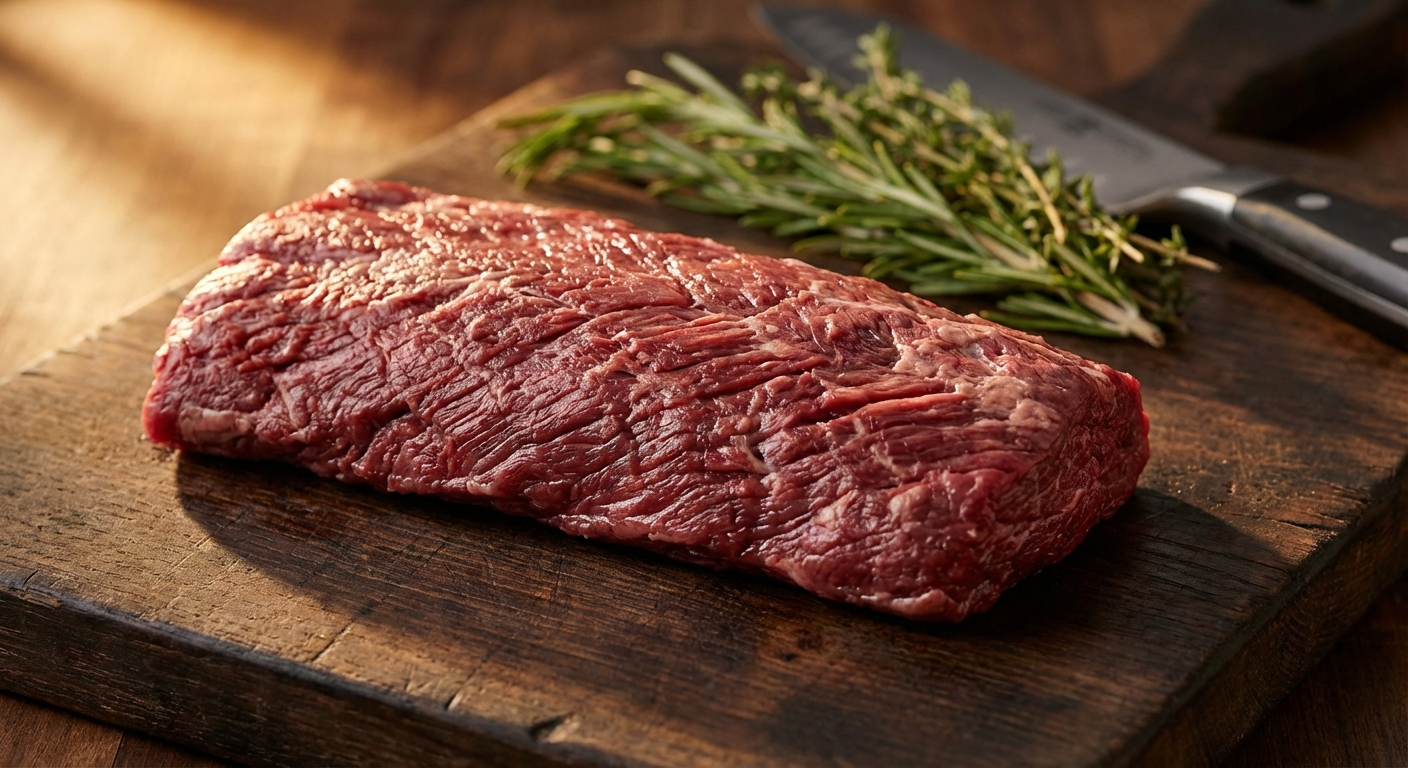
What Exactly is Hanger Steak?
Hanger steak comes from the plate primal, the lower belly section of the animal. Technically, it's the crura of the diaphragm—the thick, central portion of the diaphragm muscle that literally hangs between the last rib and the loin. The NAMP designation is #140, though most butchers simply call it the "hanging tender."
A whole hanger steak typically weighs between 1 and 2 pounds. It arrives as a single piece with a tough central membrane running down the middle that divides it into two lobes. That membrane needs to be removed before cooking—more on that shortly—leaving you with two elongated steaks roughly 8 to 10 inches long.
The texture is distinctly coarse-grained compared to cuts like filet mignon or strip steak. Those visible muscle fibers are part of what gives hanger steak its signature: an intense, almost mineral beefy flavor that's stronger than nearly any other cut. People who taste properly cooked hanger steak for the first time often describe it as "the beefiest thing they've ever eaten."
Anatomy: Where Does It Come From?
Understanding the hanger steak's location explains both its flavor and its scarcity. The diaphragm separates the chest cavity from the abdominal cavity. The hanger is the thickest part of this muscle, attached to the spine near the kidneys and hanging down toward the belly.
This placement gives the hanger steak several unique characteristics:
- Proximity to the kidneys and organs: This area receives excellent blood flow, contributing to the cut's deep, minerally flavor profile.
- Limited movement: While the diaphragm contracts with every breath, it doesn't undergo the same stress as leg muscles. The result is surprising tenderness for a working muscle.
- One per animal: Unlike ribeyes, strips, or sirloins that yield multiple steaks per cow, there is exactly one hanger steak per animal. This scarcity kept it off menus for decades.
- Central membrane: The connective tissue running through the center must be removed, which requires some butchery skill—another reason it was easier for butchers to just take it home.
The hanger sits in the same general area as skirt steak and flank steak, but it's a fundamentally different muscle. While skirt and flank come from the abdominal wall, the hanger is an interior muscle—it never touches the outside of the animal, which contributes to its remarkable tenderness.
Why Butchers Kept It Secret
The story of the "butcher's steak" isn't just marketing folklore—it's genuinely how this cut earned its reputation. Before the farm-to-table movement and the era of whole-animal butchery, most American meat processing followed a strict commodity model. Carcasses were broken down into primals, then into familiar retail cuts: ribeyes, T-bones, sirloins, chuck roasts.
The hanger didn't fit neatly into any retail category. It was small, oddly shaped, had that annoying membrane, and there was only one per animal—making it impossible to stock consistently. So butchers did the logical thing: they trimmed it out, tossed it in their personal cooler, and never told anyone.
In France, the tradition was more open. Onglet has been a bistro staple for over a century, served with shallot sauce and frites. French butchers recognized its quality and charged accordingly. American consumers, meanwhile, had no idea what they were missing.
That changed in the early 2000s when chefs began championing underutilized cuts. Suddenly, hanger steak appeared on gastropub menus across the country, and the secret was finally out. Prices have risen accordingly—hanger steak is no longer cheap—but it remains one of the best values in beef when you consider flavor per dollar.
How to Prepare Hanger Steak
Removing the Central Membrane
If you buy a whole, untrimmed hanger steak, the first task is removing the tough sinew that runs down the center. This membrane will not break down during cooking and will make the steak unpleasantly chewy if left intact.
- Lay the steak flat on a cutting board with the membrane facing up.
- Using a sharp boning knife, slide the blade along one side of the membrane, separating one lobe from the connective tissue.
- Repeat on the other side, keeping your knife angled slightly toward the membrane to minimize meat loss.
- Trim any remaining silver skin or excess fat from each lobe.
You'll end up with two clean steaks of slightly different sizes. Many butchers and markets now sell hanger steak pre-trimmed, saving you this step. If buying pre-trimmed, check that the membrane has been fully removed—sometimes a thin strip remains.
Seasoning
Hanger steak's intense beef flavor means it can stand up to bold seasonings, but it doesn't need them. Here are three approaches:
- Simple: Coarse salt and freshly cracked black pepper, applied 30 to 60 minutes before cooking. This is my preferred method—let the beef speak.
- Marinade: Soy sauce, garlic, olive oil, and a splash of acid (red wine vinegar or lime juice) for 2 to 4 hours. The coarse grain absorbs marinades beautifully.
- Dry rub: Smoked paprika, garlic powder, cumin, and brown sugar for a more complex crust. Works especially well for grilling.
Important: Never marinate hanger steak for more than 4 hours. The coarse grain that makes it absorb flavor so well also means it can become mushy if over-marinated, particularly with acidic ingredients.
How to Cook Hanger Steak: Three Best Methods
Hanger steak is best cooked with high, direct heat to medium-rare or medium. Going beyond medium is a mistake—the lean meat dries out quickly and becomes tough. Aim for an internal temperature of 130°F to 135°F.
Method 1: Cast Iron Sear
The most reliable method for home cooks. A screaming hot cast iron pan creates the perfect crust.
- Pat the steaks completely dry with paper towels. Moisture is the enemy of a good sear.
- Heat a cast iron skillet over high heat until it just begins to smoke. Add a high-smoke-point oil (avocado or grapeseed).
- Sear for 3 to 4 minutes per side without moving the steak. Resist the urge to peek—you want deep browning.
- Optional: add butter, garlic, and thyme in the last minute, basting the steak with the foaming butter.
- Remove at 130°F internal temperature and rest for 5 to 8 minutes before slicing.
Total cook time: about 8 minutes for a 1-inch-thick steak. Hanger steak is often thicker on one end and thinner on the other, so expect the thinner end to cook faster—this actually gives you a range of doneness to please different preferences.
Method 2: Grilling
The open flame of a grill adds smoky complexity that complements hanger steak's bold flavor beautifully.
- Preheat your grill to high heat (450°F to 500°F). Clean and oil the grates.
- Place the steaks directly over the hottest part of the grill.
- Grill for 3 to 4 minutes per side, rotating 45 degrees halfway through each side for crosshatch marks if desired.
- Move to indirect heat if the exterior is browning too quickly before the interior reaches temperature.
- Rest for 5 to 8 minutes before slicing against the grain.
Charcoal grills produce superior results here—the uneven heat and real smoke flavors elevate the cut. Gas works fine but consider adding a small chunk of hardwood for smoke.
Method 3: Broiler
For apartment dwellers without access to grills or for winter cooking, the broiler is an underrated option.
- Position the oven rack 4 to 5 inches from the broiler element.
- Preheat the broiler on high for at least 10 minutes.
- Place the seasoned steaks on a wire rack set over a sheet pan.
- Broil for 4 to 5 minutes per side, watching carefully—broiler heat varies significantly between ovens.
- Rest and slice as with other methods.
Keep a close eye on the broiler method. The difference between perfectly charred and burnt can be thirty seconds.
The Critical Step: Slicing Against the Grain
This is where many home cooks go wrong with hanger steak, and it makes an enormous difference. The muscle fibers in hanger steak are large and clearly visible—running the length of the steak. If you slice with the grain (parallel to those fibers), each bite requires your teeth to break through long, tough strands. The result is chewy and disappointing.
Instead, slice perpendicular to the grain in cuts about ¼ to ½ inch thick. Each slice should show a cross-section of those fibers, meaning your teeth encounter short segments that are easy to bite through. Properly sliced hanger steak is remarkably tender; improperly sliced, it's an exercise in jaw strength.
One tip: the grain direction can shift slightly through the steak, especially if it was cut from a whole hanger at an angle. Before cooking, note which direction the fibers run. After resting, rotate the steak so you're cutting across those fibers with every slice.
Hanger Steak vs. Similar Cuts
Hanger Steak vs. Skirt Steak
Both have bold beef flavor and visible grain, but they're different muscles from different locations. Skirt steak comes from the abdominal wall (the diaphragm's outer portion for inside skirt, or the plate muscle for outside skirt). Skirt is thinner, wider, and benefits from quick, high-heat cooking. Hanger is thicker and more tender. Both must be sliced against the grain.
Choose hanger when: You want a thicker steak with more tenderness and don't mind the higher price.
Hanger Steak vs. Flank Steak
Flank steak is leaner and comes from the abdominal wall. It has a milder flavor compared to hanger's intense beefiness. Flank is wider and flatter, making it better for dishes like London broil or stuffed and rolled preparations. Hanger is more like a traditional steak in shape and thickness.
Choose hanger when: You're cooking individual steaks and want maximum beef flavor.
Hanger Steak vs. Flat Iron
Flat iron comes from the shoulder (chuck) and is the second most tender muscle after the tenderloin. It has more marbling than hanger and a milder, more buttery flavor. Flat iron is more widely available since multiple steaks come from each animal.
Choose hanger when: You prioritize intense flavor over tenderness and marbling.
Hanger Steak vs. Filet Mignon
Filet mignon is the tenderness champion—nothing beats it for texture. But many chefs and meat lovers find it bland compared to cuts with more fat and deeper muscle flavor. Hanger steak offers roughly double the flavor at half the price, with surprisingly good tenderness when cooked and sliced properly.
Choose hanger when: Flavor is your priority and you're comfortable with medium-rare cooking.
Classic Preparations and Pairings
Hanger steak's bold flavor makes it a natural partner for equally assertive accompaniments:
- Steak frites: The classic French bistro preparation. Pan-seared onglet with crispy fries and a shallot or red wine pan sauce.
- Chimichurri: The bright, herbaceous Argentine sauce cuts through the richness perfectly. Fresh parsley, oregano, garlic, red wine vinegar, and olive oil.
- Tacos: Grilled hanger steak, thinly sliced, is outstanding in street-style tacos with cilantro, onion, and salsa verde.
- Stir-fry: The coarse grain absorbs sauces beautifully. Slice thin against the grain before cooking for tender bites.
- Salad: Sliced over arugula with shaved Parmesan, cherry tomatoes, and a balsamic reduction.
- Red wine pan sauce: Deglaze the cast iron with red wine, add a minced shallot, reduce, and finish with cold butter. Simple, classic, devastating.
For wine pairing, hanger steak's intensity demands equally bold wines: Malbec, Syrah, Côtes du Rhône, or a robust Cabernet Sauvignon. The tannins in these wines stand up to the beefy flavor without being overwhelmed.
Where to Buy Hanger Steak
The one-per-animal scarcity means hanger steak isn't always easy to find. Here's where to look:
- Local butcher shops: Your best bet. Ask ahead—they may need to set one aside for you since demand often exceeds supply.
- Farmers' markets: Vendors selling whole or half animals often have hanger steaks available.
- Online specialty retailers: For premium quality, online meat purveyors offer consistent availability. If you want to try hanger steak at its absolute best, explore specialty beef options from purveyors who prioritize quality sourcing.
- Whole Foods and upscale grocers: Increasingly stocking hanger steak, though availability varies by location.
What to Look For
- Deep red color: Darker than most steaks—this is normal and indicates the rich myoglobin content that gives hanger its flavor.
- Visible grain: The coarse muscle fibers should be clearly visible.
- Pre-trimmed preferred: Unless you're confident with a knife, buy it with the central membrane already removed.
- Even thickness: Look for pieces that are relatively uniform to ensure even cooking.
- No off odors: Hanger steak has a stronger natural aroma than most cuts, but it should still smell fresh and clean.
Common Mistakes to Avoid
- Overcooking: The single biggest error. Hanger steak must be served medium-rare to medium. Beyond that, it becomes dry and tough rapidly.
- Slicing with the grain: This turns a tender steak into a chewy disaster. Always slice against the grain.
- Leaving the membrane: That central sinew does not break down with heat. Remove it completely before cooking.
- Over-marinating: The coarse grain absorbs quickly. More than 4 hours in acid-based marinades turns the texture mushy.
- Skipping the rest: Hanger steak is lean—cutting into it immediately releases precious juices. Five minutes minimum.
- Cooking from cold: Let the steak sit at room temperature for 30 minutes before cooking for even results.
- Thin slicing while hot: Slice after resting, not before. And keep slices at least ¼ inch thick—paper-thin slices cool too quickly and lose their appeal.
Final Thoughts
Hanger steak is proof that the best things in the meat world aren't always the most expensive or the most famous. For decades, the people who knew beef most intimately—the butchers who broke down animals every single day—chose this cut above all others for their own tables. That endorsement speaks volumes.
Yes, it requires a bit more attention than throwing a ribeye on the grill. You need to watch the temperature, slice it correctly, and respect its preference for medium-rare. But the reward is a steak experience that's genuinely unique: deeply beefy, surprisingly tender, and rich with the kind of complex, almost mineral flavor that no other cut can quite replicate.
Find a good butcher, ask them to save you a hanger steak, and cook it simply—hot pan, salt, pepper, five minutes per side, rest, slice against the grain. You'll understand immediately why butchers kept this secret for as long as they did.
— Frank Russo
Frequently Asked Questions
What is another name for hanger steak?
Hanger steak goes by several names: butcher's steak (because butchers traditionally kept it for themselves), hanging tender, and onglet (its French name). The NAMP designation is #140. In some regions, it may also be labeled as bistro steak or butcher's tenderloin.
Why is hanger steak called the butcher's steak?
Hanger steak earned the name 'butcher's steak' because butchers historically kept this cut for themselves rather than selling it. Since there's only one hanger steak per animal and it didn't fit standard retail cut categories, butchers would set it aside and take it home. Its incredible flavor made it too good to sell—or so they reasoned.
Is hanger steak tender or tough?
Hanger steak is surprisingly tender when cooked and sliced correctly. It should be cooked to medium-rare or medium (130-135°F internal), rested for at least 5 minutes, and sliced against the grain. Following these steps produces a tender steak with intense beef flavor. Overcooking or slicing with the grain will make it tough and chewy.
How should you cook hanger steak?
The best methods for hanger steak are cast iron searing, grilling, or broiling—all using high, direct heat. Cook to medium-rare (130-135°F internal temperature), rest for 5-8 minutes, then slice against the grain. The key rules: never cook past medium, always slice against the visible grain, and remove the central membrane before cooking.
What is the difference between hanger steak and skirt steak?
While both have bold beef flavor and visible grain, they're different muscles. Hanger steak comes from the interior diaphragm, is thicker, and more tender. Skirt steak comes from the abdominal wall, is thinner and wider. Hanger is typically more expensive due to scarcity (one per animal vs. two skirt steaks). Both must be sliced against the grain.
Why is hanger steak so expensive?
Hanger steak's price reflects its scarcity—there's only one per animal, weighing 1-2 pounds total. Unlike ribeye or strip steak where each cow yields many portions, the limited supply of hanger steak can't keep up with growing demand. Its rise in popularity on restaurant menus since the 2000s has further driven prices up.
More Expert Guides
What Is Chateaubriand? (Cut, Cooking, & Best Sources)
Chateaubriand is a thick-cut roast from the center of the beef tenderloin, traditionally served for two. Learn what makes this classic French cut special and how to cook it.
14 min readWhat Is Round Steak? The Complete Guide to Beef's Most Versatile Budget Cut
Round steak comes from the rear leg of the cow — it's lean, affordable, and misunderstood. A master butcher breaks down every sub-cut, cooking method, and technique to turn this budget workhorse into genuinely delicious meals.
14 min readWhat Is Eye of Round? The Complete Butcher's Guide to This Lean Cut
Eye of round is one of the leanest, most affordable cuts in the entire beef case — and one of the most misunderstood. A butcher explains how to turn this budget-friendly roast into something genuinely delicious.