Chuck Roast vs Chuck Steak: What's the Difference?
Walk up to the beef case and you'll see two cuts sitting side by side that look like they could be related — and they are. Chuck roast and chuck steak both come from the chuck primal, the large shoulder section of the cow. But grab the wrong one for your recipe, and you'll end up with a tough, disappointing meal.
The difference between these two cuts isn't about quality. It's about thickness, cooking method, and time. Get those right, and both cuts deliver incredible flavor at a price that won't empty your wallet.
After thirty years of breaking down chuck primals, I can tell you: understanding this distinction is one of the most practical things a home cook can learn.
The Quick Answer
Chuck roast is a thick cut (2-4 inches), weighing 2-5 pounds, designed for low-and-slow cooking like braising or pot roast. Chuck steak is the same muscle sliced thin (3/4 to 1 inch), meant for grilling, pan-searing, or broiling.
Same animal, same primal, completely different cooking approaches.
Where They Come From
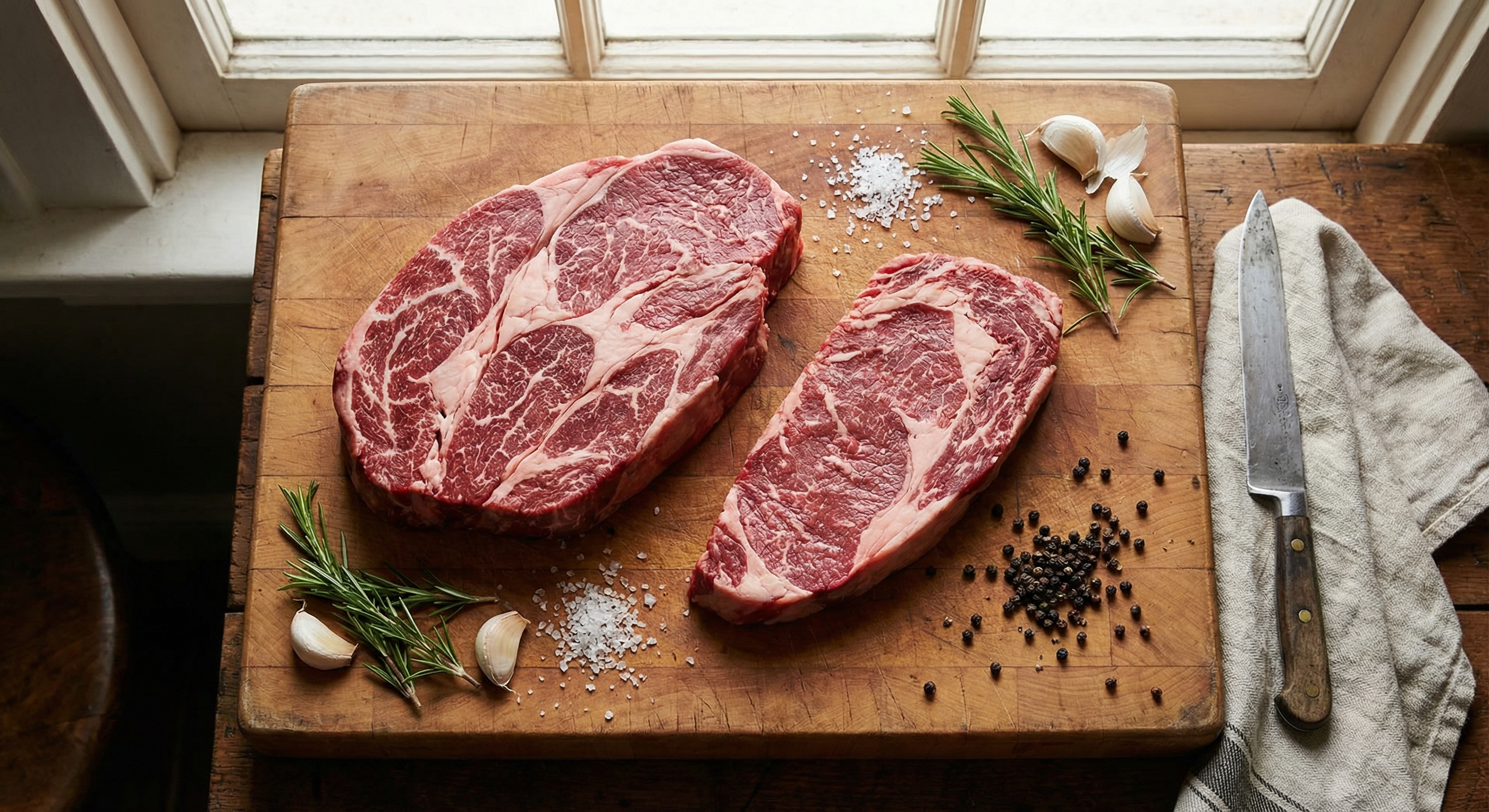
The chuck primal is the front shoulder of the cow, spanning from the neck to the fifth rib. It's one of the eight primal cuts and accounts for roughly 26% of the animal's total weight — making it the largest primal by a comfortable margin.
This section does a lot of work during the animal's life. The shoulder supports the head, powers forward movement, and stays engaged constantly. That means the muscles here are well-developed, full of connective tissue, and loaded with collagen. It also means they're packed with deep, beefy flavor that leaner cuts can't match.
Both chuck roast and chuck steak typically come from the chuck roll or chuck shoulder clod subprimals. The only difference is how the butcher cuts them:
- Chuck roast: A thick slab, usually 2-4 inches, often left as a single large piece
- Chuck steak: The same muscle sliced across the grain at 3/4 to 1 inch thick
Think of it this way: every chuck steak is essentially a thin slice of what could have been a chuck roast.
Side-by-Side Comparison
| Attribute | Chuck Roast | Chuck Steak |
|---|---|---|
| Thickness | 2-4 inches | 3/4 - 1 inch |
| Weight | 2-5 lbs | 8-16 oz per steak |
| Best cooking method | Braise, slow cook, smoke | Grill, pan-sear, broil |
| Cook time | 3-8 hours | 8-15 minutes |
| Internal temp target | 200-210°F (fork tender) | 130-135°F (medium-rare) |
| Price per pound | $5-8 | $6-9 |
| Connective tissue | Fully broken down | Still present (chewy) |
Chuck Roast: The Low-and-Slow Champion
Chuck roast is built for patience. That thick slab of well-marbled beef is loaded with collagen-rich connective tissue that needs time and moisture to break down into gelatin. When it does, the result is fall-apart tender meat with a rich, almost silky texture that no premium steak can replicate.
The classic preparation is a pot roast: sear the outside hard in a Dutch oven, add aromatics and liquid (beef broth, wine, or even beer), then cook covered at 300-325°F for 3-4 hours. You know it's done when a fork slides in with zero resistance.
Best Uses for Chuck Roast
- Pot roast — the definitive chuck roast application
- Beef stew — cube it for the most flavorful stew meat available
- Smoked chuck — treat it like a small brisket (225°F, 6-8 hours)
- Shredded beef — tacos, sandwiches, nachos
- Mississippi pot roast — the viral slow cooker recipe exists for a reason
The key principle: chuck roast needs to reach an internal temperature of 200-210°F to fully render the collagen. Cook it to 145°F like a steak and you'll be chewing for hours.
Chuck Steak: The Budget Grilling Cut
Chuck steak is what happens when you slice that same roast thin enough to cook with direct heat. At 3/4 to 1 inch thick, it can be grilled, pan-seared, or broiled in minutes instead of hours.
The tradeoff? You won't have time to break down all that connective tissue. Chuck steak will always have more chew than a ribeye or strip. But it also has more flavor than either of those cuts, and it costs a fraction of the price.
The secret to a great chuck steak is a good marinade. The acid (vinegar, citrus, wine) starts breaking down the tough fibers before the steak ever hits the heat. Marinate for 4-24 hours, then cook hot and fast to medium-rare or medium at most.
Best Uses for Chuck Steak
- Marinated and grilled — the most common preparation
- Philly cheesesteaks — shave it thin while partially frozen
- Stir-fry — slice against the grain into thin strips
- Swiss steak — pounded thin, braised in tomato sauce
- Fajitas — a more flavorful (and cheaper) alternative to skirt steak
The Connective Tissue Factor
This is the most important thing to understand about the chuck roast vs chuck steak decision. Both cuts contain significant amounts of collagen and connective tissue. The difference is entirely in how you deal with it.
With a chuck roast, you cook it long enough to convert that collagen into gelatin. This is a chemical process that happens above 160°F and accelerates around 180°F. Given enough time, every strand of tough tissue melts into silky richness. That's why pot roast is so tender despite coming from a working muscle.
With a chuck steak, you don't have that luxury. You're cooking for minutes, not hours. The connective tissue stays largely intact, which means you need to work around it: use marinades to soften fibers, slice thin against the grain, and don't overcook past medium (which tightens everything up).
Which One Should You Buy?
The answer depends entirely on your dinner plan and your timeline:
Buy chuck roast when:
- You have 3+ hours to cook (or a slow cooker running all day)
- You want fall-apart tender, fork-shredable meat
- You're feeding a crowd on a budget
- You're making stew, pot roast, or pulled beef
- It's a cold Sunday and the house needs to smell incredible
Buy chuck steak when:
- You need dinner on the table in under 30 minutes
- You want a grilled steak without the ribeye price tag
- You're making fajitas, stir-fry, or cheesesteaks
- You don't mind a bit more chew in exchange for bold flavor
- You're marinating overnight and grilling tomorrow
Pro Tips From the Butcher Block
- Ask your butcher to cut steaks from a chuck roast. You'll get fresher steaks and can control the thickness. Most butchers are happy to do this.
- Look for good marbling. Chuck varies more than most cuts. The best pieces have visible white streaks of fat running through the meat — avoid anything that looks uniformly dark red.
- Chuck eye steak is the exception. The chuck eye (cut from ribs 5-6) is essentially a cheap ribeye. If you see it, grab it — it's tender enough to grill without marinating.
- Don't skip the sear. Whether you're braising a roast or grilling a steak, a hard sear creates the Maillard reaction crust that makes beef taste like beef.
- Rest your steak. Chuck steak especially benefits from 5-10 minutes of resting. The juices redistribute and the meat relaxes, giving you a noticeably more tender bite.
Frequently Asked Questions
Frequently Asked Questions
Can I use chuck steak instead of chuck roast in a slow cooker?
You can, but the thinner steaks will cook faster and may fall apart into shreds rather than sliceable pieces. Reduce your cooking time by about 30-40% if substituting chuck steaks for a roast in a slow cooker recipe.
Is chuck roast the same as pot roast?
Not exactly. Chuck roast is a cut of beef. Pot roast is a cooking method — braising a large piece of beef with liquid and vegetables. Chuck roast is the most popular cut used to make pot roast, but you can also use bottom round, rump roast, or brisket.
Why is my chuck steak so tough?
Chuck steak has a lot of connective tissue that needs special attention. The most common mistakes are skipping the marinade, overcooking past medium, and slicing with the grain instead of against it. Address all three and your chuck steak will be significantly more tender.
What's the best substitute for chuck roast?
Bottom round roast and rump roast are the closest substitutes in terms of price and cooking method. Brisket flat also braises well but costs more. For the closest flavor match, look for a boneless short rib roast.
How do I know when chuck roast is done?
Internal temperature should reach 200-210°F for braised preparations. The real test is the fork test — if a fork slides in and out with no resistance and the meat pulls apart easily, it's done. Don't rely on time alone; every roast is different.
More Expert Guides
What Is Chateaubriand? (Cut, Cooking, & Best Sources)
Chateaubriand is a thick-cut roast from the center of the beef tenderloin, traditionally served for two. Learn what makes this classic French cut special and how to cook it.
14 min readWhat Is Round Steak? The Complete Guide to Beef's Most Versatile Budget Cut
Round steak comes from the rear leg of the cow — it's lean, affordable, and misunderstood. A master butcher breaks down every sub-cut, cooking method, and technique to turn this budget workhorse into genuinely delicious meals.
14 min readWhat Is Eye of Round? The Complete Butcher's Guide to This Lean Cut
Eye of round is one of the leanest, most affordable cuts in the entire beef case — and one of the most misunderstood. A butcher explains how to turn this budget-friendly roast into something genuinely delicious.