What Is Spider Steak? The Rarest Cut on the Cow
There's a steak so rare that most butchers never sell it — they keep it for themselves. The spider steak, sometimes called the oyster steak or araignée in French butchery, is a small, intensely flavorful cut hidden inside the hip bone of the cow. Each animal produces exactly two of them, one per hip, making it one of the scarcest steaks you can find.
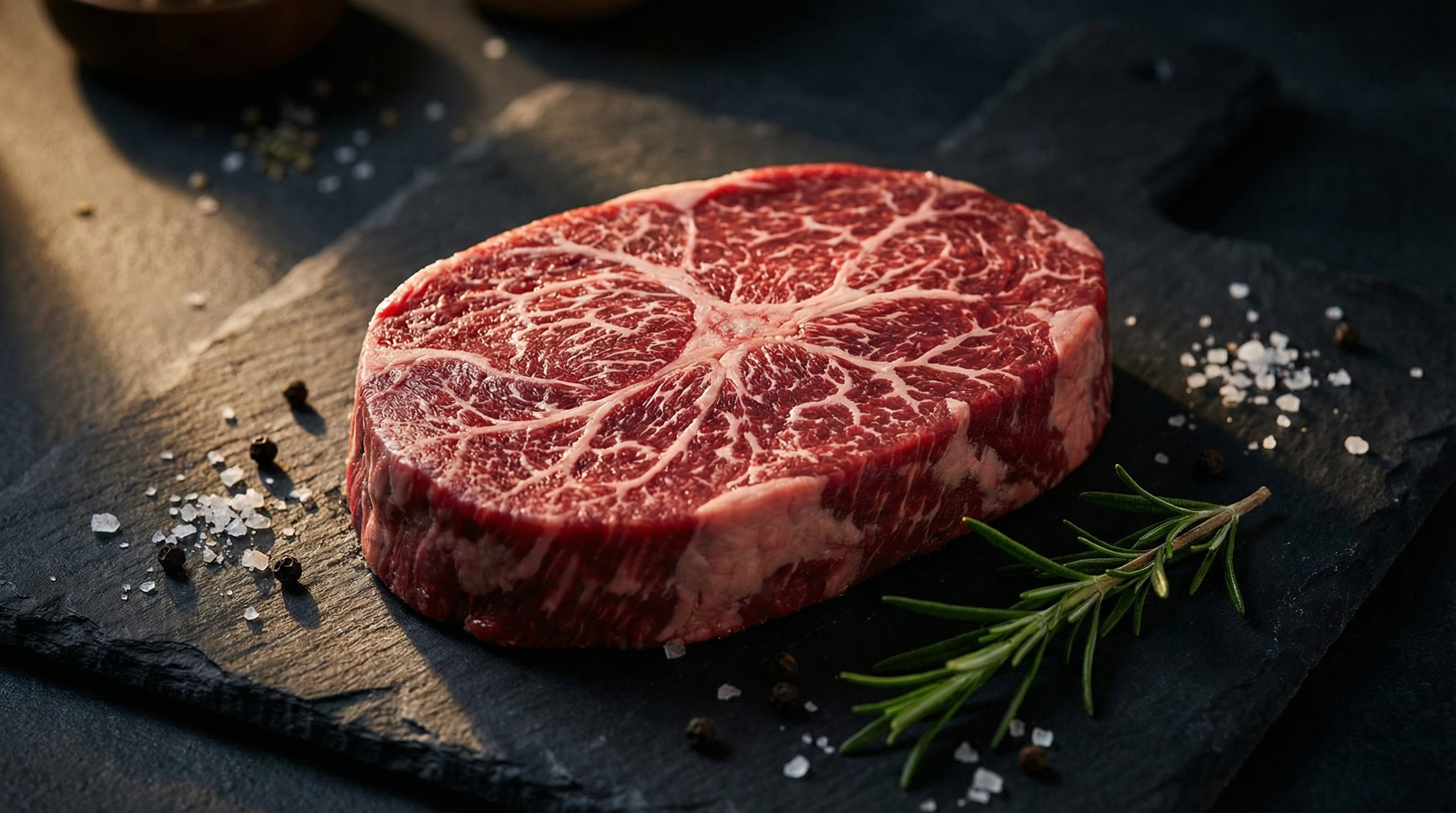
The name comes from the distinctive web-like pattern of intramuscular fat that radiates across the meat's surface, resembling a spider's web. This marbling pattern isn't just visually striking — it delivers extraordinary flavor and juiciness in a compact package that rivals cuts costing far more per pound.
Where Spider Steak Comes From
Spider steak is cut from the obturator internus muscle located inside the pelvic cavity of the cow, specifically on the inner surface of the aitch bone (hip bone). This muscle sits in a concave depression in the pelvis, which gives the steak its characteristic semi-circular or fan-like shape. The IMPS/NAMP designation is #167D, though you'll rarely see it referenced because so few retailers fabricate this cut.
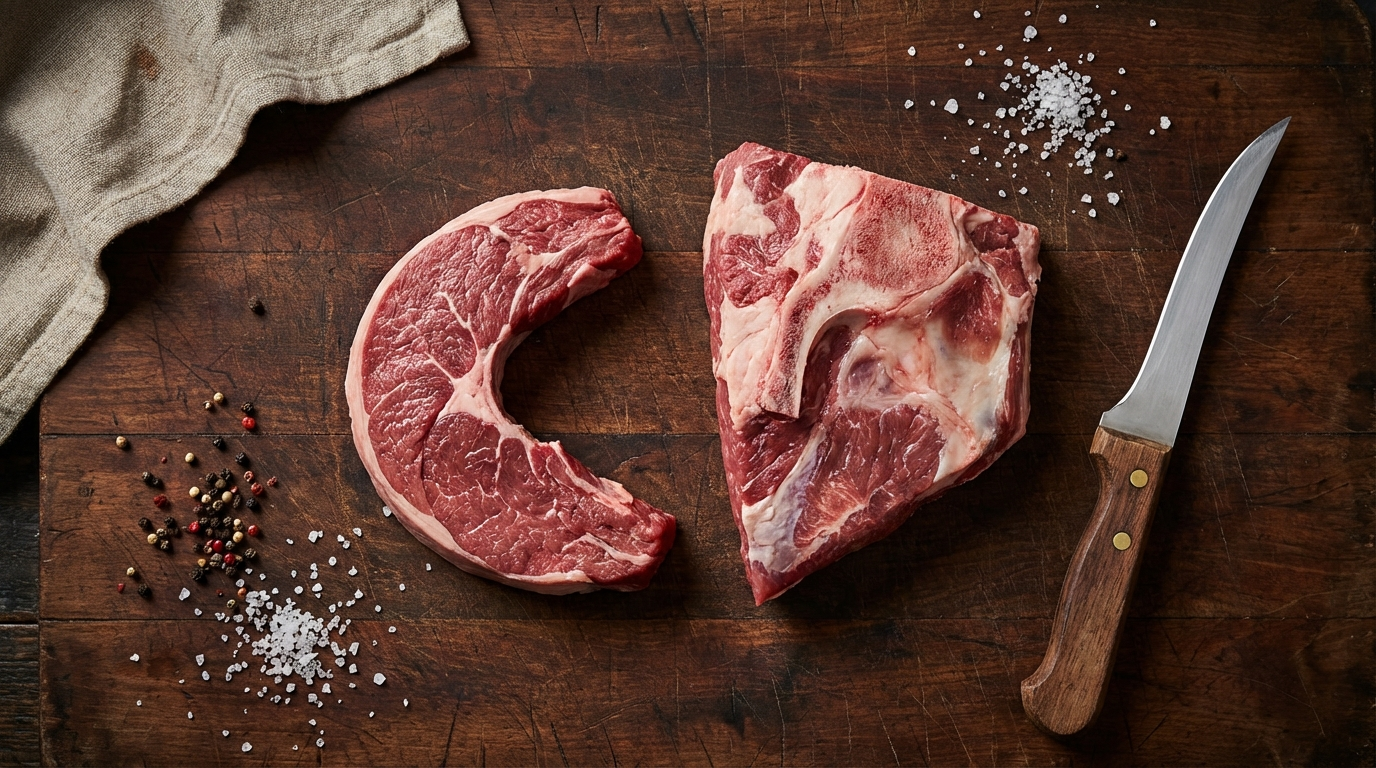
Each spider steak weighs between 7 and 10 ounces, depending on the size of the animal. The muscle is thin — rarely more than three-quarters of an inch at its thickest point — and has an irregular, roughly semicircular shape that follows the curvature of the bone it was attached to. You can't mistake it for any other cut once you've seen the distinctive fat webbing.
The obturator internus is responsible for lateral rotation of the hip joint. It's a relatively low-effort stabilizing muscle — the cow uses it for balance and subtle leg movements, not for heavy locomotion like walking or standing. This is why the spider steak is tender despite coming from the round primal, an area generally known for tougher, leaner cuts like eye of round and bottom round.
The scarcity is real. A 1,200-pound steer yields roughly 500 pounds of retail beef cuts. Of that, spider steaks account for barely one pound — two small steaks from the entire animal. Compare that to a ribeye, which yields 15–20 pounds of steaks per carcass, and you understand why most people have never encountered this cut.
Why It's Called Spider Steak
The name "spider steak" comes from the radiating pattern of fat and connective tissue that fans across the muscle's surface. These sinew lines spread outward from a central point near where the muscle attached to the bone, creating a visual effect remarkably similar to a spider's web. The pattern is visible on the raw steak and becomes even more pronounced during cooking as the surrounding meat browns while the fat lines remain lighter.
In French butchery, this cut is called araignée — literally "spider" — and it has been prized by French butchers for generations. Paris bistros that serve araignée often list it as a daily special because supply is so limited that it can't be a regular menu item.
In Australia, it's most commonly called "spider steak," which is where the English name gained traction. Australian butchery tends to fabricate more individual muscles than American processing, so Aussie butchers have been cutting and selling spider steaks for decades while American processors left the muscle on the bone or ground it into trim.
In the United Kingdom, you may encounter it labeled as "oyster steak" — a reference to the oyster-shaped pocket in the hip bone where the muscle sits. In Scotland, there's occasional overlap with the term "pope's eye," though that name more commonly refers to a different cut from the rump.
In Japanese butchery, this muscle is part of the uchimomo (inner round) fabrication, and skilled Japanese butchers have long recognized it as a premium portion within what Western butchery treats as a commodity section.
What Spider Steak Tastes Like
Spider steak delivers a flavor experience that surprises everyone who tries it for the first time. The combination of deep beefy taste and rich intramuscular fat in such a small package creates a concentration of flavor that larger, more common steaks often can't match.
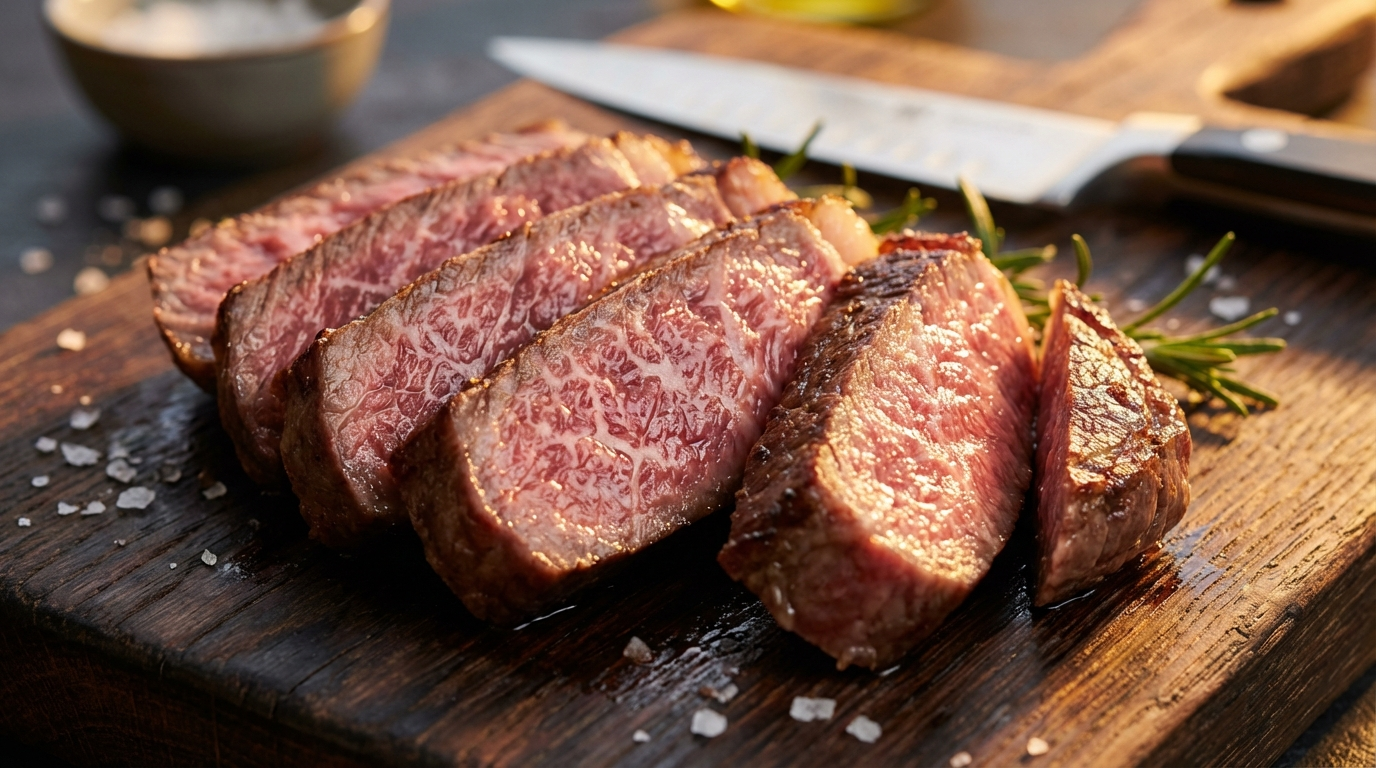
Flavor: Spider steak has an intensely beefy, almost mineral-rich taste. Because the obturator internus is a hard-working stabilizing muscle with excellent blood flow, it develops deeper myoglobin content than many premium loin cuts. The result is a robust, iron-rich beef flavor reminiscent of hanger steak or bavette — cuts prized by chefs specifically for their savory depth. The web of fat running through the meat amplifies this flavor with buttery richness as it renders during cooking.
Texture: The texture is unique among beef cuts. Spider steak has a slightly coarse grain with those distinctive connective tissue veins running through it. When cooked to medium-rare or medium, these soften into silky, gelatinous threads that add body and mouthfeel. The overall bite is tender but with character — not the uniform softness of filet mignon, but a more complex, satisfying chew that rewards each bite.
Juiciness: The web of intramuscular fat acts as a natural basting system. As the steak cooks, fat renders from multiple points across the meat simultaneously, keeping the interior consistently moist. Spider steak is one of the juiciest cuts you'll encounter, and this quality holds up even if you slightly overshoot your target temperature — the fat network provides a buffer that leaner cuts lack.
How to Cook Spider Steak
Spider steak's thin profile and rich fat content make it ideal for fast, high-heat cooking methods. The key is to build a crust quickly without overcooking the thin center. Treat it more like skirt steak or flat iron than a thick-cut ribeye.
Cast Iron Sear (Best Method)
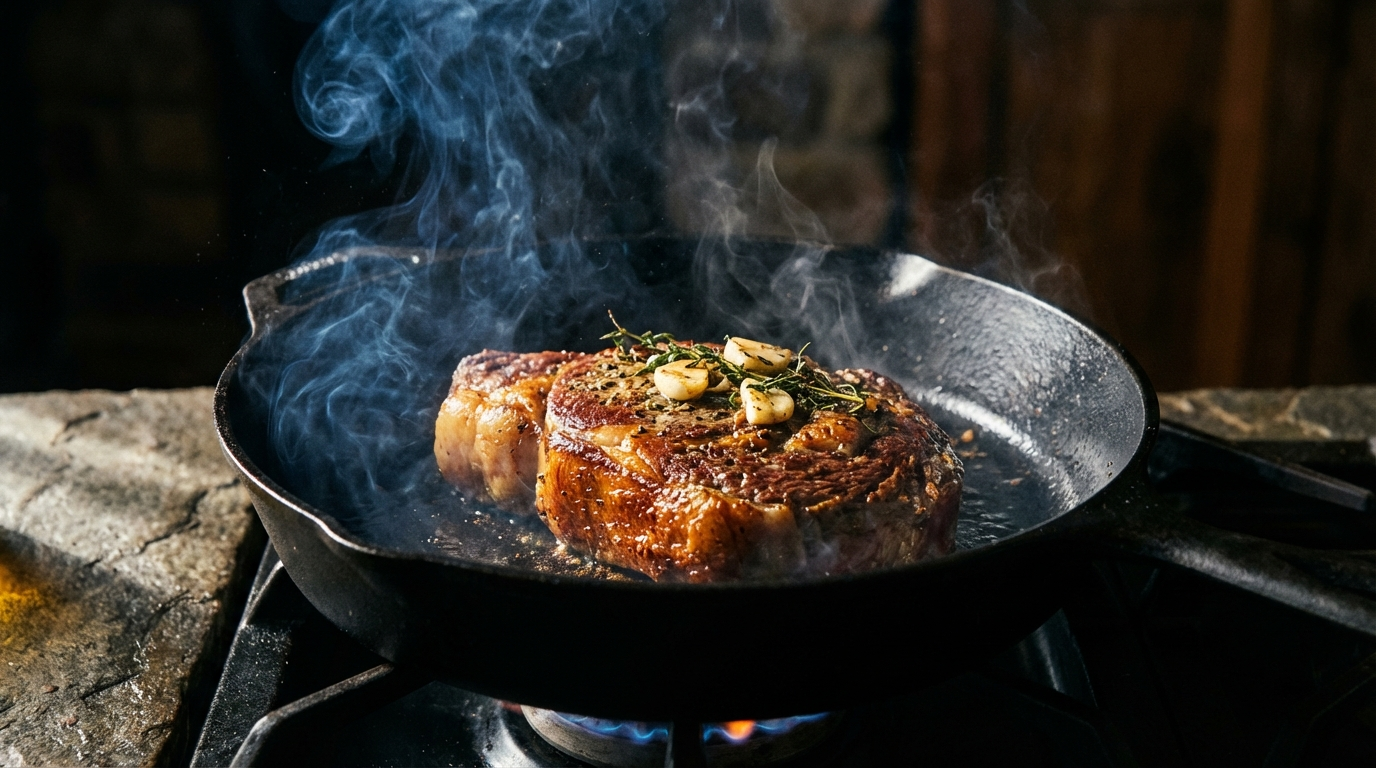
The cast iron skillet delivers the best results for spider steak. Its heat retention creates the intense, even surface temperature needed to develop a Maillard crust in the short window before the thin steak cooks through.
- Temper: Remove the steak from the fridge 20–30 minutes before cooking. Pat completely dry with paper towels — the thin profile means surface moisture will steam rather than sear. Season generously with kosher salt and coarse black pepper.
- Preheat aggressively: Heat your cast iron over high heat for 4–5 minutes until it's smoking. Add a thin film of avocado oil or beef tallow. You want the pan hotter than you'd use for a thick steak — spider steak needs speed.
- Sear fast: Lay the steak flat in the pan. Do not move it for 2–3 minutes. The thin profile means the crust needs to develop quickly. When the edges show deep mahogany color, flip once. Cook another 2 minutes for medium-rare.
- Baste (optional): Add butter, crushed garlic, and thyme in the last 60 seconds. Tilt the pan and spoon the foaming butter over the steak. The web-like fat absorbs the aromatics beautifully.
- Rest briefly: Transfer to a cutting board and rest 3–4 minutes. Spider steak is thin enough that a long rest isn't necessary — just enough to let the juices redistribute.
Grilling Over Charcoal
Spider steak is exceptional on a hot charcoal grill. Set up a single-zone high-heat fire — you won't need an indirect zone because the steak cooks so quickly. Grill 2–3 minutes per side directly over the coals. The fat web will drip and flare, giving the steak a smoky char that complements its bold beef flavor. Pull at 125°F internal for a final rested temperature of 130–133°F.
French Bistro Style (Poêlée)
This is how Parisian butchers cook their prized araignée: Sear in a screaming-hot pan with clarified butter. Once both sides are crusted, deglaze the pan with a splash of red wine and a spoonful of Dijon mustard. Swirl in cold butter to create a quick pan sauce. Serve the steak sliced against the grain with the sauce spooned over and a pile of crispy frites on the side. Simple, perfect, French.
Yakiniku (Japanese Tabletop Grill)
Because spider steak is thin and heavily marbled, it's a natural fit for yakiniku-style cooking. Slice the raw steak into thin strips following the natural lines of the web pattern. Grill each strip for 20–30 seconds per side on a blazing-hot grate. Dip in ponzu with grated daikon, or a sesame-soy tare. The rapid cooking renders the fat lines into pure flavor without overcooking the meat.
Temperature and Doneness Guide
Spider steak's thin profile means temperature climbs fast. Use an instant-read thermometer and pull it earlier than you think — carryover heat will add 4–5°F during the short rest.
- Rare (120–125°F): Cool red center. The fat web hasn't fully rendered, so you miss some of the buttery quality. Acceptable but not ideal for this cut.
- Medium-rare (130–135°F): Warm pink center with fully rendered intramuscular fat. The connective tissue web has softened to silky gelatin. This is the sweet spot — peak flavor, tenderness, and juiciness.
- Medium (140–145°F): Pink turning to rosy. The generous fat keeps it moist. Many French preparations target this range because the web fully melts and the beef flavor intensifies with slightly more rendering.
- Medium-well and above (150°F+): The thin steak tightens quickly past medium. The connective tissue web becomes chewy rather than silky. Not recommended — too much of what makes this cut special is lost.
Spider Steak vs Other Rare Cuts
Spider steak belongs to a family of "butcher's cuts" — steaks that are so scarce or require such skilled fabrication that butchers historically kept them for themselves rather than selling them.
Spider Steak vs Hanger Steak
Hanger steak shares spider steak's bold beefy flavor and scarcity (one per animal), but they're very different cuts. Hanger is thicker, with a prominent central membrane that divides it into two lobes. Spider steak is thinner with its web pattern distributed throughout. Hanger has a slightly more pronounced mineral flavor; spider steak is richer from its higher fat content. Both are excellent, but spider steak is roughly twice as scarce since you get two per animal versus one hanger — and hanger is already rare.
Spider Steak vs Flat Iron
Flat iron is more widely available and yields larger steaks (8–14 oz vs 7–10 oz). Flat iron has uniform tenderness and consistent thickness that makes it easier to cook. Spider steak has more character — the fat web creates variation in every bite, and the beefy flavor is more concentrated. If you want reliable and crowd-pleasing, go flat iron. If you want something truly special and different, spider steak is the move.
Spider Steak vs Teres Major
Teres major (petite tender) is another hidden gem from the chuck, prized for its tenderloin-like texture. It's more tender than spider steak but less flavorful — teres major is mild and delicate where spider steak is bold and rich. Teres major yields about one pound per animal (similar scarcity), but its mild flavor makes it a different eating experience entirely.
Where to Buy Spider Steak
Finding spider steak requires effort, relationships, and sometimes luck. This is not a cut you'll stumble across at a grocery store.
Independent butcher shops are by far your best source. Build a relationship with your butcher and ask specifically for spider steak or oyster steak. Many skilled butchers know this cut but don't display it because the yield is so low — they may set one aside for you if you ask. Explain that you want the muscle from the inside of the hip bone, the obturator internus, if they're unfamiliar with the retail name.
Farmers' markets and whole-animal butchers are excellent sources. Operations that break down entire carcasses are more likely to fabricate niche cuts like spider steak, especially if they have customers who specifically request them. Many whole-animal butchers appreciate customers who want unusual cuts because it helps them sell every part of the animal at appropriate value.
Online specialty retailers occasionally offer spider steak, though availability is inconsistent. Look for companies that specialize in rare or heritage breed beef — they're more likely to fabricate unusual cuts. Expect to pay $15–25 per pound, which is actually reasonable considering the quality and rarity.
Standard grocery stores almost never carry spider steak. Large-scale meat processing facilities don't fabricate individual muscles from the hip — the obturator internus gets left on the bone and ends up as trim or ground beef. This is the fundamental problem: the economics of high-volume processing don't support spending extra labor on a muscle that yields less than a pound per animal.
Common Mistakes to Avoid
Spider steak is forgiving thanks to its fat content, but these mistakes will diminish the experience:
- Using a cold pan: Spider steak is thin. If the pan isn't screaming hot, the interior will overcook before a crust forms. Preheat longer than you think necessary.
- Cooking too slowly: This is a fast-sear cut. Low and slow methods like braising or sous vide work against spider steak's strengths. The connective tissue web needs quick, intense heat to render into gelatin without turning the meat to mush.
- Cutting with the grain: Spider steak's grain runs in a fan pattern matching the web. Identify the dominant grain direction and always slice perpendicular to it. Cutting with the grain turns a tender steak into a chewy one.
- Overcooking past medium: The thin profile means there's a narrow window between perfectly cooked and overdone. Use an instant-read thermometer and pull at 125°F for medium-rare after resting.
- Not drying the surface: Spider steak can hold moisture in its web pattern. Pat both sides thoroughly dry with paper towels before seasoning. Surface water steams instead of searing.
Is Spider Steak Worth Seeking Out?
Absolutely — with a caveat. Spider steak is not going to replace your go-to weeknight steak. The supply is too limited, the sourcing too unpredictable, and the portion too small for most appetites. But as a special-occasion experience or a way to explore the full potential of beef, spider steak is revelatory.
What makes it worth the hunt is the combination of qualities that don't usually coexist: bold, concentrated beef flavor; rich, self-basting fat; genuine tenderness from an area of the cow that's typically tough; and a visual presentation — that web — unlike anything else in the butcher case.
If you eat at restaurants that focus on whole-animal butchery, ask if they ever serve spider steak. Many chefs hoard this cut for staff meals or off-menu specials. If your butcher offers it, don't hesitate. And if you ever find yourself breaking down a whole hindquarter, take the extra ten minutes to carefully remove the obturator internus from the hip bone. It's one of the most rewarding discoveries in beef butchery.
Frequently Asked Questions
What is spider steak?
Spider steak is an ultra-rare cut from the obturator internus muscle inside the cow's hip bone. Only two exist per animal, each weighing 7-10 ounces. It's named for the web-like pattern of intramuscular fat that radiates across its surface.
Why is spider steak so rare?
Each cow produces only two spider steaks, totaling less than one pound of meat from a 500-pound carcass. Most large processors don't bother fabricating it because the yield is too low — the muscle usually ends up as trim or ground beef.
What does spider steak taste like?
Spider steak has an intensely beefy, mineral-rich flavor similar to hanger steak, with rich buttery notes from the web of intramuscular fat. The texture is tender with a satisfying chew, and the rendered fat creates pockets of concentrated flavor.
How do you cook spider steak?
Sear spider steak fast and hot — cast iron or charcoal grill, 2-3 minutes per side. The thin profile and rich fat content make it ideal for quick, high-heat methods. Cook to medium-rare (130-135°F) for the best texture and flavor.
Is spider steak the same as oyster steak?
Yes, spider steak and oyster steak are the same cut — the obturator internus from inside the hip bone. 'Spider steak' is common in Australia, 'oyster steak' in the US and UK, and 'araignée' in France.
Where can I buy spider steak?
Independent butcher shops and whole-animal butchers are your best sources. Ask specifically for spider steak or oyster steak. Standard grocery stores almost never carry it due to the extremely low yield per animal.
More Expert Guides
What Is Chateaubriand? (Cut, Cooking, & Best Sources)
Chateaubriand is a thick-cut roast from the center of the beef tenderloin, traditionally served for two. Learn what makes this classic French cut special and how to cook it.
14 min readWhat Is Round Steak? The Complete Guide to Beef's Most Versatile Budget Cut
Round steak comes from the rear leg of the cow — it's lean, affordable, and misunderstood. A master butcher breaks down every sub-cut, cooking method, and technique to turn this budget workhorse into genuinely delicious meals.
14 min readWhat Is Eye of Round? The Complete Butcher's Guide to This Lean Cut
Eye of round is one of the leanest, most affordable cuts in the entire beef case — and one of the most misunderstood. A butcher explains how to turn this budget-friendly roast into something genuinely delicious.