What is Teres Major Steak? The Butcher's Best Kept Secret
If you asked most people to name the most tender cut of beef, they'd say filet mignon without hesitating. And they'd be right — the tenderloin is the single most tender muscle on the animal. But if you asked what comes in second, you'd get blank stares. That's because the answer — teres major — is a cut most consumers have never encountered, even though it's been hiding in plain sight at every butcher counter in America.
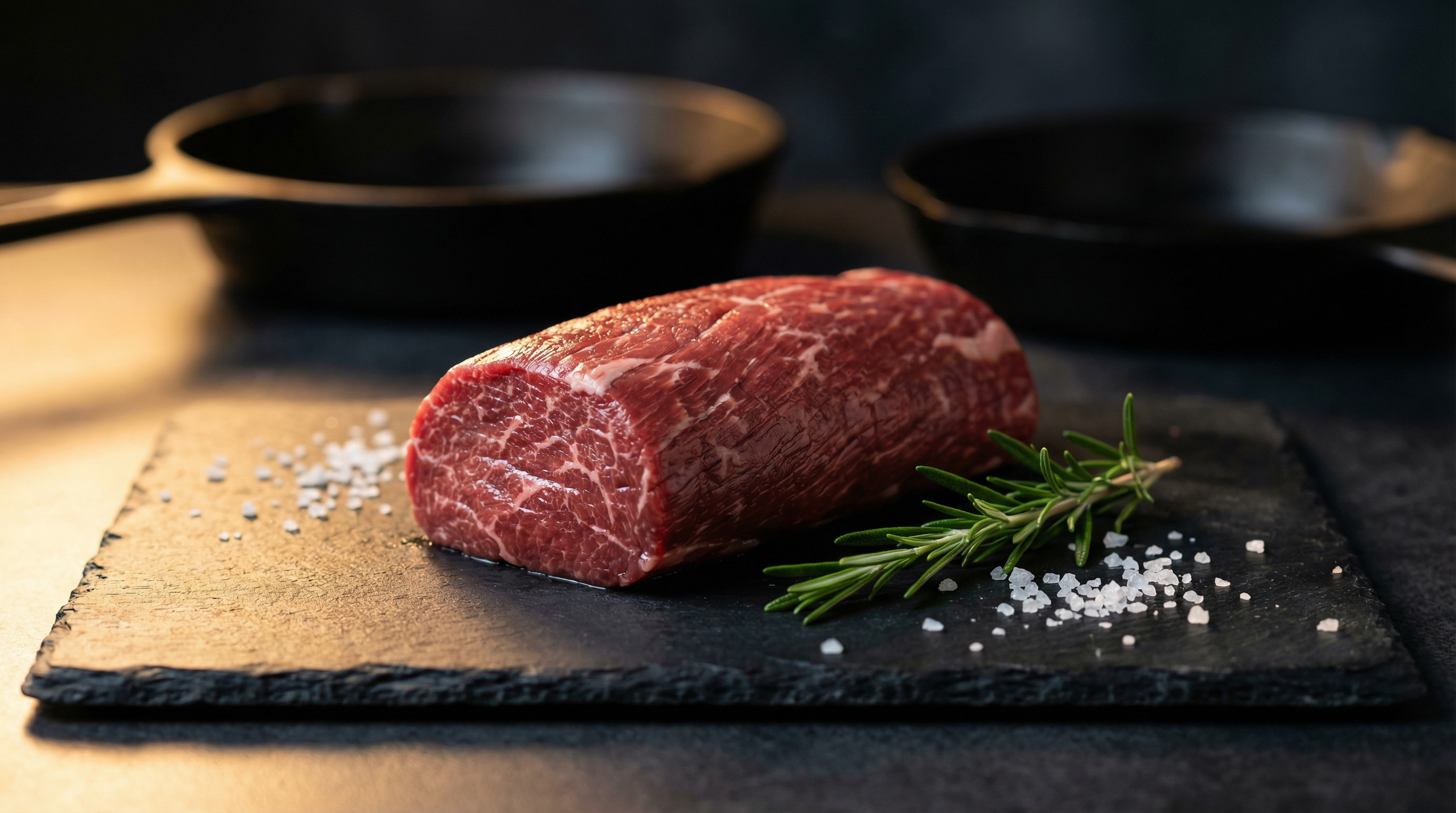
Also called the petite tender, bistro filet, or shoulder tender, teres major is a small, torpedo-shaped muscle from the chuck that delivers tenderness rivaling the tenderloin at a fraction of the price. It's the kind of cut that makes butchers shake their heads when customers walk past it to grab another ribeye. And once you understand what it is and how to cook it, you'll wonder why nobody told you about it sooner.
Anatomy: Where Does Teres Major Come From?
The teres major comes from the chuck primal — the massive shoulder section that accounts for roughly 26% of the animal's total weight. But while most chuck cuts are known for being tough, well-marbled, and best suited for braising, the teres major is a striking exception.
Specifically, teres major is a small muscle that sits along the back edge of the shoulder blade (scapula). Its NAMP (North American Meat Processors) designation is #114F. In anatomical terms, the teres major muscle helps rotate and stabilize the foreleg — it's a postural muscle rather than a locomotive one, which is exactly why it's so tender. Muscles that move the animal constantly (legs, neck) develop tough connective tissue. Muscles that stabilize and support (like the tenderloin and teres major) stay remarkably soft.
The muscle is relatively small — a whole teres major typically weighs between 8 and 12 ounces, roughly the size of a pork tenderloin. Each animal yields only two teres major muscles, one from each shoulder, which partly explains why the cut remains obscure. There simply isn't much of it, and until the early 2000s, most processors just ground it into chuck or left it buried in shoulder roasts.
Its neighbors in the chuck tell an interesting story about muscle function and tenderness:
- Flat iron steak sits just above the teres major, separated by a band of connective tissue. It's the third most tender muscle, making this small area of the shoulder an unlikely tenderness hotspot.
- Chuck roast surrounds the teres major on all sides — these are the working muscles that require low-and-slow cooking.
- Denver steak comes from the same general area but is serratus ventralis — a different muscle entirely with its own texture and cooking profile.
Understanding this anatomy reveals something remarkable: within the toughest primal on the animal, there are pockets of extraordinary tenderness. The flat iron and teres major are essentially hidden gems buried inside the chuck, and skilled butchers have known about them for decades even as the general public remained oblivious.
Why Is Teres Major So Tender?
Tenderness in beef comes down to three factors: connective tissue content, muscle fiber diameter, and the type of work the muscle performs. Teres major scores well on all three.
First, connective tissue. Hardworking muscles like the shank or brisket are laced with collagen — tough protein strands that require hours of low heat to break down into gelatin. The teres major, by contrast, does relatively little work. It assists with shoulder rotation and stabilization, but it's not bearing weight or propelling the animal forward. This means minimal collagen development, which translates directly to a tender eating experience without any special cooking technique.
Second, muscle fiber diameter. The teres major has exceptionally fine muscle fibers — comparable to the tenderloin itself. Fine fibers mean a smoother, more delicate texture on the palate. When you slice into a properly cooked teres major, the grain is tight and uniform, almost like cutting through butter. This is in stark contrast to coarser-grained cuts like flank or skirt steak, where the visible grain requires careful slicing against the fiber direction.
Third, the work pattern matters. The teres major is a tonic muscle — one that maintains posture through sustained, low-level contractions rather than powerful, repetitive movements. Tonic muscles tend to be tender because they don't develop the thick connective tissue sheaths that protect high-output muscles. The tenderloin is the classic example of a tonic muscle, and the teres major follows the same pattern on a smaller scale.
Scientific studies have consistently placed teres major among the top five most tender muscles on the bovine carcass. Research from the University of Nebraska and the University of Florida's muscle profiling studies both identified it as having shear force values (measured with a Warner-Bratzler device) that rival or approach the psoas major (tenderloin). In practical terms, you can cook a teres major with nothing more than salt, pepper, and high heat, and it will come out fork-tender every time.
Teres Major vs Filet Mignon: How Do They Compare?
The comparison is inevitable, because teres major is marketed as a filet mignon alternative — and for good reason. But the two cuts aren't identical, and understanding the differences helps you decide when each one shines.
Tenderness: Filet mignon (from the psoas major) is still the undisputed champion — the most tender muscle on the animal. But teres major is remarkably close. In blind tastings, many consumers struggle to distinguish between the two when both are cooked to the same doneness. The difference is subtle: filet mignon has a slightly more buttery, melt-in-your-mouth quality, while teres major has a barely perceptible bit more chew that some tasters actually prefer because it feels more substantial.
Flavor: This is where teres major often wins. Filet mignon is famously mild — tender but not particularly beefy. It's the cut people slather in béarnaise or wrap in bacon precisely because the meat itself doesn't deliver intense flavor. Teres major, coming from the harder-working chuck, has noticeably more beefy depth. The flavor is richer, more complex, with subtle mineral and iron notes that remind you of the best parts of a prime rib.
Marbling: Neither cut is heavily marbled compared to ribeye, but teres major typically shows slightly more intramuscular fat than filet mignon. This additional marbling contributes to its fuller flavor and helps keep the meat juicy during cooking — a meaningful advantage for home cooks who might slightly overcook their steak.
Size and shape: A whole teres major is 8–12 ounces and roughly 6–8 inches long, tapering from thick to thin — shaped like a miniature tenderloin. Filet mignon steaks are typically cut 1.5–2 inches thick from the much larger tenderloin. You can cut teres major into medallions, but most butchers recommend cooking it whole and slicing after resting.
Price: This is the decisive factor. Filet mignon routinely sells for $30–60 per pound at retail, and significantly more at restaurants. Teres major, when you can find it, typically runs $10–18 per pound — often less than half the price of filet mignon for 85–90% of the eating experience. Dollar for dollar, it might be the best value in the entire beef case.
Other Names for Teres Major
One reason teres major remains obscure is that it goes by a confusing array of names. If you're hunting for it at the butcher counter or online, knowing these aliases is essential:
- Petite tender — The most common retail name, coined by the Beef Checkoff program's Muscle Profiling study in the early 2000s. This is what you'll see on labels at Whole Foods, specialty butchers, and some Costco locations.
- Shoulder tender — Descriptive name referencing its anatomical location. Common in wholesale and foodservice.
- Bistro filet — A marketing name used by some restaurants and retailers to position it as an elegant alternative to filet mignon.
- Shoulder petite tender — The full USDA-approved retail name, sometimes seen on packaging.
- Teres major — The anatomical name, used by butchers and meat professionals. If you ask a knowledgeable butcher for teres major by name, they'll know you've done your homework.
- Mock tender — Occasionally confused with this, but mock tender is actually a different muscle (supraspinatus) that's significantly less tender. Don't confuse them.
The naming confusion extends to how the cut is merchandised. In many supermarkets, teres major never appears as a standalone item — it's simply part of a bone-in chuck roast or gets trimmed into stew meat. Only butchers who seam-cut the shoulder (separating individual muscles rather than just sawing across the primal) will extract the teres major as its own cut. This is one reason specialty butcher shops and direct-from-ranch online retailers are often the best sources.
How to Cook Teres Major Steak
Teres major is forgiving and versatile, but its shape and size call for specific techniques to get the best results. The key principle: treat it like a small tenderloin, not like a typical steak.
The Best Method: Sear and Roast (Reverse Sear)
Because teres major tapers from thick to thin, even heat distribution is the main challenge. The reverse sear solves this perfectly:
- Season generously with kosher salt and freshly ground black pepper at least 45 minutes before cooking (or up to 24 hours in the fridge, uncovered).
- Slow roast in a 250°F oven on a wire rack until the internal temperature hits 115°F — typically 25–35 minutes depending on size.
- Sear hard in a screaming-hot cast iron skillet with a high-smoke-point oil (avocado or refined peanut) for 60–90 seconds per side until a deep brown crust forms.
- Rest for 8–10 minutes, loosely tented with foil.
- Slice into 1/2-inch medallions against the grain.
Target final temperature: 130°F for medium-rare. Because this cut is so lean compared to ribeye, overcooking past medium (155°F) will dry it out and waste its natural tenderness. Medium-rare to medium is the sweet spot.
Grilling Whole
Teres major is outstanding on the grill, cooked like a small roast over indirect heat with a final sear over the hot zone. Set up a two-zone fire — coals banked to one side on charcoal, or burners on one side for gas. Cook the teres major on the cool side with the lid closed until it reaches 120°F internal, then move it directly over the coals to sear all sides. Total cook time is usually 20–30 minutes.
Pan-Seared Medallions
If you want individual portions, slice the raw teres major into 1.5-inch thick medallions before cooking. Tie each medallion with butcher's twine to maintain its shape (they'll try to flatten out). Sear in a cast iron skillet over high heat for 2–3 minutes per side, basting with butter, garlic, and thyme during the final minute. This method is fast, elegant, and works beautifully for a weeknight dinner that looks like it came from a steakhouse.
Sous Vide
Teres major might be the single best cut for sous vide cooking. Vacuum-seal the whole muscle with salt, pepper, and a sprig of thyme. Cook at 131°F for 2–3 hours. The extended time allows the small amount of connective tissue to break down while the precise temperature ensures edge-to-edge medium-rare. After the bath, pat dry thoroughly and sear in a blazing-hot pan for 45 seconds per side. The result is tenderloin-level perfection from a $12/lb cut.
What NOT to Do
- Don't braise it. Teres major doesn't need low-and-slow cooking. Braising will turn it mushy and destroy its naturally fine texture. Save braising for chuck roast and stew cuts.
- Don't slice it thin before cooking. The tapered shape means thin slices will overcook instantly. Cook whole or in thick medallions.
- Don't cook past medium. This is a lean cut. Internal temperatures above 150°F will produce dry, disappointing results.
- Don't skip the rest. Resting for 8–10 minutes is non-negotiable. The fibers need time to reabsorb their juices.
Where to Buy Teres Major
Finding teres major requires slightly more effort than grabbing a ribeye from the supermarket cooler, but it's becoming easier every year as more consumers discover the cut.
Specialty butcher shops are the most reliable source. Independent butchers who break down whole animals or sub-primals will typically seam out the teres major as a separate cut if you ask. Many already display it, especially shops that cater to food-savvy customers. Call ahead — if they have chuck on hand, they can extract the teres major for you, often for less than $15/lb.
Online meat retailers have made teres major much more accessible. Companies like Snake River Farms, Porter Road, Crowd Cow, and similar direct-to-consumer operations offer petite tenders as a regular catalog item. Expect to pay $15–22/lb online including shipping, which is still a remarkable value for a cut this tender.
Costco and Whole Foods occasionally carry petite tenders, though availability varies by region and season. Costco sometimes packages them in the specialty meat section under "petite tender." Whole Foods labels them as "shoulder petite tender" and they appear more frequently in stores with full-service butcher counters.
Conventional supermarkets rarely carry teres major as a standalone cut. The muscle is simply too small and unfamiliar for most grocery store meat departments to merchandise individually. Your best bet at a conventional supermarket is to ask the butcher behind the counter — if they're breaking chuck in-house, they may be willing to cut one out for you.
When buying, look for teres major that's been cleanly trimmed of its surrounding silver skin and connective tissue. The surface should be deep red with fine flecks of white intramuscular fat. Avoid any that appear dry, discolored at the edges, or excessively trimmed (sometimes overzealous trimming removes too much of the muscle's natural fat cap).
The History of a "New" Cut
Teres major has existed on every cow that ever lived, obviously. But as a retail cut, it's essentially a 21st-century invention. The story of how it went from anonymous chuck scrap to boutique steak reveals a lot about how the beef industry works.
In the late 1990s, the National Cattlemen's Beef Association funded research at several universities to systematically evaluate every muscle in the bovine carcass. The goal was to find undervalued muscles that could be marketed as premium cuts — a process called muscle profiling. Researchers at the University of Nebraska and the University of Florida tested dozens of individual muscles for tenderness, flavor, and portion size.
The results were eye-opening. Several muscles from the chuck and round — primals traditionally viewed as "commodity" meat destined for grinding or braising — turned out to be remarkably tender when isolated and properly cut. The flat iron was the biggest discovery, but teres major was right behind it. Both muscles had shear force values (a scientific measure of tenderness) that placed them alongside loin cuts costing three to four times as much.
The Beef Checkoff program gave these rediscovered cuts consumer-friendly names — "flat iron" and "petite tender" — and launched marketing campaigns aimed at restaurants and retailers. The flat iron caught on quickly, becoming one of the most popular steakhouse cuts by 2010. The petite tender's adoption has been slower, partly because of its smaller portion size and partly because it requires more skilled butchery to extract cleanly.
But the trend is unmistakably moving in its direction. Restaurant menus featuring teres major or petite tender have increased significantly over the past five years, and online meat retailers report it as one of their fastest-growing items. As more consumers learn about it — often through food media, cooking shows, or word of mouth — demand continues to build.
Seasoning and Pairing Ideas
Teres major has enough inherent flavor that it doesn't need heavy seasoning, but it also takes well to bold treatments because of its rich, beefy base. Here are approaches that work beautifully:
Classic steakhouse: Kosher salt, coarsely cracked black pepper, and a finish of flaky Maldon salt. Let the meat speak. This is the best first-time approach — you want to taste what the cut naturally delivers.
Herb-crusted: After searing, press a mixture of minced fresh rosemary, thyme, and garlic into the crust while the meat rests. The residual heat blooms the herbs without burning them.
Coffee-rubbed: Equal parts finely ground coffee, smoked paprika, brown sugar, and kosher salt, applied 2 hours before cooking. The coffee creates an intensely savory crust that pairs surprisingly well with the mineral notes in the meat.
Asian-inspired: Marinate in soy sauce, sesame oil, rice vinegar, ginger, and garlic for 4–6 hours. Grill whole, slice into thin medallions, and serve over rice with pickled vegetables. The cut's fine texture absorbs marinades beautifully.
Chimichurri finish: Cook the teres major simply with salt and pepper, then top sliced medallions with a bright chimichurri of parsley, oregano, garlic, red wine vinegar, and olive oil. The herbaceous acidity cuts through the richness perfectly.
For wine pairing, teres major's moderate fat content and deep beef flavor work best with medium-bodied reds: Pinot Noir, Côtes du Rhône, Malbec, or a young Barolo. Avoid overly tannic Cabernets — the cut's lean profile doesn't have enough fat to buffer aggressive tannins the way a ribeye does.
Frequently Asked Questions
Is teres major the same as mock tender?
No. This is a common and important distinction. Mock tender (supraspinatus) is a completely different shoulder muscle that looks similar but is significantly tougher. Mock tender has a central band of connective tissue that makes it chewy when cooked with dry heat. If you see "mock tender" at the store, it's not the same cut — don't substitute it expecting similar results.
Can I substitute teres major for filet mignon in recipes?
In most cases, yes. Teres major works in any recipe that calls for filet mignon medallions, beef tenderloin steaks, or tournedos. The main adjustment is cooking time — teres major is typically thinner than a filet mignon steak, so it cooks faster. Monitor internal temperature rather than relying on timing.
How many servings does one teres major yield?
One whole teres major (8–12 oz) typically serves 1–2 people as a steak entrée. For a dinner party of four, plan on buying 2–3 teres majors. When sliced into medallions, one muscle produces 4–6 attractive rounds.
Why don't more stores carry it?
Volume and awareness. Each animal produces only two small teres major muscles, totaling roughly 1–1.5 pounds. For a high-volume supermarket that processes thousands of pounds of chuck daily, the labor required to extract, trim, and merchandise such a small cut often doesn't justify the effort. As consumer demand grows, more retailers are adding it — but we're still in the early adoption phase.
Can I age teres major?
The muscle is too small for traditional dry aging, which requires large primals with fat caps to protect against moisture loss. However, wet aging in vacuum-sealed packaging for 14–21 days works well and is how most commercial teres major is handled before it reaches the consumer. If you buy from a quality source, it's likely already been wet-aged in transit.
Frequently Asked Questions
What is teres major steak?
Teres major is a small, torpedo-shaped muscle from the beef shoulder (chuck primal) that is the second most tender cut on the entire animal. Also called petite tender, bistro filet, or shoulder tender, it delivers tenderness rivaling filet mignon at a significantly lower price.
Is teres major the same as mock tender?
No. Mock tender (supraspinatus) is a completely different shoulder muscle that looks similar but is significantly tougher due to a central band of connective tissue. Teres major (petite tender) is much more tender and should not be confused with mock tender.
How do you cook teres major steak?
The best methods are reverse sear (slow roast at 250°F then sear in cast iron), grilling whole over indirect heat, pan-seared medallions, or sous vide at 131°F for 2-3 hours. Cook to medium-rare (130°F) for best results. Do not braise or cook past medium.
Where can I buy teres major steak?
Specialty butcher shops, online meat retailers (Snake River Farms, Porter Road, Crowd Cow), and occasionally Costco or Whole Foods. Most conventional supermarkets do not carry it as a standalone cut, but in-house butchers may extract one from chuck if you ask.
Why is teres major cheaper than filet mignon?
Teres major typically costs $10-18/lb versus $30-60/lb for filet mignon. It is cheaper because it comes from the chuck (a less prestigious primal), each animal yields only two small muscles, and consumer awareness is still low compared to established premium cuts.
More Expert Guides
What Is Chateaubriand? (Cut, Cooking, & Best Sources)
Chateaubriand is a thick-cut roast from the center of the beef tenderloin, traditionally served for two. Learn what makes this classic French cut special and how to cook it.
14 min readWhat Is Round Steak? The Complete Guide to Beef's Most Versatile Budget Cut
Round steak comes from the rear leg of the cow — it's lean, affordable, and misunderstood. A master butcher breaks down every sub-cut, cooking method, and technique to turn this budget workhorse into genuinely delicious meals.
14 min readWhat Is Eye of Round? The Complete Butcher's Guide to This Lean Cut
Eye of round is one of the leanest, most affordable cuts in the entire beef case — and one of the most misunderstood. A butcher explains how to turn this budget-friendly roast into something genuinely delicious.