Beef Tenderloin vs Filet Mignon: What's the Real Difference?
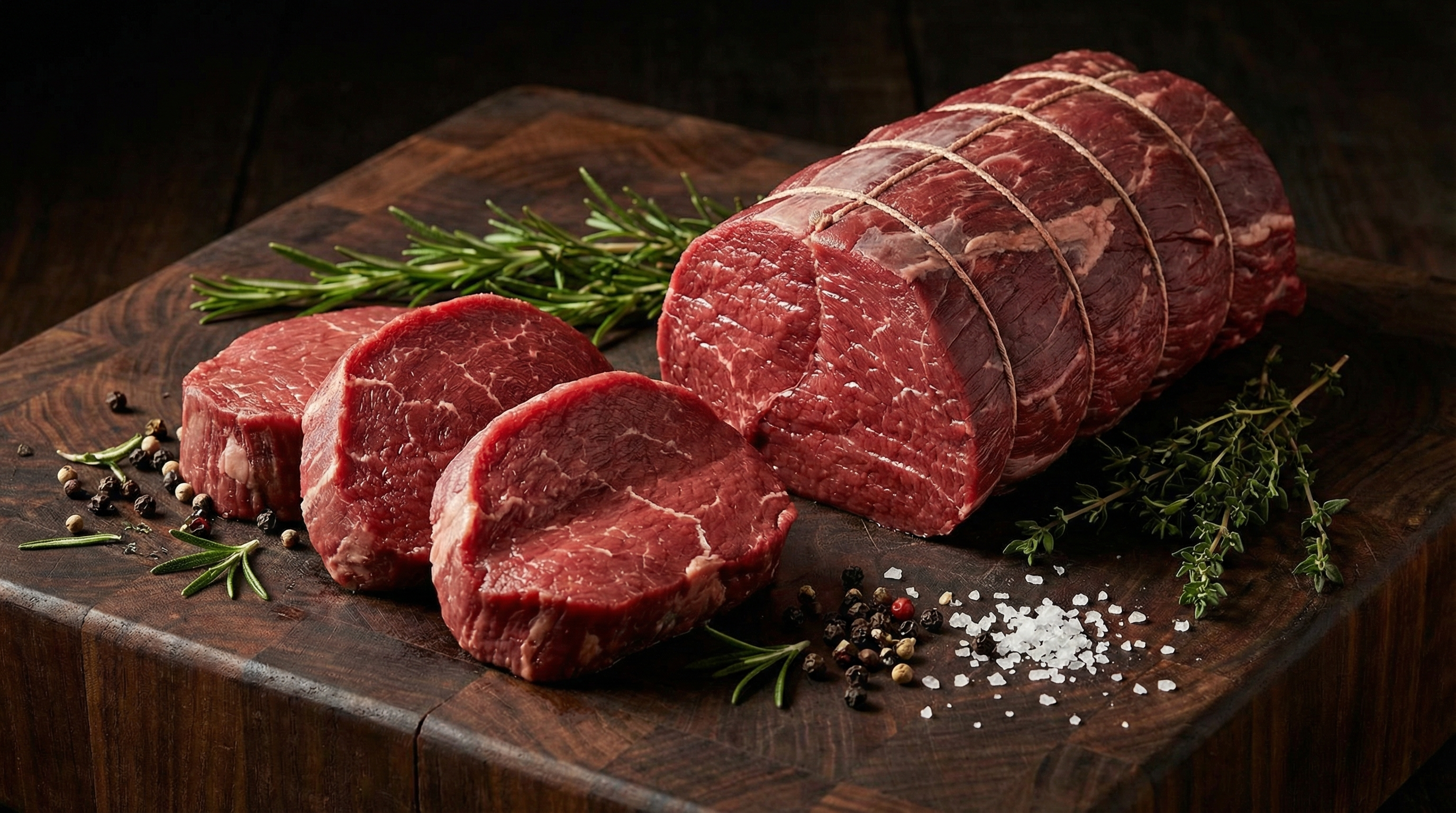
I hear this question at least three times a week: "What's the difference between beef tenderloin and filet mignon?" Most people use the terms interchangeably, and most of the time, nobody corrects them. But if you're spending $30 to $50 a pound on beef, you deserve to know exactly what you're buying — and more importantly, which one you actually need.
The short answer is simple: beef tenderloin is the entire muscle, and filet mignon is a specific steak cut from that muscle. But the practical differences in how you buy, cook, and serve them are significant enough that understanding the distinction will save you money and help you cook better.
Let me break this down the way I'd explain it if you were standing in front of my case.
Anatomy: The Whole Muscle vs. the Steak
The beef tenderloin is the psoas major muscle — a long, narrow, torpedo-shaped muscle that runs along the spine inside the loin primal. It sits beneath the strip loin (where New York strips come from) and above the kidney. On a whole carcass, it stretches from the rib area back to the sirloin, typically measuring 18 to 24 inches long and weighing 4 to 6 pounds after trimming.
Because this muscle does almost no work during the animal's life — it's an internal stabilizer, not a locomotion muscle — it stays incredibly tender. In fact, the tenderloin is the single most tender muscle in the entire beef carcass. That tenderness is its defining characteristic and the reason it commands such a premium price.
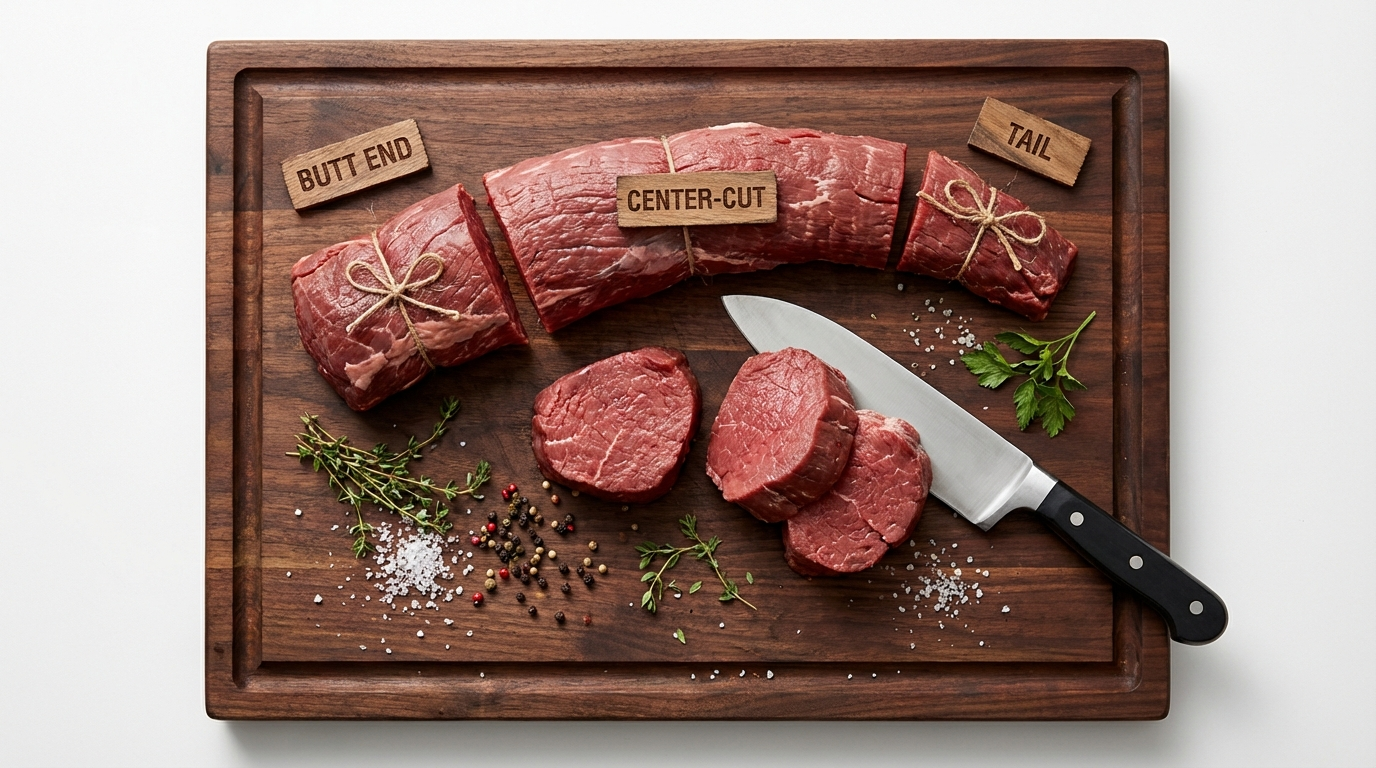
The tenderloin has three distinct sections:
- The butt end (head): The widest part, closest to the sirloin. This is where chateaubriand comes from — a thick roast cut from the butt end that serves two people beautifully. It's slightly less uniform in shape but still incredibly tender.
- The center-cut: The most uniform, cylindrical portion. This is where filet mignon steaks are cut. Because the center is consistent in diameter — roughly 2.5 to 3.5 inches across — it produces steaks that are perfectly round, even in thickness, and cook uniformly. This is the money section.
- The tail (tip): The tapered thin end. Too narrow for proper steaks, the tail is typically folded under and tied for roasting, cut into medallions, or used for stroganoff, stir-fry, or kebabs. Smart butchers sell the tail separately at a lower price point.
Filet mignon (French for "dainty fillet" or "cute fillet") specifically refers to steaks cut from the narrow end and center of the tenderloin. In American butchery, "filet mignon" has expanded to mean any steak cut from the tenderloin's center section, typically 1.5 to 2.5 inches thick and 6 to 8 ounces each.
So the relationship is straightforward: every filet mignon is beef tenderloin, but not every piece of beef tenderloin is filet mignon. The whole muscle includes sections that are too wide, too narrow, or too irregular to be sold as filet mignon steaks.
How They're Sold at the Butcher Shop
Understanding how tenderloin is sold helps you navigate the butcher case — and spot opportunities to save money.
Whole Tenderloin (PSMO)
A "PSMO" — peeled, side muscle on — is the standard wholesale form. The heavy external fat and silverskin have been partially removed, but the chain (side muscle) and some silverskin remain. A PSMO typically weighs 5 to 7 pounds and costs $20 to $35 per pound for USDA Choice, $30 to $45 for Prime.
Buying a whole PSMO and breaking it down yourself is the single best value play in premium beef. You'll get:
- 4 to 6 center-cut filet mignon steaks (the premium portion)
- 1 chateaubriand roast from the butt end
- Tail pieces for medallions, stir-fry, or beef stroganoff
- Chain meat for grinding or quick-cooking applications
Total cost for 5 pounds of PSMO at $28/lb: roughly $140. That same amount of meat bought as pre-cut filets, chateaubriand, and tips would easily run $200 or more. You're saving 25 to 35% by doing the simple work of trimming and cutting it yourself.
Pre-Cut Filet Mignon Steaks
Most consumers buy filet mignon as individual steaks, already trimmed and portioned. These run $35 to $55 per pound for Choice, $45 to $70+ for Prime. The convenience premium is real — you're paying someone else to trim, portion, and absorb the waste from the less desirable sections.
Center-Cut Tenderloin Roast
Some butchers sell the center section as a whole roast (sometimes called a "tenderloin roast" or "châteaubriant roast"). This is the same meat as filet mignon, just left uncut. It's ideal for roasting whole and slicing at the table — a stunning holiday or dinner party presentation.
Flavor, Texture, and Fat Content
Here's where I give you the honest butcher's take that might be unpopular: tenderloin — whether served as a whole roast or as filet mignon steaks — is the most tender cut of beef but not the most flavorful. This is important to understand before you spend top dollar.
The tenderloin's lack of work means it develops very little intramuscular fat (marbling). Even at USDA Prime grade, a tenderloin will have noticeably less marbling than a Prime ribeye or strip. That means:
- Texture: Buttery, almost velvety. The fibers are fine-grained and incredibly easy to chew. A properly cooked filet mignon practically dissolves on your tongue. This is the cut people describe as "melt in your mouth."
- Flavor: Mild and clean. Without significant fat to add richness, the beef flavor is more subtle and delicate than fattier cuts. This is why filet mignon is so often paired with rich sauces (béarnaise, peppercorn, red wine reduction), compound butters, or wrapped in bacon — those additions compensate for what the lean meat doesn't provide on its own.
- Fat content: A 6-ounce cooked filet mignon has roughly 250 to 280 calories, 40g protein, and 10 to 14g fat. Compare that to a ribeye at 400+ calories and 28 to 32g fat. If you're watching macros, tenderloin is one of the most protein-dense premium cuts available.
Does filet mignon taste bad? Absolutely not. It tastes like clean, pure beef — just without the richness that marbling brings. Some people genuinely prefer this cleaner flavor profile. Others find it underwhelming compared to a well-marbled strip or ribeye. Neither opinion is wrong.
Cooking: Roast vs. Steak
The biggest practical difference between buying a whole tenderloin versus filet mignon steaks is how you cook them. Each format has advantages.
Cooking a Whole Beef Tenderloin
A whole tenderloin roast is one of the most elegant things you can serve at a dinner party. The process:
- Trim: Remove the silverskin (the thin, pearlescent membrane) completely — it doesn't break down during cooking and becomes chewy. Leave a thin layer of fat if present. Remove the chain (side muscle) and save it for another use.
- Tie: Use butcher's twine every 1.5 inches to create a uniform cylinder. Tuck the tail under and tie it to even out the thickness. This ensures even cooking from end to end.
- Season: Generously salt at least 1 hour before cooking (overnight is better). The lean meat benefits enormously from dry-brining.
- Sear and roast: Sear on all sides in a screaming-hot pan, then transfer to a 425°F oven until the center reaches 120 to 125°F (for medium-rare). Total oven time for a 3-pound center-cut roast: roughly 20 to 25 minutes.
- Rest: 15 minutes minimum. This is critical for lean meat — cutting too early means juices flood the board instead of staying in the roast.
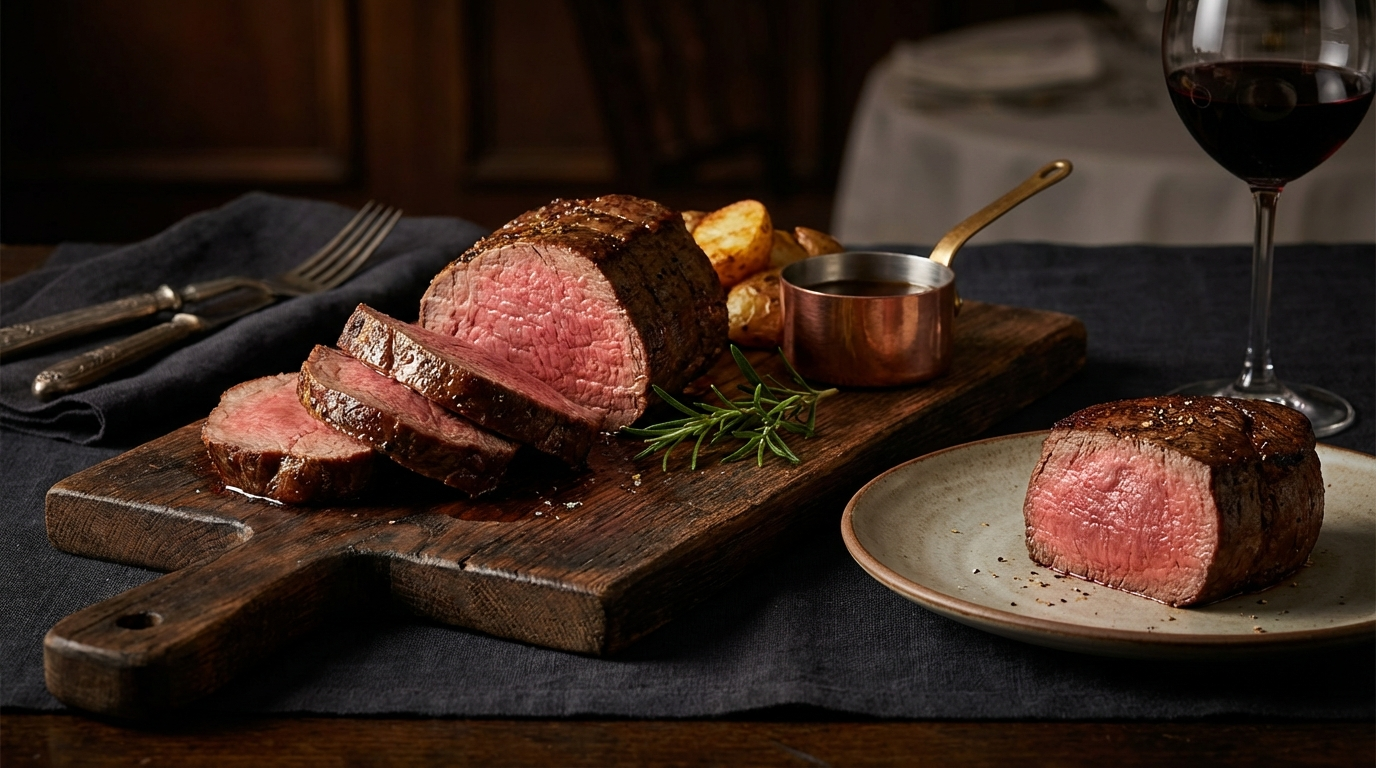
Advantages of roasting whole: Dramatic presentation, feeds 6 to 8 people, more forgiving than individual steaks (the mass retains heat better), and you can serve multiple doneness levels by cutting from the more-done ends for well-done preferences and the center for medium-rare.
Cooking Filet Mignon Steaks
Individual filets are all about precision. Because the meat is lean, you have a narrower margin for error than with fattier steaks.
- Bring to room temperature: Pull from the fridge 30 to 45 minutes before cooking. Cold centers in thick steaks lead to uneven cooking.
- Salt early: At least 40 minutes before cooking, or right before — never in between (10 to 30 minutes draws moisture to the surface without enough time to reabsorb).
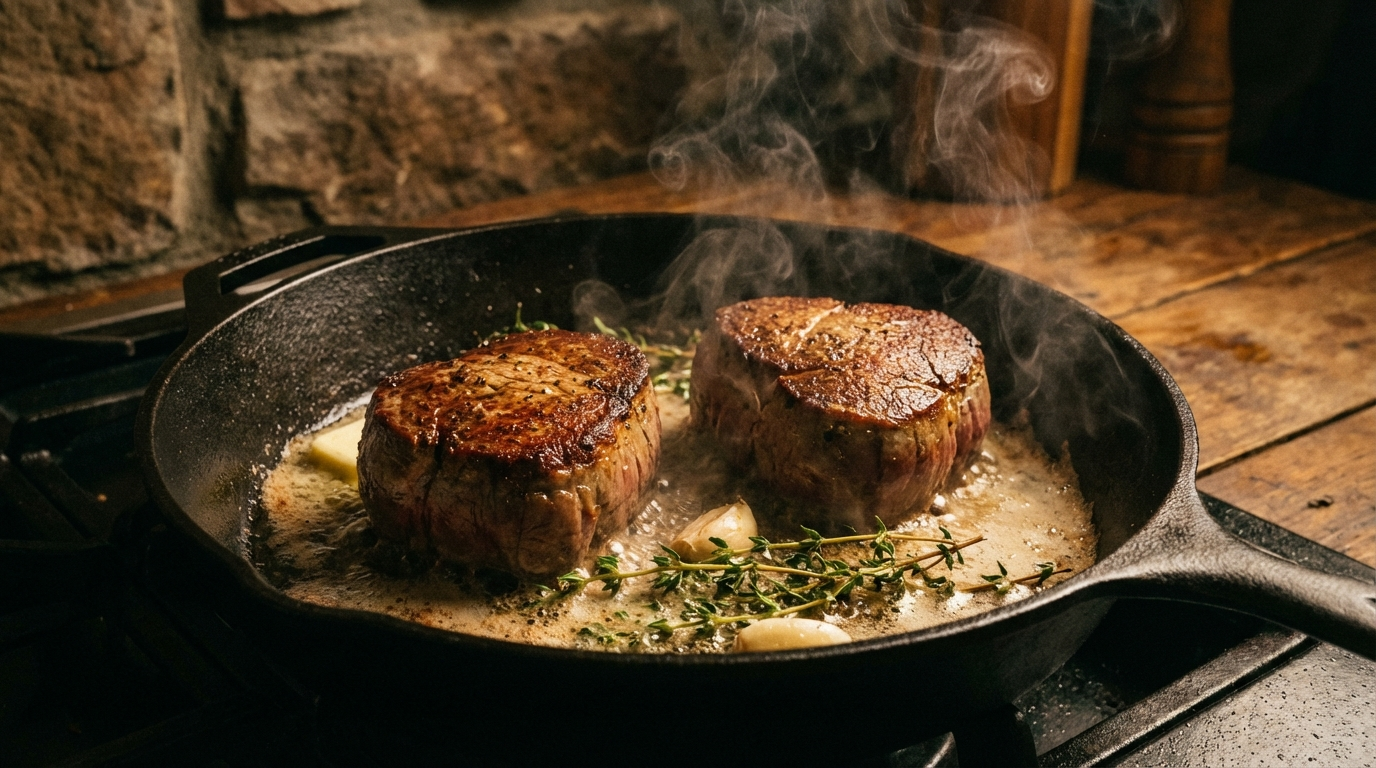
- Sear in butter: Use a cast iron pan with clarified butter or a high-smoke-point oil. Sear 3 to 4 minutes per side for a 2-inch-thick filet. Baste continuously with foaming butter, garlic, and thyme during the last minute.
- Target temperature: Pull at 120 to 125°F for medium-rare. Carryover will bring it to 130°F. Do not cook filet mignon past medium — without fat, it dries out rapidly.
- Rest: 5 to 8 minutes under loose foil.
The bacon wrap debate: Wrapping filet in bacon adds fat and flavor that the lean meat lacks. It's a legitimate technique, not a gimmick. If you wrap, use thin-cut bacon and secure with toothpicks. Sear the bacon-wrapped filet on all sides before finishing in the oven at 400°F.
Price Breakdown: Which Is the Better Buy?
Here's where the whole-muscle versus steak distinction matters most — in your wallet. As of early 2026:
- Whole PSMO tenderloin (Choice): $22 to $32 per pound
- Whole PSMO tenderloin (Prime): $32 to $45 per pound
- Pre-cut filet mignon steaks (Choice): $35 to $55 per pound
- Pre-cut filet mignon steaks (Prime): $45 to $70+ per pound
The math is clear. A 5-pound PSMO at $28/lb costs $140 and yields roughly 3 pounds of filet-grade steaks (the rest is trim, chain, and tail — all usable, just not premium). Those 3 pounds of center-cut filets, bought individually at $45/lb, would cost $135 — but you also got the chateaubriand, tail pieces, and chain meat for essentially free.
My recommendation: if you're cooking for 4 or more people, or if you entertain regularly, buy the whole muscle. Learn to trim it (it takes 10 minutes and there are excellent guides from any quality butcher). The savings are real, and the trimming skills transfer to every other piece of meat you'll ever buy.
If you're cooking for two and want two perfect filets for a special dinner, buy them pre-cut. The convenience premium is worth it for a small quantity. Just make sure the butcher cuts them at least 1.5 inches thick — thin filets overcook before they develop a proper crust.
When to Buy Tenderloin vs. Filet Mignon
After decades of selling both, here's my decision framework:
Buy a whole tenderloin when:
- You're hosting a holiday dinner or dinner party (6+ guests)
- You want to save money on premium beef
- You enjoy the presentation of a carved whole roast
- You want multiple cuts from one purchase (steaks + roast + stir-fry pieces)
- You're comfortable with basic butchering (removing silverskin, portioning)
Buy filet mignon steaks when:
- You're cooking for 1 to 3 people
- You want the convenience of a ready-to-cook steak
- Consistent portion size matters (restaurant-style plating)
- You prioritize tenderness above all other qualities
- You're pairing with a rich sauce or compound butter
Consider a different cut entirely when:
- You want maximum beef flavor — choose ribeye or NY strip instead
- You're grilling over high heat — tenderloin's low fat means more flare-up risk and faster drying
- Budget is a concern — flat iron delivers comparable tenderness at a third of the price
- You're feeding a crowd casually — tri-tip or flank steak is more practical
The Butcher's Final Word
Beef tenderloin and filet mignon are the same animal, the same muscle, and ultimately the same eating experience. The difference is format: one is the whole muscle, the other is steaks cut from its best section. Understanding that distinction doesn't just make you a smarter shopper — it opens up options you might not have considered.
A whole tenderloin, trimmed and roasted for Christmas dinner, is one of the most impressive things a home cook can serve. A pair of thick-cut filet mignon steaks, seared in butter and finished with béarnaise, is one of the most romantic. And buying the whole muscle to cut your own steaks is one of the smartest moves in premium beef.
Now you know the difference. Go buy whichever one fits your occasion — and cook it to no more than medium-rare. That's the one rule that applies to both.
Frequently Asked Questions
Is filet mignon the same as beef tenderloin?
Filet mignon is a steak cut from the beef tenderloin, but they are not the same thing. The beef tenderloin is the entire psoas major muscle (4-6 lbs), while filet mignon refers to individual steaks cut from the center and narrow end of that muscle. Every filet mignon is tenderloin, but not every piece of tenderloin is filet mignon.
Is it cheaper to buy a whole beef tenderloin or filet mignon steaks?
Buying a whole tenderloin (PSMO) saves 25-35% compared to pre-cut filet mignon steaks. A whole USDA Choice tenderloin runs $22-$32/lb, while pre-cut filets cost $35-$55/lb. You will need to trim the silverskin and portion it yourself, which takes about 10 minutes.
What part of the tenderloin is filet mignon?
Filet mignon comes from the center-cut section of the tenderloin — the most uniform, cylindrical portion that produces perfectly round steaks of consistent thickness (typically 2.5-3.5 inches in diameter). The wider butt end produces chateaubriand, and the tapered tail is used for medallions or stir-fry.
Why is filet mignon so expensive?
Filet mignon is expensive because the tenderloin is a small muscle — each steer produces only 4-6 pounds of it, and only a portion qualifies as filet mignon. High demand for the most tender cut combined with limited supply per animal drives the price to $35-$70/lb depending on grade.
What is better, filet mignon or ribeye?
Neither is objectively better — they excel at different things. Filet mignon is more tender with a mild, clean flavor and lower fat content. Ribeye has more marbling, richer flavor, and a buttery mouthfeel. Choose filet when you want tenderness and lean protein; choose ribeye when you want maximum flavor and richness.
More Expert Guides
What Is Chateaubriand? (Cut, Cooking, & Best Sources)
Chateaubriand is a thick-cut roast from the center of the beef tenderloin, traditionally served for two. Learn what makes this classic French cut special and how to cook it.
14 min readWhat Is Round Steak? The Complete Guide to Beef's Most Versatile Budget Cut
Round steak comes from the rear leg of the cow — it's lean, affordable, and misunderstood. A master butcher breaks down every sub-cut, cooking method, and technique to turn this budget workhorse into genuinely delicious meals.
14 min readWhat Is Eye of Round? The Complete Butcher's Guide to This Lean Cut
Eye of round is one of the leanest, most affordable cuts in the entire beef case — and one of the most misunderstood. A butcher explains how to turn this budget-friendly roast into something genuinely delicious.