Best Beef Cuts for Tacos: A Complete Guide to Carne Asada and Beyond
Best Beef Cuts for Tacos: A Complete Guide to Carne Asada and Beyond
Walk into any taqueria in Mexico City, Monterrey, or East LA, and the menu isn't organized by seasoning or salsa. It's organized by cut. Suadero. Cabeza. Lengua. Bistec. The cut defines the taco — not the other way around.
Most home cooks default to ground beef for tacos. That's fine for a Tuesday night. But if you want tacos that taste like they came from a street cart in Sonora, you need to think about which cut you're using and why.
This guide ranks the 7 best beef cuts for tacos, explains what makes each one work, and tells you exactly how to cook them.
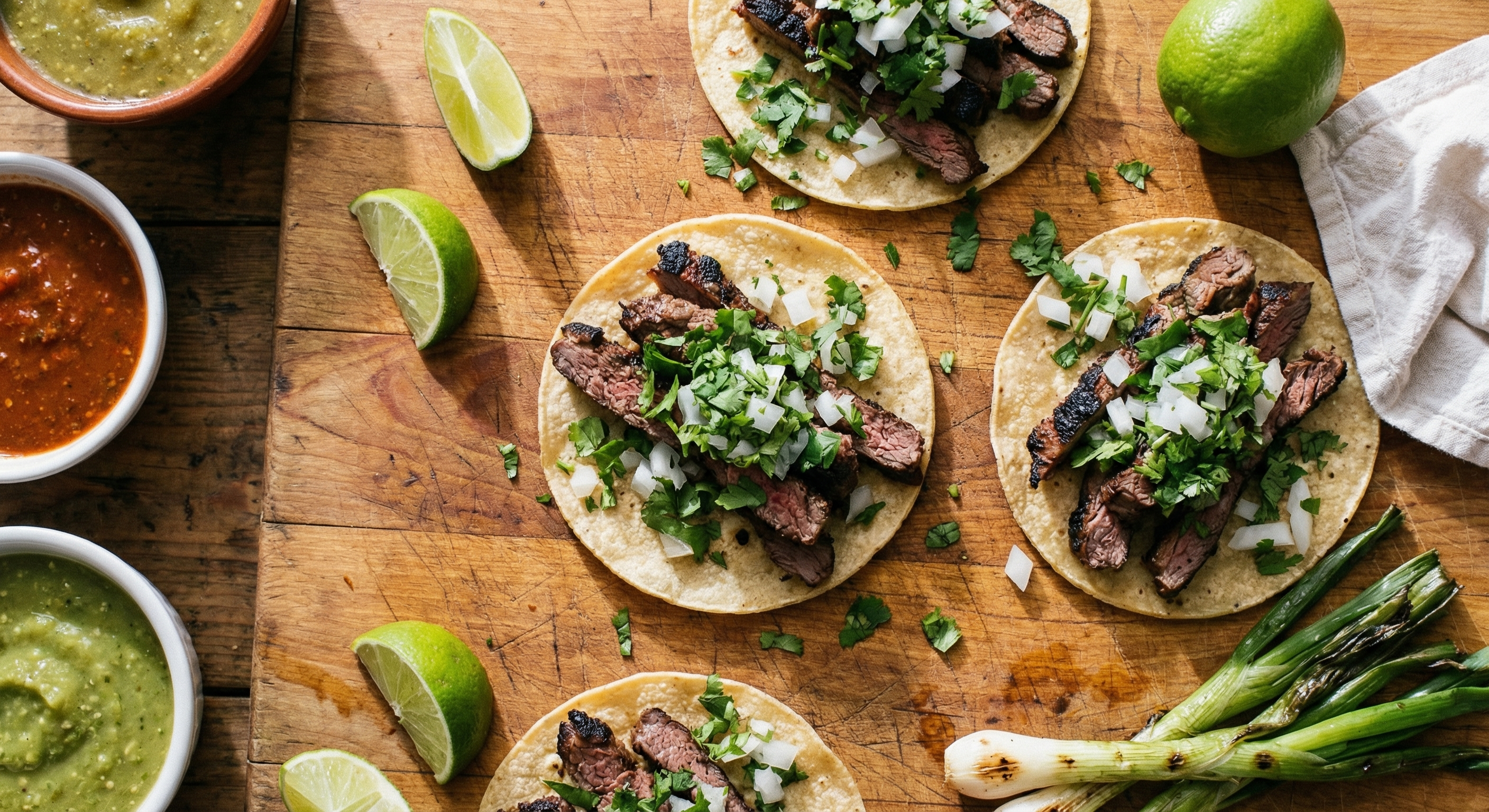
Why the Cut Matters More Than the Seasoning
A taco is structurally simple: tortilla, meat, garnish. There's nowhere to hide. The beef is the star, and the cut determines three things that no amount of seasoning can fix:
- Texture — Do you want tender slices or shredded, pull-apart strands?
- Fat content — Lean cuts dry out in a tortilla. Fattier cuts stay juicy.
- Flavor intensity — Working muscles (flank, skirt, cheeks) taste beefier than loin cuts.
The best taco cuts share a common trait: they're high-flavor, moderate-fat cuts from working muscles. Tenderloin makes a terrible taco. Hanger steak makes a great one.
1. Skirt Steak — The King of Carne Asada
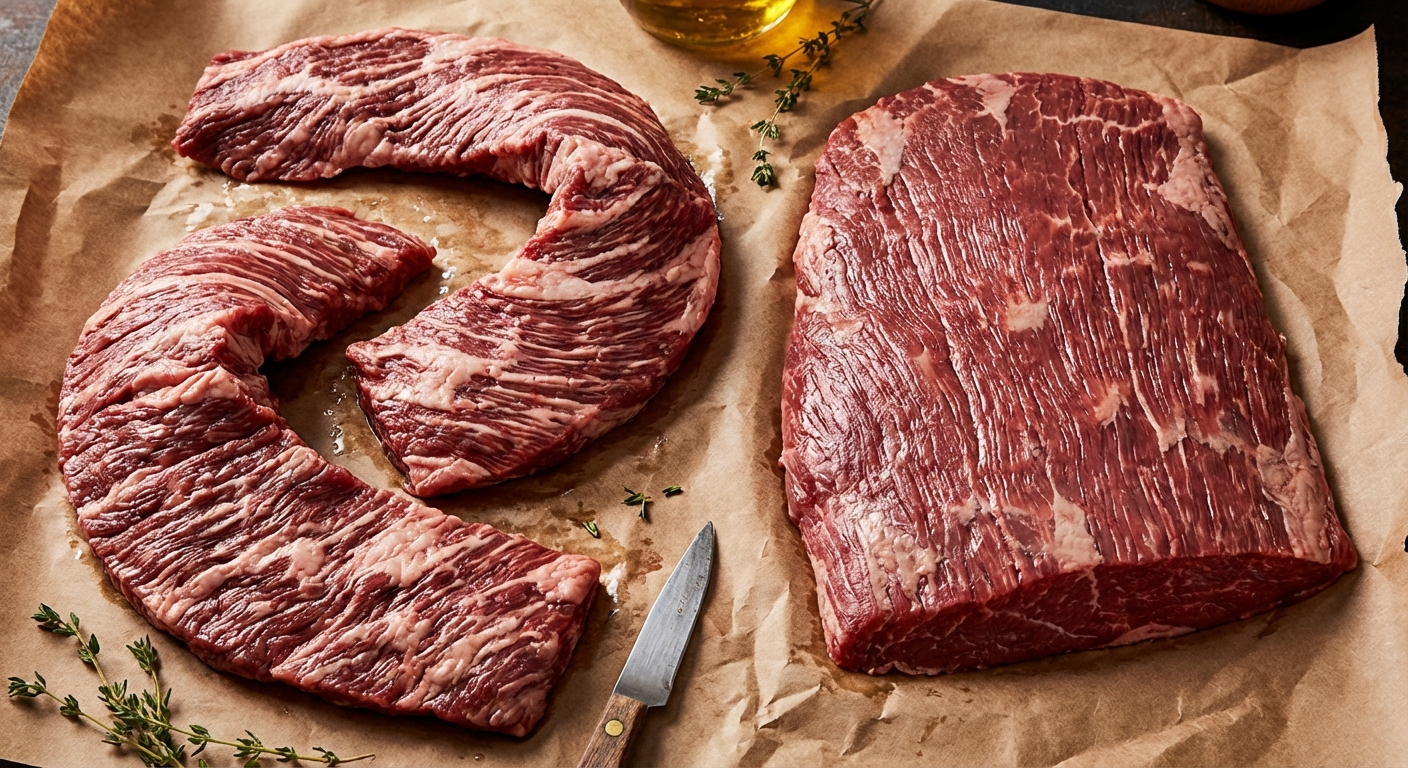
Why it works: Skirt steak is the traditional carne asada cut for a reason. It has intense beefy flavor, visible marbling throughout, and a loose, open grain that absorbs marinades like a sponge. When seared over screaming-hot charcoal and sliced thin against the grain, it produces the ideal taco meat: charred exterior, juicy interior, and enough fat to keep every bite moist inside a corn tortilla.
Which skirt to buy: There are two types. The outside skirt is the butcher's choice — thicker, more marbled, and more flavorful. It's what restaurants use. The inside skirt is thinner and leaner, but still excellent for tacos. If your butcher has outside skirt, grab it.
How to cook it:
- Marinate 2–4 hours in lime juice, garlic, cumin, and a splash of oil
- Sear on the hottest surface you have — grill, cast iron, or plancha — for 2–3 minutes per side
- Rest 5 minutes, then slice against the grain into thin strips
- The grain on skirt steak runs lengthwise, so cut across the short dimension
Best for: Classic carne asada tacos, fajita-style tacos, any high-heat preparation
2. Flank Steak — The Reliable Alternative
Why it works: Flank steak is leaner than skirt but still packs serious beef flavor. It's more widely available, more consistent in thickness, and easier to slice uniformly. Where skirt steak is the wild card, flank is the reliable starter.
The key difference is fat. Flank steak has less marbling, which means it's more sensitive to overcooking. Take it past medium and you'll have shoe leather in a tortilla. Keep it at medium-rare (130–135°F internal) and slice thin, and it rivals skirt steak for taco duty.
How to cook it:
- Score the surface lightly in a crosshatch pattern to help marinades penetrate
- Marinate 4–8 hours (flank benefits from longer marinating than skirt)
- Grill or sear over high heat, 4–5 minutes per side for a typical 1-inch thick piece
- Rest 8–10 minutes — flank bleeds juice if you cut too early
- Slice thin against the grain at a slight diagonal
Best for: Carne asada tacos, Korean-Mexican fusion tacos (bulgogi-marinated), meal prep taco bowls
3. Chuck Roast — The Braise-and-Shred Champion
Why it works: Not all taco meat needs a hot grill. Some of the best tacos in the world — barbacoa, birria, tacos de guisado — use braised beef that falls apart into tender, saucy shreds. Chuck roast is the ideal braising cut: well-marbled, full of connective tissue that converts to gelatin, and cheap enough to buy in bulk.
After 3–4 hours of low heat in a flavorful liquid, chuck transforms from a tough, chewy muscle into silky, pull-apart strands that soak up every drop of braising liquid. This is barbacoa territory.
How to cook it:
- Season a 3–4 lb chuck roast generously with salt, pepper, cumin, and dried chiles
- Sear all sides in a Dutch oven until deeply browned
- Add braising liquid: beef broth, chipotles in adobo, lime juice, garlic, and oregano
- Braise at 300°F for 3–4 hours until fork-tender
- Shred with two forks, then return meat to the reduced braising liquid
Best for: Barbacoa tacos, birria tacos (with consommé for dipping), shredded beef tacos, taco pizza
4. Short Ribs — The Luxury Braise
Why it works: If chuck roast is the workhorse braiser, short ribs are the thoroughbred. Bone-in short ribs have even more connective tissue and intramuscular fat than chuck, which means the braised meat is richer, more unctuous, and almost sticky with natural gelatin. They cost more, but the flavor payoff is immediate.
Korean-style (flanken-cut) short ribs are also excellent for grilling: sliced thin across the bone, they cook in minutes over high heat and produce an entirely different taco experience — charred, sweet, and deeply savory.
How to cook braised short rib tacos:
- Season English-cut short ribs with salt, ancho chile powder, and brown sugar
- Sear until deeply caramelized on all sides
- Braise with beer, tomatoes, onions, and garlic at 300°F for 3 hours
- Remove bones, shred meat, reduce braising liquid into a glaze
- Toss shredded meat in the glaze before serving
Best for: Birria tacos, Korean BBQ tacos, luxury braised tacos, food truck specials
5. Beef Cheeks — The Taqueria Secret
Why it works: Beef cheeks are the cut that separates taqueria regulars from tourists. This is barbacoa de cachete — the most traditional barbacoa cut in northern Mexico. Cheeks are almost entirely collagen-rich connective tissue, which means they braise into the most tender, melt-in-your-mouth taco meat you'll ever eat.
The texture is unlike any other cut. Where chuck shreds into distinct strands, beef cheeks dissolve into something closer to a savory custard wrapped in meat fibers. It's unctuous, silky, and incredibly rich.
How to cook it:
- Trim the silver skin and excess fat from each cheek
- Sear in a heavy pot until deeply browned (this step is non-negotiable for flavor)
- Braise in a guajillo-ancho chile sauce with cumin, cloves, Mexican oregano, and beef broth
- Cook at 300°F for 3–4 hours until the meat yields to a spoon
- Chop (not shred) into rough pieces and serve immediately
Best for: Traditional barbacoa, cachete tacos, birria, any slow-cooked taco where you want maximum tenderness
6. Hanger Steak — The Butcher's Taco
Why it works: Hanger steak hangs from the diaphragm, doesn't do any locomotive work, and has the most concentrated beefy flavor of any quick-cooking cut. There's only one per animal (about 1–1.5 lbs), which is why butchers used to keep it for themselves. Hence the name "butcher's steak."
For tacos, hanger is exceptional: deeply flavorful, naturally tender (no marinating required), and it takes high-heat cooking beautifully. The only caveat is the central membrane — your butcher should remove it, or you'll need to split the steak in half along that seam yourself.
How to cook it:
- Season simply with salt and pepper (hanger doesn't need a marinade)
- Sear over the highest heat available, 3–4 minutes per side
- Cook to medium-rare only (130°F) — hanger gets livery past medium
- Rest 5 minutes, then slice thin against the grain
Best for: Bistec tacos, simple salt-and-lime tacos, campechanos (mixed meat tacos), upscale taco nights
7. Tri-Tip — The West Coast Wild Card
Why it works: Tri-tip is a California specialty that's increasingly showing up in taco shops from Santa Maria to San Diego. It's a triangular muscle from the bottom sirloin with moderate marbling, a beefy flavor that sits between flank and ribeye, and a unique shape that gives you different textures from the thick end to the thin tip.
The thick end stays juicy and medium-rare while the thin tip gets more well-done and slightly charred — which means a single tri-tip gives you variety in every batch of tacos. Some bites are pink and tender, others are crispy and well-done. That contrast is a feature, not a bug.
How to cook it:
- Season with a Santa Maria-style rub: salt, pepper, garlic powder, and a pinch of cayenne
- Sear over high heat to build a crust, then move to indirect heat
- Cook to 130–135°F internal (the thick end) — about 25–35 minutes total
- Rest 10 minutes, then slice thin against the grain
- The grain changes direction across the cut, so rotate your knife as you slice
Best for: Santa Maria-style tacos, California taco shops, Sunday taco parties (one tri-tip feeds 6–8 people in tacos)
Quick Comparison: Best Beef Cuts for Tacos
| Cut | Cook Method | Time | Flavor | Best Taco Style |
|---|---|---|---|---|
| Skirt Steak | High-heat grill/sear | 5–6 min | Intense, rich | Carne asada |
| Flank Steak | High-heat grill/sear | 8–10 min | Beefy, lean | Carne asada, fusion |
| Chuck Roast | Braise | 3–4 hours | Rich, savory | Barbacoa, birria |
| Short Ribs | Braise or grill | 3 hours or 5 min | Unctuous, sweet | Birria, Korean BBQ |
| Beef Cheeks | Braise | 3–4 hours | Silky, melt-in-mouth | Traditional barbacoa |
| Hanger Steak | High-heat sear | 6–8 min | Deep, concentrated | Bistec, campechanos |
| Tri-Tip | Grill (sear + indirect) | 25–35 min | Moderate, versatile | Santa Maria style |
Cuts to Avoid for Tacos
Not every beef cut belongs in a tortilla. Skip these:
- Tenderloin/Filet Mignon — Too mild, too expensive, and the soft texture gets lost in a taco. Save it for the plate.
- Top Round — Lean and tough when grilled, bland when braised. It's sandwich meat, not taco meat.
- Eye of Round — The leanest, driest cut on the cow. Even thin slicing can't save it in a taco.
- Pre-ground "taco meat" — Mystery blend, no texture, no char. If you must use ground beef, grind your own from chuck.
Pro Tips for Better Beef Tacos
- Cut against the grain, always. This is the single biggest factor in taco meat tenderness. Identify the grain direction before cooking, then slice perpendicular to it.
- Go hotter than you think. Taco meat wants aggressive sear. A 700°F grill or smoking-hot cast iron creates the charred exterior that defines great carne asada.
- Rest your meat. Even for tacos. 5–10 minutes of resting means the juices redistribute instead of running out onto your cutting board (and then through your tortilla).
- Chop, don't slice (for braised cuts). Shredded meat is fine, but traditional taquerias chop braised meats on a cutting board for chunkier, more textured bites.
- Warm your tortillas. Cold tortillas crack and can't grip the meat. 30 seconds on a dry comal or directly over a gas burner flame transforms the entire taco.
- Double up. Two small corn tortillas per taco. This is non-negotiable street taco protocol — the second tortilla catches anything the first one can't hold.
Where to Source Quality Beef for Tacos
The cut matters, but so does the quality. For grilling cuts like skirt and flank, higher-grade beef (USDA Choice or Prime) makes a noticeable difference because the extra marbling keeps the meat juicy during high-heat cooking.
For braising cuts like chuck, cheeks, and short ribs, grade matters less — the long cooking process breaks down connective tissue regardless. What matters more is sourcing from animals that were well-raised, which translates to better flavor in the final product.
For the ultimate taco experience, consider American wagyu versions of these cuts. Wagyu skirt steak and wagyu short ribs have significantly more intramuscular fat, which means richer flavor and more forgiving cooking. Japanese A5 wagyu is overkill for tacos — the fat-to-meat ratio overwhelms a tortilla — but American wagyu hits the sweet spot of enhanced marbling without losing the beefy backbone that makes a great taco.
Frequently Asked Questions
What is the best cut of beef for carne asada tacos?
Skirt steak is the traditional and best cut for carne asada tacos. It has intense flavor, visible marbling, and a loose grain that absorbs marinades well. The outside skirt is preferred for its thickness and marbling, but inside skirt also works.
Can I use stew meat for tacos?
Pre-cut stew meat (usually chuck or round) can work for braised tacos, but it is often inconsistently sized and from mixed cuts. For better results, buy a whole chuck roast and cube or braise it yourself for more control over texture and flavor.
What is the cheapest beef cut for tacos?
Chuck roast is the most affordable option for excellent tacos. A 3-4 lb chuck roast costs $5-8 per pound and yields enough braised, shredded meat for 15-20 tacos. Beef cheeks are also affordable when available.
Should I marinate beef for tacos?
It depends on the cut. Skirt steak and flank steak benefit from 2-8 hours of marinating with citrus and spices. Hanger steak and tri-tip need only salt and pepper. Braising cuts like chuck and short ribs get their flavor from the braising liquid, not a marinade.
How do I slice beef for tacos?
Always slice against the grain for grilled cuts (skirt, flank, hanger, tri-tip). This shortens the muscle fibers and makes each bite tender. For braised cuts (chuck, cheeks, short ribs), shred with forks or chop on a cutting board for a chunkier texture.
More Expert Guides
What Is Chateaubriand? (Cut, Cooking, & Best Sources)
Chateaubriand is a thick-cut roast from the center of the beef tenderloin, traditionally served for two. Learn what makes this classic French cut special and how to cook it.
14 min readWhat Is Round Steak? The Complete Guide to Beef's Most Versatile Budget Cut
Round steak comes from the rear leg of the cow — it's lean, affordable, and misunderstood. A master butcher breaks down every sub-cut, cooking method, and technique to turn this budget workhorse into genuinely delicious meals.
14 min readWhat Is Eye of Round? The Complete Butcher's Guide to This Lean Cut
Eye of round is one of the leanest, most affordable cuts in the entire beef case — and one of the most misunderstood. A butcher explains how to turn this budget-friendly roast into something genuinely delicious.