What Are Beef Cheeks? The Ultimate Guide to This Underrated Cut
There's a cut of beef that fine-dining chefs have been hoarding for years—one that costs a fraction of a ribeye but delivers a depth of flavor and texture that no premium steak can match. It's not from the loin. It's not from the rib. It comes from the face of the animal, and it might be the single most underrated cut in the entire beef carcass.
We're talking about beef cheeks—the facial muscles that a cow uses thousands of times a day to chew cud. That constant work creates a cut packed with connective tissue and collagen that, when braised low and slow, melts into something extraordinary: fork-tender, deeply beefy, and impossibly rich.
What Exactly Are Beef Cheeks?
Beef cheeks are exactly what the name suggests—the cheek muscles from the head of the cow. Specifically, they're the masseter muscles, the primary muscles responsible for chewing. A cow spends roughly eight hours a day chewing cud, which means these muscles are among the hardest-working in the entire animal.
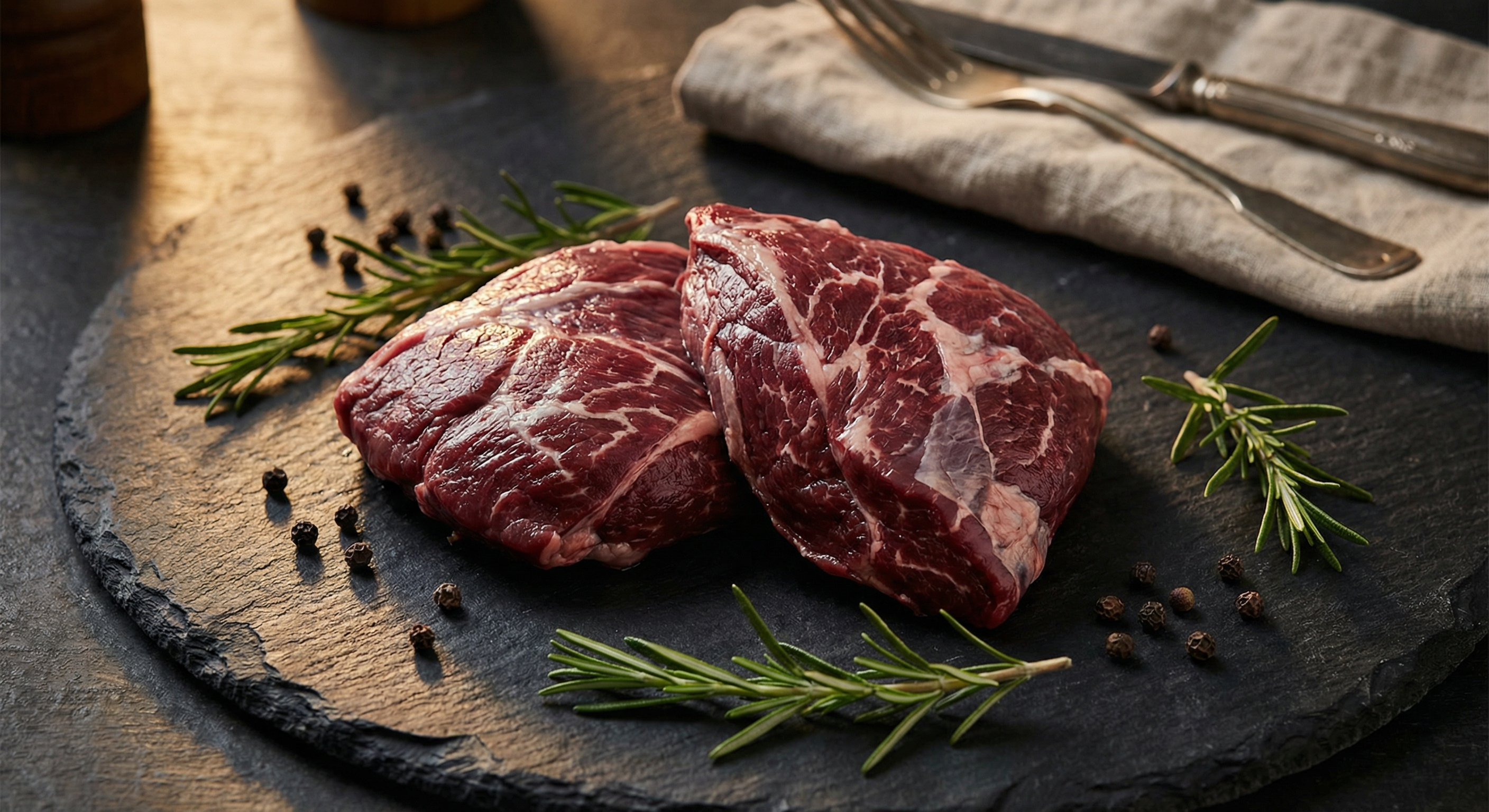
Each animal yields two cheeks, and after trimming, each one typically weighs between 12 ounces and 1.5 pounds. They arrive as thick, roughly oval-shaped pieces of deep red meat surrounded by a layer of silver skin and sinew that needs to be trimmed before cooking.
The texture of raw beef cheeks is distinctive. They're dense and firm—much firmer than a typical steak—with visible seams of white connective tissue running throughout the meat. That connective tissue is almost entirely collagen, and collagen is the key to everything that makes beef cheeks special.
When collagen is exposed to sustained low heat in the presence of moisture, it undergoes a transformation: the tough, chewy protein breaks down into gelatin. That gelatin coats the muscle fibers, creating the silky, unctuous mouthfeel that defines a perfectly braised beef cheek. It's the same science behind great osso buco, short ribs, or oxtail—but beef cheeks take it to another level because of their extraordinarily high collagen content.
Anatomy: Where Do Beef Cheeks Come From?
The masseter muscle sits on either side of the cow's jaw, running from the cheekbone (zygomatic arch) down to the lower jaw (mandible). It's a thick, powerful muscle that provides the crushing force needed to grind tough grasses and plant material.
This location and function give beef cheeks several defining characteristics:
- Extreme muscle activity: Eight hours of daily chewing makes the masseter one of the most exercised muscles on the animal. More work means more flavor compounds—myoglobin, amino acids, and other molecules that create deep, complex beefy taste.
- Dense connective tissue network: The constant chewing motion requires an elaborate web of collagen to support and protect the muscle fibers. This is dramatically more collagen than you'll find in even other braising cuts like chuck or brisket.
- Excellent blood supply: The head receives rich blood flow, contributing to the cheek's intensely dark red color and mineral-rich, almost iron-forward flavor profile.
- Two per animal: Like hanger steak, the limited yield (two relatively small pieces per cow) contributes to scarcity at retail, though beef cheeks remain affordable because demand hasn't caught up to the restaurant world's enthusiasm.
Beef cheeks are removed during the head-processing stage of butchery, well before the carcass is broken into primals. This separation from the standard butchery flow is one reason they've remained obscure—they simply don't fit into the typical retail supply chain that focuses on rib, loin, chuck, and round primals.
Why Chefs Love Beef Cheeks
Walk into any serious restaurant kitchen and mention beef cheeks. Watch the chef's eyes light up. There's a reason this cut has become a darling of the fine-dining world while remaining almost unknown to home cooks.
The appeal comes down to three things:
Flavor density. Beef cheeks deliver a concentration of beef flavor that's hard to find elsewhere on the animal. The combination of heavy muscle use, rich blood supply, and high collagen content creates layers of taste—meaty, mineral, slightly sweet from the gelatin—that build with every bite. Chefs describe it as "beef turned up to eleven."
Textural transformation. Few cuts undergo such a dramatic metamorphosis during cooking. What starts as a tough, almost intimidating piece of raw meat becomes so tender after braising that it literally falls apart at the touch of a fork. The gelatin from all that dissolved collagen creates a silky richness that coats your mouth. It's the kind of texture that makes people close their eyes and sigh.
Cost efficiency. Beef cheeks typically cost between $6 and $12 per pound—a fraction of the price of short ribs, oxtail, or any premium steak. For restaurants, the margin on a braised beef cheek dish is excellent. For home cooks, it means world-class eating at budget prices.
Italian trattorias have served guanciale di manzo for generations. French bistros braise them in red wine. Mexican kitchens turn them into barbacoa—one of the most authentic and revered preparations in the entire cuisine. The professional cooking world figured out beef cheeks long ago. It's the home cooking world that's just starting to catch on.
How to Prepare Beef Cheeks
Trimming
Beef cheeks require more trimming than most cuts. When you receive them, they'll likely have a coating of silver skin, some exterior fat, and possibly remnants of the salivary gland (a small, pale, slightly spongy piece that should be removed entirely).
- Remove the silver skin: Using a sharp boning knife, slide the blade under the silver skin membrane and peel it away. Work in strips—trying to remove it all in one piece usually tears the meat.
- Trim excess exterior fat: Leave a thin layer for flavor, but remove any thick deposits. Unlike a brisket flat, you don't need a fat cap for protection during braising.
- Remove the salivary gland: If present, it's a small, pale lump on one side. Cut it away completely—it has an unpleasant texture when cooked.
- Leave the internal sinew: Those seams of white connective tissue running through the meat? Leave them alone. They're pure collagen and will dissolve completely during braising, enriching the sauce and tenderizing the meat.
After trimming, you'll lose about 15-20% of the raw weight. Budget accordingly when shopping—if you want to serve four generous portions, buy about 3 pounds of untrimmed cheeks.
Seasoning and Searing
Season the trimmed cheeks generously with salt and pepper at least 30 minutes before cooking, or up to overnight in the refrigerator (uncovered, on a wire rack). The overnight dry brine draws moisture to the surface and then reabsorbs it with the salt, seasoning the meat throughout.
Before braising, sear the cheeks hard in a hot Dutch oven or heavy pan with a neutral oil. Get a deep, dark brown crust on all sides—3 to 4 minutes per side. This Maillard browning is not optional. It creates hundreds of flavor compounds that the braising liquid will absorb, transforming a good braise into an extraordinary one.
How to Cook Beef Cheeks: Three Best Methods
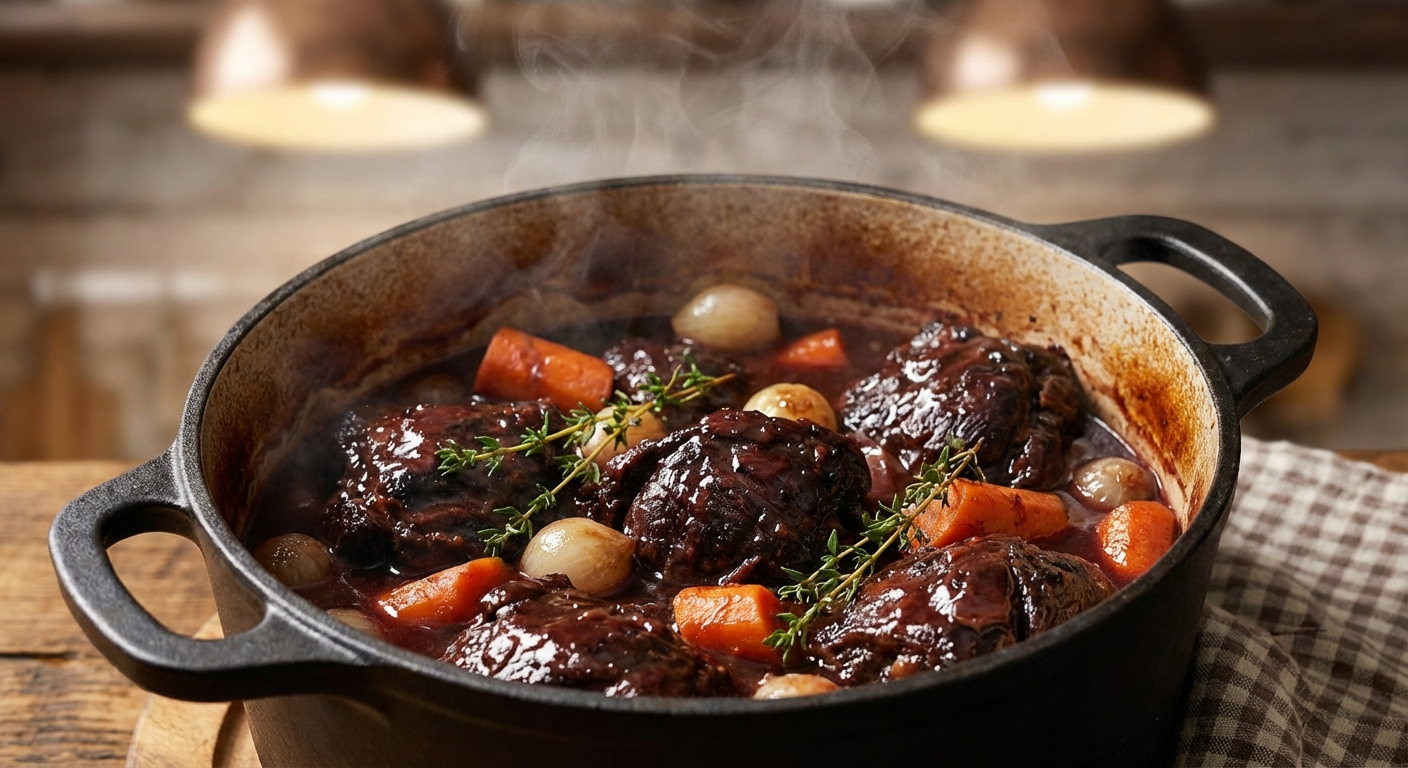
Beef cheeks are a braising cut, full stop. Their dense collagen network requires sustained, moist heat to break down. Grilling, pan-searing, or any quick-cooking method will leave you with something resembling a hockey puck. Embrace the low-and-slow approach and these cheeks will reward you beyond measure.
Method 1: Classic Red Wine Braise (Dutch Oven)
This is the gold standard. A heavy Dutch oven in a low oven produces the most consistent, foolproof results.
- Sear the cheeks as described above. Remove and set aside.
- Build the aromatics: In the same pot, sauté diced onion, carrot, and celery until softened (about 8 minutes). Add 4-6 garlic cloves, a tablespoon of tomato paste, and cook until the paste darkens slightly.
- Deglaze with a full bottle of dry red wine (something you'd drink—Côtes du Rhône, Malbec, or Chianti work beautifully). Scrape up every brown bit from the bottom.
- Add 2 cups of beef stock, a few sprigs of thyme, a bay leaf, and a strip of orange zest. Return the seared cheeks to the pot. The liquid should come about two-thirds up the sides of the meat.
- Cover and braise in a 300°F oven for 3 to 3.5 hours. The cheeks are done when a fork slides in with zero resistance and the meat threatens to fall apart.
- Remove the cheeks carefully (they're fragile now). Strain and reduce the braising liquid by half to make a glossy, intensely flavored sauce.
The result is nothing short of transformative. What went into the oven as tough, sinew-laced muscle emerges as something almost unrecognizable—trembling, tender, saturated with wine-dark flavor, coated in a sauce that's rich with natural gelatin.
Method 2: Slow Cooker
The slow cooker produces excellent results with minimal effort, though you sacrifice the depth of flavor that oven braising provides.
- Sear the cheeks in a separate pan (don't skip this step even for the slow cooker).
- Layer aromatics in the bottom of the slow cooker: onions, carrots, garlic, herbs.
- Place seared cheeks on top and add braising liquid (wine and stock, or stock alone).
- Cook on low for 8 to 10 hours or high for 5 to 6 hours.
- Remove cheeks and reduce the liquid on the stovetop for a proper sauce.
The slow cooker method is ideal for weekday cooking—start it in the morning and come home to a house that smells like a Parisian bistro.
Method 3: Pressure Cooker / Instant Pot
When time is short, a pressure cooker delivers braised beef cheeks in about 90 minutes total—a fraction of the traditional time.
- Use the sauté function to sear the cheeks directly in the pot.
- Add aromatics and liquid as with the Dutch oven method (reduce liquid by about 25% since there's no evaporation).
- Pressure cook on high for 45 to 55 minutes with a natural release (about 15 minutes).
- Remove cheeks and reduce sauce using the sauté function.
The results are remarkably close to the traditional method. You lose a small amount of the deep, developed flavor that hours of gentle oven braising create, but for a weeknight dinner, it's an outstanding trade-off.
Classic Preparations Around the World
Beef cheeks appear in traditional cuisines across the globe—a testament to how cultures that practiced whole-animal eating figured out this cut's potential generations ago.
- Barbacoa (Mexico): Perhaps the most famous beef cheek preparation. The cheeks are seasoned with dried chiles (guajillo, ancho, chipotle), cumin, oregano, and cloves, then wrapped in maguey leaves and slow-cooked underground or in a Dutch oven until fall-apart tender. Served in tacos with cilantro, onion, and lime.
- Brasato (Italy): Braised in Barolo or another robust Italian red with root vegetables and aromatics. Served over creamy polenta—the gelatin-rich sauce mingles with the polenta in ways that border on indecent.
- Joues de Boeuf (France): Braised in Burgundy wine with pearl onions, mushrooms, and lardons. Essentially a bourguignon made with the best possible cut for the technique.
- Carrillada (Spain): Slow-cooked in Pedro Ximénez sherry with onions and spices. The sweet, raisiny wine creates a dark, complex sauce that's utterly unique.
- Ochsenbäckchen (Germany): Braised with root vegetables and dark beer, served with spaetzle or potato dumplings.
Notice a pattern? Every culture that discovered beef cheeks arrived at the same conclusion: low heat, moisture, patience, extraordinary results. The method is universal because the science is universal—collagen breaks down into gelatin regardless of which continent you're cooking on.
Serving Suggestions and Pairings
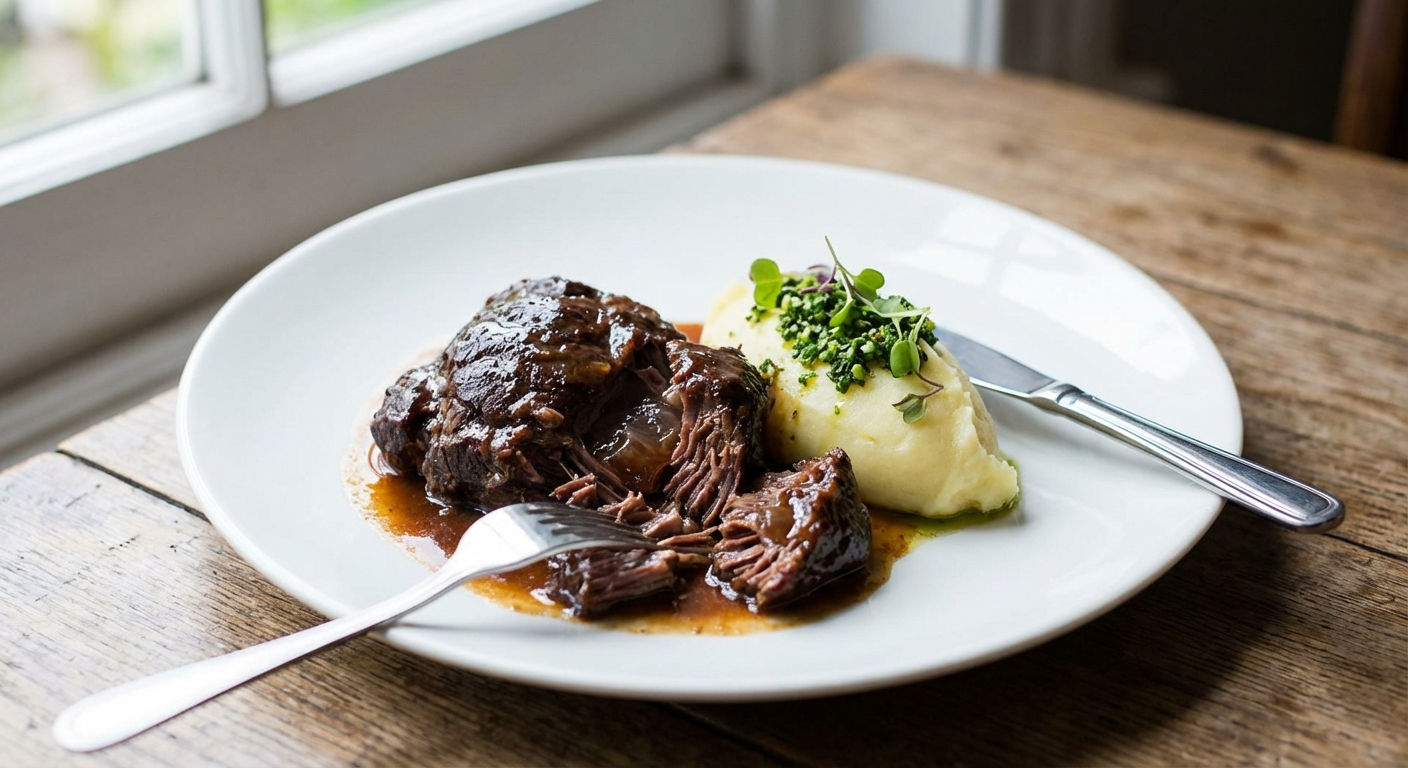
Braised beef cheeks produce a rich, glossy sauce that demands something to soak it up. The best accompaniments are:
- Creamy polenta: The classic Italian pairing. Soft, buttery polenta absorbs the braising sauce beautifully. This is arguably the perfect combination.
- Mashed potatoes: Silky, buttery mashed potatoes with the gelatin-rich sauce is comfort food at its absolute peak.
- Egg noodles or pappardelle: Wide, flat pasta catches the sauce in every fold. Toss the shredded meat with the pasta for a ragù-style presentation.
- Crusty bread: For mopping up every last drop of sauce. Sourdough is ideal.
- Root vegetable purée: Celery root, parsnip, or cauliflower purées provide a lighter alternative to potatoes while still absorbing sauce.
For wine pairing, match the cooking wine: if you braised in Malbec, serve Malbec. In general, beef cheeks love full-bodied reds with good tannin structure—Barolo, Syrah, Monastrell, or Cabernet Sauvignon. The richness of the dish needs a wine with enough backbone to stand up to it.
Finishing touches: A bright garnish cuts through the richness and elevates the dish. Gremolata (parsley, lemon zest, garlic), fresh horseradish, or a drizzle of high-quality olive oil and flaky sea salt all work beautifully.
Where to Buy Beef Cheeks
Finding beef cheeks requires a bit more effort than picking up a pack of ribeyes, but they're increasingly available as nose-to-tail eating gains popularity.
- Local butcher shops: Your best resource. Call ahead—many butchers can order cheeks even if they don't stock them regularly. Whole-animal butchers almost always have them.
- Mexican and Latin markets: Often the most reliable and affordable source. Beef cheeks are a staple for barbacoa, so these markets stock them consistently.
- Farmers' markets: Ranchers selling whole or half animals frequently have cheeks available and are happy to set them aside if you ask.
- Online specialty retailers: For premium quality and convenient delivery, online purveyors offer consistent availability. Explore specialty beef options from quality-focused suppliers who source from top producers.
- Warehouse stores: Costco occasionally carries beef cheeks, particularly in regions with large Hispanic populations.
What to Look For
- Deep, dark red color: Darker than most cuts—this indicates the rich myoglobin content from excellent blood supply and heavy muscle use.
- Visible connective tissue: Seams of white running through the meat are a good sign—that's the collagen that will make your braise incredible.
- Fresh smell: Should smell clean and faintly metallic, like fresh beef. No sour or ammonia notes.
- Firm texture: Raw cheeks should feel dense and firm, not soft or mushy.
- Reasonable trim: Some silver skin is expected, but avoid cheeks with excessive fat or untrimmed glandular tissue.
Expect to pay between $6 and $12 per pound, depending on sourcing and quality. This makes beef cheeks one of the best values in the entire beef world—you're getting fine-dining flavor at utility-cut prices.
Common Mistakes to Avoid
- Not braising long enough: The number one error. Beef cheeks need a full 3 to 3.5 hours in the oven (or equivalent in a slow cooker/pressure cooker). Underdone cheeks are tough and chewy because the collagen hasn't fully converted to gelatin. When in doubt, cook longer.
- Skipping the sear: Browning the cheeks before braising is essential for building flavor. Those Maillard compounds dissolve into the braising liquid and transform the final sauce. Never skip this step.
- Too much liquid: The braising liquid should come about two-thirds up the sides of the cheeks, not cover them completely. You want braising, not boiling. Submerged meat doesn't develop as complex a flavor profile.
- Braising too hot: Keep your oven at 300°F or below. Higher temperatures cause the exterior of the meat to dry out before the interior's collagen has fully broken down. Low and slow is the only way.
- Not reducing the sauce: The braising liquid after cooking is good but thin. Straining and reducing it by half concentrates the flavors and creates a proper, glossy sauce with body from the dissolved gelatin.
- Poor wine choice: Use wine you'd actually drink. Cheap "cooking wine" with added salt will make your entire braise taste flat and harsh. A $10-15 bottle of dry red is perfectly adequate.
- Cutting before resting: Let braised cheeks rest in their sauce for at least 10 minutes before serving. They're fragile when hot and will hold together better with a brief rest.
Storing and Reheating
Here's a secret that experienced braisers know: beef cheeks are even better the next day. As the braise cools, the flavors continue to meld and deepen. The gelatin sets into a rich, wobbly jelly that re-melts beautifully when reheated.
- Refrigerator: Store cheeks in their braising liquid in an airtight container for up to 4 days. The solidified fat on top acts as a natural seal.
- Freezer: Beef cheeks freeze exceptionally well. Portion them with sauce into freezer-safe containers. They'll keep for up to 3 months with minimal quality loss.
- Reheating: Gently rewarm in a covered pot over low heat, or in a 300°F oven for 20-30 minutes. Don't microwave—it heats unevenly and can dry out the edges while the center stays cold.
This make-ahead quality makes beef cheeks ideal for dinner parties. Braise them a day or two ahead, refrigerate, then simply reheat before serving. Less stress, better flavor.
Final Thoughts
Beef cheeks are a reminder that the best eating doesn't always come from the most expensive, most famous cuts. While the steakhouse world obsesses over dry-aged ribeyes and A5 wagyu, the world's best braises start with humble, affordable cuts that nobody else wants—and beef cheeks sit at the very top of that list.
They require patience. You can't rush the conversion of collagen to gelatin—it takes hours of gentle heat and moisture. But that patience is rewarded with a dish that no quick-cooked steak can match for depth of flavor, richness of texture, and sheer soul-satisfying comfort.
Find them at your local butcher or Latin market, braise them with good wine and simple aromatics, and serve them over polenta or mashed potatoes. Then sit back and watch as everyone at the table goes quiet for a moment—the unmistakable sign that you've served something truly extraordinary.
— Frank Russo
Frequently Asked Questions
What are beef cheeks?
Beef cheeks are the facial muscles (masseter muscles) from the cow's jaw. They're dense, collagen-rich muscles that the cow uses for chewing cud up to eight hours per day. When braised low and slow, the collagen converts to gelatin, creating an incredibly tender, rich, and flavorful meat that falls apart at the touch of a fork.
How long do beef cheeks take to cook?
Beef cheeks need 3 to 3.5 hours of braising in a 300°F oven, 8-10 hours on low in a slow cooker, or 45-55 minutes in a pressure cooker. The key is patience—the collagen must fully convert to gelatin for that fork-tender texture. They're done when a fork slides in with zero resistance.
Are beef cheeks expensive?
No—beef cheeks are one of the best values in beef, typically costing $6-$12 per pound. That's a fraction of the price of short ribs, oxtail, or premium steaks. Despite their low price, they deliver fine-dining quality flavor and texture when properly braised.
Where can I buy beef cheeks?
The best sources are local butcher shops (call ahead to request them), Mexican or Latin markets (they stock them regularly for barbacoa), farmers' markets, and online specialty meat retailers. Warehouse stores like Costco occasionally carry them as well.
What is the best way to cook beef cheeks?
Braising is the only proper method for beef cheeks. Sear them hard in a hot pan first, then braise in red wine and beef stock with aromatics at 300°F for 3-3.5 hours. The classic preparation is a red wine braise served over polenta or mashed potatoes. Slow cookers and pressure cookers also produce excellent results.
Can you grill or pan-sear beef cheeks like a steak?
No. Beef cheeks are extremely tough when cooked with quick, high-heat methods. Their dense collagen network requires sustained, moist heat (braising) to break down into gelatin. Attempting to grill or pan-sear beef cheeks will result in a very tough, chewy, and unpleasant eating experience.
More Expert Guides
What Is Chateaubriand? (Cut, Cooking, & Best Sources)
Chateaubriand is a thick-cut roast from the center of the beef tenderloin, traditionally served for two. Learn what makes this classic French cut special and how to cook it.
14 min readWhat Is Round Steak? The Complete Guide to Beef's Most Versatile Budget Cut
Round steak comes from the rear leg of the cow — it's lean, affordable, and misunderstood. A master butcher breaks down every sub-cut, cooking method, and technique to turn this budget workhorse into genuinely delicious meals.
14 min readWhat Is Eye of Round? The Complete Butcher's Guide to This Lean Cut
Eye of round is one of the leanest, most affordable cuts in the entire beef case — and one of the most misunderstood. A butcher explains how to turn this budget-friendly roast into something genuinely delicious.