Best Beef Cuts for Stir Fry: A Butcher's Guide to Tender, Fast-Cooking Beef
Every week, at least a dozen customers walk up to my counter and ask some version of the same question: "What's the best beef for stir fry?" And almost every time, they're reaching for the wrong thing. Some grab a package of pre-cut "stir fry strips" that are hacked from whatever trim was left over that day. Others go straight for the expensive cuts — ribeye, tenderloin — thinking more money means better results. Neither approach is right.
After forty-plus years behind the counter, I can tell you this: great stir fry beef comes down to three things. The right cut, the right slice, and the right heat. Get the cut wrong, and no amount of cornstarch slurry or velvet technique will save you from chewy, stringy, or dry disappointment. Get it right, and you'll wonder why you ever ordered takeout.
Here's everything I know about picking beef for stir fry, ranked from the best all-around options to the budget-friendly alternatives that still deliver.
What Makes a Good Stir Fry Cut?
Stir fry is a high-heat, fast-cooking method. You're talking 500-700°F in a properly heated wok, with pieces of beef spending maybe 60-90 seconds in contact with the metal before everything gets tossed together. That extreme speed changes what you need from a cut of beef compared to almost any other cooking method.
Moderate tenderness is essential. You don't need the most tender cut on the animal — tenderloin is actually overkill and falls apart too easily. But you can't use tough braising cuts either, because there's zero time for collagen to break down. You want cuts that are naturally reasonably tender with a moderate amount of connective tissue that won't turn rubbery in 90 seconds of cooking.
Good grain structure matters. Cuts with a clear, identifiable grain direction let you slice against it cleanly. Slicing against the grain shortens the muscle fibers, which is the single most important technique for tender stir fry beef — more important than the cut itself, honestly. Cuts with confused or multi-directional grain patterns are harder to slice correctly.
Some fat is your friend. Unlike jerky, where you want pure lean, stir fry benefits from a modest amount of intramuscular fat. That fat bastes the meat during the sear and adds richness that stands up to bold sauces. You don't want heavy marbling (it renders too fast and makes things greasy), but paper-thin veins of fat through the muscle are ideal.
Flat, even shape helps. Thin, flat muscles are easier to slice into uniform strips. A thick, round roast means the outer pieces are thin while the center pieces are thick, leading to uneven cooking. Flat cuts give you consistent strips that all cook at the same rate.
Flank Steak: The Stir Fry Standard
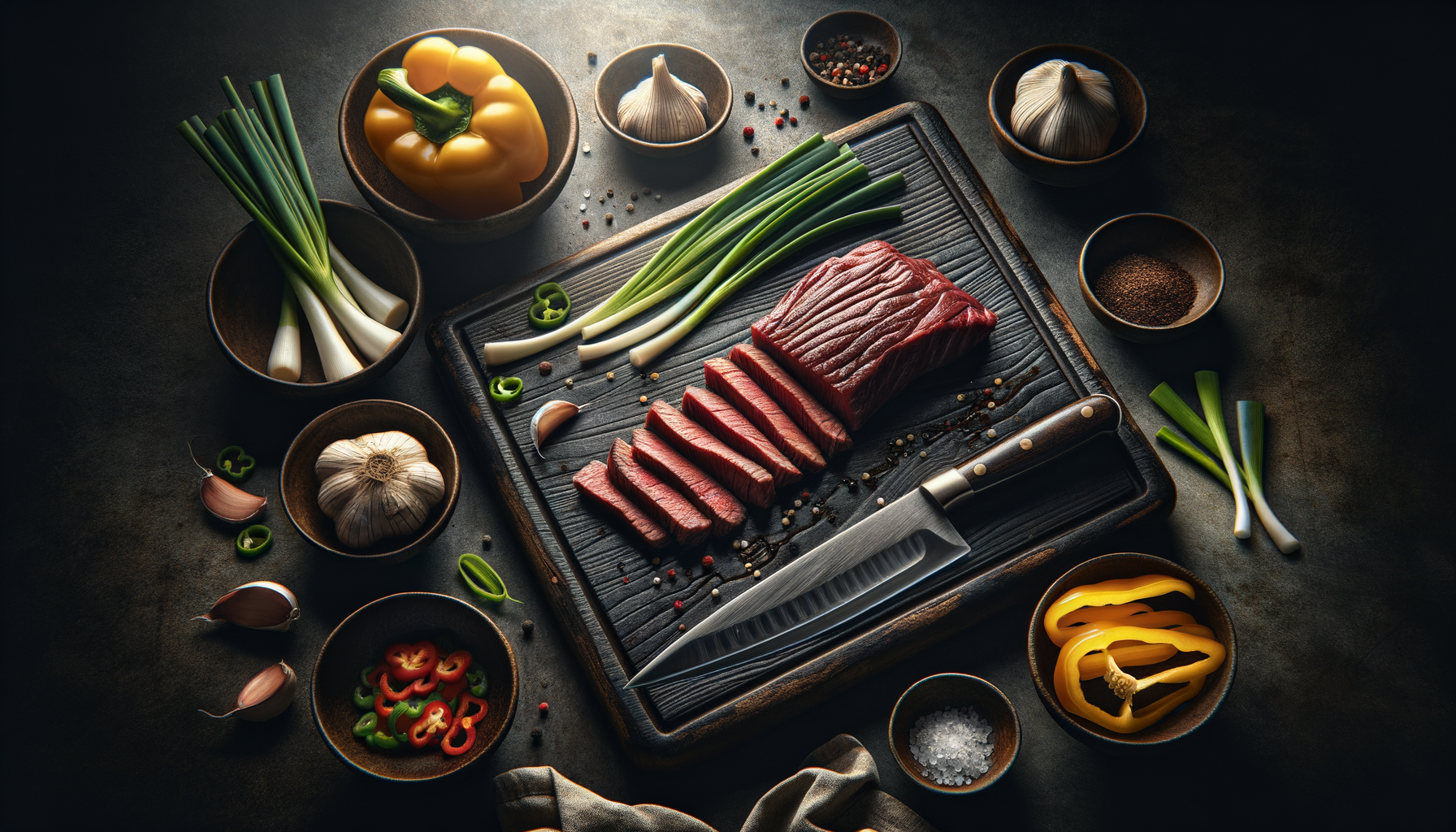
If I could only recommend one cut for stir fry for the rest of my career, it would be flank steak. This flat, wide muscle from the belly of the animal has been the go-to stir fry cut in Chinese, Thai, and Korean cooking for generations, and for very good reason.
Flank steak has the most pronounced, visible grain of any cut on the animal. You can see the muscle fibers running lengthwise from one end to the other like the lines on a piece of wood. That makes it almost impossible to slice incorrectly — just turn it perpendicular to the grain and cut thin strips. Even a beginner can get this right on the first try.
The flavor is assertive and beefy, which is exactly what you want when you're up against garlic, ginger, soy sauce, and chili paste. Milder cuts get lost in bold stir fry sauces. Flank steak holds its own.
Why it's #1:
- Extremely visible grain makes slicing foolproof
- Flat shape yields uniform strips
- Bold beef flavor stands up to strong sauces
- Moderate fat content keeps it moist without being greasy
- Widely available ($8-12/lb)
- Traditional choice in Asian stir fry cooking
Slicing tip: Pop it in the freezer for 30-45 minutes until firm but not frozen. Slice against the grain at a 45-degree angle into strips about 1/8 inch thick and 2-3 inches long. The angle increases the surface area of each slice, which means more caramelized sear and better sauce absorption.
Yield: A typical flank steak weighs 1.5-2.5 pounds. After trimming the thin membrane on one side, you'll lose almost nothing — maybe 5% at most. One flank steak is enough for 4-6 servings of stir fry.
Skirt Steak: Maximum Flavor, Maximum Sear
If flank steak is the textbook answer, skirt steak is the passionate chef's answer. This long, thin strip from the diaphragm area has even more intense beef flavor than flank and develops an absolutely incredible sear because of its loose, open grain structure.
The looser fiber structure means skirt steak absorbs marinades like a sponge. Thirty minutes in soy sauce, sesame oil, and garlic, and the flavor penetrates deep into every fiber. Flank steak absorbs marinade well too, but skirt takes it to another level.
The trade-off is that skirt steak is slightly trickier to slice. The grain can shift direction, especially in outside skirt, so you need to pay attention as you work your way along the cut. And it has a heavier membrane on the outside that needs to be peeled off before slicing — your butcher can do this, but pre-packaged skirt often still has it attached.
Why it's excellent:
- Richest beef flavor of any stir fry cut
- Open grain absorbs marinades exceptionally well
- Develops intense caramelization at high heat
- Naturally thin shape requires minimal preparation
Watch out for:
- Outside skirt has tougher membrane that must be removed
- Grain direction shifts — watch as you slice
- Price has risen dramatically ($12-18/lb) due to fajita demand
- Can be chewy if sliced too thick or with the grain
Pro tip: Ask your butcher for inside skirt specifically. It's more tender, has less membrane, and the grain runs more consistently. Outside skirt has more flavor but requires more prep work.
Sirloin Flap (Bavette): The Underrated Champion
Here's the cut I recommend to anyone who wants flank steak quality at a lower price point. Sirloin flap, also called bavette, comes from the bottom sirloin and has a texture remarkably similar to flank steak — long, pronounced grain, flat shape, good beefy flavor.
For years, bavette flew under the radar because it doesn't have an elegant name and it doesn't look pretty in the case. It's a shaggy, uneven muscle that needs trimming. But once you clean it up and slice it against the grain, it's nearly indistinguishable from flank steak in a stir fry — and it often costs $2-4 less per pound.
Why it's great:
- Similar texture and grain structure to flank steak
- Strong beefy flavor
- Typically $2-4/lb cheaper than flank
- Large cut (2-3 lbs) — plenty for a big batch
The catch: Bavette requires more trimming than flank. It has a fat cap and some internal seams that need to be cleaned out. Expect 15-20% trim loss compared to flank's 5%. Still worth it for the price difference, especially if you're feeding a crowd.
Flat Iron Steak: Tender and Forgiving
If you tend to overcook things — no judgment, it happens — flat iron steak is your safety net. This cut from the shoulder blade is the second most tender muscle on the animal after the tenderloin, which means it stays tender even if your timing isn't perfect.
Flat iron has a fine, even grain and a nice stripe of marbling that keeps it juicy at high heat. It doesn't have the intense beefy punch of flank or skirt, but it has a clean, pleasant flavor that works well in lighter stir fry preparations — think garlic and black pepper sauce or a simple oyster sauce stir fry where you want the beef flavor to come through without competing.
Why it works:
- Extremely tender — forgiving of overcooking
- Fine, even grain for clean slicing
- Good marbling keeps it moist
- Affordable ($8-11/lb)
Limitation: Flat iron steaks are relatively small (8-12 oz each), so you may need two or three for a family-sized stir fry. The center seam of connective tissue should be cut around, not through.
Top Sirloin: The Reliable All-Rounder
Top sirloin is the Swiss Army knife of the beef world. It's not the most tender, not the most flavorful, not the cheapest — but it's good at everything and available absolutely everywhere. Every grocery store in America has top sirloin, and it rarely disappoints in a stir fry.
The key with sirloin is slicing it thin enough. Because it's moderately tender rather than extremely tender, thick slices will be noticeably chewy. Keep your strips under 1/8 inch thick and against the grain, and sirloin gives you a solid, satisfying stir fry at a reasonable price.
Why it's reliable:
- Available everywhere, year-round
- Balanced flavor — not too mild, not too strong
- Moderate price ($7-10/lb)
- Large steaks mean less waste from trimming
Tip: Look for top sirloin specifically, not bottom sirloin (which is tougher) or sirloin tip (which is from the round and much leaner). The labeling can be confusing — when in doubt, ask your butcher.
Hanger Steak: The Butcher's Secret
There's only one hanger steak per animal, which is why you rarely see it at the grocery store — butchers often keep it for themselves. But if you can find it at a specialty butcher shop, it makes exceptional stir fry.
Hanger steak has a coarse, open grain similar to skirt steak, with even more intense mineral, almost liver-like beef flavor. It absorbs marinades deeply and sears beautifully. The texture is uniquely tender for such a flavorful cut — it sits right in the sweet spot between melt-in-your-mouth tender and satisfying chew.
The deal-breaker for some: Hanger steak has a thick central membrane that divides it into two lobes. This must be removed — it's inedible and will ruin your stir fry. Ask your butcher to clean it, or do it yourself with a sharp boning knife. Once that membrane is out, you've got two gorgeous strips of some of the best stir fry beef money can buy.
Budget Options That Still Deliver
Chuck Eye Thin-Sliced
The chuck eye, sometimes called the "poor man's ribeye," has surprising tenderness and excellent flavor. The catch is that it has more connective tissue and fat than the premium stir fry cuts. To make it work, you need to trim aggressively and slice paper-thin. When you do, the rich marbling actually becomes an advantage — those thin-sliced, well-marbled strips develop incredible flavor at high heat.
Tri-Tip
Tri-tip is a West Coast favorite that makes solid stir fry meat. It's lean, flavorful, and reasonably tender when sliced correctly. The challenge is that tri-tip has two different grain directions that meet in the middle of the cut. You need to identify where the grain shifts and cut the roast in half before slicing each piece against its own grain direction.
Eye of Round (With Velveting)
I wouldn't normally recommend eye of round for stir fry — it's too lean and tough for quick cooking. But if budget is the priority, velveting transforms this cheap cut into something remarkably tender. Toss thin slices in a mixture of egg white, cornstarch, and a splash of rice wine, then blanch briefly in oil or water before stir frying. The coating creates a protective barrier that keeps the meat moist and tender. Chinese restaurants have been using this technique to make inexpensive cuts taste premium for centuries.
The Velveting Technique: Making Any Cut Better
Speaking of velveting — this Chinese restaurant secret works on every cut listed above, but it's transformative on the tougher, cheaper ones. Here's the basic process:
- Slice beef thin against the grain (1/8 inch or less)
- Toss with 1 tablespoon cornstarch, 1 egg white, 1 tablespoon rice wine or dry sherry, and a pinch of salt per pound of beef
- Refrigerate for 15-30 minutes
- Either blanch in 300°F oil for 30 seconds (restaurant method) or poach in barely simmering water for 60 seconds (home method)
- Drain and proceed with your stir fry
Velveting creates a thin protein coating that seals in moisture and gives the beef that signature silky texture you get at good Chinese restaurants. It's not strictly necessary with naturally tender cuts like flank or flat iron, but it elevates them. With tougher cuts like eye of round or bottom round, it's the difference between edible and excellent.
How to Slice Beef for Stir Fry
I've said it three times already, but it bears repeating because it's that important: always slice against the grain. This single technique matters more than which cut you buy. A cheap cut sliced correctly will be more tender than an expensive cut sliced wrong.
Step 1: Identify the grain. Look at the surface of the meat. You'll see lines running in one direction — those are the muscle fibers. On cuts like flank and skirt, they're obvious. On sirloin and flat iron, you may need to look more closely.
Step 2: Freeze briefly. Put the beef in the freezer for 30-45 minutes. You want it firm but not frozen solid — it should give slightly when you press it. This makes thin slicing dramatically easier and safer.
Step 3: Slice at an angle. Position your knife perpendicular to the grain and slice at a 30-45 degree bias. This creates wider strips with more surface area than cutting straight down. Aim for 1/8 inch thick for tender cuts, even thinner for tougher ones.
Step 4: Keep strips short. Cut strips 2-3 inches long. Longer strips tangle in the wok and steam instead of searing. Short strips sit flat against the metal and develop proper caramelization.
Cuts to Avoid for Stir Fry
Not every beef cut works in a wok. Here's what to skip:
Ribeye and strip steak: Too expensive and too fatty. The heavy marbling renders out and creates a greasy pool in the wok instead of a clean sear. Save these for the grill.
Tenderloin: Too tender and too mild. It falls apart into mush in a stir fry and its delicate flavor gets completely buried by the sauce. It's also absurdly expensive for a preparation that doesn't showcase it.
Brisket, chuck roast, short ribs: Too tough for quick cooking. These cuts need hours of low, slow heat to break down their collagen. In a 90-second stir fry, they'll be like chewing rubber bands.
Pre-cut "stir fry strips": These mystery meat packages are usually scraps from multiple cuts, sliced in random directions, at inconsistent thicknesses. Some pieces will be tender while others are tough. You're better off buying a whole cut and slicing it yourself — it's often cheaper too.
Quick-Reference Comparison
Here's how the best stir fry cuts stack up at a glance:
Flank Steak — Tenderness: 7/10 | Flavor: 8/10 | Price: $8-12/lb | Ease of prep: 9/10 | Best for: All-purpose stir fry
Skirt Steak — Tenderness: 6/10 | Flavor: 10/10 | Price: $12-18/lb | Ease of prep: 7/10 | Best for: Bold, heavily seasoned dishes
Sirloin Flap (Bavette) — Tenderness: 7/10 | Flavor: 8/10 | Price: $6-9/lb | Ease of prep: 7/10 | Best for: Budget-conscious cooking
Flat Iron — Tenderness: 9/10 | Flavor: 7/10 | Price: $8-11/lb | Ease of prep: 8/10 | Best for: Light, delicate sauces
Top Sirloin — Tenderness: 6/10 | Flavor: 7/10 | Price: $7-10/lb | Ease of prep: 8/10 | Best for: Everyday family cooking
Hanger Steak — Tenderness: 8/10 | Flavor: 9/10 | Price: $10-15/lb | Ease of prep: 6/10 | Best for: Special-occasion stir fry
The Bottom Line
For most home cooks, flank steak is the answer. It's widely available, reasonably priced, easy to slice, and delivers consistently excellent results. If you want to experiment, try skirt steak for maximum flavor or bavette for the best value. And regardless of which cut you choose, remember the two non-negotiable rules: slice thin, slice against the grain.
Every great stir fry starts at the meat counter. Now you know exactly what to ask for.
Frequently Asked Questions
What is the most tender beef cut for stir fry?
Flat iron steak is the most tender option for stir fry, being the second most tender muscle on the animal after the tenderloin. It stays tender even if slightly overcooked, making it ideal for less experienced cooks.
Can I use ribeye for stir fry?
While you can, it's not recommended. Ribeye's heavy marbling renders out at high wok heat, creating a greasy result rather than a clean sear. It's also expensive for a preparation that doesn't showcase its qualities. Flank or skirt steak will give better results at a lower price.
What does "slice against the grain" mean for stir fry?
The grain refers to the direction of muscle fibers visible on the surface of the meat. Slicing against (perpendicular to) the grain cuts those fibers short, resulting in tender pieces. Slicing with the grain leaves long fibers intact, making the meat chewy and tough.
What is velveting and does it really work?
Velveting is a Chinese technique where thinly sliced beef is coated in a mixture of egg white, cornstarch, and rice wine, then briefly blanched before stir frying. It creates a protective coating that seals in moisture and gives the beef a silky texture. It works exceptionally well, especially on tougher, cheaper cuts like eye of round.
Are pre-cut stir fry strips from the grocery store worth buying?
Generally no. Pre-cut stir fry strips are usually scraps from multiple cuts, sliced in random directions at inconsistent thicknesses. You get better, more consistent results by buying a whole flank steak or sirloin and slicing it yourself — and it often costs less per pound.
How thin should I slice beef for stir fry?
Aim for 1/8 inch thick or slightly less, sliced against the grain. Freeze the beef for 30-45 minutes first to firm it up for easier slicing. Thinner slices cook faster and stay more tender at high heat.
More Expert Guides
What Is Chateaubriand? (Cut, Cooking, & Best Sources)
Chateaubriand is a thick-cut roast from the center of the beef tenderloin, traditionally served for two. Learn what makes this classic French cut special and how to cook it.
14 min readWhat Is Round Steak? The Complete Guide to Beef's Most Versatile Budget Cut
Round steak comes from the rear leg of the cow — it's lean, affordable, and misunderstood. A master butcher breaks down every sub-cut, cooking method, and technique to turn this budget workhorse into genuinely delicious meals.
14 min readWhat Is Eye of Round? The Complete Butcher's Guide to This Lean Cut
Eye of round is one of the leanest, most affordable cuts in the entire beef case — and one of the most misunderstood. A butcher explains how to turn this budget-friendly roast into something genuinely delicious.