What is Bavette Steak? The Underrated French Bistro Cut
Walk into any traditional French bistro and you'll find bavette steak on the menu—often served with shallots, red wine, and a pile of crispy frites. It's one of the most beloved everyday cuts in France, a staple of home kitchens from Lyon to Bordeaux. Yet in American grocery stores, bavette is practically invisible. Most shoppers have never heard of it, and many butchers don't even break it out as a separate cut.
That's a shame, because bavette is one of the most flavorful, versatile, and affordable steaks on the entire animal. If you've ever enjoyed flank steak or skirt steak, bavette is their French cousin—with its own distinct personality and, arguably, a more satisfying eating experience than either one.
What Exactly is Bavette Steak?
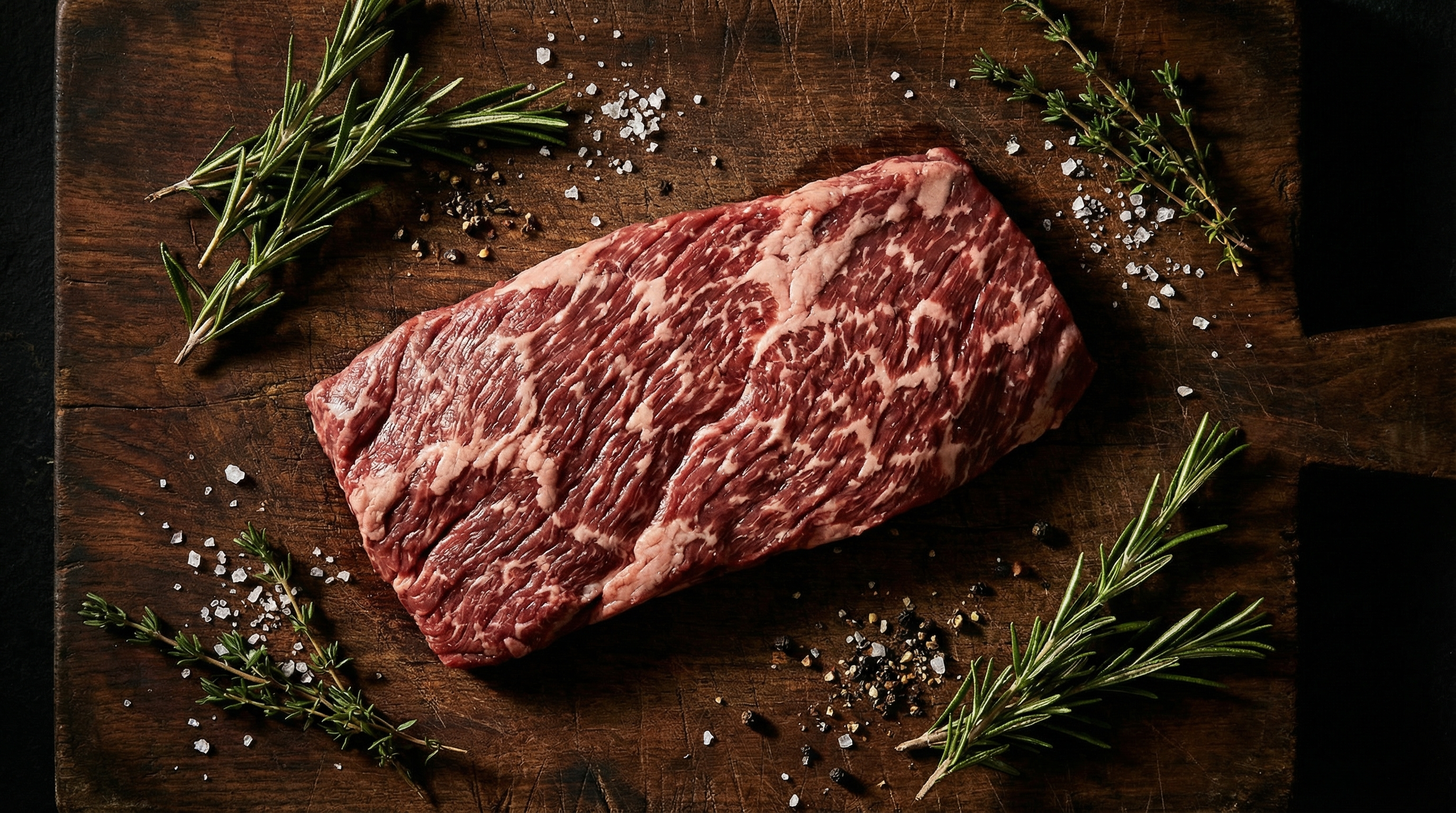
Bavette is the French name for the sirloin flap, also called flap steak or flap meat in American butchery. Its NAMP (North American Meat Processors) designation is #185A. The word "bavette" comes from the French bavette, meaning "bib"—a reference to the cut's flat, thin shape that loosely resembles a baby's bib when laid out.
A whole bavette typically weighs between 1.5 and 2.5 pounds. It's a flat, irregularly shaped piece of beef with a distinctly coarse, open grain—similar to flank and skirt steak but noticeably thicker and wider. The muscle fibers run in clear, visible lines across the surface, which is actually a feature, not a flaw. That pronounced grain is what makes bavette so easy to slice properly and so satisfying to eat when handled correctly.
The flavor profile is intensely beefy—stronger than strip steak or ribeye, closer to hanger steak in depth. Bavette has moderate marbling that varies depending on the grade, but even Select-grade bavette delivers remarkable flavor because of the muscle's location and the type of work it does. It's a cut where technique matters more than grade.
Anatomy: Where Does Bavette Come From on the Cow?
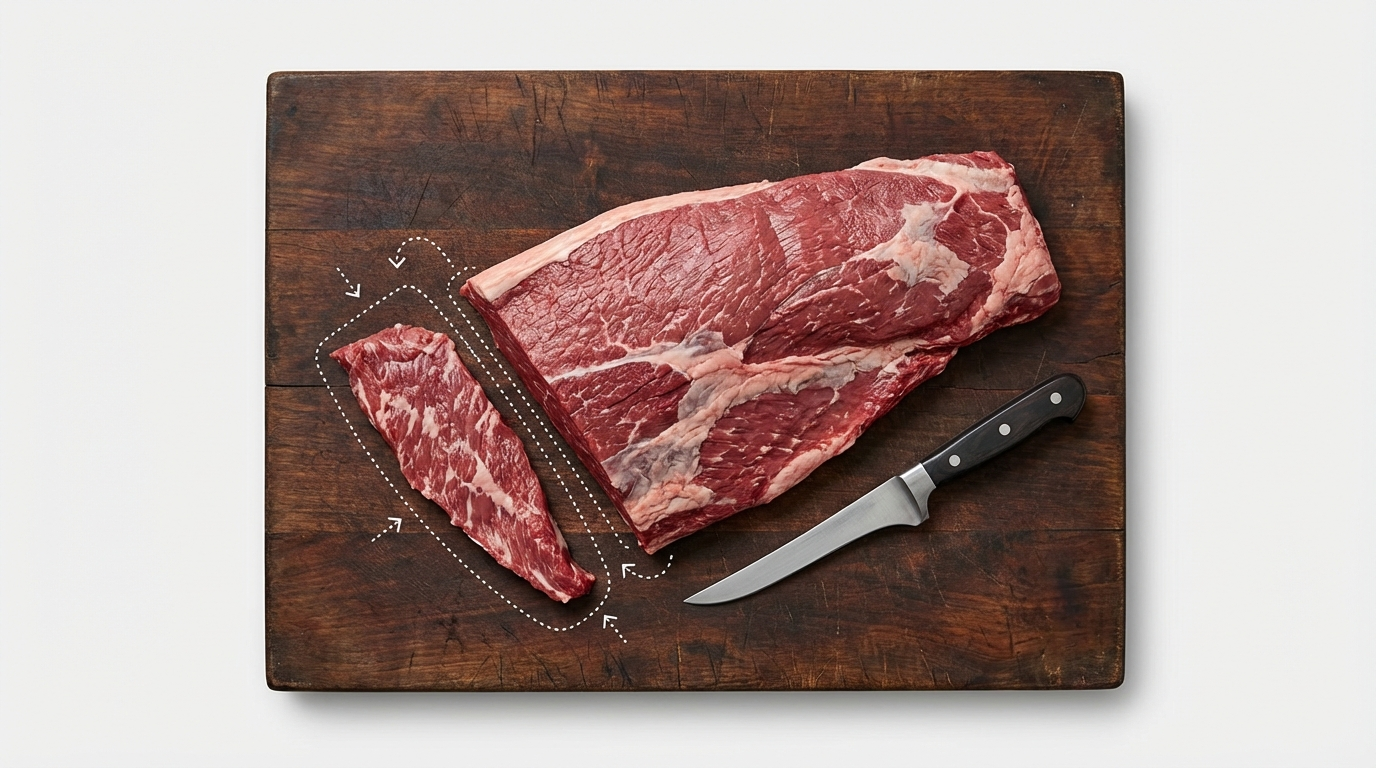
Bavette comes from the bottom sirloin subprimal, specifically the ventral (belly-side) portion of the sirloin. It sits just below the tri-tip and adjacent to the flank, which explains why it shares textural similarities with both flank steak and skirt steak while being its own distinct muscle.
The muscle itself is the obliquus abdominis internus—part of the abdominal wall. It's a working muscle that helps with core movement, breathing, and supporting the animal's weight. This constant low-level activity gives bavette its characteristic coarse grain and deep beefy flavor, while the muscle's relatively thin profile keeps it tender enough for quick, high-heat cooking.
Understanding the anatomy explains several key characteristics:
- Location near the belly: Abdominal muscles see moderate use but aren't weight-bearing like leg muscles, resulting in a balance of flavor and tenderness that's ideal for grilling.
- Flat, thin shape: The muscle naturally lies flat, making it perfect for high-heat searing without needing to butterfly or pound it thin.
- Coarse grain direction: The fibers run consistently in one direction, which makes slicing against the grain straightforward—a critical step for tenderness.
- Moderate marbling: The abdominal area receives good blood flow and deposits intramuscular fat more readily than leaner leg muscles.
One important anatomical note: bavette (sirloin flap) is sometimes confused with flank steak or skirt steak, but they're three entirely different muscles from three different primals. The flank comes from the flank primal below the loin. The skirt is the diaphragm muscle from the plate. The bavette sits above and behind both, in the bottom sirloin. Each has its own texture, thickness, and optimal cooking approach.
Bavette vs Flank Steak vs Skirt Steak
This is the comparison every cook wants to know, because these three cuts occupy similar territory—flat, coarse-grained, highly flavorful steaks that respond well to marinades and high heat. But the differences are meaningful, and understanding them will change how you shop and cook.
Bavette (sirloin flap) is the thickest of the three, typically 3/4 to 1 inch at its center, and the widest. It has a looser, more open grain than flank, with more intramuscular fat. This makes it the most forgiving to cook—it stays juicy even if you slightly overcook it. The flavor is deeply beefy with a slight minerality.
Flank steak is leaner and tighter-grained. It's thinner than bavette (usually 1/2 to 3/4 inch), with a denser, more compact texture. Flank is less forgiving—overcook it past medium and it turns tough quickly. The flavor is clean and beefy but without the richness bavette provides.
Skirt steak comes in two sub-cuts: outside skirt (thicker, more marbled, usually reserved for restaurants) and inside skirt (thinner, tougher, what you typically find at retail). Outside skirt has the most intense beefy flavor of all three but is the most expensive and hardest to find. Inside skirt needs careful cooking to avoid chewiness.
Here's the practical breakdown:
- For fajitas and tacos: Skirt steak (outside if you can get it) is traditional and delivers the most concentrated beef flavor in thin strips.
- For stir-fry and Asian dishes: Flank steak's lean, tight grain slices beautifully and absorbs marinades well.
- For steak frites and bistro-style: Bavette is the clear winner—its thickness allows you to get a proper crust while keeping a pink center, and its marbling delivers richness that complements simple preparations.
- For grilling beginners: Bavette is the most forgiving of the three, thanks to its thickness and fat content.
How to Cook Bavette Steak
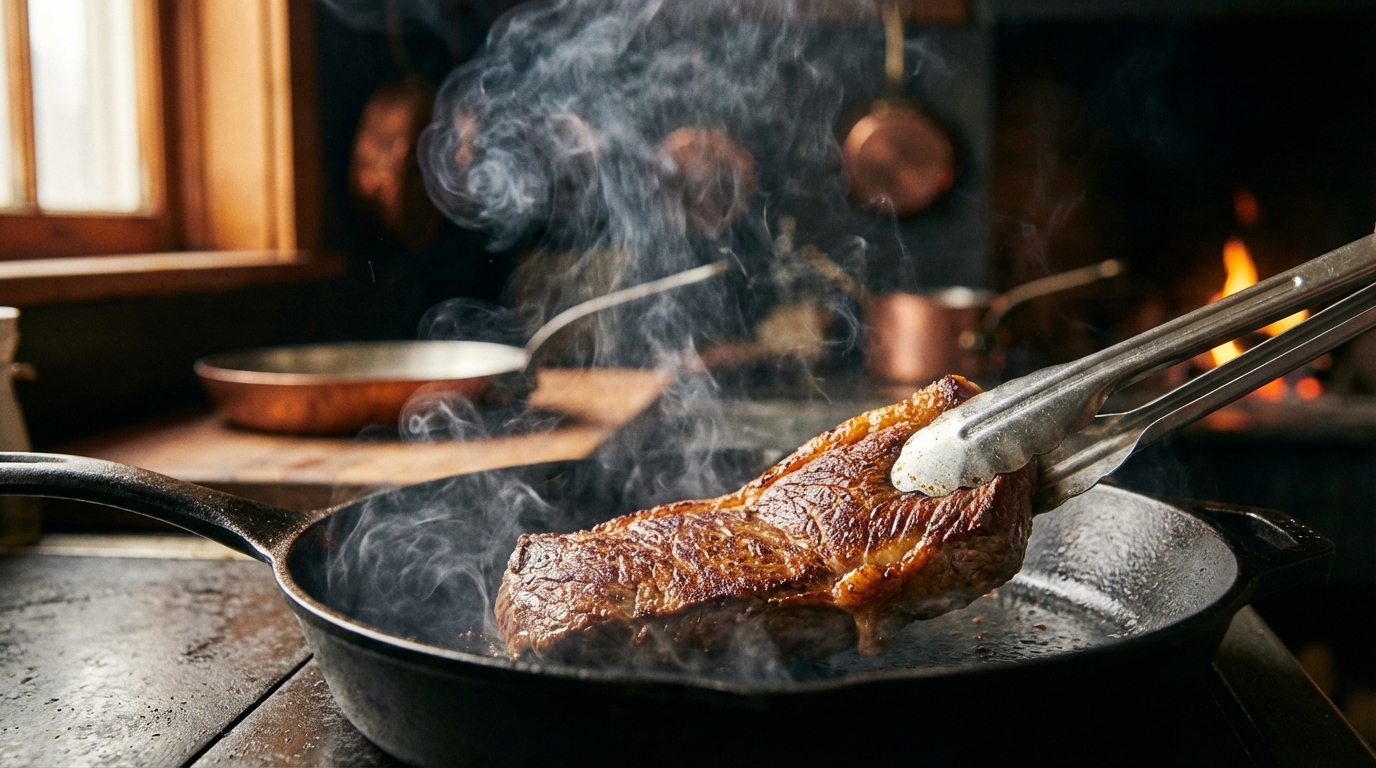
Bavette steak rewards high-heat, quick-cooking methods. The goal is always the same: develop a deep, caramelized crust on the exterior while keeping the interior pink and juicy. The cut's natural thickness (thicker than skirt, comparable to a good flank) gives you a comfortable window to achieve this.
Method 1: Cast Iron Sear (Best for Indoors)
This is the French bistro approach, and it's the method I recommend for most home cooks.
- Temper the steak: Remove the bavette from the refrigerator 30 to 45 minutes before cooking. A room-temperature steak cooks more evenly.
- Season generously: Pat the surface completely dry with paper towels—this is critical for crust formation. Season liberally with coarse salt and freshly cracked black pepper. Nothing else is needed, though smoked paprika or garlic powder are welcome additions.
- Preheat the pan: Heat a cast iron skillet over high heat for a full 3 to 4 minutes until it's smoking. Add a high-smoke-point oil (avocado, grapeseed, or refined peanut) and let it shimmer.
- Sear without moving: Lay the steak away from you and don't touch it for 2.5 to 3 minutes. You want deep, dark browning—not pale gray. Flip once and cook another 2 to 3 minutes for medium-rare (130°F internal).
- Rest before slicing: Transfer to a cutting board and rest for 5 to 8 minutes. Bavette is a thick enough cut that resting makes a real difference in juice retention.
Method 2: Charcoal or Gas Grill (Best for Outdoors)
Bavette is a spectacular grilling steak. Set up your grill for direct high heat—you want grates hot enough that you can only hold your hand 4 inches above them for 2 seconds.
Grill for 3 to 4 minutes per side over direct heat, rotating 45 degrees halfway through each side for crosshatch marks if you want them. Pull at 125°F internal for medium-rare (it will carry over to 130°F during rest). The slightly longer cooking time compared to cast iron accounts for the less efficient heat transfer of grill grates.
Method 3: Reverse Sear (Best for Thick Pieces)
If your bavette is unusually thick (over 1 inch), the reverse sear produces the most evenly cooked result. Start in a 250°F oven on a wire rack until internal temperature reaches 115°F (about 25 to 30 minutes), then finish with a hard sear in a ripping hot cast iron skillet for 60 to 90 seconds per side.
Marinating Bavette: Do You Need To?
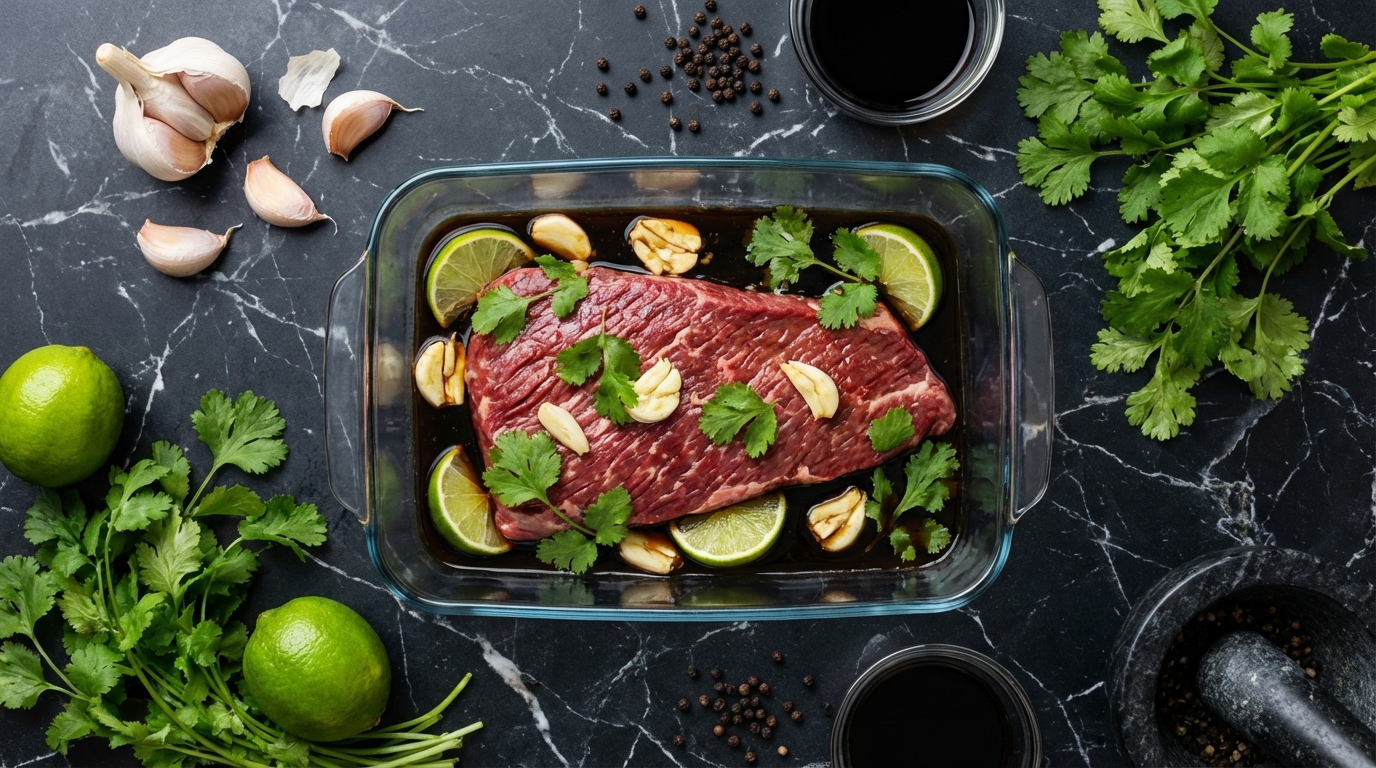
The short answer: no, you don't need to marinate bavette. It has enough inherent flavor and marbling to stand on its own with just salt and pepper. Many French preparations use nothing more than that, finishing with a shallot and red wine pan sauce.
The longer answer: bavette's open, coarse grain structure makes it one of the best steaks for absorbing marinades. The wide spaces between muscle fibers act like tiny channels that pull in liquid flavor. If you're going to marinate any steak, bavette will reward you more than most.
Keep marinades to 2 to 4 hours maximum. Longer marination in acidic liquids (citrus, vinegar, wine) will start to break down the surface proteins and create a mushy texture. Some effective bavette marinades:
- French bistro: Red wine, Dijon mustard, minced shallots, fresh thyme, olive oil
- Asian-inspired: Soy sauce, sesame oil, rice vinegar, ginger, garlic, brown sugar
- Argentine: Chimichurri (parsley, oregano, garlic, red wine vinegar, olive oil, red pepper flakes)
- Mexican: Lime juice, cumin, ancho chile powder, garlic, cilantro, olive oil
How to Slice Bavette Steak
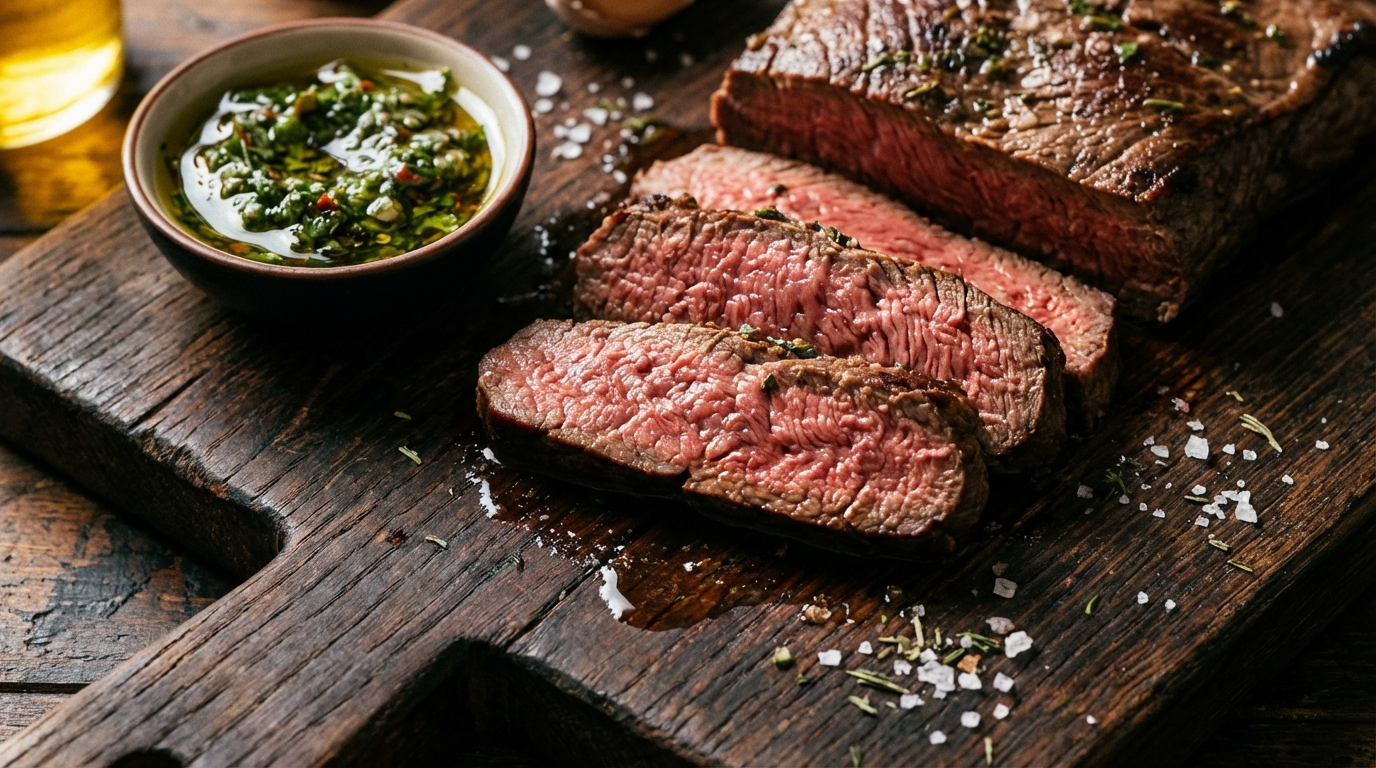
This is the single most important step in the entire bavette cooking process. The cut's coarse, long muscle fibers mean that slicing with the grain produces chewy, tough bites, while slicing against the grain shortens those fibers and creates tender, melt-in-your-mouth pieces.
With bavette, the grain is usually easy to identify—look for the parallel lines running across the surface of the meat. Position your knife perpendicular to those lines and slice in thin strips, about 1/4 inch thick, at a slight bias (angle your knife about 30 degrees from vertical). This bias cut creates wider slices with more surface area, which looks better on the plate and exposes more of that beautiful pink interior.
One common mistake: bavette can change grain direction partway through the steak, especially on larger pieces. If you notice the grain shifting, adjust your cutting angle to stay perpendicular. Taking an extra few seconds to read the grain before each cut is worth it.
Where to Buy Bavette Steak
Finding bavette can be the biggest challenge, depending on where you live. Here's where to look:
- Specialty butcher shops: Your best bet. Independent butchers break down whole primals and are more likely to separate the sirloin flap as its own cut. Ask for "bavette," "sirloin flap," or "flap steak"—they may know it by any of these names.
- Costco and restaurant supply stores: Costco occasionally carries flap meat (often labeled "sirloin flap" or "steak tips"), and restaurant supply stores like Restaurant Depot frequently stock it.
- Online meat purveyors: Companies like Snake River Farms, Porter Road, and Crowd Cow regularly stock bavette. It ships well because it's a flat cut that vacuum-seals easily.
- Grocery stores: Most conventional grocery stores don't separate bavette from the sirloin, instead grinding it or cutting it into "sirloin tips." If your store has a butcher counter, ask if they can cut one for you—they may have it in the back, just not on display.
Price-wise, bavette typically runs $8 to $14 per pound—significantly less than strip steak or ribeye ($16 to $30/lb) and roughly comparable to flank steak. For the flavor it delivers, it's one of the best values in the meat case.
Classic Bavette Recipes and Serving Ideas
Bavette's versatility is one of its greatest strengths. Here are the preparations that show it off best:
- Bavette à l'échalote (the French classic): Sear the steak, rest it, then build a sauce in the same pan with minced shallots, red wine, butter, and a splash of stock. Serve with pommes frites. This is the dish that made bavette famous in Parisian bistros.
- Grilled bavette with chimichurri: Simple salt-and-pepper grilling with a bright, herby chimichurri spooned over the sliced steak. The acidity of the chimichurri cuts through the richness perfectly.
- Bavette tacos: Marinate in lime, cumin, and ancho chile, grill hot and fast, slice thin, and serve in warm corn tortillas with pickled onions and salsa verde.
- Stir-fried bavette: Slice raw bavette very thin against the grain, marinate briefly in soy and sesame, and stir-fry over extremely high heat with vegetables. The coarse grain soaks up sauce beautifully.
- Bavette steak salad: Sear to medium-rare, slice thin, and arrange over arugula with shaved Parmesan, cherry tomatoes, and a balsamic vinaigrette. A substantial lunch that looks impressive.
Common Mistakes to Avoid
Bavette is forgiving, but these mistakes will still undermine the final result:
- Not drying the surface: Moisture on the meat's surface creates steam instead of crust. Pat it thoroughly dry before seasoning—this single step makes the biggest difference in sear quality.
- Cooking past medium: Bavette is at its best between rare and medium (125°F to 145°F internal). Beyond medium, the intramuscular fat renders out and the muscle fibers tighten, resulting in a dry, chewy steak. If someone at the table wants well-done, cook them a different cut.
- Slicing with the grain: We covered this, but it bears repeating: always slice against the grain, always thin, always on a bias. This is not optional.
- Skipping the rest: Bavette holds a lot of juice in those coarse muscle fibers. Cut into it immediately and you'll lose that juice all over the cutting board. Five minutes of resting is the minimum.
- Over-marinating: More than 4 hours in an acidic marinade turns the exterior mushy. If you want deeper flavor penetration, use a salt-based dry brine (1 teaspoon kosher salt per pound, uncovered in the fridge for 12 to 24 hours) instead of a wet marinade.
Storing and Freezing Bavette
Fresh bavette keeps well in the refrigerator for 3 to 5 days in its original vacuum packaging, or 2 to 3 days if re-wrapped in butcher paper or plastic wrap after opening. For longer storage, freeze it: vacuum-sealed bavette stays good for 6 to 12 months in the freezer without significant quality loss.
When thawing, always use the refrigerator method—24 hours in the fridge on a plate. Microwave thawing creates uneven hot spots that partially cook the edges, and countertop thawing is a food safety risk. If you're in a hurry, submerge the sealed package in cold running water for 30 to 45 minutes.
Frequently Asked Questions
What is bavette steak called in the US?
In the US, bavette is most commonly called sirloin flap, flap steak, or flap meat. Some butchers and grocery stores also label it as 'steak tips' or 'sirloin tips,' though those terms can refer to other cuts as well. The NAMP designation is #185A.
Is bavette steak the same as flank steak?
No. Bavette (sirloin flap) and flank steak are different muscles from different parts of the cow. Bavette comes from the bottom sirloin, while flank steak comes from the flank primal below the loin. Bavette is generally thicker, has more marbling, and has a looser grain than flank steak.
How do you cook bavette steak so it's not tough?
Three keys to tender bavette: cook it hot and fast (high heat, 2-3 minutes per side for medium-rare), don't cook past medium (145°F internal maximum), and always slice thin against the grain. The grain runs in clear parallel lines across the surface—cut perpendicular to those lines.
Is bavette steak expensive?
Bavette is one of the best value steaks available, typically $8 to $14 per pound—significantly less than ribeye ($18-$30/lb) or strip steak ($16-$25/lb). Despite the lower price, many chefs consider bavette more flavorful than premium cuts due to its intense beefy taste and moderate marbling.
Can you grill bavette steak?
Absolutely—bavette is an excellent grilling steak. Its thickness (3/4 to 1 inch) is ideal for direct high-heat grilling. Cook for 3 to 4 minutes per side over hot coals or high gas flame, pull at 125°F internal for medium-rare, and rest for 5 minutes before slicing against the grain.
More Expert Guides
What Is Chateaubriand? (Cut, Cooking, & Best Sources)
Chateaubriand is a thick-cut roast from the center of the beef tenderloin, traditionally served for two. Learn what makes this classic French cut special and how to cook it.
14 min readWhat Is Round Steak? The Complete Guide to Beef's Most Versatile Budget Cut
Round steak comes from the rear leg of the cow — it's lean, affordable, and misunderstood. A master butcher breaks down every sub-cut, cooking method, and technique to turn this budget workhorse into genuinely delicious meals.
14 min readWhat Is Eye of Round? The Complete Butcher's Guide to This Lean Cut
Eye of round is one of the leanest, most affordable cuts in the entire beef case — and one of the most misunderstood. A butcher explains how to turn this budget-friendly roast into something genuinely delicious.