Best Beef Cuts for Fajitas: 7 Cuts Ranked by a Butcher
Best Beef Cuts for Fajitas: 7 Cuts Ranked by a Butcher
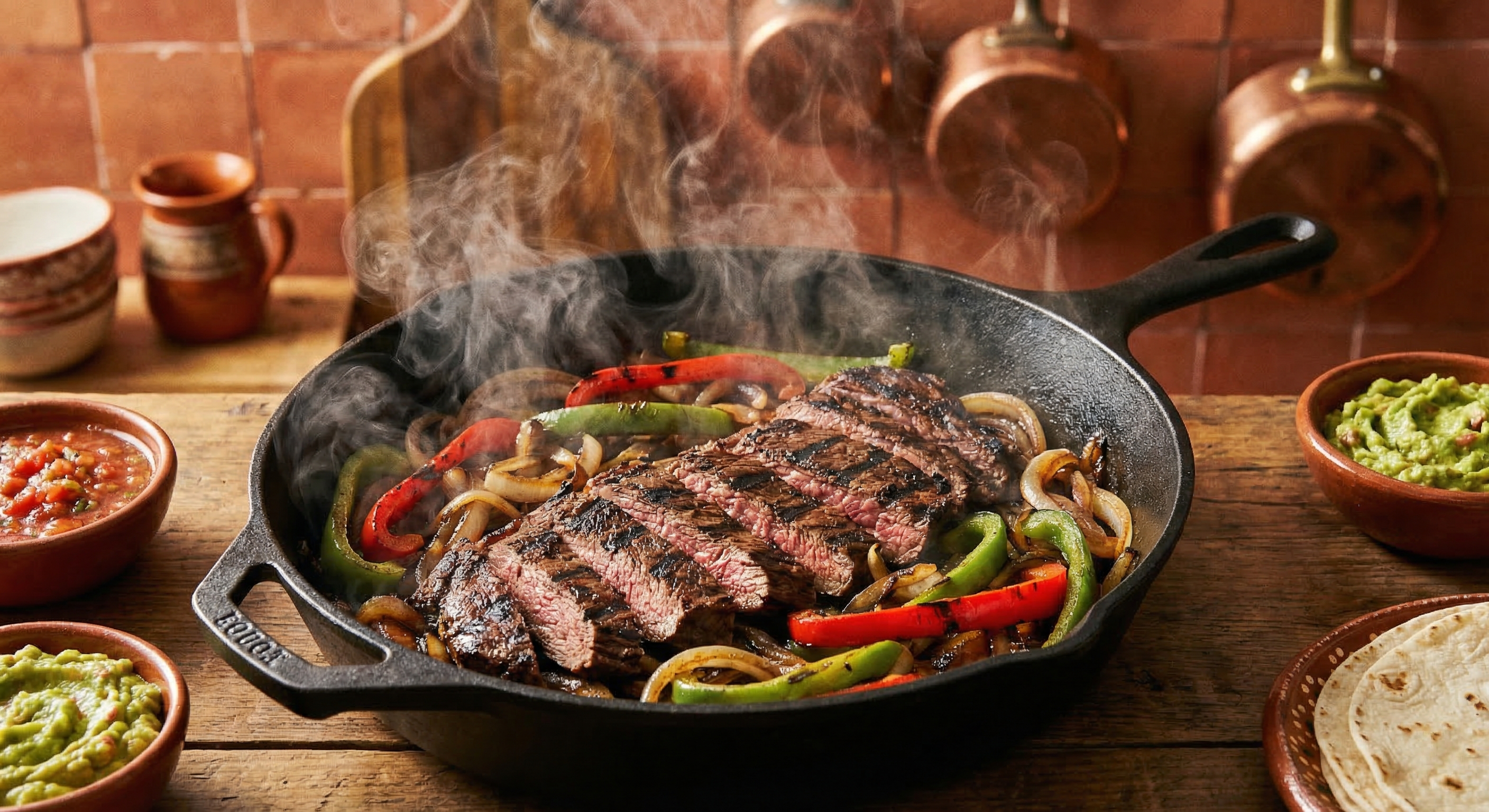
Fajitas are one of the simplest dishes in the Tex-Mex canon. Sliced beef, seared peppers and onions, warm tortillas. That's it. And because the recipe is so stripped down, the cut of beef you choose makes or breaks the entire plate.
Most grocery store fajita meat is pre-sliced mystery beef — thin, dry strips from whatever was cheapest that week. You can do much better. The right cut gives you charred edges, juicy interiors, and that deep beefy flavor that makes fajitas worth eating in the first place.
I've been cutting beef for over thirty years, and I've watched fajitas evolve from a South Texas ranch-hand meal into a restaurant staple. The cuts that work best haven't changed. Here are the 7 best beef cuts for fajitas, ranked by how well they perform on a screaming-hot skillet or grill.
What Makes a Good Fajita Cut?
Not every cut of beef works for fajitas. The cooking method — fast, hot, direct heat — demands specific characteristics:
- Loose grain structure — Open-grained cuts absorb marinades and stay tender when sliced thin against the grain.
- Moderate fat content — Too lean and the meat dries out over high heat. Too fatty and it turns greasy in a tortilla.
- Strong beef flavor — Working muscles from the plate, flank, and diaphragm have deeper flavor than loin cuts.
- Thin profile or easy to slice thin — Fajita meat needs to cook in 2-3 minutes per side. Thick roasts need not apply.
The best fajita cuts all come from muscles that work hard during the animal's life. That work builds flavor — and with the right technique, you get tenderness too.
1. Skirt Steak — The Original Fajita Cut
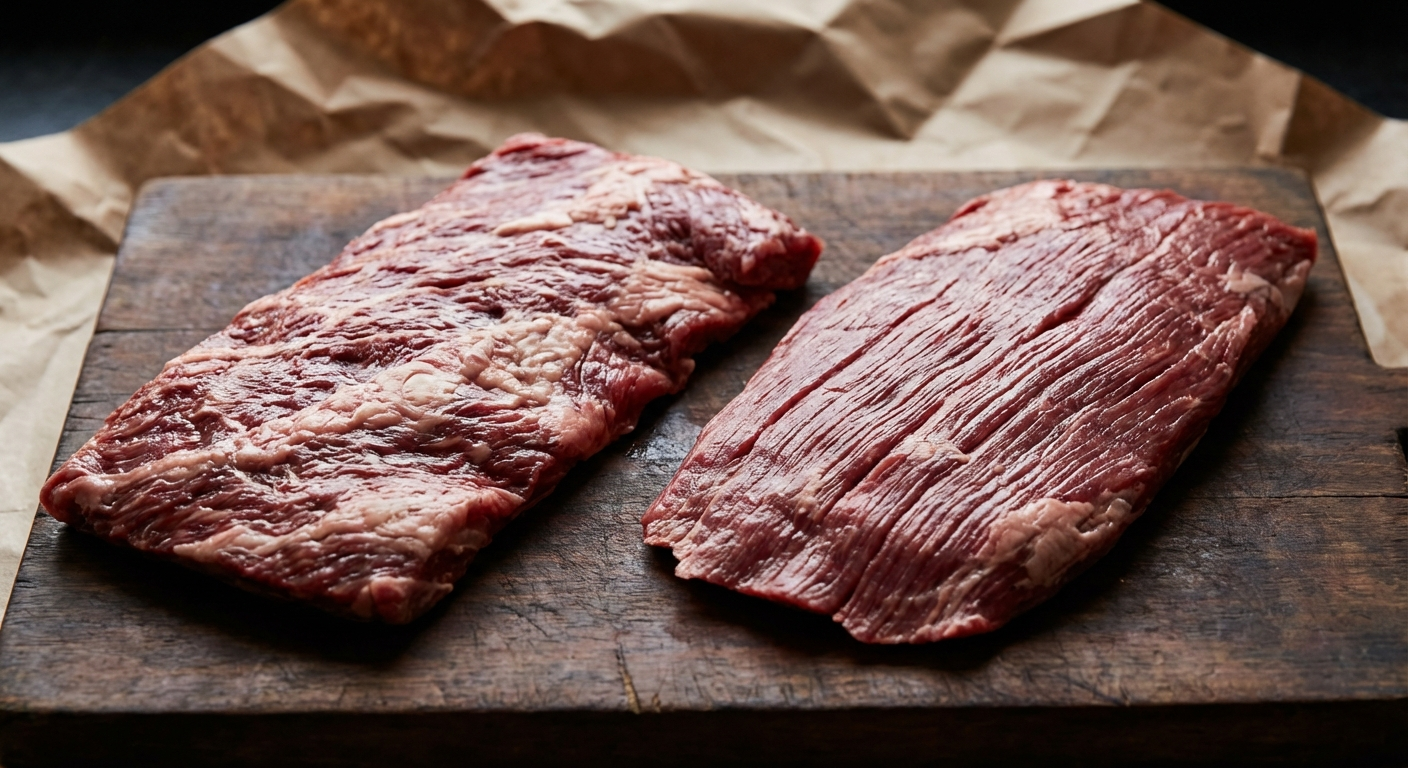
The word “fajita” literally comes from faja, the Spanish word for belt or strip — a reference to the skirt steak's long, flat shape. This is the cut that invented fajitas. Mexican ranch hands in the Rio Grande Valley would get paid in less desirable cuts, and they turned skirt steak into one of the most iconic dishes in American cooking.
Why it's #1: Skirt steak has more intramuscular fat than almost any other thin cut. That marbling keeps it juicy even when seared hard over direct heat. The loose, open grain absorbs marinades deeply — lime juice, cumin, garlic, and chili penetrate the meat instead of sitting on the surface.
Outside vs. inside skirt: There are two skirt steaks per animal. The outside skirt is thicker, more marbled, and more tender — it's what restaurants use. The inside skirt is thinner and chewier but still excellent. Ask your butcher which one they have. Outside skirt is worth the premium.
How to cook it for fajitas:
- Marinate 2-8 hours (lime juice, soy sauce, garlic, cumin, chili powder)
- Pat dry and season with salt
- Sear over the hottest heat you can get — 2-3 minutes per side
- Rest 5 minutes, then slice thin against the grain at a 45-degree bias
- Target 130-135°F internal for medium-rare
Price range: $12-18/lb (outside skirt can hit $20+/lb at premium butchers)
2. Flank Steak — The Lean Alternative
Flank steak is the most common skirt steak substitute for fajitas, and for good reason. It's widely available, reasonably priced, and has a tight, uniform grain that slices cleanly against the cut.
Why it works: Flank steak is leaner than skirt, which means it won't have quite as much juiciness. But it's more consistent in thickness, easier to find at any grocery store, and holds up beautifully to marinades. The flavor is beefy and clean — less funky than skirt, more approachable for people who don't eat fajitas regularly.
The key difference from skirt: Flank steak has a tighter grain. You must slice it very thin against the grain, or it'll be chewy. With skirt, you can get away with slightly thicker slices because the grain is more forgiving. With flank, precision matters.
How to cook it for fajitas:
- Marinate 4-12 hours — flank benefits from longer marinating because it's leaner
- Sear whole over high heat, 4-5 minutes per side (it's thicker than skirt)
- Rest 8-10 minutes
- Slice as thin as possible against the grain
- Target 125-130°F internal — flank gets tough past medium
Price range: $10-15/lb
3. Flap Meat (Sirloin Tip) — The Butcher's Secret
Flap meat is the cut most home cooks have never heard of, but it's the one many restaurants quietly use for their fajitas. Also called sirloin tip or bavette in French butchery, this cut comes from the bottom sirloin and has a loose, open grain similar to skirt steak.
Why it's underrated: Flap meat delivers 90% of skirt steak's performance at 60% of the price. It's well-marbled for a budget cut, takes marinades like a sponge, and has that deep beefy flavor you want in fajitas. The reason it's less popular is purely marketing — “flap meat” isn't a sexy name.
How to cook it for fajitas:
- Marinate 2-6 hours
- Sear over high heat, 3-4 minutes per side
- Rest 5 minutes, slice against the grain
- Target 130-135°F internal
Price range: $8-12/lb — outstanding value
4. Hanger Steak — Maximum Flavor
If you want the most flavorful fajitas possible, hanger steak is your cut. This muscle hangs from the diaphragm (hence the name) and has an almost liver-like intensity of beef flavor that some people find addictive.
Why it works for fajitas: Hanger steak is incredibly tender for a working muscle — second only to tenderloin in some tenderness tests. It has good marbling, a loose grain, and that intense flavor that stands up to bold fajita seasonings. The downside: there's only one per animal, so it can be hard to find and more expensive than flank or flap.
The catch: Hanger steak has a central membrane that runs through the middle. Your butcher should remove it, but if they don't, cut it out yourself before cooking. The membrane is tough and chewy even when the rest of the steak is perfect.
How to cook it for fajitas:
- Light marinade only — this cut has so much natural flavor that heavy marinades can overwhelm it
- Sear 3-4 minutes per side over high heat
- Rest 5 minutes, slice against the grain
- Target 130°F internal — hanger gets livery past medium
Price range: $14-20/lb
5. Flat Iron Steak — Tender and Forgiving
Flat iron steak isn't a traditional fajita cut, but it's one of the best modern choices — especially if you're cooking for people who prefer their beef on the tender side. Cut from the chuck shoulder, flat iron is the second most tender muscle on the entire animal after the tenderloin.
Why it works: Flat iron has excellent marbling for a chuck cut, and its extreme tenderness means your fajitas will practically melt in a tortilla. It's also very forgiving — even if you slightly overcook it, flat iron stays more tender than most cuts. The beef flavor is moderate, not as intense as hanger or skirt, but clean and crowd-pleasing.
How to cook it for fajitas:
- Marinade optional — flat iron doesn't need tenderizing
- Season with salt, pepper, garlic powder, and cumin
- Sear 3-4 minutes per side
- Rest 5 minutes, slice against the grain into strips
- Target 130-140°F internal — stays tender across a wider range than most cuts
Price range: $10-14/lb
6. Sirloin Steak — The Budget Workhorse
Top sirloin isn't the sexiest cut for fajitas, but it's reliably available, affordable, and delivers decent results when handled correctly. It's what most chain restaurants use for their fajita plates.
Why it works: Sirloin is lean but not dry, with a clean beef flavor that works well with aggressive marinades and seasonings. It's also consistent — you always know what you're getting with sirloin, and it slices predictably.
The limitation: Sirloin is leaner and less flavorful than skirt, flank, or flap. It compensates with versatility and price. If you're feeding a crowd and watching the budget, sirloin won't let you down.
How to cook it for fajitas:
- Marinate 4-8 hours minimum — sirloin needs the help
- Slice into strips before cooking (sirloin is thicker and benefits from pre-slicing)
- Sear strips in a blazing hot skillet, 1-2 minutes total
- Don't overcook — sirloin dries out fast past medium
- Target 130°F internal
Price range: $8-12/lb
7. Chuck Eye Steak — The Flavor Dark Horse
Chuck eye steak is an unconventional fajita choice, but it's one that delivers surprisingly well. Cut from the chuck primal right next to where the ribeye begins, chuck eye has more marbling and flavor than you'd expect from a budget cut.
Why it works: Chuck eye essentially tastes like a poor man's ribeye. It has ribbons of fat that keep the meat juicy during high-heat cooking, and a rich, beefy flavor that pairs perfectly with fajita seasonings. The cut is usually 1-1.5 inches thick, so you sear it whole and slice afterward.
The catch: Chuck eye has more connective tissue than loin cuts. It needs to be sliced thin against the grain, and it's best at medium-rare to medium. Past that, the connective tissue tightens and the texture suffers.
How to cook it for fajitas:
- Marinate 4-8 hours
- Sear whole, 4-5 minutes per side
- Rest 8 minutes, slice thin against the grain
- Target 130-135°F internal
Price range: $7-11/lb — best value on this list
The Fajita Marinade That Works for Every Cut
Every butcher has a fajita marinade recipe. Here's the one I've used for twenty years:
- Acid: 1/4 cup fresh lime juice (never bottled)
- Oil: 2 tablespoons vegetable or avocado oil
- Salt: 1 tablespoon soy sauce or Worcestershire
- Heat: 2 minced jalapeños or 1 tablespoon chili powder
- Aromatics: 4 cloves garlic (minced), 1 teaspoon cumin, 1/2 teaspoon smoked paprika
- Sweet: 1 tablespoon brown sugar or pineapple juice (optional, helps with caramelization)
Combine everything in a zip-lock bag with the beef. Marinate in the refrigerator — 2 hours minimum for skirt and flap, 4-8 hours for leaner cuts like flank and sirloin. Don't go past 12 hours with lime juice or the acid will start to break down the surface texture and turn it mushy.
Cooking Tips That Apply to Every Cut
Regardless of which cut you choose, these principles will give you better fajitas:
- Get the pan screaming hot. If you're cooking indoors, use a cast iron skillet over the highest heat your stove can produce. You want the beef to sear, not steam. Cook in small batches — crowding the pan drops the temperature and gives you gray, steamed meat.
- Pat the meat dry. After marinating, pat the surface dry with paper towels before it hits the heat. Wet surfaces steam instead of searing, and you lose that charred crust that makes fajitas special.
- Always slice against the grain. This is the single most important technique for tender fajitas. Look at the direction the muscle fibers run, then cut perpendicular to them. This shortens the fibers so each bite is tender instead of chewy.
- Rest the meat. Five to ten minutes off the heat lets the juices redistribute. Skip this step and those juices end up on the cutting board instead of in your tortilla.
- Cook the peppers and onions separately. Don't dump everything in the same pan at the same time. Sear the beef first, remove it, then cook the vegetables in the same pan to pick up the fond. Combine right before serving.
Quick Comparison: All 7 Fajita Cuts at a Glance
Here's how these seven cuts stack up across the factors that matter most for fajitas:
- Skirt steak: Best overall flavor and marbling. Classic fajita cut. $12-18/lb.
- Flank steak: Lean and clean. Widely available. Needs thin slicing. $10-15/lb.
- Flap meat: Best value-to-flavor ratio. Underrated. $8-12/lb.
- Hanger steak: Most intense beef flavor. Hard to find. $14-20/lb.
- Flat iron: Most tender. Forgiving to cook. $10-14/lb.
- Sirloin: Budget-friendly. Consistent. Needs marinade help. $8-12/lb.
- Chuck eye: Rich, ribeye-like flavor. Best bang for buck. $7-11/lb.
For the best possible fajitas, buy outside skirt steak. For the best value, buy flap meat. For a crowd-pleasing option that won't break the bank, buy sirloin or chuck eye. Every cut on this list will make great fajitas if you cook it right.
For premium beef cuts ready to become your best fajitas ever, explore The Meatery's beef collection — from American Wagyu to hand-selected USDA Prime, every cut is sourced for quality and shipped fresh to your door.
Frequently Asked Questions
What is the best cut of beef for fajitas?
Skirt steak is the best cut for fajitas. It's the original fajita cut, with excellent marbling, loose grain that absorbs marinades, and intense beef flavor. Outside skirt steak is the premium choice; inside skirt is a more affordable alternative that still works well.
Can you use flank steak for fajitas?
Yes, flank steak is the most popular skirt steak substitute for fajitas. It's leaner and has a tighter grain, so you need to marinate it longer (4-12 hours) and slice it very thin against the grain. Don't cook it past medium or it gets tough.
What is the cheapest beef cut for fajitas?
Chuck eye steak is usually the cheapest good fajita cut at $7-11/lb. Flap meat (sirloin tip) at $8-12/lb offers the best overall value — it has marbling and flavor similar to skirt steak at a much lower price.
How long should you marinate beef for fajitas?
Marinate 2-4 hours for well-marbled cuts like skirt and flap meat, and 4-8 hours for leaner cuts like flank and sirloin. Don't exceed 12 hours with citrus-based marinades — the acid breaks down the meat surface and creates a mushy texture.
Should you slice fajita meat before or after cooking?
For most cuts, cook the steak whole and slice after resting. This preserves juices and gives you better searing. The exception is thick sirloin — pre-slice it into strips before cooking since it's harder to sear and rest as a single thick piece.
What temperature should fajita meat be cooked to?
Cook fajita meat to 125-135°F internal temperature (medium-rare to medium). Most fajita cuts — especially skirt, flank, and hanger — get noticeably tougher past medium (140°F). Use an instant-read thermometer and pull the meat 5°F before your target since it continues cooking while resting.
More Expert Guides
What Is Chateaubriand? (Cut, Cooking, & Best Sources)
Chateaubriand is a thick-cut roast from the center of the beef tenderloin, traditionally served for two. Learn what makes this classic French cut special and how to cook it.
14 min readWhat Is Round Steak? The Complete Guide to Beef's Most Versatile Budget Cut
Round steak comes from the rear leg of the cow — it's lean, affordable, and misunderstood. A master butcher breaks down every sub-cut, cooking method, and technique to turn this budget workhorse into genuinely delicious meals.
14 min readWhat Is Eye of Round? The Complete Butcher's Guide to This Lean Cut
Eye of round is one of the leanest, most affordable cuts in the entire beef case — and one of the most misunderstood. A butcher explains how to turn this budget-friendly roast into something genuinely delicious.