What Is Flap Meat? The Underrated Sirloin Cut Butchers Love
If you've ever ordered steak tips at a restaurant in New England, you've almost certainly eaten flap meat — even if you didn't know it. This long, thin, intensely beefy cut from the bottom sirloin is one of the best-kept secrets in the meat case. Butchers love it. Chefs build menus around it. Yet most home cooks have never heard the name.
That's starting to change. As beef prices climb and shoppers look beyond the usual ribeye-and-strip rotation, flap meat has quietly become one of the smartest buys at the butcher counter. It delivers big flavor, takes beautifully to marinades, and costs a fraction of premium steaks.
Where Flap Meat Comes From
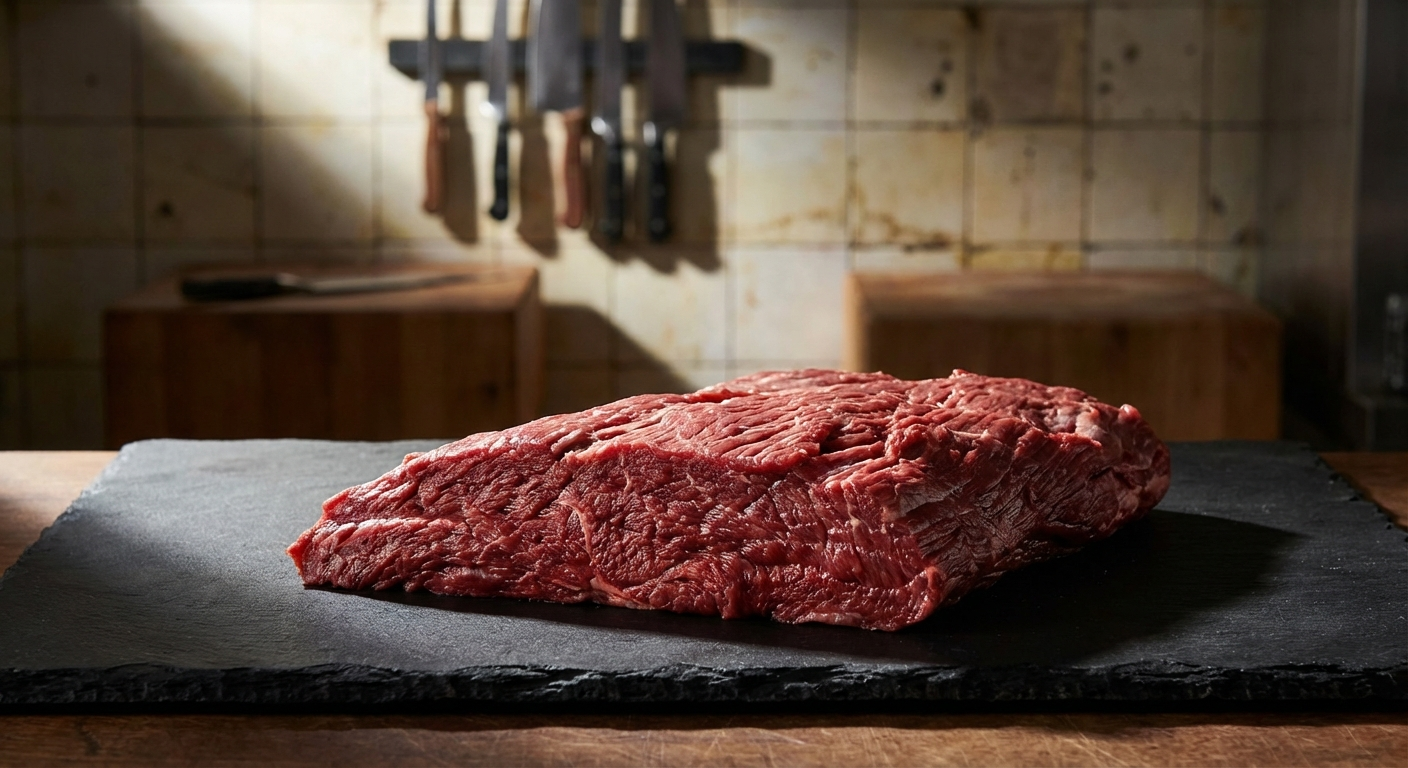
Flap meat comes from the obliquus internus abdominis muscle — a belly wall muscle located in the bottom sirloin primal. The industry designation is IMPS/NAMP #1185A, and you may see it labeled as "sirloin tip," "bottom sirloin butt flap," "bavette d'aloyau" (in French butchery), or simply "steak tips" in New England.
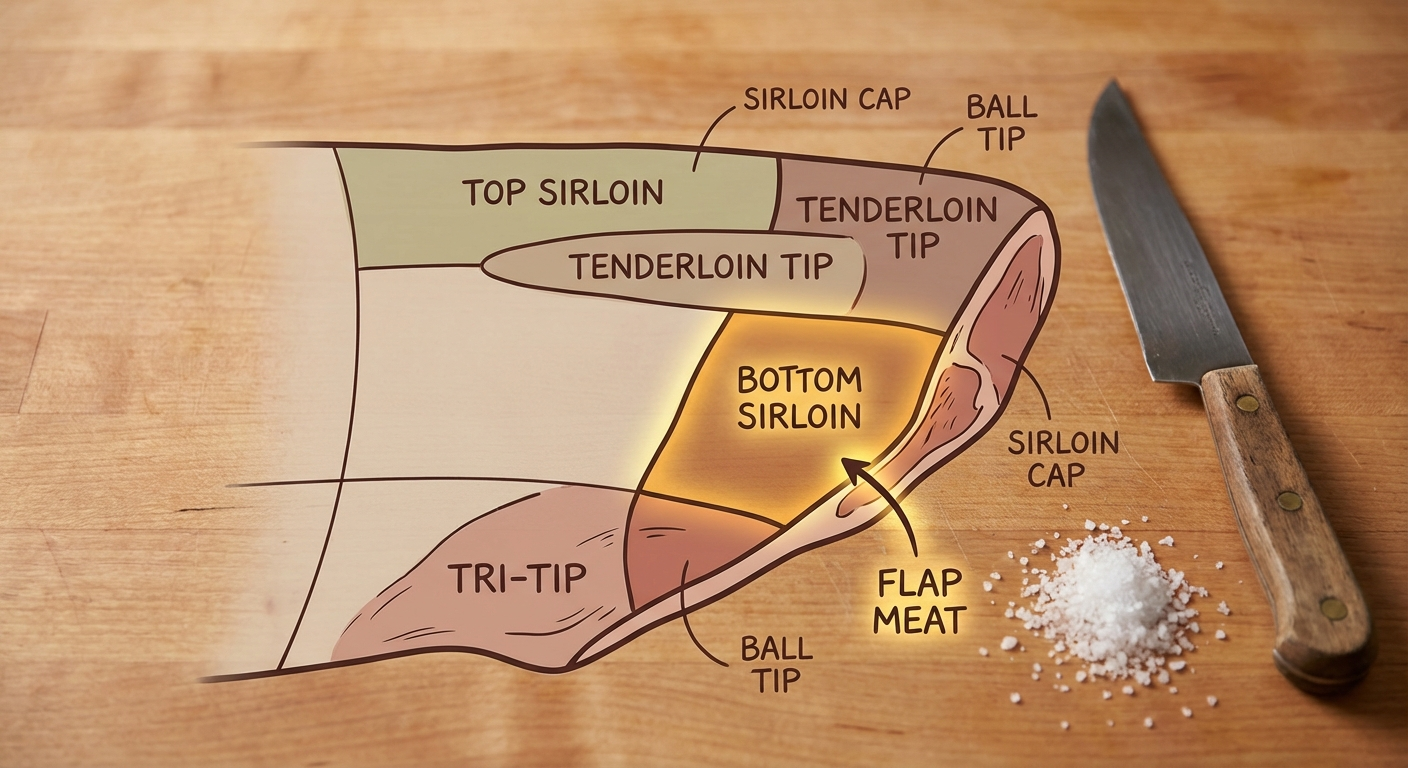
The bottom sirloin sits just forward of the round and below the top sirloin. It's a transitional zone where the animal's loin meets the hip, and the muscles here do moderate work — enough to develop flavor, but not so much that they become tough. Flap meat is the thin, flat muscle that wraps along the lower edge of this section.
A whole flap meat piece typically weighs 2 to 4 pounds and measures roughly 12 to 18 inches long by 6 to 8 inches wide. It's irregularly shaped — thicker at one end, tapering at the other — with very pronounced muscle grain running lengthwise. This open grain is one of its defining visual characteristics and the key to cooking it properly.
Each side of beef yields only one flap meat, so a whole animal produces just two. This relative scarcity, combined with the labor required to separate it cleanly from the surrounding sirloin muscles, is part of why it hasn't become a mainstream retail cut despite its excellent eating quality.
Flap Meat vs Skirt Steak vs Flank Steak
Flap meat gets confused with skirt steak and flank steak constantly — and sometimes even mislabeled at grocery stores. All three are long, flat, coarse-grained steaks that work well with high heat and marinades. But they come from different parts of the animal and have distinct characteristics.
Flap Meat vs Skirt Steak
Skirt steak comes from the diaphragm muscle (plate primal), while flap meat comes from the bottom sirloin. Skirt steak is narrower (typically 3-4 inches wide) and has even more pronounced grain than flap meat. Skirt steak also tends to be fattier between the muscle fibers and has a slightly more mineral, intense flavor. Price-wise, outside skirt steak has become expensive ($15-20/lb) due to fajita demand, while flap meat remains more affordable ($8-12/lb).
Flap Meat vs Flank Steak
Flank steak comes from the abdominal wall below the loin. It's leaner and denser than flap meat, with a tighter grain structure. Flank steak has a more uniform thickness and a slightly firmer, chewier texture when cooked to the same doneness. Flap meat is generally more tender than flank and absorbs marinades more readily due to its open grain structure.
Quick Comparison
- Flap meat: Bottom sirloin, 2-4 lbs, open grain, moderate fat, great marinade absorption, $8-12/lb
- Skirt steak: Plate/diaphragm, 1-2 lbs, very coarse grain, more fat, intense flavor, $15-20/lb (outside)
- Flank steak: Abdominal wall, 1.5-2.5 lbs, tight grain, lean, firm texture, $12-16/lb
The practical takeaway: if your recipe calls for skirt steak and you want to save money without sacrificing flavor, flap meat is the best substitute. It handles the same marinades, cooks the same way, and slices beautifully against the grain.
What Flap Meat Tastes Like
Flap meat delivers a rich, deeply beefy flavor that punches above its price point. The open grain structure means each bite has a satisfying chew without being tough — provided you don't overcook it and you slice against the grain.
The fat content falls between flank steak (leaner) and skirt steak (fattier). There's enough intramuscular fat to keep things juicy, but it's not a heavily marbled cut. The flavor profile is clean and robust — less mineral than skirt steak, more complex than top sirloin.
Where flap meat truly excels is marinade absorption. That open, coarse grain acts like a sponge, pulling flavors deep into the meat. This is why it's the traditional choice for New England steak tips (marinated in Italian dressing, soy-ginger, or teriyaki) and why it's becoming the preferred cut for Korean bulgogi, carne asada, and Thai crying tiger beef.
How to Cook Flap Meat
Flap meat is forgiving and versatile, but there are a few rules that make the difference between good and exceptional results.
The Golden Rules
- High heat, fast cook. Flap meat is thin and responds best to intense, direct heat — grill, cast iron, or broiler. Aim for a hard sear.
- Medium-rare to medium. Internal temperature of 130-140°F. Past medium, the open grain structure dries out and becomes stringy.
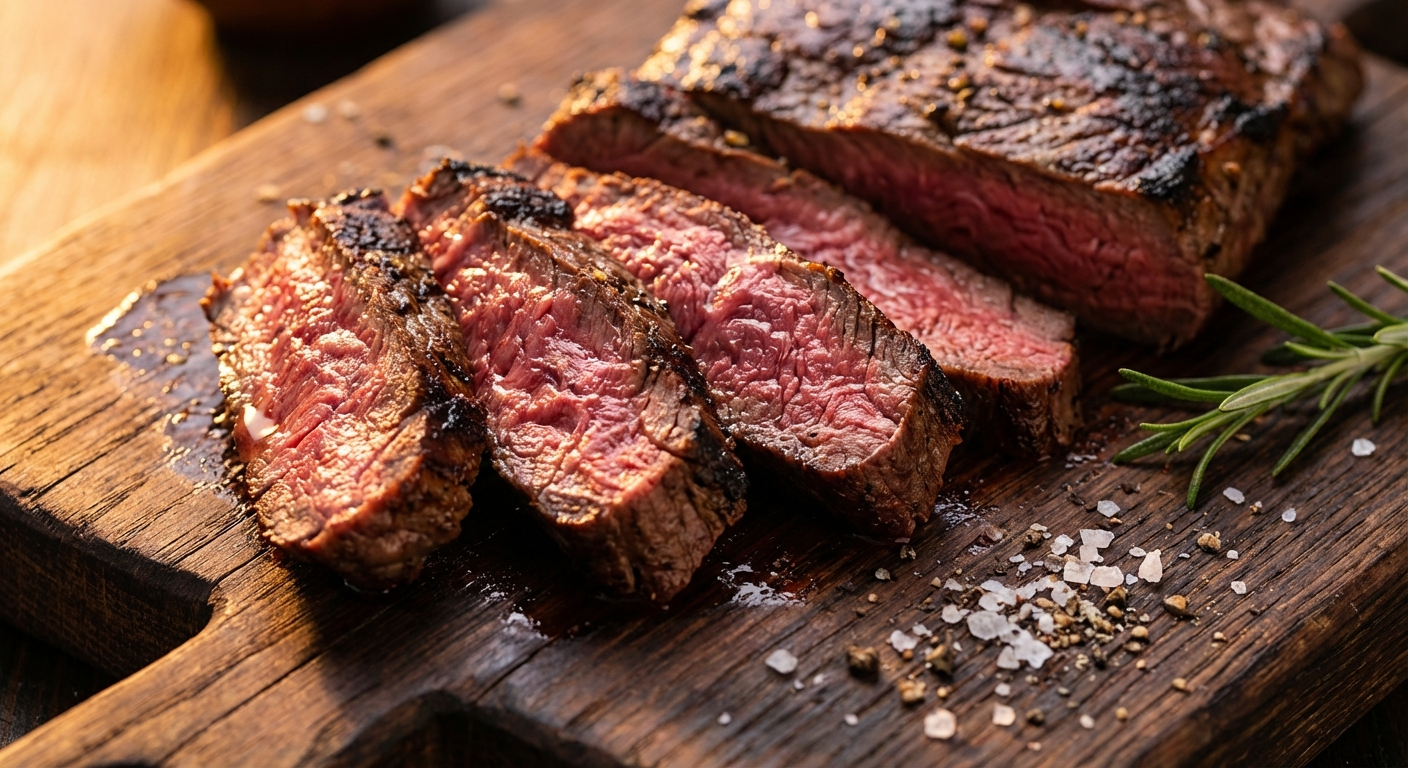
- Rest, then slice against the grain. Always let it rest 5-8 minutes, then slice thin (¼ inch) perpendicular to the visible grain lines. This is non-negotiable — cutting with the grain turns tender steak into a chewing exercise.
Method 1: Cast Iron Sear
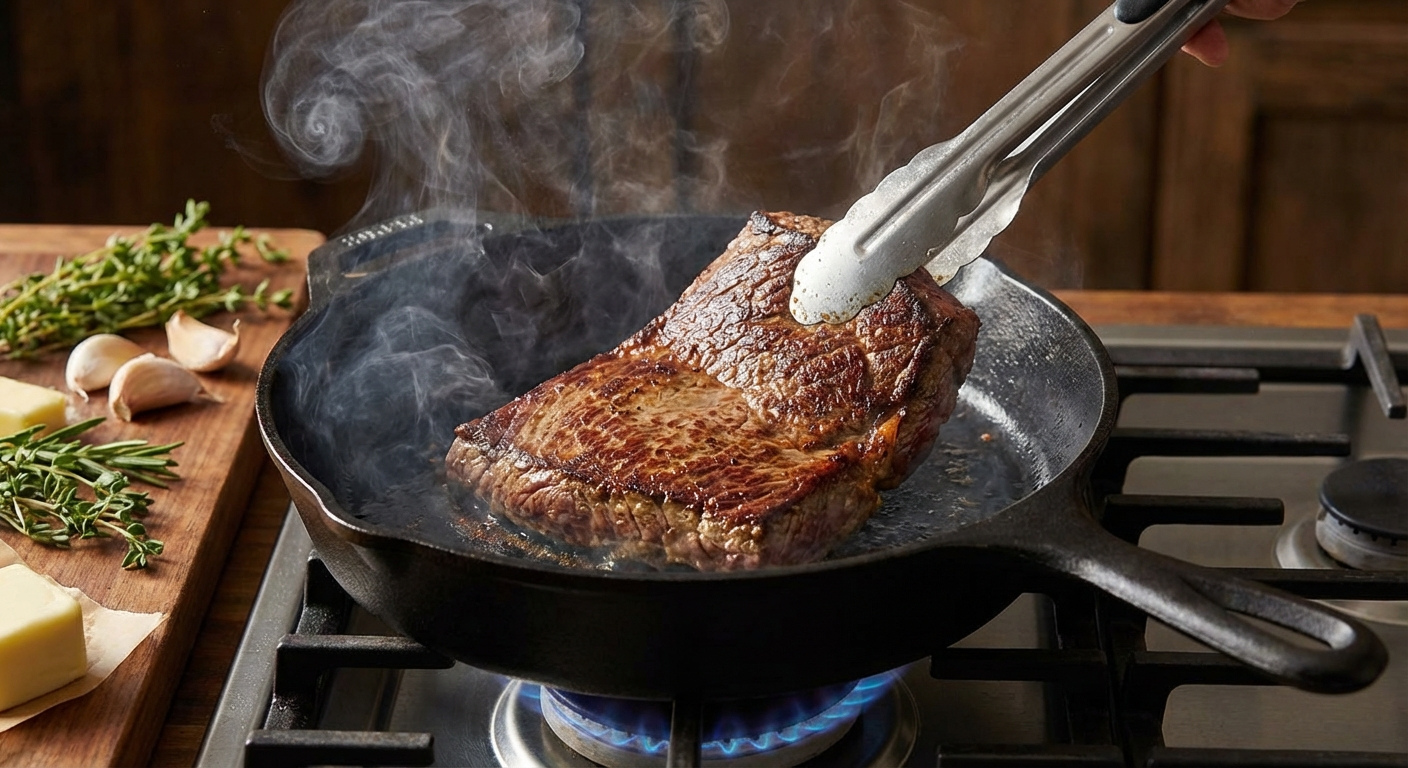
- Pat the steak dry and season generously with salt and pepper (or remove from marinade and pat dry)
- Heat cast iron over high heat until smoking — about 2 minutes
- Add a high-smoke-point oil (avocado or grapeseed), then lay the steak in
- Sear 3-4 minutes per side for medium-rare on a 1-inch thick piece
- Rest 5-8 minutes on a cutting board
- Slice thin against the grain
Method 2: Hot Grill
- Preheat grill to high (500°F+ on the grate)
- Oil the grates or brush the steak with oil
- Grill 3-4 minutes per side, moving to indirect heat if flare-ups occur
- Rest and slice against the grain
Method 3: Steak Tips (New England Style)
- Cut flap meat into 1.5-inch cubes
- Marinate 4-24 hours in your choice of marinade
- Thread onto skewers or cook loose in a screaming-hot cast iron
- Cook until charred outside, pink inside — about 6-8 minutes total, turning frequently
Best Marinades for Flap Meat
Flap meat's open grain makes it the ideal marinating steak. Here are proven combinations that butchers and chefs rely on:
- Classic steak tips: Soy sauce, Worcestershire, garlic, olive oil, black pepper — the New England standard
- Carne asada: Lime juice, cilantro, cumin, jalapeño, garlic, oil — perfect for tacos
- Korean-style: Soy sauce, Asian pear (or pineapple juice), sesame oil, gochugaru, garlic, ginger
- Chimichurri: Parsley, oregano, red wine vinegar, garlic, red pepper flakes, olive oil — Argentine classic
- Mediterranean: Red wine vinegar, oregano, lemon zest, garlic, olive oil, black pepper
Marinate for 4 to 24 hours in the refrigerator. The coarse grain pulls marinade deep into the meat, so even 4 hours delivers significant flavor penetration. Avoid marinating longer than 24 hours with acid-heavy marinades (citrus, vinegar) — the surface can turn mushy.
Where to Buy Flap Meat
Finding flap meat depends on where you live. In New England, it's everywhere — labeled as "steak tips" or "sirloin tips" at virtually every grocery store and butcher shop. It's deeply embedded in the regional food culture.
Outside New England, availability is spottier. Your best bets:
- Butcher shops: Most full-service butchers can cut flap meat on request, even if it's not in the display case. Ask for "bottom sirloin flap" or NAMP #1185A.
- Mexican and Latin markets: Flap meat is popular for carne asada and is often available pre-sliced or whole.
- Costco and restaurant supply stores: Sometimes carry whole flap meat in cryovac packaging.
- Online meat purveyors: Snake River Farms, Porter Road, and others ship flap meat nationwide.
When buying, look for deep red color with visible open grain. Avoid pieces that look gray or have excessive surface moisture — signs of poor handling or age. A whole flap meat should feel pliable, not stiff.
Tips from the Butcher Counter
- Buy whole when possible. Whole flap meat gives you the flexibility to cut it into steaks, tips, or strips for stir-fry. Pre-cut tips at the grocery store often include trimmings from other cuts mixed in.
- Trim minimally. Flap meat has very little external fat or silverskin compared to skirt steak. A quick pass with a sharp knife to remove any membrane is usually all it needs.
- Freeze portions you won't use within 3 days. Wrap tightly in plastic, then foil. Thaw in the refrigerator overnight. Flap meat freezes well for up to 4 months.
- Don't pound it. Unlike flank steak, flap meat doesn't benefit from tenderizing. The open grain structure is already tender enough — pounding just makes it fall apart.
- Grain direction matters more here than almost any other cut. The fibers in flap meat are very pronounced. Slicing against them is the single most important step in getting a tender result. If you're new to the cut, score a light line across the grain before cooking so you remember the direction after searing.
Frequently Asked Questions
Frequently Asked Questions
Is flap meat the same as flank steak?
No. Flap meat comes from the bottom sirloin (obliquus internus abdominis muscle), while flank steak comes from the abdominal wall below the loin. Flap meat has a more open grain, is generally more tender, and absorbs marinades better than flank steak.
Why is flap meat called steak tips?
In New England, flap meat has been the traditional cut sold as 'steak tips' for decades. The name likely originated from butchers cutting the flap into tip-sized pieces for marinating and grilling. Outside New England, 'steak tips' can refer to various cuts, but authentic New England steak tips are almost always flap meat.
Is flap meat a cheap cut?
Flap meat is affordable relative to premium steaks — typically $8 to $12 per pound compared to $18-25 for ribeye or strip. But it delivers flavor and tenderness that rivals cuts costing twice as much, making it one of the best values in beef.
How long should you marinate flap meat?
Four to 24 hours is the sweet spot. The coarse, open grain structure absorbs marinades quickly, so even 4 hours delivers significant flavor. Avoid exceeding 24 hours with acid-heavy marinades (citrus, vinegar) to prevent the surface from becoming mushy.
What temperature should flap meat be cooked to?
Medium-rare to medium (130-140°F internal) is ideal. Flap meat's open grain structure dries out quickly past medium doneness. Use an instant-read thermometer and pull the steak about 5°F below your target temperature — it will continue rising during the rest.
Can you smoke flap meat?
You can, but it's not the best application. Flap meat is thin and lean enough that low-and-slow smoking tends to dry it out. If you want smoke flavor, try a reverse sear: smoke at 225°F until the internal temperature reaches 115°F, then sear over high heat to finish. This gives you smoke flavor without overcooking.
More Expert Guides
What Is Chateaubriand? (Cut, Cooking, & Best Sources)
Chateaubriand is a thick-cut roast from the center of the beef tenderloin, traditionally served for two. Learn what makes this classic French cut special and how to cook it.
14 min readWhat Is Round Steak? The Complete Guide to Beef's Most Versatile Budget Cut
Round steak comes from the rear leg of the cow — it's lean, affordable, and misunderstood. A master butcher breaks down every sub-cut, cooking method, and technique to turn this budget workhorse into genuinely delicious meals.
14 min readWhat Is Eye of Round? The Complete Butcher's Guide to This Lean Cut
Eye of round is one of the leanest, most affordable cuts in the entire beef case — and one of the most misunderstood. A butcher explains how to turn this budget-friendly roast into something genuinely delicious.