What Is Denver Steak? The Best Chuck Cut You're Not Eating
There's a steak hiding in the beef chuck that rivals cuts costing twice as much — and most people walk right past it. The Denver steak is one of the most well-marbled, genuinely tender steaks on the entire animal, yet it remains one of the least known cuts at the butcher counter. If you've never tried it, you're missing one of the best values in beef.
Like the flat iron steak, the Denver steak emerged from modern muscle profiling research that transformed overlooked chuck muscles into premium steaks. But where flat iron gets all the attention, Denver steak has quietly built a cult following among chefs and butchers who know what they're looking at.
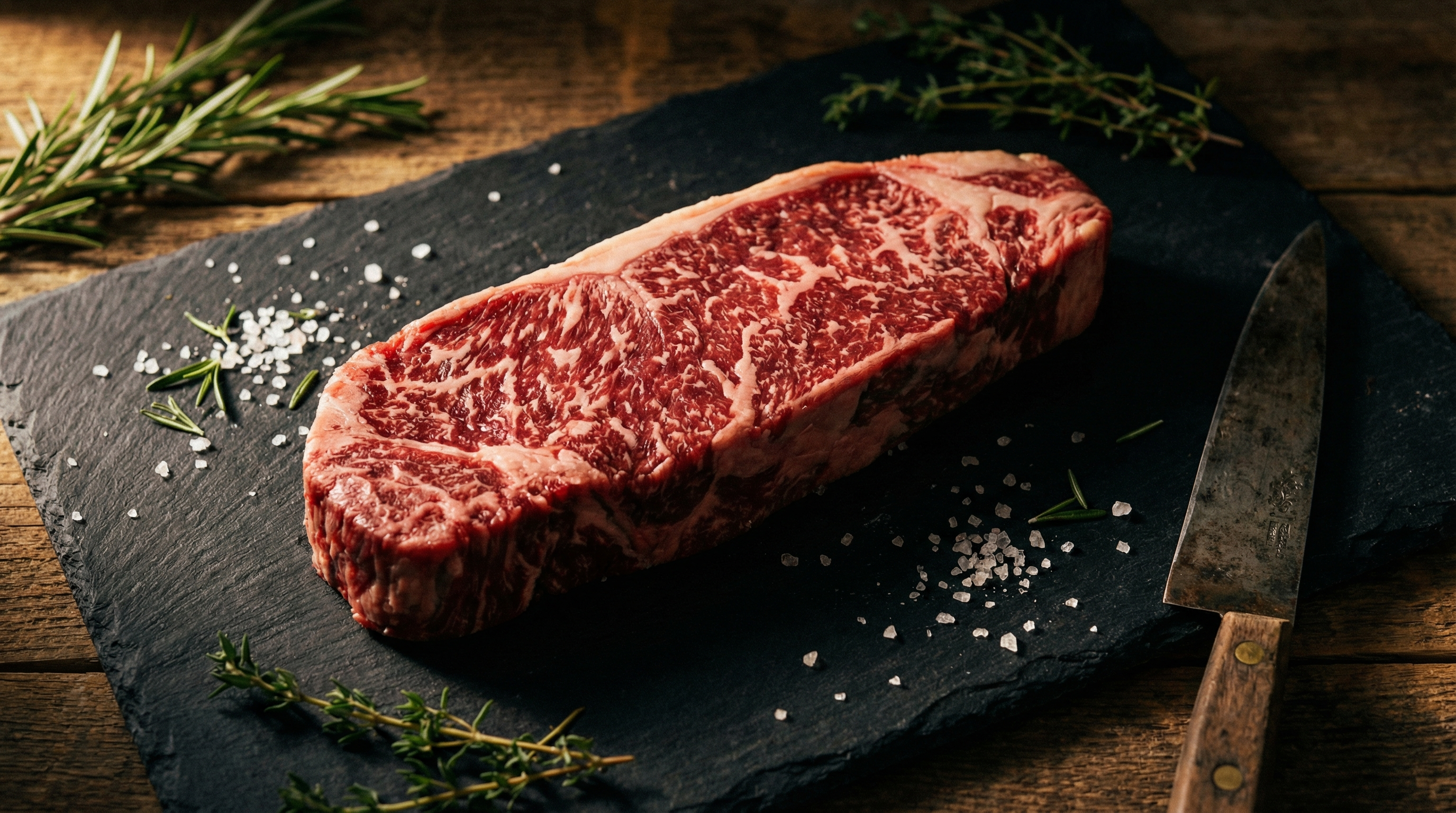
Where Denver Steak Comes From
Denver steak is cut from the serratus ventralis muscle in the beef chuck primal — the shoulder section of the cow. This muscle sits beneath the shoulder blade, running along the underside of the chuck roll. The IMPS/NAMP designation is #116G, and you may also see it labeled as "chuck under blade steak," "chuck under blade center steak," or simply "zabuton" in Japanese butchery.
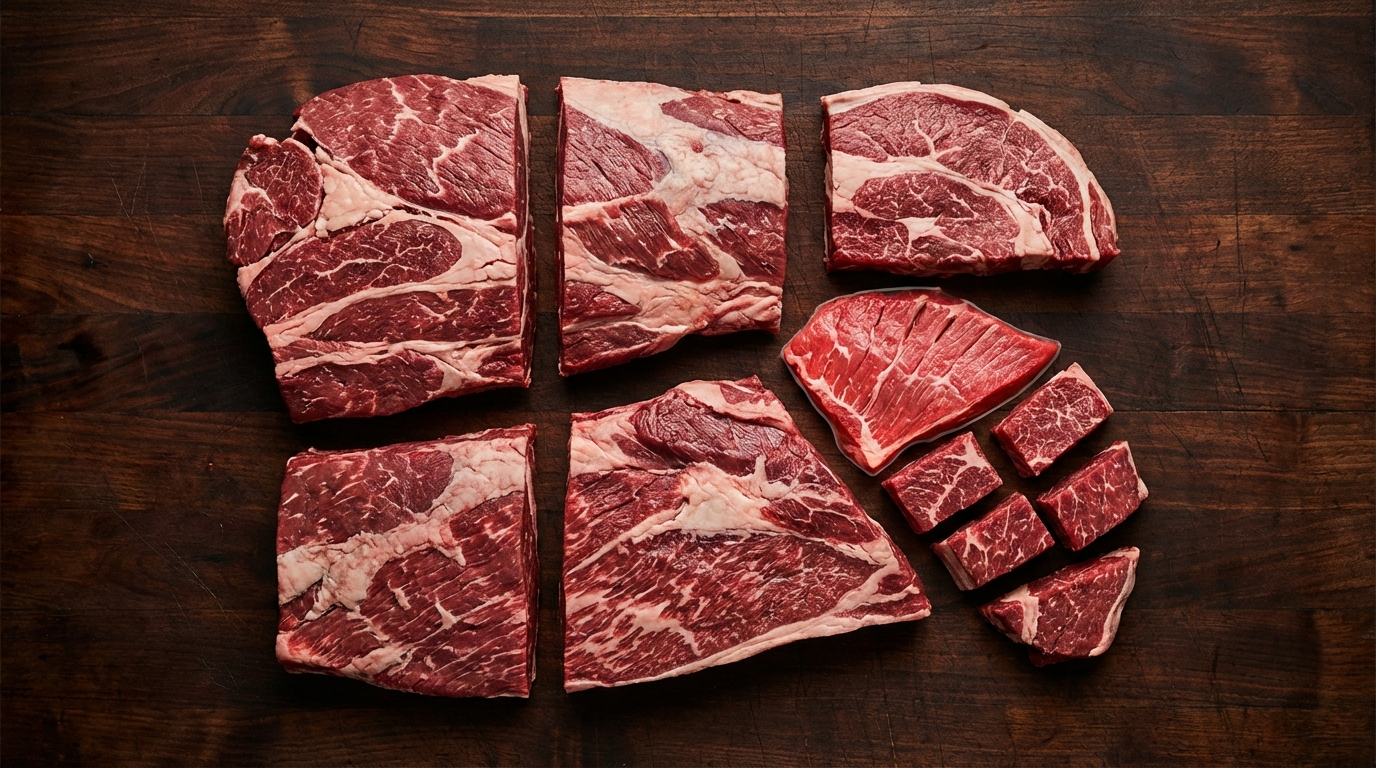
A whole serratus ventralis typically yields 2 to 4 Denver steaks, depending on how thick you cut them. Each steak weighs between 8 and 14 ounces and has a slightly irregular rectangular shape — not as uniform as flat iron, but easy to work with. The muscle is about an inch to an inch and a half thick at its center, tapering slightly at the edges.
What makes the serratus ventralis remarkable is its marbling density. Despite coming from the chuck — an area most people associate with tough braising cuts — this particular muscle carries intramuscular fat rivaling many loin cuts. In blind taste tests, Denver steak has been rated comparable to New York strip for both tenderness and flavor, at roughly half the price.
The name "Denver steak" was coined by the beef industry as a marketing-friendly alternative to the technical name. It was first introduced at a National Cattlemen's Beef Association convention, and the name stuck. There's no actual connection to Denver, Colorado — it was simply chosen as a clean, memorable brand for a new retail cut.
How Denver Steak Was Discovered
Denver steak is a product of the same muscle profiling revolution that gave us the flat iron steak. In the early 2000s, researchers at the University of Nebraska and University of Florida systematically tested thousands of beef muscles for tenderness, flavor, and potential retail value.
The serratus ventralis had always been known to be tender among butchers, but it was traditionally left inside the chuck roll and sold as part of larger roasts — or worse, cut into stew meat. The research quantified what experienced butchers already suspected: this muscle was significantly more tender than most other chuck muscles and carried exceptional marbling.
Warner-Bratzler shear force testing — the industry standard for measuring tenderness — ranked the serratus ventralis among the top ten most tender muscles in the carcass. Combined with its above-average marbling score, it was a clear candidate for fabrication as a standalone steak.
The challenge was extraction. The serratus ventralis is surrounded by tougher connective tissue and adjacent muscles that are far less tender. Cleanly separating it requires skill and anatomical knowledge that goes beyond standard butchery. This is why Denver steak is still relatively uncommon at grocery stores — it takes extra labor to fabricate, and many processors simply don't bother.
When they do bother, the economics are compelling. A whole chuck that would sell for $4–6 per pound as roasts yields Denver steaks worth $12–18 per pound. That value uplift has slowly driven adoption, and Denver steak availability has been growing steadily since its formal introduction around 2009.
Why Denver Steak Is So Good
Three qualities set Denver steak apart from other chuck cuts: exceptional marbling, genuine tenderness, and deep beefy flavor. Understanding why requires looking at the muscle's biology.
Marbling: The serratus ventralis is one of the most heavily marbled muscles in the chuck. In USDA grading terms, Denver steaks from Choice-grade carcasses often display marbling that approaches the low end of Prime. This intramuscular fat melts during cooking, basting the meat from the inside and creating that buttery, juicy quality people crave in premium steaks.
Tenderness: Despite being a shoulder muscle, the serratus ventralis doesn't bear heavy loads during the animal's life. It's a stabilizing muscle that assists with rib cage movement during breathing — a constant, low-effort motion that doesn't build the tough connective tissue found in working muscles like the brisket or shank. The result is a naturally tender steak that doesn't need slow cooking to be enjoyable.
Flavor: Chuck muscles are prized by chefs for their deep, beefy flavor — it's why the best burgers are made from chuck. Denver steak delivers that same concentrated beef taste, but in a tender steak format. The combination of rich intramuscular fat and robust muscle flavor gives Denver steak a savory depth that leaner cuts like filet mignon simply can't match.
One thing to note: Denver steak does contain some internal connective tissue seams. These aren't as prominent as the membrane in flat iron, but you may notice thin lines of sinew running through the meat. These soften during cooking and are rarely noticeable when the steak is properly prepared — especially if you don't cook past medium.
How to Cook Denver Steak
Denver steak is versatile and forgiving, but the best results come from high-heat methods that develop a crust while keeping the interior pink. The generous marbling means this cut stays juicy even if you slightly overcook it — but medium-rare remains the sweet spot.
Cast Iron Sear (Best Method)
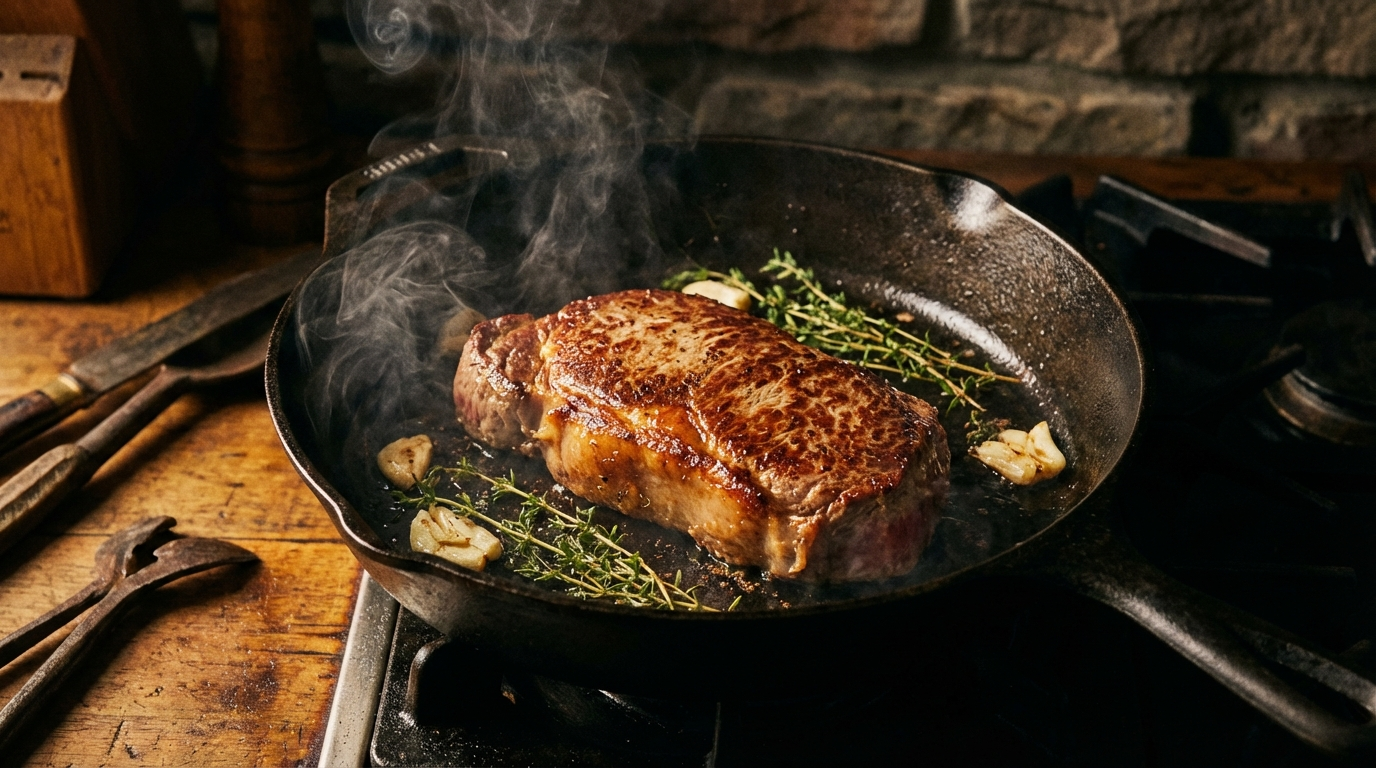
The cast iron skillet is the ideal vessel for Denver steak. Its heat retention creates the consistent, intense surface temperature needed for a proper Maillard crust.
- Temper: Pull the steak from the fridge 30–45 minutes before cooking. Pat completely dry with paper towels — surface moisture is the enemy of a good sear. Season generously with kosher salt and black pepper.
- Preheat: Heat your cast iron over high heat for 3–4 minutes. Add a thin film of avocado oil or another high-smoke-point fat. The oil should shimmer and just barely begin to smoke.
- Sear: Lay the steak in the pan away from you. Don't move it for 3–4 minutes — let the crust develop. When the edges show deep brown color creeping up the sides, flip once. Cook another 3–4 minutes for medium-rare (130°F internal).
- Baste: In the last 90 seconds, add butter, smashed garlic, and fresh rosemary or thyme. Tilt the pan and spoon the foaming brown butter over the steak continuously.
- Rest: Transfer to a cutting board. Rest 5–7 minutes before slicing. The internal temperature will coast up another 3–5°F.
Grilling
Set up a two-zone fire with hot coals banked to one side. Sear the Denver steak over direct high heat for 2–3 minutes per side to build char and crust, then slide to the cooler indirect zone to finish. Pull at 128°F internal for a final rested temperature of 132–135°F. Total cook time runs 8–12 minutes depending on thickness.
Denver steak's irregular thickness means the thinner edges will cook faster than the center. If this bothers you, fold a piece of aluminum foil over the thin end during indirect cooking to shield it from heat — but honestly, the marbling keeps even the thinner sections juicy.
Sous Vide
Set your circulator to 131°F and cook for 2–3 hours. The extended time at temperature renders the intramuscular fat beautifully and softens any connective tissue seams into near-invisibility. Finish with a 60-second sear per side in a screaming-hot pan. This method produces the most consistently perfect Denver steak — edge-to-edge pink with a paper-thin crust.
Reverse Sear
Place the seasoned steak on a wire rack set over a sheet pan in a 250°F oven. Cook until internal temperature reaches 120°F (30–40 minutes). Then sear in a blazing cast iron for 45–60 seconds per side. This method gives you maximum control over doneness and works especially well for thicker-cut Denver steaks.
Temperature and Doneness Guide
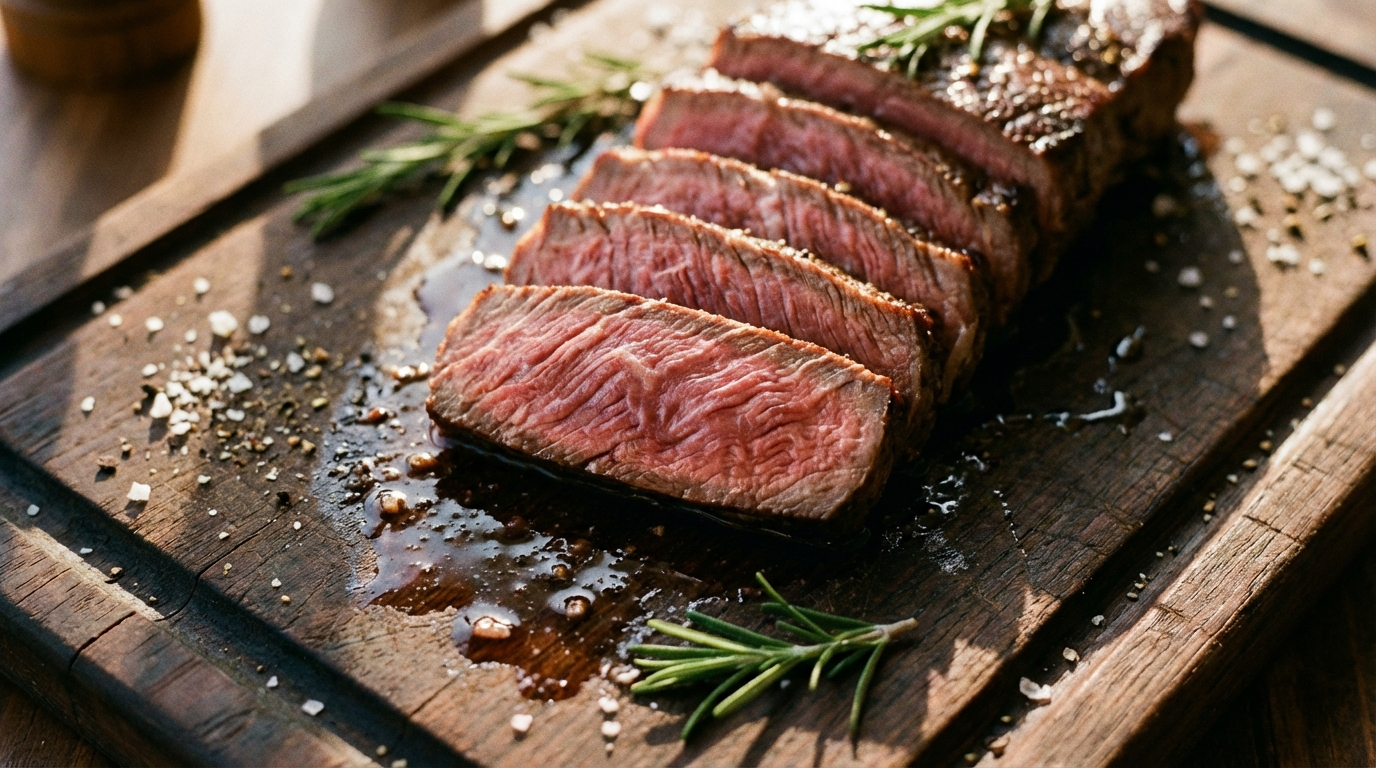
Denver steak's heavy marbling gives it more tolerance for temperature variation than leaner cuts, but there's still a clear optimum:
- Rare (120–125°F): Cool red center. The fat hasn't fully rendered, so you lose some of the buttery flavor that makes this cut special. Still tender, but not at its best.
- Medium-rare (130–135°F): Warm pink center with fully melted intramuscular fat. This is the sweet spot — maximum juiciness, peak beefy flavor, and the connective tissue seams are barely noticeable.
- Medium (140–145°F): Pink center starting to turn. The generous marbling keeps it moist at this temperature where leaner steaks dry out. Many people prefer Denver steak at medium — it works.
- Medium-well and above (150°F+): The muscle tightens significantly and even the abundant fat can't compensate. Any connective tissue seams become more noticeable. Not recommended for this cut.
Denver Steak vs Other Cuts
Knowing how Denver steak stacks up against familiar cuts helps you decide when to choose it over the competition.
Denver Steak vs Flat Iron
Both are modern chuck cuts discovered through muscle profiling research, but they're different eating experiences. Flat iron is slightly more tender with a uniform rectangular shape and very consistent thickness. Denver steak has more marbling and deeper beefy flavor, with a slightly irregular shape. If tenderness is your priority, flat iron has a slight edge. If flavor and richness matter more, Denver steak wins. Price is comparable at $10–15 per pound for both.
Denver Steak vs New York Strip
This is the comparison that surprises people. In blind taste tests, Denver steak regularly scores within striking distance of New York strip for overall eating quality. Strip has a slightly firmer texture and cleaner grain, while Denver has more intramuscular fat and a richer taste. Strip costs $18–28 per pound versus $12–18 for Denver — making Denver the clear value play.
Denver Steak vs Ribeye
Ribeye remains the king of marbled steaks, with large pockets of fat and the coveted spinalis cap. Denver steak has finer, more evenly distributed marbling without the big fat pockets. If you love the buttery excess of ribeye, Denver won't fully replace it — but it delivers 80% of the experience at 60% of the price.
Denver Steak vs Chuck Eye
Chuck eye steak — often called the "poor man's ribeye" — comes from the same general area but is a different muscle. Chuck eye is cut from the first few ribs of the chuck where it borders the rib primal, giving it ribeye-like character. Denver steak is more tender and consistently marbled, while chuck eye can be hit-or-miss depending on exactly where it was cut. Both are excellent chuck values.
Where to Buy Denver Steak
Finding Denver steak requires a bit more effort than picking up a ribeye, but it's getting easier every year as the cut gains popularity.
Butcher shops are your best bet. A skilled butcher can fabricate Denver steaks from any whole chuck, and many now stock them regularly. If you don't see them in the case, ask — most butchers are happy to cut them for you. Specify that you want steaks from the serratus ventralis, cut 1 to 1.25 inches thick.
Specialty grocery stores like Whole Foods, Sprouts, and regional premium markets increasingly carry Denver steaks. Look in the premium steak section. Quality tends to be consistent because these retailers source from processors who know how to fabricate the cut properly.
Online retailers offer Denver steaks in various grades, from USDA Choice through Prime and even Wagyu-cross. Online is often the most reliable source for consistently high-quality Denver steaks, since specialty beef companies have invested in the butchery skills needed to extract this cut cleanly.
Standard grocery stores rarely carry Denver steak because it requires additional fabrication labor. If your local supermarket only offers standard chuck steaks and roasts, the Denver muscles are likely being left inside larger subprimals and sold at chuck prices — which is exactly the lost value that the muscle profiling research was designed to address.
Common Mistakes to Avoid
Denver steak is forgiving, but these errors will undermine even the best-quality cut:
- Not drying the surface: Denver steak's marbling means it can release moisture. Pat it thoroughly dry before searing — every drop of surface water steams instead of sears, robbing you of crust.
- Cooking too thin: If your butcher cuts Denver steaks under an inch thick, they'll overcook before developing a proper crust. Ask for 1 to 1.25 inch cuts.
- Ignoring the grain: Denver steak's grain runs lengthwise but can shift direction. Look carefully before slicing and always cut perpendicular to the grain for maximum tenderness.
- Overcooking past medium: The connective tissue seams in Denver steak become more noticeable at higher temperatures. Keep it at medium or below for the best eating experience.
- Confusing it with chuck steak: Generic "chuck steak" is a cross-cut through multiple muscles with varying tenderness. Denver steak is a single, specific muscle. If the label just says "chuck steak," it's probably not Denver.
Denver Steak Recipes and Preparations
Denver steak's combination of tenderness, marbling, and deep beef flavor makes it versatile across many preparations:
- Classic steakhouse style: Season with just kosher salt and coarse black pepper. Sear in cast iron, baste with butter and garlic. Let the beef speak for itself — Denver steak has enough flavor to stand alone.
- Coffee-rubbed Denver: Mix finely ground coffee, smoked paprika, brown sugar, garlic powder, and black pepper. Apply generously and grill over charcoal. The coffee rub creates an incredible bark that complements the rich beef flavor.
- Korean-style bulgogi: Slice thin against the grain and marinate in soy sauce, sesame oil, pear juice, garlic, and ginger for 2–4 hours. Grill over high heat and serve with rice and pickled vegetables. The marbling keeps thin slices juicy.
- Steak tacos: Season with cumin, chili powder, and lime zest. Grill to medium-rare, rest, slice thin. Serve in warm corn tortillas with pickled onions, cilantro, and salsa verde.
- Zabuton yakiniku: Honoring its Japanese name, slice Denver steak into thin strips and cook briefly on a tabletop grill. Dip in ponzu or yakiniku sauce. The heavy marbling makes it ideal for quick, high-heat Japanese grilling.
Frequently Asked Questions
What is Denver steak?
Denver steak is a cut from the serratus ventralis muscle in the beef chuck primal. It's one of the most tender and well-marbled cuts from the shoulder, with flavor and tenderness rivaling premium loin cuts at a lower price point.
Why is it called Denver steak?
The name 'Denver steak' was created by the National Cattlemen's Beef Association as a marketing-friendly label for the serratus ventralis muscle. There's no connection to Denver, Colorado — it was chosen simply as a clean, memorable brand name.
Is Denver steak tender?
Yes, Denver steak is one of the most tender cuts from the chuck primal. Warner-Bratzler shear force testing ranks the serratus ventralis among the top ten most tender muscles in the entire beef carcass, with heavy marbling that further enhances the eating experience.
How do you cook Denver steak?
The best methods are cast iron searing (3-4 minutes per side), grilling over a two-zone fire, reverse searing, or sous vide at 131°F for 2-3 hours. Cook to medium-rare (130-135°F) for optimal tenderness and flavor.
Where can I buy Denver steak?
Butcher shops are the most reliable source. Specialty grocers like Whole Foods increasingly stock it, and online beef retailers offer various grades. Standard grocery stores rarely carry it because of the extra fabrication labor required.
Is Denver steak better than flat iron?
They're different strengths. Denver steak has more marbling and deeper beefy flavor, while flat iron is slightly more tender with a more uniform shape. Both are excellent value cuts from the chuck primal at comparable prices ($10-15/lb).
More Expert Guides
What Is Chateaubriand? (Cut, Cooking, & Best Sources)
Chateaubriand is a thick-cut roast from the center of the beef tenderloin, traditionally served for two. Learn what makes this classic French cut special and how to cook it.
14 min readWhat Is Round Steak? The Complete Guide to Beef's Most Versatile Budget Cut
Round steak comes from the rear leg of the cow — it's lean, affordable, and misunderstood. A master butcher breaks down every sub-cut, cooking method, and technique to turn this budget workhorse into genuinely delicious meals.
14 min readWhat Is Eye of Round? The Complete Butcher's Guide to This Lean Cut
Eye of round is one of the leanest, most affordable cuts in the entire beef case — and one of the most misunderstood. A butcher explains how to turn this budget-friendly roast into something genuinely delicious.