Rump Roast vs Chuck Roast: Which Is Better for Your Recipe?
Every week someone stands at my counter, stares at two labels — "rump roast" and "chuck roast" — and asks: "What's the difference? They're about the same price." And every week I give the same answer: the difference is enormous, and choosing wrong will ruin your dinner.
Both cuts are workhorses of the budget beef world. Both weigh 3 to 5 pounds. Both look like lumps of red meat that promise a cozy Sunday dinner. But they come from opposite ends of the animal, have completely different fat profiles, and respond to cooking in fundamentally different ways. Let me break it down the way my grandfather Sal explained it to me in his Brooklyn shop — simple, honest, and practical.
Where They Come From
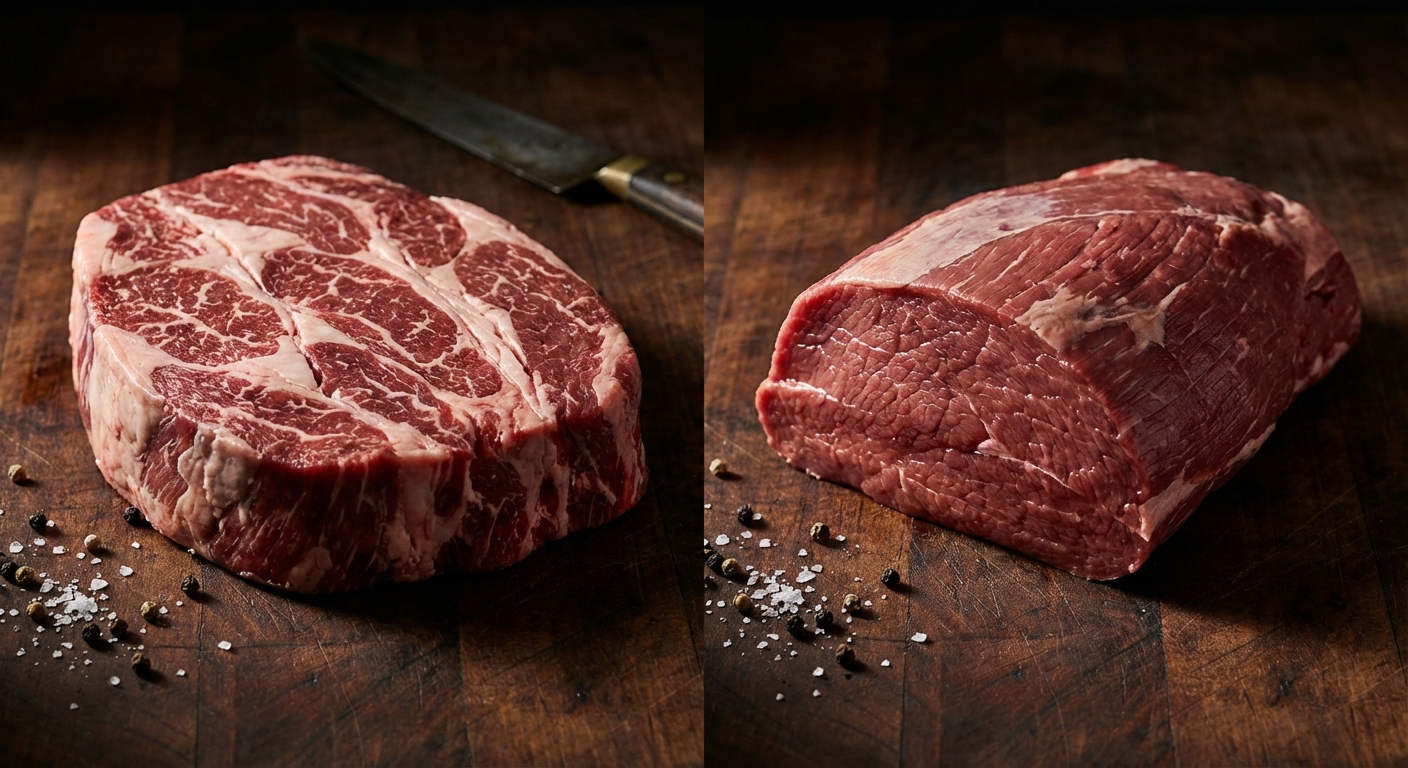
Understanding the anatomy tells you everything you need to know about how these roasts will cook.
Chuck Roast
The chuck is the shoulder of the steer — a massive primal that accounts for roughly 26% of the carcass weight. This is where the animal does serious work: supporting its front end, moving its head, and driving forward motion. All that activity means the muscles are loaded with connective tissue (collagen) and marbled with intramuscular fat.
A "chuck roast" is typically a cross-cut slice through the shoulder, encompassing several different muscles separated by seams of fat and connective tissue. When you look at a raw chuck roast, you'll see distinct sections of lean meat interspersed with white fat lines and streaks of marbling within the lean itself. It looks like a map with rivers of fat running through it.
The most common chuck roasts come from the chuck roll or the shoulder clod. A "7-bone roast" — named for the blade bone cross-section that looks like the number 7 — is one of the most traditional cuts. Chuck eye roasts come from the center of the chuck roll and have the most marbling.
Rump Roast
The rump comes from the round primal — the rear leg of the steer. Specifically, it's from the bottom round area, near where the leg meets the hip. These are locomotion muscles — the animal uses them constantly for walking and standing.
Unlike the chuck, the round is lean. Very lean. When you look at a raw rump roast, you'll see a relatively uniform piece of meat with minimal internal fat. There might be a thin external fat cap, but inside it's almost entirely dense, red lean muscle. The grain is tight and compact.
The rump is sometimes sold as "bottom round roast" — the names are largely interchangeable at the retail level, though technically the rump is the upper portion of the bottom round nearest the hip.
The Key Differences
| Factor | Chuck Roast | Rump Roast |
|---|---|---|
| Location | Shoulder (front quarter) | Rear leg/hip (hind quarter) |
| Fat content | High — heavy marbling + fat seams | Low — very lean interior |
| Connective tissue | Abundant collagen | Moderate collagen |
| Flavor (braised) | Rich, beefy, almost unctuous | Clean, straightforward beef |
| Texture (braised) | Falls apart, shreds easily | Sliceable, firmer structure |
| Best method | Pot roast, shredding, stews | Sliced roast beef, deli-style |
| Forgiveness | Very forgiving — fat keeps it moist | Less forgiving — can dry out |
| Price (2026) | $6–$9/lb Choice | $5–$8/lb Choice |
| Weight range | 3–5 lbs typical | 3–5 lbs typical |
Fat Content: The Fundamental Difference
This is the conversation that matters. Everything else flows from this one fact: chuck roast has significantly more fat — both intramuscular marbling and intermuscular fat seams — than rump roast.
A typical USDA Choice chuck roast runs roughly 15–20% total fat. A comparable rump roast runs 6–10%. That's not a subtle difference — it's a factor of two. And during a long braise, that fat does three critical things:
- Moisture insurance. As the roast cooks for hours, water evaporates and muscle fibers contract. The intramuscular fat melts and lubricates the muscle from inside, keeping things juicy even if you cook a bit too long. Rump roast doesn't have this safety net — once the moisture is gone, it's dry.
- Flavor amplification. Fat carries and concentrates flavor compounds. The rendered fat in a braised chuck roast creates that rich, almost sticky, deeply savory quality that makes pot roast comfort food. Rump roast tastes like clean beef — pleasant but one-dimensional by comparison.
- Textural transformation. The collagen and fat in chuck roast melt during braising, creating a luscious, fall-apart texture where the meat practically dissolves on your tongue. Rump holds its structure — you can slice it neatly, but it won't give you that pot-roast meltdown.
When to Choose Chuck Roast
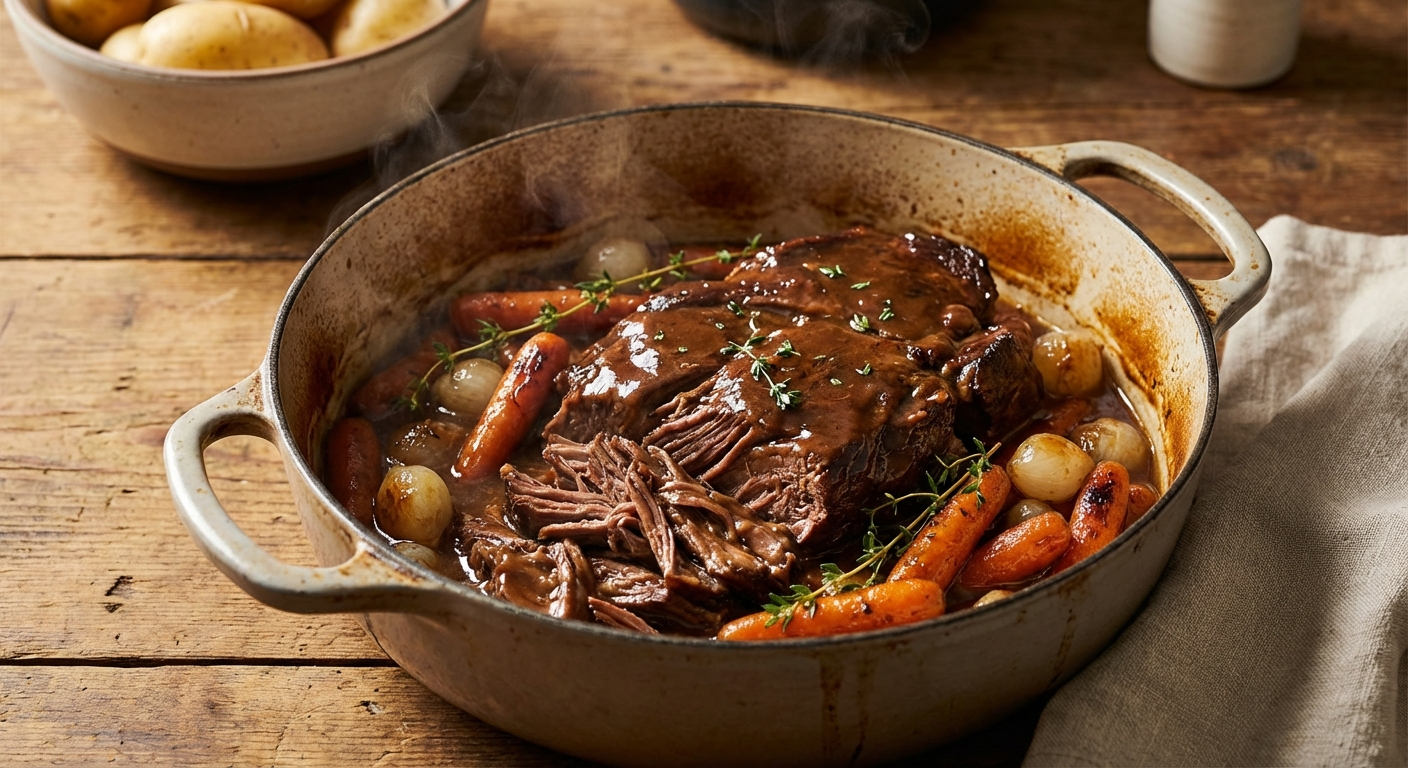
Chuck is your go-to for any application where you want the meat to become tender, rich, and shreddable:
- Classic pot roast. This is chuck's destiny. Low and slow in a Dutch oven with onions, carrots, and potatoes. The fat renders into the braising liquid, creating a gravy that needs nothing else. Cook at 300°F for 3–4 hours until fork-tender.
- Shredded beef. Tacos, sandwiches, burritos, beef barbacoa. Chuck shreds beautifully into long, juicy strands. The fat keeps every strand moist and flavorful.
- Beef stew. Cut into 1.5-inch cubes and braised in liquid. The collagen melts into the stew, thickening the broth naturally.
- Slow cooker meals. Chuck is the king of the slow cooker. Set it and forget it for 8 hours on low. The fat content means it's nearly impossible to overcook — even at 10 hours, it'll still be moist.
- Mississippi pot roast. That viral recipe with pepperoncini and ranch seasoning? Chuck. Always chuck.
- "Poor man's brisket." Smoke a chuck roast at 250°F for 5–6 hours. It won't replicate true brisket, but for a fraction of the price and time, the results are excellent.
When to Choose Rump Roast
Rump shines in applications where you want sliceable, lean meat rather than shredded richness:
- Sliced roast beef. Roast low and slow to medium-rare (130°F internal), rest, and slice paper-thin. The lean, tight grain produces clean, elegant slices — the kind you see at a good deli counter.
- Deli-style sandwiches. If you're making homemade roast beef for sandwiches, rump is your cut. It slices thin without falling apart and the lean profile means it's not greasy.
- French dip sandwiches. The lean meat soaks up the au jus beautifully, and the firm texture holds up when stuffed in a roll.
- Jerky. Lean meat is essential for jerky, and rump's tight grain and low fat content make it ideal. Fat doesn't dehydrate properly and can go rancid.
- Lean braise. If you're watching fat intake but still want a braised dish, rump works — just don't expect the same unctuous quality as chuck. Keep the braising liquid flavorful to compensate.
- Ramen or pho topping. Thinly sliced and cooked briefly in hot broth, rump provides clean beef flavor without excess grease floating on top.
Cooking Method Deep Dive
Braising Chuck Roast (The Classic Pot Roast)
- Season and sear. Pat the roast dry, season generously with salt and pepper. Sear all sides in a hot Dutch oven with oil until deeply browned. Don't skip this — the Maillard reaction creates the flavor foundation for the entire dish.
- Build the aromatics. Remove the roast. In the same pot, cook diced onions, carrots, and celery until softened. Add garlic, tomato paste, and deglaze with red wine, beef broth, or both.
- Braise low and slow. Return the roast to the pot. The liquid should come halfway up the sides — not submerged. Cover with a tight lid. Cook at 300°F for 3–3.5 hours.
- Test for doneness. A fork should slide into the center with almost no resistance. If there's any tug, give it another 30 minutes.
- Rest and serve. Let it rest 15 minutes in the pot. The roast should fall apart when you press on it with a spoon. Serve with the braising liquid as gravy.
Roasting Rump Roast (Sliced Roast Beef)
- Season aggressively. Rump is lean, so it needs flavor help. Salt heavily the night before and refrigerate uncovered. The salt penetrates deeply and the surface dries — better crust.
- Sear first. Brown all sides in a hot skillet. This is even more critical for rump than chuck because you don't have fat to develop flavor during roasting.
- Low oven. Roast at 250°F on a wire rack over a pan until internal temperature hits 125°F for medium-rare (130°F after resting). This takes roughly 25–30 minutes per pound.
- Rest completely. Minimum 20 minutes under foil. The lean muscle needs time for juices to redistribute.
- Slice thin. Against the grain, as thin as you can manage. A sharp slicing knife is essential — thin slices compensate for the leaner texture.
Critical rule for rump: Do not cook past medium for dry-heat methods. Medium-rare to medium is the absolute limit. Past that, lean rump becomes dry and tough. If you want well-done meat, braise it — don't roast it.
Can You Swap Them in Recipes?
Yes, with adjustments:
- Rump in a pot roast recipe: It will work but won't fall apart the same way. The result will be sliceable rather than shreddable. Add extra fat to the braising liquid (a tablespoon of butter or olive oil) to compensate for the lean meat. Consider wrapping the roast in bacon for added moisture.
- Chuck as sliced roast beef: It will taste richer but won't slice as neatly. The fat seams create natural breaking points, so you'll get rougher slices. For sandwiches this is fine; for a clean presentation, rump is better.
The swap that works best: using chuck instead of rump in a slow cooker. Chuck handles the long, slow environment better because the fat prevents drying out. The reverse swap — rump in a slow cooker — requires more liquid and careful timing to avoid a dry result.
Buying Tips
- For chuck: Look for visible marbling within the lean sections and distinct fat seams between muscles. A chuck roast with good marbling will braise into something spectacular. Avoid roasts that look uniformly lean — they may be from the bottom of the Choice grade range.
- For rump: Look for a uniform shape with an even thickness. An external fat cap is a bonus — it bastes the top during roasting. Avoid roasts with an oddly thin end that will overcook while the thick center reaches temperature.
- Grade matters less for braising. Unlike steaks where the grade difference is dramatic, braised chuck at Choice produces excellent results. Save the Prime premium for your ribeyes.
- Size for your vessel. A 3–4 lb roast is ideal for most home Dutch ovens and slow cookers. Going bigger (5+ lbs) works but needs more braising time and a larger pot.
The Bottom Line
Here's my 30-second guide:
- Want fall-apart, rich, comforting pot roast? Chuck, every time.
- Want clean, sliceable roast beef? Rump is your cut.
- Slow cooker dinner? Chuck. No contest.
- Deli sandwiches? Rump.
- Stew? Chuck.
- Jerky? Rump.
- Not sure? Buy chuck. It's more forgiving, more flavorful, and harder to mess up.
Both cuts represent outstanding value — two of the best bargains in the meat case. At $5–$9/lb for Choice, either one will feed a family of four for a fraction of what you'd spend on steaks. The key is matching the right roast to the right recipe. Get that right, and a $25 hunk of beef will produce a dinner that rivals a $100 restaurant meal. For premium roasts and steaks, check out the selection at The Meatery — quality beef makes all the difference.
Frequently Asked Questions
Is rump roast or chuck roast better for pot roast?
Chuck roast is significantly better for pot roast. Its higher fat content and abundant connective tissue break down during braising, creating a fall-apart, rich, unctuous result. Rump roast works but stays firmer and leaner — it won't give you that classic pot roast texture.
Can I use rump roast in a slow cooker?
Yes, but it requires more attention than chuck. Add extra liquid and consider wrapping in bacon or adding butter to compensate for the lean meat. Check doneness carefully — rump can dry out in a slow cooker if left too long. Chuck is a safer slow cooker choice.
Which is cheaper, rump roast or chuck roast?
Rump roast is typically $1-$2/lb cheaper than chuck roast, running $5-$8/lb vs $6-$9/lb for USDA Choice. Both are budget-friendly cuts that represent excellent value for feeding families.
What is the best use for rump roast?
Rump roast excels at sliced roast beef — roasted low and slow to medium-rare and sliced paper-thin. It's ideal for deli-style sandwiches, French dip, and beef jerky. The lean, tight grain produces clean slices without the fat seams that make chuck harder to slice neatly.
More Expert Guides
What Is Chateaubriand? (Cut, Cooking, & Best Sources)
Chateaubriand is a thick-cut roast from the center of the beef tenderloin, traditionally served for two. Learn what makes this classic French cut special and how to cook it.
14 min readWhat Is Round Steak? The Complete Guide to Beef's Most Versatile Budget Cut
Round steak comes from the rear leg of the cow — it's lean, affordable, and misunderstood. A master butcher breaks down every sub-cut, cooking method, and technique to turn this budget workhorse into genuinely delicious meals.
14 min readWhat Is Eye of Round? The Complete Butcher's Guide to This Lean Cut
Eye of round is one of the leanest, most affordable cuts in the entire beef case — and one of the most misunderstood. A butcher explains how to turn this budget-friendly roast into something genuinely delicious.