Bone-In vs Boneless Ribeye: Which Is Actually Better?
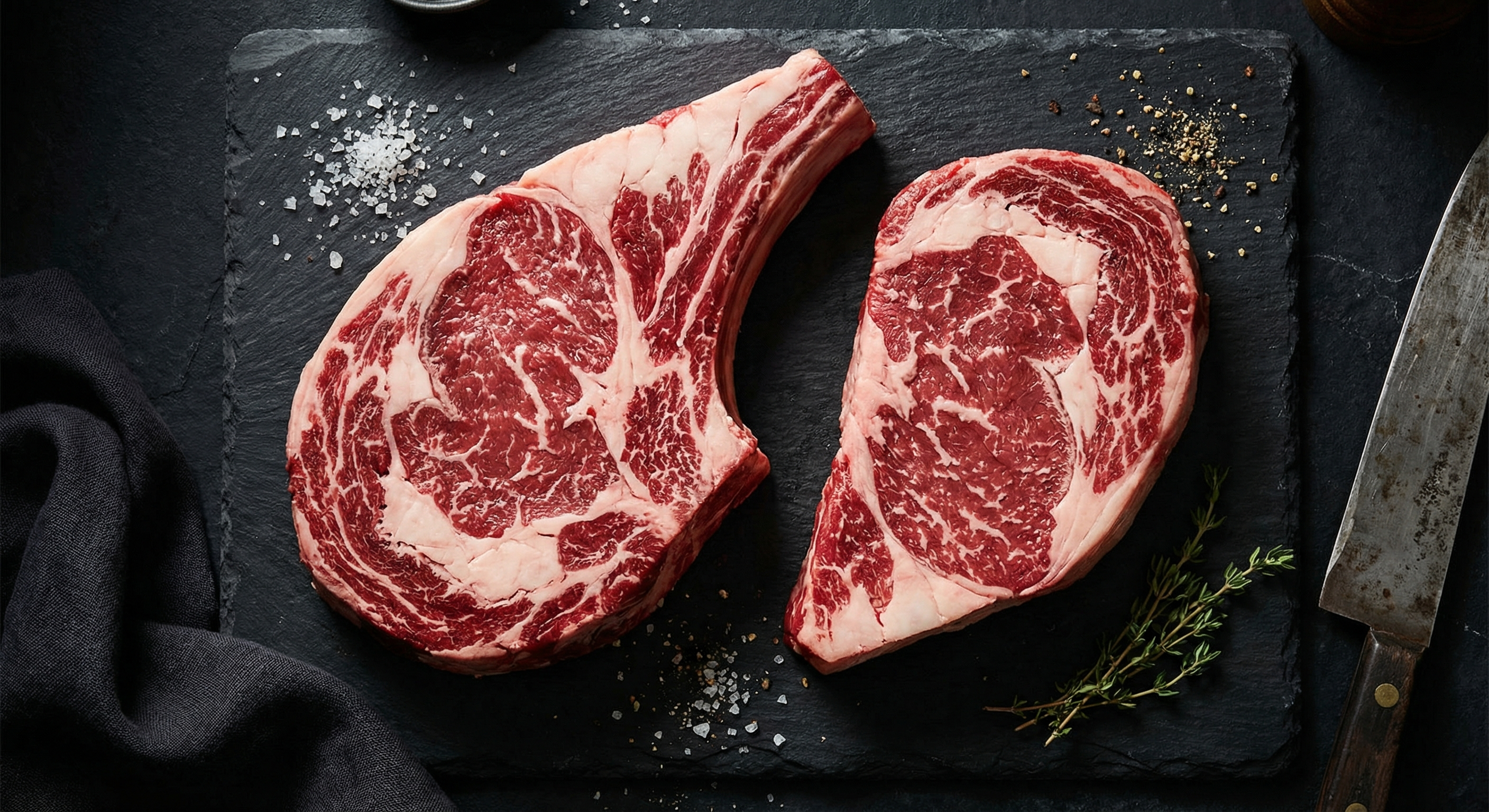
Walk into any steakhouse or butcher shop and you'll face this choice: bone-in or boneless ribeye? The bone-in costs more per pound, looks more impressive on the plate, and comes with a lot of mythology attached. The boneless is easier to cook, easier to portion, and — some argue — gives you more meat for your money.
I've been cutting both for over 30 years. I've cooked thousands of each. And I'm going to tell you exactly what the bone does and doesn't do, so you can make the right call for your next steak night.
The Quick Answer
Choose bone-in ribeye when: You want a dramatic presentation, slightly slower cooking (which can mean more even doneness for thick cuts), and you enjoy gnawing meat off the bone.
Choose boneless ribeye when: You want easier searing, faster cooking, simpler portioning, and maximum usable meat per dollar.
The flavor difference between the two is real but subtle. Anyone who tells you the bone "infuses" the meat with dramatic flavor is repeating a myth. The real differences are practical.
What Exactly Is a Bone-In Ribeye?
A bone-in ribeye is cut from the rib primal (ribs 6 through 12) with a section of the curved rib bone left attached. The meat itself is identical to a boneless ribeye — it's the longissimus dorsi muscle, often with a section of the spinalis (the ribeye cap) and some complexus muscle.
When the bone is left especially long and frenched (cleaned of meat and fat), you get a tomahawk steak — which is just a bone-in ribeye with a handle. The meat is the same.
Common Names for Bone-In Ribeye
- Bone-in ribeye steak — the standard name
- Cowboy steak — bone-in ribeye with a short frenched bone (2-4 inches)
- Tomahawk steak — bone-in ribeye with a long frenched bone (5+ inches)
- Rib steak — an older term, same cut
What Exactly Is a Boneless Ribeye?
A boneless ribeye is the same muscle group — longissimus dorsi, spinalis, and complexus — with the rib bone removed before portioning. The butcher cuts along the bone, separates it cleanly, and then slices the boneless rib roast into individual steaks.
This is the most common form you'll find at grocery stores. It's what most people picture when they think "ribeye."
Does the Bone Add Flavor?
This is the big question, and the honest answer is: barely, and not in the way most people think.
Bone is a poor conductor of heat. During a 10-15 minute steak cook, there isn't enough time for marrow compounds to migrate through dense bone into the surrounding meat. The bone isn't a flavor delivery system — it's an insulator.
What the bone does do is protect the meat directly next to it from overcooking. The area right against the bone stays slightly rarer and more tender than the rest of the steak. Some people love this gradient of doneness. Others find it annoying.
The real flavor difference comes down to one thing: fat near the bone. There's typically a pocket of intramuscular fat and connective tissue where the meat meets the bone. When this renders during cooking, it bastes the surrounding area. That's where the "bone-in tastes better" perception comes from — and it's legitimate, just not because of the bone itself.
Cooking Differences: Side by Side
Searing
Boneless wins. A boneless ribeye sits flat on a hot skillet or grill grate, making full contact across the entire surface. This means a more even, consistent crust. A bone-in ribeye can rock or tilt because the bone creates an uneven base, leading to spotty searing unless you press it down or use a weight.
Cooking Time
Bone-in takes longer. The bone acts as an insulator, slowing heat transfer into the meat next to it. A 1.5-inch bone-in ribeye typically needs 2-4 extra minutes compared to the same thickness boneless. This isn't a disadvantage — it actually gives you a wider window before overshooting your target temperature.
Temperature Consistency
Boneless is more uniform. Without the bone's insulating effect, heat penetrates evenly from all sides. You'll get consistent doneness from edge to center. Bone-in steaks will have a gradient: slightly rarer near the bone, slightly more done on the opposite side.
Resting
Both need to rest 5-10 minutes after cooking. The bone retains heat longer, so a bone-in ribeye continues cooking slightly more during the rest period. Pull it off heat about 3-5°F earlier than your target if you're using a thermometer.
Reverse Sear
Bone-in shines here. The reverse sear method (low oven first, then high-heat sear) is ideal for bone-in ribeyes because the slow initial cook lets heat equalize around the bone. By the time you sear, the entire steak is within a degree or two of your target, and the bone issue disappears.
Price Comparison
Here's where it gets interesting. Bone-in ribeye often costs $2-5 more per pound than boneless at retail. But 15-20% of that weight is bone — bone you're paying steak prices for but can't eat.
Let's do the math on a real example:
- Bone-in ribeye: 24 oz total at $22/lb = $33.00 (roughly 19-20 oz of usable meat)
- Boneless ribeye: 20 oz total at $24/lb = $30.00 (all usable meat)
In this scenario, the boneless is cheaper overall AND gives you the same amount of edible meat. This is almost always the case. You're paying a presentation premium for bone-in.
There's one exception: when bone-in ribeyes go on sale. Grocery stores sometimes discount them aggressively because they're harder to move than boneless. If you catch bone-in at $16-18/lb while boneless sits at $24/lb, the bone-in becomes the better value even accounting for bone weight.
Which Is Better for Different Cooking Methods?
Cast Iron / Pan Searing
Boneless is easier. Full contact with the pan, even crust, no wrestling with the bone. If you're a beginner, go boneless for pan cooking.
Grilling
Bone-in works great. On a grill, the uneven base matters less because heat comes from below. The bone protects against flare-ups on one side, and the presentation at a backyard cookout is unbeatable.
Reverse Sear (Oven + Pan)
Bone-in is ideal. The low-and-slow oven phase eliminates the bone's insulation issue, and you get the best of both worlds: even doneness plus that extra fat rendering near the bone.
Sous Vide
Boneless is practical. Bone-in steaks can puncture vacuum bags and take up more space in the water bath. The bone adds nothing in a sous vide context since the entire steak reaches the exact same temperature regardless.
Smoking
Bone-in for low and slow. If you're smoking a thick ribeye at 225°F, the bone's insulation helps prevent the meat near it from drying out during the long cook. Plus, smoked bone-in ribeye (sometimes called a smoked cowboy steak) is visually stunning.
The Presentation Factor
Let's be honest about something: bone-in ribeye looks incredible. There's a primal satisfaction in a thick steak with a bone jutting out. At a dinner party, a bone-in ribeye on the plate says something that a boneless steak simply doesn't.
If you're cooking to impress — a date, a celebration, guests you want to wow — bone-in is worth the premium. Food is an experience, and presentation is part of that experience. There's nothing wrong with paying extra for the theater.
What to Do with the Bone
If you go bone-in, don't throw the bone away after dinner. Ribeye bones with residual meat and fat make excellent stock. Toss them in a freezer bag and save them until you have 3-4 pounds worth, then make beef bone broth. The marrow and collagen from rib bones produce a rich, gelatinous stock that's far better than anything you'll buy.
A Butcher's Honest Recommendation
Here's what I tell people at my counter:
- Weeknight dinner for yourself? Boneless. Faster, easier, less waste.
- Grilling for friends? Bone-in. The wow factor is worth it.
- First time cooking ribeye? Boneless. Remove the bone variable until you're confident with your technique.
- Special occasion? Bone-in, reverse seared. This is the peak ribeye experience.
- On a budget? Whichever is cheaper per ounce of actual meat. Do the math — don't just look at the per-pound price.
The dirty secret of the bone-in vs boneless debate is that the meat is identical. Same animal, same muscle, same marbling grade. The bone changes how you cook it and how it looks on the plate, but it doesn't transform one steak into a fundamentally different eating experience.
Buy whichever one makes you happy. Cook it properly. Either way, you're eating one of the best cuts of beef that exists.
Frequently Asked Questions
Frequently Asked Questions
Does the bone make a ribeye taste better?
The bone itself contributes minimal direct flavor during a normal steak cook. The perceived flavor difference comes from fat and connective tissue near the bone that renders during cooking, basting the surrounding meat. The effect is real but subtle.
Why is bone-in ribeye more expensive per pound?
Bone-in ribeye commands a premium because of presentation value and perceived quality. However, 15-20% of the weight is inedible bone, so the actual cost per ounce of meat is often higher than boneless. Always compare the cost of usable meat, not just the sticker price.
Is a cowboy steak the same as a bone-in ribeye?
Yes. A cowboy steak is a bone-in ribeye with a short frenched bone (2-4 inches exposed). A tomahawk steak is the same cut with a longer frenched bone (5+ inches). The meat is identical in all three — only the bone presentation differs.
Can I ask my butcher to remove the bone from a bone-in ribeye?
Absolutely. Any good butcher will remove the bone for you at no charge. Ask them to save the bone for you too — it's great for making beef stock or bone broth.
Which cooks faster, bone-in or boneless ribeye?
Boneless cooks faster because heat penetrates evenly from all sides. Bone-in ribeye takes 2-4 extra minutes for the same thickness because the bone insulates the adjacent meat. Use a meat thermometer rather than relying on time alone.
Is bone-in or boneless better for reverse sear?
Bone-in is excellent for reverse sear. The low-temperature oven phase gives heat time to equalize around the bone, eliminating the uneven cooking issue. By searing time, the entire steak is uniformly at your target temperature.
More Expert Guides
What Is Chateaubriand? (Cut, Cooking, & Best Sources)
Chateaubriand is a thick-cut roast from the center of the beef tenderloin, traditionally served for two. Learn what makes this classic French cut special and how to cook it.
14 min readWhat Is Round Steak? The Complete Guide to Beef's Most Versatile Budget Cut
Round steak comes from the rear leg of the cow — it's lean, affordable, and misunderstood. A master butcher breaks down every sub-cut, cooking method, and technique to turn this budget workhorse into genuinely delicious meals.
14 min readWhat Is Eye of Round? The Complete Butcher's Guide to This Lean Cut
Eye of round is one of the leanest, most affordable cuts in the entire beef case — and one of the most misunderstood. A butcher explains how to turn this budget-friendly roast into something genuinely delicious.