What Is Ribeye Cap Steak? The Best Cut Most People Never Order
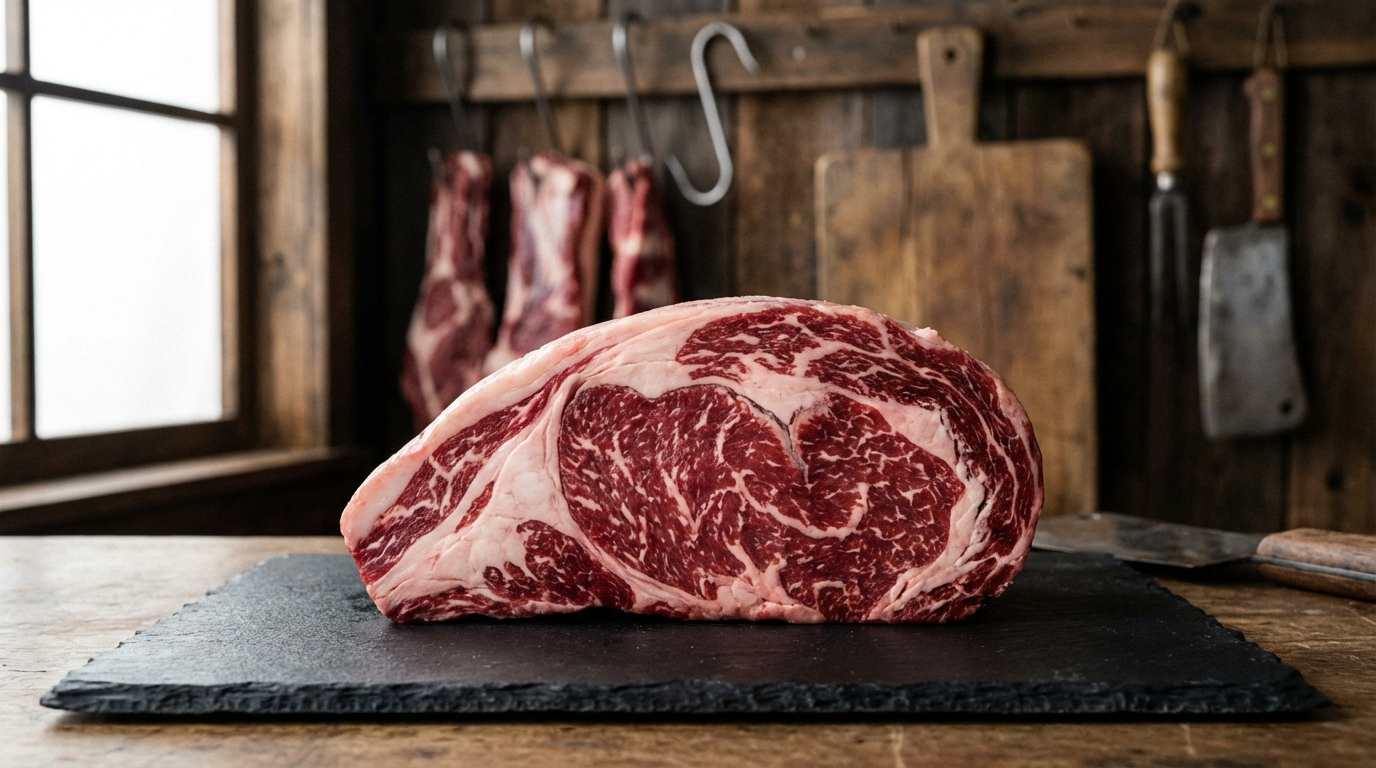
Every time you eat a ribeye, there's a crescent of meat along the outer edge that tastes noticeably better than the rest. It's fattier, more tender, and carries a depth of flavor that makes you pause mid-bite. That crescent is the ribeye cap — and if you've never had it served as its own steak, you've been missing the best cut on the animal.
Ask any butcher what they take home at the end of the day, and the answer is almost always the same: the cap. Known formally as the spinalis dorsi, this muscle has earned a near-mythical reputation among meat professionals. It combines the marbling of a wagyu strip with the tenderness of a filet — and it tastes better than both.
Where Ribeye Cap Comes From
The ribeye cap is the spinalis dorsi muscle — one of three distinct muscles that make up a whole ribeye steak. It sits along the outer curve of the ribeye, wrapping around the top and side of the larger longissimus dorsi (the "eye" of the ribeye). The third muscle, the complexus, appears only in the chuck-end ribeyes and is much smaller.
On the carcass, the spinalis dorsi runs along ribs 6 through 12 in the rib primal. It's a relatively thin muscle — typically three-quarters of an inch to an inch thick — and gets wider as you move toward the chuck end (front) of the rib section. The fattest, most generous ribeye caps come from ribs 6 through 8, which is why experienced butchers request the "chuck end" of the rib when they want maximum cap meat.
A whole spinalis dorsi, removed intact from a bone-in rib roast, weighs between 2 and 3 pounds. That's not a lot of meat from a 1,200-pound animal — which is exactly why it commands premium prices when sold separately. Most of the time, this muscle stays attached to the ribeye and gets sold as part of a regular steak. Separating it requires extra butchery labor, and many shops simply don't bother.
You may see ribeye cap sold under several names: spinalis steak, deckle steak, calotte (the French term), or simply "ribeye cap roll." In Japanese butchery, it's sometimes called zaburi. The IMPS/NAMP designation is #112D for the cap removed from a lip-on ribeye.
Why Butchers Call It the Best Steak
The spinalis dorsi has a unique combination of qualities that no other single muscle on the animal can match. Understanding why requires looking at three factors: marbling, tenderness, and flavor chemistry.
Marbling density: The ribeye cap carries more intramuscular fat per square inch than virtually any other steak muscle. Even in USDA Choice carcasses, the spinalis dorsi displays marbling that rivals Prime-grade ribeye eyes. In Prime carcasses, the cap's marbling is extraordinary — fine, evenly distributed fat that melts at relatively low temperatures, creating a buttery mouthfeel that's hard to replicate.
Tenderness: Despite being an active muscle involved in spinal extension and lateral movement, the spinalis dorsi is remarkably tender. Warner-Bratzler shear force testing consistently ranks it among the five most tender muscles on the carcass. The combination of thin muscle fibers and extensive intramuscular fat creates a texture that almost dissolves on your tongue — closer to filet mignon than to the firmer eye of the ribeye.
Flavor concentration: The rib section is where beef flavor peaks. The spinalis dorsi benefits from its position along the outside of the rib, where it develops rich, complex compounds during the animal's life. Combined with its exceptional fat content, this creates layers of savory depth — umami, buttery richness, and a clean beef finish that lingers. Chefs describe it as "what you wish every steak tasted like."
The cap also has a textural advantage: its grain runs differently from the eye of the ribeye, creating a more open, looser structure that's inherently easier to chew. When you eat a whole ribeye, you can actually feel the difference as your fork moves from the firmer eye into the softer, more yielding cap.
Ribeye Cap vs. Regular Ribeye
When you order a standard ribeye steak, you're getting three muscles in one cut: the large central eye (longissimus dorsi), the cap (spinalis dorsi), and sometimes a small piece of the complexus. The eye is a great steak muscle — well-marbled and flavorful — but the cap outperforms it on every metric.
In side-by-side tastings, the cap consistently scores higher for tenderness, juiciness, and overall flavor. The eye has a tighter grain and slightly firmer chew. The cap is looser, fattier, and more succulent. It's the difference between a very good steak and a transcendent one.
The trade-off with buying the cap separately is size and shape. A whole ribeye cap, when unrolled, is a long, thin strip — roughly 16 to 20 inches long and irregularly shaped. It's not a neat, thick steak like a tomahawk. Butchers typically handle this by either rolling and tying the cap into a compact roast, cutting it into individual steaks across the grain, or leaving it as one dramatic piece for grilling.
How to Buy Ribeye Cap
Finding ribeye cap requires either a good butcher relationship or knowing where to look online. Here's the reality of the market:
Butcher shops: Most independent butchers can separate the cap from a whole rib section if you ask. Call ahead — this isn't a cut that sits in the display case. Some shops charge a premium ($25–40/lb for USDA Prime), while others will sell it at a modest markup over their ribeye price if you're a regular customer. Building a relationship with your butcher is the best long-term strategy for accessing this cut.
Online retailers: Several specialty meat companies now sell the ribeye cap as a standalone product. Expect to pay $35–60 per pound for USDA Prime, and significantly more for wagyu-grade spinalis. The advantage of buying online is consistency — you know exactly what you're getting. The disadvantage is the premium markup and shipping costs.
Wholesale clubs: Costco and similar warehouse stores sell whole bone-in rib roasts (USDA Prime during holidays). You can buy one and separate the cap yourself — it's not difficult. The seam between the cap and the eye is a natural fat layer that you can follow with a sharp boning knife. This is the most economical route: you get the cap at regular rib roast prices, plus you still have the eye for steaks.
What to look for: A quality ribeye cap should be deep red with heavy, evenly distributed marbling. The fat should be white to cream-colored — yellowing can indicate older beef or grass-fed cattle (not necessarily bad, just different). The cap should be at least three-quarters of an inch thick at its widest point. Avoid caps that look dried out at the edges or have excessive external fat that wasn't properly trimmed.
How to Cook Ribeye Cap Steak
The ribeye cap's high fat content makes it both forgiving and dangerous. Forgiving because the marbling keeps it juicy even if you slightly overshoot your target temperature. Dangerous because all that fat can cause serious flare-ups on a grill. The best approaches manage the fat while maximizing crust development.
Reverse Sear (Best Method)
The reverse sear is ideal for the cap because the thin, uneven shape benefits from gentle, indirect heat before a hard sear. Here's the process:
- Season generously with coarse salt and freshly ground black pepper — at least 45 minutes before cooking, or overnight uncovered in the fridge for the best crust.
- Place the cap on a wire rack over a sheet pan in a 250°F oven. Cook until the internal temperature reaches 115°F — about 20 to 30 minutes depending on thickness.
- While the meat rests briefly, heat a cast iron skillet until it's screaming hot — you want visible wisps of smoke.
- Sear for 60 to 90 seconds per side, pressing gently to ensure full contact with the pan. Add a tablespoon of butter in the last 30 seconds and baste.
- Rest for 5 minutes. Slice against the grain and serve immediately.
Target medium-rare (130°F final) for the best balance of rendered fat and tender meat. The cap's extensive marbling needs some heat to fully render — rare (125°F) leaves too much unmelted fat, which can feel waxy rather than buttery.
Rolled and Tied Roast
For a showstopper presentation, roll the entire cap into a tight cylinder, tie it with butcher's twine at one-inch intervals, and roast it whole. Season the inside surface before rolling — a thin layer of Dijon mustard, minced garlic, and fresh herbs works beautifully.
- Sear the rolled cap in a hot skillet on all sides until deeply browned — about 6 to 8 minutes total.
- Transfer to a 275°F oven and roast until the center reaches 125°F — typically 25 to 35 minutes.
- Rest for 10 minutes before removing the twine and slicing into thick medallions.
The rolled method gives you thick, uniform slices that look like filet mignon but taste like the best ribeye you've ever had. This is an excellent approach for dinner parties — impressive presentation with minimal effort.
Direct Grill
Grilling the cap works well but requires attention. The high fat content means aggressive flare-ups, so you need a two-zone fire: hot coals on one side, nothing on the other.
- Start the cap over indirect heat (the cool side) with the lid closed. Cook until internal temperature reaches 115°F.
- Move to direct heat for a hard sear — 60 to 90 seconds per side. If flare-ups get intense, move the meat back to indirect immediately.
- Rest 5 minutes, slice against the grain.
Wood or charcoal grilling adds a smoke dimension that complements the cap's rich fat beautifully. Avoid gas grills if possible — the fat dripping onto ceramic briquettes doesn't create the same flavor as real wood coals.
Common Mistakes to Avoid
Cooking it too rare: This is the most common mistake. The cap's marbling needs to render — internal temperatures below 128°F leave too much solid fat in the meat. Medium-rare (130–135°F) is the sweet spot where fat has melted but the meat remains pink and juicy.
Cutting with the grain: The cap's grain runs lengthwise along the strip. Always slice across the short dimension. Cutting with the grain turns a butter-tender steak into something chewy.
Over-seasoning: The ribeye cap has so much natural flavor that heavy seasoning or marinades are counterproductive. Salt, pepper, and maybe a finishing compound butter are all you need. Save the elaborate rubs for less flavorful cuts.
Cooking too thick: If you're cutting the cap into individual steaks rather than cooking it whole, keep them at 1 to 1.5 inches thick. Thinner steaks are hard to hit medium-rare before the exterior overcooks, and thicker pieces are difficult to sear evenly given the cap's irregular shape.
Ignoring carryover: The cap's high fat content means significant carryover cooking — internal temperature will rise 5 to 8 degrees after removing from heat. Pull it earlier than you think. If your target is 130°F, pull at 122–125°F.
Ribeye Cap in Restaurant Culture
High-end steakhouses have caught on to the ribeye cap's appeal, and many now offer it as a premium menu item. You'll see it listed as "spinalis steak," "ribeye cap," or sometimes under Japanese names at wagyu-focused restaurants. Expect to pay a significant premium — $60 to $120 per serving at top steakhouses, depending on grade and preparation.
Some restaurants serve the cap as part of a "butcher's cut" or "off-menu" selection — cuts that the chef personally selects and prepares in limited quantities. If you see spinalis or ribeye cap on a specials board, order it. The chef is telling you they know what they're doing.
The rise of whole-animal butchery programs at restaurants has also increased ribeye cap availability. When a kitchen breaks down whole rib sections in-house, separating the cap becomes practical. These restaurants often have the freshest, best-handled caps because the butchery happens on-site.
Storing and Freezing
Fresh ribeye cap should be cooked within 3 to 5 days of purchase if stored in the refrigerator at 34–38°F. Keep it in its original vacuum packaging if possible, or wrap tightly in plastic wrap followed by butcher paper.
For freezing, vacuum sealing is strongly recommended — the cap's high surface area to volume ratio makes it particularly susceptible to freezer burn. Properly vacuum-sealed, it will maintain quality for 6 to 9 months in a chest freezer. Thaw in the refrigerator over 24 hours; never thaw at room temperature or in warm water.
One useful technique: if you buy a whole rib section and separate the cap, you can portion it into individual steak-sized pieces before freezing. This lets you thaw only what you need for a single meal, preserving quality across multiple uses.
Nutritional Profile
Ribeye cap is one of the fattier steak cuts, which accounts for its exceptional flavor and tenderness. A 6-ounce serving of USDA Choice ribeye cap contains approximately:
- Calories: 420–460
- Protein: 36–40g
- Total fat: 30–34g
- Saturated fat: 12–14g
- Iron: 3.2mg (18% daily value)
- Zinc: 7.5mg (68% daily value)
- B12: 4.8mcg (200% daily value)
The ribeye cap is not the cut for calorie-conscious eating — that's sirloin territory. But if you're eating steak for pleasure and nutrition rather than strict macros, the cap delivers an unmatched eating experience with excellent micronutrient density.
Frequently Asked Questions
What is a ribeye cap steak?
The ribeye cap steak is the spinalis dorsi muscle — the thin, crescent-shaped outer muscle that wraps around the eye of a ribeye. It's widely considered the single best-tasting cut on the entire animal due to its exceptional marbling, tenderness, and rich beef flavor.
Is ribeye cap better than ribeye?
Yes — the cap is the best part of the ribeye. It has more marbling, a more tender texture, and deeper flavor than the eye (longissimus dorsi). When you eat a regular ribeye, the cap is that exceptionally tender, buttery strip along the outer edge. Sold separately, it's a premium cut.
Why is ribeye cap so expensive?
A whole ribeye cap weighs only 2 to 3 pounds per side of beef — it's a scarce cut. Separating it from the ribeye requires extra butchery labor, and most of the time the cap is simply sold as part of a regular ribeye steak. When sold separately, expect to pay $25–60 per pound depending on the grade.
How do you cook ribeye cap steak?
The reverse sear is the best method: slow-cook in a 250°F oven to 115°F internal, then sear in a screaming-hot cast iron skillet for 60–90 seconds per side. Target medium-rare (130°F final) to properly render the marbling. You can also roll and tie the whole cap into a roast for an impressive presentation.
What is another name for ribeye cap?
Ribeye cap goes by several names: spinalis dorsi (anatomical name), spinalis steak, deckle steak, calotte (French), and zaburi (Japanese). At butcher shops you may also see it labeled as "ribeye cap roll" or IMPS #112D.
Can you buy ribeye cap at the grocery store?
Rarely. Most grocery stores sell the cap as part of a whole ribeye steak. Your best options are: asking an independent butcher to separate it (call ahead), ordering from online specialty meat retailers, or buying a whole rib roast from Costco and removing the cap yourself — it separates easily along a natural fat seam.
More Expert Guides
What Is Chateaubriand? (Cut, Cooking, & Best Sources)
Chateaubriand is a thick-cut roast from the center of the beef tenderloin, traditionally served for two. Learn what makes this classic French cut special and how to cook it.
14 min readWhat Is Round Steak? The Complete Guide to Beef's Most Versatile Budget Cut
Round steak comes from the rear leg of the cow — it's lean, affordable, and misunderstood. A master butcher breaks down every sub-cut, cooking method, and technique to turn this budget workhorse into genuinely delicious meals.
14 min readWhat Is Eye of Round? The Complete Butcher's Guide to This Lean Cut
Eye of round is one of the leanest, most affordable cuts in the entire beef case — and one of the most misunderstood. A butcher explains how to turn this budget-friendly roast into something genuinely delicious.