Best Beef Cuts for Smoking: A Butcher's Complete Guide
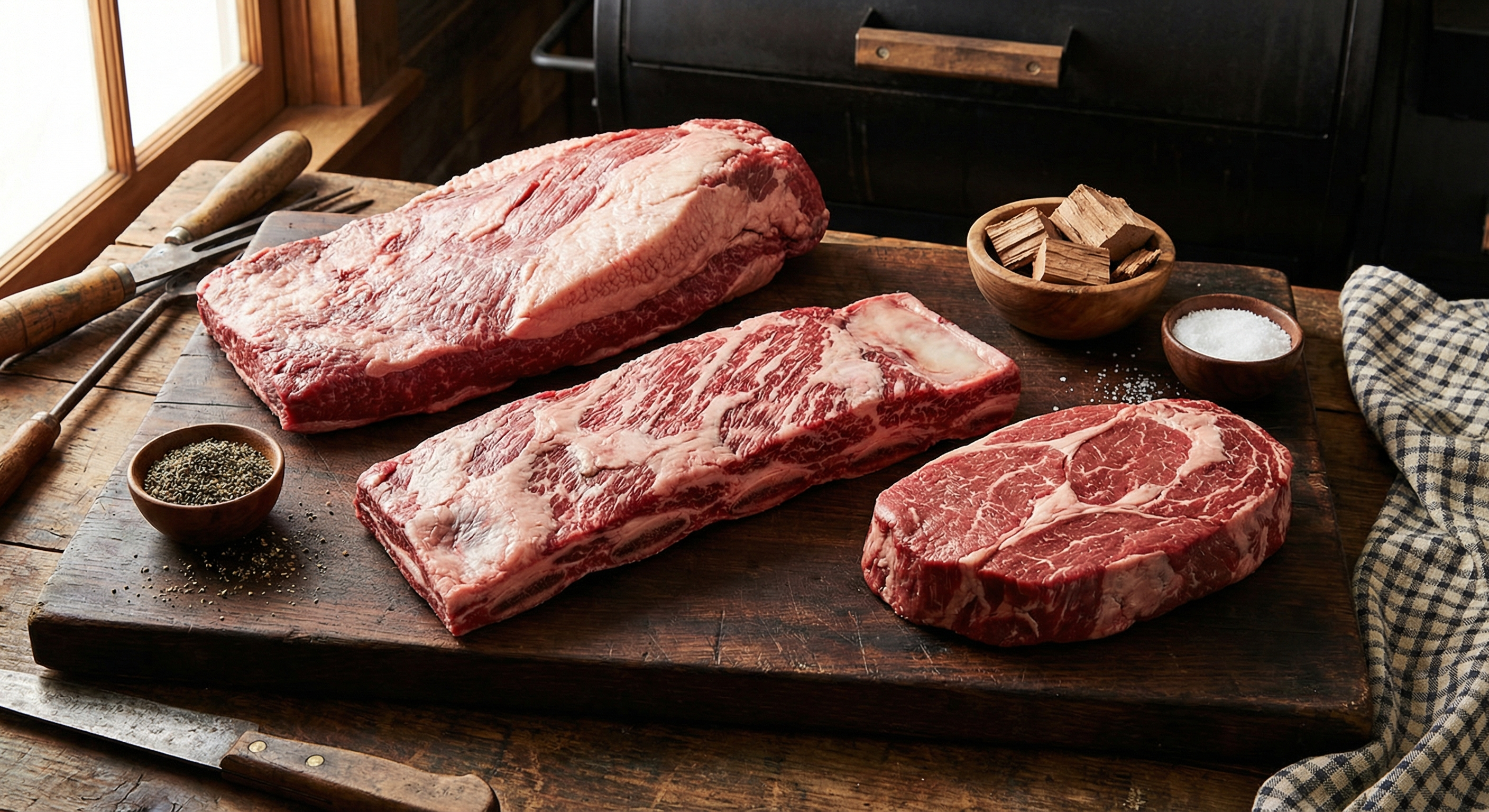
There's a reason barbecue pitmasters don't smoke filet mignon. Smoking is low, slow, and patient — and the cuts that thrive in a smoker are the ones most people walk past at the butcher counter. Tough, collagen-rich, well-marbled muscles that would be chewy disasters on a hot grill become transcendent after 8, 12, or 16 hours bathed in wood smoke at 225°F.
After 30 years of cutting meat and more weekends than I can count tending my own smoker, I've learned which cuts are worth the time and which ones are a waste of charcoal. This guide ranks every beef cut worth smoking, tells you exactly what to look for when buying, and gives you the temperatures and timelines that actually work.
What Makes a Good Smoking Cut?
Before we get into specific cuts, you need to understand what makes beef suitable for smoking. Three factors matter:
1. Collagen content. Collagen is the connective tissue that makes raw meat tough. When heated slowly to 160-205°F over many hours, collagen converts to gelatin — that silky, unctuous quality that makes great barbecue melt in your mouth. Cuts with heavy collagen (brisket, short ribs, chuck) are smoking gold. Cuts with little collagen (tenderloin, strip steak) have nothing to convert and just dry out.
2. Intramuscular fat (marbling). Fat is flavor insurance during a long cook. Marbling renders slowly, basting the meat from within over hours of cooking. Well-marbled cuts stay moist; lean cuts turn to jerky. This is why USDA Choice or higher is important for smoking — that marbling keeps things juicy through the entire cook.
3. Size and shape. Smoking is a time investment. A cut that's too small will overcook before it absorbs meaningful smoke flavor. The best smoking cuts are thick, substantial pieces — 3 pounds minimum, ideally 8-15 pounds. The mass provides thermal inertia that prevents overcooking and gives you a proper bark-to-meat ratio.
1. Whole Packer Brisket — The King of Smoked Beef
If there's one cut that defines American barbecue, it's the brisket. A whole packer brisket includes both the flat (the lean, more uniform section) and the point (the thicker, fattier section). Together, they weigh 12-20 pounds and require 12-18 hours of smoking at 225-275°F.
Why it works: Brisket is loaded with collagen and has a thick fat cap that protects the meat during the long cook. The flat delivers clean, sliceable beef. The point delivers rich, unctuous chunks that can be cubed into burnt ends — arguably the single greatest creation in the history of smoked meat.
What to Buy
- Grade: USDA Choice minimum. Prime is worth the upgrade — the extra marbling in the flat makes a noticeable difference. American Wagyu brisket is the ultimate if you can find it.
- Size: 12-16 lbs is the sweet spot. Under 10 lbs means a thin flat that'll dry out. Over 18 lbs means you need a large smoker and more time.
- Fat cap: Even, 1/4-inch thickness. Too thick and it won't render; too thin and the flat is exposed.
- Flexibility: Pick up the brisket from the middle. A good one bends like a wet towel. Stiff = less marbling.
Smoking Parameters
- Temperature: 225-275°F (250°F is my sweet spot)
- Target internal temp: 200-205°F, with the probe sliding in like butter
- Time estimate: 1-1.5 hours per pound at 250°F
- Wood: Post oak (Texas style), hickory, or a mix of oak and cherry
- Rest: Minimum 1 hour in a cooler wrapped in butcher paper. 2-4 hours is better.
Pro tip: The "stall" — when internal temp plateaus around 150-170°F for hours — is normal. It's evaporative cooling as moisture leaves the meat. Power through it or wrap in butcher paper (the "Texas crutch") to push past it faster.
2. Beef Short Ribs — The Show-Stopper
Plate-style beef short ribs (also called "dino ribs" or "dinosaur ribs") are the most impressive thing you can pull out of a smoker. Each bone is 8-12 inches long with a thick cap of intensely marbled meat on top. When properly smoked, the meat has the texture and richness of the best brisket point, with the added drama of that massive bone.
Why it works: Short ribs have an extraordinary amount of intramuscular fat and connective tissue between the meat and the bone. That connective tissue melts into gelatin during smoking, creating a luxuriously tender, almost buttery texture.
What to Buy
- Type: Plate short ribs (from the short plate, ribs 6-8), NOT chuck short ribs. Plate ribs are larger and meatier.
- Size: A 3-bone rack weighs 5-8 lbs. Each bone should have at least 1-2 inches of meat on top.
- Grade: Choice or Prime. The marbling in Prime short ribs is stunning.
Smoking Parameters
- Temperature: 250-275°F
- Target internal temp: 200-210°F (probe tender)
- Time estimate: 8-10 hours
- Wood: Oak, hickory, or mesquite (mesquite pairs beautifully with the rich fat)
- Rest: 30-60 minutes loosely wrapped
3. Chuck Roast — The Weekday Brisket
I call chuck roast "poor man's brisket" and I mean it as the highest compliment. A bone-in or boneless chuck roast has similar collagen content and marbling to brisket, but it weighs 3-5 pounds instead of 12-18. That means you can smoke it in 6-8 hours instead of an entire day.
Why it works: Chuck comes from the shoulder, which does heavy work and develops lots of connective tissue. That collagen converts to gelatin just like brisket. The generous marbling in the chuck keeps the meat moist, and at 3-5 lbs, you can start smoking after lunch and eat dinner at a reasonable hour.
What to Buy
- Grade: Choice is perfect. The chuck is so well-marbled that the grade bump to Prime matters less here than with other cuts.
- Size: 3-5 lbs. Uniform thickness cooks more evenly.
- Bone-in vs boneless: Either works. Bone-in adds a bit of flavor and helps insulate the meat.
Smoking Parameters
- Temperature: 250-275°F
- Target internal temp: 200-205°F
- Time estimate: 6-8 hours
- Wood: Hickory, cherry, or oak
- Best use: Pull it apart for sandwiches, slice for plates, or cube for burnt ends
4. Tri-Tip — The Quick Smoke
Tri-tip is the outlier on this list because it's a relatively tender, lean cut that doesn't need low-and-slow to break down collagen. Instead, you smoke it like a thick steak — low smoke to build flavor, then sear to finish. The result is smoky, medium-rare beef with a beautiful bark. It's a California barbecue staple for good reason.
Why it works: Tri-tip has enough marbling to stay moist during a shorter smoke, and its triangular shape creates natural thin and thick zones — so everyone gets their preferred doneness.
What to Buy
- Size: 2-3 lbs, with the fat cap intact.
- Grade: Choice or Prime. The marbling matters here because you're not cooking to collagen-conversion temps.
Smoking Parameters
- Temperature: 225-250°F
- Target internal temp: 130-135°F (medium-rare) — NOT 200°F like brisket
- Time estimate: 2-3 hours
- Wood: Red oak is traditional. Cherry or pecan also work well.
- Finish: Sear over high heat for 60-90 seconds per side after smoking
- Slice: Against the grain (the grain changes direction — find the seam)
5. Beef Back Ribs — The Underrated Pick
Beef back ribs are the bones removed when butchers cut boneless ribeyes. They're often dismissed because they have less meat than plate short ribs, but properly smoked, they're excellent — tender, flavorful, and significantly cheaper than short ribs.
Why it works: The intercostal meat between the bones has great flavor, and the thin layer of meat on top (leftover from the ribeye) is well-marbled. They cook relatively quickly and are perfect for weeknight smoking.
Smoking Parameters
- Temperature: 250-275°F
- Target: When the meat pulls back from the bones about 1/2 inch and is probe-tender
- Time estimate: 4-6 hours
- Wood: Hickory, oak, or cherry
6. Beef Cheeks — The Hidden Gem
Beef cheeks are one of the most underappreciated cuts in the entire animal. Each cheek is a dense, collagen-packed muscle that worked constantly during the animal's life (chewing). That heavy exercise means tons of connective tissue — which means incredible gelatin conversion when smoked low and slow.
Why it works: Beef cheeks have more collagen per ounce than almost any other cut. After 6-8 hours of smoking, they become impossibly tender — fork-shredding soft with a rich, beefy flavor that's deeper than brisket.
Smoking Parameters
- Temperature: 250-275°F
- Target internal temp: 205-210°F
- Time estimate: 6-8 hours
- Wood: Oak or mesquite
- Note: Hard to find at regular grocery stores. Ask your butcher to order them.
7. Beef Clod (Shoulder Clod) — The Whole-Animal Challenge
The beef clod is the entire shoulder muscle system — a massive 15-25 pound cut that's popular in Texas barbecue joints. It's essentially the beef equivalent of a whole pork shoulder. The clod contains multiple muscles with varying fat levels, which means different textures and flavors in every slice.
Why it works: Like brisket, the clod has extensive connective tissue that converts to gelatin. The size means it takes 12-16 hours, developing a spectacular bark and deep smoke ring. Many Texas BBQ joints serve clod alongside brisket as a leaner sliced option.
Smoking Parameters
- Temperature: 250-275°F
- Target internal temp: 195-205°F
- Time estimate: 12-16 hours
- Wood: Post oak (traditional Texas)
8. Beef Plate (Navel) — For Smoked Pastrami
The beef navel (also called the plate) is the cut used to make authentic pastrami. It's the belly of the cow — fattier and more flavorful than brisket flat, with layers of meat and fat that render beautifully during smoking.
Why it works: The navel's alternating fat and lean layers create a self-basting effect during smoking. Cure it with a pastrami spice blend for 5-7 days, then smoke it, and you'll produce deli-quality pastrami that puts anything from the supermarket to shame.
Smoking Parameters (for pastrami)
- Cure: 5-7 days in a curing brine with pink salt
- Temperature: 225-250°F
- Target internal temp: 200-205°F
- Time estimate: 8-12 hours
- Wood: Hickory or a mix of hickory and cherry
- Finish: Steam for 2-3 hours after smoking for classic pastrami texture
Quick Reference: All Cuts Ranked
| Cut | Weight | Smoke Temp | Target Temp | Time | Difficulty |
|---|---|---|---|---|---|
| Whole Brisket | 12-18 lbs | 225-275°F | 200-205°F | 12-18 hrs | Hard |
| Plate Short Ribs | 5-8 lbs | 250-275°F | 200-210°F | 8-10 hrs | Medium |
| Chuck Roast | 3-5 lbs | 250-275°F | 200-205°F | 6-8 hrs | Easy |
| Tri-Tip | 2-3 lbs | 225-250°F | 130-135°F | 2-3 hrs | Easy |
| Back Ribs | 3-4 lbs | 250-275°F | Probe tender | 4-6 hrs | Easy |
| Beef Cheeks | 1-2 lbs ea | 250-275°F | 205-210°F | 6-8 hrs | Medium |
| Shoulder Clod | 15-25 lbs | 250-275°F | 195-205°F | 12-16 hrs | Hard |
| Beef Navel | 6-10 lbs | 225-250°F | 200-205°F | 8-12 hrs | Medium |
Cuts to Avoid in the Smoker
Not every cut belongs in a smoker. Here's what to skip:
- Tenderloin / Filet Mignon — Too lean, no connective tissue to convert. Will dry out completely.
- Ribeye steaks — The fat is great but the cut is too thin and tender. Grill or pan-sear instead.
- Eye of round — Extremely lean with no marbling. Will become beef jerky in a smoker.
- Sirloin steaks — Too lean for the long cook times smoking requires.
The rule is simple: if a cut is already tender, it doesn't need a smoker. If it's tough and marbled, the smoker is where it shines.
Wood Selection Guide
The wood you choose matters almost as much as the cut. Here's what works with beef:
- Post oak: The Texas standard. Clean, mild smoke that doesn't overpower the beef. Best for brisket and clod.
- Hickory: Stronger, more assertive smoke. Classic for ribs and chuck. Can be overpowering in excess — mix with a fruit wood if unsure.
- Mesquite: Very strong, almost spicy smoke. Use sparingly or for shorter cooks (tri-tip). Pairs well with heavily seasoned rubs.
- Oak (red or white): Versatile, medium-strength smoke. Good all-purpose choice for any beef cut.
- Cherry: Mild, slightly sweet smoke with a beautiful mahogany color. Excellent blended with oak or hickory.
- Pecan: Nutty, mild smoke. Great for those who find hickory too strong.
USDA Grade Matters for Smoking
For smoking, USDA grade matters more than most people realize:
Select: The leanest grade. Can work for brisket if you're careful, but the flat will likely dry out before the collagen fully converts. Not recommended for most smoking applications.
Choice: The sweet spot for value. Enough marbling to keep things moist during a 12+ hour cook. This is what most competition pitmasters use for brisket.
Prime: Significantly more marbling. A Prime brisket is more forgiving — the extra fat gives you a wider window before things dry out. Worth the premium if you're learning.
Wagyu: The ultimate smoking beef. The extreme marbling in American Wagyu produces briskets and short ribs with an almost obscene level of richness. If you've never smoked a wagyu brisket, it's a bucket-list experience.
Essential Smoking Tips from the Butcher Block
- Buy a good thermometer. Two, actually — one for the smoker temp and one for the meat. Smoking is about temperature control, and guessing doesn't work.
- Don't over-smoke. Meat absorbs most of its smoke flavor in the first 3-4 hours. After that, the bark has formed and additional smoke penetration is minimal. You don't need to feed wood for the entire cook.
- The rest is not optional. Resting in an insulated cooler (wrapped in butcher paper, then towels) for 1-4 hours is what transforms good barbecue into great barbecue. The carryover cooking finishes collagen conversion while the juices redistribute.
- Fat cap orientation matters. For brisket, place the fat cap toward the heat source. On most smokers, that's fat-side down. The fat shields the meat from direct heat.
- Cook to feel, not to time. Every piece of meat is different. A probe thermometer that slides in with zero resistance ("like butter") is the real indicator of doneness — not a specific temperature or time.
- Keep the lid closed. Every time you open the smoker, you lose heat and extend the cook. Check temps wirelessly and resist the urge to peek.
Getting Started: The Best First Smoke
If you've never smoked beef before, start with a chuck roast. It's cheap ($6-$10/lb), forgiving (heavy marbling means it's hard to dry out), and finishes in 6-8 hours instead of a full day. Season with salt and pepper, smoke at 250°F until probe-tender, and pull it apart for sandwiches. If your first chuck roast turns out well — and it will — you're ready for brisket.
For the best cuts to smoke, quality matters. Browse The Meatery's beef collection for Prime and Wagyu options that will take your barbecue from good to extraordinary. Premium marbling makes the biggest difference in the cuts that spend the most time in the smoker.
Frequently Asked Questions
What is the best beef cut for smoking?
Whole packer brisket is the gold standard for smoked beef. It has heavy collagen that converts to gelatin over 12-18 hours at 225-275°F, plus a fat cap that protects the meat. For a quicker smoke, chuck roast delivers similar results in 6-8 hours at a fraction of the cost.
What temperature should I smoke beef at?
Most beef cuts smoke best at 225-275°F, with 250°F being the sweet spot for brisket, short ribs, and chuck. The exception is tri-tip, which is smoked at 225°F but only to medium-rare (130-135°F internal) rather than the 200-205°F needed for collagen-rich cuts.
How long does it take to smoke a brisket?
Plan for 1-1.5 hours per pound at 250°F. A 14-lb brisket typically takes 14-18 hours including the stall period. The stall (when internal temp plateaus around 150-170°F) can last several hours. Wrapping in butcher paper speeds through the stall.
What USDA grade is best for smoking?
USDA Choice is the sweet spot for value — enough marbling to stay moist during long cooks. Prime is worth the upgrade for brisket (the extra marbling is more forgiving). Select grade is too lean for most smoking and risks drying out.
Can you smoke a ribeye steak?
Ribeye steaks are not ideal for traditional low-and-slow smoking because they are already tender and will dry out over many hours. However, you can reverse-sear a thick ribeye using smoke at 225°F to build flavor, then finish with a hot sear — but this is a 1-2 hour cook, not a full smoke session.
What is the best wood for smoking beef?
Post oak is the Texas standard for brisket — clean, mild smoke that doesn't overpower. Hickory is stronger and classic for ribs and chuck. Oak is versatile for any cut. Cherry adds a sweet note and beautiful color. Mesquite is very strong and best for shorter cooks like tri-tip.
More Expert Guides
What Is Chateaubriand? (Cut, Cooking, & Best Sources)
Chateaubriand is a thick-cut roast from the center of the beef tenderloin, traditionally served for two. Learn what makes this classic French cut special and how to cook it.
14 min readWhat Is Round Steak? The Complete Guide to Beef's Most Versatile Budget Cut
Round steak comes from the rear leg of the cow — it's lean, affordable, and misunderstood. A master butcher breaks down every sub-cut, cooking method, and technique to turn this budget workhorse into genuinely delicious meals.
14 min readWhat Is Eye of Round? The Complete Butcher's Guide to This Lean Cut
Eye of round is one of the leanest, most affordable cuts in the entire beef case — and one of the most misunderstood. A butcher explains how to turn this budget-friendly roast into something genuinely delicious.