What Is London Broil? A Complete Guide to This Misunderstood Cut
Walk up to any meat counter in America and you'll find packages labeled "London broil" — but ask three different butchers what it actually is and you'll get three different answers. That's because London broil isn't a specific cut of beef. It's a cooking method that got repurposed as a retail label, and the confusion has been compounding for decades.
Despite the name, London broil has nothing to do with London. It's a purely American invention — a technique for turning lean, affordable beef into a satisfying meal through marination and high-heat cooking. Understanding what you're actually buying and how to handle it properly is the difference between a tough, disappointing dinner and one of the best values in the meat case.
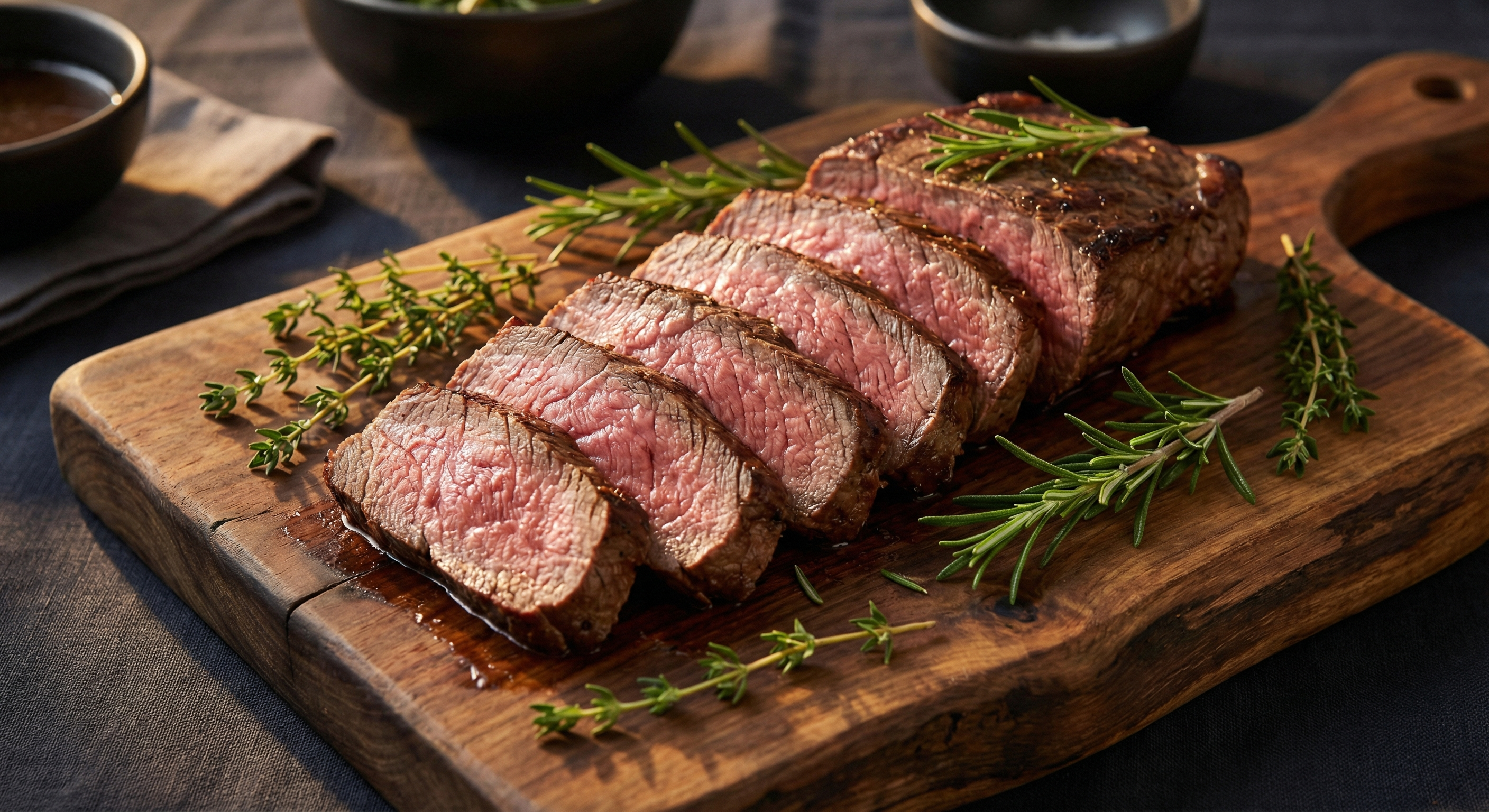
London Broil: A Method, Not a Cut
The term "London broil" originally described a preparation technique: marinate a lean steak, broil or grill it at high heat to medium-rare, then slice it thinly against the grain. That's it. The method was designed to make tougher, less expensive cuts taste like premium steak by breaking down some surface proteins through acid-based marinades and keeping the interior pink and tender through fast, high-heat cooking.
The earliest documented uses of "London broil" in American cookbooks date to the 1930s, though the technique may be older. Originally, it almost always referred to flank steak — a flat, fibrous muscle from the belly that responds beautifully to marination and thin slicing. But as flank steak prices rose through the 1970s and 80s, butchers and supermarkets started applying the "London broil" label to whatever lean, affordable cut they had available.
Today, a package labeled "London broil" at your grocery store could contain any of several different cuts. The USDA does not regulate or define "London broil" as a standardized cut name, which means retailers can use it however they want. This is why understanding the underlying muscle matters far more than trusting the label.
Which Cuts Get Sold as London Broil
The most common cuts sold under the London broil label come from the beef round — the large, lean hind leg of the cow. Here's what you're most likely to find:
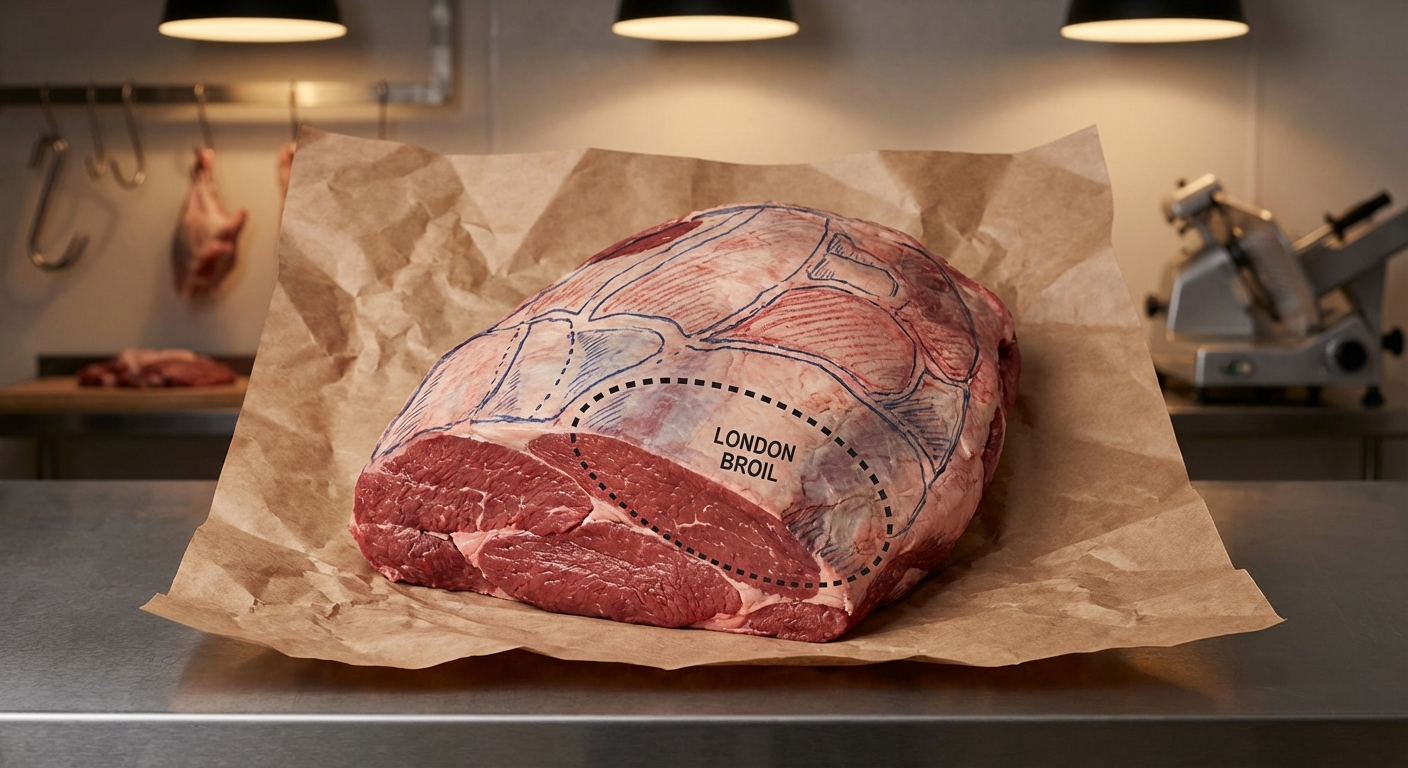
Top round is the single most common cut sold as London broil. It's a large, lean muscle from the inner thigh of the hind leg. Top round is moderately tender by round standards, with a fine grain and very little intramuscular fat. When properly marinated and sliced thin, it delivers clean, beefy flavor at a fraction of the cost of loin or rib cuts. Expect to pay $5–8 per pound for top round London broil.
Bottom round occasionally appears as London broil, though it's tougher and better suited to slow roasting. Bottom round comes from the outer thigh and has a coarser grain. If you see London broil that's noticeably thicker and rounder than usual, it may be bottom round — and you'll want to adjust your cooking approach accordingly.
Flank steak is the original London broil cut and still the best one for the technique. It's flat, about 3/4 to 1 inch thick, with prominent long muscle fibers that run lengthwise. Flank has more flavor than round cuts thanks to its higher fat content and proximity to the belly. However, flank steak now commands $10–14 per pound, so you'll rarely find it labeled simply as "London broil" anymore — retailers want to charge the flank steak premium.
Sirloin tip (also called "knuckle") sometimes gets the London broil treatment. It comes from the front of the round, where the round meets the sirloin, and has slightly more tenderness than pure round cuts. This is a decent option when you can identify it.
The key takeaway: always check beyond the label. Most packages will list the actual USDA cut name in smaller text somewhere — "top round London broil" or "flank steak London broil." If it just says "London broil" with no cut specified, ask your butcher what muscle it comes from. The cooking approach varies meaningfully between these cuts.
Why London Broil Gets a Bad Reputation
London broil is one of the most commonly overcooked cuts in America, and overcooking is the root of almost every complaint about it. Lean beef with minimal marbling has zero margin for error — there's no intramuscular fat to keep things moist if you push past medium. Cook a ribeye to medium-well and it's still reasonably juicy. Cook London broil to medium-well and you get shoe leather.
The other major mistake is slicing. London broil must be sliced thin, against the grain. Those long muscle fibers that run through round and flank cuts will feel like chewing rubber bands if you cut with the grain or leave slices too thick. Proper technique means identifying the grain direction, then slicing perpendicular to it at a slight angle, no more than 1/4 inch thick.
Skip the marinade and you're missing half the technique. The acid in a good marinade — vinegar, citrus, wine, or soy sauce — partially denatures surface proteins, creating a more tender exterior that contrasts with the firm interior. A marinade also adds flavor that lean beef desperately needs. London broil without marinade is like pasta without sauce — technically edible, but missing the point.
How to Marinate London Broil
A proper London broil marinade needs four components: acid, oil, aromatics, and salt. The acid tenderizes, oil carries fat-soluble flavors, aromatics add complexity, and salt seasons throughout.
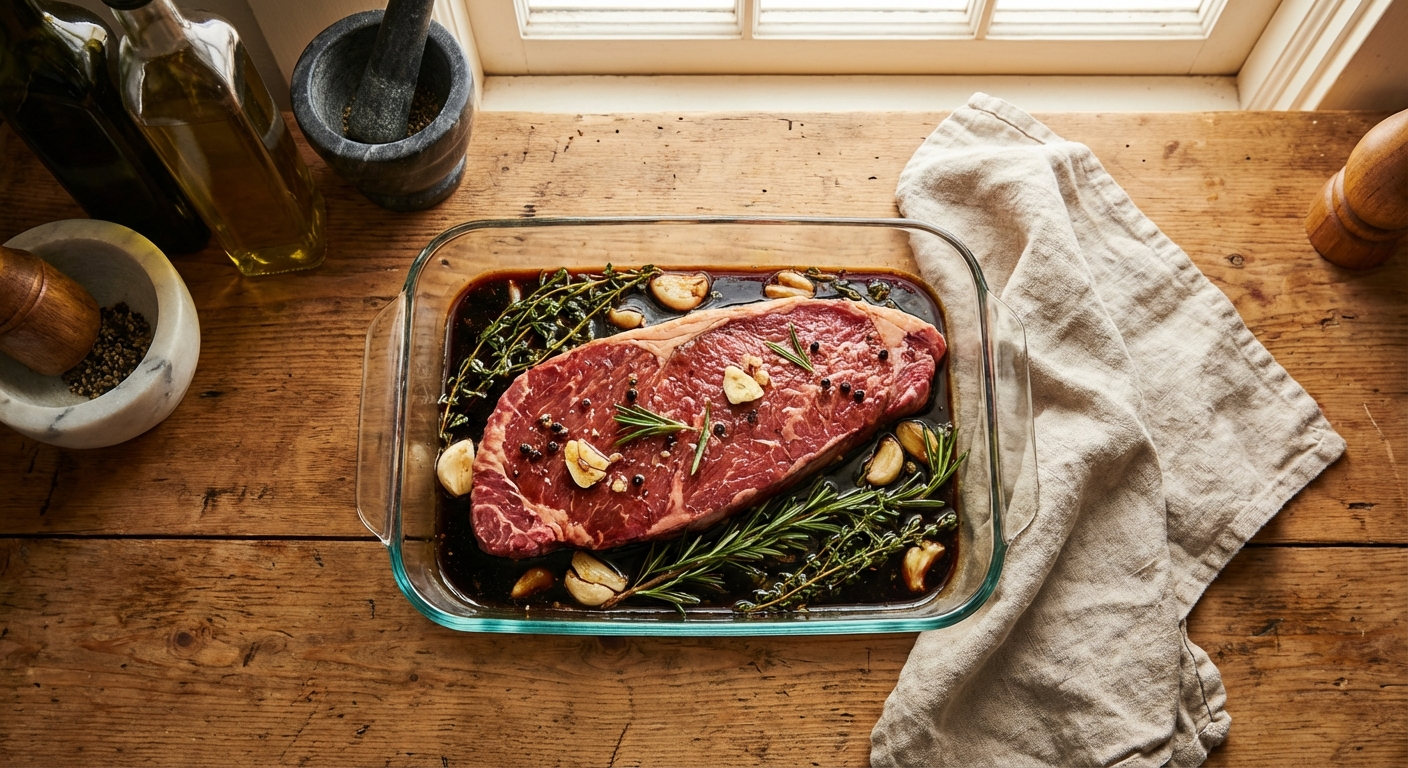
Here's a classic London broil marinade that works every time:
- 1/3 cup soy sauce — provides salt, umami, and enzymatic tenderization
- 1/4 cup olive oil — carries flavors and promotes browning
- 3 tablespoons red wine vinegar or balsamic vinegar — acid for tenderization
- 4 cloves garlic, minced — the non-negotiable aromatic
- 1 tablespoon Dijon mustard — emulsifies the marinade and adds bite
- 1 teaspoon freshly ground black pepper
- Fresh rosemary and thyme — a few sprigs of each
Whisk everything together, place the beef in a large zip-top bag or glass dish, pour the marinade over, and refrigerate. Minimum marination time is 4 hours. Overnight (8–12 hours) is ideal. Beyond 24 hours, the acid can break down surface texture to a mushy consistency, so don't overdo it.
Important: always marinate in the refrigerator, not on the counter. Acid marinades don't kill bacteria — they can actually create a more hospitable environment for pathogens at room temperature. Keep it cold.
Variations that work well: swap soy sauce for Worcestershire sauce, use lime juice instead of vinegar for a citrus profile, add a tablespoon of brown sugar for caramelization, or include a splash of bourbon for smoky depth. The formula is flexible as long as you maintain the acid-oil-aromatic-salt balance.
How to Cook London Broil
The golden rule: high heat, fast cook, medium-rare maximum. London broil should be cooked to an internal temperature of 130–135°F (54–57°C) and no higher. Let it rest 10 minutes after cooking — the internal temperature will rise another 5 degrees during rest.
Broiling (the Original Method)
Position your oven rack 4–5 inches from the broiler element. Preheat the broiler for 5 minutes. Remove the meat from the marinade and pat it thoroughly dry — surface moisture prevents browning. Place on a broiler pan or wire rack set over a sheet pan. Broil for 5–6 minutes per side for a 1-inch-thick top round cut. Use an instant-read thermometer; pull at 130°F.
Grilling
Preheat a gas grill to high (500°F+) or build a hot charcoal fire pushed to one side. Pat the meat dry, oil the grates, and place the London broil directly over the hottest part of the grill. Sear for 4–5 minutes per side without moving. If the exterior is well-charred but the interior needs more time, move to indirect heat and close the lid until the thermometer reads 130°F.
Pan Searing
Heat a cast iron skillet over high heat until it's smoking. Add a high-smoke-point oil (avocado or grapeseed). Sear the London broil for 4 minutes per side, pressing gently to ensure full contact with the pan. For thicker cuts (1.5 inches+), finish in a 400°F oven for 5–8 minutes after searing both sides.
Reverse Sear (Best for Thick Cuts)
For London broil over 1.5 inches thick, the reverse sear produces the most even cook. Set your oven to 250°F, place the meat on a wire rack over a sheet pan, and roast until the internal temperature hits 120°F (usually 25–35 minutes). Then sear in a ripping-hot cast iron skillet for 60–90 seconds per side. Rest 10 minutes before slicing.
How to Slice London Broil
Slicing is where most people ruin an otherwise well-cooked London broil. The technique is simple but non-negotiable:
- Identify the grain — look at the surface of the meat and find the direction the muscle fibers run. They'll appear as parallel lines.
- Cut perpendicular to the grain — your knife should cross those lines at a 90-degree angle (or a slight diagonal for wider slices).
- Slice thin — no more than 1/4 inch thick. Thinner slices mean shorter muscle fibers in each bite, which means tenderness.
- Use a sharp knife — a dull blade tears rather than cuts, compressing the meat and squeezing out juices. A 10-inch carving knife or chef's knife is ideal.
If you slice with the grain, every bite requires your teeth to break through long, intact muscle fibers — and lean beef fibers are tough. Slicing against the grain pre-cuts those fibers into short segments that fall apart easily when chewed. This single technique transforms London broil from tough to tender.
London Broil vs Similar Cuts
Understanding how London broil compares to other affordable beef options helps you make smarter decisions at the meat counter:
London broil vs flank steak: Flank steak was the original London broil cut and remains superior for the technique — more flavor, slightly more fat, and a more consistent shape. But flank costs 40–60% more than top round London broil. For everyday weeknight meals, top round London broil delivers 85% of the result at 60% of the cost.
London broil vs tri-tip: Tri-tip comes from the bottom sirloin and has more intramuscular fat than any round cut. It's more forgiving to cook and doesn't strictly require marination. But tri-tip is harder to find outside the West Coast and runs $8–12 per pound. If you have access, tri-tip is the better cut; if not, properly prepared London broil is the practical alternative.
London broil vs chuck roast: Chuck roast has more fat and connective tissue, making it ideal for slow braising — the opposite cooking method from London broil. Don't try to quick-cook chuck like London broil (it'll be tough) and don't try to braise London broil (it'll turn dry and stringy). Different cuts, different techniques, both excellent when matched correctly.
London broil vs sirloin steak: Sirloin sits between London broil and premium steaks in both price and quality. It has more marbling than round cuts, moderate tenderness, and can be cooked without marination. Sirloin is the upgrade when you want something better but can't justify ribeye prices.
Buying Tips
When shopping for London broil, look for these indicators of quality:
- Color: Deep cherry red, not brown or gray. Brown edges indicate oxidation from extended display time.
- Thickness: At least 1 inch, ideally 1.25–1.5 inches. Thinner pieces overcook before developing a proper sear.
- Grain visibility: You should be able to see the muscle fiber direction clearly — this tells you how to slice later.
- USDA grade: Choice grade London broil will have slightly more marbling than Select. The price difference is usually only $1–2 per pound and worth paying.
- Cut identification: Look for "top round" on the label. If it just says "London broil" with no cut specified, assume it's the cheapest available round and price accordingly.
London broil freezes well for up to 6 months in vacuum-sealed packaging. You can even freeze it in the marinade — as it thaws, it marinates simultaneously. This is an excellent make-ahead strategy: prep six bags on a Sunday, freeze them, and pull one out the night before you want to cook.
Frequently Asked Questions
Frequently Asked Questions
Is London broil a specific cut of beef?
No. London broil is a cooking method — marinate, broil or grill at high heat, and slice thin against the grain. Grocery stores adopted it as a retail label, most commonly applied to top round, bottom round, or flank steak. Always check the fine print on the package for the actual cut name.
Why is my London broil always tough?
The three most common causes are overcooking (anything past medium makes lean beef tough), skipping the marinade (acid-based marinades tenderize the surface), and slicing with the grain instead of against it. Cook to 130–135°F internal, marinate at least 4 hours, and slice thin against the grain.
How long should you marinate London broil?
Minimum 4 hours, ideally 8–12 hours overnight. Don't exceed 24 hours — prolonged acid exposure can make the surface mushy. Always marinate in the refrigerator, never at room temperature.
What temperature should London broil be cooked to?
Pull London broil off the heat at 130°F (54°C) for medium-rare. It will carry over to about 135°F during the 10-minute rest. Medium-rare is the maximum recommended doneness for lean cuts like top round — anything higher results in dry, tough meat.
Can you slow cook London broil?
While you can slow cook London broil, it's not ideal. Round cuts lack the collagen and intramuscular fat that make chuck and brisket great for braising. Slow-cooked London broil tends to turn dry and stringy rather than fork-tender. Stick to the original high-heat method for best results.
What's the best cut for London broil?
Flank steak is the traditional and best choice — more flavor and slightly more fat than round cuts. Top round is the most common and affordable option, delivering excellent results when properly marinated and sliced. Avoid bottom round if possible, as it's tougher and less consistent.
More Expert Guides
What Is Chateaubriand? (Cut, Cooking, & Best Sources)
Chateaubriand is a thick-cut roast from the center of the beef tenderloin, traditionally served for two. Learn what makes this classic French cut special and how to cook it.
14 min readWhat Is Round Steak? The Complete Guide to Beef's Most Versatile Budget Cut
Round steak comes from the rear leg of the cow — it's lean, affordable, and misunderstood. A master butcher breaks down every sub-cut, cooking method, and technique to turn this budget workhorse into genuinely delicious meals.
14 min readWhat Is Eye of Round? The Complete Butcher's Guide to This Lean Cut
Eye of round is one of the leanest, most affordable cuts in the entire beef case — and one of the most misunderstood. A butcher explains how to turn this budget-friendly roast into something genuinely delicious.