Sirloin vs Filet Mignon: Price, Flavor, and When to Choose Each
If you've ever stood at a butcher counter debating between sirloin and filet mignon, you're weighing two fundamentally different steak philosophies. Sirloin is the workhorse — a cut with robust beef flavor, moderate tenderness, and a price that won't wreck your grocery budget. Filet mignon is the luxury play — the most tender steak on the animal, with a delicate texture that melts on contact, but at two to three times the cost.
Neither is objectively "better." They solve different problems. Understanding where each cut comes from, how it eats, and what cooking methods bring out its strengths will help you pick the right steak for the right occasion — every time.
Where Each Cut Comes From
The location of a muscle on the cow determines almost everything about how it tastes and feels in your mouth. Sirloin and filet mignon come from neighboring but functionally different areas.
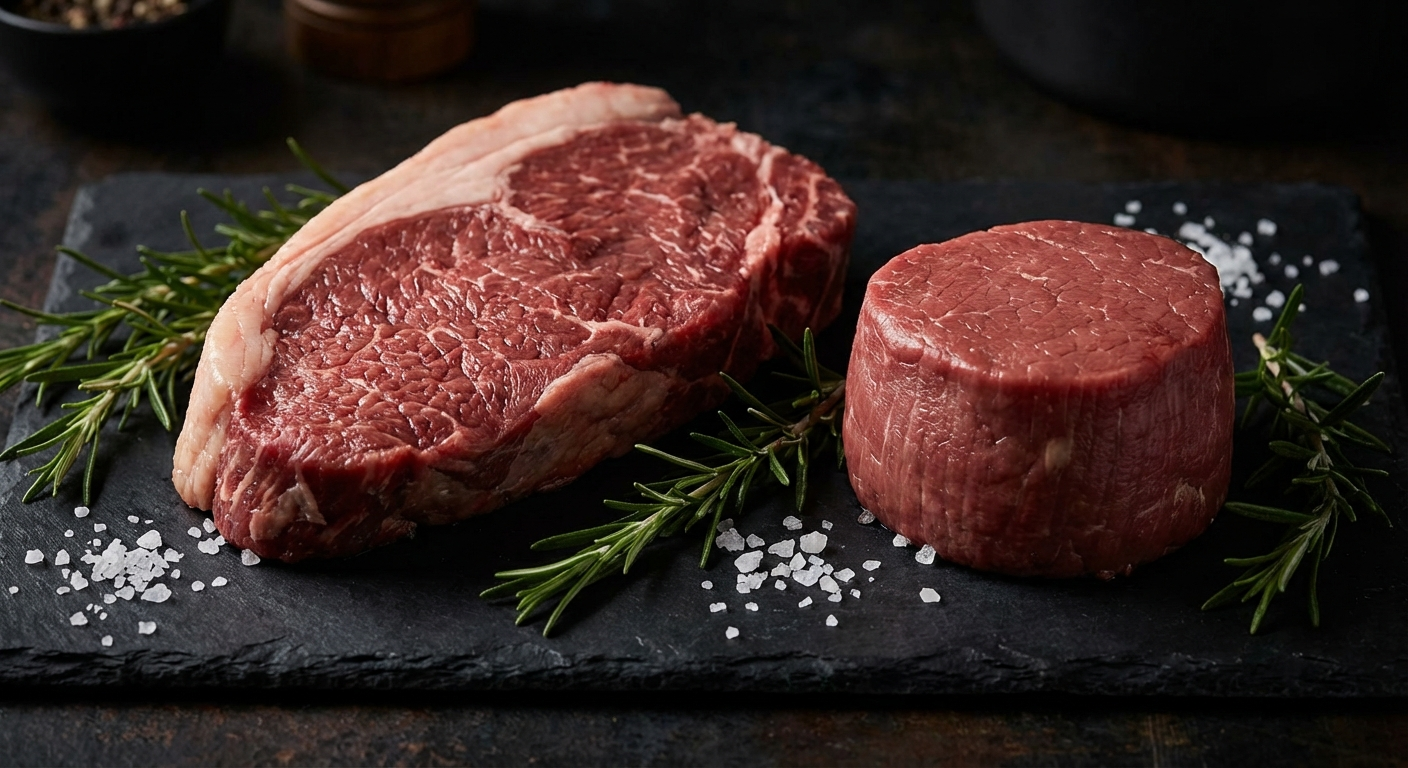
Sirloin comes from the sirloin primal, which sits behind the short loin and in front of the round (hindquarter). This is a transitional zone — the muscles here do moderate work supporting the animal's weight and movement. The most common retail cut is the top sirloin (IMPS #184), taken from the gluteus medius muscle. It's a large, lean cut with a visible grain and a thin external fat cap.
Filet mignon comes from the tenderloin (psoas major muscle), a long, narrow muscle that runs along the spine inside the loin primal. This muscle does almost no weight-bearing work — it assists with spinal flexion, a low-effort movement. The filet mignon specifically refers to the small, thick medallions cut from the narrow end of the tenderloin, typically 1.5 to 2.5 inches thick and 6 to 10 ounces each.
The tenderloin's position — tucked inside the carcass, protected from stress — is why filet mignon is so extraordinarily tender. Meanwhile, the sirloin muscles do real work, building the flavor-carrying muscle fibers and connective tissue that give the cut its characteristic beefy punch.
Tenderness Comparison
This is where the gap between these two cuts is most dramatic. In Warner-Bratzler shear force testing — the industry standard for measuring how much force it takes to bite through cooked beef — the tenderloin consistently ranks as the single most tender muscle in the entire carcass.
Filet mignon has a fine, almost velvety grain with minimal connective tissue. When cooked properly, it offers virtually zero resistance to your teeth. You can cut it with a butter knife — and that's not hyperbole. The muscle fibers are thin, tightly packed, and uniformly structured, creating a texture closer to foie gras than to a traditional steak.
Top sirloin is moderately tender — firmly in the middle of the tenderness spectrum. It has a coarser grain with more visible muscle fibers and slightly more connective tissue than loin cuts. It's chewier than a New York strip or ribeye, but far more tender than round or chuck cuts. Proper cooking and slicing against the grain significantly improve sirloin's perceived tenderness.
If tenderness is your primary criterion, filet mignon wins by a mile. It's not close.
Flavor and Marbling
Here's where things get interesting — because tenderness and flavor often work in opposite directions with beef.
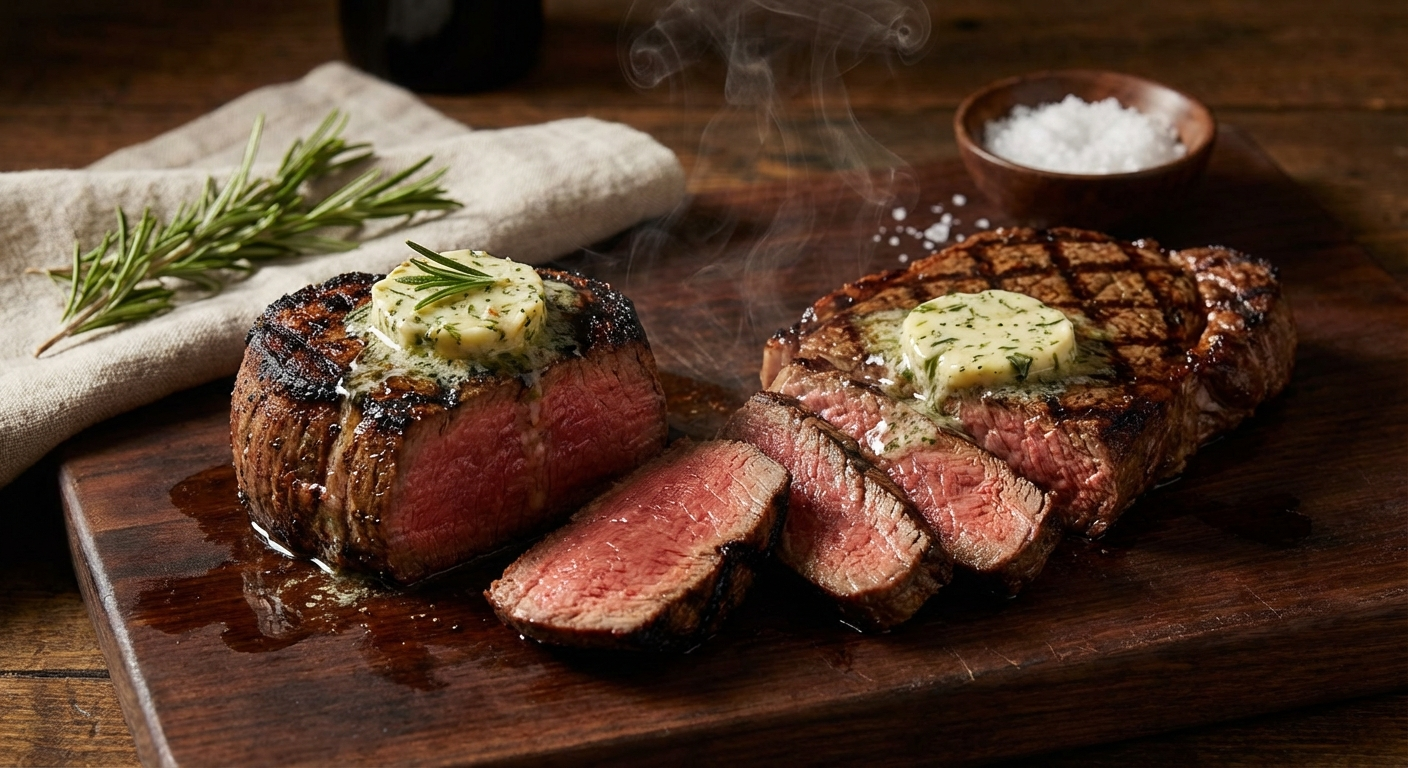
Top sirloin delivers significantly more beef flavor than filet mignon. The working muscles of the sirloin develop myoglobin (the protein responsible for "beefy" taste) and contain more flavor compounds from their active metabolic history. When you bite into a well-seared sirloin, you get a pronounced, savory, distinctly beefy experience. It's the steak that tastes most like beef.
Filet mignon has a milder, more delicate flavor. Because the tenderloin is a relatively inactive muscle, it doesn't develop the same concentration of flavor compounds. Marbling is typically moderate — filet mignon from USDA Choice carcasses carries less intramuscular fat than equivalent-grade ribeye or even strip steak. The flavor is subtle, clean, and almost buttery rather than aggressively beefy.
This is why filet mignon is so often served with sauces — béarnaise, peppercorn cream, red wine reduction, or compound butter. The mild base flavor is a canvas that absorbs and complements rich accompaniments. Sirloin rarely needs a sauce because the beef flavor carries the dish on its own.
In marbling terms, neither cut is heavily marbled compared to ribeye. But sirloin's leaner profile with more muscle fiber creates a different kind of satisfaction — it's the flavor density, not the fat, that makes it rewarding.
Price and Value
The price difference between sirloin and filet mignon is substantial and consistent across all market tiers.
- Top sirloin (USDA Choice): $8–14 per pound at retail. One of the best values in the steak case — you get genuine steak-quality beef at near-roast prices.
- Filet mignon (USDA Choice): $25–40 per pound at retail. At steakhouses, expect $45–75+ per plate for a 6-8 oz portion.
- Top sirloin (USDA Prime): $14–22 per pound. Prime sirloin is arguably the best value in premium beef — the extra marbling significantly improves both tenderness and flavor.
- Filet mignon (USDA Prime): $40–65 per pound. Prime filet represents the absolute top tier of beef tenderness.
The price gap comes down to supply. Each beef carcass yields roughly 4 to 6 pounds of tenderloin — and filet mignon steaks come only from the narrow end, further limiting supply. A single animal produces maybe four to six filet mignon portions. The same carcass yields 15 to 20 pounds of sirloin steaks. Scarcity drives the premium.
From a pure cost-per-serving perspective, sirloin delivers dramatically more value. A family of four can eat well-seasoned sirloin steaks for $15–20 total. The same dinner with filet mignon runs $50–80. If you're grilling for a crowd, sirloin is the rational choice every time.
Best Cooking Methods
The two cuts require different approaches to reach their full potential. What works beautifully for sirloin can ruin filet mignon, and vice versa.
Cooking Sirloin
Sirloin's moderate fat content and coarser grain respond best to high-heat methods that build a deep crust. The crust-to-interior ratio matters more with sirloin because the Maillard reaction creates flavor compounds that complement the already-robust beef taste.
- Grilling (best method): Sirloin was born for the grill. Direct high heat for 4–5 minutes per side over charcoal or gas at 500°F+. The external char adds smoky complexity to the beefy base. Pull at 130°F internal for medium-rare.
- Cast iron sear: Preheat until smoking. Sear 4 minutes per side, baste with butter in the last minute. Works well for thicker cuts (1.25 inches+).
- Reverse sear: Start in a 250°F oven until 120°F internal, then sear in cast iron. Ideal for thick-cut sirloin — ensures edge-to-edge medium-rare.
- Marinating: Sirloin takes to marinades extremely well. Its coarser grain absorbs flavors — soy sauce, garlic, citrus, and herbs can transform a good sirloin into something memorable. Marinate 2–8 hours.
Sirloin is also excellent sliced thin for fajitas, stir-fry, steak sandwiches, or salad toppers. Its firm texture holds up well to slicing and doesn't fall apart like more tender cuts.
Cooking Filet Mignon
Filet mignon's challenge is the opposite of sirloin's. The cut is already supremely tender — the goal is to add flavor and texture without overcooking the delicate interior.
- Pan sear + oven finish (best method): Sear in cast iron with high-smoke-point oil for 2 minutes per side, then transfer to a 400°F oven for 5–7 minutes. Pull at 128°F for medium-rare. This builds a flavorful crust while gently finishing the thick center.
- Sous vide: Set circulator to 130°F and cook for 1.5–2 hours. Finish with a 60-second sear per side. This method produces the most precise results with filet mignon's thick, cylindrical shape.
- Bacon-wrapped: Wrapping filet mignon in bacon adds the fat and smoky flavor the cut naturally lacks. Secure with butcher's twine, sear all sides, finish in oven. A classic steakhouse technique for a reason.
- Grilling: Works but requires more attention. Use a two-zone setup — sear over direct high heat, then move to indirect to finish. Filet's thickness and low fat content make it easy to char outside while leaving the center raw.
Never marinate filet mignon in acidic marinades — the delicate fibers break down quickly and turn mushy. If you want added flavor, use a dry rub, compound butter, or pan sauce.
Texture and Eating Experience
Beyond flavor and tenderness numbers, the actual experience of eating these steaks is dramatically different.
Eating filet mignon is a refined experience. Each bite yields immediately — there's almost no chewing required. The texture is smooth, uniform, and luxurious. It's the steak you serve at an anniversary dinner or a formal celebration. The portion is typically smaller (6–8 oz), and the mild flavor pairs with wine rather than competing with it.
Eating sirloin is a satisfying, substantial experience. There's real texture to engage with — you feel the muscle fibers, you get the chew that tells your brain you're eating steak. The bigger portion (8–12 oz) fills you up. The bold flavor stands up to chimichurri, bold red wines, or a loaded baked potato. It's a weeknight warrior, a backyard grill star, and a crowd-pleaser.
People who love filet mignon often care most about the sensation of tenderness. People who love sirloin often care most about the sensation of flavor and the satisfaction of a real steak experience. Neither preference is wrong — they're just different values.
When to Choose Sirloin
- Grilling for a group: Sirloin feeds a crowd without destroying the budget. Buy a whole top sirloin roast and cut your own steaks 1.25 inches thick.
- Weeknight dinners: Quick-cooking, forgiving, and flavorful. Season with salt and pepper, sear in 8 minutes, done.
- When you want beef flavor: If the taste of beef is what you're after, sirloin delivers more of it per dollar than almost any other steak.
- Steak salads, tacos, fajitas: Sirloin's firm texture holds up to slicing and tossing without falling apart.
- Marinades and rubs: Sirloin absorbs seasonings beautifully. Use it as a flavor vehicle.
When to Choose Filet Mignon
- Special occasions: Date night, birthday dinner, holidays. The tenderness creates a luxury experience.
- When tenderness matters most: For anyone who prioritizes melt-in-your-mouth texture over bold flavor.
- Sauce-based preparations: Beef Wellington, steak Diane, peppercorn-crusted with cream sauce — filet's mild flavor lets sauces shine.
- Smaller appetites: A 6 oz filet is rich, satisfying, and appropriately portioned without being overwhelming.
- Wine pairing dinners: Filet's subtle flavor complements rather than competes with fine wines.
Nutritional Comparison
Both cuts are relatively lean compared to heavily marbled steaks like ribeye. Here's how they compare per 6-ounce cooked serving:
- Top sirloin: ~310 calories, 46g protein, 13g fat. One of the highest protein-to-calorie ratios of any steak cut.
- Filet mignon: ~350 calories, 42g protein, 18g fat. Slightly more fat than sirloin despite the lean appearance — the fine marbling adds up.
Both cuts are excellent sources of iron, zinc, B12, and complete protein. For fitness-focused eaters maximizing protein per calorie, top sirloin has a slight edge. For overall nutritional balance with premium eating quality, both are solid choices.
Sirloin vs Filet Mignon: The Bottom Line
These two steaks represent different priorities, and the "right" choice depends entirely on what you value in a steak experience:
- Choose sirloin if you want bold beef flavor, good value, versatility, and a satisfying chew. It's the better everyday steak.
- Choose filet mignon if you want supreme tenderness, a refined eating experience, and you're willing to pay the premium for it. It's the better special-occasion steak.
Or do what smart steak lovers do: keep both in rotation. Sirloin three weeks out of four, filet mignon when the moment calls for something extraordinary. That's not a compromise — it's a strategy.
Frequently Asked Questions
Is sirloin or filet mignon more tender?
Filet mignon is significantly more tender — it's the single most tender cut on the entire animal. The tenderloin muscle does almost no work during the cow's life, resulting in extremely fine muscle fibers with minimal connective tissue. Sirloin is moderately tender but has a noticeably firmer, chewier texture.
Which has more flavor, sirloin or filet mignon?
Top sirloin has more intense, beefy flavor. The working muscles of the sirloin develop more myoglobin and flavor compounds. Filet mignon has a milder, more delicate taste — which is why it's often served with sauces like béarnaise or peppercorn cream to add flavor.
Why is filet mignon so expensive?
Supply is extremely limited. Each beef carcass produces only 4-6 pounds of tenderloin, and filet mignon comes from the narrowest end — yielding just four to six portions per animal. Combined with high demand from steakhouses, this scarcity drives prices to $25-40+ per pound retail.
Can I substitute sirloin for filet mignon in recipes?
It depends on the recipe. For grilled or pan-seared steak dishes, sirloin works as a more flavorful, budget-friendly alternative. For recipes that depend on extreme tenderness — like Beef Wellington or carpaccio — sirloin won't deliver the same texture. Consider the cooking method and whether tenderness or flavor matters more.
What's the best way to cook sirloin steak?
Grilling over high heat is the best method for sirloin — 4-5 minutes per side at 500°F+ builds a deep crust that complements the robust beef flavor. Cast iron searing and reverse searing also work well. Sirloin responds beautifully to marinades, unlike filet mignon.
Is sirloin the same as sirloin tip?
No. Top sirloin comes from the sirloin primal and is a genuine steak cut. Sirloin tip (also called knuckle) comes from the round primal and is a leaner, tougher cut better suited for roasting or slicing thin. Despite the similar name, they're different muscles with different qualities.
More Expert Guides
What Is Chateaubriand? (Cut, Cooking, & Best Sources)
Chateaubriand is a thick-cut roast from the center of the beef tenderloin, traditionally served for two. Learn what makes this classic French cut special and how to cook it.
14 min readWhat Is Round Steak? The Complete Guide to Beef's Most Versatile Budget Cut
Round steak comes from the rear leg of the cow — it's lean, affordable, and misunderstood. A master butcher breaks down every sub-cut, cooking method, and technique to turn this budget workhorse into genuinely delicious meals.
14 min readWhat Is Eye of Round? The Complete Butcher's Guide to This Lean Cut
Eye of round is one of the leanest, most affordable cuts in the entire beef case — and one of the most misunderstood. A butcher explains how to turn this budget-friendly roast into something genuinely delicious.