What Is Oxtail? A Butcher's Guide to the Most Underrated Cut
If you've ever had a bowl of oxtail soup that made you close your eyes and question every other beef dish you've eaten, you already know — oxtail is something special. It's one of the most intensely flavored, deeply satisfying cuts of beef, yet most home cooks have never bought one. That's a mistake worth correcting.
Oxtail was once considered offal — throwaway scraps destined for the stockpot. Today it commands premium prices at butcher shops and appears on the menus of high-end restaurants worldwide. The transformation from peasant food to prized ingredient tells you everything about what this cut delivers when you know how to cook it.
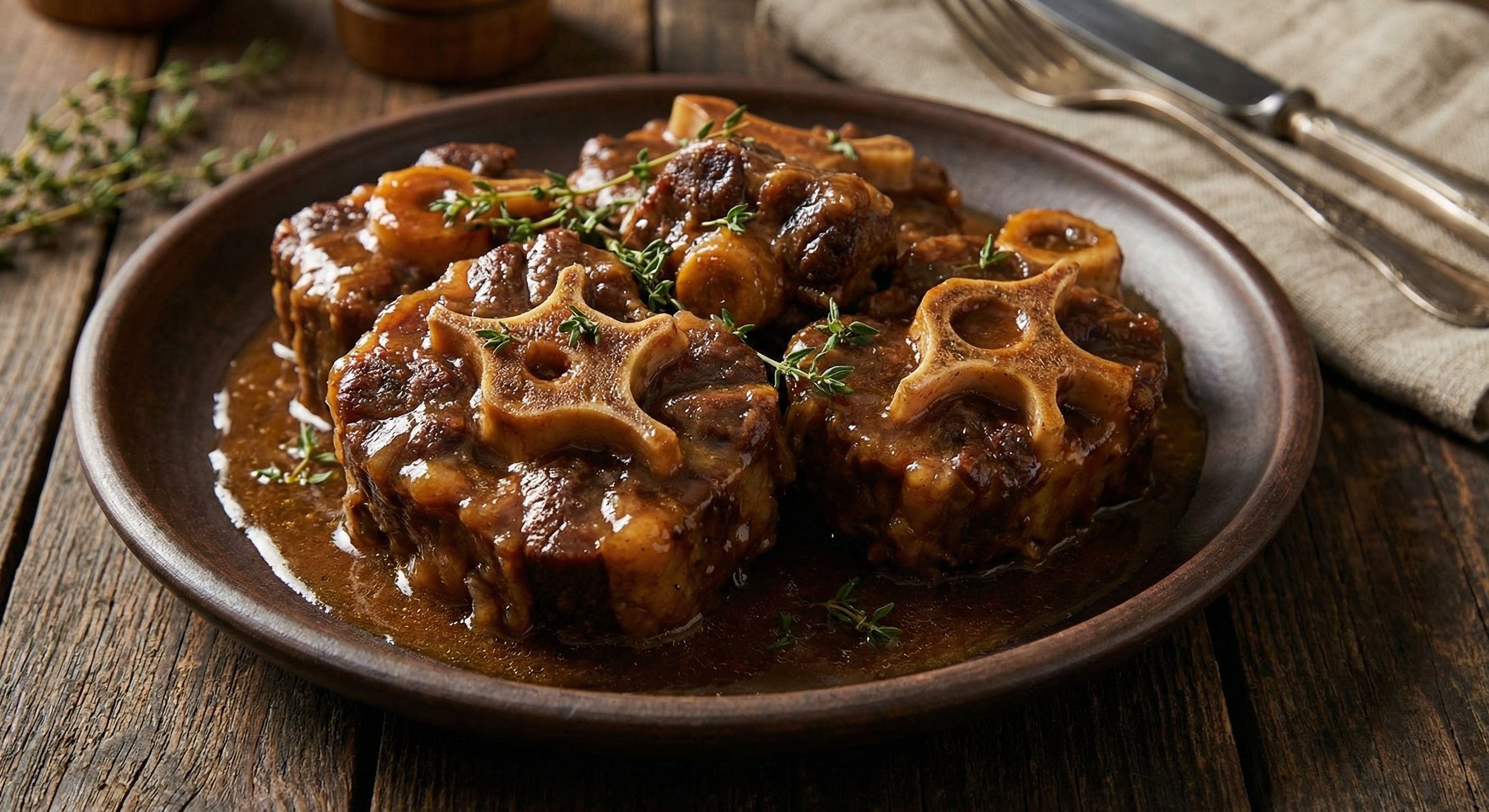
Where Oxtail Comes From on the Cow
Oxtail is exactly what the name suggests — the tail of the cow, cut into cross-sections typically 1.5 to 2 inches thick. The word "ox" is historical; it originally referred to the tail of a castrated bull (an ox) used as a draft animal, but today oxtail comes from any beef cattle regardless of sex.
A whole beef tail weighs between 7 and 10 pounds and tapers from a thick base near the hip to a thin, bony tip. When butchered, it yields about 8 to 12 cross-cut pieces of varying sizes. The thicker pieces near the base have the most meat and are the most desirable. The thinner tip pieces are mostly bone and connective tissue — still valuable for stock but less impressive on a plate.
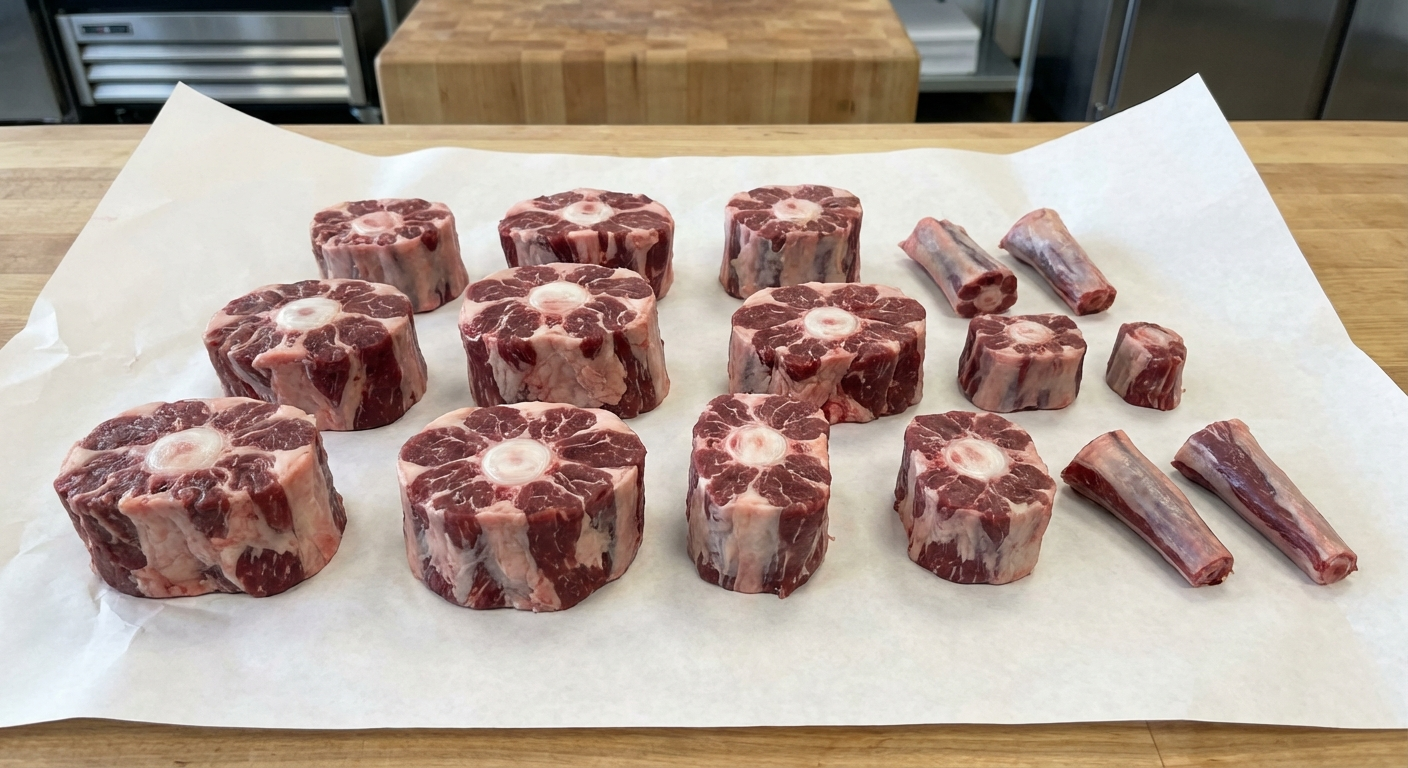
Each cross-section reveals a central vertebral bone surrounded by meat, fat, marrow, and connective tissue. That layered anatomy is what makes oxtail so special. The bone and marrow contribute body and richness to braising liquid. The connective tissue — loaded with collagen — melts into silky gelatin during slow cooking. And the meat itself, though lean, absorbs all that flavor and becomes impossibly tender.
Anatomically, the tail is an extension of the spinal column. The vertebrae get progressively smaller toward the tip, and the surrounding muscles are some of the hardest-working on the animal. That constant movement builds intense beefy flavor but also means the meat is naturally tough — which is why oxtail must be braised, not grilled.
Why Oxtail Is So Expensive
If you've priced oxtail recently, you might have experienced sticker shock. At $8 to $15 per pound (and sometimes higher at specialty butchers), oxtail costs more than many steaks. That seems counterintuitive for what was historically a cheap, unwanted cut. Several factors drive the price:
Limited supply per animal. Each cow has exactly one tail. A 1,200-pound steer yields maybe 7 pounds of oxtail — less than 1% of total carcass weight. Compare that to the hundreds of pounds of chuck, round, and loin cuts available. Oxtail is inherently scarce.
Global demand has surged. Oxtail is central to cuisines across the Caribbean (Jamaican oxtail stew), Korea (kkori gomtang), Italy (coda alla vaccinara), the Philippines (kare-kare), and many African traditions. As these cuisines gained mainstream popularity, demand outpaced the fixed supply. When a Korean restaurant and a Jamaican restaurant and a fine-dining chef are all competing for the same limited cut, prices rise.
The bone-to-meat ratio is high. When you buy a pound of oxtail, roughly 40-50% of that weight is bone. Your actual yield of edible meat is significantly less than what you'd get from a pound of chuck roast. Factor that in, and the effective price per pound of meat is even higher than the sticker price.
There's no substitute. You can swap a chuck roast for a round roast in a braise and get acceptable results. Nothing replicates what oxtail does — the gelatin, the marrow richness, the particular texture of the meat. That irreplaceability gives it pricing power.
What Makes Oxtail Taste So Good
Oxtail's flavor comes from a combination of factors that no other single cut delivers simultaneously:
Collagen and gelatin. The connective tissue surrounding oxtail vertebrae contains exceptionally high concentrations of collagen — the structural protein that converts to gelatin when heated above 160°F for extended periods. That gelatin gives braising liquid a rich, mouth-coating body that you can feel on your lips. It's the same quality that makes bone broth so prized, concentrated in one cut.
Bone marrow. The central vertebral bones contain marrow that slowly renders into the braising liquid, adding a buttery, mineral richness that deepens the overall flavor. Marrow fat carries flavor compounds differently than regular beef fat, which is why dishes made with marrow-rich cuts taste more complex.
Intense beef flavor from hard-working muscles. The tail muscles work constantly during the animal's life — every step, every swish. That constant use develops myoglobin (the protein responsible for deep red color) and builds complex flavor compounds through normal metabolic activity. Hard-working muscles taste beefier than sedentary ones. It's the same reason beef shank and cheeks have more flavor than tenderloin.
Intramuscular fat distribution. While oxtail meat is relatively lean compared to ribeye, the fat that exists is distributed in thin seams between the muscle fibers and connective tissue layers. During braising, this fat renders slowly and bastes the meat from within, keeping it moist while adding flavor.
How to Buy Oxtail
Buying oxtail well means knowing what to look for and where to shop:
Go to a butcher or ethnic grocery store. Major supermarkets often don't stock oxtail consistently. Caribbean, Korean, Filipino, and African grocery stores almost always carry it, often at better prices than mainstream retailers. A dedicated butcher shop will have it or can order it with a day's notice.
Look for thick, meaty pieces. The best pieces come from the base and middle of the tail — they'll be 2 to 3 inches in diameter with a visible ring of dark red meat around the central bone. Avoid packages dominated by thin tip pieces (under 1.5 inches across), which are mostly bone.
Check the color. Fresh oxtail should be deep red to burgundy with white to cream-colored fat. Avoid pieces that look brown, gray, or have yellowed fat — signs of age or poor handling. The bone should be white or pinkish, not discolored.
Buy more than you think you need. Plan on 1 to 1.5 pounds per person to account for the bone-to-meat ratio. For a dinner of four, buy at least 4 to 6 pounds. Leftover braised oxtail is arguably better the next day anyway — the gelatin sets and the flavors deepen overnight.
Frozen is fine. Oxtail freezes exceptionally well because the collagen and fat protect the meat from freezer damage. Many butchers and ethnic markets sell it frozen in 2-3 pound packages, which is a convenient way to keep it on hand.
How to Cook Oxtail
Oxtail requires low and slow cooking — there are no shortcuts. The collagen needs sustained heat above 160°F to convert to gelatin, and the tough muscle fibers need time to break down. Plan on 3 to 4 hours of braising time minimum.
The Essential Method: Braising
1. Season and sear. Pat the oxtail pieces dry and season generously with salt and pepper. Sear them in a heavy pot (Dutch oven is ideal) over high heat until deeply browned on all sides — about 3 to 4 minutes per side. This Maillard reaction builds a flavor foundation that carries through the entire braise. Don't skip this step and don't crowd the pot; work in batches.
2. Build aromatics. Remove the oxtail and soften diced onions, carrots, and celery in the rendered fat. Add garlic, tomato paste, and any spices appropriate to your cuisine. Deglaze with wine, beer, or stock, scraping up the fond from searing.
3. Braise low and slow. Return the oxtail to the pot, add enough liquid to come about two-thirds up the sides of the meat, bring to a simmer, then cover and transfer to a 300-325°F oven. Cook for 3 to 4 hours until the meat is falling-off-the-bone tender and the braising liquid has reduced and thickened from the dissolved gelatin.
4. Rest and defat. For the best results, cool the braise, refrigerate overnight, and skim the solidified fat cap the next day. Reheat gently. This overnight rest allows flavors to meld and makes defatting effortless — and the reheated version is always better than day-one.
Other Cooking Methods
Pressure cooker / Instant Pot: Reduces cooking time to 45-60 minutes under pressure. Sear first using the sauté function, then pressure cook on high. Results are good but slightly less rich than a traditional oven braise — the extended evaporation and reduction that happens in a Dutch oven concentrates flavors more effectively.
Slow cooker: 8 to 10 hours on low. Convenient but sear the oxtail in a separate pan first — slow cookers don't get hot enough for proper browning. The results are tender but the sauce will be thinner since there's minimal evaporation. You may need to reduce the braising liquid separately.
Classic Oxtail Dishes from Around the World
Oxtail appears in comfort food traditions across virtually every continent:
Jamaican oxtail stew — Braised with butter beans (lima beans), allspice, Scotch bonnet peppers, thyme, and soy sauce. One of the most celebrated dishes in Caribbean cuisine, served over rice and peas. The interplay of heat, sweet, and savory against the rich oxtail is extraordinary.
Kkori gomtang (Korean oxtail soup) — A clear, milky-white soup made by boiling oxtail for hours until the broth turns opaque from dissolved collagen. Served simply with salt, scallions, and rice. The broth is the star — intensely beefy and impossibly silky.
Coda alla vaccinara (Roman oxtail stew) — A Roman classic featuring oxtail braised with tomatoes, celery, pine nuts, raisins, and cocoa powder. The sweet-savory combination is typical of Roman cucina povera — poor people's cooking that turns cheap cuts into something magnificent.
Kare-kare (Filipino oxtail peanut stew) — Oxtail simmered in a thick peanut sauce with eggplant, string beans, and banana blossom. Served with fermented shrimp paste (bagoong) on the side. The richness of peanut butter against the gelatinous oxtail creates an unforgettable texture.
Rabo de toro (Spanish braised oxtail) — A traditional dish from Andalusia, originally made with bull's tail after bullfights. Braised with red wine, vegetables, and Spanish paprika. Often served during festivals and celebrations.
Oxtail vs. Other Braising Cuts
How does oxtail compare to other cuts commonly used for braising?
Oxtail vs. beef short ribs: Both are collagen-rich braising cuts, but oxtail produces a more gelatinous, body-rich sauce. Short ribs have more meat per piece and a higher fat content. Short ribs are meatier; oxtail is more about the sauce and the experience of eating around the bone.
Oxtail vs. beef shank: Shank (osso buco) is the closest comparison. Both have a central bone with marrow, surrounded by tough meat and connective tissue. Shank pieces are larger and meatier per cross-section. Oxtail has a higher collagen concentration, producing a richer broth. Cost per pound is usually similar.
Oxtail vs. chuck roast: Chuck is far more economical and yields more meat per pound. But chuck can't match oxtail's gelatin production or bone-marrow richness. For everyday braising, chuck wins on value. For a special occasion where the sauce matters as much as the meat, oxtail is worth the premium.
Frequently Asked Questions
Frequently Asked Questions
Is oxtail actually from an ox?
Not anymore. The name is historical — it originally referred to the tail of a castrated bull (ox) used as a working animal. Today, oxtail comes from any beef cattle and is simply the culinary term for cow tail, regardless of the animal's sex or breed.
Why is oxtail so expensive?
Each cow has only one tail yielding about 7 pounds of oxtail — less than 1% of the carcass. Combined with surging global demand from Caribbean, Korean, Filipino, and fine-dining cuisines, plus a 40-50% bone-to-meat ratio, oxtail commands premium prices despite its historical status as a budget cut.
Can you grill oxtail?
Technically yes, but it's not recommended as a primary cooking method. Oxtail is extremely tough when cooked with dry heat alone. Some recipes call for braising oxtail first until tender, then finishing briefly on a grill for smoky char — that approach works well. But raw oxtail straight on a grill will be unpleasantly chewy.
How long does oxtail take to cook?
Traditional braising takes 3 to 4 hours at 300-325°F. A pressure cooker reduces that to 45-60 minutes. A slow cooker takes 8-10 hours on low. The oxtail is done when the meat easily pulls away from the bone and the braising liquid has thickened from dissolved gelatin.
How much oxtail should I buy per person?
Plan on 1 to 1.5 pounds per person. About 40-50% of oxtail weight is bone, so your actual meat yield is roughly half of what you buy. For a dinner of four, purchase at least 4 to 6 pounds.
Can you freeze oxtail?
Yes, both raw and cooked oxtail freeze exceptionally well. Raw oxtail keeps for 6-9 months in the freezer. Braised oxtail in its sauce freezes beautifully for 3-4 months — the gelatin actually helps protect the meat during freezing and reheating.
More Expert Guides
What Is Chateaubriand? (Cut, Cooking, & Best Sources)
Chateaubriand is a thick-cut roast from the center of the beef tenderloin, traditionally served for two. Learn what makes this classic French cut special and how to cook it.
14 min readWhat Is Round Steak? The Complete Guide to Beef's Most Versatile Budget Cut
Round steak comes from the rear leg of the cow — it's lean, affordable, and misunderstood. A master butcher breaks down every sub-cut, cooking method, and technique to turn this budget workhorse into genuinely delicious meals.
14 min readWhat Is Eye of Round? The Complete Butcher's Guide to This Lean Cut
Eye of round is one of the leanest, most affordable cuts in the entire beef case — and one of the most misunderstood. A butcher explains how to turn this budget-friendly roast into something genuinely delicious.