What Is Shaved Beef? Cuts, Uses & How to Shave Steak at Home
Walk through any grocery store deli section and you'll find packages of shaved beef — paper-thin slices of steak rolled up and ready to cook. It's the backbone of Philly cheesesteaks, the secret to fast weeknight stir-fries, and the key to Korean bulgogi. But most people have no idea what they're actually buying.
Here's the thing: shaved beef isn't a specific cut of meat. It's a preparation method — any cut of beef sliced thin enough qualifies. That means the quality, flavor, and tenderness of your shaved beef depends entirely on which cut it started as and how it was sliced. Understanding that distinction is the difference between a transcendent cheesesteak and a chewy, flavorless mess.
After three decades of breaking down beef, I can tell you that shaved beef is one of the smartest ways to stretch your dollar and cook faster. You just need to know what to look for.
What Exactly Is Shaved Beef?
Shaved beef is any cut of beef that has been sliced into very thin pieces, typically between 1/16 and 1/8 inch thick. At that thickness, the slices are nearly translucent and cook in seconds. You'll also see it labeled as shaved steak, beef shavings, sandwich steak, steak-ums, or ribeye shavings depending on where you shop.
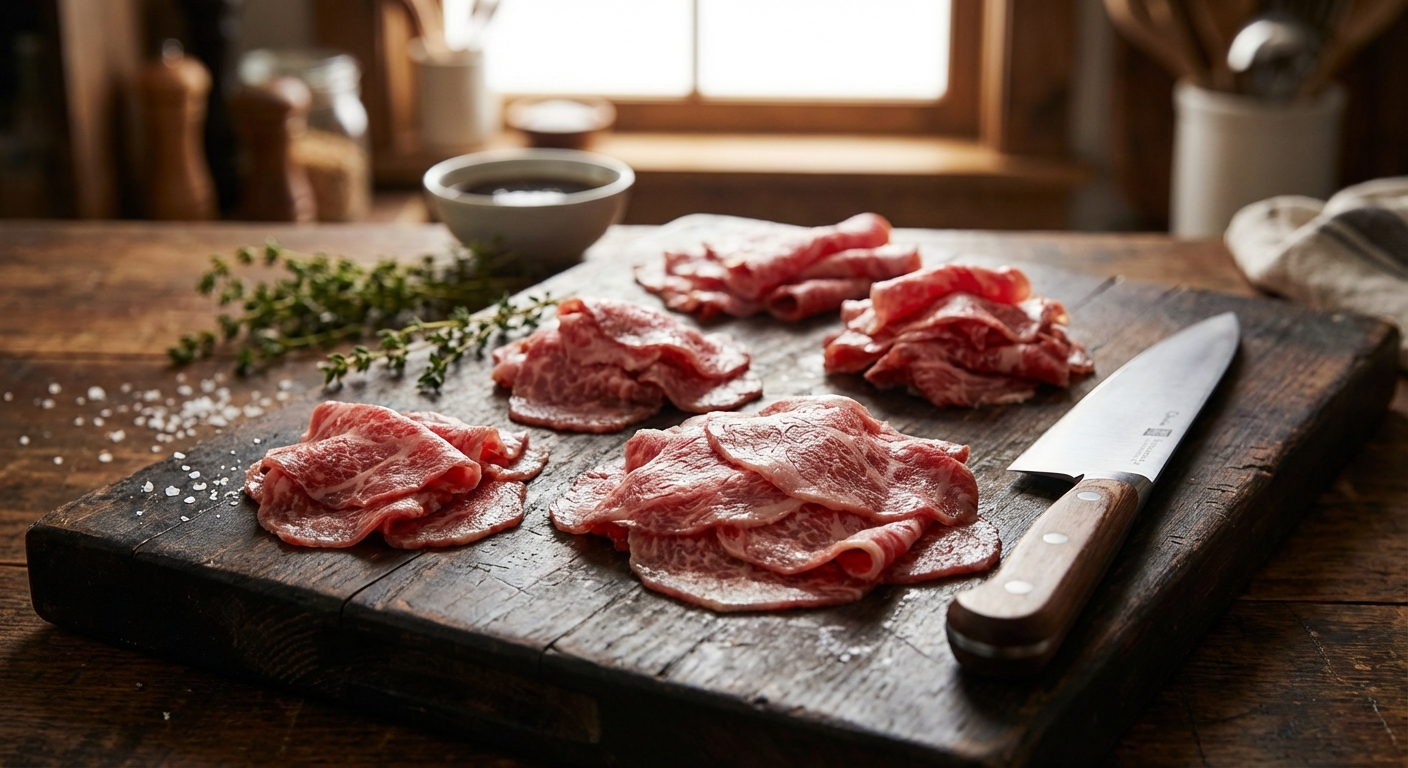
The commercial process is straightforward. Butchers or processors partially freeze a piece of beef — just enough to firm it up without turning it into a solid block — then run it through a mechanical slicer set to the thinnest possible setting. The partial freezing is critical because it gives the meat enough rigidity to slice cleanly rather than tearing or bunching.
What makes shaved beef special isn't just convenience. The extreme thinness fundamentally changes the eating experience. Tough connective tissue that would require hours of braising to break down becomes irrelevant when sliced this thin. Muscle fibers that would fight your teeth in a thick steak simply fall apart. This is why shaved beef can make cheap, tough cuts taste tender and luxurious.
Best Cuts of Beef for Shaving
Not all cuts are created equal when it comes to shaving. Here's what actually works best, ranked by the balance of flavor, cost, and texture.
Skirt Steak
This is the go-to for shaved beef, and for good reason. Skirt steak has intense beefy flavor from its loose grain and generous intramuscular fat. The main knock against skirt steak — its toughness from long muscle fibers — disappears completely when shaved against the grain. You get all the flavor with none of the chew. It's also the traditional cut for Korean bulgogi and fajitas.
Flank Steak
Similar to skirt steak but leaner and slightly more uniform in shape, making it easier to slice consistently. Flank steak has excellent beef flavor and a very pronounced grain, which means slicing against it thin enough creates an incredibly tender result. It's typically cheaper than skirt steak too, making it ideal for bulk shaving.
Ribeye
If you want the most luxurious shaved beef possible, ribeye is the answer. The generous marbling melts when it hits heat, creating rich, buttery shavings that are almost impossible to overcook. The trade-off is cost — you're paying premium prices for meat you're going to slice thin. Many grocery stores sell "ribeye shavings" specifically, which are often trimmed from the edges of ribeye roasts that would otherwise go to waste. Those are a great value.
Top Round
This is what most commercial shaved beef packages contain, and it's a perfectly good option. Top round is lean and affordable, with a mild flavor that works well in heavily seasoned applications like cheesesteaks or stir-fries. It can dry out if overcooked, but since shaved beef cooks so quickly, that's rarely an issue.
Sirloin
A solid middle ground between the richness of ribeye and the economy of top round. Sirloin has moderate marbling, good beef flavor, and a reasonable price point. It shaves well and cooks evenly. If you're not sure which cut to buy, sirloin is a safe bet.
Chuck Eye
An underrated option. Chuck eye has excellent marbling — it's sometimes called "the poor man's ribeye" — and shaving it thin mitigates the connective tissue that makes chuck cuts better suited to braising. The flavor is outstanding, and the price is usually 30-40% less than actual ribeye.
How to Shave Beef at Home
You don't need a commercial meat slicer to get great results at home. The key is partial freezing and a sharp knife.
The Partial Freeze Method
- Start with a clean, trimmed piece of beef. Remove any silverskin or excess external fat. A piece between 1 and 2 pounds is easiest to work with.
- Wrap tightly in plastic wrap and place in the freezer for 45 minutes to 1.5 hours. You want the meat firm but not frozen solid — it should give slightly when pressed with your finger, like a very cold stick of butter.
- Use your sharpest knife. A long, thin slicing knife works best, but a sharp chef's knife will do. The blade needs to glide through the meat, not compress it.
- Slice against the grain at the thinnest angle you can manage. Aim for 1/8 inch or thinner. Angling your knife at about 30 degrees to the cutting board (rather than straight down) helps create wider, thinner slices.
- Work quickly. The meat warms up as you handle it, so slice what you need and return the rest to the freezer if necessary.
Tips for Thinner Slices
- Sharpen your knife first. A dull knife will tear the meat instead of slicing cleanly. This is non-negotiable.
- Slice with long, smooth strokes rather than sawing back and forth.
- Flatten and separate slices as you cut. Stack them on parchment paper between layers if you're prepping ahead.
- If you own a mandoline with a meat setting, use it. Some mandolines can handle semi-frozen meat and produce remarkably even slices.
Shaved Beef vs Other Thin-Cut Preparations
Shaved beef gets confused with several other preparations. Here's how they differ.
Shaved Beef vs Carpaccio
Carpaccio is raw beef sliced paper-thin and served uncooked, typically from tenderloin or eye of round. Shaved beef is meant to be cooked. Both are sliced thin, but carpaccio requires higher-grade, sashimi-quality beef and careful handling for food safety.
Shaved Beef vs Beef Jerky Slices
Jerky is sliced thin and then dehydrated and cured. Shaved beef is fresh, raw, and ready to cook immediately. The slicing thickness is similar, but the end products couldn't be more different.
Shaved Beef vs Deli Roast Beef
Deli roast beef is cooked first, then sliced thin on a commercial slicer. Shaved beef is raw, sliced thin, and then cooked. The distinction matters because shaved beef develops a seared crust and caramelized edges that pre-cooked deli meat can never achieve.
Shaved Beef vs Sliced Steak
The difference is purely thickness. Sliced steak is typically 1/4 inch or thicker — thin enough for quick cooking but thick enough to retain a distinct steak texture. Shaved beef is thinner than 1/8 inch, which fundamentally changes how it cooks and eats. Shaved beef curls, crisps at the edges, and melds together, while sliced steak maintains individual piece identity.
Best Ways to Cook Shaved Beef
The golden rule: high heat, fast cooking, small batches. Shaved beef's worst enemy is overcrowding the pan, which causes it to steam instead of sear.
Philly Cheesesteak
The classic application. Heat a flat griddle or large cast iron skillet until smoking hot. Add shaved beef in a single layer — you might need multiple batches. Season with salt and pepper, let it sear for 60-90 seconds without moving it, then chop and flip with a spatula. Add provolone or American cheese on top, let it melt, scoop onto a hoagie roll. The entire cooking process takes under 3 minutes.
Korean Bulgogi
Marinate shaved beef (ideally from skirt steak or ribeye) in a mixture of soy sauce, sesame oil, pear juice, garlic, ginger, and a touch of sugar for at least 30 minutes. Cook on the hottest possible surface — a charcoal grill, cast iron, or if you have one, a Korean barbecue table grill. The thin slices caramelize in the marinade almost instantly, creating those signature crispy-sweet edges.
Stir-Fry
Shaved beef is the fastest protein for stir-fry because it requires almost no cooking time. Sear it first in a screaming hot wok, remove it, cook your vegetables, then toss the beef back in at the last second. This prevents overcooking. Works with any stir-fry sauce — oyster sauce, black bean, garlic ginger, Szechuan chili.
Italian Beef Sandwiches
Chicago's answer to the Philly cheesesteak. Shaved beef is simmered in seasoned beef broth with Italian spices (oregano, basil, garlic, red pepper flakes, giardiniera peppers). The thin slices absorb the broth like a sponge. Pile onto Italian bread and dip — or "drag" — the whole sandwich through the jus.
Beef and Broccoli
The Chinese-American takeout classic works brilliantly with shaved beef. Toss the shavings with a little cornstarch before cooking for a velveted texture, sear quickly, and combine with blanched broccoli and a soy-oyster sauce glaze. Faster than delivery.
How to Store Shaved Beef
Fresh shaved beef is more perishable than whole cuts because the increased surface area exposes more meat to air and bacteria. Handle it accordingly.
- Refrigerator: Use within 1-2 days of purchase or slicing. Keep it in the coldest part of your fridge (usually the back of the bottom shelf), tightly wrapped.
- Freezer: Shaved beef freezes exceptionally well. Spread slices in a single layer on a parchment-lined sheet pan, freeze for 1 hour until solid, then transfer to a freezer bag. This prevents the slices from freezing into one solid clump. Stored this way, it lasts 3-4 months.
- Thawing: Move frozen shaved beef to the refrigerator overnight. Because the slices are so thin, they thaw much faster than whole cuts — usually 4-6 hours in the fridge is enough. In a pinch, you can cook directly from frozen in a very hot pan, though you'll sacrifice some sear quality.
What to Look for When Buying Shaved Beef
Whether you're buying pre-packaged shaved beef or asking your butcher to slice it fresh, keep these guidelines in mind.
- Check the cut. The label should tell you which cut was used. Ribeye and sirloin shavings are premium; top round and bottom round are budget. Avoid packages that just say "beef" without specifying the cut — you have no idea what you're getting.
- Look at the color. Fresh shaved beef should be bright cherry red. Browning isn't necessarily bad (it's just oxidation from air exposure), but gray or green discoloration means it's past its prime.
- Check for even thickness. Good shaved beef is uniformly thin. If some slices are paper-thin and others are 1/4 inch thick, the batch will cook unevenly.
- Smell it. Fresh beef should smell clean and slightly metallic. Any sour, ammonia, or off odors mean it's spoiled.
- Ask the butcher. Most butcher counters will shave any cut to order if you ask. This is the best option because you control the cut, thickness, and freshness. Ask them to slice it on the thinnest setting of their deli slicer after a 30-minute freeze.
Cost Comparison: Shaved Beef by Cut
One of the smartest things about shaved beef is that it lets cheap cuts punch above their weight. Here's what you can expect to pay (prices as of early 2026, varying by region).
- Top round shavings: $5-7/lb — the budget king
- Flank steak shavings: $8-11/lb — great value for the flavor
- Skirt steak shavings: $10-14/lb — premium flavor, moderate cost
- Sirloin shavings: $9-12/lb — solid all-arounder
- Chuck eye shavings: $7-10/lb — best marbling per dollar
- Ribeye shavings: $14-20/lb — the luxury option
Keep in mind that shaved beef has virtually no waste. With whole steaks, you lose weight to trimming, bones, and the inevitable bite that's too fatty or too tough. Shaved beef is 100% edible, which means the per-serving cost is often lower than it looks on the price tag.
Frequently Asked Questions
Frequently Asked Questions
Is shaved beef the same as ground beef?
No. Ground beef is beef that has been passed through a grinder, breaking down the muscle structure entirely. Shaved beef is intact muscle tissue sliced very thin. They cook differently, have different textures, and work in different recipes. You can substitute shaved beef for ground beef in some applications (like tacos), but the result will be quite different.
Can you eat shaved beef raw?
While beef carpaccio is served raw, standard shaved beef from the grocery store is not intended to be eaten raw. If you want raw beef, buy sashimi-grade tenderloin or eye of round from a trusted butcher and slice it yourself. Standard shaved beef packages have been handled on commercial equipment and should always be cooked.
What is the best thickness for shaved beef?
For most applications, aim for 1/16 to 1/8 inch (about 1.5-3mm). Cheesesteaks work best at the thinner end, while stir-fry and bulgogi can go slightly thicker. If you can see light through the slice when you hold it up, you are in the right range.
How long does shaved beef take to cook?
On high heat, shaved beef cooks in 60-90 seconds per side. Total cooking time is typically 2-3 minutes. Because it is so thin, the margin between perfectly cooked and overcooked is small — stay by the stove and pull it off heat as soon as it loses its raw pink color.
Can you make shaved beef without a meat slicer?
Absolutely. Partially freeze the beef for 45 minutes to 1.5 hours until firm but not solid, then use a very sharp knife to slice as thinly as possible against the grain. You will not get slices quite as thin as a commercial slicer, but for home cooking the result is excellent.
More Expert Guides
What Is Chateaubriand? (Cut, Cooking, & Best Sources)
Chateaubriand is a thick-cut roast from the center of the beef tenderloin, traditionally served for two. Learn what makes this classic French cut special and how to cook it.
14 min readWhat Is Round Steak? The Complete Guide to Beef's Most Versatile Budget Cut
Round steak comes from the rear leg of the cow — it's lean, affordable, and misunderstood. A master butcher breaks down every sub-cut, cooking method, and technique to turn this budget workhorse into genuinely delicious meals.
14 min readWhat Is Eye of Round? The Complete Butcher's Guide to This Lean Cut
Eye of round is one of the leanest, most affordable cuts in the entire beef case — and one of the most misunderstood. A butcher explains how to turn this budget-friendly roast into something genuinely delicious.