What Is Round Steak? The Complete Guide to Beef's Most Versatile Budget Cut
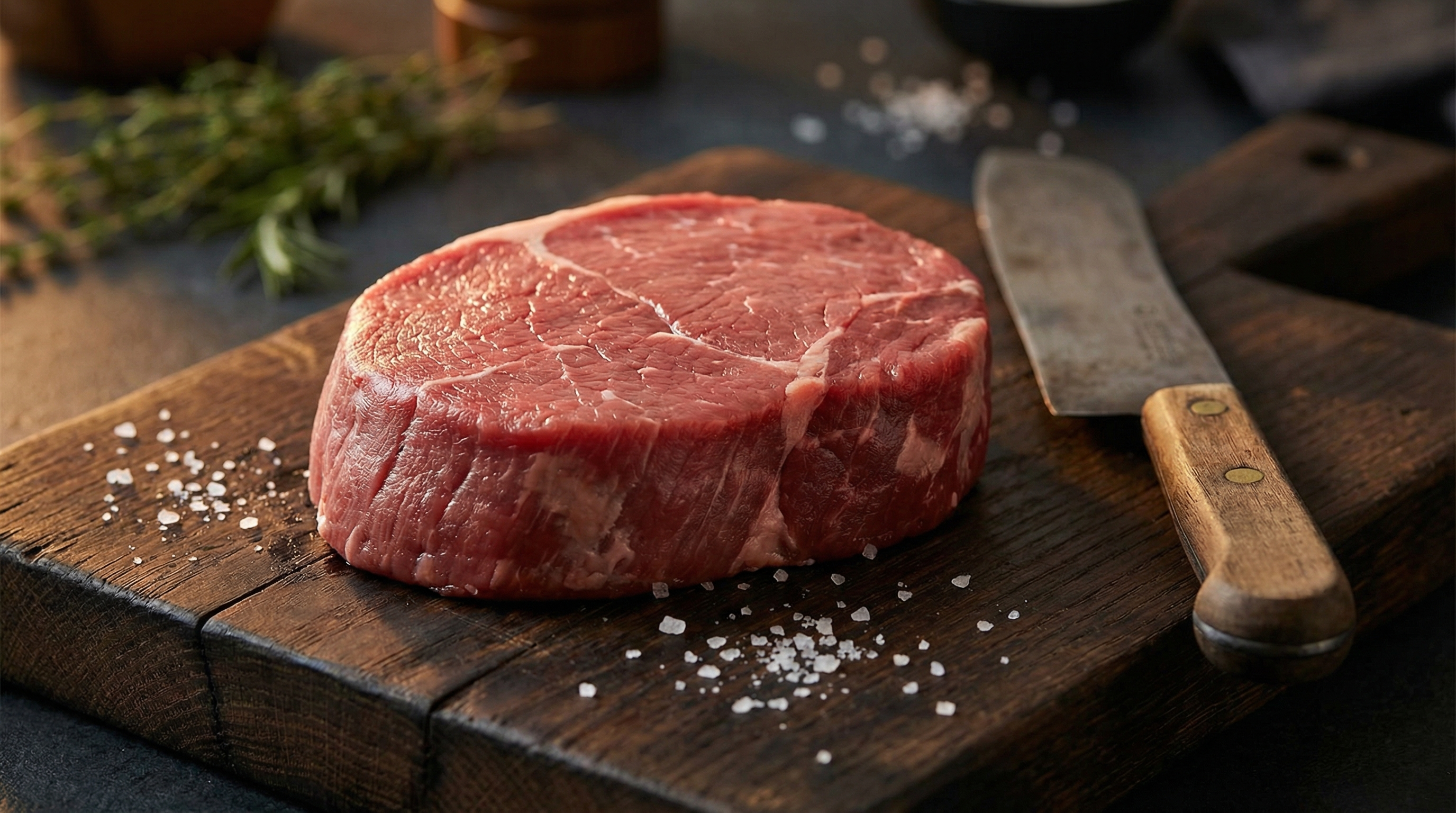
Walk into any grocery store in America and you'll find it sitting quietly in the meat case, usually on the bottom shelf, priced at half of what the ribeyes and strips above it cost. It won't win any beauty contests. There's no dramatic marbling, no Instagram-worthy fat cap, no fancy butcher shop name.
That cut is round steak, and it's one of the most misunderstood pieces of beef in the entire case. Millions of home cooks buy it because it's affordable, take it home, cook it like a regular steak, and end up chewing through something that feels like a leather belt. Then they never buy it again.
That's a mistake. After three decades behind the cutting block, I can tell you that round steak isn't a bad cut — it's a badly cooked cut. Treat it right, and it produces Swiss steak that melts in your mouth, beef jerky with perfect chew, stir-fry that rivals your favorite takeout, and Sunday pot roast that fills the whole house with the kind of smell that makes neighbors jealous.
Let me show you everything you need to know about this workhorse of the beef world.
Where Round Steak Comes From on the Cow
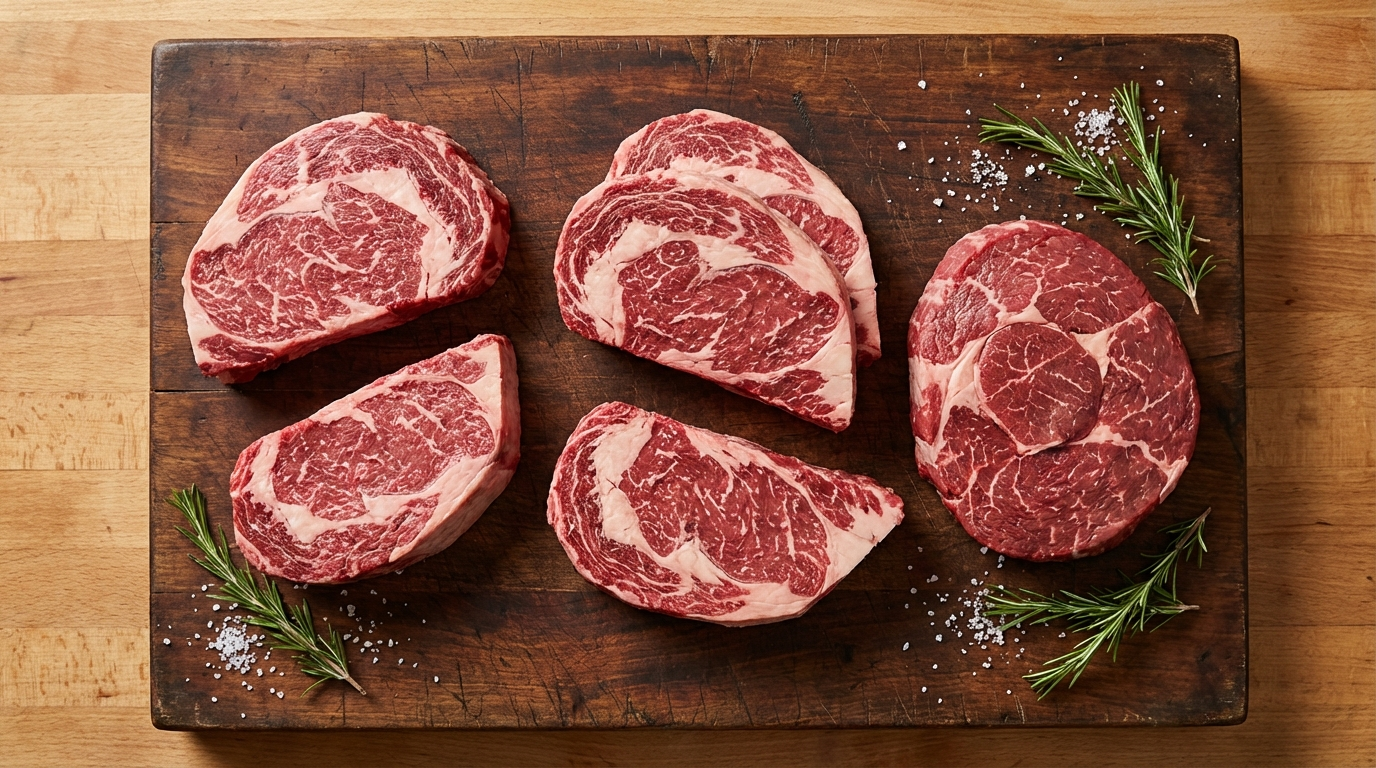
The round is one of the eight primal cuts of beef. It encompasses the entire rear leg and rump of the cow — everything from the hip bone down to the knee joint. On a 1,200-pound steer, the round primal accounts for roughly 22 to 24 percent of the carcass weight, making it the single largest primal cut on the animal.
Think about what those rear legs do all day. They propel a half-ton animal forward, support its weight when it stands, push it uphill. These are working muscles — lean, dense, and loaded with connective tissue. That's what defines round steak: lots of protein, very little intramuscular fat, and tough connective fibers that require the right cooking technique to break down.
When butchers break down the round primal, they divide it into several sub-cuts, each with slightly different characteristics. The main ones you'll see at retail are top round, bottom round, and eye of round. Understanding which one you're buying is the first step to cooking it well.
The Three Main Sub-Cuts of Round Steak
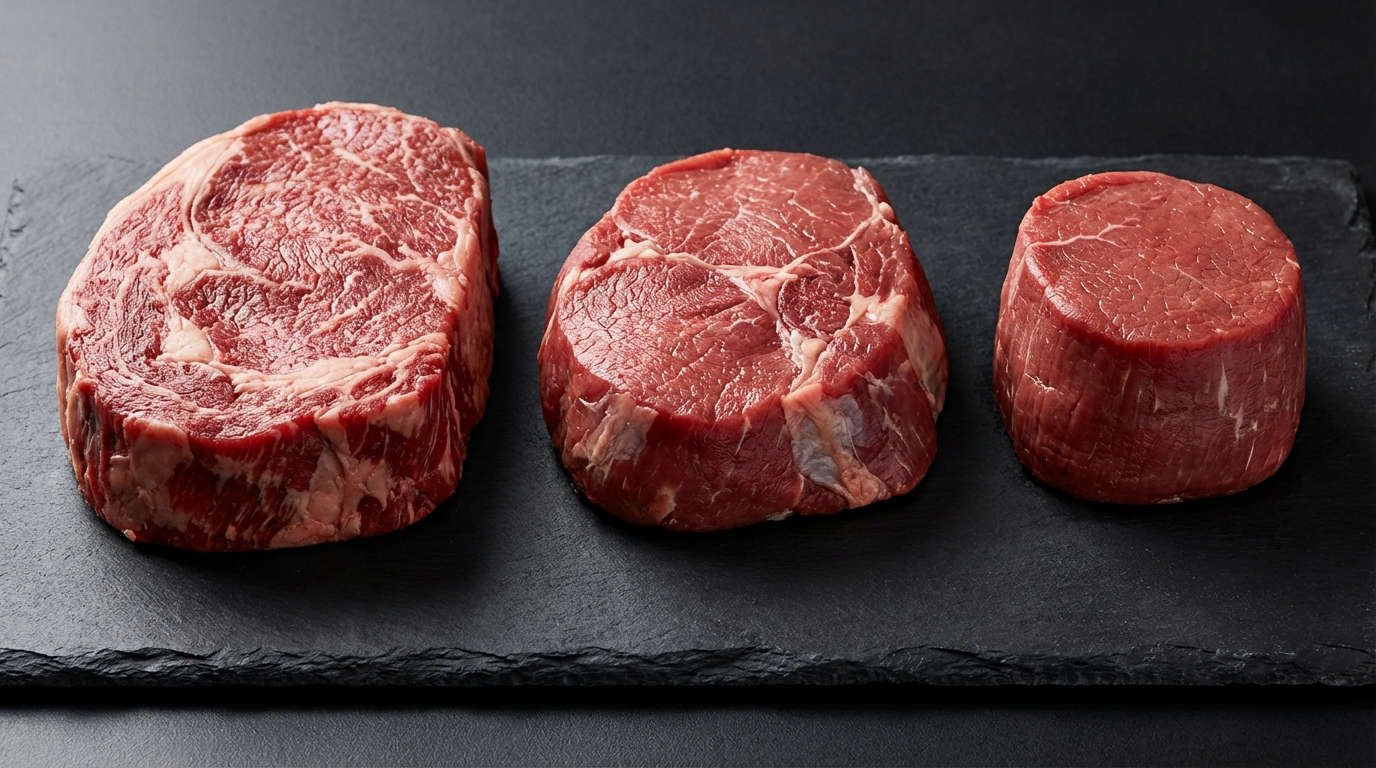
Not all round steak is created equal. The name "round steak" is actually an umbrella term that covers several distinct muscles from the rear leg. Each one has different tenderness, flavor, and best cooking applications. Here's what you need to know about each.
Top Round (Inside Round)
The top round is the most tender sub-cut from the round primal, which is why it sits at the top of the hierarchy. It comes from the inner (medial) portion of the rear leg — the muscle on the inside of the thigh. Because this muscle does slightly less work than the outer leg muscles, it develops less connective tissue and stays relatively tender by round standards.
Top round is what most delis use for their roast beef. It's also the preferred cut for London broil (though that's technically a cooking method, not a cut), and it's the go-to for homemade beef jerky because of its lean, uniform grain structure.
- Tenderness: Most tender of the three (but still tougher than loin or rib cuts)
- Fat content: Very lean — approximately 4g fat per 4-oz serving
- Best uses: London broil, roast beef, stir-fry, beef jerky, quick-sear steaks (if sliced thin)
- Typical weight: 15–20 pounds as a whole roast
Bottom Round (Outside Round)
The bottom round comes from the outer (lateral) portion of the rear leg. It works harder than the top round, which makes it slightly tougher with more connective tissue running through the grain. It's a bigger muscle group overall and typically costs a bit less per pound than top round.
Bottom round is the traditional choice for pot roasts and rump roasts. It has just enough connective tissue to break down beautifully during long, slow cooking, but not so much that it becomes stringy or falls apart excessively. It's the Goldilocks of braising cuts from the round.
- Tenderness: Medium — tougher than top round, needs moist-heat cooking
- Fat content: Lean — approximately 6g fat per 4-oz serving
- Best uses: Pot roast, Swiss steak, braised beef, corned beef (bottom round flat)
- Typical weight: 14–18 pounds as a whole roast
Eye of Round
The eye of round is a small, oval-shaped muscle that sits between the top and bottom round. It's the leanest cut on the entire animal — practically zero intramuscular fat. It looks deceptively like a tenderloin, which tricks a lot of shoppers into buying it expecting tenderloin-like tenderness. They're in for a surprise.
Eye of round is arguably the trickiest cut on the whole cow to cook well. Too much heat and it turns into rubber. But nail the technique — a quick high-heat sear followed by a very low oven, or a slow braise — and it can be genuinely good. It's also the preferred cut for deli-style roast beef when you want perfectly uniform, paper-thin slices.
- Tenderness: Least tender of the three — dense, tight grain
- Fat content: Extremely lean — approximately 3g fat per 4-oz serving
- Best uses: Deli roast beef, slow-roasted at low temps, beef jerky, thinly sliced for sandwiches
- Typical weight: 3–5 pounds
Round Steak vs Other Beef Cuts
To understand where round steak fits in the beef universe, it helps to compare it directly against the cuts most people are familiar with:
- Round steak vs ribeye: A ribeye has 3 to 4 times more intramuscular fat than any round cut. That fat is what makes ribeye tender and buttery without any special technique. Round steak requires technique to be tender — but costs 50 to 60% less per pound.
- Round steak vs chuck: Chuck comes from the shoulder and has more connective tissue and fat than round. Chuck is actually better for long braises and stews because the extra fat keeps it moist. Round is leaner and better for applications where you want clean, beefy flavor without heavy fattiness.
- Round steak vs sirloin: Sirloin sits just in front of the round on the cow and serves as a transitional cut — more tender than round but leaner than loin cuts. Sirloin costs more but is more forgiving to cook. Round is the better value when you're willing to put in a little extra technique.
- Round steak vs flank: Both are lean and benefit from thin slicing against the grain. Flank has a more pronounced beefy flavor and wider grain pattern. Round is leaner and milder, making it more versatile as a canvas for marinades and seasonings.
How to Cook Round Steak
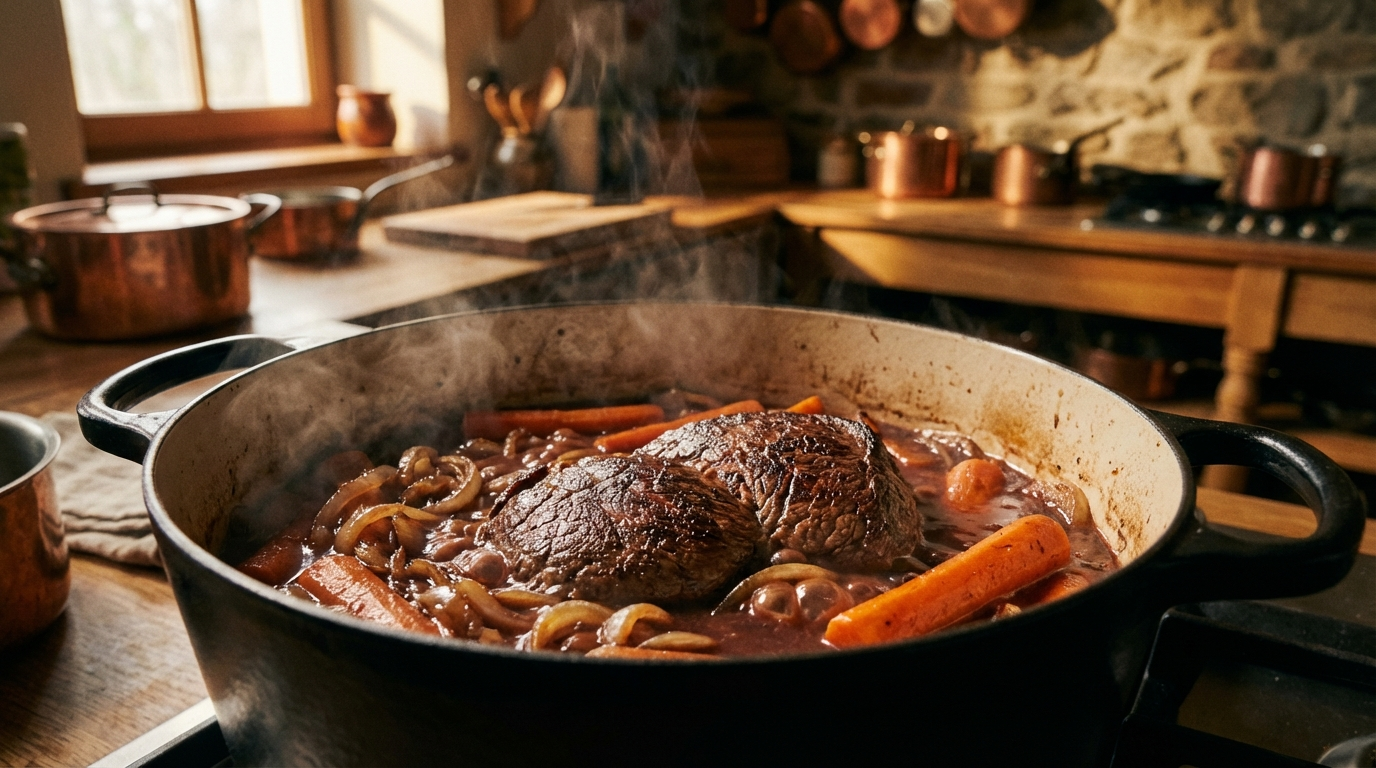
Here's the fundamental rule of round steak: you either cook it fast and slice it thin, or you cook it low and slow until the connective tissue breaks down. There is no middle ground. A medium-speed cook at moderate heat is the worst possible approach — you'll end up with tough, dry, chewy meat every time.
Let me walk you through the methods that actually work.
Method 1: Braising (Best for Bottom Round and Whole Steaks)
Braising is the most reliable way to cook round steak, especially the tougher bottom round and full-cut round steaks that include multiple muscles.
- Season and sear: Pat the steak dry with paper towels (moisture is the enemy of a good sear). Season generously with salt and pepper. Heat a heavy skillet or Dutch oven over high heat with a tablespoon of oil. Sear the steak for 2 to 3 minutes per side until you get a deep brown crust. Remove and set aside.
- Build the braising liquid: In the same pan, sauté diced onions, carrots, and celery until softened. Add garlic, tomato paste, and deglaze with beef broth, red wine, or even just water. Scrape up all the browned bits — that's concentrated flavor.
- Braise low and slow: Return the steak to the pot. The liquid should come about halfway up the meat — don't submerge it completely. Cover tightly and cook in a 300°F oven for 2.5 to 3 hours, or until a fork slides in and out of the meat with zero resistance.
- Rest and reduce: Remove the meat and let it rest for 10 minutes. Meanwhile, reduce the braising liquid on the stovetop to concentrate the flavors into a rich sauce.
This is the classic Swiss steak method, and it's been a Sunday dinner staple in American kitchens for over a century. The long, moist cooking converts the collagen in the connective tissue into gelatin, which makes the meat tender and gives the sauce a silky, luxurious body.
Method 2: Quick Sear and Thin Slice (Best for Top Round)
If you want round steak on the table in 15 minutes rather than 3 hours, this is your method. The key is extreme heat and razor-thin slicing.
- Slice thin before cooking: Cut the top round across the grain into slices no thicker than ¼ inch. If the meat is firm, pop it in the freezer for 20 minutes first — partially frozen beef slices much more cleanly.
- Velvet the meat (optional but game-changing): Toss the sliced beef with a teaspoon of baking soda and a tablespoon of cornstarch per pound. Let it sit for 15 minutes, then rinse. This Chinese restaurant technique (called "velveting") tenderizes the surface proteins and creates a silky texture.
- Stir-fry in batches: Heat a wok or large skillet over the highest heat you have. Add a tablespoon of high-smoke-point oil. Cook the beef in small batches — no more than a single layer — for 60 to 90 seconds per batch. Overcrowding the pan drops the temperature and steams the meat instead of searing it.
This method is why Chinese restaurants use top round for most of their beef dishes. The combination of thin slicing, velveting, and high-heat wok cooking produces tender, flavorful beef from one of the cheapest cuts in the case.
Method 3: Slow Roasting (Best for Eye of Round)
Eye of round roast is the trickiest cut to nail, but this method produces deli-quality roast beef at home:
- Season aggressively: Coat the roast with salt, pepper, garlic powder, and a touch of onion powder. Let it sit uncovered in the fridge overnight — the salt draws moisture to the surface, which then gets reabsorbed, seasoning the meat throughout and drying the exterior for a better crust.
- Blast then coast: Preheat your oven to 500°F. Put the roast in for exactly 7 minutes per pound. Then turn the oven completely off — do not open the door — and let the residual heat slowly cook the roast for 2.5 hours. The dropping temperature gently brings the interior to a perfect medium-rare without overcooking the lean meat.
- Slice paper-thin: Let the roast rest for at least 20 minutes, then slice as thin as humanly possible against the grain. At paper-thin slices, even eye of round is tender and delicious.
Method 4: Beef Jerky (All Round Cuts)
Round steak is the single best cut for homemade jerky, and it's what most commercial jerky producers use. The extremely lean meat dries evenly without the greasy, rancid issues you get from fattier cuts.
- Freeze the round steak for 1 to 2 hours until firm but not solid.
- Slice against the grain into strips ⅛ to ¼ inch thick.
- Marinate in your preferred jerky marinade (soy sauce, Worcestershire, garlic, black pepper) for 4 to 24 hours.
- Dehydrate at 160°F for 4 to 6 hours until the strips crack when bent but don't snap in half.
A 3-pound top round produces approximately 1.5 pounds of finished jerky — at roughly $5 to $7 per pound for the raw meat, that's homemade jerky at a fraction of the $30-plus per pound you'd pay at the store.
How to Slice Round Steak Against the Grain
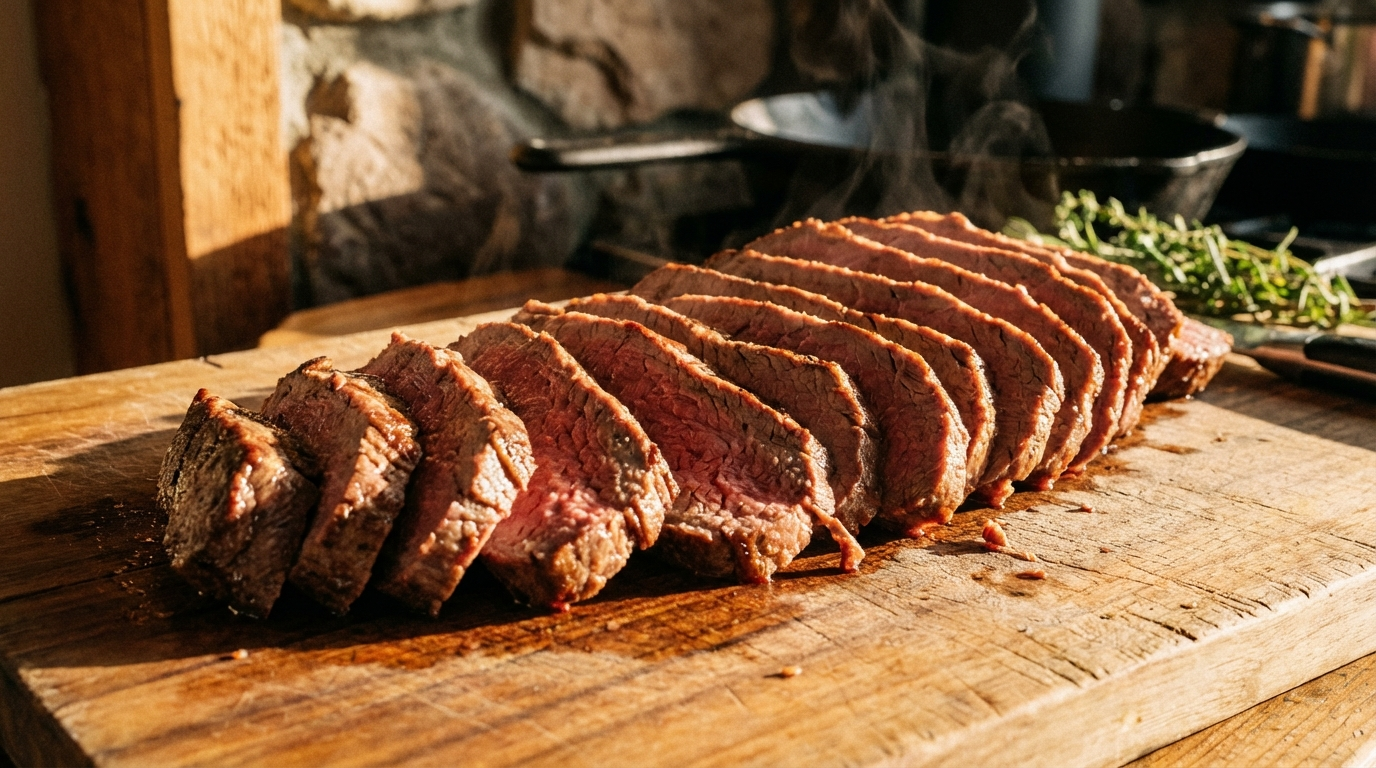
If there's one technique that separates good round steak from bad round steak, it's this: always slice against the grain. This single step makes more difference in tenderness than any marinade, tenderizer, or cooking method.
The "grain" refers to the direction the muscle fibers run through the meat. In round steak, these fibers are long, dense, and tightly packed — which is what makes the cut tough when chewed along the fiber direction. When you slice against (perpendicular to) the grain, you're cutting those long fibers into short segments. Short fibers are easy to bite through. Long fibers require chewing.
To find the grain: look at the surface of the raw meat. You'll see faint parallel lines running in one direction — those are the muscle fibers. Position your knife at a 90-degree angle to those lines and slice. On a whole round steak, the grain direction may change across different muscles, so pay attention as you work across the cut.
Nutritional Profile of Round Steak
Round steak is one of the most nutritionally impressive cuts of beef available, particularly for anyone watching their fat intake while maintaining high protein consumption:
- Protein: 26 to 29g per 4-oz serving — among the highest of any beef cut
- Fat: 4 to 7g per 4-oz serving (varies by sub-cut) — one of the leanest cuts available
- Calories: 150 to 180 per 4-oz serving
- Iron: 2.5mg per serving (14% of daily value) — heme iron, which is absorbed more efficiently than plant-source iron
- Zinc: 5mg per serving (45% of daily value)
- Vitamin B12: 2.4mcg per serving (100% of daily value)
- Selenium: 33mcg per serving (60% of daily value)
For anyone on a high-protein, low-fat diet, round steak is arguably the best beef cut you can buy. It delivers as much protein per serving as chicken breast with a fraction of the saturated fat of marbled steaks — plus significantly more iron, zinc, and B12.
How to Buy Round Steak
When you're standing at the meat counter, here's what to look for:
- Color: Deep cherry red indicates fresh, properly handled beef. Avoid anything with brown or gray patches — that's oxidation from exposure to air, and while it's not dangerous, it means the meat has been sitting longer than ideal.
- Texture: The surface should look moist but not wet or slimy. Excess liquid in the package (purge) is normal, but excessive amounts suggest the meat was previously frozen and thawed.
- Label specificity: Look for the specific sub-cut name — "top round steak," "bottom round roast," or "eye of round." A generic "round steak" label usually means it's a full cross-section cut through the entire leg, which includes multiple muscles with different grain directions. These are fine for braising but harder to cook as steaks.
- Thickness: For searing or grilling, look for steaks at least ¾ inch thick. Thinner steaks overcook before they develop a proper crust. For braising, thickness matters less — anything from ½ inch to 2 inches works well.
- USDA grade: Select grade round steak is actually a great value — the difference between Select and Choice is minimal in a cut that has almost no marbling to begin with. Save the Choice and Prime premium for cuts where marbling matters (ribeye, strip, etc.).
Common Mistakes to Avoid
In three decades of talking to customers about round steak, I see the same mistakes over and over:
- Cooking it like a premium steak: Round steak is not a ribeye. Throwing it on a hot grill to medium-rare and serving it in thick slices will produce tough, chewy, disappointing meat. Always either braise it or slice it thin.
- Skipping the sear before braising: That initial sear in a screaming-hot pan creates Maillard reaction compounds that give the braising liquid its depth and complexity. Skip it, and you get flat, one-dimensional flavor.
- Slicing with the grain: This is the single biggest error home cooks make. Slicing with the grain leaves the long muscle fibers intact, making each bite a chewing marathon. Always slice perpendicular to the grain lines.
- Overcooking thin slices: When you're doing a quick sear or stir-fry with thinly sliced round, every second counts. Pull the meat when it still has a hint of pink in the center — carryover heat will finish the job. Overcooked thin round steak is basically cardboard.
- Not letting braised meat rest: After braising, the meat needs 10 to 15 minutes to reabsorb its juices before slicing. Cut into it immediately and all that liquid runs out onto the cutting board instead of staying in the meat.
Price and Value
Round steak is consistently one of the best values in the meat case. As of 2026, here's what you can expect to pay:
- Top round steak/roast: $5.50 to $8.00 per pound
- Bottom round steak/roast: $5.00 to $7.50 per pound
- Eye of round roast: $5.00 to $7.00 per pound
Compare that to $15 to $22 per pound for ribeye or $18 to $28 per pound for filet mignon, and the value proposition is clear. A family of four can eat a generous round steak dinner for $12 to $15 worth of meat — less than a single premium steak at a restaurant.
The best value play: buy a whole top round roast (15 to 20 pounds) when it goes on sale, then break it down yourself into steaks, stir-fry strips, jerky slices, and roasts. Whole primals typically run $1 to $2 less per pound than individual steaks, and a sharp knife is all you need to do the butchery yourself.
Frequently Asked Questions
Is round steak tough?
Round steak is lean and dense, which makes it tough when cooked incorrectly. However, braising it low and slow for 2.5 to 3 hours, or slicing it very thin and searing quickly at high heat, produces tender, flavorful results. The key is choosing the right cooking method for this cut.
What is the best way to cook round steak?
The two best methods are braising (low and slow in a Dutch oven with liquid for 2.5 to 3 hours) and quick stir-frying (thin slices in a very hot wok for 60 to 90 seconds). Braising works best for bottom round and full-cut round steaks. Quick-sear methods work best for top round sliced thin against the grain.
Is round steak good for grilling?
Round steak is not ideal for traditional grilling because it lacks the fat needed to stay moist over direct heat. However, top round can be marinated for 4 to 24 hours and grilled quickly over high heat to no more than medium-rare, then sliced very thin against the grain. This is essentially the London broil method.
What is the difference between top round and bottom round?
Top round comes from the inner thigh and is the more tender of the two. Bottom round comes from the outer thigh, is slightly tougher, and has more connective tissue. Top round is better for quick-cooking methods and roast beef; bottom round is better for braising and pot roasts.
Can you use round steak for beef jerky?
Round steak is the best cut for homemade beef jerky. Its extremely lean composition means it dries evenly without becoming greasy or rancid. Top round is the preferred choice — slice it against the grain into ⅛-inch strips, marinate overnight, and dehydrate at 160°F for 4 to 6 hours.
More Expert Guides
What Is Chateaubriand? (Cut, Cooking, & Best Sources)
Chateaubriand is a thick-cut roast from the center of the beef tenderloin, traditionally served for two. Learn what makes this classic French cut special and how to cook it.
14 min readWhat Is Eye of Round? The Complete Butcher's Guide to This Lean Cut
Eye of round is one of the leanest, most affordable cuts in the entire beef case — and one of the most misunderstood. A butcher explains how to turn this budget-friendly roast into something genuinely delicious.
14 min readBottom Round vs Top Round: A Butcher Explains the Real Differences
Top round and bottom round look similar in the meat case but cook completely differently. A butcher with 30 years of experience explains where each cut comes from, which is more tender, and how to get the best results from both.