What is Picanha Steak? The Complete Guide to Brazil's Favorite Cut
If you've ever visited a Brazilian steakhouse—known as a churrascaria—you've likely experienced that magical moment when the server approaches with a sword-like skewer, carving thin slices of perfectly charred, impossibly juicy beef directly onto your plate. That cut, my friends, is picanha, and it's about to change everything you think you know about steak.
As someone who's spent decades studying beef cuts and traveling to learn traditional cooking methods, I can tell you that picanha represents one of the most underappreciated steaks in American kitchens. While we obsess over ribeyes and filets, Brazilians have quietly perfected the art of cooking this superior cut for generations.
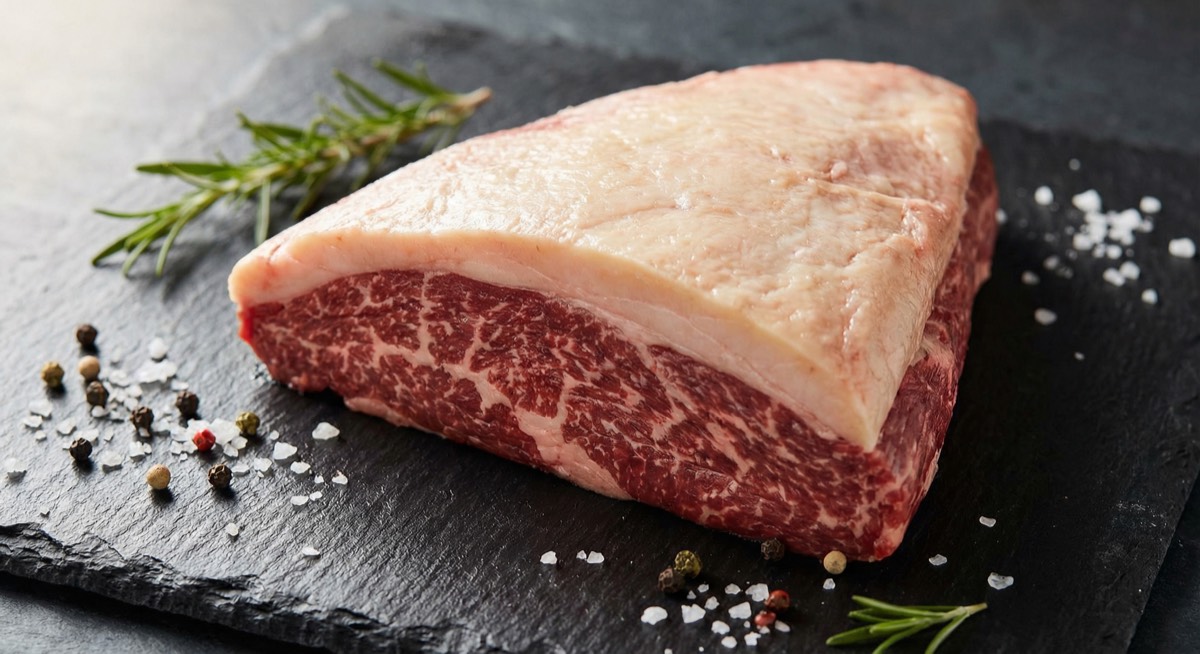
What Exactly is Picanha?
Picanha (pronounced "pee-KAHN-yah") is a cut of beef taken from the top of the rump, specifically the cap of the top sirloin. In American butcher terminology, it's called the sirloin cap, rump cap, or coulotte. The NAMP (North American Meat Processors) designation is #184D, though good luck finding a butcher who knows that off the top of their head.
What makes picanha instantly recognizable is its thick layer of fat on one side—the fat cap—which typically measures between a quarter-inch to a full inch thick. This isn't just any fat; it's firm, flavorful back fat that bastes the meat as it cooks, creating that signature succulence that makes Brazilian barbecue legendary.
A whole picanha typically weighs between 2.5 to 4 pounds and has a distinctive triangular or crescent shape. The muscle fibers run in one direction, making it easy to slice against the grain for maximum tenderness.
Anatomy: Where Does Picanha Come From?
To understand why picanha tastes so good, you need to understand where it lives on the animal. The picanha sits on top of the hip, covering part of the gluteus muscle group. Specifically, it's the biceps femoris muscle, which sits just above the top sirloin and behind the loin.
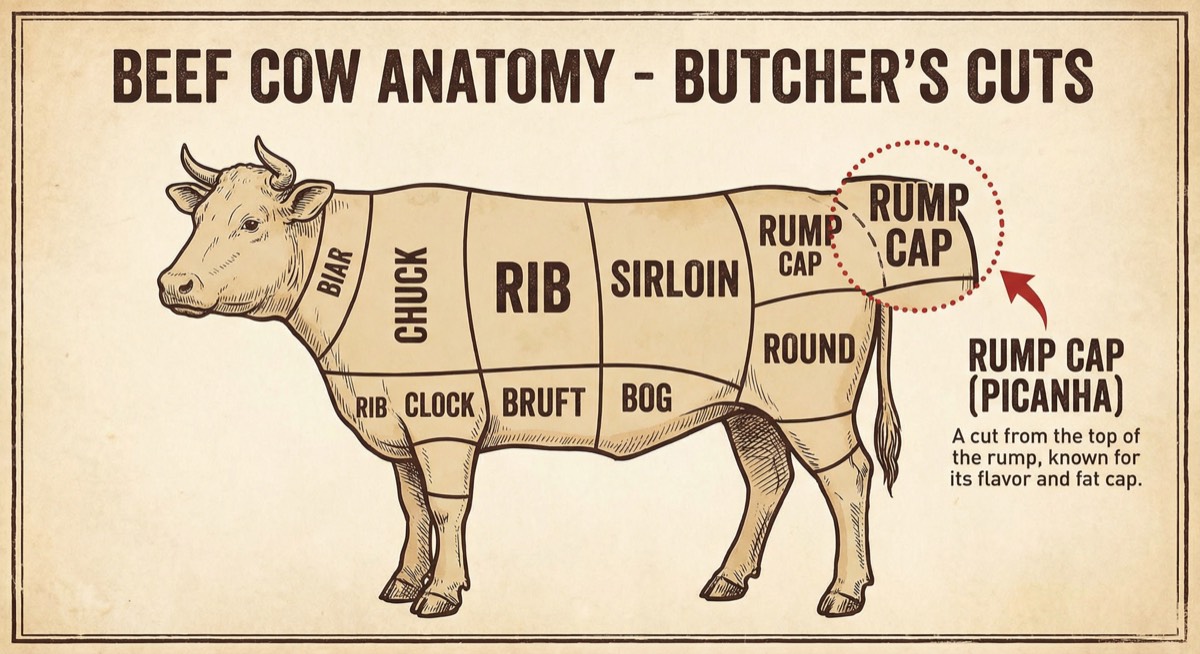
This placement is crucial for several reasons:
- Limited movement muscle: Unlike constantly working leg muscles, this area sees relatively little action, resulting in tender meat without excessive connective tissue.
- Natural fat protection: The fat cap develops because this area of the animal naturally stores fat, providing insulation and flavor.
- Proximity to the loin: Being adjacent to premium cuts like the sirloin means similar marbling characteristics and tenderness.
- Single muscle structure: Unlike multi-muscle cuts, picanha's uniform structure means consistent cooking and texture throughout.
In American butchery, this cut is often broken down into other portions or ground into hamburger, which is why many Americans have never encountered it as a standalone steak. It's one of beef's best-kept secrets hiding in plain sight.
Why Brazil is Obsessed with Picanha
In Brazil, asking someone their favorite cut of beef is like asking a parent to choose their favorite child—except everyone agrees the answer is picanha. This cut isn't just popular; it's culturally sacred.
The Brazilian love affair with picanha traces back to the gauchos—the cowboys of southern Brazil and neighboring regions who developed churrasco (Brazilian barbecue) as both a cooking method and a way of life. These cattle herders discovered that cooking meat on skewers over open flame, with the fat cap facing the heat, produced extraordinary results.
The Churrasco Tradition
Traditional Brazilian churrasco isn't just a cooking method—it's a social institution. Families and friends gather around the churrasqueira (grill pit) for hours, drinking caipirinha cocktails and eating freshly carved meat in waves. Picanha always holds the place of honor, typically served after appetizer cuts to mark the main event.
What makes Brazilian preparation special is its simplicity. Traditional picanha requires only two ingredients: beef and coarse salt (sal grosso). No marinades, no rubs, no fancy sauces. The fat cap and fire do all the work, and the result is pure beef flavor amplified to its maximum potential.
At Brazilian steakhouses (churrascarias), picanha commands premium prices and often gets its own dedicated carver. The ritual of the passador (meat server) approaching with a gleaming skewer of picanha is as theatrical as it is delicious.
How to Cook Picanha: Three Essential Methods
Cooking picanha properly requires understanding one fundamental principle: respect the fat cap. This layer of fat isn't trim waste—it's your secret weapon. Here are three proven methods to achieve picanha perfection.
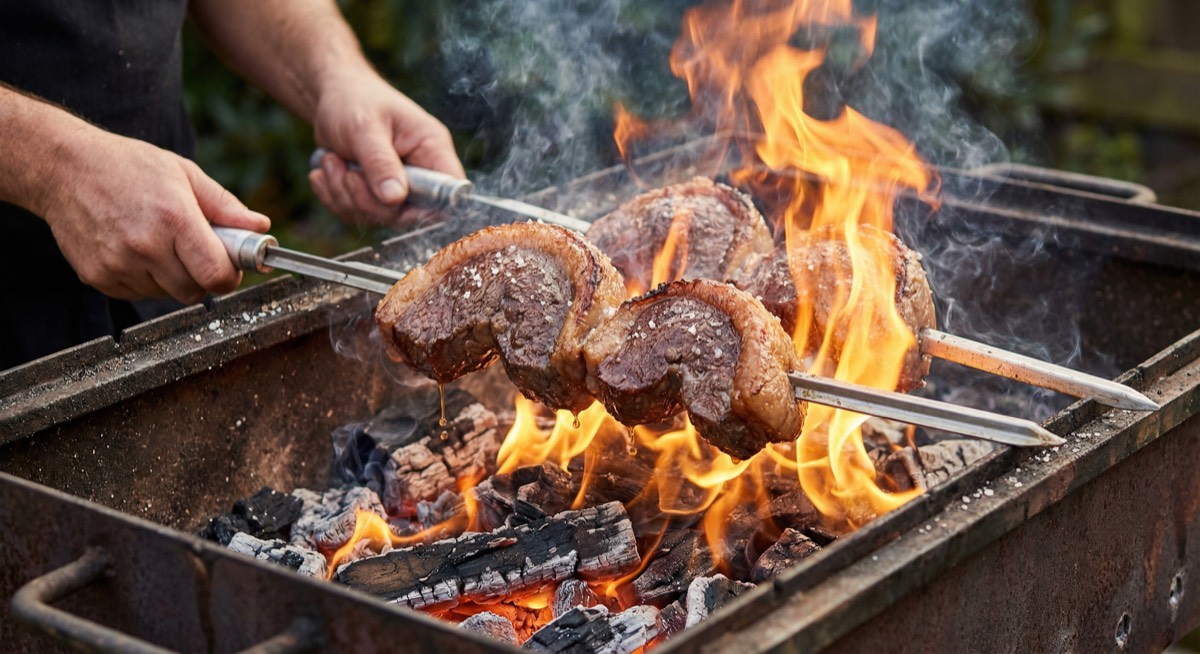
Method 1: Traditional Brazilian Skewer (Espeto)
This is the authentic churrasco method, and if you have access to a rotisserie or can rig up skewers over your grill, it's worth the effort.
Steps:
- Cut against the grain into thick steaks (about 2 inches), keeping the fat cap attached.
- Fold each piece into a "C" shape with the fat cap on the outside.
- Thread onto skewers, piercing through both ends of the "C" to maintain the curved shape.
- Season generously with coarse salt only—no other seasonings needed.
- Position over hot coals with the fat cap facing the heat source (about 6-8 inches away).
- Rotate slowly, allowing the fat to render and baste the meat. Total cook time: 20-30 minutes for medium-rare.
- Slice thin pieces directly from the skewer, starting from the charred exterior.
The beauty of this method is that guests receive varying degrees of doneness—charred exterior pieces for those who like it well done, rosy interior slices for medium-rare lovers. Everyone wins.
Method 2: Reverse Sear
For American home cooks without rotisserie setups, the reverse sear produces exceptional results. This method gives you precise temperature control and a perfect crust.
Steps:
- Score the fat cap in a crosshatch pattern, cutting about halfway through the fat without reaching the meat.
- Season liberally with coarse salt (and freshly cracked pepper if desired) and refrigerate uncovered for 1-24 hours.
- Preheat your oven to 250°F (120°C).
- Place on a wire rack over a sheet pan, fat cap up.
- Roast until internal temperature reaches 115°F (46°C) for medium-rare—typically 45-60 minutes depending on thickness.
- Rest for 5 minutes while you heat a cast iron skillet screaming hot.
- Sear fat cap down first for 2-3 minutes until deeply browned and crispy.
- Flip and sear the meat side for 1-2 minutes.
- Rest again for 5 minutes before slicing against the grain.
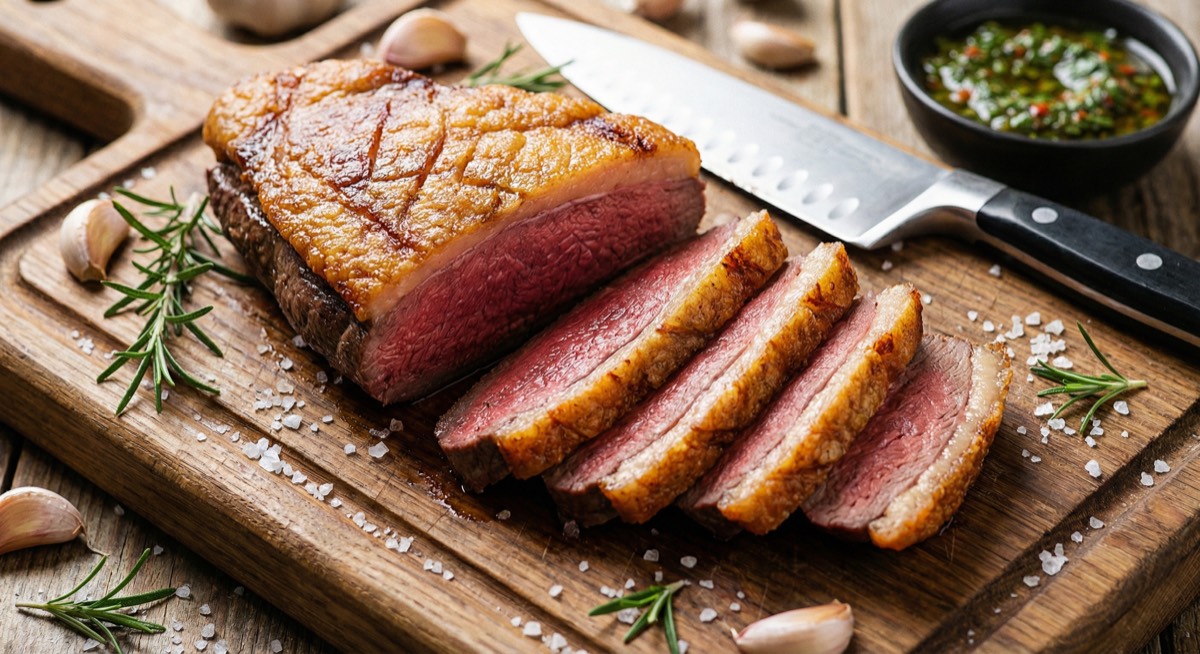
The reverse sear advantage? Edge-to-edge consistent doneness with a crackling, rendered fat cap that shatters under your knife.
Method 3: Direct Grilling
The simplest approach for backyard grillers. Fast, hot, and delicious.
Steps:
- Slice into steaks about 1.5 inches thick, fat cap intact.
- Season with coarse salt 30-60 minutes before cooking (or immediately if short on time).
- Preheat grill to high heat (450-500°F).
- Grill fat cap down first for 4-5 minutes to render and crisp.
- Flip and continue cooking to desired doneness—about 3-4 minutes more for medium-rare.
- Rest for 5 minutes before serving.
Pro tip: Keep a spray bottle handy. The rendering fat can cause flare-ups. A quick spritz keeps flames in check without losing heat.
Fat Cap Management: The Key to Success
The fat cap is what separates picanha from ordinary sirloin steaks. Managing it correctly is non-negotiable for great results.
To Trim or Not to Trim?
Short answer: Don't trim it. The fat cap is the whole point. If you want a lean steak, buy a filet mignon. Picanha's magic comes from that fat rendering down, basting the meat, and creating incomparable richness.
That said, you can trim the fat cap down to about ½ inch if it's excessively thick (over 1 inch). Any thicker and it won't fully render before the meat overcooks.
Scoring Technique
For oven and pan methods, scoring the fat cap helps it render evenly and prevents curling. Use a sharp knife to make a crosshatch pattern with cuts about ½ inch apart. Cut through most of the fat but stop before you reach the meat.
Fat Cap Orientation
- Skewer method: Fat cap faces the coals (heat source).
- Oven roasting: Fat cap up to self-baste.
- Pan searing: Fat cap down first to render and crisp.
- Grilling: Fat cap down first, then flip.
Where to Buy Quality Picanha
Finding genuine picanha in the United States can be challenging. Here's how to source the best:
What to Look For
- Intact fat cap: Should be at least ¼ inch thick, evenly distributed.
- Good marbling: Look for visible intramuscular fat throughout the meat, not just the cap.
- Deep red color: Indicates proper aging and freshness.
- Firm texture: Should spring back when pressed.
- Proper size: Whole picanha should be 2-4 lbs; pre-cut steaks around 8-12 oz.
Where to Shop
Brazilian markets: Your best bet for authentic whole picanha at reasonable prices. Staff typically understand the cut and can offer preparation advice.
Online specialty retailers: For premium quality, online meat purveyors offer excellent options. If you want to experience picanha at its absolute finest, consider American Wagyu beef—the intense marbling takes this already incredible cut to another dimension entirely.
Costco: Occasionally stocks picanha, often labeled as "sirloin cap" or "coulotte." Quality varies but price is usually excellent.
Local butchers: Many can special-order picanha if you ask. Request NAMP #184D with the fat cap intact.
What to Avoid
- Pre-trimmed cuts with the fat cap removed
- Very thin cuts (under 1 inch) that will overcook easily
- Anything labeled "rump roast"—similar location but different preparation
- Excessive external fat that appears yellow or waxy (indicates older beef)
Picanha vs. Other Premium Cuts
How does picanha stack up against the steakhouse classics? Here's an honest comparison:
Picanha vs. Ribeye
Ribeye wins on marbling—it's fattier throughout the meat itself. But picanha's fat cap creates a different kind of richness: external basting rather than internal fat. Ribeye is more forgiving to cook; picanha requires more attention but rewards with a cleaner beef flavor.
Choose picanha when: You want pure beef flavor with textural contrast between meat and crispy fat.
Picanha vs. Filet Mignon
Filet is more tender—nothing beats the tenderloin's buttery texture. But filet is lean and mild, often needing sauces or bacon wrapping. Picanha offers more flavor per bite and costs significantly less.
Choose picanha when: Flavor matters more than melt-in-your-mouth tenderness.
Picanha vs. NY Strip
Strip steak offers a similar beefy flavor profile with good fat content. The main difference is the fat cap—strip has a fat edge, but not the thick cap that defines picanha's character.
Choose picanha when: You want that fat cap experience and more bang for your buck.
Picanha vs. Tri-Tip
Both are triangular cuts from the sirloin area with similar price points. Tri-tip is leaner and benefits from marinades or smoking. Picanha's fat cap means it can cook with just salt.
Choose picanha when: You prefer simplicity and self-basting richness.
Serving Suggestions and Sides
Traditional Brazilian accompaniments include:
- Farofa: Toasted cassava flour, often with bacon and herbs
- Vinagrete: A fresh tomato and onion salsa (not to be confused with vinaigrette dressing)
- White rice and black beans: The classic Brazilian combination
- Grilled pineapple: The acidity cuts through the richness beautifully
- Chimichurri: Argentine, technically, but fantastic with picanha
- Pão de queijo: Brazilian cheese bread
For American-style sides, picanha pairs wonderfully with roasted vegetables, creamy mashed potatoes, or a crisp green salad with acidic dressing to balance the fat.
Common Mistakes to Avoid
After teaching countless home cooks about picanha, I see these errors repeatedly:
- Trimming the fat cap: The whole point is that fat. Leave it alone.
- Slicing with the grain: Always cut against the grain for tenderness. The fibers run lengthwise through the cut.
- Cooking cold: Let the meat reach room temperature (30-60 minutes) before cooking for even results.
- Over-seasoning: Coarse salt is traditional for good reason. The beef speaks for itself.
- Cooking past medium: Picanha dries out quickly beyond medium. Medium-rare is ideal.
- Skipping the rest: Always rest your meat. Five minutes minimum.
- Thin slices too early: Slice thick for serving, let guests cut to preference. Thin slices cool too quickly.
Final Thoughts
Picanha represents everything I love about studying beef cuts—it's a working-class hero that outperforms celebrities. While Americans pay premium prices for filet mignon, Brazilians discovered generations ago that this humble sirloin cap, cooked with nothing but salt and fire, produces one of the world's most satisfying beef experiences.
The fat cap, the simplicity, the social ritual of carving directly from skewer to plate—picanha isn't just a steak, it's an education in why less is often more when you start with quality ingredients.
Find yourself a good piece of picanha, respect the fat cap, keep the seasoning simple, and cook it with attention. You'll understand immediately why Brazil guards this secret so jealously—and why the rest of us are finally catching on.
— Frank Russo
Frequently Asked Questions
What is picanha called in the United States?
In the U.S., picanha is most commonly called sirloin cap, rump cap, or coulotte. The official NAMP (North American Meat Processors) designation is #184D. When purchasing, ask for any of these names and specify that you want the fat cap left intact.
Why is picanha so popular in Brazil?
Picanha is central to Brazilian churrasco (barbecue) culture, which originated with the gauchos (cowboys) of southern Brazil. The cut's thick fat cap bastes the meat during cooking, creating exceptional flavor with minimal seasoning. It's traditionally cooked on skewers over open flame and served communally, making it both delicious and socially significant.
Should I remove the fat cap from picanha?
No—the fat cap is essential to picanha's character and should never be removed. As it cooks, the fat renders and bastes the meat, creating rich flavor and juiciness. You may trim it down to ½ inch if it's excessively thick (over 1 inch), and scoring in a crosshatch pattern helps it render evenly, but always keep the fat cap intact.
What temperature should picanha be cooked to?
For optimal results, cook picanha to medium-rare (130-135°F internal temperature) or medium at most (135-145°F). The cut tends to dry out when cooked beyond medium because it's relatively lean beneath the fat cap. For reverse sear methods, remove from the oven at 115°F before searing, as carryover cooking will bring it to final temperature.
How do you slice picanha correctly?
Always slice picanha against the grain—the muscle fibers run lengthwise through the cut, so slice perpendicular to them for maximum tenderness. For skewer-style cooking, slice while on the skewer from the outside in. For steaks, let the meat rest for 5 minutes after cooking, then cut into ½-inch slices against the grain.
How does picanha compare to ribeye steak?
Ribeye has more intramuscular marbling (fat throughout the meat), while picanha features a thick external fat cap that bastes during cooking. Ribeye is more forgiving to cook and has richer internal fat, but picanha offers cleaner beef flavor with textural contrast between the lean meat and crispy fat cap. Picanha also typically costs less per pound than prime ribeye.
More Expert Guides
What Is Chateaubriand? (Cut, Cooking, & Best Sources)
Chateaubriand is a thick-cut roast from the center of the beef tenderloin, traditionally served for two. Learn what makes this classic French cut special and how to cook it.
14 min readWhat Is Round Steak? The Complete Guide to Beef's Most Versatile Budget Cut
Round steak comes from the rear leg of the cow — it's lean, affordable, and misunderstood. A master butcher breaks down every sub-cut, cooking method, and technique to turn this budget workhorse into genuinely delicious meals.
14 min readWhat Is Eye of Round? The Complete Butcher's Guide to This Lean Cut
Eye of round is one of the leanest, most affordable cuts in the entire beef case — and one of the most misunderstood. A butcher explains how to turn this budget-friendly roast into something genuinely delicious.