What is a Delmonico Steak? The Most Confusing Cut in Beef, Explained
Walk into ten different butcher shops across America and ask for a Delmonico steak. You'll get ten different cuts. One hands you a thick-cut ribeye. Another gives you a bone-in strip. A third pulls out something from the chuck that looks nothing like what the last two sold you. Everyone is confident. Everyone is technically correct. And that, in a nutshell, is the Delmonico problem.
No other steak name in the English language creates this much confusion. The Delmonico steak has no single USDA definition, no standardized NAMP number, and no universally agreed-upon muscle or primal. It's a name rooted in restaurant history rather than butchery science—and understanding that history is the key to understanding the cut.
The History: Where the Name Comes From
The Delmonico steak takes its name from Delmonico's Restaurant, which opened in New York City in 1837 and became the most famous fine dining establishment in 19th-century America. The restaurant was founded by Swiss-born brothers Giovanni and Pietro Delmonico, and it essentially invented the concept of the American steakhouse.
Before Delmonico's, American restaurants were taverns and boarding houses that served whatever was available. Delmonico's introduced printed menus, à la carte dining, wine lists, and—most importantly—the idea that a single cut of steak could be a signature dish worth building a reputation around.
The original Delmonico steak was likely a thick-cut piece from the short loin, served at the restaurant starting in the 1850s. Historical menus show it listed alongside other items at premium prices, and it quickly became the dish that everyone ordered. When competitors and imitators wanted to signal luxury, they put "Delmonico steak" on their own menus—but without a standard definition, each restaurant used whatever cut they thought best represented the name.
By the early 20th century, the name had spread so far beyond the original restaurant that it lost any precise meaning. Butchers in different regions attached "Delmonico" to their best-selling premium cut—ribeye in some areas, strip in others, even chuck eye where budgets were tighter. The restaurant itself closed and reopened multiple times, and each incarnation served a slightly different version. Today, the current Delmonico's in Manhattan serves a thick-cut bone-in ribeye as their signature Delmonico steak.
What Cut Is a Delmonico Steak, Really?
Here's the honest answer: there is no single cut that definitively "is" a Delmonico steak. The name has been applied to at least nine different cuts over the past 170 years. However, certain cuts are more commonly sold under the Delmonico name than others, and understanding the options helps you know exactly what you're buying.
The Most Common Delmonico Cuts
- Thick-cut ribeye (boneless): This is the most widely accepted modern interpretation, especially at steakhouses. A boneless ribeye cut 1.5 to 2 inches thick, typically from the center of the rib primal (ribs 9-11). Rich marbling, tender, and intensely beefy.
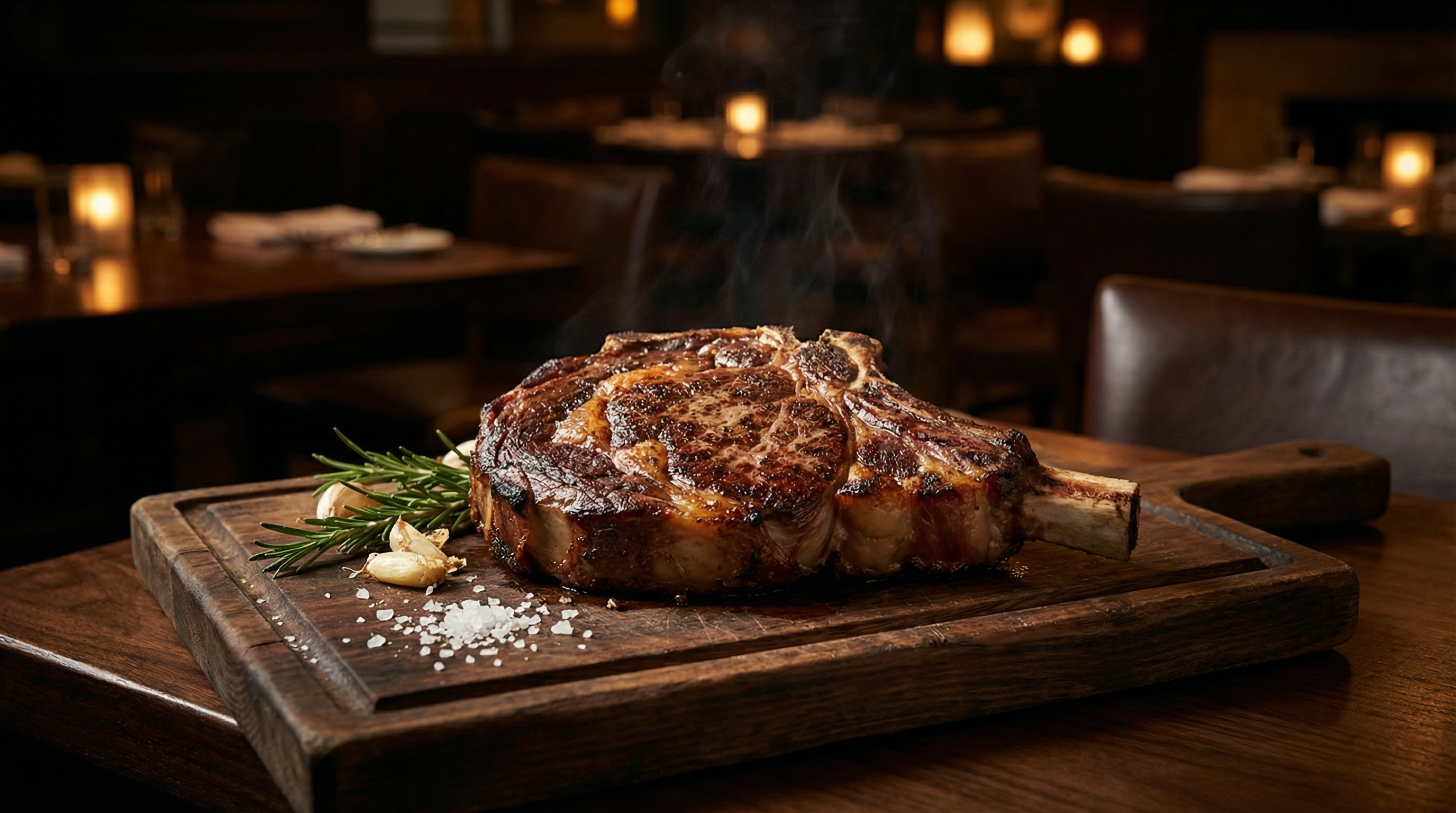
- Bone-in ribeye: The version served at the current Delmonico's restaurant in New York. Essentially a single-rib bone-in ribeye cut thick. The bone adds presentation value and some argue it improves flavor during cooking.
- Top loin / New York strip: Some butchers, particularly in the Northeast, sell a thick-cut strip steak as a Delmonico. This aligns more closely with what the original restaurant likely served, since the short loin was a prized cut in the 1800s.
- Chuck eye steak: In budget-conscious markets, the chuck eye—sometimes called the "poor man's ribeye"—gets labeled as a Delmonico. It comes from the same muscle group as the ribeye but from a less tender section closer to the shoulder.
- First-cut club steak: A bone-in steak from the rib end of the short loin, right where the rib primal meets the loin. Some classic butchery references identify this as the "true" Delmonico, though this interpretation is less common today.
The common thread across all versions: a Delmonico is always a premium, thick-cut steak from a tender primal. You'll never see chuck roast or round steak sold as Delmonico. The name consistently implies quality, even when the specific muscle varies.
How to Know What You're Getting
When you see "Delmonico steak" at a butcher shop, grocery store, or restaurant, you need to look beyond the name. Here's how to identify what's actually in front of you:
- Check for a rib bone: If there's a curved rib bone attached, you're looking at a bone-in ribeye from the rib primal (ribs 6-12).
- Look at marbling: Heavy intramuscular fat with a pronounced central fat pocket (the spinalis or cap) indicates a ribeye. Leaner meat with a strip of fat along one edge suggests a New York strip.
- Check the shape: Ribeyes tend to be rounder and more irregular. Strips are more rectangular with a uniform shape. Chuck eyes look like smaller, slightly tougher ribeyes.
- Ask your butcher: Simply ask which primal the steak comes from. A good butcher will tell you immediately whether it's rib, loin, or chuck.
- Check the price: True ribeye Delmonicos typically run $20-40 per pound for Choice grade. If the price seems too good, it may be a chuck eye being sold under the Delmonico name.
None of these versions is "wrong"—the Delmonico name is legally unregulated, and any of these cuts can legitimately carry it. But knowing what you're actually buying helps you cook it correctly and set appropriate expectations.
Delmonico vs. Ribeye: Is There a Difference?
This is the most common question, and the answer depends on who you ask. In most modern American butcher shops and steakhouses, a Delmonico is a ribeye. Specifically, it's a ribeye that's been cut thicker than standard—usually 1.5 inches or more, often closer to 2 inches.
The key distinctions people draw between the two:
- Thickness: A standard ribeye might be cut at 1 to 1.25 inches. A Delmonico is almost always cut thicker, typically 1.5 to 2 inches. This extra thickness changes the cooking approach significantly.
- Weight: Because of the added thickness, Delmonico steaks often weigh 16 to 24 ounces compared to a standard ribeye's 10 to 14 ounces.
- Presentation: The Delmonico name carries steakhouse connotations. Restaurants use it to signal a premium presentation with a correspondingly premium price.
- Center cut: Some butchers reserve the Delmonico label for ribeyes cut from the center of the rib primal (ribs 9-11), which have the best balance of marbling and tenderness. Regular ribeyes can come from anywhere along ribs 6-12.
So is there a real difference? Practically speaking, if your butcher sells "Delmonico" ribeyes, you're likely getting a thicker, possibly center-cut version of what they also sell as a regular ribeye. The meat is the same muscle—the longissimus dorsi with portions of the spinalis and complexus—just cut differently.
How to Cook a Delmonico Steak
Because the Delmonico is almost always thick-cut, it requires a two-stage cooking approach. You can't just throw a 2-inch steak on high heat and expect the center to reach temperature before the outside burns. The solution is a combination of searing and gentler finishing heat.
Method 1: Reverse Sear (Recommended)
The reverse sear is ideal for thick steaks like the Delmonico because it gives you maximum control over doneness while still delivering a spectacular crust.
- Season generously with kosher salt and freshly cracked black pepper at least 45 minutes before cooking—overnight in the fridge on a wire rack is even better.
- Preheat your oven to 250°F. Place the steak on a wire rack set over a sheet pan.
- Slow-roast until the internal temperature reaches 115-120°F for medium-rare. This takes 30 to 50 minutes depending on thickness. Use an instant-read thermometer—don't guess.
- Heat a cast iron skillet over the highest heat your stove can produce. Add a thin film of avocado oil.
- Sear for 60 to 90 seconds per side, pressing gently to ensure full contact with the pan. Add butter, garlic, and thyme in the last 30 seconds, basting continuously.
- Rest for 8 to 10 minutes before slicing. The carryover will bring the center to a perfect 130-135°F.
The reverse sear produces edge-to-edge pink with a paper-thin crust—exactly what a premium thick steak deserves. No gray band of overcooked meat beneath the surface.
Method 2: Traditional Sear and Oven Finish
The steakhouse classic. Faster than reverse sear but with slightly less even doneness.
- Bring the steak to room temperature for 30 to 45 minutes.
- Preheat your oven to 400°F.
- Get a cast iron skillet screaming hot. Add oil, then sear the steak for 2 to 3 minutes per side until deeply browned.
- Transfer the skillet to the oven and roast until the internal temperature hits 125-130°F for medium-rare, roughly 8 to 15 minutes depending on thickness.
- Rest for 8 to 10 minutes before slicing or serving.
This method works well when you want dinner on the table faster. The trade-off is a slightly wider band of well-done meat near the surface, but the crust development is outstanding.
Method 3: Grilling
Set up a two-zone fire with hot coals on one side and no coals on the other. Sear over direct heat for 2 minutes per side, then move to the indirect zone and close the lid until you reach your target temperature. This mimics the sear-then-oven approach outdoors and works beautifully with the smoke from a charcoal grill.
Regardless of method, the rules for a great Delmonico are consistent: use a thermometer, don't cook past medium, and always rest the steak. The thick cut means there's more thermal mass, and the temperature will continue rising 5-10°F after you pull it from the heat.
Seasoning and Serving
The Delmonico's heritage is steakhouse simplicity. These are premium steaks that don't need much help:
- Classic: Diamond Crystal kosher salt and coarsely cracked Tellicherry peppercorns. Applied 45 minutes to overnight before cooking. This is all a great steak needs.
- Steakhouse compound butter: Softened butter mixed with minced garlic, fresh thyme, and a pinch of flaky salt. A tablespoon melting over the resting steak is pure luxury.
- Red wine reduction: After searing, deglaze the pan with a splash of robust red wine, add a minced shallot, reduce by half, then swirl in cold butter. Classic for a reason.
- Béarnaise: The old-school steakhouse pairing. The rich, tarragon-infused sauce was born in the same era as the Delmonico and remains one of the best companions for a thick-cut steak.
Traditional steakhouse sides pair naturally: creamed spinach, baked potato with all the fixings, sautéed mushrooms, or a simple wedge salad. The Delmonico is a statement piece—keep the accompaniments classic and let the steak be the star.
Buying Guide: What to Look For
Whether your butcher calls it a Delmonico, a cowboy cut, or simply a thick-cut ribeye, here's what makes a great one:
- Grade: USDA Choice or Prime. The marbling difference between Select and Choice is dramatic in a ribeye, and Prime takes it to another level. For the ultimate Delmonico experience, American Wagyu offers marbling that exceeds even Prime.
- Thickness: Minimum 1.5 inches. Thinner than that and it's just a ribeye—the thick cut is what defines the Delmonico experience and allows for proper two-stage cooking.
- Marbling: Look for abundant white flecks of intramuscular fat throughout the meat. The fat should be evenly distributed, not concentrated in large pockets.
- Color: Bright cherry-red with clean white fat. Brown or gray tinges indicate age or improper storage.
- The cap: The spinalis dorsi (rib cap) is the crescent-shaped muscle that wraps around the outside of a ribeye. In a quality Delmonico, this cap should be well-attached and generously marbled—it's widely considered the single most flavorful muscle on the cow.
Online specialty retailers offer excellent options for those without a premium butcher nearby. The Meatery's beef collection includes thick-cut ribeyes and premium steaks that arrive properly aged and ready to cook.
Why the Name Still Matters
You might wonder why anyone bothers with the Delmonico name when it's so imprecise. The answer is cultural. The Delmonico steak represents something bigger than a specific muscle—it represents the idea of a great American steak dinner. It evokes white tablecloths, candlelight, a generous pour of Cabernet, and a thick slab of perfectly seared beef.
When a restaurant puts "Delmonico steak" on the menu instead of "ribeye," they're selling an experience as much as a cut of meat. And when a butcher labels their best thick-cut ribeye as a Delmonico, they're signaling that this is their premium offering—the steak they're most proud of.
The imprecision that frustrates meat nerds is actually part of the charm. Unlike a New York strip (always from the short loin) or a T-bone (always includes the tenderloin), the Delmonico is whatever a skilled butcher or chef decides represents the highest expression of beef. That's a tradition worth keeping, even if it drives purists a little crazy.
Final Thoughts
The Delmonico steak is American dining history carved in beef. It's the original steakhouse cut, the one that taught Americans that a great steak could be a destination meal rather than just sustenance. Whether yours comes from the rib primal, the loin, or somewhere in between, the principle is the same: take a thick piece of high-quality beef, cook it simply, serve it proudly.
Next time you see "Delmonico" at the butcher counter, don't be confused—be curious. Ask which cut they've chosen to carry the name. Chances are, it'll be the one they think is their best. And that's exactly what the Delmonico brothers had in mind when they put their name on a steak 170 years ago.
— Frank Russo
Frequently Asked Questions
What cut of meat is a Delmonico steak?
A Delmonico steak has no single standardized definition. It most commonly refers to a thick-cut boneless or bone-in ribeye, but it can also be a thick-cut New York strip, a chuck eye steak, or a first-cut club steak from the rib-loin junction. The name comes from Delmonico's Restaurant in New York City, not from a specific muscle or USDA designation.
Is a Delmonico steak the same as a ribeye?
In most modern butcher shops and steakhouses, yes—a Delmonico is a thick-cut ribeye, typically 1.5 to 2 inches thick. However, the name isn't regulated, and some butchers use it for New York strips or chuck eye steaks instead. The key difference from a standard ribeye is usually the extra thickness and the premium presentation.
How should you cook a Delmonico steak?
Because Delmonico steaks are thick-cut (1.5-2 inches), use a two-stage method. The reverse sear is ideal: slow-roast at 250°F until 115-120°F internal, then sear in a screaming hot cast iron skillet for 60-90 seconds per side. Rest for 8-10 minutes. Always use a meat thermometer and don't cook past medium (145°F).
Why is it called a Delmonico steak?
The name comes from Delmonico's Restaurant, which opened in New York City in 1837 and became the most famous steakhouse in 19th-century America. Their signature thick-cut steak became so iconic that other restaurants and butchers adopted the name for their own premium cuts, which is why the definition varies across the country today.
How much does a Delmonico steak cost?
A Delmonico steak typically costs $20-40 per pound for USDA Choice grade, and $30-60+ for Prime. Individual steaks weigh 16-24 ounces, so expect to pay $20-60+ per steak depending on grade and source. If a Delmonico seems unusually cheap, it may be a chuck eye steak rather than a true ribeye.
What is the difference between a Delmonico and a New York strip?
A New York strip comes from the short loin and has a standardized USDA definition. A Delmonico has no standardized definition—it's most often a thick-cut ribeye, though some butchers do sell thick-cut strips as Delmonicos. Ribeyes have more marbling and a richer, fattier flavor profile, while strips are leaner with a firmer texture.
More Expert Guides
What Is Chateaubriand? (Cut, Cooking, & Best Sources)
Chateaubriand is a thick-cut roast from the center of the beef tenderloin, traditionally served for two. Learn what makes this classic French cut special and how to cook it.
14 min readWhat Is Round Steak? The Complete Guide to Beef's Most Versatile Budget Cut
Round steak comes from the rear leg of the cow — it's lean, affordable, and misunderstood. A master butcher breaks down every sub-cut, cooking method, and technique to turn this budget workhorse into genuinely delicious meals.
14 min readWhat Is Eye of Round? The Complete Butcher's Guide to This Lean Cut
Eye of round is one of the leanest, most affordable cuts in the entire beef case — and one of the most misunderstood. A butcher explains how to turn this budget-friendly roast into something genuinely delicious.