What Is Cube Steak? The Budget Cut Every Home Cook Should Know
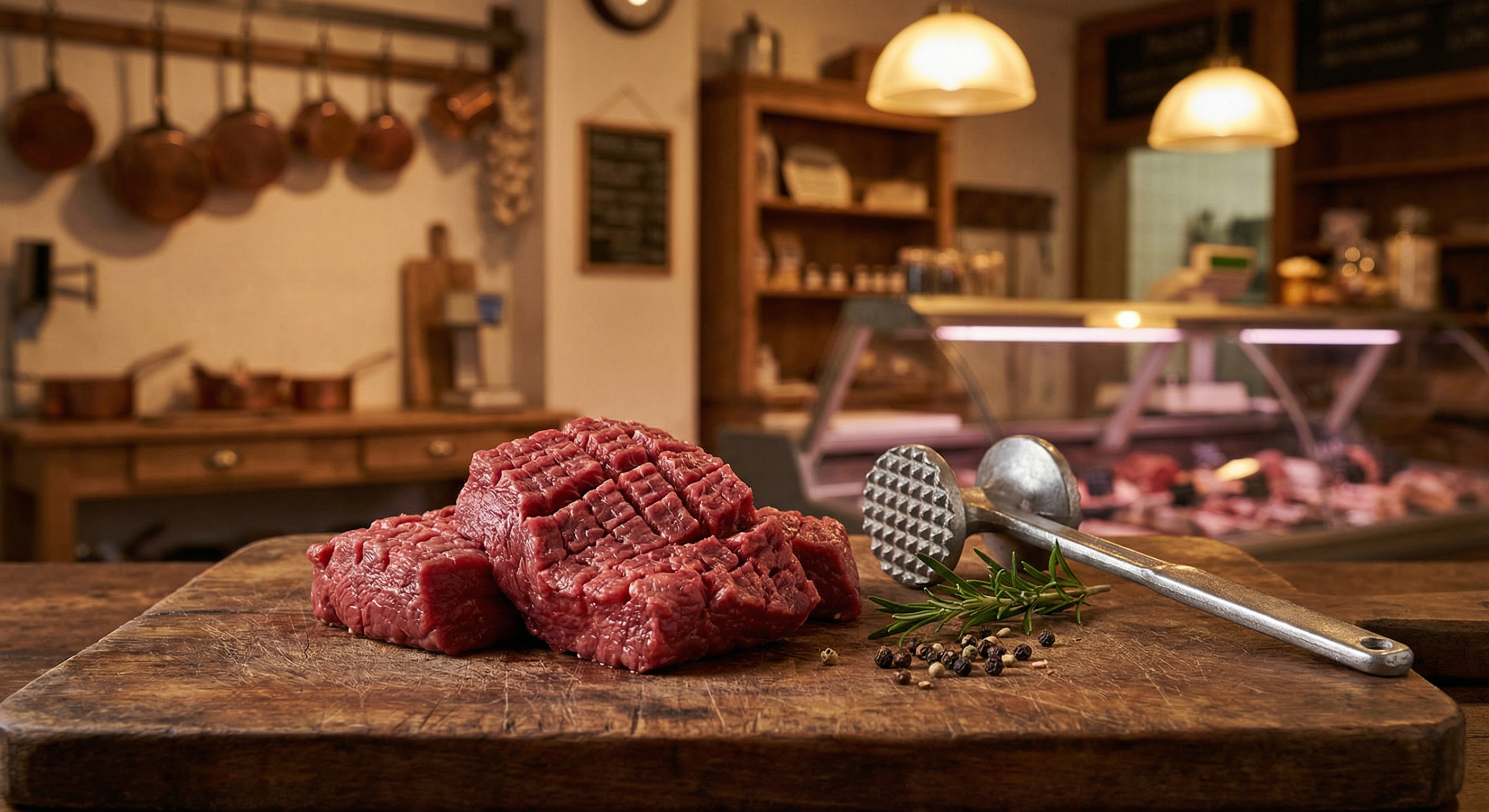
If you grew up in the South or the Midwest, you already know cube steak. It's the backbone of chicken-fried steak, the star of smothered steak with gravy, and one of the most honest, hardworking cuts in the American meat case. But if you didn't grow up with it, you've probably walked past it a hundred times without giving it a second look — and that's a mistake.
Cube steak is a mechanically tenderized cut of beef, usually from the top round or top sirloin, that's been run through a machine (or pounded by hand) to break down the tough muscle fibers. The name comes from the cube-shaped indentations left on the surface by the tenderizing process. It's cheap, it's versatile, and when cooked properly, it's genuinely delicious.
After 30 years behind the butcher block, I've sold more cube steak than I can count. Let me tell you everything you need to know about this underappreciated cut.
Where Does Cube Steak Come From?
Cube steak isn't a specific anatomical cut — it's a preparation method applied to tough cuts from the round primal (the rear leg of the cow). The most common source muscles are:
- Top round — The most common source. Lean, relatively uniform in shape, and inexpensive. This is what you'll find in most grocery store cube steaks.
- Bottom round — Slightly tougher than top round, but still a fine choice for cubing.
- Eye of round — Very lean and can be dry, but cubing helps compensate for the toughness.
- Top sirloin — A step up in quality. Some higher-end butchers cube sirloin for a more flavorful product.
All of these muscles come from the round primal — the rear leg of the cow. This section does a LOT of work during the animal's life. Walking, standing, supporting 1,200+ pounds of body weight — these muscles never rest. That constant exercise makes them lean, dense, and tough. Without tenderization, a round steak cooked over high heat would be chewy enough to double as a doorstop.
That's where the cubing process comes in.
How Is Cube Steak Made?
The "cubing" in cube steak refers to mechanical tenderization — a process that physically breaks down the muscle fibers and connective tissue in tough cuts.
Commercial Method: The Cubing Machine
In commercial butcher shops and meat processing plants, cube steak is made using a mechanical tenderizer — essentially a set of rotating blades or hammers that pierce and flatten the meat. The steak is fed through the machine, which punctures it with dozens of small blade-shaped cuts in a grid pattern. This process:
- Severs muscle fibers — The blades cut through the long, tough fibers that make round steaks chewy.
- Breaks connective tissue — Collagen and elastin networks are disrupted, preventing that rubbery texture.
- Flattens the steak — The meat comes out thinner and more uniform, typically 1/4 to 1/2 inch thick.
- Creates the distinctive pattern — Those cube-shaped indentations on the surface are the signature of the tenderizing blades.
Some machines run the steak through twice — once on each side — for maximum tenderization. The result is a piece of beef that was tough enough to braise for hours, transformed into something you can pan-fry in 5 minutes.
DIY Method: The Meat Mallet
You can absolutely make cube steak at home. Buy a top round steak (usually $6-$10/lb), place it between two sheets of plastic wrap, and pound it with a textured meat mallet or the back of a heavy skillet. Hit it firmly and evenly until it's about 1/4 inch thick. Flip and repeat on the other side.
The home version won't have the perfectly uniform grid pattern of a commercial cubing machine, but the result is functionally identical: tenderized, flattened beef ready for the pan.
Cube Steak vs. Other Budget Cuts
How does cube steak stack up against other affordable beef options? Here's the honest comparison:
| Cut | Price/lb | Tenderness | Flavor | Best Use |
|---|---|---|---|---|
| Cube Steak | $5-$9 | Moderate (tenderized) | Mild, clean | Pan-frying, chicken-fried steak |
| Round Steak | $5-$8 | Low (tough) | Mild, lean | Braising, Swiss steak |
| Chuck Steak | $6-$10 | Low-Medium | Rich, beefy | Braising, grilling (if thick) |
| Flat Iron | $8-$14 | High | Rich, marbled | Grilling, pan-searing |
| London Broil | $6-$10 | Low-Medium | Lean, beefy | Marinating, grilling, slicing thin |
Cube steak occupies a unique niche: it's the only budget cut that's been pre-tenderized, making it a quick-cooking option in a price range where most cuts require hours of braising. That's its superpower. When you want steak on a Tuesday night for under $10 total, and you don't have 3 hours for a braise, cube steak delivers.
How to Cook Cube Steak: 5 Methods That Work
Cube steak is thin, lean, and pre-tenderized. These characteristics dictate the cooking approach: fast, hot, and with some form of added fat or moisture. Here are the methods I recommend after decades of cooking and selling this cut.
1. Chicken-Fried Steak (The Classic)
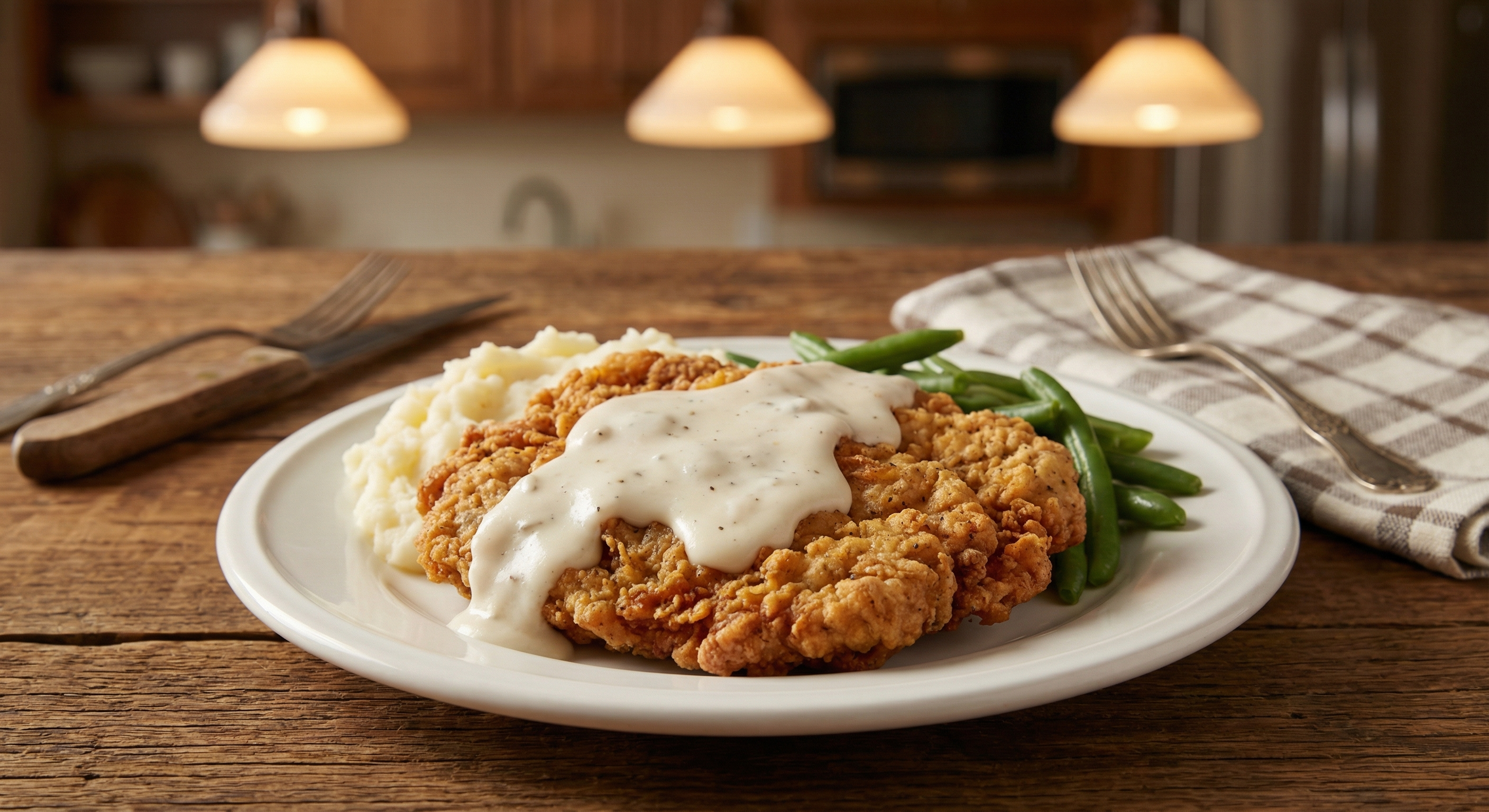
This is the dish that put cube steak on the map. If you've never had chicken-fried steak done right — with a shatteringly crisp coating and a river of cream gravy — you're missing one of America's great comfort foods.
- Season the steaks generously with salt, pepper, and garlic powder on both sides.
- Set up a breading station: flour seasoned with salt, pepper, and paprika in one dish; beaten eggs with a splash of buttermilk in another; more seasoned flour in a third.
- Dredge each steak: flour → egg → flour. Press the coating firmly so it adheres. Let the breaded steaks rest on a wire rack for 10 minutes — this helps the coating set.
- Fry in a cast iron skillet with 1/2 inch of vegetable oil or shortening at 350°F. Cook 3-4 minutes per side until deeply golden brown and crispy.
- Drain on a wire rack (not paper towels, which make the bottom soggy).
- Make cream gravy in the same skillet: pour off all but 3 tablespoons of the frying fat, add 3 tablespoons flour, cook 2 minutes, then whisk in 2 cups of whole milk. Season with salt, pepper, and a pinch of cayenne. Simmer until thick.
This is the definitive cube steak preparation. The breading provides the fat and crunch the lean meat needs, and the cream gravy provides the richness. It's not health food — it's soul food.
2. Smothered Steak with Onion Gravy
Another Southern classic. This method braises the cube steak briefly in a rich onion gravy, adding moisture back to the lean cut:
- Season cube steaks and dredge lightly in seasoned flour.
- Brown in a hot skillet with oil, 2-3 minutes per side. Remove and set aside.
- Add 2 large sliced onions to the skillet. Cook until soft and golden, 8-10 minutes.
- Add 2 tablespoons flour, stir for 1 minute, then add 2 cups of beef broth.
- Return the steaks to the skillet, cover, and simmer on low for 30-45 minutes until the meat is fork-tender and the gravy is thick.
The brief braise compensates for the lean round's tendency to dry out, and the onion gravy is deeply comforting.
3. Swiss Steak
Swiss steak is cube steak braised in a tomato-based sauce — a preparation that dates back to mid-20th century American home cooking:
- Brown floured cube steaks in a Dutch oven.
- Add diced onions, celery, carrots, and garlic. Cook 5 minutes.
- Add a 14-oz can of crushed tomatoes, 1 cup beef broth, and seasonings (thyme, Worcestershire sauce, salt, pepper).
- Cover and braise at 325°F for 1.5-2 hours.
The long braise further tenderizes the already-cubed steak and creates a rich, tomatoey sauce. Serve over egg noodles or mashed potatoes.
4. Quick Pan-Sear (Simple Weeknight Method)
When you want steak fast and simple:
- Pat cube steaks completely dry with paper towels.
- Season with salt, pepper, and garlic powder.
- Heat a cast iron skillet over high heat with 2 tablespoons of butter or oil.
- Sear 2-3 minutes per side — no more. The thin profile means overcooking happens fast.
- Rest 3 minutes. Serve with a pan sauce (deglaze with beef broth and butter).
Warning: Plain pan-seared cube steak without a breading or sauce will be drier than a ribeye or strip because the round is so lean. A quick pan sauce or compound butter helps enormously.
5. Steak Sandwiches
Cube steak makes excellent steak sandwiches. The thin, tenderized slices are perfect for hoagies:
- Season and quickly pan-sear cube steaks in a hot skillet.
- Slice into strips while still hot.
- Load into toasted hoagie rolls with sautéed peppers, onions, and provolone cheese.
- Broil briefly to melt the cheese.
It's not a true Philly cheesesteak (which uses shaved ribeye or top round), but it's a very good approximation at a fraction of the cost.
Cube Steak Cooking Tips from 30 Years Behind the Counter
These are the things I tell every customer who picks up cube steak:
- Don't overcook it. Cube steak is thin and lean — it goes from done to dry in under a minute. Cook it fast and hot, or braise it low and slow. There's no middle ground with this cut.
- Add fat. Whether it's a breading, a gravy, a sauce, or just a generous amount of butter in the pan, cube steak needs external fat to compensate for the lean round it comes from.
- Flour it before browning. Even if you're not making chicken-fried steak, a light dusting of seasoned flour before searing creates a better crust and thickens any pan sauce you make afterward.
- Don't confuse it with minute steak. Minute steak is a similar product — thin, quick-cooking beef — but it's not always tenderized. Cube steak has been specifically run through a tenderizer. If you see both at the store, cube steak is the better choice for pan-frying.
- Check the source muscle. If the label says "top round cube steak," that's standard and fine. If it says "sirloin cube steak," you've found a slightly premium product that'll have more flavor.
How to Buy the Best Cube Steak
Not all cube steak is created equal. Here's what to look for at the meat counter:
Color
Look for bright red to pinkish-red meat with minimal browning. Some surface browning is normal (the tenderizing process exposes more surface area to oxygen), but the meat should look fresh, not grey.
Thickness
Aim for 1/4 to 1/2 inch thick. Thinner than 1/4 inch and it's almost impossible to sear without overcooking. Thicker than 1/2 inch and the tenderizing may not have penetrated fully.
Uniformity
The steaks should be roughly even in thickness throughout. Uneven steaks cook unevenly, leaving you with parts that are perfect and parts that are overcooked.
Grade
Most cube steak is USDA Select or Choice. Since the cut is from the lean round, the grade difference is less dramatic than with premium steaks. Don't overpay for Prime cube steak — it defeats the purpose of buying a budget cut.
Price
Expect to pay $5-$9 per pound at most grocery stores. If you're paying more than that, you're buying from the wrong place — or the butcher is using a more expensive source muscle like sirloin. A whole top round roast ($5-$7/lb) can be sliced and tenderized at home for even less.
Cube Steak Nutrition
For the health-conscious, cube steak is actually a solid choice. Because it comes from the lean round:
- High protein: About 26g of protein per 4-oz serving
- Low fat: 6-8g total fat per serving (before cooking additions)
- Iron-rich: Good source of heme iron, zinc, and B12
- Calorie-efficient: About 160-180 calories per 4-oz serving (plain)
Of course, chicken-fried steak with cream gravy isn't exactly a health food. But the base protein itself is legitimately lean and nutritious. If you pan-sear it simply with minimal added fat, cube steak is one of the leanest beef options available.
The History of Cube Steak
Cube steak is a distinctly American product. The mechanical tenderizer was developed in the early 20th century as a way to make tough, inexpensive beef more accessible to working-class families. Before cubing machines, the only options for tough round steaks were slow braising (which takes hours and fuel) or manual pounding (which is labor-intensive).
The cubing machine changed everything. Suddenly, a cut that previously required 3 hours of cooking could be pan-fried in 5 minutes. This democratized steak — you didn't need a premium cut or a lot of time to put meat on the table.
Chicken-fried steak, the most iconic cube steak dish, has roots in German and Austrian wiener schnitzel — breaded and fried cutlets brought to Texas by German immigrants in the 19th century. They adapted the technique to beef instead of veal, and a Texas institution was born.
Cube Steak vs. Minute Steak
These two terms are often used interchangeably, but there's a technical difference:
- Cube steak has been mechanically tenderized with a cubing machine, creating the distinctive grid pattern on the surface. It's specifically processed to break down tough fibers.
- Minute steak is simply a thin-cut steak (usually 1/4 inch or less) from any part of the animal. It may or may not be tenderized. The name refers to the cooking time, not the preparation.
In practice, many stores label tenderized round steaks as "minute steak" and non-tenderized thin steaks as "sandwich steak." The labeling is inconsistent across the industry. If you want guaranteed tenderization, look specifically for the word "cube steak" or the visible grid pattern on the surface.
Common Mistakes with Cube Steak
Mistake 1: Cooking it like a regular steak
Cube steak is not a ribeye. It doesn't have the fat content to stay juicy on its own. Cooking it plain over high heat without a breading, sauce, or braising liquid usually produces dry, disappointing results.
Mistake 2: Overcooking
At 1/4 to 1/2 inch thick, cube steak overcooks in seconds. If you're pan-frying, 2-3 minutes per side is the maximum. If you're braising, the long cook time compensates, but for any quick-cook method, err on the side of less time.
Mistake 3: Skipping the rest
Even thin steaks benefit from a 2-3 minute rest after cooking. The muscle fibers need time to relax and reabsorb juices. Cutting or biting into cube steak straight from the pan means more moisture on your plate and less in the meat.
Mistake 4: Using it for the wrong application
Cube steak is not a grilling steak. The thin profile and lack of fat means it dries out over direct heat before you can develop any char. Keep it in the skillet where you can control the heat and add fat.
Making Your Own Cube Steak at Home
If you want to save money or control the quality, making cube steak at home is straightforward:
- Buy a top round steak or roast — typically $5-$7/lb at most grocery stores.
- Slice into 1/2-inch thick steaks if starting from a roast. Cutting against the grain gives the best results.
- Place between plastic wrap — this prevents sticking and contains the mess.
- Pound with a textured meat mallet — the spiked side, not the flat side. Hit firmly and evenly, working from the center outward. Aim for 1/4-inch thickness.
- Flip and repeat on the other side.
The advantage of DIY cube steak: you know exactly what muscle you're starting with, and you can control the thickness. The disadvantage: it's messy and takes about 5 minutes per steak. Still, buying a $6/lb top round and cubing it yourself is about 30% cheaper than buying pre-cubed steaks at $8-$9/lb.
Frequently Asked Questions
Is cube steak good quality?
Cube steak is a tenderized version of an economical cut. It's not premium quality like ribeye or strip — it's lean, mild, and functional. But "quality" is relative to purpose. For chicken-fried steak, smothered steak, and quick weeknight dinners, cube steak is excellent quality for the job it's meant to do.
Can I grill cube steak?
I don't recommend it. The thin profile and low fat content make it prone to drying out over the high heat of a grill. Stick to pan-frying, braising, or baking. If you want a budget grilling steak, try flat iron or chuck eye instead.
What's the best way to tenderize cube steak further?
It's already been tenderized, but you can improve it further by marinating in buttermilk for 1-2 hours before cooking. The acidity gently breaks down proteins, and the milk proteins add richness. This is actually the secret behind many great chicken-fried steak recipes.
How long does cube steak last in the fridge?
3-5 days in the original packaging. The increased surface area from tenderization means it oxidizes faster than a solid steak, so use it sooner rather than later. If you won't cook it within 3 days, freeze it — cube steak freezes well for up to 4 months.
Is cube steak the same as ground beef?
No. Cube steak is a whole-muscle product that's been tenderized but remains intact. Ground beef has been completely broken down and reformed. The texture, cooking methods, and uses are entirely different.
The Butcher's Bottom Line
Cube steak isn't sexy. It doesn't get featured on food TV shows or Instagram accounts. It doesn't command premium prices or inspire heated debates among steak enthusiasts. But it feeds families. It makes one of America's greatest comfort foods possible. And at $5-$9 per pound, it puts real beef on the table for people who can't afford $25 ribeyes.
In my book, that makes cube steak one of the most important cuts in the case. Respect the round, respect the process, and don't overcook it. That's all you need to know.
Looking for premium cuts that don't need tenderizing? Browse The Meatery's beef collection for American Wagyu and USDA Prime options that deliver tenderness naturally — no mallet required.
Frequently Asked Questions
What is cube steak?
Cube steak is a cut of beef — usually top round or top sirloin — that has been mechanically tenderized by running it through a machine with textured blades. The process creates a distinctive grid pattern of indentations on the surface and breaks down tough muscle fibers, making it tender enough to pan-fry quickly.
What cut of meat is cube steak made from?
Cube steak is most commonly made from top round, though bottom round, eye of round, and top sirloin are also used. These all come from the round primal (rear leg) of the cow — lean, tough muscles that benefit significantly from the mechanical tenderizing process.
How do you cook cube steak so it's not tough?
The key is to either cook it fast and hot (pan-fry 2-3 minutes per side with a breading or in butter) or braise it low and slow (in gravy or tomato sauce for 1-2 hours). Avoid medium-heat, medium-time cooking — that's the zone where cube steak dries out and toughens up.
Is cube steak the same as minute steak?
Not exactly. Cube steak has been mechanically tenderized with a cubing machine, creating the signature grid pattern. Minute steak is simply any thin-cut steak (named for its quick cooking time) that may or may not be tenderized. Many stores use the terms interchangeably, but true cube steak is always tenderized.
Is cube steak healthy?
Cube steak is relatively lean — about 26g of protein and only 6-8g of fat per 4-oz serving (plain). It's a good source of iron, zinc, and B12. However, classic preparations like chicken-fried steak with cream gravy add significant calories and fat from the breading and sauce.
Can you make cube steak at home?
Yes. Buy a top round steak, place it between plastic wrap, and pound it with the textured side of a meat mallet until it's about 1/4 inch thick. This DIY approach is about 30% cheaper than buying pre-cubed steaks and lets you control the thickness and source muscle.
More Expert Guides
What Is Chateaubriand? (Cut, Cooking, & Best Sources)
Chateaubriand is a thick-cut roast from the center of the beef tenderloin, traditionally served for two. Learn what makes this classic French cut special and how to cook it.
14 min readWhat Is Round Steak? The Complete Guide to Beef's Most Versatile Budget Cut
Round steak comes from the rear leg of the cow — it's lean, affordable, and misunderstood. A master butcher breaks down every sub-cut, cooking method, and technique to turn this budget workhorse into genuinely delicious meals.
14 min readWhat Is Eye of Round? The Complete Butcher's Guide to This Lean Cut
Eye of round is one of the leanest, most affordable cuts in the entire beef case — and one of the most misunderstood. A butcher explains how to turn this budget-friendly roast into something genuinely delicious.