What Is Coulotte Steak? The Butcher's Guide to Top Sirloin Cap
If you've ever walked past the sirloin section of a well-stocked butcher counter and noticed a triangular cut with a thick fat cap, there's a good chance you were looking at coulotte steak. It goes by half a dozen names — top sirloin cap, sirloin cap steak, picanha (in Brazilian steakhouses), and occasionally "rump cap" — but whatever you call it, this is one of the most flavorful and underappreciated cuts of beef you can buy.
After thirty years of breaking down whole sirloins, I can tell you that the coulotte is the cut butchers keep for themselves. It has the tenderness of a good sirloin, the flavor depth that rivals a ribeye, and a fat cap that bastes the meat as it cooks. Yet most American grocery shoppers walk right past it because they don't know what they're looking at.
That changes today. Here's everything you need to know about coulotte steak — where it comes from, what makes it special, and exactly how to cook it.
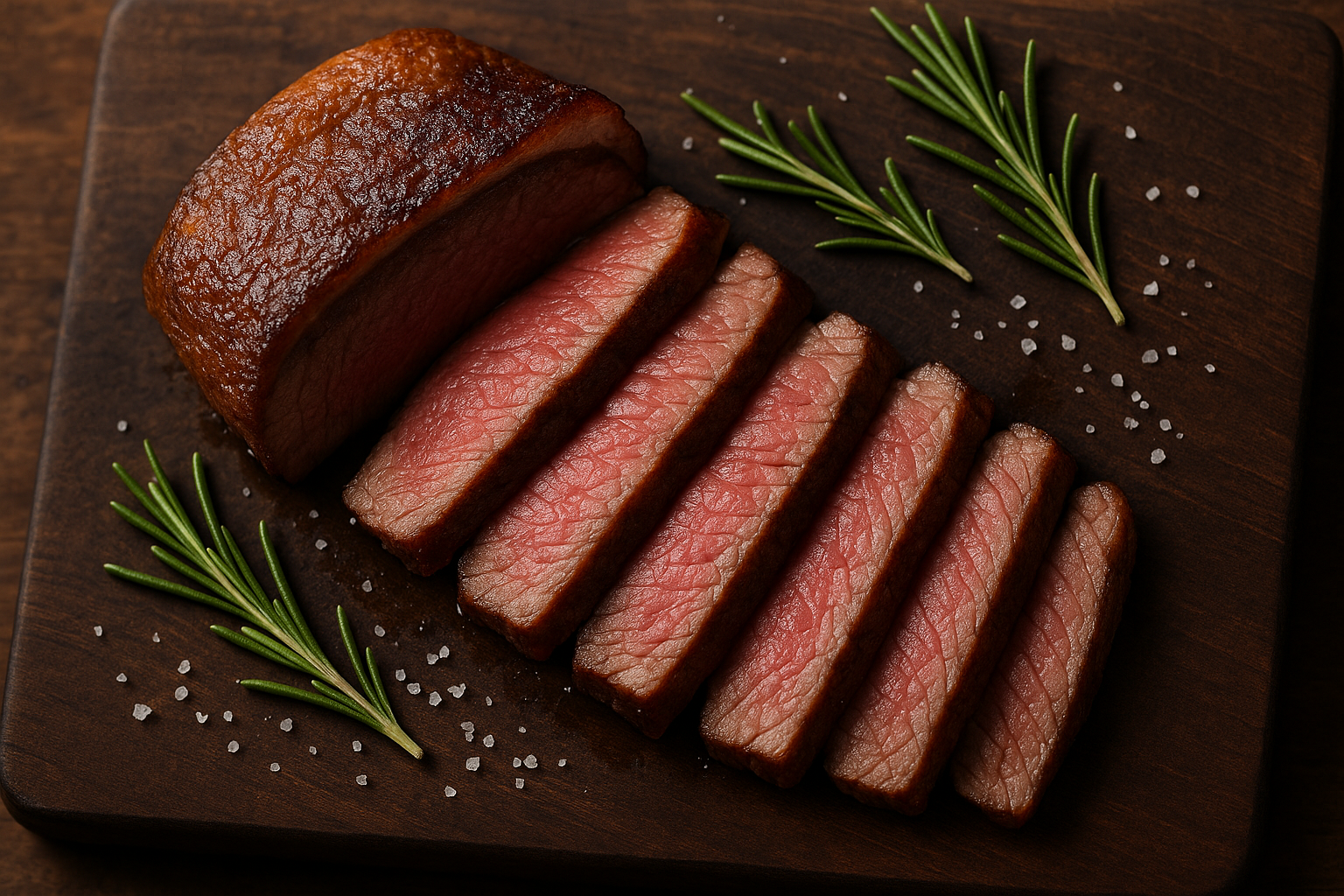
Where Does Coulotte Steak Come From?
The coulotte comes from the top sirloin subprimal, specifically from a triangular muscle called the biceps femoris that sits on top of the sirloin like a cap. Picture the hindquarter of the cow: the sirloin sits just behind the short loin (where T-bones and porterhouses come from) and in front of the round. The coulotte is the uppermost layer of that sirloin section, right beneath the fat and skin.
This muscle does relatively little work compared to cuts from the round or chuck. It's not completely sedentary like the tenderloin, but it gets far less exercise than a flank or skirt. That balance of moderate use gives coulotte its signature combination: enough connective tissue to deliver deep beefy flavor, but tender enough to cook quickly over high heat.
A whole coulotte roast typically weighs between 2.5 and 4 pounds. Butchers can sell it whole as a roast (sometimes labeled "top sirloin cap roast") or slice it crosswise into individual steaks roughly 1 to 1.5 inches thick. The individual steaks usually weigh between 8 and 12 ounces each.
Coulotte vs. Picanha: Are They the Same Cut?
Yes and no. Coulotte and picanha refer to the same muscle on the cow — the top sirloin cap. The difference is entirely cultural and in how it's prepared.
In American butchery, "coulotte" typically refers to individual steaks cut from the cap, often with the fat cap trimmed down or removed entirely. In Brazilian churrasco tradition, "picanha" is the whole cap roast, kept intact with its full fat cap, then sliced into thick C-shaped pieces that are skewered and grilled over open flame.
The preparation matters because the fat cap is the soul of this cut. When American butchers trim it off (as they often do for coulotte steaks), you lose a significant amount of flavor and moisture. My advice: always buy coulotte with the fat cap on, regardless of what name it's sold under. You can render that fat yourself and end up with a dramatically better steak.
What Does Coulotte Steak Taste Like?
Coulotte has a rich, full beefy flavor that punches above its weight class. On a flavor intensity scale, I'd place it between a New York strip and a ribeye — it's beefier and more complex than strip but not quite as rich or fatty as a well-marbled ribeye.
The texture is moderately tender with a slight chew. It's not butter-soft like filet mignon, but it's far more tender than flank or skirt steak. The grain runs in one direction, making it easy to slice against for maximum tenderness. When cooked properly (medium-rare to medium), the fat cap renders into a crispy, caramelized layer that adds incredible richness to each bite.
The marbling in coulotte is moderate — less than ribeye but more than most round cuts. This makes it a great option for people who want serious beef flavor without the heaviness of a highly marbled steak.
How to Cook Coulotte Steak
Coulotte is versatile, but it really shines with high-heat methods that can render the fat cap while keeping the interior pink and juicy.
Reverse Sear (Best Method)
The reverse sear is my top recommendation for coulotte steaks thicker than 1 inch. Start in a 250°F oven on a wire rack until the internal temperature hits 115°F (about 30-40 minutes). Then sear in a ripping-hot cast iron skillet, fat cap side down first, for 90 seconds per side. Rest for 5 minutes. This gives you an evenly cooked interior with a perfectly rendered, crispy fat cap.
Direct Grill
For a whole coulotte roast, set up a two-zone fire. Sear the roast over direct high heat for 2-3 minutes per side, then move to indirect heat and cook until the internal temperature reaches 130°F for medium-rare. Let it rest for 10 minutes before slicing against the grain.
Cast Iron Skillet
For individual steaks, get your cast iron smoking hot with a high-smoke-point oil. Place the steak fat cap down first and press gently to ensure full contact. Cook fat cap side for 2-3 minutes until golden and crispy, then flip and cook 3-4 minutes per side for medium-rare. Baste with butter, garlic, and thyme in the last minute.
Brazilian Churrasco Style
If you want the authentic picanha experience, slice the whole cap into 1.5-inch thick steaks, keeping the fat cap attached. Bend each slice into a C-shape and thread onto a skewer. Season with nothing but coarse salt. Grill over high heat, rotating the skewer, until the fat is rendered and the exterior is charred. Slice thin pieces off the outside as they cook, then return the skewer to the fire — this is the traditional rodízio method.
How Coulotte Compares to Other Cuts
Understanding where coulotte fits in the beef hierarchy helps you decide when to choose it over more familiar cuts.
Coulotte vs. Ribeye: Ribeye has significantly more marbling and fat content, making it richer but heavier. Coulotte is leaner with a concentrated beefy flavor. Choose coulotte when you want big flavor without feeling weighed down.
Coulotte vs. New York Strip: Very similar in tenderness and leanness, but coulotte has a more pronounced beefy flavor thanks to the fat cap. Strip has a finer grain. Coulotte is typically $3-5 per pound cheaper.
Coulotte vs. Tri-Tip: Both come from the sirloin area and share similar flavor profiles. Tri-tip is slightly leaner and has a more complex grain structure (it changes direction mid-cut). Coulotte is more uniformly grained and has the fat cap advantage.
Coulotte vs. Flank Steak: Coulotte is significantly more tender and forgiving to cook. Flank has more mineral, iron-rich flavor but must be sliced very thin against the grain. Coulotte gives you more room for error.
Buying Tips
Here's what to look for when shopping for coulotte steak:
Fat cap intact: This is non-negotiable. The fat cap should be at least 1/4 inch thick and evenly distributed. If the fat has been trimmed off, you're losing the best part of the cut. Some stores trim it for aesthetic reasons — ask the butcher for an untrimmed piece.
Color: Look for deep cherry red meat with white (not yellow) fat. Yellowish fat can indicate older, grass-finished beef — not necessarily bad, but it will taste different than the grain-finished version most people expect.
Thickness: For individual steaks, aim for at least 1 inch thick. Thinner steaks are nearly impossible to cook to medium-rare without overcooking. For a whole roast, 2.5-3 pounds is ideal for 4-6 servings.
Grade: USDA Choice is the sweet spot for coulotte. Prime is great but often unavailable in this cut at retail. Select grade will work but may be noticeably less tender. The fat cap compensates for lower marbling grades more than most cuts.
Price: Expect to pay $8-12 per pound for Choice grade coulotte, making it one of the best values in the beef case. Compare that to $16-25 for ribeye or $25-40 for tenderloin.
Common Mistakes to Avoid
Removing the fat cap before cooking: This is the number one mistake I see. That fat cap is there for a reason — it bastes the meat, adds flavor, and creates an incredible textural contrast when rendered crispy. Trim it after cooking if you must, but cook with it on.
Overcooking: Coulotte is best at medium-rare to medium (130-140°F internal). Push it past medium and it dries out quickly because it's leaner than cuts like ribeye. Use a meat thermometer — don't guess.
Slicing with the grain: Always slice coulotte against the grain. The muscle fibers run lengthwise, so cut crosswise into thin slices. This makes the difference between tender and chewy.
Skipping the rest: Let coulotte rest for at least 5 minutes after cooking (10 minutes for a whole roast). This redistributes the juices and prevents them from running out onto the cutting board.
Frequently Asked Questions
Frequently Asked Questions
Is coulotte steak tender?
Yes, coulotte steak is moderately tender — more so than flank, skirt, or round cuts, and comparable to New York strip. It's not as tender as filet mignon or ribeye, but when cooked to medium-rare and sliced against the grain, it's very enjoyable.
What is another name for coulotte steak?
Coulotte steak is also called top sirloin cap, sirloin cap steak, picanha (Brazilian name), rump cap, and occasionally culotte (alternate spelling). In some stores you'll see it labeled as "top sirloin cap roast" when sold whole.
Is coulotte the same as picanha?
Coulotte and picanha come from the same muscle — the top sirloin cap. The difference is mainly in preparation: coulotte is the American butchery term for individual steaks, while picanha is the Brazilian term for the whole roast prepared churrasco-style with the fat cap intact.
How much does coulotte steak cost?
Coulotte steak typically costs $8-12 per pound for USDA Choice grade, making it significantly more affordable than ribeye ($16-25/lb) or tenderloin ($25-40/lb). It's one of the best value cuts for the flavor it delivers.
Can you cook coulotte steak in the oven?
Yes. The reverse sear method works excellently — roast at 250°F until the internal temperature reaches 115°F, then finish with a hot sear in a cast iron skillet. For a whole roast, you can also roast at 325°F until 130°F internal for medium-rare, about 25-30 minutes per pound.
More Expert Guides
What Is Chateaubriand? (Cut, Cooking, & Best Sources)
Chateaubriand is a thick-cut roast from the center of the beef tenderloin, traditionally served for two. Learn what makes this classic French cut special and how to cook it.
14 min readWhat Is Round Steak? The Complete Guide to Beef's Most Versatile Budget Cut
Round steak comes from the rear leg of the cow — it's lean, affordable, and misunderstood. A master butcher breaks down every sub-cut, cooking method, and technique to turn this budget workhorse into genuinely delicious meals.
14 min readWhat Is Eye of Round? The Complete Butcher's Guide to This Lean Cut
Eye of round is one of the leanest, most affordable cuts in the entire beef case — and one of the most misunderstood. A butcher explains how to turn this budget-friendly roast into something genuinely delicious.