What is a Tomahawk Steak? The Butcher's Guide
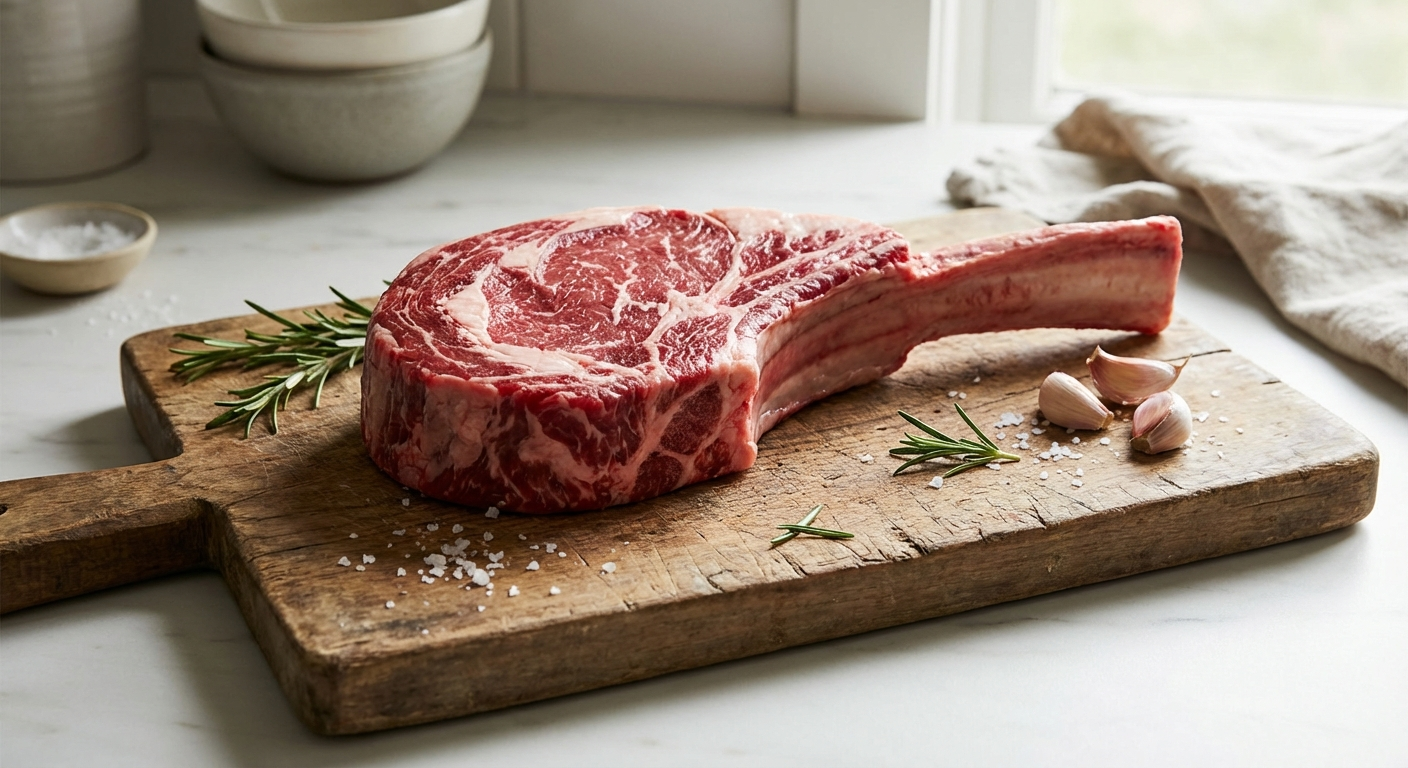
The tomahawk steak is the showstopper of the meat case — a bone-in ribeye with the entire rib bone left intact and frenched (cleaned of meat and fat) to create a handle that can extend 6 to 8 inches beyond the meat. It looks like something a caveman would eat, and honestly, eating one feels about that primal.
I've been cutting tomahawks for decades, long before Instagram made them famous. They've always been impressive. But now that every steakhouse and home cook wants one, let me give you the real guide — not the social media version, but the butcher's version.
What a Tomahawk Actually Is
A tomahawk is simply a bone-in ribeye steak with an extended, frenched rib bone. The meat is identical to any other ribeye — the longissimus dorsi (the eye), the spinalis dorsi (the cap), and the complexus. The only difference is the bone presentation.
The bone itself doesn't add flavor during a normal cook — that's a myth I need to address. The bone acts as a heat shield, slowing cooking on the bone side and creating a slight temperature gradient that some people enjoy. But the real reason for the bone is drama. And there's nothing wrong with that.
A typical tomahawk weighs 30 to 45 ounces (2 to 2.8 lbs) and is cut 2 to 2.5 inches thick. This is a steak for two people, minimum — or one very ambitious eater.
Tomahawk vs Cowboy vs Bone-In Ribeye
These three cuts cause constant confusion, so let me clarify:
- Bone-in ribeye: Ribeye steak with the rib bone trimmed to about 1–2 inches. Standard cut.
- Cowboy steak: Bone-in ribeye with a longer bone, typically 3–4 inches, partially frenched. A bigger presentation than standard bone-in.
- Tomahawk: Bone-in ribeye with the full rib bone (6–8+ inches), completely frenched. Maximum drama.
The meat is identical in all three. You're paying for bone weight and presentation. A 40 oz tomahawk might have 24–28 oz of actual meat — the rest is bone. Keep that in mind when comparing per-pound prices.
Buying a Tomahawk
Grade
USDA Prime is ideal for tomahawks. You're already making a statement with this cut — don't undermine it with mediocre marbling. At minimum, go upper Choice or Certified Angus Beef. If you can find American wagyu tomahawks, the marbling is extraordinary.
Thickness
At least 2 inches. Thinner tomahawks lose the advantage of the reverse sear method and cook too quickly on the exterior before the center reaches temperature. 2.5 inches is the sweet spot.
Weight
Expect 32–48 oz total. Remember, roughly 30% of that weight is bone. A 40 oz tomahawk feeds 2–3 people comfortably.
Where to Buy
Most grocery stores don't carry tomahawks. Your best options are a quality butcher shop (call ahead — they may need to cut it special), online specialty retailers like The Meatery, or Costco (which occasionally carries them in Prime).
How to Cook a Tomahawk: The Reverse Sear
The reverse sear is the definitive method for tomahawks. The thickness demands it — direct high heat alone would char the outside before the center gets warm.
Step 1: Prep (Day Before or 1+ Hours Before)
- Season generously with kosher salt on all surfaces.
- Ideally, salt the night before and leave uncovered on a rack in the fridge. The salt draws moisture out, which is reabsorbed along with the salt, and the surface dries — producing a better sear.
- Add coarse black pepper and any other seasoning right before cooking.
- Pull from the fridge 45–60 minutes before cooking to take the chill off.
Step 2: Low Oven (The "Reverse" Part)
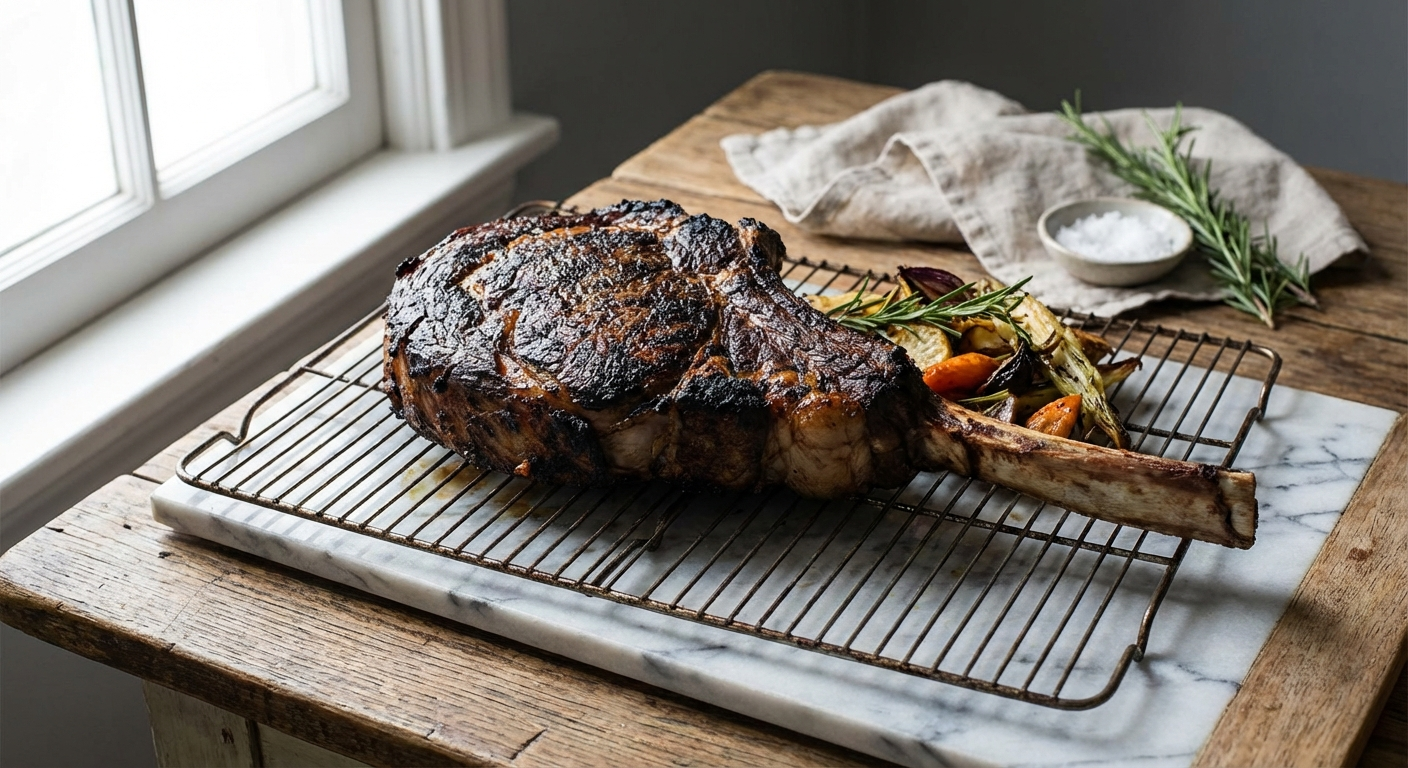
- Preheat oven to 250°F. Place a wire rack on a sheet pan.
- Set the tomahawk on the rack, bone side down.
- Insert a probe thermometer into the thickest part of the meat, away from the bone.
- Cook until internal temperature reaches 115–120°F for medium-rare final result. This takes 45–60 minutes depending on thickness.
- Remove and rest for 10 minutes while you heat your searing surface.
Step 3: The Sear
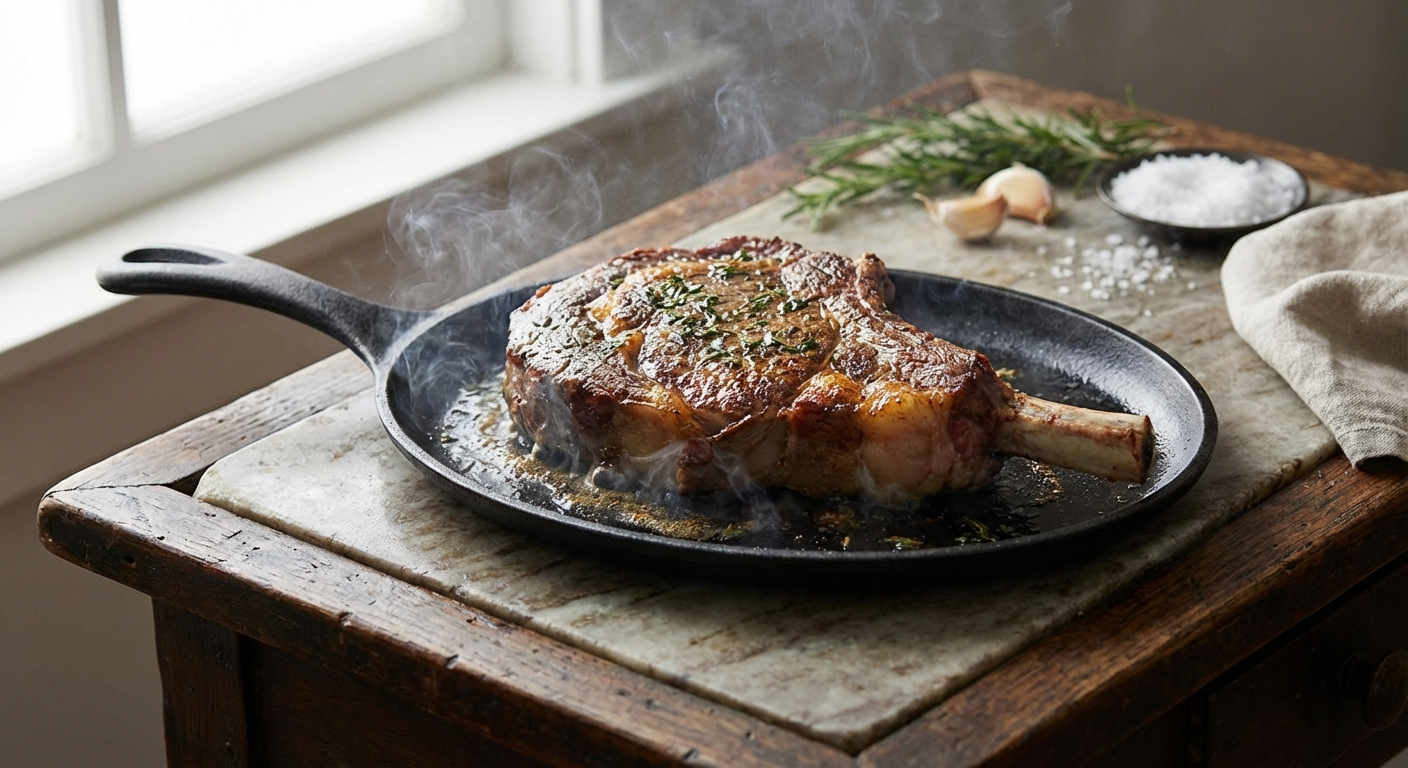
- Get a cast iron skillet (the biggest you have) screaming hot. Add a high-smoke-point oil (avocado oil is ideal).
- Sear the flat sides for 1–2 minutes per side until a deep brown Maillard crust forms.
- Use tongs to sear the fat cap edge for 30–60 seconds.
- In the last 30 seconds, add butter, crushed garlic, and fresh thyme. Baste the steak with the melted butter.
Alternatively, sear over the hottest part of a charcoal grill for that smoky char. Both methods are excellent.
Step 4: Rest and Slice
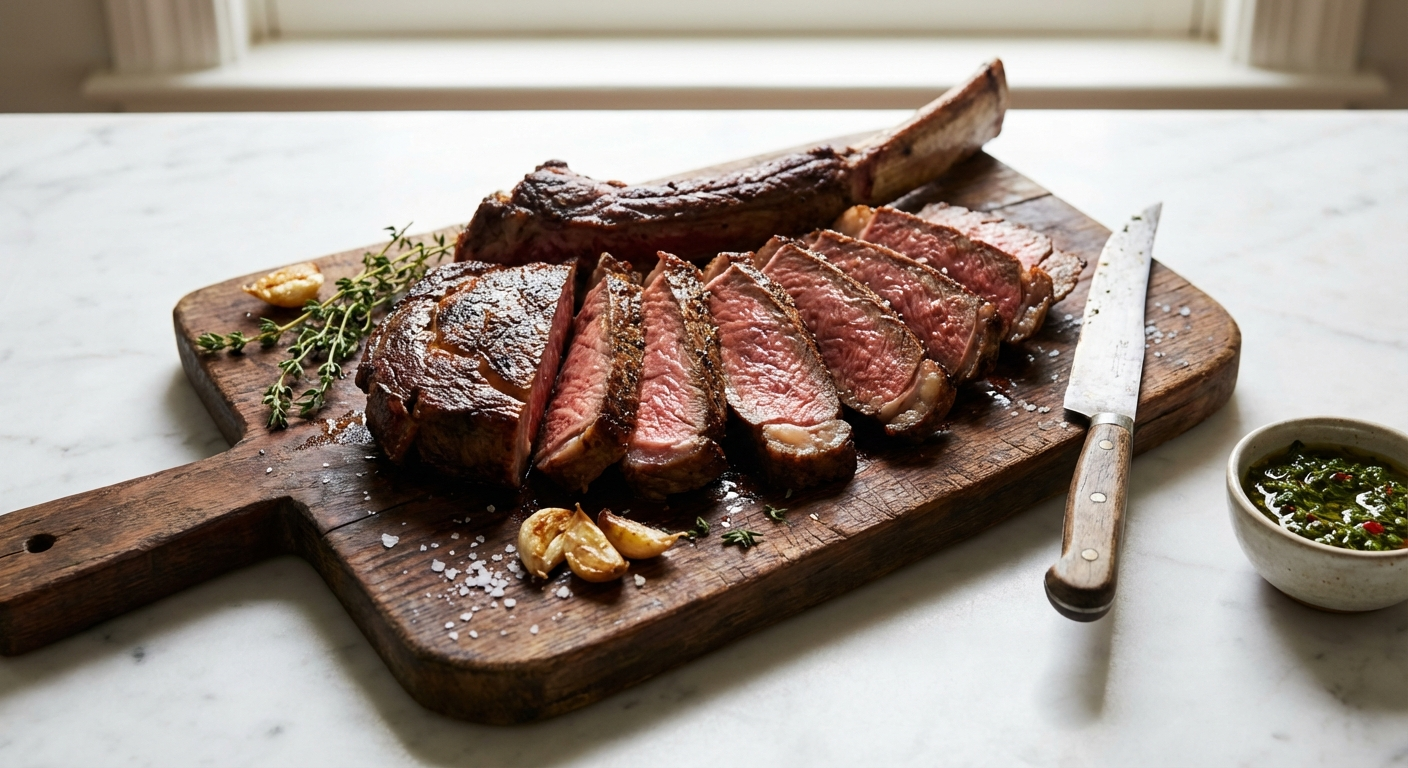
- Rest for 10 minutes on a cutting board. The internal temp will rise to 125–130°F (medium-rare).
- Slice the meat off the bone in one piece, then cut across the grain into 1/2-inch slices.
- Fan the slices next to the bone on a board or platter. Season with flaky finishing salt.
Common Mistakes
- Cooking entirely over high heat. A 2.5-inch steak will char black outside while remaining raw in the center. The reverse sear solves this.
- Not accounting for bone weight. Don't expect 40 oz of meat from a 40 oz tomahawk. You're getting about 28 oz of edible steak.
- Skipping the rest. A thick steak needs 10 minutes minimum. Cut too soon and you lose extraordinary amounts of juice.
- Trying to eat it alone. This is a shared cut. Slice and serve family-style.
Is a Tomahawk Worth the Price?
Per ounce of actual meat, tomahawks cost more than a standard boneless ribeye because you're paying meat prices for bone weight. A $50/lb tomahawk where 30% is bone means you're really paying about $70/lb for the meat.
Is it worth it? For a special occasion — a birthday, anniversary, Father's Day, or just a Saturday where you want to feel like a king — absolutely. The presentation, the ritual of the reverse sear, the communal slicing and sharing — that's worth something. Not every steak needs to be an optimized cost-per-ounce calculation.
For a regular Tuesday dinner, buy a boneless ribeye. For the moments that matter, bring out the tomahawk.
Frequently Asked Questions
How big is a tomahawk steak?
A typical tomahawk weighs 30-45 oz (2-2.8 lbs) and is cut 2-2.5 inches thick with a 6-8 inch frenched rib bone. About 70% of the weight is meat and 30% is bone. It feeds 2-3 people.
What is the best way to cook a tomahawk steak?
The reverse sear is the definitive method: slow-cook in a 250°F oven to 115-120°F internal, rest 10 minutes, then sear in a screaming hot cast iron for 1-2 minutes per side. This gives you edge-to-edge medium-rare with a perfect crust.
Is a tomahawk steak worth the price?
Per ounce of meat, tomahawks cost more than boneless ribeye because you're paying for bone weight. The meat is identical to a standard ribeye. The premium is for presentation and experience — worth it for special occasions, not for everyday cooking.
More Expert Guides
What Is Chateaubriand? (Cut, Cooking, & Best Sources)
Chateaubriand is a thick-cut roast from the center of the beef tenderloin, traditionally served for two. Learn what makes this classic French cut special and how to cook it.
14 min readWhat Is Round Steak? The Complete Guide to Beef's Most Versatile Budget Cut
Round steak comes from the rear leg of the cow — it's lean, affordable, and misunderstood. A master butcher breaks down every sub-cut, cooking method, and technique to turn this budget workhorse into genuinely delicious meals.
14 min readWhat Is Eye of Round? The Complete Butcher's Guide to This Lean Cut
Eye of round is one of the leanest, most affordable cuts in the entire beef case — and one of the most misunderstood. A butcher explains how to turn this budget-friendly roast into something genuinely delicious.