Ribeye vs Strip Steak: The Complete Comparison Guide
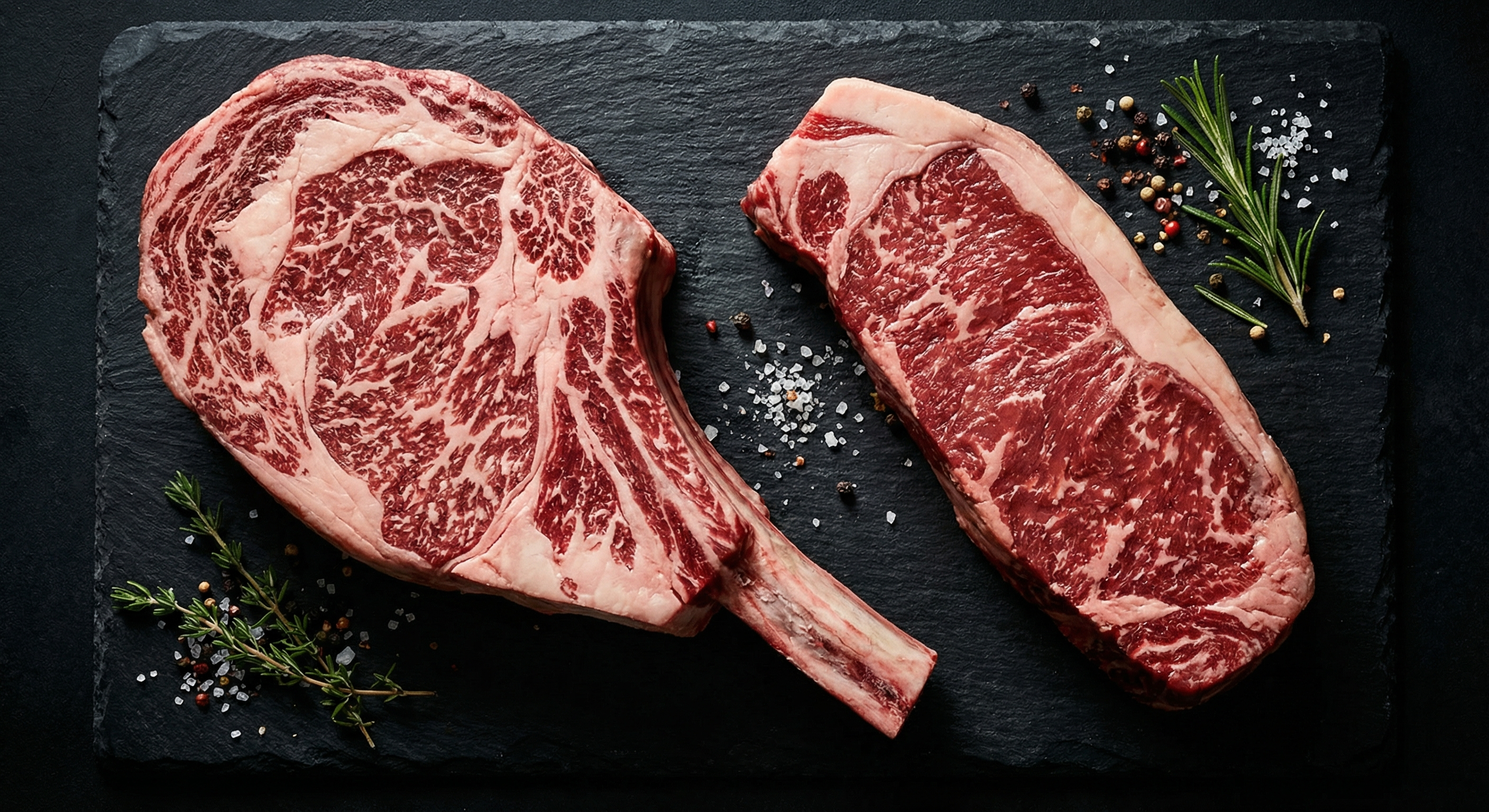
If I had a dollar for every time a customer stood at my counter, pointed at the ribeye and then the strip, and asked "which one should I get?" — I could've retired ten years ago. After four decades of cutting, selling, and cooking both of these steaks thousands of times, I can tell you this: there's no wrong answer. But there is a right answer for you, depending on what you're looking for.
The ribeye vs strip steak debate is the great divide of the steak world. Both are premium cuts. Both come from the same general area of the animal. Both command top dollar at steakhouses. But the eating experience? Completely different. Let me walk you through every detail so you can make the call with confidence.
Where Each Cut Comes From
Understanding the anatomy is the key to understanding the flavor. Both the ribeye and the strip come from the longissimus dorsi — the long muscle that runs along the cow's spine. But they come from different sections of that muscle, and that location changes everything.
Ribeye is cut from the rib primal, spanning ribs 6 through 12 along the upper back. This section of the longissimus sits in an area surrounded by fat deposits, and the muscle itself does very little work. The result: heavy marbling and supreme tenderness. A ribeye also includes portions of the spinalis dorsi (the "cap") and the complexus muscles, giving it that distinctive multi-textured character.
Strip steak — also called New York strip, Kansas City strip, or simply "the strip" — is cut from the short loin, which sits directly behind the rib section. It's the same longissimus muscle, but as you move toward the rear of the animal, the muscle gets leaner, firmer, and more uniform. The strip also has a strip of fat along one edge and sometimes a small piece of the gluteus medius attached.
Think of it this way: the ribeye is the longissimus at its fattiest and most luxurious. The strip is the same muscle tightened up, leaned out, and delivering a more focused beef experience.
Marbling: The Biggest Difference Between Ribeye and Strip
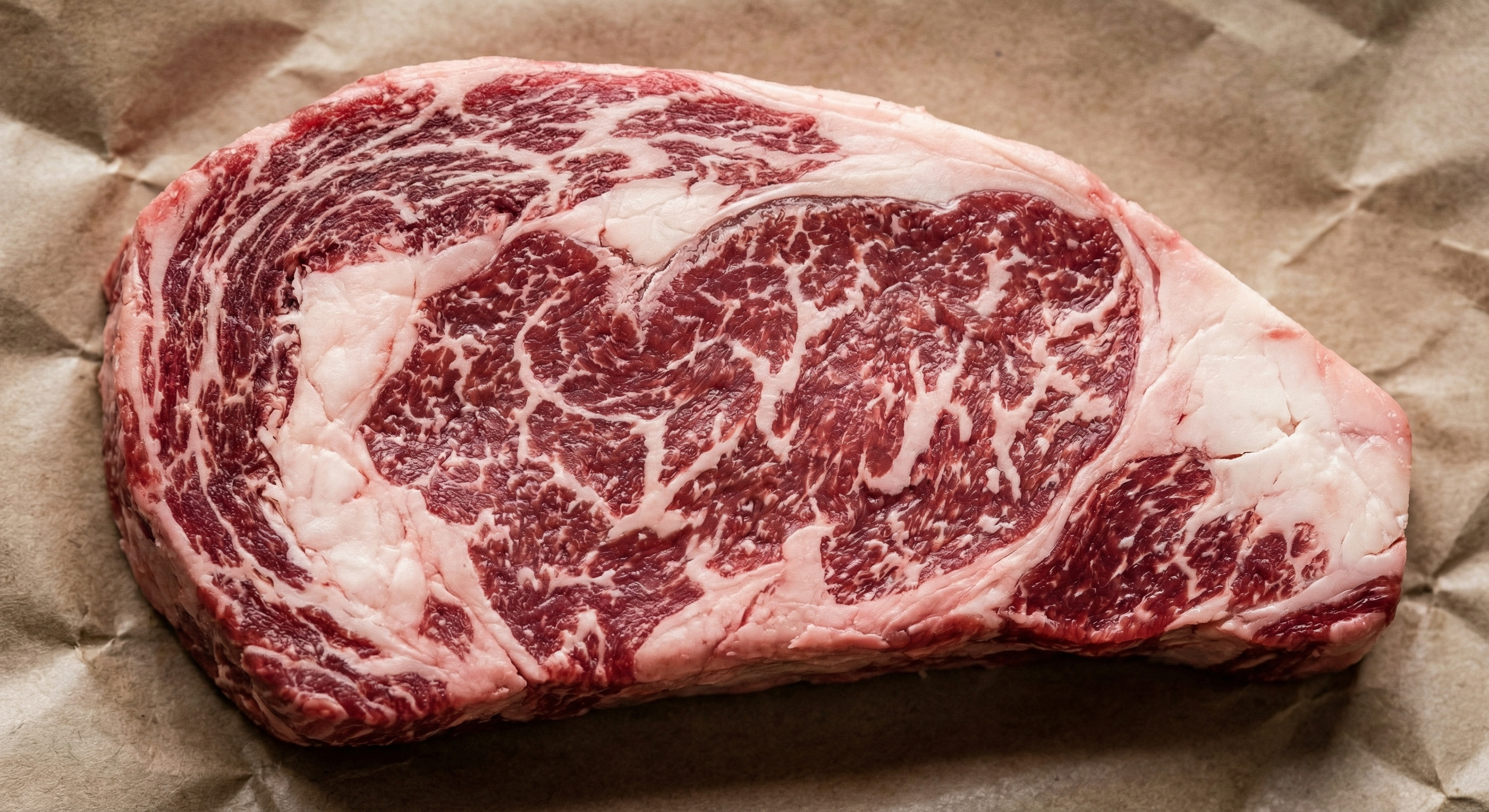
If you want to understand why these two steaks taste so different, look at the marbling. It tells you nearly everything.
Ribeye marbling is heavy, uneven, and almost extravagant. When you look at a raw ribeye — especially USDA Prime — you'll see thick white veins and flecks of intramuscular fat woven throughout the meat. The spinalis cap (that crescent-shaped outer muscle) is the single most marbled section on the entire animal. Some bites will be almost buttery from fat; others will be leaner. That variability is part of the ribeye experience.
Strip steak marbling is moderate, more evenly distributed, and concentrated toward the center of the steak. Instead of the dramatic fat swirls you see in a ribeye, the strip has finer, more uniform flecking. It also has a thick fat cap running along one edge — external fat rather than internal. This gives you a different kind of richness: clean beef flavor in the center, with rendered edge fat adding richness when you want it.
In practical terms: a USDA Choice ribeye often has as much or more marbling than a USDA Prime strip. The rib section is simply a fattier part of the animal. If marbling is your top priority, the ribeye wins every time — it's not even close.
Flavor Profile: Rich vs Clean
This is where personal preference really comes into play, and where the ribeye vs strip steak debate gets passionate.
Ribeye flavor is rich, buttery, and almost decadent. The heavy marbling melts during cooking, basting the meat from within and creating a lush, fatty mouthfeel. Each bite is a little different — one might be pure, tender cap muscle dripping with rendered fat, the next might be a leaner section from the eye. Serious steak lovers describe the ribeye as "luxurious" or "indulgent." It's the steak equivalent of a rich Burgundy wine.
Strip steak flavor is bold, clean, and intensely beefy. Without all that intramuscular fat softening the flavor, the actual taste of the beef comes through more sharply. The texture is firmer and more consistent bite to bite. Strip steak devotees describe it as "honest" or "pure beef." If the ribeye is Burgundy, the strip is a structured Cabernet — more defined, more focused.
Neither is objectively better. I've watched professional chefs argue this point until closing time. But here's my experience: people who love rich, fatty food tend to be ribeye people. People who appreciate clean, defined flavors tend to be strip people. Know thyself.
Tenderness: It's Closer Than You Think
There's a common misconception that ribeye is dramatically more tender than strip. In reality, the difference is more nuanced than that.
Ribeye tenderness comes from two sources: the naturally tender muscle fibers (these muscles barely work) and the heavy marbling that lubricates every bite. The spinalis cap is extraordinarily tender. The eye of the ribeye is also very tender. But there's a seam of fat and connective tissue between the muscles that can be slightly chewy if not rendered properly.
Strip steak tenderness is consistent and predictable. It's a single muscle, so every bite has roughly the same texture. It's slightly firmer than the ribeye's center — what I'd call "tender with structure." You get a satisfying resistance when you bite into it, followed by easy chewing. It's not tough by any means, but it has more "tooth" than a ribeye.
If you rank all the premium cuts by pure tenderness, the order goes: tenderloin (filet mignon), then ribeye cap, then ribeye eye, then strip. But the differences between ribeye and strip are modest. Both are firmly in the "premium tender" category. You'd need to eat them side by side to really notice.
Price Comparison: What You'll Actually Pay
Let's talk numbers, because this matters more than most food writers want to admit.
| Grade | Ribeye (per lb) | Strip Steak (per lb) | Difference |
|---|---|---|---|
| USDA Select | $12–$16 | $10–$14 | Ribeye +15–20% |
| USDA Choice | $16–$28 | $14–$24 | Ribeye +15–20% |
| USDA Prime | $28–$45 | $24–$38 | Ribeye +15–25% |
| American Wagyu | $45–$80+ | $38–$65+ | Ribeye +20–25% |
Ribeye consistently commands a premium over strip at every grade level. The rib section yields fewer steaks per animal than the loin, and consumer demand for ribeye is enormous. That said, the price gap is smaller than many people expect — usually 15–25%.
Here's my value tip: a USDA Prime strip steak often costs less than a Choice ribeye, and the eating experience is phenomenal. If you've been buying Choice ribeyes and want to level up without spending more, try a Prime strip. You might be surprised. The Meatery carries Prime and Wagyu strips that routinely convert ribeye loyalists.
Best Cooking Methods for Ribeye
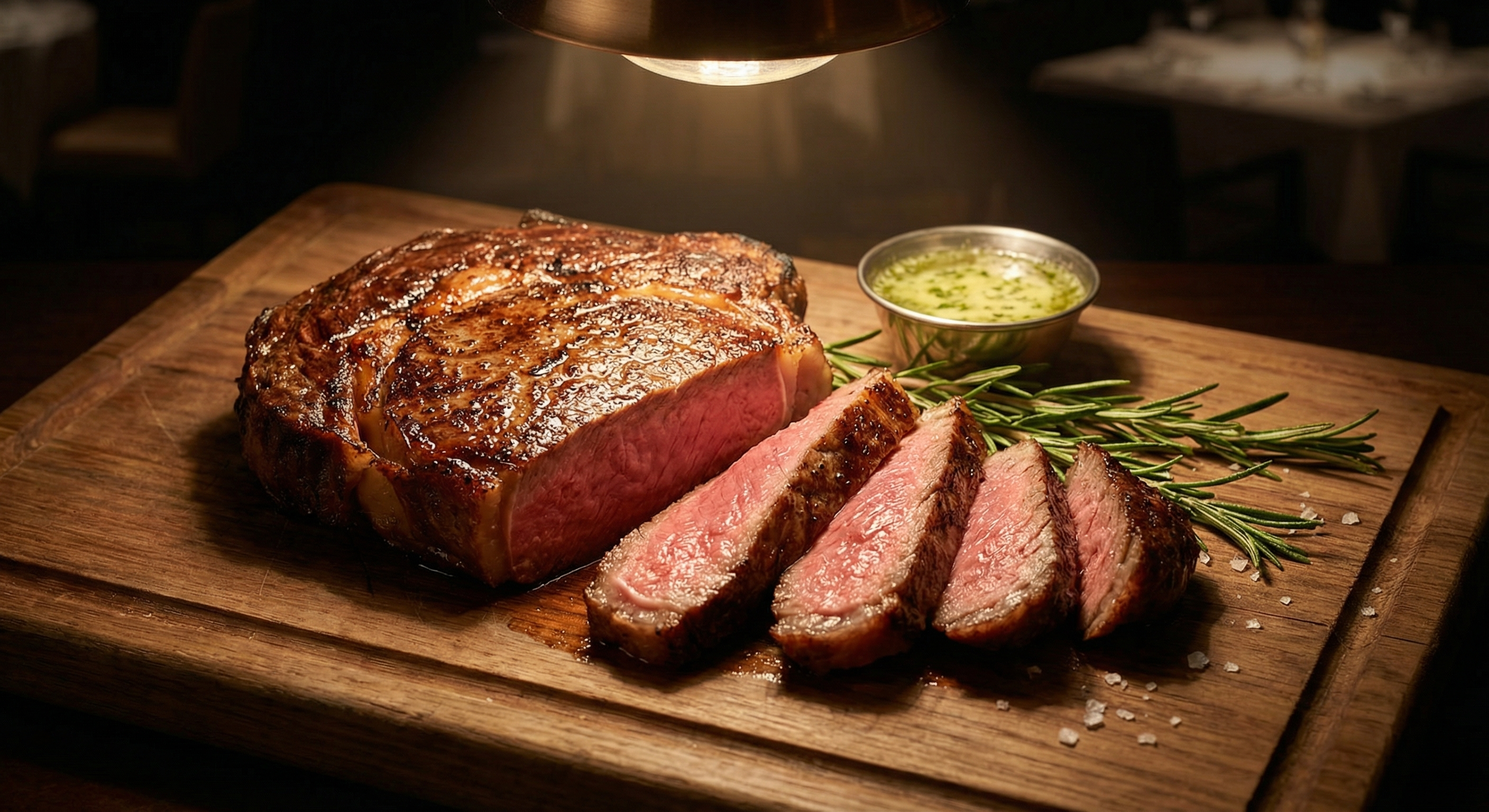
Ribeye's heavy marbling is both its greatest strength and its biggest cooking challenge. All that fat needs to render properly, or you'll end up with pockets of raw, waxy fat in an otherwise beautiful steak. Here are the methods that handle this best:
Reverse Sear (My #1 Pick for Ribeye)
The reverse sear is tailor-made for thick, well-marbled steaks. The low initial heat (250°F in the oven) gives the intramuscular fat time to render gently while bringing the interior to temperature. Then a scorching sear in cast iron finishes with a perfect crust.
- Season generously with coarse salt and pepper. Rest on a wire rack in the fridge for 1–24 hours.
- Place on a wire rack over a sheet pan. Roast at 250°F until internal temp hits 115°F (about 40–50 minutes for a 1.5-inch steak).
- Heat a cast iron skillet until it's screaming hot. Add a high-smoke-point oil.
- Sear 90 seconds per side. Baste with butter, garlic, and thyme for the last 30 seconds.
- Rest 8–10 minutes. Serve.
This method produces the most evenly rendered fat and the most consistent doneness from edge to edge. For thick-cut ribeyes (1.5 inches or thicker), nothing beats it.
Cast Iron Pan Sear
The classic steakhouse method. Works best for steaks 1–1.25 inches thick where the reverse sear isn't necessary:
- Preheat cast iron over high heat for 5 minutes.
- Pat the steak completely dry. Season heavily with salt.
- Sear 3–4 minutes per side for medium-rare.
- Add butter, garlic, rosemary. Baste for 1 minute.
- Rest 5–8 minutes.
Warning: Ribeyes generate a LOT of smoke when seared in cast iron. Ventilate your kitchen or do this outside on a portable burner. I've set off more smoke alarms with ribeyes than I care to admit.
Charcoal Grill
Set up a two-zone fire: hot coals on one side, nothing on the other. Start the ribeye over indirect heat until it's within 15 degrees of your target temp, then move it to the hot side for a hard sear. The dripping fat will cause flare-ups over direct heat — having that cool zone gives you an escape route.
Best Cooking Methods for Strip Steak
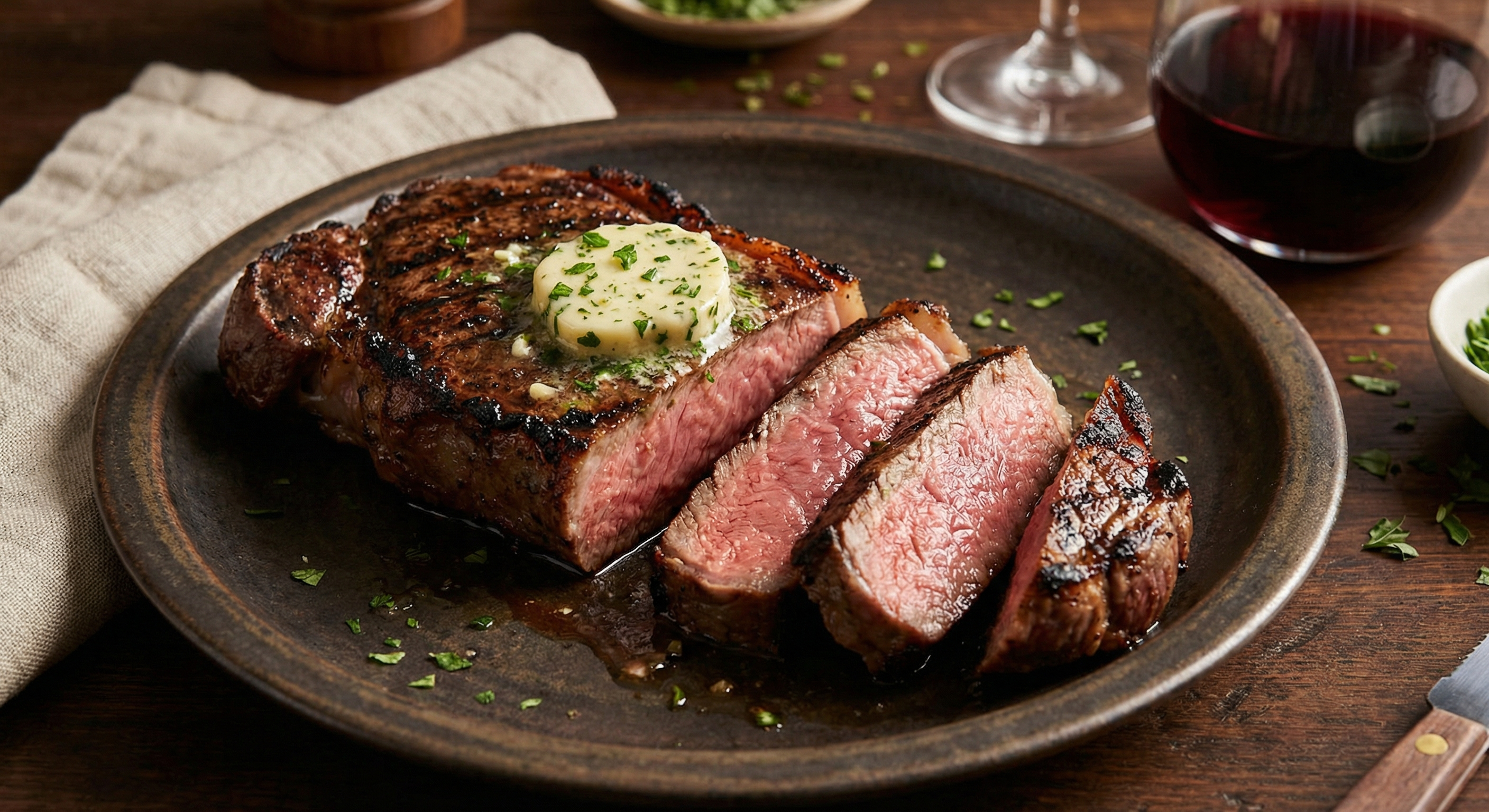
Strip steak is more forgiving and more versatile than ribeye when it comes to cooking methods. The leaner profile means less rendered fat to manage, fewer flare-ups, and a wider window of acceptable doneness.
Hot Grill (My #1 Pick for Strip)
Strip steak and a hot grill are a match made in heaven. The firm texture holds up beautifully to direct heat, and the exterior develops an incredible char without overcooking the interior:
- Season with salt 45 minutes ahead (or up to overnight uncovered in the fridge).
- Grill over direct high heat (500°F+), 4–5 minutes per side for medium-rare on a 1.25-inch steak.
- For diamond grill marks: rotate 45 degrees halfway through each side.
- Rest 5–8 minutes on a warm plate.
The strip's lower fat content means fewer flare-ups and more predictable cooking. You can grill a strip steak with confidence while barely paying attention — something I would never say about a ribeye over direct flame.
Cast Iron Pan Sear
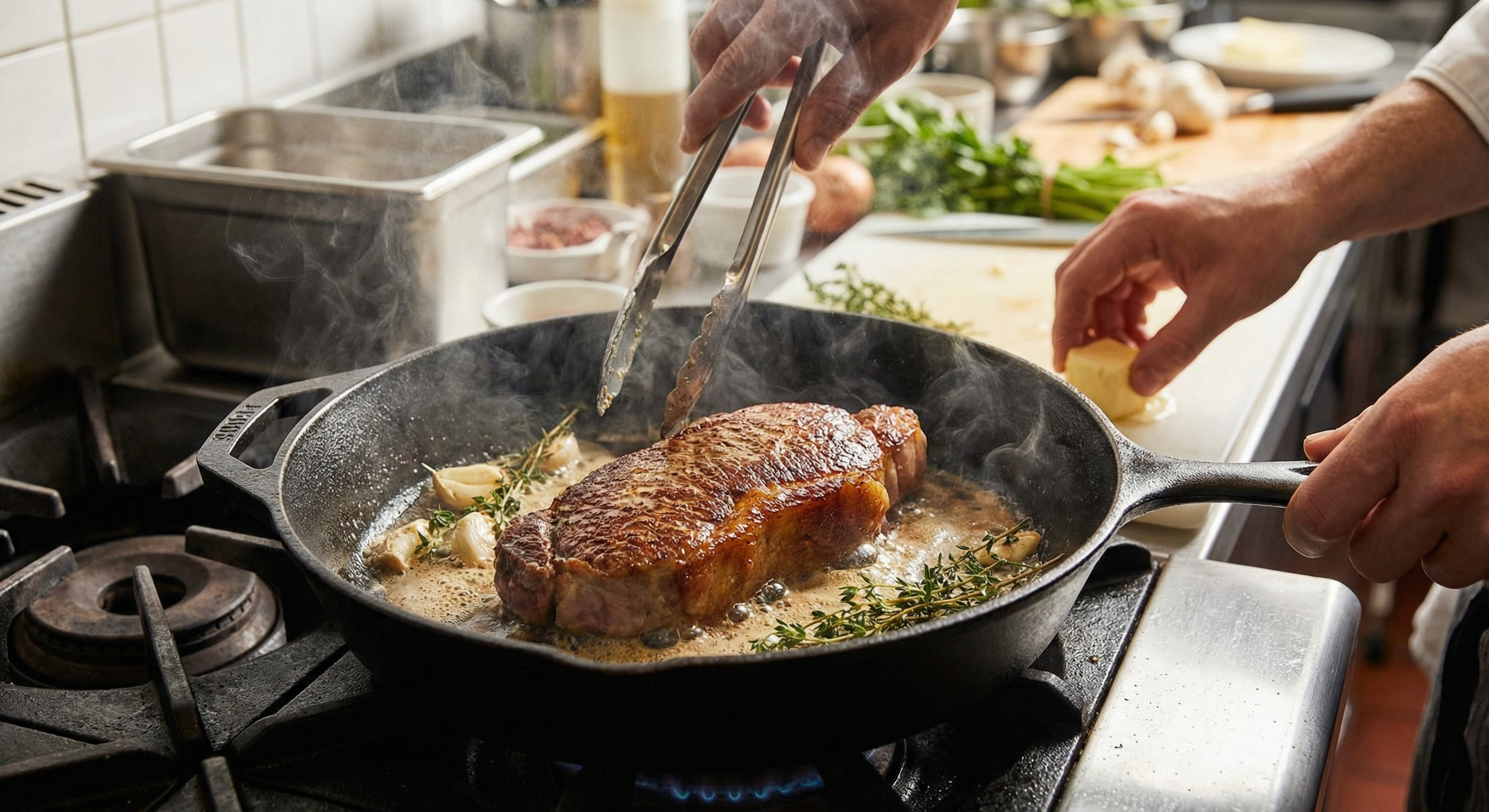
Same technique as the ribeye, but with one key advantage: less smoke. The leaner strip renders less fat, so your kitchen stays habitable. This is the ideal weeknight method — 10 minutes of actual cooking for a steakhouse-quality meal.
Broiler
Many apartment dwellers and winter cooks rely on the broiler, and strip steak excels here. Position the oven rack 4–6 inches from the heating element, preheat for 5 minutes, and broil 4–5 minutes per side. The firm texture resists overcooking better than a fatty ribeye under the intense top-down heat.
Temperature Guide: Ribeye vs Strip
Both steaks use the same target temperatures, but they respond differently to doneness levels:
| Doneness | Pull Temp | After Rest | Ribeye Notes | Strip Notes |
|---|---|---|---|---|
| Rare | 115°F | 120–125°F | Fat won't render — not ideal | Works if you like it very rare |
| Medium-Rare | 125°F | 130–135°F | Perfect. Fat renders beautifully | Perfect. Peak tenderness and flavor |
| Medium | 135°F | 140–145°F | Still excellent — more fat renders | Good, slightly firmer |
| Medium-Well | 145°F | 150–155°F | Fat carries it, still edible | Gets dry — not recommended |
One important difference: ribeye is more forgiving if you overshoot. All that intramuscular fat acts as insurance, keeping the meat moist even at medium or (shudder) medium-well. A strip steak cooked past medium loses moisture rapidly because there's less internal fat to compensate. If you tend to overcook things, ribeye gives you more margin for error.
The Head-to-Head Comparison
| Category | Ribeye | Strip Steak | Winner |
|---|---|---|---|
| Marbling | Heavy, dramatic | Moderate, even | Ribeye |
| Flavor | Rich, buttery, complex | Clean, bold, beefy | Tie (preference) |
| Tenderness | Very tender, variable | Tender, consistent | Ribeye (slight edge) |
| Texture | Multi-muscle, varied | Single muscle, uniform | Tie (preference) |
| Price | Higher | Lower | Strip |
| Ease of Cooking | Needs fat management | Straightforward | Strip |
| Forgiveness | More forgiving | Less forgiving | Ribeye |
| Best Grade | Choice or higher | Prime ideal, Choice good | Tie |
When to Choose Ribeye
Reach for the ribeye when:
- You want maximum indulgence. Date night, celebration dinner, "I deserve this" moments. The ribeye is the showstopper.
- You're reverse searing or using a method that renders fat well. Low-and-slow techniques bring out the best in heavily marbled steaks.
- You prefer variety in your bites. The multi-muscle structure means cap bites, eye bites, and everything in between. Each forkful is an adventure.
- You might overcook it. The fat insurance policy means a medium ribeye is still a great steak. A medium strip is merely acceptable.
- You're serving red wine. The richness of ribeye stands up to bold, tannic wines better than strip.
For the ultimate ribeye experience, American Wagyu ribeyes from The Meatery take the marbling to another dimension entirely. Once you've had a Wagyu ribeye, regular Prime almost feels lean.
When to Choose Strip Steak
Reach for the strip when:
- You want pure beef flavor to dominate. The strip lets the actual taste of the beef shine without a fat filter.
- You're grilling. Fewer flare-ups, more predictable timing, better grill marks. Strip is the ideal grilling steak.
- Consistency matters. Feeding a crowd? Strips cook uniformly and deliver the same experience to every plate. Ribeyes are more variable.
- You're pairing with sides. The cleaner flavor of strip plays well with compound butters, chimichurri, peppercorn sauce, and other accompaniments. Ribeye can overwhelm subtle sauces.
- Budget is a factor. A Prime strip often costs the same as a Choice ribeye — and the Prime strip is the better steak.
The Bone-In Factor
Both cuts are available bone-in, and the bone changes the equation slightly:
Bone-in ribeye (also called a cowboy steak, or a tomahawk when the bone is frenched) is a dramatic presentation piece. The bone insulates the meat nearest to it, creating a slightly rarer zone that some people love. It also makes the steak take longer to cook — plan an extra 5–8 minutes.
Bone-in strip (sometimes called a shell steak or a Kansas City strip) is less common but equally delicious. The bone adds a subtle depth of flavor from the marrow and gives you something to gnaw on at the end.
Does bone-in actually taste better? After 40 years, my honest answer: the flavor difference is minimal. The real benefits are presentation (bone-in looks incredible) and a small insulating effect that can help prevent overcooking. If you're paying a premium for bone-in, you're mostly paying for the experience — and that's perfectly valid.
Grade Matters More Than the Cut
Here's something that doesn't get said enough in the ribeye vs strip debate: the USDA grade of either steak matters more than which cut you choose.
A Prime strip will beat a Select ribeye every single time. An upper-Choice ribeye will outperform a low-Choice strip. The grade determines how much intramuscular fat is present, and that fat is the primary driver of flavor, tenderness, and juiciness in both cuts.
My hierarchy, if I'm spending my own money:
- Prime strip steak (best value in premium beef)
- Prime ribeye (the ultimate indulgence)
- Upper Choice / CAB ribeye (excellent everyday option)
- Upper Choice / CAB strip (solid and reliable)
When shopping for either cut, always look at the actual marbling through the packaging rather than relying solely on the grade label. Two steaks labeled "Choice" can look dramatically different. The one with more visible white flecks is the better buy every time.
The Final Verdict
After cutting and cooking thousands of both steaks over four decades, here's my honest take:
Ribeye is the more exciting steak. It's richer, more complex, and more dramatic. When I want to impress someone or treat myself, I reach for a thick-cut ribeye.
Strip is the more reliable steak. It's easier to cook, more consistent, and lets the beef flavor speak clearly. When I'm grilling for a crowd or want a no-fuss perfect dinner, I grab strips.
The best approach? Buy both. Seriously. Get a Prime ribeye and a Prime strip, cook them side by side, and do your own comparison. That's not just good advice — it's an outstanding Tuesday night. You'll discover your own preference, and armed with everything in this guide, you'll cook both of them perfectly.
No matter which side of the debate you land on, you're eating one of the best cuts of beef on the planet. In the ribeye vs strip steak showdown, the real winner is you.
Frequently Asked Questions
Is ribeye or strip steak more tender?
Ribeye is slightly more tender than strip steak due to its heavier marbling and the inclusion of the ultra-tender spinalis cap muscle. However, the difference is modest — both are premium tender cuts. Strip steak offers more consistent tenderness bite to bite since it is a single muscle, while ribeye varies between its multiple muscles.
Which is more expensive, ribeye or strip steak?
Ribeye typically costs 15–25% more than strip steak at every grade level. USDA Choice ribeye runs $16–$28/lb compared to $14–$24/lb for Choice strip. A smart value play is buying USDA Prime strip, which often costs less than Choice ribeye while delivering a superior eating experience.
What is the best way to cook a ribeye steak?
The reverse sear is the best method for thick-cut ribeyes. Roast at 250°F until the internal temperature reaches 115°F, then sear in a screaming-hot cast iron skillet for 90 seconds per side. This method renders the heavy marbling evenly while producing a perfect crust. For thinner ribeyes (1 inch), a straight cast iron pan sear works well.
What is the best way to cook a strip steak?
A hot grill (500°F+) is ideal for strip steak. The leaner profile means fewer flare-ups and more predictable cooking. Grill 4–5 minutes per side for medium-rare on a 1.25-inch steak. Cast iron pan searing is also excellent and produces less smoke than cooking a ribeye indoors.
Is ribeye or strip steak better for grilling?
Strip steak is generally better for grilling. Its lower fat content produces fewer flare-ups, cooks more predictably, and develops better grill marks. Ribeye can be grilled successfully but requires a two-zone fire setup to manage the dripping fat and resulting flare-ups.
Are ribeye and New York strip from the same part of the cow?
They come from the same muscle (longissimus dorsi) but different sections. Ribeye is cut from the rib primal (ribs 6–12), while strip steak comes from the short loin just behind the ribs. The rib section has more intramuscular fat, which is why ribeye is more heavily marbled than strip.
More Expert Guides
What Is Chateaubriand? (Cut, Cooking, & Best Sources)
Chateaubriand is a thick-cut roast from the center of the beef tenderloin, traditionally served for two. Learn what makes this classic French cut special and how to cook it.
14 min readWhat Is Round Steak? The Complete Guide to Beef's Most Versatile Budget Cut
Round steak comes from the rear leg of the cow — it's lean, affordable, and misunderstood. A master butcher breaks down every sub-cut, cooking method, and technique to turn this budget workhorse into genuinely delicious meals.
14 min readWhat Is Eye of Round? The Complete Butcher's Guide to This Lean Cut
Eye of round is one of the leanest, most affordable cuts in the entire beef case — and one of the most misunderstood. A butcher explains how to turn this budget-friendly roast into something genuinely delicious.