Ribeye vs New York Strip: A Detailed Comparison

Ribeye vs New York strip is the eternal debate of the steakhouse world, and I've been answering this question at my counter for four decades. I've watched customers agonize over the choice like they're picking a college. So let me settle it — or at least give you enough information to make your own informed decision.
The short answer: they're both excellent, but they're genuinely different steaks that reward different preferences. Let me show you why.
Where They Come From
Both steaks come from the longissimus dorsi — the same muscle — but from different sections of it.
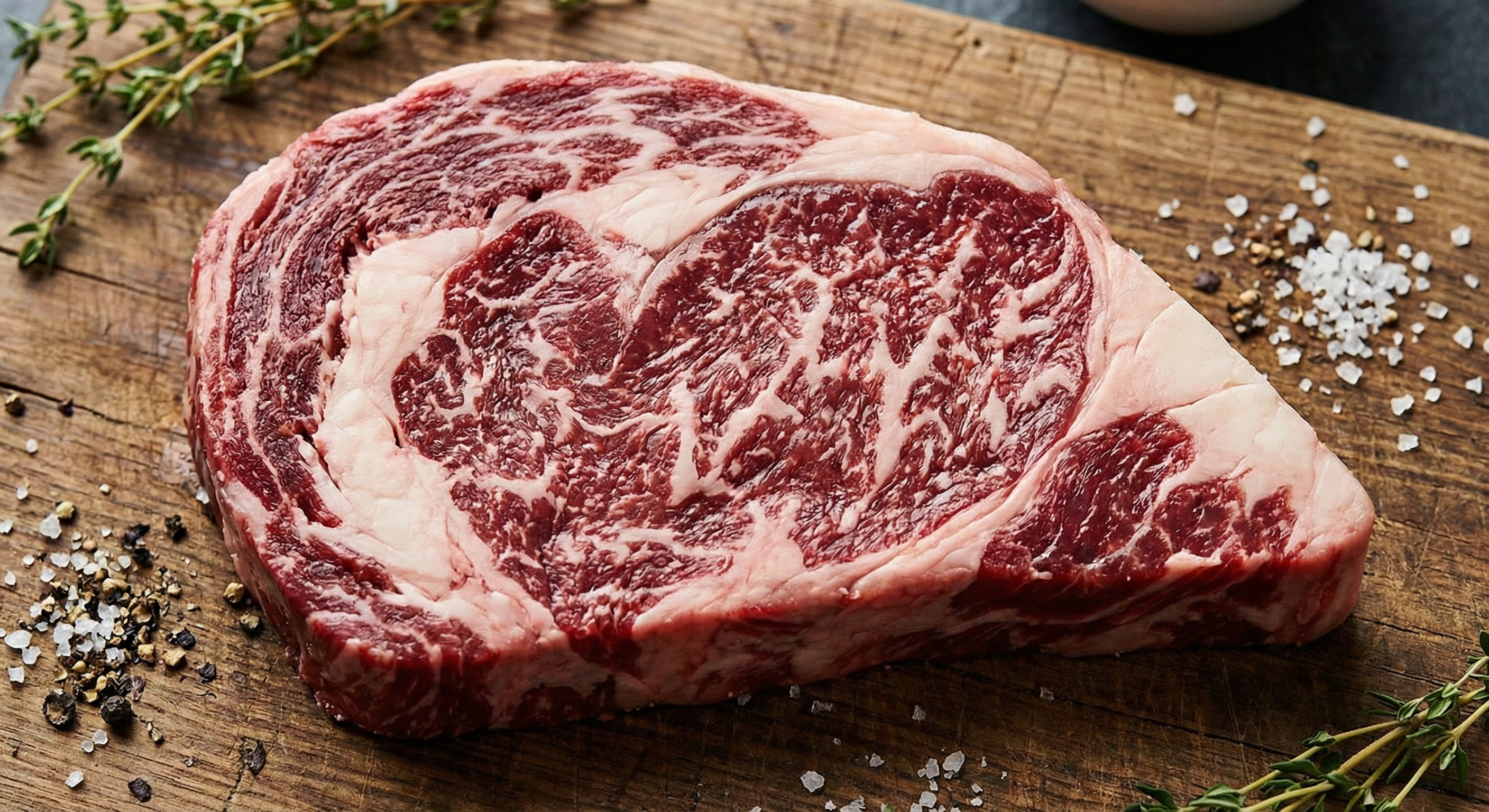
- Ribeye: Cut from the rib primal (ribs 6–12). The longissimus dorsi here is accompanied by the spinalis dorsi (the "cap") and the complexus. Three muscles, three textures.
- New York Strip: Cut from the short loin (behind the rib). It's essentially a continuation of the same main muscle, but without the cap and with a strip of fat and connective tissue along one side.
Think of it this way: if you could see the whole longissimus dorsi in one piece, the ribeye section is the front half and the strip section is the back half. Same muscle, different neighborhoods.
The Key Differences
Marbling
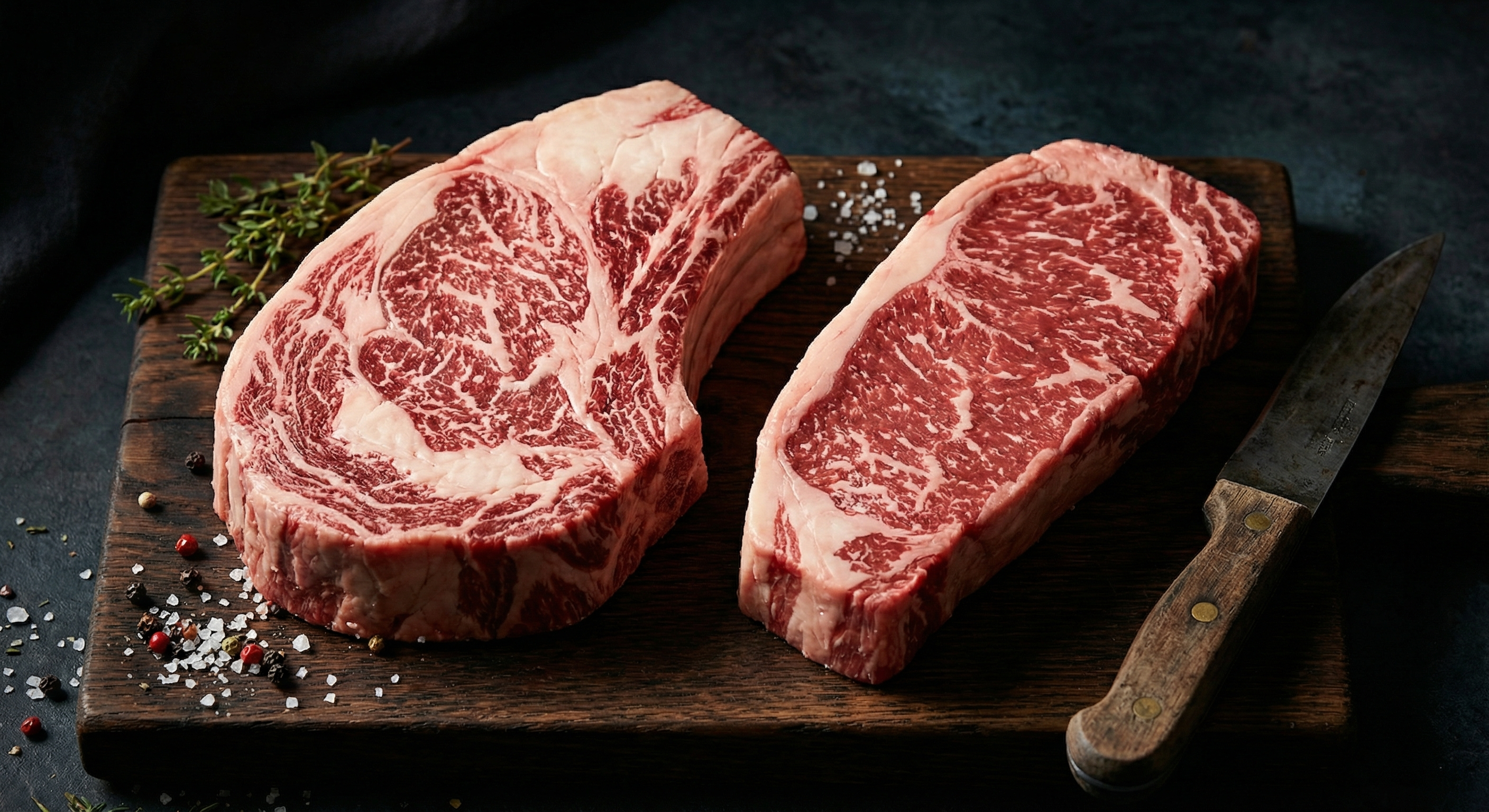
The ribeye has more marbling, period. The rib section of the longissimus dorsi develops heavier intramuscular fat than the loin section. Plus, the spinalis dorsi (ribeye cap) is one of the most heavily marbled muscles in the entire carcass. At the same USDA grade, a ribeye will almost always have visibly more fat than a strip.
Winner: Ribeye
Tenderness
Both are tender steaks, but in different ways. The ribeye's heavier marbling creates a softer, more buttery mouthfeel — the fat disrupts the muscle fibers. The strip is slightly firmer with more "tooth" — a more defined chew that many steak lovers actually prefer.
The ribeye cap (spinalis) is extraordinarily tender. The strip's connective tissue band along one side can be chewy if not trimmed or rendered properly.
Winner: Ribeye (but the strip's firmer bite is a feature, not a bug)
Flavor
This is where it gets interesting. The ribeye is richer and more buttery thanks to the fat. The strip is beefier and more "mineral" — some people describe it as having a cleaner, more direct meat flavor.
The spinalis dorsi on the ribeye has a richness that's almost decadent. The strip delivers a more focused, intense beef experience.
Winner: Tie (genuinely comes down to preference)
Consistency
The strip is a single muscle with a relatively uniform composition throughout. What you see is what you get — consistent texture from edge to edge.
The ribeye is three different muscles with a fat "kernel" in the center and varying textures throughout. Every bite is slightly different — which is either a selling point or a drawback depending on your preference.
Winner: Strip (for uniformity), Ribeye (for variety)
Head-to-Head Comparison
| Factor | Ribeye | New York Strip |
|---|---|---|
| Marbling | Heavy | Moderate-heavy |
| Fat content | Higher (15-20% IMF at Prime) | Moderate (10-15% IMF at Prime) |
| Tenderness | Very tender (soft, buttery) | Tender (firmer, more "bite") |
| Flavor profile | Rich, buttery, complex | Beefy, mineral, direct |
| Texture | Varied (3 muscles) | Uniform (1 muscle) |
| Best bone-in | Tomahawk / cowboy | Shell steak / Kansas City |
| Price (Prime) | $25–$45/lb | $22–$38/lb |
| Forgivingness | Very (fat compensates) | Moderate (less fat buffer) |
| Ideal doneness | Medium-rare to medium | Medium-rare |
| Best cooking | Grill, cast iron | Cast iron, reverse sear |
Cooking Considerations
On the Grill
Ribeyes are grill kings. The fat renders and drips onto the coals, creating flavorful smoke that bastes the steak. The uneven composition means some bites are meltingly tender (cap) while others are more substantial (eye). Flare-ups can be an issue with heavily marbled ribeyes — use a two-zone setup.
Strips grill well but require a bit more attention. They're more uniform, so they cook more evenly — but they're less forgiving if you overshoot. The fat cap side should face the heat to render properly.
In a Cast Iron
Both are excellent here. The strip might have a slight edge because its flat, uniform shape creates maximum contact with the hot surface, producing an incredibly even Maillard crust. Baste both with butter, garlic, and thyme during the last minute.
Reverse Sear
The reverse sear (slow oven to temperature, then hard sear) is particularly great for thick strip steaks. The uniform shape produces edge-to-edge even doneness.
My Personal Take
I eat more strip steaks than ribeyes, and here's why: I love beef flavor more than I love fat. A well-marbled Prime strip steak, cooked in a ripping hot cast iron with salt, pepper, and butter, gives me exactly what I want — intense, clean beef flavor with enough marbling to stay juicy.
But when I'm at a great steakhouse, I order the bone-in ribeye. When it's dry-aged, the fat concentration and complexity of a ribeye is staggering. And the cap — the spinalis — is simply the best bite of beef available.
The Decision Framework
Choose ribeye if:
- You love rich, fatty, buttery flavor
- You're grilling (the fat is an asset)
- You want a forgiving steak (hard to overcook)
- You enjoy variety in texture within a single steak
- You're ordering dry-aged
Choose strip if:
- You prefer beefy, mineral, direct flavor
- You like a firmer, more defined steak texture
- You're pan-searing (flat shape = maximum crust)
- You want consistency from first bite to last
- You want slightly leaner but still well-marbled
The real answer: Don't pick one forever. Alternate. A great steak rotation includes both — and about a dozen other cuts too. The beauty of beef is its diversity.
Frequently Asked Questions
Which is more expensive, ribeye or NY strip?
Ribeye typically costs $3-$7/lb more than NY strip at the same grade due to heavier marbling and higher demand. Expect $25-$45/lb for Prime ribeye vs $22-$38/lb for Prime strip.
Which is better for grilling, ribeye or strip?
Ribeye is generally better for grilling — the heavy fat renders and bastes the meat, and it's more forgiving of overcooking. Strip works great too but requires more attention and benefits from a two-zone setup.
More Expert Guides
The Complete Guide to Beef Primal Cuts
A 3rd-generation butcher breaks down the eight primal cuts of beef, what comes from each one, and how understanding the animal makes you a better cook.
10 min readUnderstanding USDA Beef Grades: Prime vs Choice vs Select
What do USDA grades actually mean? A veteran butcher cuts through the marketing to explain how beef grading works, what you're paying for, and when it matters most.
14 min readWhat is Wagyu Beef? A Butcher's Honest Guide
Wagyu is the most misused word in the meat industry. Here's what it actually means, how to tell real from fake, and whether it's worth your money.