Porterhouse vs Ribeye: Which Premium Steak Is Worth Your Money?
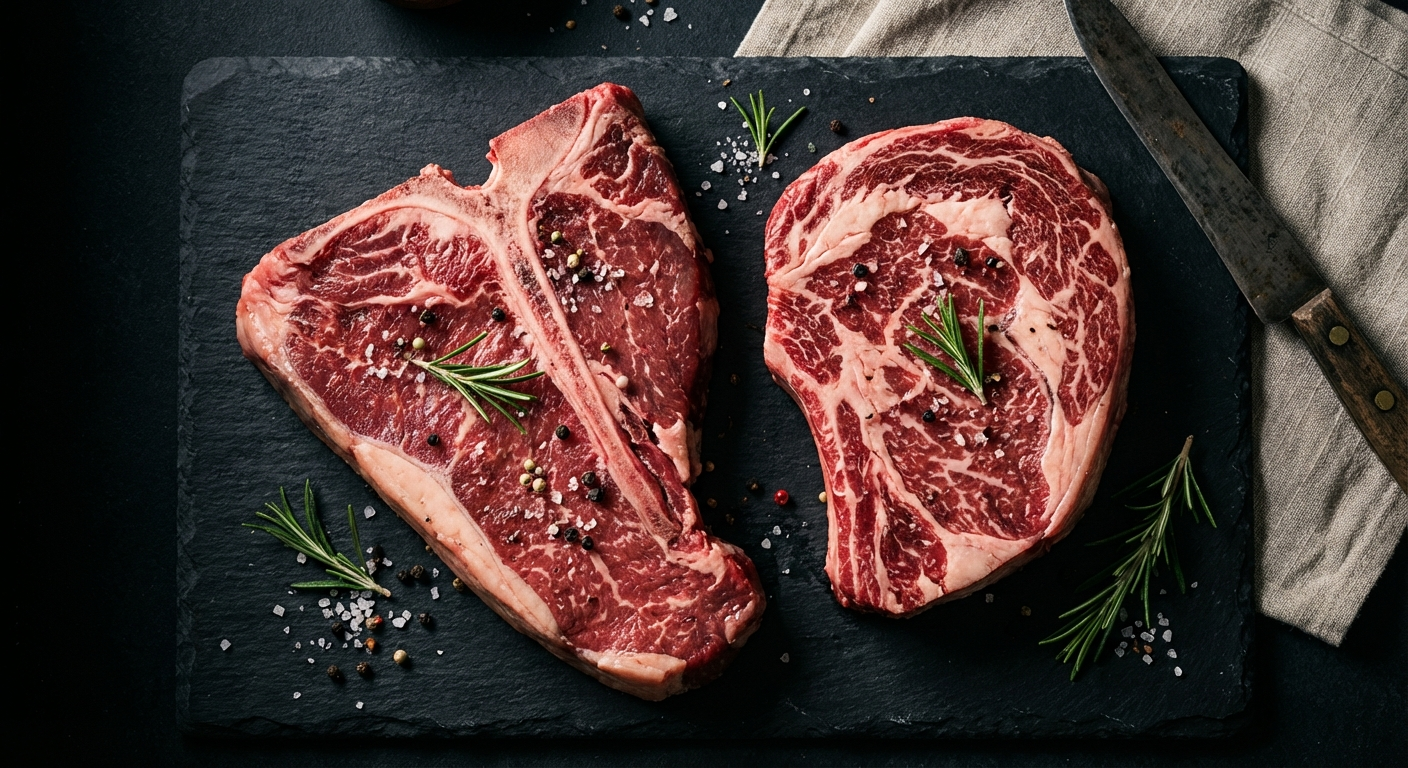
If you've ever stood in front of a butcher case trying to decide between a porterhouse and a ribeye, you're not alone. These are two of the most celebrated steaks in existence, and people argue about which one is better with the kind of passion usually reserved for sports teams and barbecue sauce recipes.
Here's what most of those arguments get wrong: porterhouse and ribeye aren't really competing for the same job. They come from different parts of the animal, they cook differently, they eat differently, and they satisfy different cravings. Comparing them is a bit like comparing a Swiss Army knife to a chef's knife — both are excellent, but they're built for different purposes.
I've been breaking down beef for over thirty years, and I've sold thousands of both cuts. Let me give you the real breakdown so you can stop guessing and start buying the right steak for the right occasion.
Anatomy: Where Each Cut Comes From
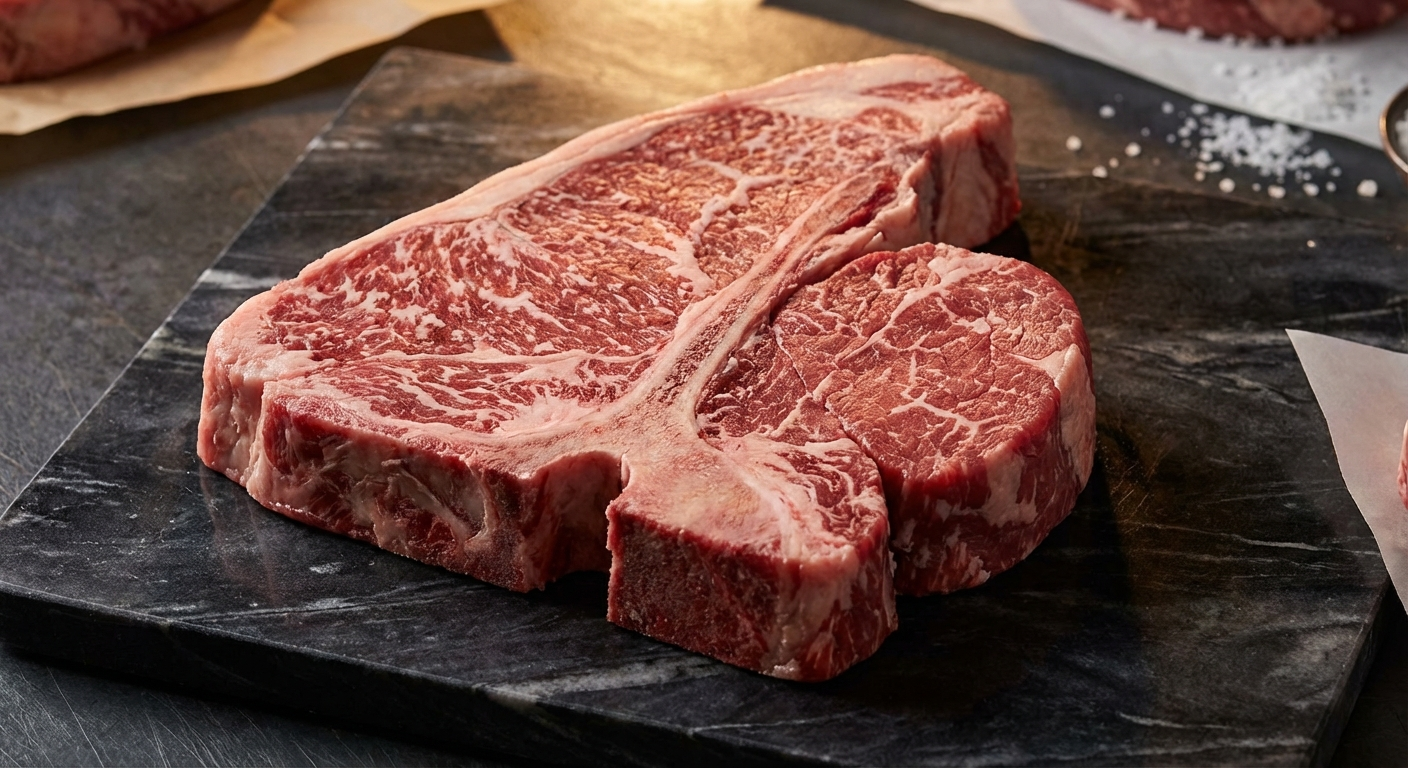
Understanding the anatomy is the key to understanding everything else about these two steaks. Where a muscle sits on the animal determines how tender it is, how much fat it carries, and how it should be cooked.
The porterhouse comes from the rear end of the short loin primal, right where it meets the sirloin. It's a cross-section cut that includes a T-shaped bone with two different muscles on either side. On the larger side sits the strip steak (longissimus dorsi) — the same muscle you'd get if you ordered a New York strip. On the smaller side sits the tenderloin (psoas major) — the same muscle that filet mignon comes from. A true porterhouse must have a tenderloin portion that's at least 1.25 inches across at its widest point, measured from the bone. Anything smaller, and it's technically a T-bone.
The ribeye comes from the rib primal, specifically ribs 6 through 12. The primary muscle is the longissimus dorsi (the "eye"), but a quality ribeye also includes a section of the spinalis dorsi — commonly called the "cap" or "deckle." That cap muscle is separated from the eye by a ribbon of fat, and many butchers and chefs consider it the single most flavorful piece of beef on the entire animal. The ribeye sits in an area of the cow that does very little work, which is why it accumulates so much intramuscular fat.
The critical difference: a porterhouse gives you two distinct muscles with different textures and fat levels in one steak. A ribeye gives you one primary muscle (plus the cap) with uniformly high marbling throughout. That structural difference affects everything from how you cook it to how it feels in your mouth.
Marbling and Fat Distribution
Fat is flavor, and the way fat is distributed through these two cuts creates genuinely different eating experiences.
The ribeye is the undisputed marbling champion of the steak world. A USDA Choice ribeye typically carries 10% to 15% intramuscular fat, with Prime grades pushing well above that. The marbling is distributed throughout the eye muscle in an even, web-like pattern that renders during cooking and bastes the meat from the inside. The cap muscle adds even more richness — it has some of the most intense marbling of any beef muscle. Between the eye and cap sits a seam of fat that renders into pure flavor during cooking. The overall effect is a steak that tastes rich, buttery, and deeply beefy from the first bite to the last.
The porterhouse presents a more complex fat picture because you're dealing with two muscles. The strip side carries moderate marbling — typically 8% to 12% intramuscular fat at Choice grade. It's well-marbled by any standard, but noticeably less so than a ribeye. The tenderloin side is lean by comparison, usually 5% to 8% fat. The tenderloin compensates for its lower fat content with extraordinary tenderness — it's the least-worked muscle on the animal and has a buttery-soft texture that doesn't depend on fat for its appeal.
Here's what this means at the table: every bite of ribeye delivers consistent richness. With a porterhouse, you get variety — rich, well-marbled bites from the strip side, and lean, melt-in-your-mouth tender bites from the filet side. Whether that variety is a feature or a compromise depends entirely on what you're looking for in a steak.
Flavor and Texture: The Eating Experience
This is where personal preference rules, and where I see the most passionate disagreements between customers.
Ribeye delivers what I call a "one-note masterpiece." That one note is rich, beefy, buttery indulgence. Every bite has the same gorgeous fat-to-meat ratio. The rendered marbling creates a silky mouthfeel, and the cap — when you get a piece with a good section of it — adds an almost nutty, caramelized sweetness that's unlike anything else in the beef world. The texture is tender but not soft — there's enough structure to the muscle that you feel like you're eating a proper steak, but the fat keeps it yielding and juicy. Ribeye is the steak that converts people who "don't really like steak" into steak lovers.
Porterhouse delivers a two-act dining experience. The strip side offers a firm, clean beef flavor with good marbling — it's the workhorse of steakhouse menus for a reason. The texture is firmer and slightly chewier than ribeye, with a more concentrated, less fatty beef taste. Then you cross the bone to the tenderloin side and the experience shifts entirely. The filet is soft, almost velvety, with a milder flavor and a delicate texture that practically dissolves on your tongue. Eating a porterhouse is like getting two different steaks for the price of one — and that contrast is exactly what porterhouse loyalists love about it.
The bone factor matters too. The T-bone in a porterhouse adds flavor during cooking — meat cooked against bone develops deeper, more complex flavors than boneless cuts. It also acts as an insulator, which means the meat closest to the bone cooks more slowly and stays rarer. Ribeye can be bone-in or boneless, but the most common presentation is boneless, which means even, predictable cooking but without the bone's flavor contribution.
Best Cooking Methods
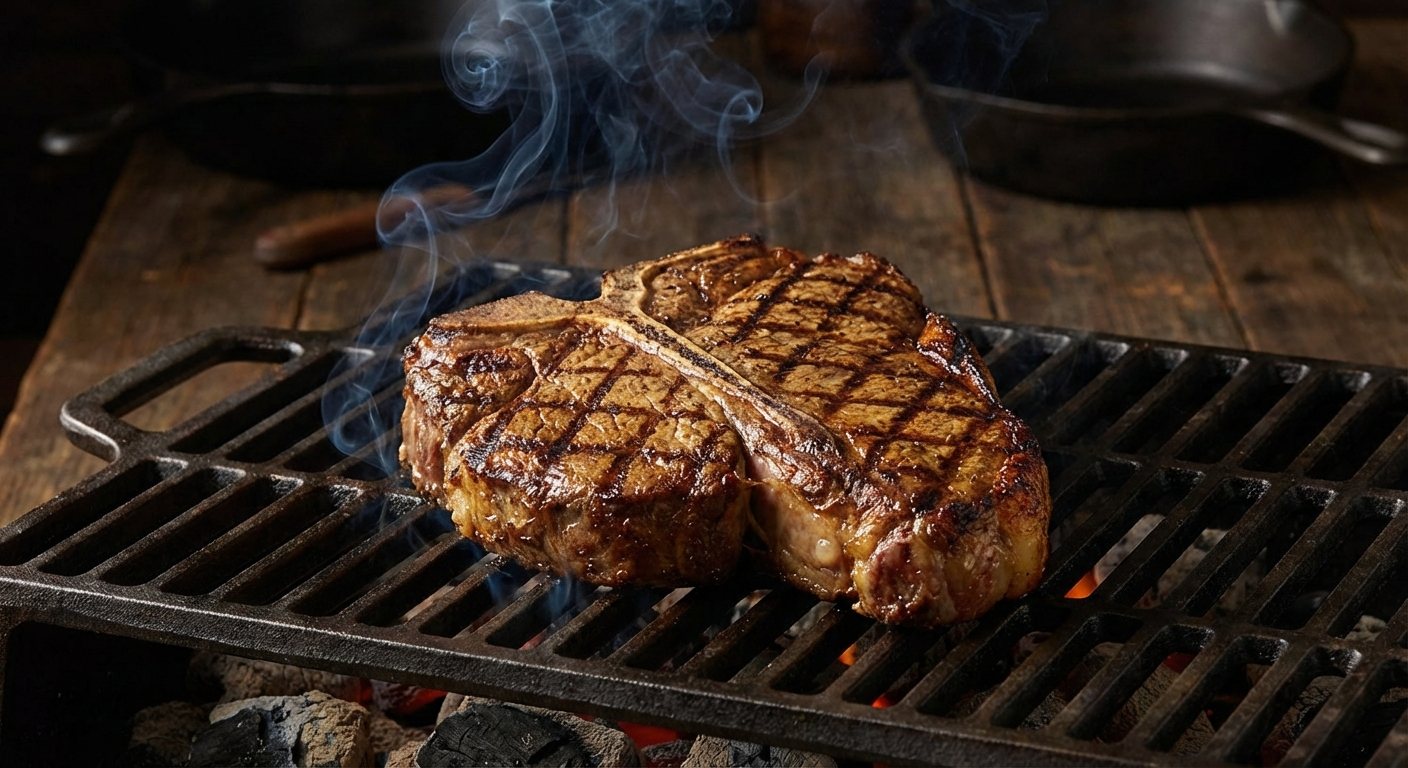
This is where the porterhouse gets tricky and the ribeye shines as the more forgiving option.
Cooking Ribeye
Ribeye is one of the easiest premium steaks to cook well. That abundant fat gives you a wide margin for error — even slightly overcooked ribeye stays juicy because all that intramuscular fat has already rendered and lubricated the meat fibers.
- Reverse sear (best for cuts 1.5 inches or thicker): Oven at 250°F until internal temp hits 115°F, then sear in a ripping-hot cast iron skillet for 90 seconds per side. This delivers edge-to-edge medium-rare with a perfect crust.
- Cast iron sear: Smoking hot pan, high-smoke-point oil, 3–4 minutes per side. Finish with butter, garlic, and thyme. The fat in the ribeye renders and essentially fries the surface, creating an incredible crust.
- Grill: Direct high heat, 4–5 minutes per side. Keep the lid open and watch for flare-ups — all that dripping fat will cause them. Move the steak to indirect heat if flames get aggressive.
Pull temperature: 130°F for medium-rare. Ribeye remains excellent up to 140°F (medium), giving you a 10-degree window of great results.
Cooking Porterhouse
Porterhouse requires more skill because you're managing two muscles that cook at different rates. The tenderloin side is thinner, leaner, and will overcook before the strip side reaches your target temperature if you're not careful.
- Reverse sear (strongly recommended): Start in a 250°F oven with the tenderloin side facing away from the heat source. Pull at 115°F internal on the strip side. Sear in cast iron, positioning the tenderloin side away from the hottest part of the pan — you want to develop crust on the strip without pushing the filet past medium.
- Grill with zone cooking: Set up two-zone heat — hot coals on one side, none on the other. Position the steak so the strip side is over direct heat and the tenderloin is over indirect. This gives the fattier, thicker strip side the aggressive heat it needs while protecting the delicate filet.
- Steakhouse method: Sear both sides hard in a cast iron or flat-top for 2 minutes per side, then finish in a 450°F oven for 5–7 minutes. Rest for 10 minutes before cutting.
Pull temperature: 125°F on the strip side. The tenderloin will be 5–8°F higher, which is fine — you want the strip at medium-rare and the filet closer to medium-rare to rare.
The honest truth: if you're a less experienced cook, ribeye is more forgiving. Porterhouse rewards skill and attention but punishes inattention — and when the filet side is overcooked, you've lost half the point of buying a porterhouse in the first place.
Price and Value
Both of these are premium cuts, but the pricing math works differently than most people expect.
As of early 2026, here's what you'll pay at a quality butcher shop:
- USDA Choice porterhouse: $18–$25 per pound
- USDA Prime porterhouse: $28–$40 per pound
- USDA Choice ribeye (boneless): $16–$22 per pound
- USDA Prime ribeye (boneless): $24–$35 per pound
On a per-pound basis, porterhouse tends to cost a few dollars more than boneless ribeye. But here's the catch: you're paying by total weight, and a porterhouse includes a large T-bone that adds significant weight but zero edible meat. A 24-ounce porterhouse typically yields 18–20 ounces of actual steak. A 16-ounce boneless ribeye is 16 ounces of pure, edible meat.
When you adjust for bone weight, the actual cost per ounce of edible meat is often comparable — and sometimes the ribeye is the better deal. If you want the absolute most steak for your dollar, boneless ribeye usually wins. If you value the experience of eating two different cuts in one sitting and don't mind paying for some bone weight, porterhouse is worth the premium.
There's also a presentation factor. A massive porterhouse on a plate is one of the most impressive things you can put in front of someone. If you're cooking for a date or a special occasion, the visual impact of a 24-ounce porterhouse with the bone is hard to match. Ribeye is a more understated luxury — gorgeous to eat, less dramatic to look at.
Nutrition Comparison
For the macro-conscious, the two cuts differ meaningfully because the porterhouse's tenderloin portion brings down the overall fat content. Per 8-ounce cooked serving (trimmed of external fat):
- Ribeye: approximately 520–580 calories, 50g protein, 36–40g fat (15–18g saturated)
- Porterhouse (both sides combined): approximately 440–500 calories, 54g protein, 26–32g fat (11–14g saturated)
The porterhouse delivers more protein and less fat per serving, largely thanks to the lean tenderloin half. If you're eating steak regularly and tracking macros, porterhouse is the more balanced choice. If you're having steak once a week as a treat and want maximum indulgence, ribeye's higher fat content is part of the appeal.
Both cuts are excellent sources of B12, zinc, iron, niacin, and selenium. From a micronutrient standpoint, they're virtually identical.
When to Choose Porterhouse Over Ribeye
After years of watching customers make this decision — and making it myself hundreds of times — here's my straightforward guidance.
Choose porterhouse when:
- You love variety and want two different textures and flavors in one steak
- You're a confident cook who can manage two muscles at different temperatures
- You want the dramatic presentation of a massive bone-in steak
- You're sharing — porterhouse is the ultimate steak for two
- You enjoy tenderloin but also want a strip steak, and buying both separately seems excessive
- You prefer slightly leaner steak overall
Choose ribeye when:
- You want maximum richness, marbling, and buttery texture in every bite
- You prioritize consistency — same great flavor from edge to edge
- You want a more forgiving steak that's hard to mess up
- You're less experienced with steak cooking and want reliable results
- You want the most edible meat per dollar spent
- You're craving that specific ribeye cap flavor that no other cut can deliver
The Butcher's Final Word
I keep both of these in my case for good reason. When I want pure, uncomplicated indulgence — the kind of steak that makes me close my eyes and forget about everything else — I reach for a ribeye. When I want a steak dinner that feels like an event, something to share and savor and talk about, I reach for a porterhouse.
Neither one is "better." They're different tools for different jobs, and the best steak lovers I know have both in their rotation. Next time you're at the butcher counter, try the one you normally skip. You might discover that the steak you've been overlooking is exactly the one you've been craving.
Frequently Asked Questions
What is the main difference between porterhouse and ribeye?
The porterhouse comes from the short loin and contains two muscles separated by a T-bone — a strip steak on one side and a tenderloin filet on the other. The ribeye comes from the rib section and is a single, heavily marbled muscle (with a cap). Porterhouse offers variety in one steak; ribeye delivers consistent richness throughout.
Which is more tender, porterhouse or ribeye?
The tenderloin side of a porterhouse is the most tender cut of beef, period. However, the strip side is firmer than ribeye. Ribeye is uniformly tender throughout thanks to its high marbling. If you want the tenderest possible bite, the porterhouse filet wins. If you want consistent tenderness in every bite, ribeye is the better choice.
Is porterhouse or ribeye better for grilling?
Ribeye is easier to grill because it is a uniform cut that cooks evenly. Porterhouse requires zone cooking — positioning the tenderloin away from direct heat — because the filet cooks faster than the strip. Experienced grillers can handle a porterhouse beautifully, but beginners will get more reliable results with ribeye.
Why does porterhouse cost more than ribeye?
Porterhouse often costs a few dollars more per pound because it includes both strip and tenderloin muscles, and the tenderloin is one of the most expensive cuts on the animal. However, you are also paying for bone weight. When adjusted for edible meat per dollar, boneless ribeye often matches or beats porterhouse on value.
Can I cook a porterhouse the same way as a ribeye?
Not exactly. A ribeye can be cooked with uniform high heat since it is one consistent muscle. A porterhouse needs heat management — the tenderloin side cooks faster and can overcook while the strip side is still reaching temperature. Reverse sear or zone grilling works best for porterhouse to protect the delicate filet.
More Expert Guides
What Is Chateaubriand? (Cut, Cooking, & Best Sources)
Chateaubriand is a thick-cut roast from the center of the beef tenderloin, traditionally served for two. Learn what makes this classic French cut special and how to cook it.
14 min readWhat Is Round Steak? The Complete Guide to Beef's Most Versatile Budget Cut
Round steak comes from the rear leg of the cow — it's lean, affordable, and misunderstood. A master butcher breaks down every sub-cut, cooking method, and technique to turn this budget workhorse into genuinely delicious meals.
14 min readWhat Is Eye of Round? The Complete Butcher's Guide to This Lean Cut
Eye of round is one of the leanest, most affordable cuts in the entire beef case — and one of the most misunderstood. A butcher explains how to turn this budget-friendly roast into something genuinely delicious.