# How to Cut Meat Against the Grain (The Right Way)
I've seen perfectly cooked steaks ruined by one simple mistake: slicing with the grain instead of against it. After fifteen years breaking down whole primals and teaching cutting techniques, I can tell you that grain direction matters more than most people think. Cut against the grain, and even a tougher cut like flank steak becomes tender and pleasant to chew. Cut with the grain, and you'll be working your jaw like you're chewing rubber bands.
## What Does "Cutting Against the Grain" Mean?
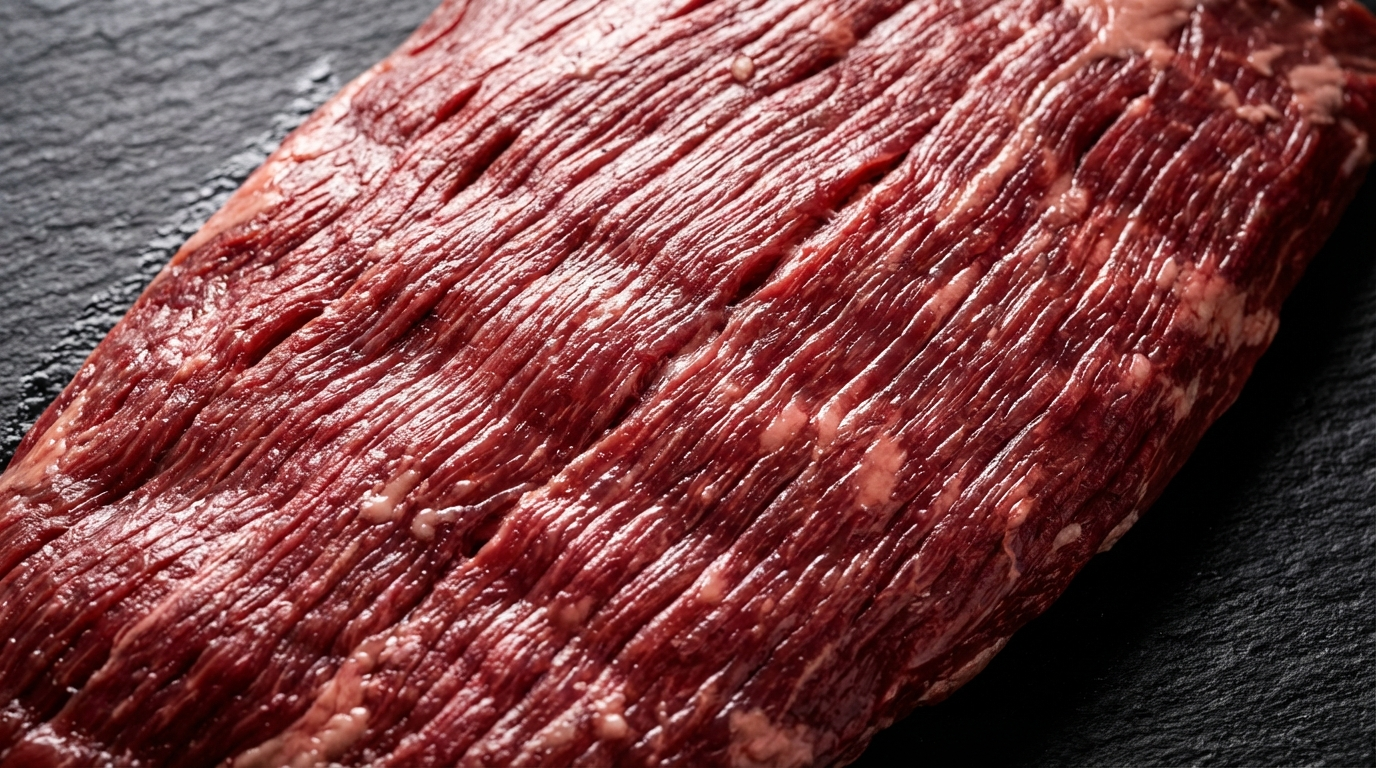
The "grain" refers to the direction of muscle fibers in meat. If you look closely at a raw or cooked steak, you'll see parallel lines running through it—those are bundles of muscle fibers. When you cut **against the grain**, you slice perpendicular (at a 90-degree angle) to these fibers, creating shorter fiber segments that are easier to chew.
According to research from [Texas A&M's Meat Science department](https://meat.tamu.edu/ansc-307-meat-science/), cutting against the grain can reduce the force required to chew meat by up to 40% compared to cutting with the grain, making even moderately tough cuts significantly more tender.
### Why It Works: The Science
Muscle fibers are long, rope-like structures. When you bite into meat cut with the grain, your teeth have to tear through these long fibers lengthwise—which requires a lot of force. When you cut against the grain first, you're pre-shortening those fibers into bite-sized segments, so your teeth only need to separate the already-shortened pieces. The [USDA Agricultural Research Service](https://www.ars.usda.gov/) has documented that fiber length directly correlates with perceived tenderness in cooked beef.
## How to Identify the Grain Direction
### Visual Inspection Method
1. **Look for parallel lines** — On both raw and cooked meat, muscle fibers appear as fine parallel lines or striations
2. **Check from multiple angles** — Sometimes the grain isn't obvious from one side; flip the meat over or rotate it
3. **Use the "fingernail test"** — Run your fingernail across the surface; you'll feel ridges running in the grain direction
### Common Grain Patterns by Cut
Different cuts have grain running in different directions:
- **Flank steak**: Long, obvious grain running lengthwise down the steak
- **Skirt steak**: Very pronounced grain, similar to flank but often at a slight diagonal
- **Brisket**: Grain direction changes between the flat and the point; you'll need to adjust your cutting angle as you work through it
- **Tri-tip**: Grain changes direction from one end to the other; most people cut it into sections first
- **Ribeye & strip steaks**: Short, less obvious grain; still benefits from proper slicing but it's more forgiving
- **Hanger steak**: Grain runs lengthwise; has a tough membrane down the center you should remove first
## Step-by-Step: Cutting Against the Grain
### Tools You'll Need
- **Sharp slicing knife** (8-10 inch blade preferred)
- **Cutting board** with a juice groove if possible
- **Carving fork** or tongs to stabilize the meat
### The Process
**1. Let the meat rest**
Before cutting, let cooked meat rest for 5-10 minutes (steaks) or 15-30 minutes (larger roasts like brisket). This allows juices to redistribute so they don't all run out when you slice.
**2. Identify the grain direction**
Look for those parallel lines. Once you see them, mentally draw a line perpendicular to them—that's your cutting angle.
**3. Position your knife at 90 degrees to the grain**
Your knife blade should cross the grain lines, not run parallel to them. For most steaks, this means slicing across the short dimension rather than the long one.
**4. Slice with smooth, even strokes**
Use the full length of your blade. Don't saw back and forth rapidly; instead, draw the knife through in one clean motion. In my experience, a smooth slice creates cleaner cuts and less tearing of the meat fibers.
**5. Aim for 1/4-inch to 1/2-inch thickness**
Thinner slices (1/4 inch) maximize tenderness, especially for tougher cuts. Thicker slices (1/2 inch) work for tender cuts like ribeye where you want more substantial pieces.
**6. Adjust for diagonal cuts (optional)**
For a more elegant presentation—common in Asian cuisine and upscale steakhouses—angle your knife at 45 degrees to the cutting board while still cutting perpendicular to the grain. This creates wider slices with more surface area.
## Common Mistakes (and How to Avoid Them)
### Mistake #1: Cutting Parallel to the Grain
**Why it happens**: On cuts with subtle grain (like ribeye), it's easy to miss the direction
**The fix**: Always take 10 seconds to identify grain before your first cut
### Mistake #2: Using a Dull Knife
**Why it matters**: A dull knife tears fibers instead of cleanly slicing them, creating a ragged texture
**The fix**: Hone your knife before slicing; sharpen it every few months depending on use
For more on knife maintenance, see our [butchery tools guide](/guides/butchery-tools-guide).
### Mistake #3: Slicing Too Thick
**Why it happens**: People worry thin slices will look skimpy
**The fix**: Remember that thinner = more tender. You can always serve more slices.
### Mistake #4: Not Resting the Meat First
**Why it matters**: Cutting into hot meat releases all the juices onto your cutting board
**The fix**: Be patient. Rest times are mandatory, not optional.
### Mistake #5: Ignoring Grain Changes
Some cuts—particularly brisket and tri-tip—have grain that changes direction within the same piece. According to the [University of Nebraska-Lincoln's Beef division](https://beef.unl.edu/), brisket's point and flat have grain running in different directions, requiring you to adjust your cutting angle as you work through the whole piece.
## Cut-Specific Grain Cutting Techniques
### Flank Steak
Grain direction: Runs lengthwise, very pronounced
**Best approach**: Cut straight across the width in 1/4-inch slices at 90 degrees. For presentation, angle your knife at 45 degrees to create wider bias-cut slices.
### Brisket
Grain direction: Changes between flat and point
**Best approach**: Separate the point from the flat first if they're still attached. Slice the flat against its grain (usually across the width). Rotate the point 90 degrees and slice against its grain (which runs perpendicular to the flat). See our detailed [brisket flat vs point guide](/guides/brisket-flat-vs-point) for more on this.
### Skirt Steak
Grain direction: Very pronounced, similar to flank but often shorter pieces
**Best approach**: Cut into 4-6 inch manageable sections first, then slice each section against the grain at 1/4 to 1/3 inch thickness. See our [inside vs outside skirt steak comparison](/guides/inside-vs-outside-skirt-steak).
### Tri-Tip
Grain direction: Runs in multiple directions from tip to base
**Best approach**: Cut the roast into 2-3 sections where the grain shifts, then slice each section against its respective grain direction. Learn more in our [what is tri-tip guide](/guides/what-is-tri-tip).
### Hanger Steak
Grain direction: Lengthwise, with a tough center membrane
**Best approach**: Remove the center membrane first (it's inedible and tough), then slice each lobe against the grain at 1/2 inch thickness. Full details in our [what is hanger steak guide](/guides/what-is-hanger-steak).
### Ribeye & Strip Steaks
Grain direction: Less pronounced, shorter fibers
**Best approach**: These tender cuts are more forgiving, but you'll still get better results cutting against the grain. Slice across the width at 1/2 to 3/4 inch for serving. See our [ribeye vs strip comparison](/guides/new-york-strip-vs-ribeye).
## Does Grain Direction Matter for All Cuts?
Short answer: yes, but it matters **much more** for tougher cuts with longer muscle fibers.
**High-impact cuts** (grain direction is critical):
- Flank steak
- Skirt steak
- Brisket
- Tri-tip
- Hanger steak
- London broil
- Chuck roasts
**Medium-impact cuts** (still beneficial):
- Sirloin steaks
- Round steaks
- Flap meat
**Low-impact cuts** (more forgiving):
- Ribeye
- Strip steak / New York strip
- Tenderloin / filet mignon
- Short ribs (braised until fall-apart tender)
Even for tender cuts, cutting against the grain improves texture. In my experience testing this side-by-side with cooking classes, people consistently prefer properly sliced tender steaks over improperly sliced ones—even when they can't articulate why.
## Pro Tips from the Butcher Block
**Chill slightly before slicing**: If you're slicing very thin (for stir-fry, cheesesteaks, or carpaccio), put the cooked meat in the freezer for 20-30 minutes to firm it up. A semi-frozen surface is much easier to slice cleanly. This is how commercial delis get those paper-thin slices.
**Mark the grain with a small cut**: When working with a large brisket or roast, I'll often make a small reference cut on one corner showing the grain direction before I start carving. That way I don't lose track halfway through.
**Practice with flank steak**: If you're learning, flank steak is the best teacher. The grain is so obvious that you'll immediately see the difference between a correct cut and an incorrect one.
**Use the "bend test" for whole muscles**: When buying large cuts, you can gently bend the meat—the fibers will spread slightly in the direction of the grain, making it easier to see.
## Frequently Asked Questions
### Does grain direction matter for ground beef?
No. Grinding destroys the muscle fiber structure entirely, so there's no grain to cut against. This is one reason why ground beef is always tender regardless of the original cut—the grinding process mechanically shortens all the fibers.
### Can you cut against the grain before cooking?
Yes, and it's actually required for certain applications:
- **Stir-fry beef**: Slice raw meat very thin against the grain before marinating and cooking
- **Fajita meat**: Slice flank or skirt steak against the grain before grilling for quicker cooking and better texture
- **Jerky**: Slice against the grain for tender jerky, or with the grain for chewier jerky (personal preference)
The main downside is that slicing before cooking can cause more moisture loss during cooking compared to cooking whole and slicing after.
### What if I already cut it wrong?
If you've sliced with the grain and the meat is too chewy, you have a few options:
1. **Re-slice perpendicularly**: Turn your incorrectly-sliced pieces 90 degrees and slice them thinner across the original slices
2. **Dice it**: Chop it into small cubes for a stew, chili, or hash where texture is less critical
3. **Shred it**: Use forks to shred it for tacos, sandwiches, or salads—shredding breaks up the long fibers manually
### Does the grain change when meat is cooked?
The direction stays the same, but the fibers shrink and tighten, sometimes making the grain more pronounced and easier to see. Overcooked meat has tighter, tougher fibers—another reason why cutting against the grain is especially important for well-done steaks.
## The Bottom Line
Cutting against the grain is a simple technique that dramatically improves the eating experience of almost any cut of beef. It takes 10 seconds to identify the grain direction and costs nothing to implement, but the payoff in tenderness is enormous—especially for tougher, more economical cuts like flank and skirt steak.
In my years running a butcher shop and teaching cutting classes, this is the single technique I emphasize most to home cooks. Master this one skill, and you'll get better results from every piece of meat you serve.
For more foundational meat knowledge, explore our [beef primal cuts diagram](/guides/beef-primal-cuts-diagram-explained), learn about [marbling identification](/guides/how-to-identify-marbling-in-steak), or discover the [most tender beef cuts](/guides/most-tender-beef-cuts) if you want to skip the grain technique altogether and go straight for naturally tender options.
Frequently Asked Questions
What does cutting against the grain mean?
Cutting against the grain means slicing perpendicular (at a 90-degree angle) to the muscle fibers in meat. This shortens the fibers, making the meat easier to chew and more tender.
Does cutting against the grain really make meat more tender?
Yes. Research from Texas A&M shows that cutting against the grain can reduce chewing force by up to 40%. Shorter muscle fibers are significantly easier to bite through than long ones.
How do I find the grain direction in cooked meat?
Look for parallel lines or striations on the surface of the meat. These lines show the direction of muscle fibers. The grain is usually most visible on cuts like flank steak, skirt steak, and brisket.
What cuts benefit most from cutting against the grain?
Tougher cuts with long muscle fibers benefit most: flank steak, skirt steak, brisket, tri-tip, hanger steak, and London broil. Tender cuts like ribeye and filet mignon are more forgiving but still improve with proper slicing.
Can I cut meat against the grain before cooking?
Yes, for stir-fry, fajitas, and jerky. Slicing raw meat against the grain before cooking works well for quick-cooking applications, though cooking whole and slicing after retains more moisture for most preparations.
What happens if I cut with the grain instead of against it?
The meat will be tougher and harder to chew because your teeth have to tear through long muscle fibers instead of short segments. You can fix this by re-slicing perpendicular to your original cuts or shredding the meat.