Chuck Roast vs. Pot Roast: What's the Difference?
Every week, someone walks up to the meat counter and asks: "What's the difference between a chuck roast and a pot roast?"
I've been breaking down primals for over 15 years, and this question never gets old—because it reveals a fundamental confusion that affects how people shop, cook, and understand beef cuts.
The short answer: Chuck roast is a specific cut of beef. Pot roast is a cooking method. You make pot roast using a chuck roast (or several other cuts). But stores have muddied the waters by labeling different cuts as "pot roast," which creates the impression that it's a distinct piece of meat.
Let me walk you through the real differences, why the naming exists, and which cuts actually work best for that classic Sunday pot roast.
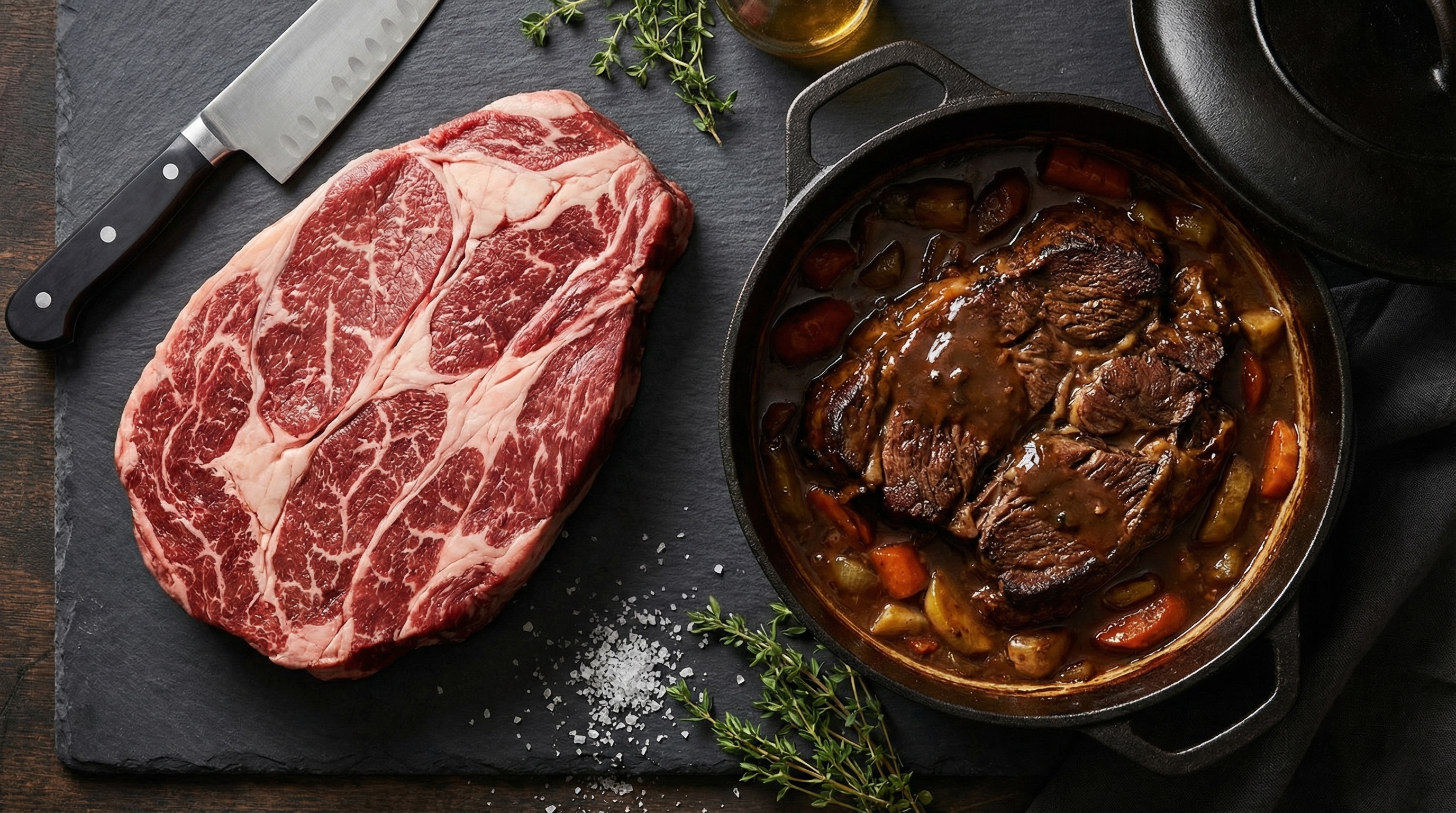
Chuck Roast: The Specific Cut
Chuck roast is a cut from the chuck primal—the shoulder and neck area of the steer. This section accounts for roughly 26% of the entire carcass and includes multiple muscles that do significant work during the animal's life. That work creates lots of connective tissue and marbling, making chuck cuts tough when raw but incredibly flavorful and tender when cooked low and slow.
Anatomy of Chuck Roast
The chuck isn't one muscle—it's a complex of overlapping muscles, fat seams, and connective tissue. When a butcher fabricates a chuck roast, they're typically cutting a cross-section through the shoulder, which includes:
- Multiple muscle groups — chuck eye, shoulder clod, and various supporting muscles
- Intermuscular fat — thick seams of fat between muscles that melt during cooking
- Connective tissue (collagen) — the tough white bands that turn into gelatin when braised
The result is a roast that's well-marbled, deeply beefy, and absolutely perfect for braising.
Common Chuck Roast Sub-Cuts
Within the chuck primal, you'll encounter several labeled variations:
- Chuck center-cut roast — The most common. A cross-section through the middle of the chuck with excellent marbling and balanced fat-to-meat ratio.
- Chuck eye roast — Cut from the same muscle as the ribeye but from the chuck section. More tender, slightly less connective tissue.
- Shoulder roast (English roast) — From the shoulder clod. Leaner than center-cut, but still excellent for braising.
- Top blade roast — Contains a tough center seam of gristle. Best slow-cooked to soften that connective tissue.
All of these are "chuck roasts," but they behave slightly differently. For pot roast, the center-cut chuck is your best bet—classic marbling, classic flavor, classic texture.
Pot Roast: The Cooking Method
Pot roast is not a cut of meat. It's a technique—specifically, braising. The process involves:
- Searing the roast to develop a crust and fond (browned bits in the pan)
- Braising in a covered pot with liquid (stock, wine, water) and aromatics (onions, carrots, celery)
- Slow cooking at low temperature (usually 275-300°F) for 3-4 hours
The goal is to break down tough connective tissue and render fat slowly, turning a tough, inexpensive cut into fork-tender, richly flavored beef.
Why "Pot Roast" Became a Label
Supermarkets started labeling cuts as "pot roast" to help shoppers identify meat suitable for this cooking method. The problem is that many cuts work for pot roast—not just chuck. So you'll see labels like:
- "Beef pot roast (chuck)"
- "Pot roast (rump)"
- "Pot roast (bottom round)"
The parenthetical is the actual cut name. The "pot roast" part is just a suggestion for how to cook it.
This labeling shortcut created a generation of cooks who think "pot roast" is a specific piece of meat. It's not. It's a destination, not a departure point.
Which Cuts Work as Pot Roast?
Any tough, well-marbled cut with significant connective tissue can become pot roast. Here are the best candidates:
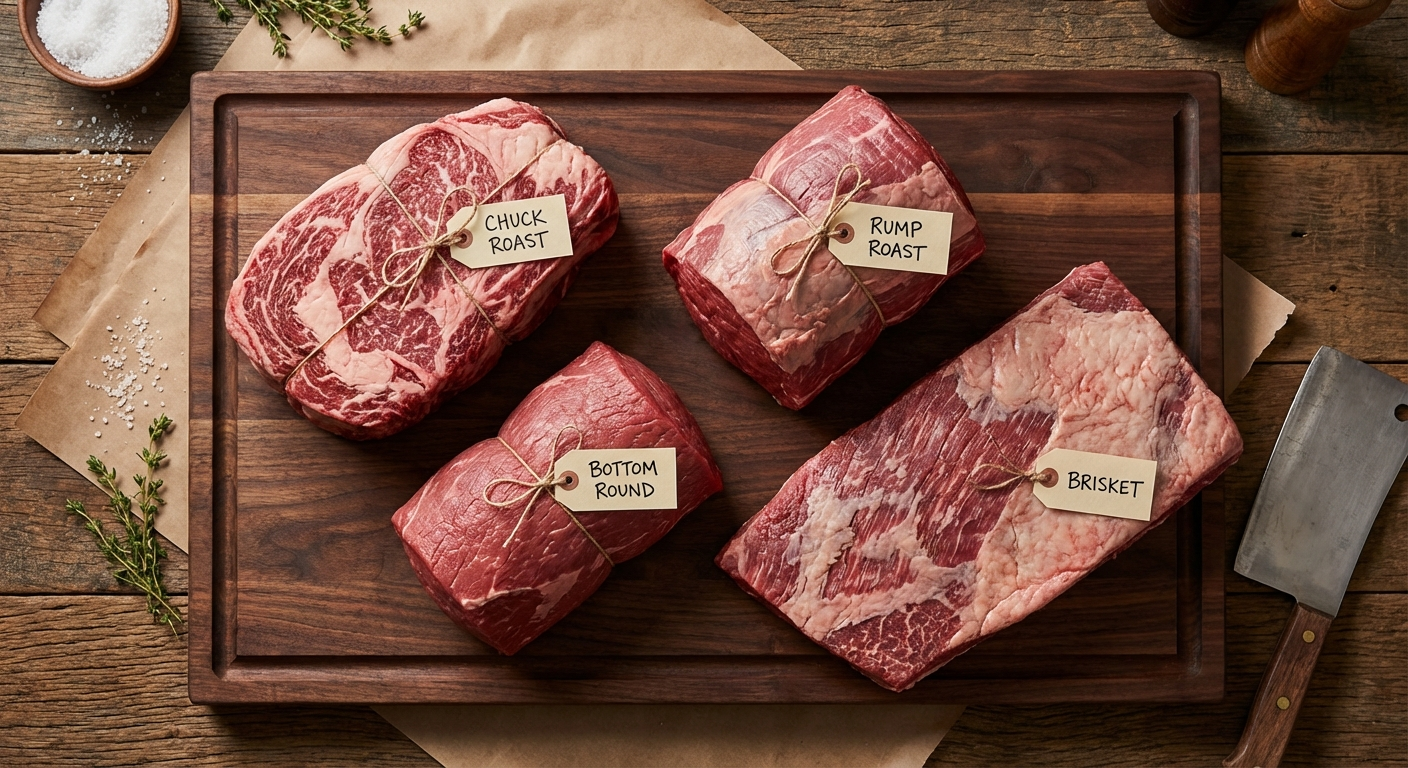
1. Chuck Roast (The Classic)
This is the gold standard. Chuck has the ideal balance of fat, collagen, and beefy flavor. When braised, the fat and connective tissue melt into the cooking liquid, creating a rich, self-basting environment. The meat pulls apart easily and tastes deeply savory.
Best for: Traditional pot roast with vegetables
2. Rump Roast
Cut from the round primal (the rear leg), rump roast is leaner than chuck but still benefits from slow braising. It's a bit less forgiving—overcook it and it can dry out—but it's also less expensive and still delivers excellent flavor.
Best for: Budget-friendly pot roast, leaner braises
3. Bottom Round Roast
Also from the round primal, bottom round is very lean and very tough when raw. Braising is almost mandatory. The result won't be as rich as chuck, but it's a clean, beefy flavor that absorbs the braising liquid beautifully.
Best for: Pot roast when you want leaner meat, shredded beef applications
4. Brisket (Flat or Point)
The brisket is traditionally smoked, but it also makes an incredible pot roast. The flat is leaner and more uniform; the point has more fat and connective tissue. Both require long, slow cooking to break down the dense muscle fibers.
Best for: Jewish-style pot roast, braised brisket with onions
5. Shoulder Roast (Beef Clod)
From the same general area as chuck but slightly leaner, shoulder roast is an excellent budget option. It's tougher than chuck center-cut, so give it an extra 30-60 minutes of braising time.
Best for: Large-batch pot roast, meal prep
How to Choose the Right Cut for Pot Roast
When you're standing at the meat counter (or browsing the supermarket case), here's how to make the call:
Look for Marbling and Fat Seams
White streaks of fat throughout the meat and thick fat seams between muscles are your friends. They melt during braising and keep the meat moist. A lean roast will turn dry and stringy no matter how long you cook it.
Check the Label for Actual Cut Name
If the label just says "pot roast," look for the parenthetical or ask the butcher. You want to know if it's chuck, rump, round, or something else. Chuck is almost always the safest bet for beginners.
Feel for Thickness and Uniformity
A roast that's roughly the same thickness throughout will cook more evenly. Avoid roasts with one thick end and one thin end—the thin part will overcook before the thick part is tender.
Don't Fear Connective Tissue
Those thick white bands and silver skin? They're not defects. They're collagen, and they turn into rich, silky gelatin when braised. If your roast looks "ugly" with lots of visible connective tissue, that's actually a good sign for pot roast.
How to Make Pot Roast (The Technique)
Regardless of which cut you choose, the basic pot roast method is the same:
Step 1: Season and Sear
Pat the roast dry. Season generously with salt and pepper. Heat a heavy Dutch oven over medium-high heat with a few tablespoons of oil. Sear the roast on all sides until deeply browned—this takes 10-12 minutes total. Don't rush this step. The fond (browned bits) are flavor.
Step 2: Build the Braising Liquid
Remove the roast and set aside. Add onions, carrots, and celery to the pot. Cook until softened, scraping up the fond. Add tomato paste and cook for 2 minutes. Deglaze with red wine or beef stock, scraping the bottom of the pot to release all those browned bits.
Step 3: Braise Low and Slow
Return the roast to the pot. Add enough liquid (stock, wine, water) to come about halfway up the sides of the roast—not fully submerged. Add aromatics: bay leaves, thyme, garlic. Cover tightly with a lid or foil.
Braise in a 275-300°F oven for 3-4 hours. Chuck roast will be done closer to 3 hours; leaner cuts like rump or bottom round may need 4 hours or more. The meat is done when a fork slides in with almost no resistance.
Step 4: Rest and Serve
Remove the roast and let it rest for 15 minutes. Skim fat from the braising liquid and reduce it on the stovetop to concentrate the flavors. Slice the roast against the grain (or pull it apart with forks if it's fall-apart tender) and serve with the vegetables and reduced braising liquid.
Common Mistakes to Avoid
Using Too Lean a Cut
Top sirloin, eye of round, or other lean cuts will turn dry and chalky, even with long braising. You need fat and connective tissue for moisture and flavor.
Cooking at Too High a Temperature
If your oven is at 350°F or higher, the exterior of the roast will dry out before the interior becomes tender. Keep it between 275-300°F for gentle, even heat.
Not Searing Properly
Skipping the sear or doing it half-heartedly means you lose the Maillard reaction—the browning that creates deep, savory flavor. Take the time to get a real crust.
Skimping on Liquid
The braising liquid should come halfway up the roast. Too little and the top dries out. Too much and you're boiling, not braising, which makes the meat tough.
Cutting Before Resting
Slice into the roast immediately after cooking and all the juices run out onto the cutting board. Let it rest for 15 minutes so the fibers reabsorb the moisture.
Internal Cooking Temperature for Pot Roast
Unlike steaks, pot roast isn't about hitting a specific internal temperature for doneness. You're not aiming for medium-rare. You're aiming for tender.
The magic happens around 195-205°F internal temperature. At this range, the collagen has fully converted to gelatin, the fat has rendered, and the meat is fork-tender. But here's the catch: you can't just cook to 195°F and pull it. The meat needs time at that temperature to fully break down.
That's why pot roast takes 3-4 hours. The temperature climbs slowly, and the connective tissue needs that prolonged exposure to heat and moisture to transform.
The fork test is more reliable than a thermometer. When a fork slides into the thickest part of the roast with almost no resistance, it's done.
Storage and Leftovers
Pot roast is one of the few dishes that actually improves overnight. The flavors meld, the meat absorbs more of the braising liquid, and the texture becomes even more tender.
Refrigerator Storage
Store the sliced or pulled roast in an airtight container with some of the braising liquid. It will keep for 4-5 days in the fridge. Reheat gently in a covered pot on the stovetop or in the microwave with a splash of liquid to prevent drying.
Freezer Storage
Pot roast freezes beautifully. Portion it into freezer-safe containers with braising liquid, leaving about 1 inch of headspace. It will keep for 3-4 months. Thaw overnight in the fridge and reheat as above.
Leftover Ideas
- Beef sandwiches — Pile shredded pot roast on toasted rolls with horseradish cream
- Shepherd's pie — Chop the roast and vegetables, top with mashed potatoes, bake until golden
- Beef and noodles — Toss shredded pot roast with egg noodles and the braising liquid
- Tacos — Shred the meat, season with cumin and chili powder, serve in tortillas with salsa and lime
The Bottom Line
Chuck roast is a cut from the shoulder. Pot roast is a braising technique. You use chuck roast (or rump roast, or bottom round, or brisket) to make pot roast.
When you see a label that says "pot roast," it's a shorthand for "this cut is tough and needs slow, moist cooking." It's not a distinct piece of meat. Always check the actual cut name, and when in doubt, go with chuck—it's the most forgiving, the most flavorful, and the most reliable for a classic Sunday pot roast.
And if someone at the meat counter asks you what the difference is, you can now give them the real answer.
Frequently Asked Questions
Is chuck roast the same as pot roast?
No. Chuck roast is a specific cut of beef from the shoulder. Pot roast is a cooking method (braising). You can use chuck roast to make pot roast, but they are not the same thing. Stores label various cuts as "pot roast" to indicate they are suitable for braising.
What is the best cut of meat for pot roast?
Chuck roast (center-cut) is the gold standard for pot roast. It has the ideal balance of marbling, connective tissue, and beefy flavor. Rump roast, bottom round, and brisket also work well, but chuck is the most forgiving and flavorful.
Can I use a lean cut like sirloin for pot roast?
No. Lean cuts like top sirloin or eye of round will turn dry and chalky when braised. You need a cut with significant fat and connective tissue—chuck, rump, bottom round, or brisket—for moisture and flavor.
How long does it take to cook pot roast?
Pot roast typically takes 3-4 hours at 275-300°F in the oven. Chuck roast will be tender closer to 3 hours. Leaner cuts like rump or bottom round may need 4 hours or more. The meat is done when a fork slides in with almost no resistance.
What temperature should pot roast be cooked to?
Pot roast should reach an internal temperature of 195-205°F, but temperature alone isn't enough—it needs time at that range to fully break down connective tissue. Use the fork test: if a fork slides into the thickest part with minimal resistance, it's done.
Why is my pot roast tough?
Common causes: cooking at too high a temperature (over 300°F), not cooking long enough (collagen needs 3-4 hours to break down), using too lean a cut (no fat or connective tissue to tenderize), or cutting against the grain incorrectly when serving.
Can I make pot roast in a slow cooker?
Yes. Sear the roast first in a skillet, then transfer to the slow cooker with vegetables and braising liquid. Cook on low for 8-10 hours or high for 4-6 hours until fork-tender. The method is the same—just slower and more hands-off.
What's the difference between pot roast and roast beef?
Pot roast is braised (cooked with liquid in a covered pot) and uses tough cuts like chuck. Roast beef is dry-roasted in the oven and uses tender cuts like ribeye or tenderloin. Pot roast is fall-apart tender; roast beef is sliced medium-rare.
More Expert Guides
What Is Chateaubriand? (Cut, Cooking, & Best Sources)
Chateaubriand is a thick-cut roast from the center of the beef tenderloin, traditionally served for two. Learn what makes this classic French cut special and how to cook it.
14 min readWhat Is Round Steak? The Complete Guide to Beef's Most Versatile Budget Cut
Round steak comes from the rear leg of the cow — it's lean, affordable, and misunderstood. A master butcher breaks down every sub-cut, cooking method, and technique to turn this budget workhorse into genuinely delicious meals.
14 min readWhat Is Eye of Round? The Complete Butcher's Guide to This Lean Cut
Eye of round is one of the leanest, most affordable cuts in the entire beef case — and one of the most misunderstood. A butcher explains how to turn this budget-friendly roast into something genuinely delicious.