Best Beef Cuts for Roasting: A Butcher's Ranked Guide to Perfect Roast Beef
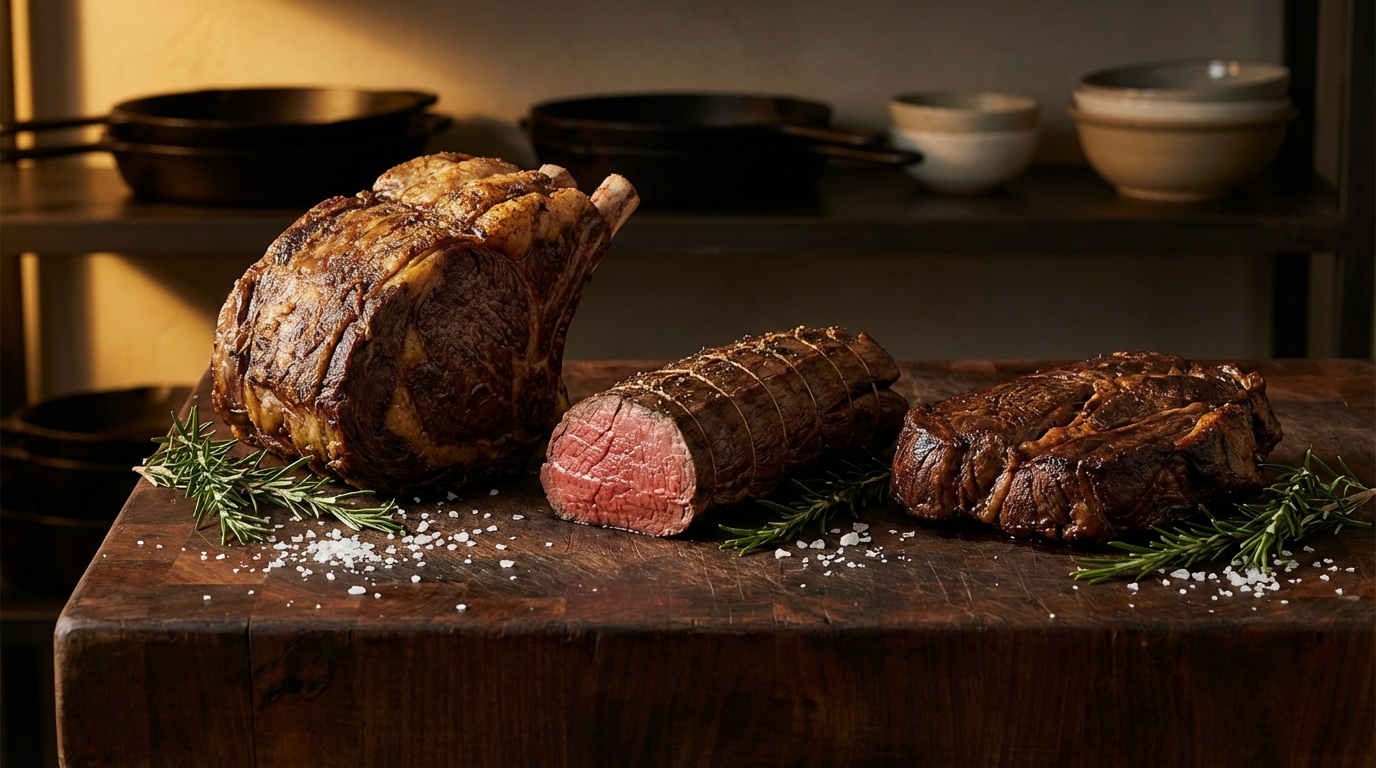
Roasting is the oldest and most reliable way to cook a large piece of beef. It's simple in concept — put meat in a hot oven, wait — but the results depend almost entirely on choosing the right cut. Pick well, and you get a centerpiece that practically cooks itself. Pick wrong, and you've got an expensive piece of shoe leather.
After more than three decades behind the butcher counter, I can tell you that the number one reason people end up with disappointing roast beef isn't technique. It's the cut they started with. Different cuts have wildly different amounts of fat, connective tissue, and muscle fiber density — and those differences determine whether your roast comes out tender and juicy or dry and chewy.
Here's everything you need to know about choosing the right cut for roasting, ranked from the absolute best to the budget-friendly alternatives that still deliver excellent results.
What Makes a Great Roasting Cut
Before we get into specific cuts, you need to understand what the oven does to meat. Roasting uses dry heat — hot air circulating around the beef at temperatures typically between 250°F and 450°F. Unlike braising or slow cooking, there's no liquid to keep the meat moist. That means the beef itself has to provide its own moisture and flavor.
Three things separate great roasting cuts from mediocre ones:
Intramuscular fat (marbling). This is your insurance policy against dryness. Fat distributed through the muscle renders slowly during roasting, basting the meat from the inside. Well-marbled cuts are almost impossible to dry out at reasonable temperatures. Lean cuts require precise timing and lower temperatures to avoid disaster.
Shape and thickness. Uniform thickness matters enormously for even cooking. A cut that's thick on one end and thin on the other will be overcooked on the thin side by the time the thick side reaches medium-rare. Cylindrical or evenly shaped cuts roast far more predictably.
Tenderness of the muscle. Roasting doesn't break down tough connective tissue the way braising does. Cuts from less-worked muscles (the rib, loin, and tenderloin) are naturally tender and well-suited to dry heat. Cuts from hard-working muscles (the round, chuck, and shank) need special treatment or lower expectations when roasted.
With that framework in mind, here are the best cuts for roasting, ranked by overall quality and reliability.
Standing Rib Roast (Prime Rib) — The King of Roasts
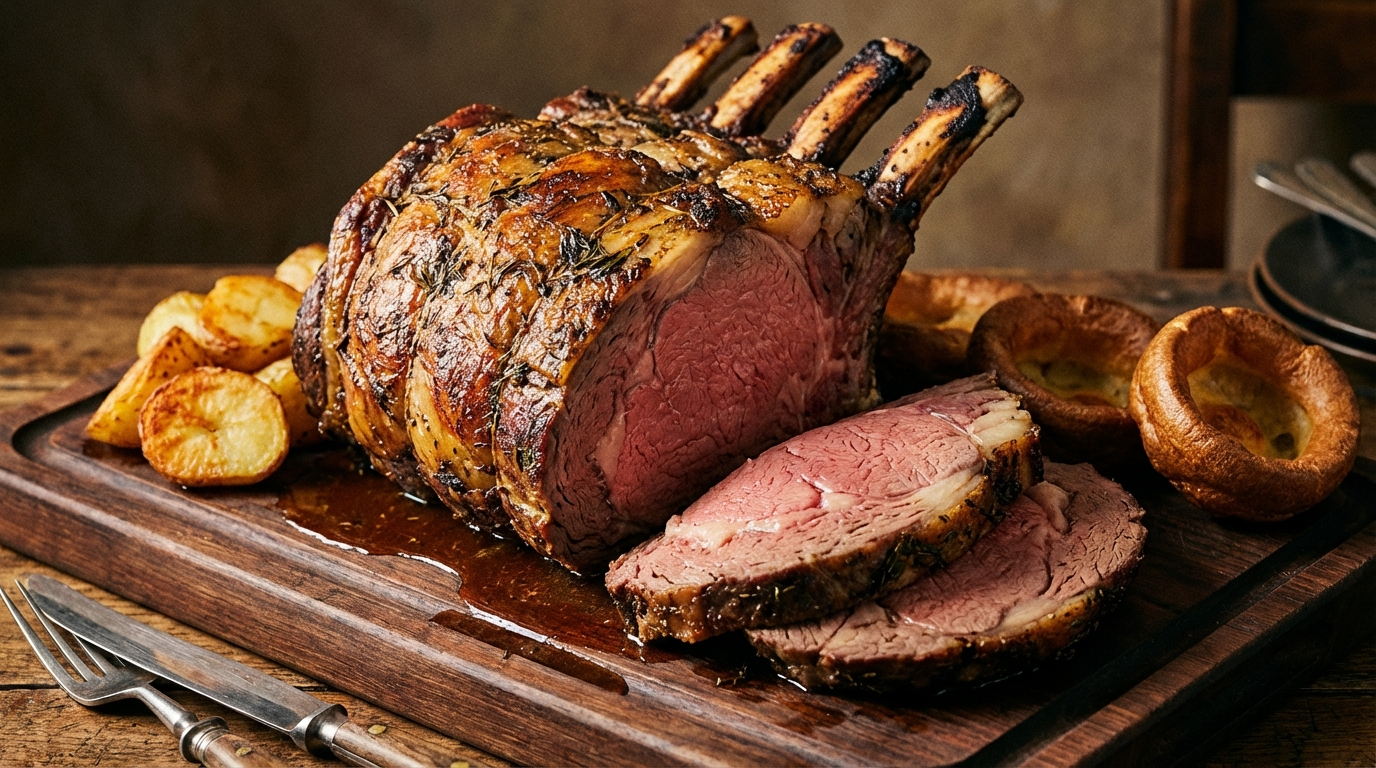
If there's one cut that was born to be roasted, it's the standing rib roast. Cut from the primal rib section (ribs 6 through 12), this is the same muscle that gives us ribeye steaks — except here you're cooking it as one magnificent piece.
Why it's the best: The rib section carries more intramuscular fat than any other area of the animal. That marbling makes a standing rib roast almost foolproof — the rendered fat keeps the interior juicy and adds an incredible depth of flavor that leaner cuts simply can't match. The bones act as a natural roasting rack and conduct heat evenly, while the fat cap on the exterior bastes the roast as it renders.
What to buy: A three-bone roast feeds 6-8 people generously. Ask your butcher for the "first cut" or "loin end" (ribs 10-12), which is the most tender and evenly shaped portion. USDA Choice grade is excellent for roasting; Prime is extraordinary but costs 30-50% more. For a special occasion, American Wagyu prime rib is in a category of its own — the marbling is on another level entirely.
How to roast it: Season heavily with salt (at least 1 tablespoon per bone) the night before and refrigerate uncovered. Roast at 250°F until the internal temperature reaches 120°F for medium-rare, then blast at 500°F for 8-10 minutes to develop the crust. Rest for 20-30 minutes. This low-and-slow approach gives you edge-to-edge pink with a beautiful sear.
Internal temperature targets: 120-125°F for rare, 130-135°F for medium-rare, 140-145°F for medium. Pull the roast 5°F below your target — carryover cooking during rest will bring it up.
Price range: $14-22/lb for Choice, $20-35/lb for Prime, $40-60/lb for American Wagyu. Budget approximately $25-35 per person for a Choice standing rib roast dinner.
Beef Tenderloin — The Most Elegant Roast
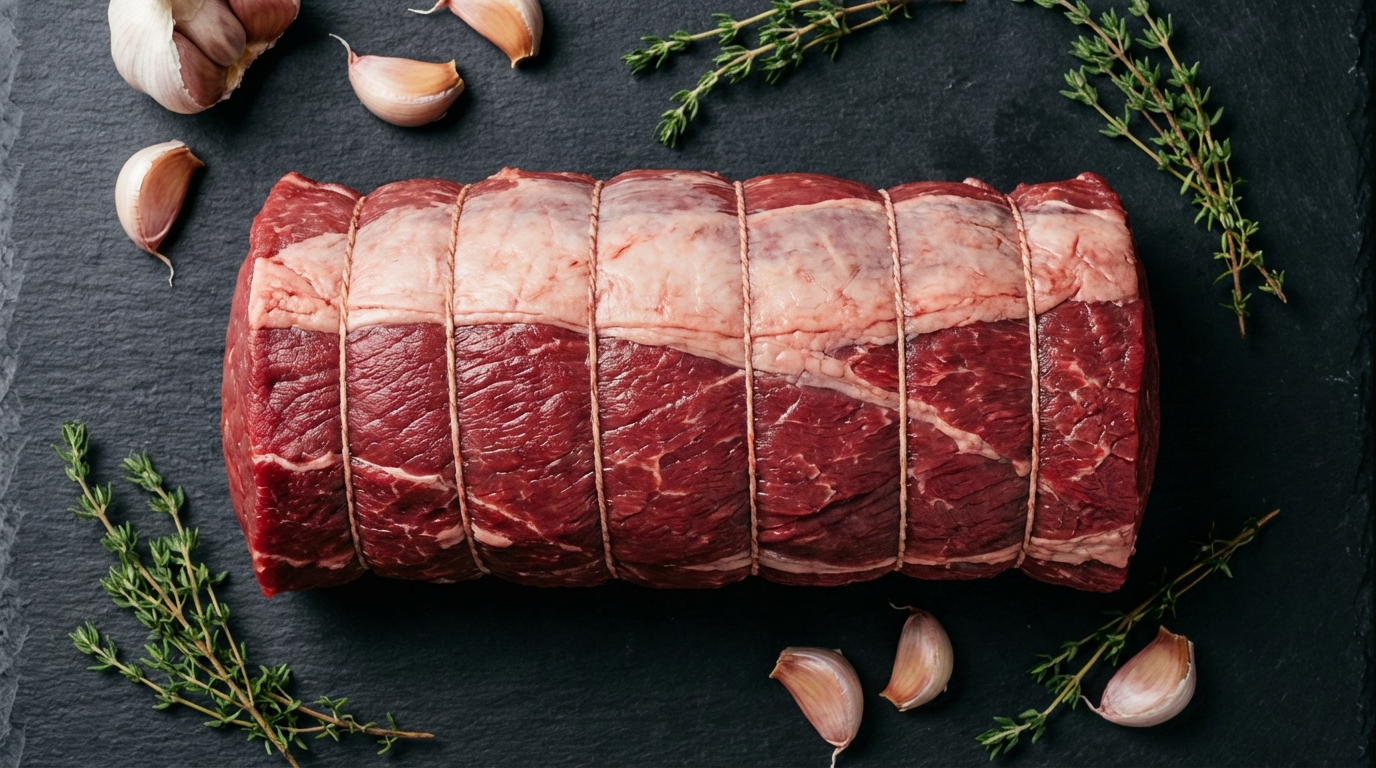
The tenderloin runs along the spine of the animal, tucked beneath the ribs. It's the least-worked muscle on the entire cow, which makes it extraordinarily tender — you can practically cut it with a fork. A whole tenderloin weighs 5-7 pounds and feeds 8-12 people when roasted whole.
Why it ranks second: Pure tenderness. Nothing else on the animal comes close. The tenderloin has a buttery, melt-in-your-mouth texture that makes it the most luxurious eating experience in beef. It's also lean and uniformly shaped (once trimmed), which makes it cook evenly.
The trade-off: Tenderness comes at the expense of flavor. The tenderloin lacks the deep, beefy richness of well-marbled cuts like prime rib or chuck. It's mild and elegant rather than bold. This is why tenderloin is often served with rich sauces — béarnaise, red wine reduction, or horseradish cream — to compensate for what the meat itself doesn't provide.
What to buy: Ask for a "peeled" or "cleaned" tenderloin — this means the butcher has removed the silver skin, chain muscle, and excess fat. If buying unpeeled (cheaper), you'll need to do this yourself. Look for even thickness from end to end, or tuck the thin tail under and tie it for uniform cooking. A center-cut tenderloin roast (also called Chateaubriand) eliminates the tapering problem entirely.
How to roast it: Sear the entire surface in a ripping hot skillet first for crust development — the tenderloin's lean profile means it won't develop much crust in the oven alone. Then roast at 425°F until the internal temperature reaches 125°F for medium-rare. This is a fast roast — a 3-pound center cut takes only 25-35 minutes after searing. Rest for 10-15 minutes before slicing into thick medallions.
Internal temperature targets: 120°F for rare, 125-130°F for medium-rare, 135-140°F for medium. Tenderloin overcooks quickly because it's narrow — check temperature early and often.
Price range: $25-40/lb for Choice, $35-55/lb for Prime. It's the most expensive cut per pound, but the yield is nearly 100% after trimming (peeled), so there's very little waste compared to bone-in cuts.
Top Sirloin Roast — The Best Value Premium Roast
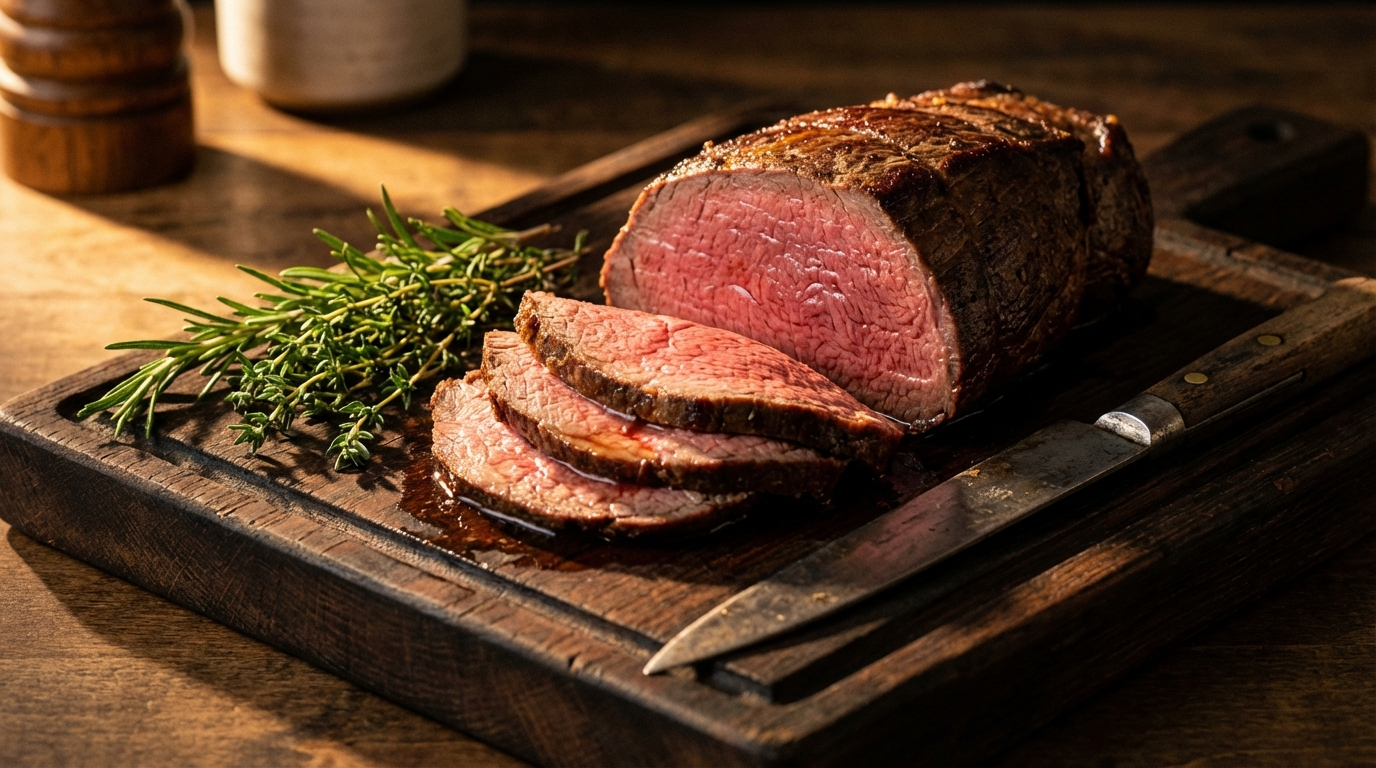
The top sirloin roast comes from the hip section, just behind the short loin. It's a large, boneless cut with moderate marbling and a robust, full-bodied beef flavor that many people prefer over more expensive cuts. A whole top sirloin roast weighs 8-12 pounds; your butcher can cut it to any size you need.
Why it's excellent for roasting: Top sirloin hits the sweet spot between tenderness, flavor, and value. It has enough marbling to stay juicy during roasting but not so much that it feels fatty. The flavor is bolder and beefier than tenderloin, closer to what most people think of when they imagine great roast beef. And it costs roughly half what tenderloin does per pound.
What to buy: Look for a roast that's been trimmed of the external fat cap to about ¼ inch — enough to baste during cooking but not so much that it's wasteful. USDA Choice is the sweet spot for value; the moderate marbling is sufficient for a great roast. Ask your butcher to tie the roast with kitchen twine at 1-inch intervals for even cooking and easier slicing.
How to roast it: Season generously and bring to room temperature for 1 hour before cooking. Sear on all sides in a hot pan, then roast at 325°F until the internal temperature reaches 130°F for medium-rare. A 4-pound roast takes approximately 1 hour 15 minutes to 1 hour 30 minutes. Rest for 15-20 minutes. Slice thin against the grain — this is important with top sirloin because the grain is more pronounced than in tenderloin or rib cuts.
Price range: $9-14/lb for Choice, $14-20/lb for Prime. This makes it one of the best-value roasting cuts available — you get a premium roasting experience for dinner-party quantities without breaking the bank.
Tri-Tip Roast — The West Coast Favorite
Tri-tip is a triangular muscle cut from the bottom of the sirloin. It weighs 2-3 pounds — smaller than most roasts — and has a distinctive grain that runs in two different directions. Originally popularized in Santa Maria, California, tri-tip has become one of the most beloved roasting cuts in American beef culture.
Why it works for roasting: Tri-tip has excellent marbling for its price point, a rich beefy flavor, and it cooks quickly because of its relatively thin profile. It's the ideal roast for 4-6 people — no leftovers, no waste. The fat cap on one side renders beautifully during high-heat roasting, creating a caramelized crust.
What to buy: Look for a tri-tip with the fat cap still attached — you'll render it during cooking for flavor and moisture. Choice grade works perfectly here. The triangular shape means varying thickness, which actually works in your favor: guests who prefer different doneness levels can be served from different sections of the roast.
How to roast it: Season with a Santa Maria-style rub (salt, pepper, garlic powder, and optionally dried parsley and cayenne). Roast fat-cap-up at 425°F for 25-35 minutes until the thickest part reaches 130°F for medium-rare. Rest for 10 minutes. Critical slicing tip: find where the grain changes direction (roughly in the center), cut the roast in half, then slice each half against its respective grain. Cutting with the grain makes tri-tip unpleasantly chewy.
Price range: $8-13/lb for Choice. Excellent value for a quick-roasting cut that punches well above its weight in flavor.
Chuck Roast — The Budget Powerhouse
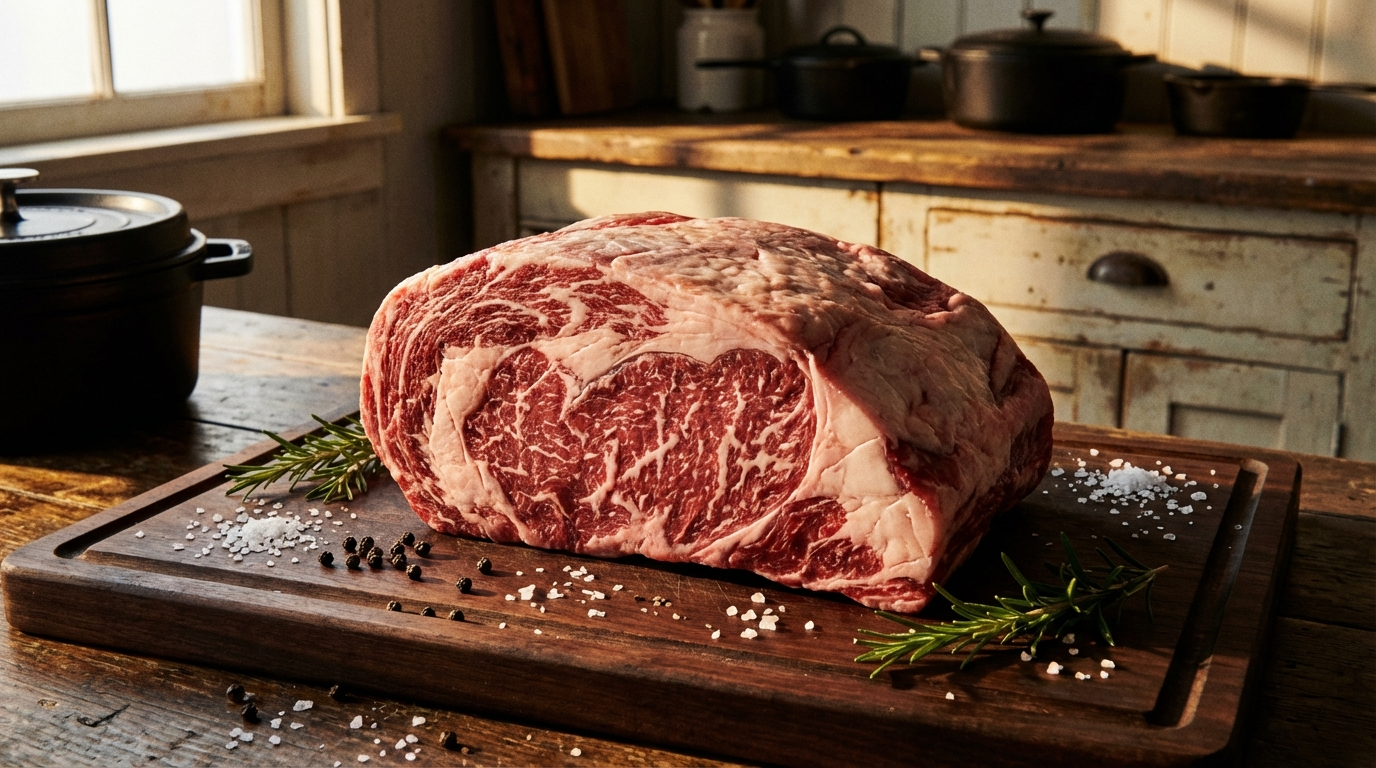
Now we're entering different territory. Chuck comes from the shoulder — a hard-working muscle group loaded with connective tissue and collagen. It's traditionally a braising cut, but it can produce spectacular results when oven-roasted at low temperatures. The key is understanding that you're not roasting it like a prime rib — you're using the oven as a slow, dry braise.
Why it works: Chuck roast has marbling that rivals many rib and loin cuts. The problem isn't fat — it's collagen. All those connective tissue fibers need time and heat to convert into gelatin. At conventional roasting temperatures (350°F+), the outside overcooks before the collagen breaks down. But at 250°F for 3-4 hours, the collagen melts into that silky richness while the marbling keeps everything moist.
What to buy: A boneless chuck roast weighing 3-4 pounds is ideal. Look for one with visible marbling throughout — avoid any that look lean or have large seams of hard white fat running through the center (that's gristle, not marbling). Chuck eye roast is the premium option — it's cut from the section closest to the rib and is significantly more tender than standard chuck.
How to roast it: Season aggressively — salt, pepper, garlic powder, onion powder. Sear on all sides in a screaming hot cast iron pan. Place on a rack in a roasting pan and roast at 250°F for 3-4 hours until the internal temperature reaches 190-200°F. Yes, you read that right — this isn't a medium-rare roast. At 190°F, the collagen has fully converted to gelatin, and the meat will be fork-tender and incredibly flavorful. Rest for 20 minutes before slicing or pulling.
Price range: $6-10/lb for Choice. This is the best roasting cut for feeding a crowd on a budget. A 4-pound chuck roast feeds 6-8 people and costs under $40.
Eye of Round — The Lean Deli-Style Roast
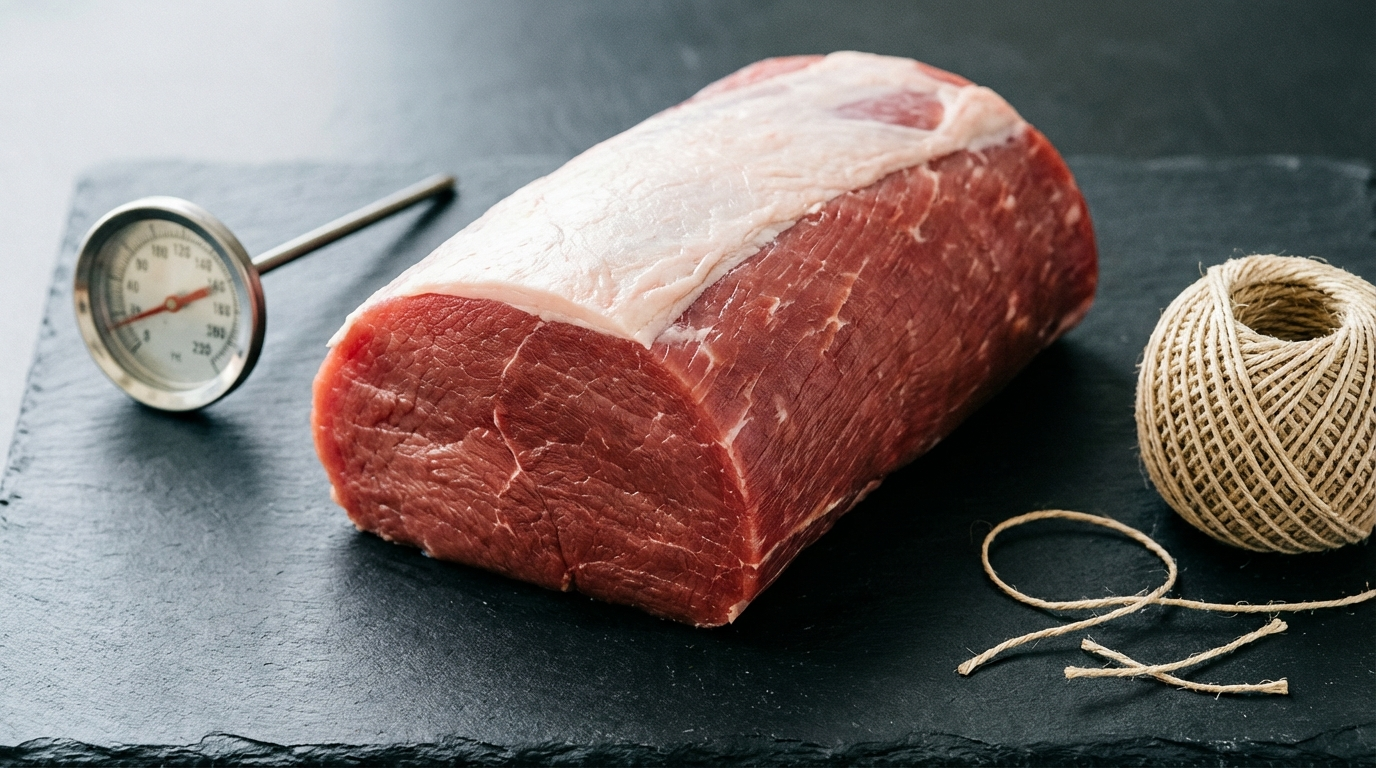
Eye of round is a lean, cylindrical muscle from the rear leg. It has almost no marbling and no connective tissue to speak of, which makes it a tricky roasting cut. But when handled correctly, it produces excellent deli-style roast beef — the kind you'd pay $18/lb for at a good deli counter.
Why it makes this list: Despite its leanness, eye of round has two things going for it: perfectly uniform shape (it cooks incredibly evenly) and a clean, pure beef flavor that takes well to seasoning. It's also one of the cheapest cuts in the case, making it the most economical way to make homemade roast beef for sandwiches.
The challenge: No marbling means no margin for error. Overcook an eye of round by even 5°F and it goes from tender to tough. This cut demands precision — an instant-read thermometer isn't optional, it's mandatory.
How to roast it: There are two schools of thought, and both work. Method 1 (high-heat blast): Preheat the oven to 500°F, put the seasoned roast in, and immediately drop the temperature to 475°F. Roast for exactly 7 minutes per pound, then turn the oven off completely — don't open the door. Leave the roast inside for 2.5 hours. The residual heat slowly brings the interior to a perfect medium-rare. Method 2 (low and slow): Sear on all sides, then roast at 225°F until 125°F internal. Either way, slice as thin as humanly possible — this cut shines paper-thin.
Price range: $5-8/lb for Choice. At this price, you can make deli-quality roast beef for a fraction of what you'd pay pre-sliced.
Rump Roast — The Underdog
Rump roast comes from the bottom round, near the rear of the animal. It's lean and moderately tough, but it has more flavor than eye of round and holds up better to higher roasting temperatures. Think of it as the middle ground between the leanness of eye of round and the richness of chuck.
When to choose rump: Rump roast is your best bet when you want sliceable roast beef (not pulled or shredded) on a tight budget. It has enough structure to slice cleanly against the grain and enough flavor to stand on its own without heavy sauces. It's the everyday roast beef of the butcher world — nothing flashy, but reliable and honest.
How to roast it: Low temperature is essential. Roast at 275°F until 130-135°F internal for medium-rare, or 190°F if you want it tender enough to shred. The middle ground — cooking to 145-155°F — is the danger zone for rump roast, producing meat that's neither pink and tender nor fully broken down. Commit to one approach or the other. Slice thin against the grain.
Price range: $5-9/lb for Choice. Comparable to eye of round but with slightly more flavor and a bit more forgiveness during cooking.
Roasting Temperature and Timing Quick Reference
Every oven is different, and every roast is a slightly different shape and density. Use these as starting points, but always cook to temperature, never to time alone. An instant-read thermometer is the single most important tool for roasting beef.
Standing rib roast (bone-in): 250°F for approximately 15-18 minutes per pound. Pull at 120°F for rare, 130°F for medium-rare. Finish with a 500°F blast for crust if desired.
Beef tenderloin: 425°F for approximately 8-10 minutes per pound (after searing). Pull at 120°F for rare, 125°F for medium-rare. This is the fastest-cooking roast.
Top sirloin roast: 325°F for approximately 20-25 minutes per pound. Pull at 125°F for rare, 130°F for medium-rare.
Tri-tip: 425°F for approximately 10-12 minutes per pound. Pull at 125°F for rare, 130°F for medium-rare.
Chuck roast: 250°F for approximately 45-60 minutes per pound. Target 190-200°F for tender, shreddable results.
Eye of round: 225°F for approximately 25-30 minutes per pound, or use the 500°F blast method. Pull at 120-125°F for medium-rare. Slice paper-thin.
Rump roast: 275°F for approximately 25-30 minutes per pound. Pull at 130°F for medium-rare slicing or 190°F for shredding.
Universal resting rule: Rest your roast for at least 15-20 minutes (large roasts like prime rib need 25-30). Internal temperature will rise 5-10°F during rest. Factor this into your pull temperature.
The Butcher's Bottom Line
If you take one thing from this guide, let it be this: match the cut to the occasion, not the other way around. A standing rib roast is spectacular for holidays and special dinners. A tenderloin is perfect when you want elegance. A top sirloin or tri-tip delivers excellent results for casual entertaining. And chuck or eye of round prove that great roast beef doesn't require a great budget.
The second most important lesson: buy a thermometer. Every cut on this list has a specific internal temperature where it's at its best. Missing that target by 10°F is the difference between a roast people rave about and one they politely eat. A $15 instant-read thermometer will improve your roasting more than any other tool, technique, or expensive cut of meat.
For premium cuts that are graded, aged, and ready for your oven, explore The Meatery's beef collection — from American Wagyu prime rib to center-cut tenderloin roasts, every cut is selected for the kind of quality that makes roasting almost foolproof.
Frequently Asked Questions
What is the best cut of beef for roasting?
Standing rib roast (prime rib) is widely considered the best cut for oven roasting. Its abundant marbling keeps the meat juicy, the bones conduct heat evenly, and the fat cap bastes the exterior during cooking. It's the most forgiving roasting cut — even slightly overcooked, it remains moist and flavorful.
What temperature should I roast beef at?
It depends on the cut. Tender, well-marbled cuts like prime rib roast best at low temperatures (250°F) for even doneness. Lean cuts like tenderloin do well at higher heat (425°F) for a shorter time. Tough cuts like chuck need low and slow (250°F) for hours to break down connective tissue. Always cook to internal temperature, not time.
How long does it take to roast a beef roast?
As a general guide: 15-18 minutes per pound for prime rib at 250°F, 8-10 minutes per pound for tenderloin at 425°F, 20-25 minutes per pound for top sirloin at 325°F, and 45-60 minutes per pound for chuck at 250°F. These are estimates — always use an instant-read thermometer to determine doneness.
What is the most affordable beef cut for roasting?
Eye of round ($5-8/lb) and rump roast ($5-9/lb) are the most affordable roasting cuts. Eye of round is excellent for deli-style roast beef when sliced paper-thin. Chuck roast ($6-10/lb) is slightly more expensive but produces richer, more flavorful results due to its superior marbling.
Should I sear beef before roasting?
For lean cuts like tenderloin and eye of round, searing before roasting is highly recommended — it develops a flavorful crust that the oven alone won't create. For well-marbled cuts like prime rib, you can sear after roasting (the reverse sear method) with a final high-heat blast at 500°F. Both approaches work; the key is getting a brown, caramelized exterior.
How long should I rest a beef roast after cooking?
Small roasts (under 3 lbs) need 10-15 minutes. Medium roasts (3-6 lbs) need 15-20 minutes. Large roasts like prime rib (7+ lbs) need 25-30 minutes. During resting, the internal temperature rises 5-10°F from carryover cooking, and the muscle fibers relax to reabsorb juices. Cutting too early means juice on your cutting board instead of in the meat.
More Expert Guides
What Is Chateaubriand? (Cut, Cooking, & Best Sources)
Chateaubriand is a thick-cut roast from the center of the beef tenderloin, traditionally served for two. Learn what makes this classic French cut special and how to cook it.
14 min readWhat Is Round Steak? The Complete Guide to Beef's Most Versatile Budget Cut
Round steak comes from the rear leg of the cow — it's lean, affordable, and misunderstood. A master butcher breaks down every sub-cut, cooking method, and technique to turn this budget workhorse into genuinely delicious meals.
14 min readWhat Is Eye of Round? The Complete Butcher's Guide to This Lean Cut
Eye of round is one of the leanest, most affordable cuts in the entire beef case — and one of the most misunderstood. A butcher explains how to turn this budget-friendly roast into something genuinely delicious.