Best Beef Cuts for Pot Roast: A Butcher's Guide to Fork-Tender Results
Pot roast is one of those dishes that sounds simple — throw a hunk of beef in a pot with some vegetables and let it cook. But the difference between a transcendent pot roast and a dry, stringy disappointment comes down to one decision you make before you ever turn on the stove: the cut of beef.
I have spent over four decades behind a butcher counter, and the number one question I get from Sunday dinner cooks is some version of “what should I buy for pot roast?” The answer is always the same: you want a tough cut. The tougher the better. That sounds counterintuitive, but braising transforms tough, collagen-loaded muscles into something so tender it falls apart when you look at it. Expensive, lean steaks? They dry out and turn to cardboard in a braise. The cheap, gnarly cuts with all the connective tissue? Those are your pot roast champions.
Let me walk you through every cut that belongs in your Dutch oven — ranked from best to acceptable — and explain exactly why each one works.
Why Tough Cuts Make the Best Pot Roast
Before we talk specific cuts, you need to understand the science behind braising. A pot roast cooks submerged (or partially submerged) in liquid at low heat — usually 300–325°F — for 3 to 4 hours. During that time, three transformations turn a tough piece of beef into something extraordinary:
Collagen melts into gelatin. Connective tissue — those white, silvery bands and sheets running through working muscles — is made of collagen. Starting around 160°F, collagen begins breaking down. After several hours of braising, it dissolves into gelatin, which gives pot roast that silky, rich mouthfeel and creates a sauce that coats the back of a spoon without any added thickener. Lean cuts lack the collagen to fuel this transformation.
Intramuscular fat renders from the inside. Marbling — the white streaks of fat within the muscle — slowly melts during the long cook, basting the meat internally. This keeps each bite moist and adds deep beefy flavor. Without enough marbling, meat dries out no matter how much liquid surrounds it.
Muscle fibers relax and separate. Hard-working muscles have tightly bundled fibers that resist a quick cook. Extended braising breaks these fibers apart until the meat practically falls into pieces under a fork. But the meat needs enough collagen and fat to stay lubricated through the process — otherwise the fibers just shrink, tighten, and squeeze out all their moisture.
This is the fundamental principle: the best pot roast comes from the worst steak cuts. The muscles that work hardest during the animal’s life develop the most flavor, collagen, and marbling — exactly the traits that reward low-and-slow cooking.
Chuck Roast: The Undisputed King
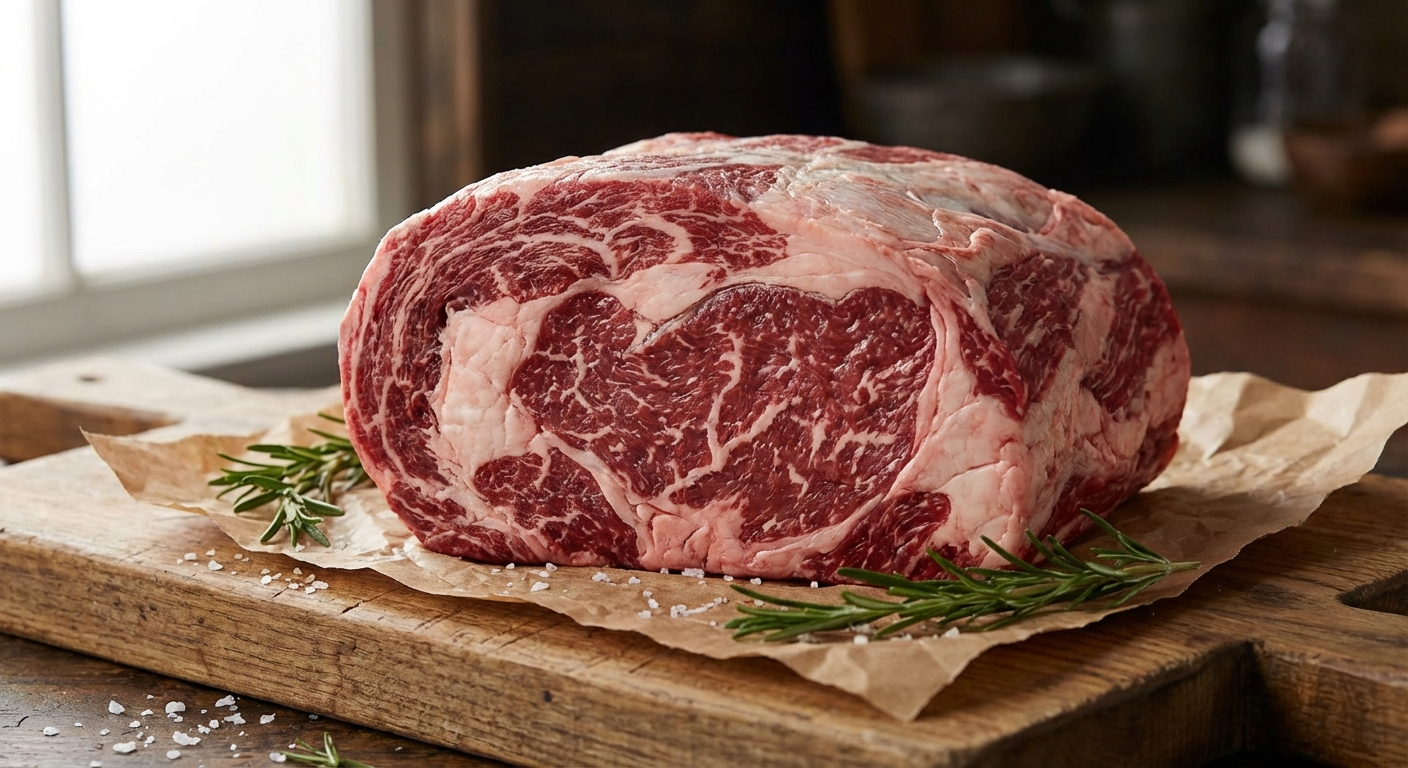
If you ask any butcher in America what the best cut for pot roast is, you will get the same answer: chuck roast. It is not even close. Cut from the shoulder primal (the chuck), this is one of the hardest-working muscle groups on the animal. Cattle use their shoulders constantly — walking, grazing, standing up, lying down — which develops deep, complex flavor, generous marbling, and abundant connective tissue throughout the meat.
A good chuck roast has visible white fat threaded throughout the lean, along with a central seam of collagen-rich connective tissue that melts completely during braising. After 3–4 hours in the oven, a chuck roast is so tender you can pull it apart with two forks. The braising liquid turns into a naturally thickened, glossy gravy without adding flour or cornstarch — all that body comes from dissolved collagen.
What to look for: A boneless chuck roast weighing 3–4 pounds with visible fat marbling throughout. Avoid pieces that have been trimmed too aggressively — you want that fat. USDA Choice grade is ideal for pot roast; Prime is unnecessary since the long braise evens out grade differences.
Specific sub-cuts: The chuck contains several muscles. The best for pot roast is the chuck eye roast (center-cut), which has the most marbling. The chuck shoulder roast is a close second. A generic “chuck roast” at the grocery store is usually one of these — both work beautifully.
Cost: $5–9/lb depending on grade and region. At this price, chuck roast delivers flavor and tenderness that outperforms cuts costing three times as much when braised.
Bottom Round Roast: The Classic Runner-Up
Bottom round is the traditional pot roast cut in many American households, and for good reason — it is affordable, widely available, and produces clean, sliceable pot roast with a beefy flavor that chuck cannot quite match. Cut from the rear leg (the round primal), bottom round is a well-exercised muscle with long, uniform grain and a dense, lean texture.
The key difference from chuck: bottom round is significantly leaner. It has less marbling and less connective tissue, which means it does not self-baste as well during cooking and the braising liquid will not thicken as naturally. You compensate by keeping the roast partially submerged (not fully immersed) and by using a rich, gelatinous stock. The payoff is a pot roast that slices beautifully — clean, even slabs with a tight grain, perfect for presenting at the dinner table.
Best technique: Sear all sides until deeply browned, then braise with the liquid coming only halfway up the roast. Flip it once at the 2-hour mark. This gives you a roast that is tender but holds its shape for slicing, rather than the shreddy, falling-apart texture of chuck.
Cost: $4–7/lb. One of the most budget-friendly roasts available.
Rump Roast: The Budget Workhorse
The rump roast comes from the top of the round, near the hip. It is a large, relatively lean cut with a tight grain and mild beefy flavor. Like bottom round, it lacks the internal fat and collagen of chuck, but it compensates with good flavor development and excellent value for large-batch cooking.
Rump roast is the cut I recommend when you are feeding a crowd on a budget. A 5–6 pound rump roast costs less than a same-size chuck and feeds 8–10 people easily. The texture after braising is firmer than chuck — not quite fall-apart, but tender enough to slice cleanly and soak up gravy.
The secret to great rump roast: Cook it longer than you think. While chuck hits perfect tenderness at 3 hours, rump needs 3.5 to 4 hours minimum. Check it by inserting a fork and twisting — when the meat fibers separate easily, it is done. Pull it early and the fibers will still be tight and chewy.
Cost: $4–6/lb. Exceptional value for large dinner parties.
Brisket Flat: The Flavor Specialist
The flat end of the brisket (also called the first cut) makes an outstanding pot roast with a distinctly beefy, almost mineral flavor that sets it apart from chuck. Brisket comes from the chest, a muscle that supports roughly 60% of the cow’s body weight. That constant work creates dense, flavorful meat with long muscle fibers and a generous fat cap on one side.
Brisket pot roast has a character all its own. The grain is longer and more pronounced than chuck, giving the finished meat a sliceable, almost deli-style texture. The fat cap renders during cooking and bastes the surface, while the exterior develops a caramelized crust from the initial sear. Many Jewish-style pot roast recipes specifically call for brisket, and for good reason — the flavor is unmatched.
Fat cap management: Leave the fat cap intact but trimmed to about 1/4 inch. Place the roast fat-side up in the Dutch oven so the rendering fat bastes the meat as it cooks. The cap will be soft and gelatinous when done — some people remove it, but I think it adds richness to each slice.
Cost: $6–10/lb. Brisket prices fluctuate with BBQ demand, so shop sales.
Cross-Cut Beef Shank: The Hidden Gem
If you have never made pot roast with beef shank, you are missing out on one of the most flavorful, richest braises possible. Shank is the leg — the most exercised muscle on the animal — and it is absolutely loaded with connective tissue and surrounded by dense collagen. Each cross-cut round comes with a marrow bone in the center that melts during cooking and adds an incomparable depth to the braising liquid.
Shank is not traditional pot roast material in most American kitchens, but it is the foundation of osso buco, one of Italy’s greatest braised dishes. The same principles apply to a pot roast preparation. The meat braises into pull-apart shreds with a slightly different texture than chuck — more fibrous, more intense, with layers of melted collagen throughout.
How to use it: You can either keep the shank rounds whole (serving one per person like osso buco) or combine 2–3 pounds of shank with a chuck roast for a hybrid pot roast that has the best qualities of both cuts. The marrow bones enrich the braising liquid enormously — your gravy will gel solid in the fridge from all the natural gelatin.
Cost: $4–8/lb. Still underpriced for the flavor and collagen load it delivers.
Arm Roast: The Overlooked Shoulder Cut
The arm roast (also called the arm chuck roast or round bone roast) comes from the lower portion of the chuck primal, near where the leg meets the shoulder. It typically includes a cross-section of the arm bone, which adds flavor to the braise, and has a slightly different fat distribution than a center-cut chuck — less marbling within the muscle but a more generous exterior fat cap.
Arm roast pot roast has a cleaner, beefier flavor than standard chuck with a texture that falls somewhere between chuck and bottom round. It is tender enough to pull apart but firm enough to slice if you prefer. The bone adds flavor to the braising liquid and makes for a more dramatic presentation — there is something deeply satisfying about a bone-in pot roast on the table.
Finding it: Not every grocery store carries arm roast separately — it often gets lumped in with generic “chuck roast.” Ask the butcher specifically for an arm roast if you want to try it. Some stores label it “round bone roast” because of the round cross-section of bone visible on the cut face.
Cost: $5–8/lb, usually slightly less than center-cut chuck.
Cuts to Avoid for Pot Roast
Not every beef roast belongs in a Dutch oven with braising liquid. These are the cuts I actively steer customers away from when they say “pot roast”:
Tenderloin roast: The leanest, most tender cut on the animal. Zero connective tissue, minimal fat. Braising it is like slow-cooking a piece of cardboard — all the moisture evaporates and there is nothing to replace it. Roast it at high heat instead.
Top sirloin roast: Too lean for braising and too expensive to justify the method. Top sirloin is designed for dry-heat cooking — roasting at 350°F to medium-rare. Braising it wastes a cut that was meant for a different purpose.
Rib roast (prime rib): The marbling is beautiful but the fat structure does not survive a long braise well. The fat pockets between the rib muscles render out completely, leaving separated, stringy sections. Roast this at high heat where it belongs.
Eye of round: The tightest, driest muscle on the cow. Even 4 hours of braising cannot fully tenderize this cut, and the flavor is flat compared to chuck or brisket. It slices nicely but tastes like nothing. Spend the extra dollar per pound on chuck.
The Perfect Pot Roast Cut Guide by Situation
Different situations call for different cuts. Here is my cheat sheet after decades of Sunday dinners:
Best overall / Sunday dinner: Chuck roast. It is the king for a reason. Fork-tender, self-saucing, deeply flavorful. Buy a 3–4 lb boneless chuck and braise at 300°F for 3–3.5 hours.
Best for slicing: Bottom round or brisket flat. Both hold their shape and slice into clean, even portions. Ideal when presentation matters — holiday dinners, dinner parties, or any time you want neat slices on a platter rather than shredded meat.
Best on a budget: Rump roast. Lowest cost per pound, largest sizes available, feeds a crowd. Give it extra time (4 hours) and use rich stock.
Best for richest gravy: Beef shank (alone or mixed with chuck). The marrow bones and massive collagen load create a gravy so rich it gels in the fridge. No thickener needed.
Best for a crowd: Rump roast (5–6 lbs) or two chuck roasts side by side. Scale your braising liquid proportionally and add 30 minutes to the cook time for larger roasts.
Best hybrid blend: 70% chuck roast + 30% beef shank. The chuck provides the classic pot roast base while the shank supercharges the braising liquid with gelatin. This is my personal go-to when I am cooking for family.
Universal Pot Roast Tips (Any Cut)
Regardless of which cut you choose, these techniques apply across the board:
Sear aggressively. Get your Dutch oven screaming hot with a high-smoke-point oil and brown every surface of the roast until deeply caramelized. This Maillard reaction creates hundreds of new flavor compounds that dissolve into the braising liquid. Never skip the sear.
Deglaze after searing. After removing the seared roast, pour wine, stock, or even water into the hot pan and scrape up all the browned bits (fond) stuck to the bottom. Those bits are concentrated flavor — leaving them behind is leaving flavor on the table.
Low and slow wins. 300–325°F is the sweet spot. Higher temperatures cook faster but tighten the muscle fibers before the collagen has time to fully melt. Patience is the entire technique — a pot roast cannot be rushed.
Do not submerge the roast. The liquid should come halfway to two-thirds up the sides of the meat. The exposed top develops a crust that adds textural contrast. A fully submerged roast is boiled meat — it will be tender but lack the flavor complexity of a proper braise.
Rest before serving. Pull the pot roast from the oven and let it rest in the Dutch oven, covered, for 15–20 minutes. The fibers relax and reabsorb some liquid, making every bite juicier.
Frequently Asked Questions
What is the best cut of beef for pot roast?
Chuck roast is the best overall cut for pot roast. It has an ideal balance of lean meat, intramuscular fat, and collagen-rich connective tissue that melts during braising to create fork-tender meat and a naturally thick, silky gravy without any added thickener.
Is bottom round or chuck roast better for pot roast?
Chuck roast produces more tender, fall-apart pot roast with richer gravy thanks to its higher collagen and fat content. Bottom round makes a leaner, cleaner-slicing pot roast but requires more careful cooking and richer stock to compensate for less internal fat. Chuck is the better choice for most home cooks.
Can you use brisket for pot roast?
Yes, the brisket flat (first cut) makes excellent pot roast with a distinctive beefy flavor and sliceable texture. Leave a quarter-inch fat cap intact and braise fat-side up so it bastes the meat. Many Jewish-style pot roast recipes specifically call for brisket.
Why is my pot roast dry and tough?
A dry, tough pot roast usually means one of two things: the cut is too lean (lacking the collagen and fat needed for braising), or it has not cooked long enough. Collagen-rich cuts like chuck need at least 3 hours at 300 degrees F. Lean cuts like eye of round or top sirloin will often stay dry regardless of cook time because they lack the internal fat to stay moist.
How long should you cook pot roast?
At 300 to 325 degrees F, most pot roasts need 3 to 4 hours. Chuck roast is typically done in 3 to 3.5 hours, while leaner cuts like rump roast or bottom round may need 3.5 to 4 hours. Test by inserting a fork and twisting. When the meat fibers separate easily with no resistance, it is done.
More Expert Guides
What Is Chateaubriand? (Cut, Cooking, & Best Sources)
Chateaubriand is a thick-cut roast from the center of the beef tenderloin, traditionally served for two. Learn what makes this classic French cut special and how to cook it.
14 min readWhat Is Round Steak? The Complete Guide to Beef's Most Versatile Budget Cut
Round steak comes from the rear leg of the cow — it's lean, affordable, and misunderstood. A master butcher breaks down every sub-cut, cooking method, and technique to turn this budget workhorse into genuinely delicious meals.
14 min readWhat Is Eye of Round? The Complete Butcher's Guide to This Lean Cut
Eye of round is one of the leanest, most affordable cuts in the entire beef case — and one of the most misunderstood. A butcher explains how to turn this budget-friendly roast into something genuinely delicious.