Best Beef Cuts for Grilling: A Butcher's Ranked Guide
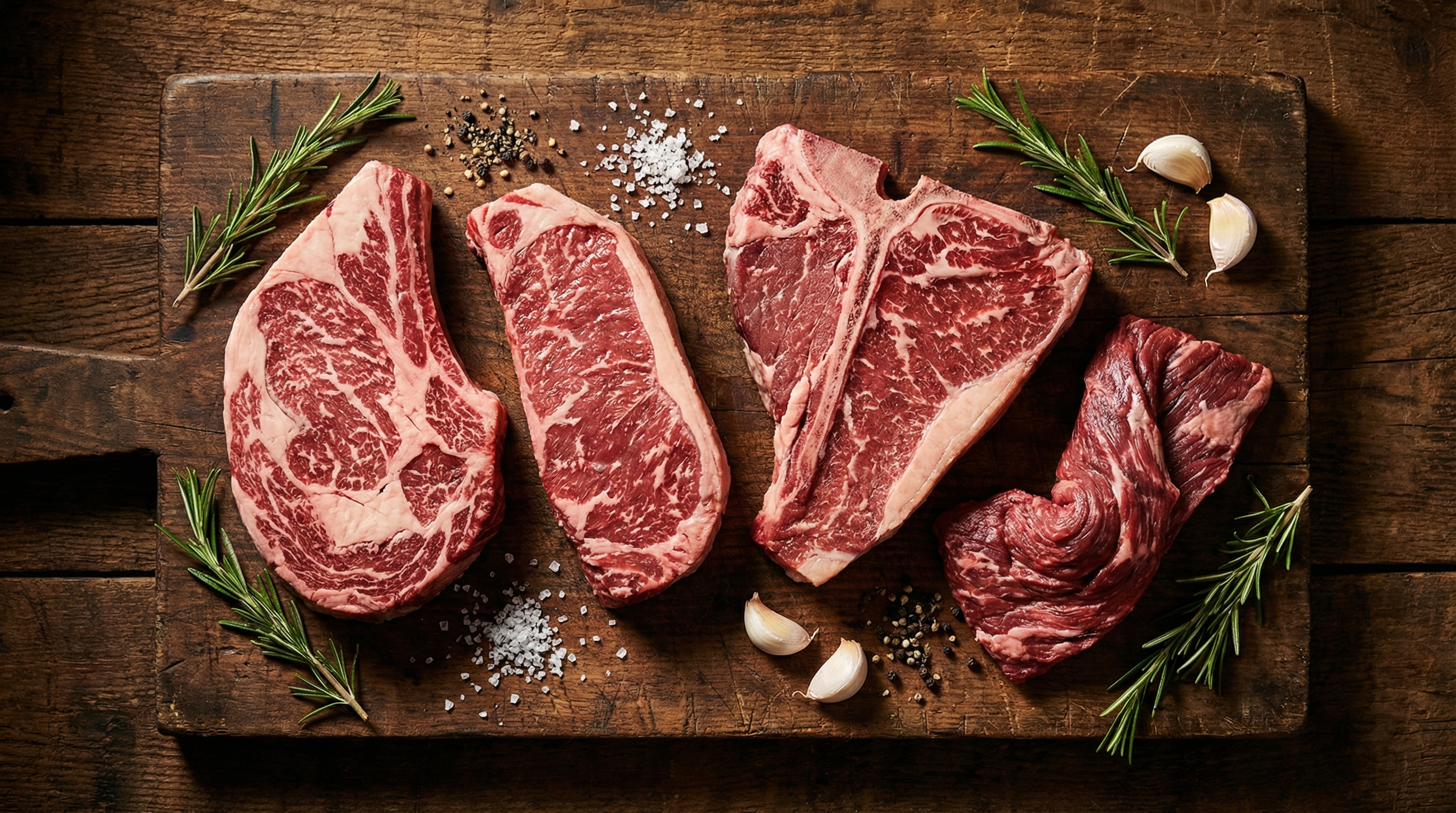
Grilling is the opposite of smoking. It's fast, hot, and unforgiving. The cuts that shine on a grill are the ones that can handle intense direct heat and still come out tender, juicy, and full of flavor. Pick the wrong cut and you'll end up with a tough, dried-out disappointment — no matter how expensive it was.
After three decades of cutting steaks and grilling on everything from cheap charcoal kettles to custom-welded rigs, I've learned which cuts are built for the grill and which ones belong in a braise. This guide ranks every beef cut worth grilling, tells you what to look for at the butcher counter, and gives you the heat levels and timelines that actually work.
What Makes a Good Grilling Cut?
Before we rank specific cuts, you need to understand what separates great grilling cuts from mediocre ones. Three factors determine success over high heat:
1. Tenderness. Grilling is fast — typically 4 to 12 minutes per side depending on thickness. There's no time for tough connective tissue to break down. Cuts from muscles that do less work (the loin, the rib section) are naturally more tender. Cuts from hard-working muscles (the chuck, the round) need slow cooking to become tender — the grill won't save them.
2. Marbling. Intramuscular fat is your insurance policy on the grill. As the steak cooks over high heat, marbling renders and bastes the meat from within. Well-marbled cuts stay juicy even if you overshoot your target temperature by a few degrees. Lean cuts have zero margin for error — 10 seconds too long and they're dry.
3. Thickness. This might be the most underrated factor. A steak needs to be at least 1 inch thick — ideally 1.25 to 1.5 inches — to develop a proper sear on the outside while staying medium-rare in the center. Thin steaks overcook before they can build a crust. The exception is intentionally thin cuts like skirt steak, which cook in under 3 minutes per side and rely on aggressive sear rather than gradual cooking.
1. Ribeye — The Undisputed Grilling Champion
If you can only buy one steak for the grill, make it a ribeye. No other cut delivers the combination of marbling, flavor, and forgiveness that a ribeye does over high heat. It comes from the rib section (ribs 6-12) where the longissimus dorsi muscle does minimal work, resulting in exceptional tenderness and generous fat distribution.
Why it's #1: The ribeye's heavy marbling means it stays juicy even at medium doneness. The fat renders over the flames, creating those characteristic flare-ups that build a gorgeous, slightly charred crust. The spinalis dorsi (the cap) — that crescent of incredibly marbled meat wrapping the top of the steak — is arguably the single best bite of beef on the entire animal.
What to Buy
- Grade: USDA Choice minimum. Prime is noticeably better on the grill — the extra marbling renders beautifully over direct heat.
- Thickness: 1.25 inches is the sweet spot. Under 1 inch and you'll overshoot medium-rare before a proper crust forms.
- Bone-in vs boneless: Bone-in (cowboy cut) looks dramatic and the bone insulates one side, creating a nice gradient of doneness. Boneless cooks more evenly and is easier to sear flat.
- Weight: 14-18 oz for boneless, 20-24 oz for bone-in.
Grilling Parameters
- Heat: High direct — 500-550°F grate temperature
- Time: 4-5 minutes per side for 1.25-inch steaks (medium-rare)
- Target internal temp: 130°F (pull at 125°F — carryover will add 5°F)
- Rest: 5-8 minutes tented loosely with foil
Pro tip: Don't press the steak down with a spatula. You're squeezing out the juices you paid a premium for. Let gravity and heat do the work. If flare-ups get aggressive, move the steak to a cooler zone — don't douse the flames with water.
2. New York Strip — The Lean Powerhouse
The New York strip (also called Kansas City strip, top loin, or simply "strip steak") is the ribeye's leaner, more disciplined cousin. Cut from the short loin just behind the ribs, it has a firmer texture, a pronounced beefy flavor, and a distinctive strip of fat running along one edge that crisps beautifully on the grill.
Why it ranks #2: The strip offers a cleaner, more consistent eating experience than the ribeye. Every bite has roughly the same texture and flavor — no pockets of fat or connective tissue to navigate. It's leaner but still has enough marbling (especially at Choice or Prime grade) to stay juicy. The fat cap along the edge bastes the meat as it renders, and when it gets direct heat, it turns into a crispy, caramelized strip of pure flavor.
What to Buy
- Grade: Choice or Prime. Select-grade strips are noticeably drier on the grill.
- Thickness: 1.25-1.5 inches. Strips thinner than 1 inch dry out fast because of their lower fat content.
- Bone-in vs boneless: Bone-in strip (sometimes called a shell steak) provides insulation and looks impressive. Boneless is easier to get an even sear.
- Fat cap: Look for an even, 1/4-inch fat cap along the edge. Too thick and it won't render fully; trimmed off and you lose flavor.
Grilling Parameters
- Heat: High direct — 500-550°F
- Time: 4-5 minutes per side for 1.25-inch steaks
- Target internal temp: 130°F (medium-rare). Strips are less forgiving than ribeyes — medium is noticeably drier.
- Rest: 5 minutes minimum
Pro tip: Render the fat cap first. Hold the steak on its edge with tongs, fat cap down on the grill, for 2-3 minutes before laying it flat. This crisps the fat and prevents it from being chewy.
3. T-Bone and Porterhouse — Two Steaks in One
The T-bone and porterhouse are essentially the same cut — a New York strip and a tenderloin filet separated by a T-shaped bone. The difference is size: a porterhouse has a larger tenderloin section (at least 1.25 inches wide at the widest point, per USDA standards). Both come from the short loin and give you two distinct textures and flavors on one plate.
Why it ranks #3: You get the rich, beefy flavor of a strip on one side and the buttery tenderness of a filet on the other. The bone conducts heat more slowly, which means the meat closest to it stays a touch more rare — a built-in doneness gradient that gives every bite variety. It's a showpiece cut that commands attention at any cookout.
What to Buy
- Grade: Choice or Prime.
- Thickness: 1.5 inches minimum. Thinner T-bones overcook the tenderloin side before the strip side develops a crust.
- Porterhouse vs T-bone: If you love filet, get the porterhouse — the tenderloin portion is significantly larger. If you prefer strip, a T-bone gives you more of that.
- Weight: 20-28 oz for T-bones, 24-36 oz for porterhouse.
Grilling Parameters
- Heat: Two-zone setup — high direct (500°F+) and medium indirect (350°F)
- Method: Sear the strip side over direct heat for 3-4 minutes per side, keeping the tenderloin side angled toward the cooler zone. The tenderloin cooks faster because it's leaner.
- Target internal temp: 130°F in the strip, 125°F in the tenderloin
- Rest: 7-10 minutes — the bone retains heat and continues cooking
Pro tip: Position the T-bone so the tenderloin side faces away from the hottest part of the grill. The filet has almost no fat protection and will overcook if it gets the same heat as the strip side. Tilting the steak slightly with the strip side angled toward the flame compensates for the difference in fat content.
4. Filet Mignon — The Tender Luxury Cut
The filet mignon comes from the tenderloin, the least-worked muscle on the animal. It's the most tender cut of beef you can buy — and the leanest of the premium steaks. That combination makes it both a grilling luxury and a grilling challenge.
Why it ranks #4: Nothing matches filet mignon for tenderness. The texture is almost buttery, with zero chew. The tradeoff is flavor — because it's so lean, it doesn't have the deep beefy punch of a ribeye or strip. On the grill, it needs careful attention because there's essentially no fat to protect it from overcooking. But when you nail it — seared hard on the outside, perfectly pink inside — it's an extraordinary eating experience.
What to Buy
- Grade: Choice or Prime. The marbling difference matters more here because the cut is so lean to begin with.
- Thickness: 2 inches minimum. Filets are cylindrical and relatively small in diameter — thin ones overcook in seconds.
- Center-cut: Ask for center-cut filets (from the middle of the tenderloin). They're the most uniform in shape, which means even cooking. Tail-end filets are thinner and taper awkwardly.
- Weight: 6-8 oz is standard. Don't go under 6 oz — they cook too fast.
Grilling Parameters
- Heat: Screaming hot direct — 600°F+ grate temperature
- Time: 3-4 minutes per side for 2-inch filets
- Target internal temp: 125-128°F (medium-rare). Filets go from perfect to overcooked in a narrow 5°F window.
- Rest: 5 minutes
Pro tip: Wrap filets in bacon if you want extra fat protection and flavor on the grill. Secure with a toothpick. The bacon bastes the lean meat during cooking and adds a smoky, salty layer that compensates for the filet's mild flavor.
5. Tri-Tip — The West Coast Grill Favorite
Tri-tip is a triangular muscle from the bottom sirloin that weighs 1.5-3 pounds untrimmed. It's been a Central California grilling staple since the 1950s (Santa Maria-style barbecue) but has gained national popularity over the past decade. It offers beefy flavor that punches well above its price point.
Why it ranks #5: Tri-tip is one of the best values in beef. It costs a fraction of ribeye or strip but delivers serious flavor when grilled properly. The triangular shape means you naturally get a range of doneness — thicker end more rare, thinner end more done — which actually works in your favor when feeding a group with different preferences. The grain changes direction partway through the cut, which is important to know when slicing.
What to Buy
- Grade: Choice. Prime tri-tip is rare and usually not worth the premium — the cut has enough inherent flavor at Choice.
- Trimming: Leave a thin fat cap (1/8 inch) on one side. It renders and crisps beautifully on the grill. Remove any silver skin.
- Weight: 2-2.5 lbs trimmed is ideal for a household grill.
Grilling Parameters
- Heat: Two-zone — sear over direct high heat, then finish over indirect medium (325-350°F)
- Method: Sear 4-5 minutes per side over direct heat for crust, then move to indirect until internal temp reaches target
- Target internal temp: 130-135°F (medium-rare to medium). Tri-tip is best at medium-rare.
- Rest: 10-15 minutes — it's a larger cut and needs time for juices to redistribute
Pro tip: Slice against the grain — but pay attention, because the grain changes direction. The bottom portion runs one way and the top portion runs perpendicular. Cut the tri-tip in half where the grain shifts, then slice each half against its respective grain direction. Ignore this and you'll get chewy slices no matter how well you cooked it.
6. Skirt Steak — The Fajita King
Skirt steak is a long, flat, intensely flavored muscle from the plate section (the diaphragm area). There are two types: the outside skirt (thicker, more tender, usually claimed by restaurants) and the inside skirt (thinner, slightly tougher, what you typically find at retail). Both are exceptional on the grill.
Why it ranks #6: Pound for pound, skirt steak might have the most intense beef flavor of any cut. The loose grain structure absorbs marinades like a sponge, and the thin profile means it cooks in under 3 minutes per side — making it the fastest premium steak on the grill. It's the traditional cut for fajitas, and there's a reason: the charred exterior and juicy, beefy interior wrapped in a warm tortilla is one of the great pleasures of grilling.
What to Buy
- Outside vs inside: Outside skirt if you can find it — it's thicker and more tender. Inside skirt is more common at retail and still excellent.
- Membrane: Make sure the tough outer membrane is removed. Some butchers leave it on — peel it off before grilling or it'll be chewy.
- Length: Skirt steaks are long (1-2 feet). Cut into manageable sections that fit your grill.
Grilling Parameters
- Heat: Maximum — as hot as your grill gets (600°F+)
- Time: 2-3 minutes per side. That's it. Skirt steak goes from perfect to ruined in 60 seconds.
- Target internal temp: 130°F, but honestly — with skirt steak this thin, use time and touch rather than a thermometer.
- Rest: 5 minutes, then slice thin against the grain
Pro tip: Always slice skirt steak against the grain and on a bias (at a 45° angle). The muscle fibers in skirt steak are long and prominent — cutting against them is the difference between tender bites and chewy strips. Also: don't marinate longer than 2 hours. The acid in most marinades will start breaking down the surface texture and make it mushy.
7. Flank Steak — The Lean All-Rounder
Flank steak comes from the abdominal muscles and is leaner and more uniform than skirt steak. It's a flat, wide muscle with a very visible grain that runs lengthwise. Like skirt steak, it's a thin cut that benefits from high heat and fast cooking — but it has a firmer, more structured texture.
Why it ranks #7: Flank steak is versatile, affordable, and consistently available. It's leaner than skirt steak, which means cleaner flavor but less forgiveness. When grilled hot and fast and sliced thin against the grain, it's tender and delicious. It takes marinades well, slices beautifully for presentation, and works in everything from tacos to steak salads to stir-fry.
What to Buy
- Size: 1.5-2 lbs is typical. Look for even thickness across the whole piece.
- Color: Deep red with visible long muscle fibers. Avoid any with gray patches or excessive moisture in the package.
- Thickness: 3/4 to 1 inch. Thinner flanks cook too fast; thicker ones are rare at retail.
Grilling Parameters
- Heat: High direct — 500-600°F
- Time: 4-5 minutes per side for medium-rare
- Target internal temp: 130°F. Do not cook flank past medium (140°F) — it turns tough and chewy.
- Rest: 5-8 minutes, then slice very thin against the grain
Pro tip: Score the surface of flank steak in a crosshatch pattern (shallow cuts, 1/8 inch deep) before marinating. This lets the marinade penetrate deeper into the dense muscle and prevents the steak from curling on the grill. A tight curl means one side overcooks while the other stays rare.
8. Flat Iron Steak — The Hidden Gem
The flat iron is cut from the chuck (shoulder) and is the second-most tender muscle on the animal after the tenderloin. It was "discovered" in 2002 by University of Nebraska meat scientists who figured out how to remove the central connective tissue from the top blade roast, yielding two flat, incredibly tender steaks.
Why it ranks #8: The flat iron offers tenderloin-level tenderness at a fraction of the price. It has more marbling than a filet and more beef flavor too. At 8-12 oz each and about 1 inch thick, they're perfectly portioned for individual servings. The catch is availability — not every butcher counter carries them, and quality varies depending on how well the central gristle line was removed.
What to Buy
- Center line: Check that the tough central connective tissue has been fully removed. A white line running through the middle means it wasn't butchered properly — it'll be chewy.
- Thickness: 3/4 to 1 inch. They're naturally thin, so don't expect 1.5-inch cuts.
- Marbling: Flat irons are naturally well-marbled for a budget cut. Look for visible intramuscular fat.
Grilling Parameters
- Heat: High direct — 500°F+
- Time: 3-4 minutes per side
- Target internal temp: 130°F. Like filet, flat irons are best at medium-rare.
- Rest: 5 minutes
Pro tip: Flat irons are thin enough to benefit from a simple reverse-sear approach if you have a two-zone setup. Start them on the cooler side for 5-6 minutes to bring the interior up to 110°F, then blast them over direct heat for 90 seconds per side for a perfect edge-to-edge pink with a hard sear.
9. Hanger Steak — The Butcher's Secret
The hanger steak (also called the "butcher's steak" because butchers historically kept it for themselves) hangs from the diaphragm between the last rib and the loin. There's only one per animal, weighing about 1-1.5 pounds, which makes it relatively rare at retail.
Why it ranks #9: Hanger steak has intense, almost livery beef flavor that polarizes people — you either love it or you don't. The texture is coarser than strip or ribeye but incredibly tender when cooked to medium-rare and sliced properly. Its scarcity and strong flavor profile make it a favorite of restaurant chefs and in-the-know home grillers.
What to Buy
- Center membrane: The hanger has a tough central membrane that should be removed before grilling (or buy it already trimmed into two pieces).
- Freshness: Hanger steak deteriorates faster than other cuts. Buy it the day you plan to grill it if possible.
- Source: Ask your butcher — many shops don't display hanger steak but will cut one for you if asked.
Grilling Parameters
- Heat: High direct — 500-600°F
- Time: 4-5 minutes per side
- Target internal temp: 125-130°F. Hanger steak turns grainy and liver-like past medium. Keep it rare to medium-rare.
- Rest: 5-8 minutes, slice against the grain
Pro tip: If the strong flavor of hanger steak is too much, a quick marinade with red wine, shallots, and Dijon mustard mellows it out while adding complementary depth. Don't marinate longer than 4 hours — the meat is already tender and acid will turn the surface mealy.
Cuts to Avoid on the Grill
Not every beef cut belongs on a grill. These cuts lack the tenderness, marbling, or structure to perform well over direct heat:
- Chuck roast: Loaded with connective tissue that needs hours of slow cooking to break down. Grilling gives you a chewy, tough mess.
- Brisket: The king of the smoker is a disaster on the grill. It needs 12+ hours of low heat to convert collagen to gelatin. A grilled brisket steak is edible but a shadow of what slow-cooked brisket can be.
- Eye of round: Extremely lean with almost no marbling. It dries out over high heat faster than any other cut. If you must cook it quick, slice it paper-thin for sandwiches.
- Beef shanks: Dense connective tissue and sinew that will never break down on a grill. These are for braising and osso buco.
- Bottom round: Lean, tough, and unforgiving. A grill makes all of its worst qualities more pronounced.
The common thread: these cuts all come from hard-working muscles with heavy connective tissue and minimal marbling. They need low, slow, moist-heat cooking methods — the exact opposite of what a grill provides.
Essential Grilling Tips for Any Cut
No matter which cut you choose, these fundamentals apply to every steak on every grill:
1. Bring steaks to room temperature. Pull steaks from the fridge 30-45 minutes before grilling. A cold steak hitting a hot grill means the exterior overcooks before the interior warms up, giving you a gray band of overcooked meat around the edges. Room temperature steaks cook more evenly from edge to center.
2. Dry the surface. Pat steaks bone-dry with paper towels before seasoning. Moisture on the surface creates steam instead of sear — steam is the enemy of crust. Dry surface + hot grill = Maillard reaction = flavor.
3. Season aggressively. Kosher salt and coarse black pepper are all you need, but use more than you think. A thick steak needs a heavy hand — the seasoning is only hitting the surface. As a rule of thumb: if it looks like too much salt, it's probably right.
4. Use an instant-read thermometer. Touch tests and timing charts are rough guides at best. A good instant-read thermometer (ThermoWorks Thermapen is the standard) removes all guesswork. Insert into the thickest part, away from bone. Pull steaks 5°F below your target — carryover cooking will close the gap during rest.
5. Rest your steak. Resting lets the muscle fibers relax and reabsorb juices that migrated to the center during cooking. Cut into a steak immediately and those juices pour onto the plate instead of staying in the meat. Rest steaks for at least 5 minutes — 8-10 minutes for thick cuts. Tent loosely with foil if you're worried about heat loss, but don't wrap tightly or you'll steam the crust.
6. Slice against the grain. This matters most for cuts with prominent grain structure (skirt steak, flank steak, hanger steak, tri-tip). Cutting against the grain shortens the muscle fibers, making each bite tender. Cutting with the grain gives you long, chewy strands. Look at the lines running through the meat and cut perpendicular to them.
The Bottom Line
The best grilling cut depends on your priorities. For pure luxury and fat-fueled flavor, you can't beat a ribeye. For a leaner, cleaner steak experience, the strip is your pick. For feeding a crowd on a budget, tri-tip or flat iron steaks deliver serious value. And for fast, intensely flavored weeknight grilling, skirt steak and flank steak are unbeatable.
Whatever you choose, remember the fundamentals: buy the best grade you can afford, get it thick enough (1 inch minimum for individual steaks), bring it to room temperature, season generously, use a thermometer, and rest it before cutting. Follow those rules and any of the cuts above will give you a steak worth remembering.
More Expert Guides
What Is Chateaubriand? (Cut, Cooking, & Best Sources)
Chateaubriand is a thick-cut roast from the center of the beef tenderloin, traditionally served for two. Learn what makes this classic French cut special and how to cook it.
14 min readWhat Is Round Steak? The Complete Guide to Beef's Most Versatile Budget Cut
Round steak comes from the rear leg of the cow — it's lean, affordable, and misunderstood. A master butcher breaks down every sub-cut, cooking method, and technique to turn this budget workhorse into genuinely delicious meals.
14 min readWhat Is Eye of Round? The Complete Butcher's Guide to This Lean Cut
Eye of round is one of the leanest, most affordable cuts in the entire beef case — and one of the most misunderstood. A butcher explains how to turn this budget-friendly roast into something genuinely delicious.