Beef Cuts for Beginners: A Butcher's Plain-English Guide to Every Cut Worth Knowing
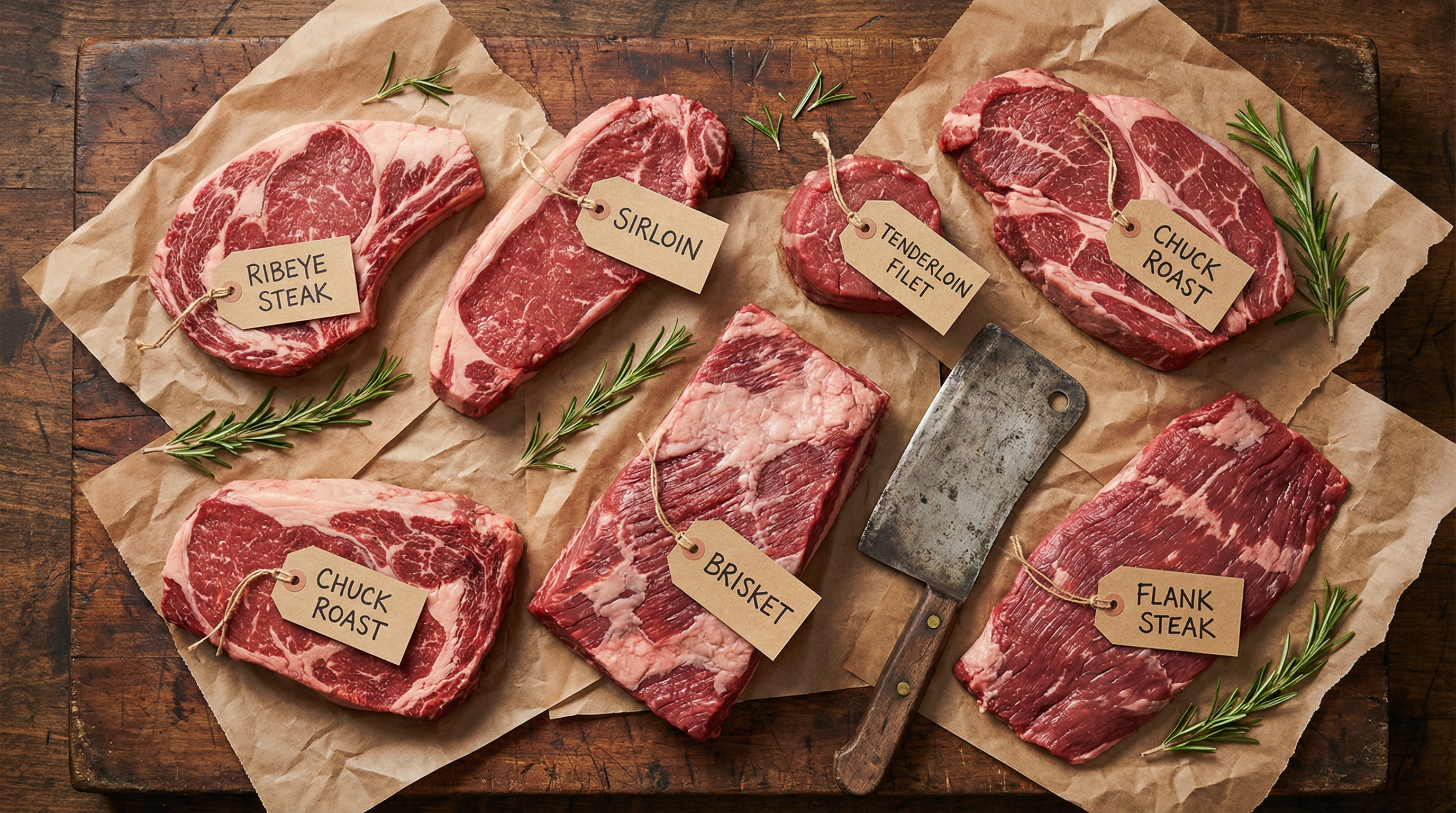
I've spent 30 years behind a butcher counter, and the question I hear more than any other is some version of: "What's the difference between all these?" Followed closely by: "Which one should I buy?"
The honest answer is that it depends on what you're cooking and how much you want to spend. But the real problem isn't choosing — it's that nobody ever taught you what you're looking at. The meat case is full of cuts with names that don't tell you anything useful. What's a "top round"? Is "chuck" good or bad? Why does that small steak cost three times more than the bigger one next to it?
This guide is the one I wish I could hand to every person who walks up to my counter looking confused. I'm going to walk you through every major beef cut you'll actually encounter at a grocery store or butcher shop, explain what makes each one different, tell you what it costs, and — most importantly — tell you exactly how to cook it so it turns out well on your first try.
No chef jargon. No culinary school assumptions. Just a butcher telling you what you need to know.
Understanding the Basics: Why Cuts Matter
Before we get into individual cuts, you need to understand one fundamental principle that explains everything about beef: muscles that work harder are tougher, but they have more flavor. Muscles that barely work are tender, but they're milder in taste.
A cow's legs, shoulders, and chest do most of the work — walking, standing, breathing. Those muscles develop dense fibers and heavy connective tissue (collagen). They need long, slow cooking to break that collagen down into gelatin, which is what makes braised beef silky and rich. But when you do cook them right, the flavor is incredible.
The muscles along the back — the loin and rib area — barely move. They support the spine but don't do heavy lifting. These cuts are naturally tender, which is why you can cook them fast with dry heat (grilling, pan-searing, roasting). They're also more expensive because there's less of this meat per animal.
That's the entire framework. Tough cut = slow cook. Tender cut = fast cook. If you remember nothing else from this guide, remember that. Every bad steak dinner in history comes from cooking a tough cut fast or a tender cut slow.
The Steakhouse Cuts: Premium and Worth Every Penny
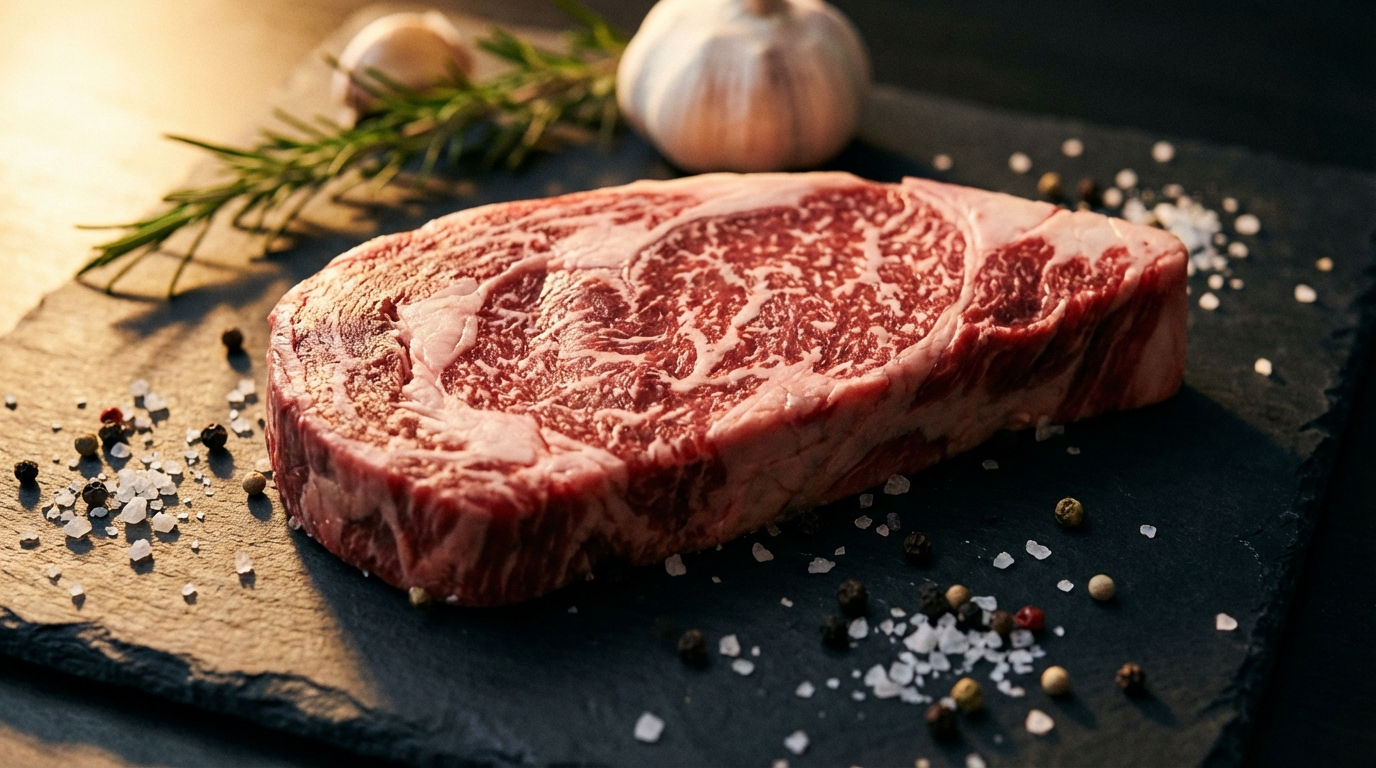
These are the cuts you see at steakhouses for $40-80 a plate, and they're the ones most people want to learn to cook at home. They all come from the loin and rib primal sections — the tenderloin-to-ribeye neighborhood along the cow's back.
Ribeye
The ribeye is the most flavorful steak you can buy. It comes from the rib primal (ribs 6-12) and it's loaded with intramuscular fat — that white marbling you see running through the meat in web-like patterns. When that fat renders during cooking, it bastes the steak from the inside out. The result is a rich, buttery, deeply beefy flavor that no other cut can match.
What to look for: Abundant, evenly distributed marbling. The more white streaks running through the red meat, the more flavorful and juicy it will be. A good ribeye should look almost like red marble stone. Thickness should be at least 1 inch — thinner ribeyes overcook before the fat has time to render properly.
How to cook it: Hot and fast. Sear in a cast iron skillet with a high smoke-point oil (avocado or refined peanut) for 3-4 minutes per side for medium-rare. Let it rest 5 minutes before cutting. The ribeye's generous fat content means it's very forgiving — even if you slightly overcook it, the fat keeps it moist.
Price range: $14-22/lb for Choice, $20-35/lb for Prime.
New York Strip
The strip steak (also called Kansas City strip, top loin, or shell steak) comes from the short loin primal, just behind the rib section. It has a firmer texture than ribeye with a thick band of fat running along one edge. The marbling is moderate — less than a ribeye but more than a tenderloin. The flavor is clean and beefy with a satisfying chew.
What to look for: A firm, compact steak with a consistent fat cap along the outer edge. The meat should be deep red with moderate marbling. Avoid strips with a thick white sinew line running through the center — that's the gristle line that separates the strip from the tenderloin, and some butchers cut too close to it.
How to cook it: Same as ribeye — hot sear, 3-4 minutes per side. But because the strip is leaner, there's less margin for error. Pull it off the heat at 130°F internal for medium-rare. Overcooking a strip steak makes it noticeably dry in a way that an overcooked ribeye doesn't.
Price range: $12-18/lb for Choice, $18-30/lb for Prime.
Filet Mignon (Tenderloin)
The filet mignon is the most tender cut on the entire animal. It comes from the psoas major muscle — a small, cylinder-shaped muscle that runs along the inside of the spine in the loin area. This muscle does essentially nothing, which is why it's so incredibly soft. You can cut it with a fork.
The tradeoff is flavor. Because the tenderloin has almost no fat marbling and very little connective tissue, the beef flavor is mild compared to a ribeye or strip. People who love filet mignon love it for the texture — it practically melts. People who don't love it say it's boring. Both camps are right.
What to look for: A thick, round steak with even coloring and no ragged edges. Filets should be at least 1.5 inches thick to cook properly — thin filets overcook in seconds. The best butcher shops sell center-cut filets, which are the most consistent in thickness and tenderness.
How to cook it: Sear on high heat for 2-3 minutes per side, then finish in a 400°F oven for 4-6 minutes. Because filet has almost no fat to protect it, overcooking is devastating — it goes from tender to cardboard fast. Use a meat thermometer. Pull at 125°F for rare, 130°F for medium-rare.
Price range: $25-40/lb for Choice, $35-55/lb for Prime.
T-Bone and Porterhouse
These two cuts are basically the same thing: a T-shaped bone with a strip steak on one side and a piece of tenderloin on the other. The only difference is size. A porterhouse has a larger tenderloin portion (at least 1.25 inches across by USDA rule), while a T-bone has a smaller piece. Both come from the short loin, but the porterhouse comes from closer to the rear where the tenderloin is wider.
How to cook it: Grill or broil — the bone makes pan-searing awkward. Keep the tenderloin side facing away from the hottest part of the heat source, since it cooks faster than the strip side. These are impressive presentation cuts. They taste good, but you're mostly paying for the visual wow factor and getting two textures in one steak.
Price range: $14-20/lb for Choice.
The Workhorse Cuts: Big Flavor, Small Price
These are the cuts I actually cook at home most often. They're less expensive than the steakhouse cuts but deliver more beef flavor pound for pound. The catch is that most of them need longer cooking times or specific techniques to be great. But once you learn those techniques, you'll wonder why you ever spent $35 a pound on filet mignon.
Chuck Roast
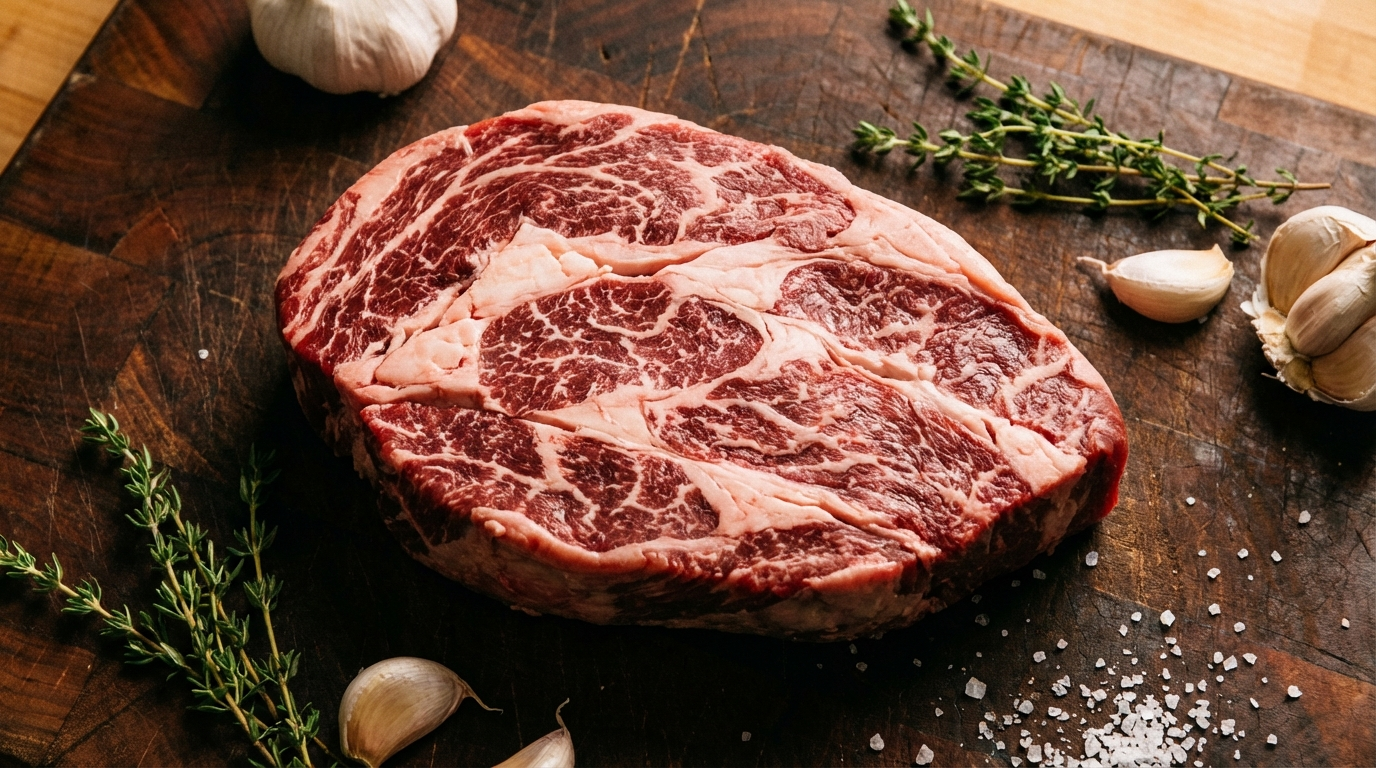
The chuck comes from the shoulder area, and it's the single most versatile cut in the entire butcher case. It's well-marbled with fat and loaded with collagen-rich connective tissue, which means it transforms from a tough hunk of meat into something silky and fall-apart tender when braised or slow-cooked.
A good chuck roast is the backbone of pot roast, beef stew, Mississippi pot roast, barbacoa, and about a hundred other comfort food classics. It's also the best cut for grinding into hamburger — most premium burger blends are 80% chuck.
What to look for: Good fat distribution throughout the meat, not just on the outside. The meat should be deep red with visible marbling. A 3-4 pound roast feeds 4-6 people generously. Bone-in chuck roasts add extra flavor to the braising liquid.
How to cook it: Braise it. Sear on all sides in a hot Dutch oven, add liquid (broth, wine, beer — whatever you like), cover, and cook at 300°F for 3-4 hours until fork-tender. You cannot rush this process. Low temperature + long time = collagen converts to gelatin = tender, rich meat.
Price range: $6-10/lb.
Brisket
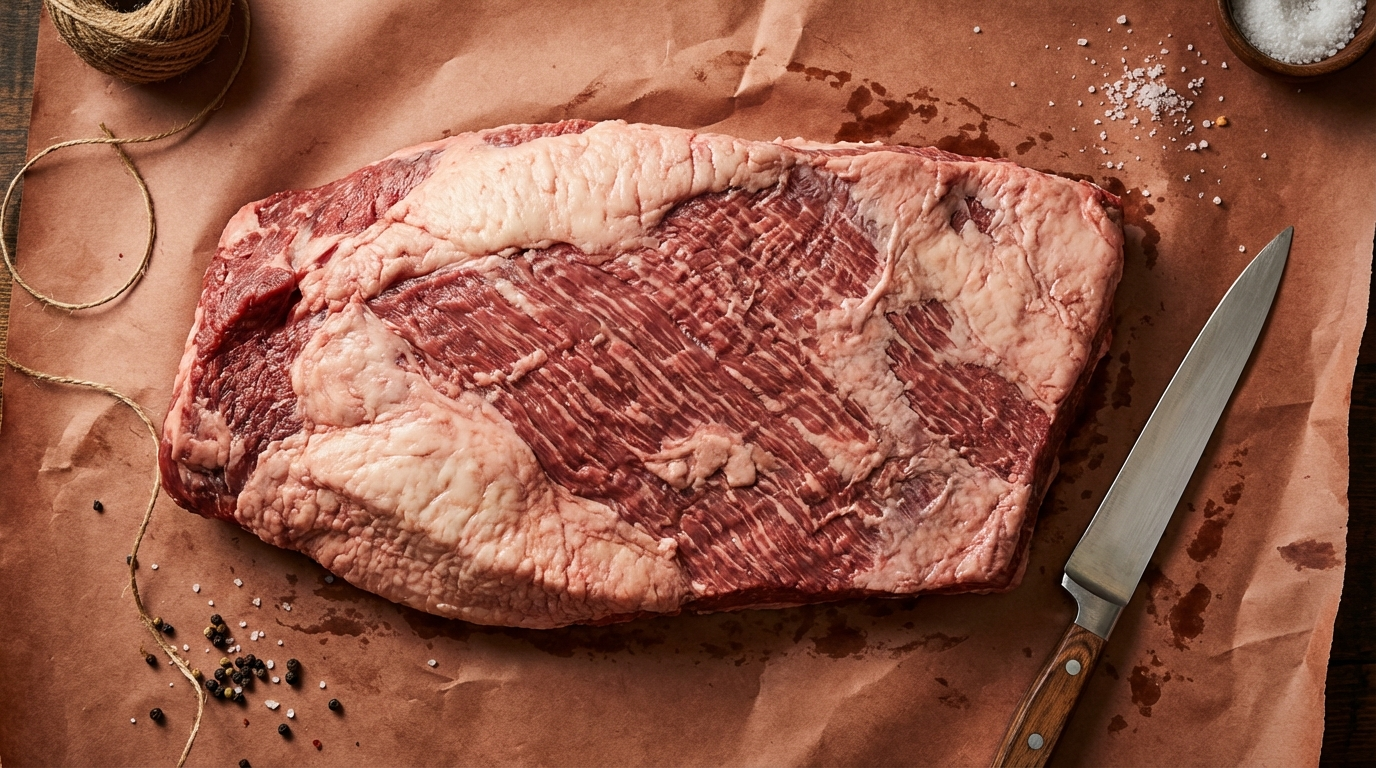
Brisket comes from the chest area — it's the pectoral muscle. It's one of the hardest-working muscles on the animal, which makes it one of the toughest raw. But that toughness is also what makes it one of the most rewarding cuts when cooked properly, because all that collagen and connective tissue breaks down into gelatin-rich, incredibly tender meat.
A full "packer" brisket has two parts: the flat (leaner, more uniform) and the point (fattier, more marbled, sitting on top of the flat). Most grocery stores sell just the flat, which is easier to work with but drier. Serious BBQ people cook the whole packer.
What to look for: For braising, a flat with consistent thickness and a thin layer of fat on top. For smoking, get the whole packer — look for one that bends easily when you pick it up from the middle (flexibility indicates good marbling). 12-15 pounds is a standard packer brisket size.
How to cook it: Two main paths. Braised: Sear, add liquid, cook covered at 300°F for 3-4 hours. Smoked: Low and slow at 225-250°F for 12-18 hours until the internal temp hits 200-205°F and a probe slides in like warm butter. Both methods produce completely different but equally incredible results.
Price range: $5-8/lb for a packer, $8-12/lb for a trimmed flat.
Short Ribs
Short ribs come from the plate (belly) and chuck (shoulder) areas. They're sections of rib bone with thick, well-marbled meat attached. If braised properly, short ribs produce the most luxurious, unctuous, melt-in-your-mouth beef experience outside of a wagyu steakhouse. This is the cut that high-end restaurants charge $45 for — and it costs you about $8 a pound at the butcher.
What to look for: English-cut short ribs for braising (single bone, thick meat on top). You want at least 2 inches of meat above the bone. Flanken-cut (thin strips across the bone) are for grilling — completely different cooking method.
How to cook it: Red wine braise. Sear hard on all sides. Add onions, carrots, garlic, tomato paste, and a full bottle of red wine. Cover and braise at 325°F for 3 hours. The meat will literally fall off the bone, and the braising liquid becomes a naturally thick, impossibly rich sauce.
Price range: $7-12/lb for bone-in English-cut.
The Lean and Mean: Budget Cuts That Reward Technique
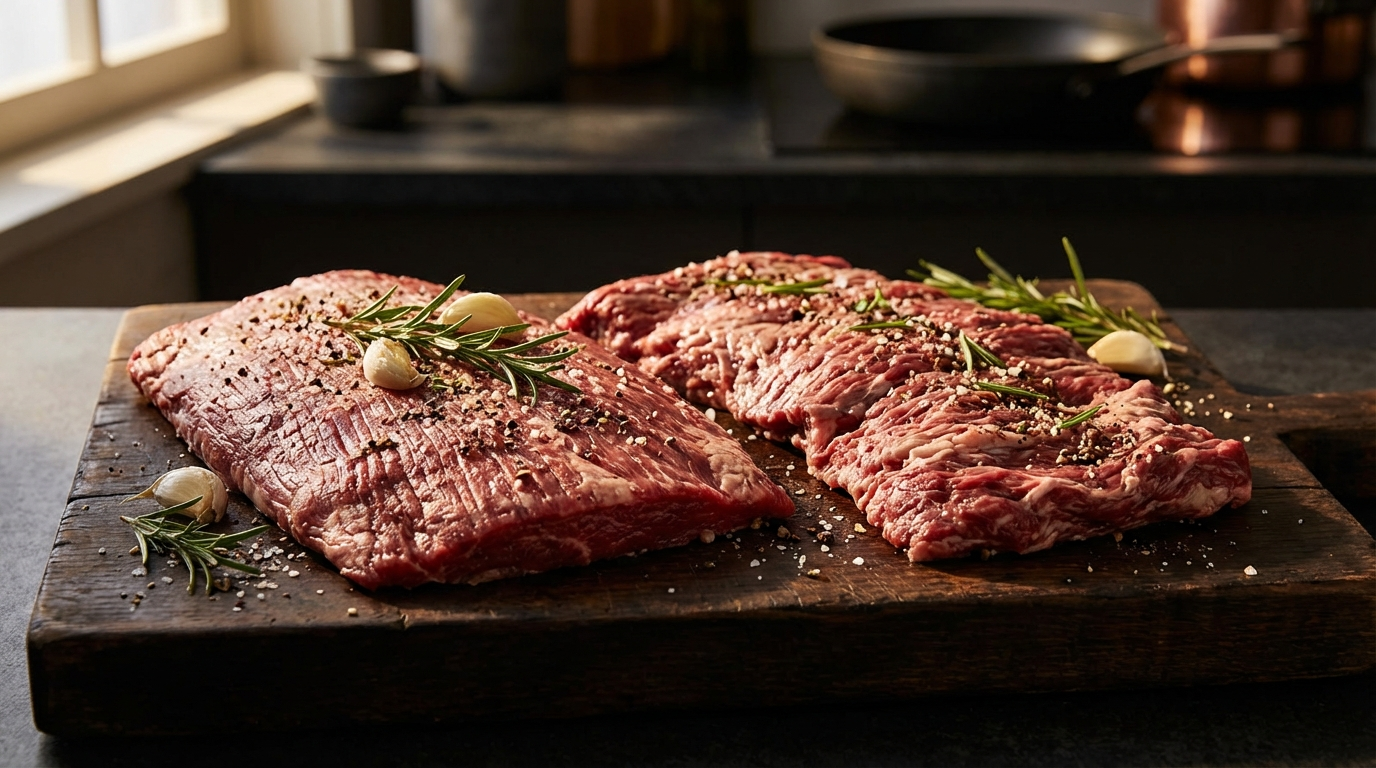
These cuts are leaner and often cheaper than the steakhouse or braising cuts. They can be fantastic when you handle them correctly, but they're less forgiving of mistakes. The key with most of these is to either slice them thin or cook them low and slow — there's very little middle ground.
Flank Steak
Flank steak is a long, flat cut from the abdominal muscles. It's lean, with very visible long grain running in one direction. It has good beef flavor but can be tough if you cook it wrong. The secret to flank steak is two-fold: don't overcook it (medium-rare max) and slice it thin against the grain. Cutting against the grain shortens those long muscle fibers, turning a chewy cut into something tender.
How to cook it: Grill or sear on screaming hot heat — 3-4 minutes per side for medium-rare. Let it rest 10 minutes, then slice as thin as you can manage at a sharp angle against the grain. Perfect for fajitas, stir-fry, steak salads, and London broil.
Price range: $9-14/lb.
Skirt Steak
Skirt steak comes from the diaphragm muscle. It looks similar to flank but has a looser, more open grain structure and more fat running between the fibers. This makes it more flavorful than flank — many butchers consider it the single most flavorful non-premium steak cut. It's the traditional cut for fajitas for a reason.
There are two types: outside skirt (thicker, more tender, usually goes to restaurants) and inside skirt (thinner, chewier, what you'll find at grocery stores). Both are good, but if your butcher has outside skirt, grab it.
How to cook it: Extremely hot grill, 2-3 minutes per side. Skirt steak is thin and cooks fast — don't walk away from it. Slice thin against the grain. Marinade works exceptionally well here because the loose grain structure absorbs flavor quickly.
Price range: $10-16/lb (outside skirt commands a premium).
Sirloin
Sirloin is the everyday steak — the one that sits in the middle of the price and quality spectrum. It comes from the rear of the loin, just behind the short loin. It's leaner than a ribeye, firmer than a strip, and more affordable than both. The flavor is solid but not exceptional.
Top sirloin is the better steak cut from this primal. Bottom sirloin is better suited for roasting or grinding. If the label just says "sirloin steak" without specifying top or bottom, it's probably top sirloin — but ask to be sure.
How to cook it: Grill, sear, or broil to medium-rare. Don't cook past medium — sirloin dries out fast because it lacks the fat safety net of a ribeye. A good marinade or dry rub helps add complexity to the milder flavor profile.
Price range: $8-14/lb for top sirloin.
Round (Top Round, Bottom Round, Eye of Round)
Round cuts come from the rear leg — the hardest-working muscle group on the animal. They're very lean, very affordable, and very easy to ruin. These are not steaks in the traditional sense. They're best used for roast beef (slow roast to medium-rare, slice paper-thin), jerky, or braised dishes where they cook in liquid for hours.
Top round is the most tender of the three and makes the best oven roast. Bottom round is tougher and better for pot roast or braising. Eye of round is the leanest and toughest — excellent for jerky and deli-style roast beef, mediocre for almost everything else.
How to cook it: For roast beef: season generously, roast at 250°F to 130°F internal, rest 20 minutes, slice as thin as humanly possible. For braising: treat it like a chuck roast but expect a leaner result. Never grill a round cut as a steak — it'll be like chewing leather.
Price range: $5-9/lb.
The Hidden Gems: Cuts Your Butcher Wants You to Try
These are the cuts that get butchers excited. They're less well-known than the standards above, but every one of them punches way above its price point when cooked right. If you want to expand your beef horizons beyond ribeye and chuck roast, start here.
Tri-Tip
Tri-tip is a triangular muscle from the bottom sirloin that's practically a religion in California and virtually unknown on the East Coast. It weighs 2-3 pounds, has excellent beef flavor, moderate marbling, and a unique two-directional grain that requires you to change your slicing angle partway through the roast. When done right, it eats like a cross between a roast and a steak.
How to cook it: Season with salt, pepper, and garlic. Grill over indirect heat to 130°F internal (about 25-30 minutes), then sear over direct high heat for 2 minutes per side to build a crust. Rest 10 minutes. Slice thin against the grain — but pay attention, because the grain changes direction across the triangle.
Price range: $8-14/lb.
Flat Iron Steak
The flat iron is the second most tender muscle on the animal (after the tenderloin), and it has significantly more flavor because it carries real marbling. It comes from the chuck primal — the shoulder — and was essentially unknown as a steak cut until the early 2000s when meat scientists at the University of Nebraska figured out how to separate it from the surrounding tough connective tissue.
How to cook it: Treat it like a ribeye — hot sear, 3-4 minutes per side, medium-rare. It's incredibly tender and well-marbled for its price point. This is the best steak deal in the entire butcher case, full stop.
Price range: $8-12/lb (a steal for this quality).
Hanger Steak
The hanger steak "hangs" from the diaphragm — there's only one per animal, which is why it's hard to find. It has intense, almost mineral-y beef flavor that's unlike any other cut. French bistros call it onglet and consider it one of the finest steak cuts available. For decades, butchers kept it for themselves because there wasn't enough to sell commercially.
How to cook it: Grill or sear to medium-rare only — it gets very tough past medium. There's a thick sinew running through the center that should be removed before cooking (or ask your butcher to do it). Slice against the grain.
Price range: $10-16/lb (when you can find it).
Denver Steak
Another relatively new cut from the chuck, the Denver steak has excellent tenderness and marbling — similar to a strip steak but from the much cheaper shoulder primal. It was identified through the same muscle profiling research that popularized the flat iron. It's becoming more widely available, but many grocery stores still don't carry it.
How to cook it: Grill or pan-sear to medium-rare, 3-4 minutes per side. Rest and slice against the grain. The Denver steak's tender texture and rich flavor make it an outstanding weeknight steak at a fraction of the price of loin cuts.
Price range: $8-13/lb.
The Quick Reference: What to Buy for Every Situation
You don't need to memorize every cut. Here's the cheat sheet:
Best steak for grilling: Ribeye (splurge), flat iron (budget)
Best cut for slow cooker: Chuck roast — nothing beats it
Best cut for stew: Chuck, cut into 1.5-inch cubes
Best cut for fajitas: Skirt steak (outside if available)
Best cut to impress a date: Filet mignon or porterhouse
Best cut for feeding a crowd: Brisket (smoked or braised)
Best overall value: Flat iron steak — steakhouse quality at chuck roast prices
Best for meal prep: Top round roast — lean, slices well, keeps all week
Best for burgers: Ground chuck (80/20 lean-to-fat ratio)
USDA Grades: What Choice, Select, and Prime Actually Mean
Every cut we've discussed comes in different quality grades assigned by USDA inspectors. The three grades you'll see at retail are:
Select: Minimal marbling. The leanest and least expensive grade. Fine for braising cuts where the collagen does the heavy lifting, but makes dry, bland steaks. Avoid Select-grade steakhouse cuts unless your budget demands it.
Choice: Moderate marbling. This is the sweet spot for most home cooks. Choice-grade ribeyes, strips, and sirloins are genuinely good steaks at reasonable prices. About 60% of all graded beef in the US falls into the Choice category.
Prime: Abundant marbling. The top 5-8% of all beef. Prime steaks are noticeably more tender, juicy, and flavorful than Choice. Most Prime beef goes to restaurants, but Costco, some butcher shops, and online retailers sell Prime-grade beef at retail. It costs 20-40% more than Choice but the difference is real and worth it for special occasions.
For braising cuts (chuck, brisket, short ribs), the grade matters much less because the long cooking process tenderizes the meat regardless. Save your Prime dollars for steaks and go with Choice for everything else.
Three Rules That Prevent Every Common Mistake
If you take nothing else from this guide, follow these three rules and you'll cook better beef than most people:
Rule 1: Let your steak come to room temperature. Pull it from the fridge 30-45 minutes before cooking. A cold steak won't sear properly because the pan's heat energy goes into warming the meat instead of creating a crust. Room temperature steak + screaming hot pan = perfect sear.
Rule 2: Use a meat thermometer. Stop cutting into your steak to check if it's done — that lets the juices run out. A $15 instant-read thermometer tells you exactly when to pull it off the heat. 125°F for rare, 130°F for medium-rare, 140°F for medium. And remember that the temperature will rise another 5°F while resting (carryover cooking).
Rule 3: Rest your meat. Every cut, every time. 5 minutes for steaks, 15-20 minutes for roasts. Resting allows the muscle fibers to relax and reabsorb their juices. Cut into a steak the second it leaves the pan and you'll see the juices pool on your cutting board instead of staying in the meat. Patience makes the difference between a good steak and a great one.
Welcome to the butcher counter. You belong here now.
More Expert Guides
What Is Chateaubriand? (Cut, Cooking, & Best Sources)
Chateaubriand is a thick-cut roast from the center of the beef tenderloin, traditionally served for two. Learn what makes this classic French cut special and how to cook it.
14 min readWhat Is Round Steak? The Complete Guide to Beef's Most Versatile Budget Cut
Round steak comes from the rear leg of the cow — it's lean, affordable, and misunderstood. A master butcher breaks down every sub-cut, cooking method, and technique to turn this budget workhorse into genuinely delicious meals.
14 min readWhat Is Eye of Round? The Complete Butcher's Guide to This Lean Cut
Eye of round is one of the leanest, most affordable cuts in the entire beef case — and one of the most misunderstood. A butcher explains how to turn this budget-friendly roast into something genuinely delicious.