Complete Beef Cuts Chart: Visual Guide to Every Primal Cut
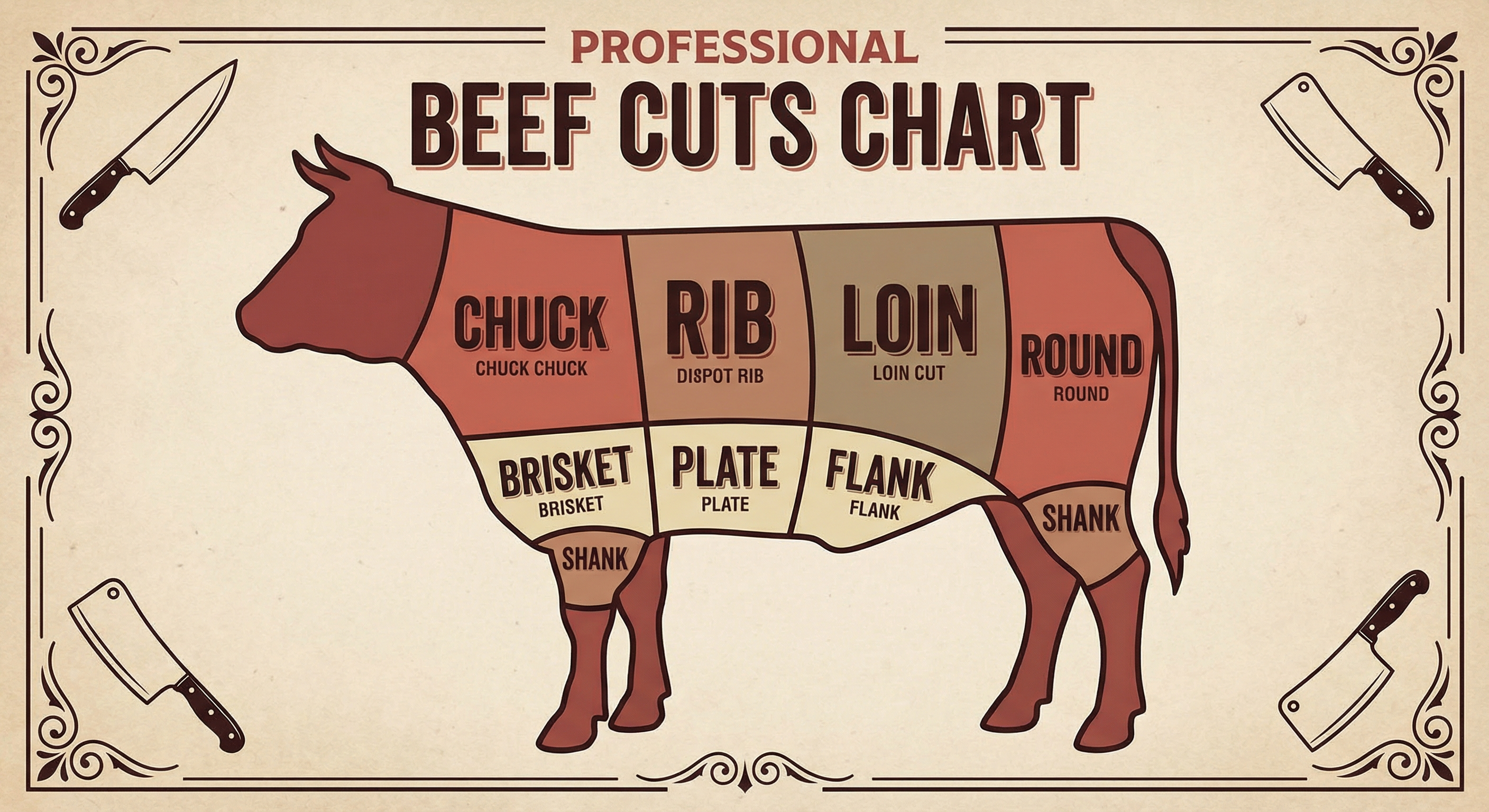
Every steak, roast, and ground beef patty you've ever eaten came from somewhere specific on the animal. Understanding where — and why it matters — is the difference between a confused shopper and a confident cook. After 30 years behind the butcher block, I can tell you: knowing your beef cuts chart is the single most useful piece of knowledge for anyone who takes meat seriously.
This guide breaks down every primal cut, every major subprimal, and the retail cuts you'll find at the butcher counter. Print this out, bookmark it, refer to it at the store. Once you understand beef anatomy, everything else — cooking methods, pricing, quality evaluation — falls into place.
The 8 Primal Cuts of Beef
When a beef carcass is broken down, it's first divided into eight primal cuts. These are the large, wholesale sections that butchers then break into smaller subprimals and retail cuts. The primals are split between the forequarter (front half) and hindquarter (back half).
Forequarter Primals
- Chuck — Shoulder and neck
- Rib — Upper back (ribs 6-12)
- Brisket — Chest/breast
- Plate (Short Plate) — Belly below the rib
Hindquarter Primals
- Loin — Upper back behind the rib (short loin + sirloin)
- Round — Rear leg/rump
- Flank — Lower belly behind the plate
- Shank — Lower leg portions
Let's break down each primal in detail with the cuts you'll actually find at the store.
1. Chuck (Shoulder)
Location: Shoulder, neck, and upper arm of the animal
Characteristics: Well-exercised muscles with abundant connective tissue. Excellent flavor but requires proper cooking to become tender. Heavy marbling in some areas.
Key Chuck Cuts
| Cut | Description | Best Cooking Method |
|---|---|---|
| Chuck Roast | Classic pot roast cut, well-marbled | Braising, slow cooking |
| Chuck Eye Steak | "Poor man's ribeye" — same muscle, different location | Grilling, pan-searing |
| Flat Iron Steak | Second most tender muscle in the carcass | Grilling, pan-searing |
| Denver Steak | Well-marbled, from the serratus ventralis | Grilling, pan-searing |
| Chuck Short Ribs | Bone-in ribs with rich meat | Braising, smoking |
| Ground Chuck | Ideal fat ratio (15-20%) for burgers | Grilling, pan-frying |
Shopping tip: Chuck is the value king. Cuts like flat iron and Denver steak deliver near-ribeye quality at half the price.
2. Rib (Prime Rib Section)
Location: Upper back, ribs 6-12
Characteristics: The most heavily marbled section. Tender muscles that do little work. Home to the most prized steaks.
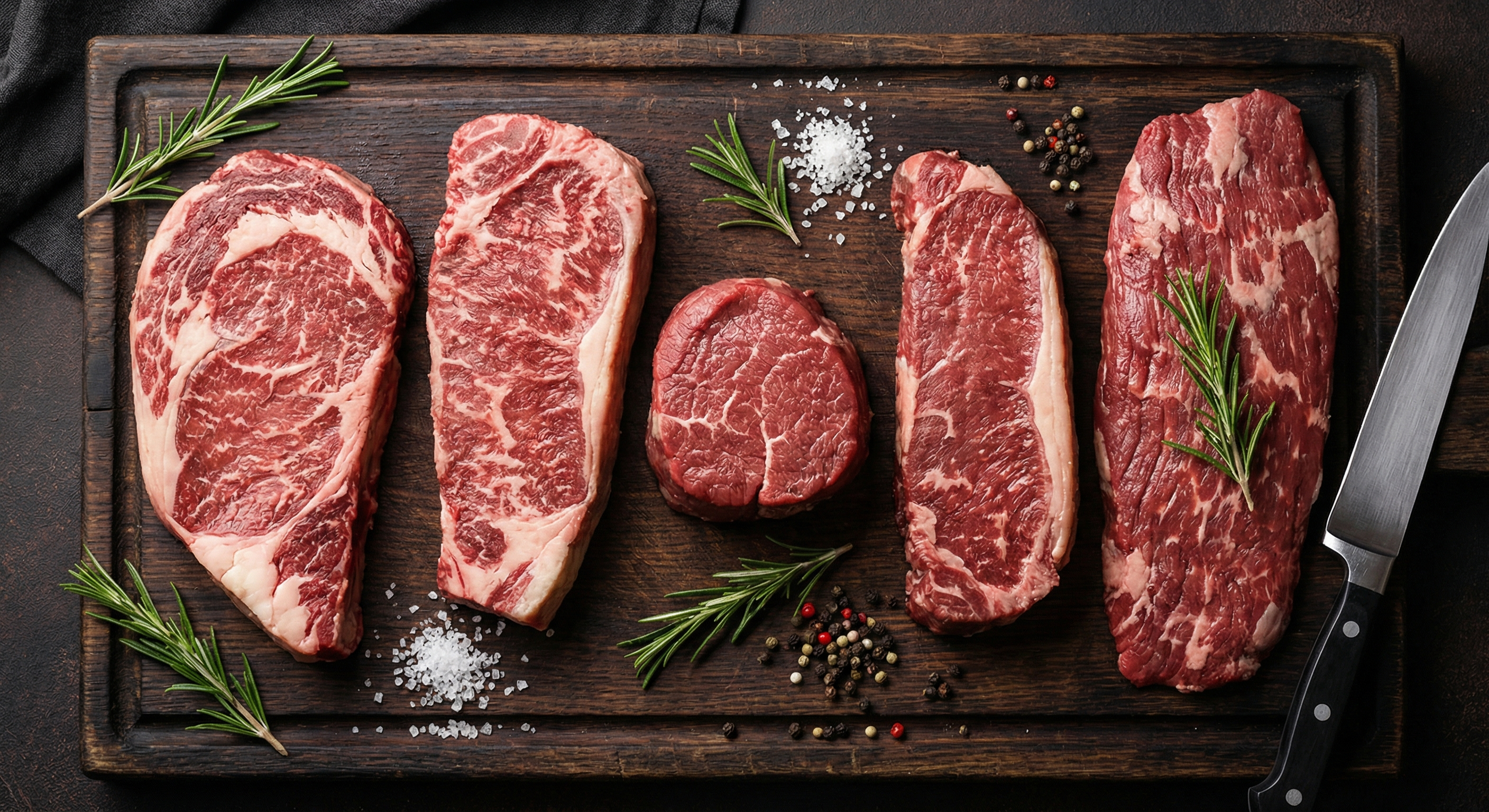
Key Rib Cuts
| Cut | Description | Best Cooking Method |
|---|---|---|
| Ribeye Steak | The gold standard — heavy marbling, multiple muscles | Grilling, pan-searing, reverse sear |
| Prime Rib Roast | Standing rib roast, bone-in for maximum flavor | Oven roasting |
| Tomahawk Steak | Bone-in ribeye with frenched rib bone | Reverse sear, grilling |
| Rib Cap (Spinalis) | The most flavorful muscle on the animal | Grilling, pan-searing |
| Beef Back Ribs | Bones removed when making boneless ribeye | Smoking, braising |
Quality matters most here: The rib primal shows the biggest quality difference between grades. A Prime ribeye vs. Select is night and day.
3. Loin (Short Loin + Sirloin)
Location: Upper back behind the rib section
Characteristics: Tender muscles, moderate marbling. Divided into the short loin (forward) and sirloin (rear). Home to classic steakhouse cuts.
Short Loin Cuts
| Cut | Description | Best Cooking Method |
|---|---|---|
| New York Strip | Firm, beefy flavor with exterior fat cap | Grilling, pan-searing |
| T-Bone Steak | Strip + small tenderloin, separated by T-shaped bone | Grilling |
| Porterhouse | Like T-bone but with larger tenderloin section | Grilling |
| Tenderloin/Filet Mignon | Most tender cut, lean and mild | Pan-searing, roasting |
Sirloin Cuts
| Cut | Description | Best Cooking Method |
|---|---|---|
| Top Sirloin | Lean, beefy flavor, affordable | Grilling, pan-searing |
| Sirloin Cap (Picanha) | Brazilian favorite with thick fat cap | Grilling, churrasco |
| Tri-Tip | Triangular muscle, popular on the West Coast | Grilling, smoking, roasting |
| Coulotte | Same as picanha, different preparation | Grilling |
Pro tip: The tenderloin runs through the short loin — that's why T-bones and porterhouses have that small filet section.
4. Round (Rear Leg)
Location: Rear leg and rump
Characteristics: Lean, heavily exercised muscles. Less tender but economical. Best when sliced thin or braised.
Key Round Cuts
| Cut | Description | Best Cooking Method |
|---|---|---|
| Top Round | Leanest major cut, good for roast beef | Roasting (rare), slicing thin |
| Bottom Round | Tougher than top, good for pot roast | Braising, slow cooking |
| Eye of Round | Very lean cylinder, often overcooked | Roasting rare, slicing thin |
| Rump Roast | Budget-friendly pot roast option | Braising |
| Round Steak | Cross-section of the leg, tough | Braising, chicken-frying |
Caution: Round cuts are lean and unforgiving. Cook them past medium and they become tough. Best served rare or braised until falling apart.
5. Brisket (Chest)
Location: Chest/pectoral area
Characteristics: Heavily worked muscle with thick connective tissue. Requires long, slow cooking but becomes incredibly tender and flavorful.
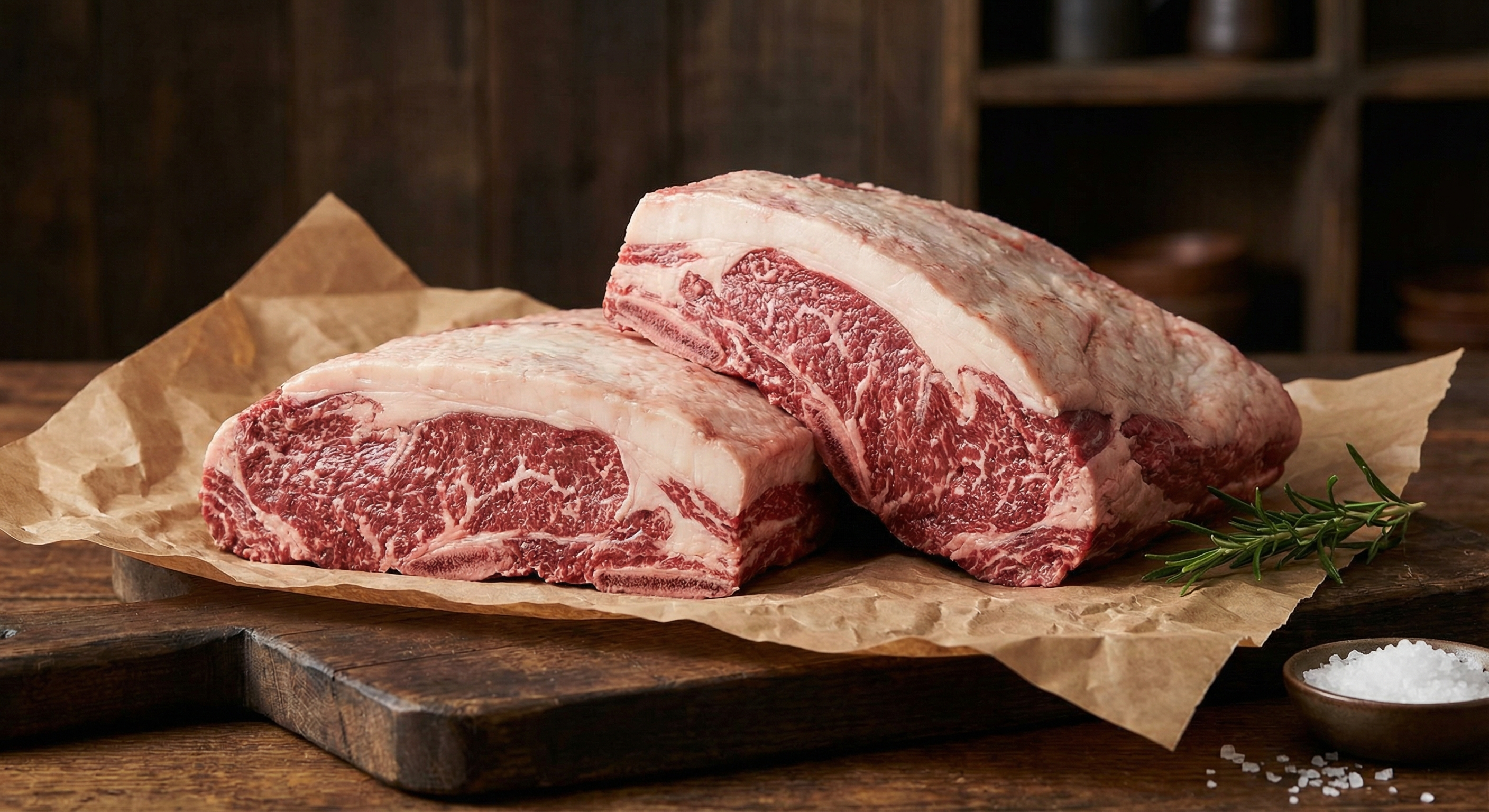
Brisket Cuts
| Cut | Description | Best Cooking Method |
|---|---|---|
| Whole Packer Brisket | The flat + point together (10-20 lbs) | Smoking (BBQ) |
| Brisket Flat | Leaner, more uniform section | Smoking, braising |
| Brisket Point | Fattier, more flavorful section | Smoking, burnt ends |
BBQ essential: A properly smoked brisket is the pinnacle of American barbecue. Low and slow (225-275°F for 12-18 hours) transforms this tough cut into tender perfection.
6. Plate (Short Plate)
Location: Belly area below the rib primal
Characteristics: Rich, fatty cuts with intense beefy flavor. The source of some underrated steaks and the best short ribs.
Key Plate Cuts
| Cut | Description | Best Cooking Method |
|---|---|---|
| Skirt Steak (Outside) | The original fajita cut, intensely beefy | High-heat grilling, slicing thin |
| Plate Short Ribs | Dinosaur ribs — massive, meaty, spectacular | Smoking, braising |
| Hanger Steak | "Butcher's steak" — tender, rich, limited supply | Grilling, pan-searing |
Hidden gems: Skirt and hanger are the butcher's secret favorites. Incredible flavor at a fraction of ribeye prices.
7. Flank
Location: Lower belly behind the plate
Characteristics: Lean, flat muscles with pronounced grain. Must be sliced against the grain for tenderness.
Key Flank Cuts
| Cut | Description | Best Cooking Method |
|---|---|---|
| Flank Steak | Flat, lean, excellent for marinating | High-heat grilling, slicing thin |
| Flap Meat (Sirloin Tip) | Similar to skirt, great for carne asada | Grilling, stir-fry |
Critical rule: Always slice flank and skirt steaks against the grain. Cutting with the grain makes them chewy regardless of doneness.
8. Shank
Location: Lower leg portions (fore and hind)
Characteristics: Very tough, collagen-rich. Transforms into silky, unctuous texture when braised properly.
Key Shank Cuts
| Cut | Description | Best Cooking Method |
|---|---|---|
| Osso Buco (Cross-Cut Shank) | Thick slices with marrow center | Braising |
| Beef Shank (Whole) | Whole lower leg, rich in collagen | Stock making, braising |
Don't skip it: Braised beef shank produces the most unctuous, spoon-tender meat and the richest stock you'll ever taste.
Beef Cuts Chart: Quick Reference
| Primal | Tenderness | Best For | Price Point |
|---|---|---|---|
| Chuck | Medium (varies) | Braising, ground beef, hidden gem steaks | $ |
| Rib | High | Steaks, roasts, premium cuts | $$$ |
| Loin | Very High | Steaks, tenderloin, special occasions | $$$ |
| Round | Low | Roast beef, pot roast, lean applications | $ |
| Brisket | Low (raw) / High (braised) | BBQ, braising, pastrami | $$ |
| Plate | Medium | Fajitas, short ribs, flavorful steaks | $$ |
| Flank | Medium | Marinating, grilling, slicing thin | $$ |
| Shank | Very Low (raw) / High (braised) | Braising, stock, osso buco | $ |
Matching Cuts to Cooking Methods
Best Cuts for Grilling
- Ribeye, NY Strip, Filet Mignon (premium)
- Flat Iron, Denver, Tri-Tip (value)
- Skirt, Flank, Hanger (flavor-forward)
Best Cuts for Braising
- Chuck Roast, Short Ribs, Brisket
- Shank, Bottom Round, Rump Roast
Best Cuts for Roasting
- Prime Rib, Tenderloin Roast
- Tri-Tip, Top Sirloin Roast
- Top Round (rare only)
Best Cuts for Ground Beef
- Chuck (ideal fat ratio, best flavor)
- Sirloin (leaner option)
- Brisket (blend for burger excellence)
Understanding Muscle and Tenderness
A simple rule governs beef tenderness: the less a muscle works, the more tender it is.
Muscles along the back (rib, loin) do minimal work — they just support the spine. They're tender. Muscles in the legs, shoulders, and chest work constantly — walking, supporting weight, breathing. They're tougher but more flavorful because of the developed muscle fibers.
Tough cuts aren't inferior — they just require different cooking. The collagen in working muscles melts into gelatin during long, slow cooking, creating a richness tender cuts can't match. A braised short rib is more luxurious than any filet mignon.
Shopping Tips: Using This Chart
- Know your cooking method first. Then choose a cut that matches. Buying a beautiful ribeye to braise is a waste; buying brisket to grill fast is a disaster.
- Compare within primals. Chuck eye is ribeye at half the price. Denver steak is an undiscovered gem. Know the alternatives.
- Grade matters for tender cuts. A Prime ribeye vs. Select is dramatic. A Prime chuck roast vs. Select barely matters — it's getting braised anyway.
- Ask your butcher. Show them this chart, tell them your cooking method and budget, and let them guide you to the best option.
For premium cuts that showcase each primal at its best, explore The Meatery's beef collection — from A5 wagyu ribeyes to heritage breed briskets.
Frequently Asked Questions
What are the 8 primal cuts of beef?
The 8 primal cuts are: Chuck (shoulder), Rib (upper back), Loin (behind rib, includes short loin and sirloin), Round (rear leg), Brisket (chest), Plate (belly below rib), Flank (lower belly), and Shank (lower legs). The forequarter contains chuck, rib, brisket, and plate; the hindquarter contains loin, round, flank, and shank.
Which beef cuts are the most tender?
The most tender cuts come from the loin and rib sections: tenderloin (filet mignon) is #1, followed by the rib cap (spinalis), ribeye, and NY strip. These muscles do the least work during the animal's life. The flat iron from the chuck is surprisingly tender — the second most tender muscle overall.
What is the best beef cut for grilling?
Ribeye is the top choice for grilling — heavy marbling keeps it juicy and forgiving. NY strip, flat iron, and tri-tip are excellent alternatives. For thinner, fast-cooking grilling, skirt and flank steaks are exceptional when sliced against the grain.
Why are some beef cuts more expensive?
Price correlates with tenderness, demand, and scarcity. Tender cuts (ribeye, tenderloin, strip) require no special cooking technique and have high demand. Tough cuts (chuck, round, brisket) are cheaper because they require time and skill to cook properly. Only 6-8 lbs of tenderloin exist per 1,200 lb steer — scarcity drives price.
What beef cuts are best for slow cooking?
Chuck roast, brisket, short ribs, and shank are ideal for slow cooking. These tough cuts have abundant collagen that melts into gelatin during long, slow cooking, creating fork-tender meat with rich, unctuous texture. The round primal also braises well but produces leaner results.
What is the difference between ribeye and NY strip?
Ribeye comes from the rib section and has more intramuscular fat (marbling) plus multiple muscles including the prized spinalis cap. NY strip comes from the loin, has a firmer texture, and features a fat cap along the edge rather than marbling throughout. Ribeye is richer; strip has a cleaner beef flavor.
More Expert Guides
What Is Chateaubriand? (Cut, Cooking, & Best Sources)
Chateaubriand is a thick-cut roast from the center of the beef tenderloin, traditionally served for two. Learn what makes this classic French cut special and how to cook it.
14 min readWhat Is Round Steak? The Complete Guide to Beef's Most Versatile Budget Cut
Round steak comes from the rear leg of the cow — it's lean, affordable, and misunderstood. A master butcher breaks down every sub-cut, cooking method, and technique to turn this budget workhorse into genuinely delicious meals.
14 min readWhat Is Eye of Round? The Complete Butcher's Guide to This Lean Cut
Eye of round is one of the leanest, most affordable cuts in the entire beef case — and one of the most misunderstood. A butcher explains how to turn this budget-friendly roast into something genuinely delicious.