Beef Back Ribs: The Underrated Cut Every Backyard Cook Should Know
Beef back ribs have a reputation problem. Walk into any barbecue joint and you'll see pork ribs dominating the menu. Ask a backyard pitmaster about beef ribs and they'll probably talk about short ribs. But beef back ribs? They're the forgotten middle child of the rib world — and that's a shame, because when you get a good rack and cook them right, they deliver something no other cut can.
The problem isn't the cut itself. It's that most people have only ever encountered the scraped-bare, meatless version that gets sold cheap at grocery stores. Those racks have had all the good meat removed when the butcher cut ribeye steaks off the top. What's left is mostly bone with thin strips of intercostal meat between the ribs.
But a properly trimmed rack of beef back ribs — one where the butcher left a generous layer of meat on top — is an entirely different experience. Rich, beefy, with fat that renders into silk during a long cook. Here's everything you need to know.
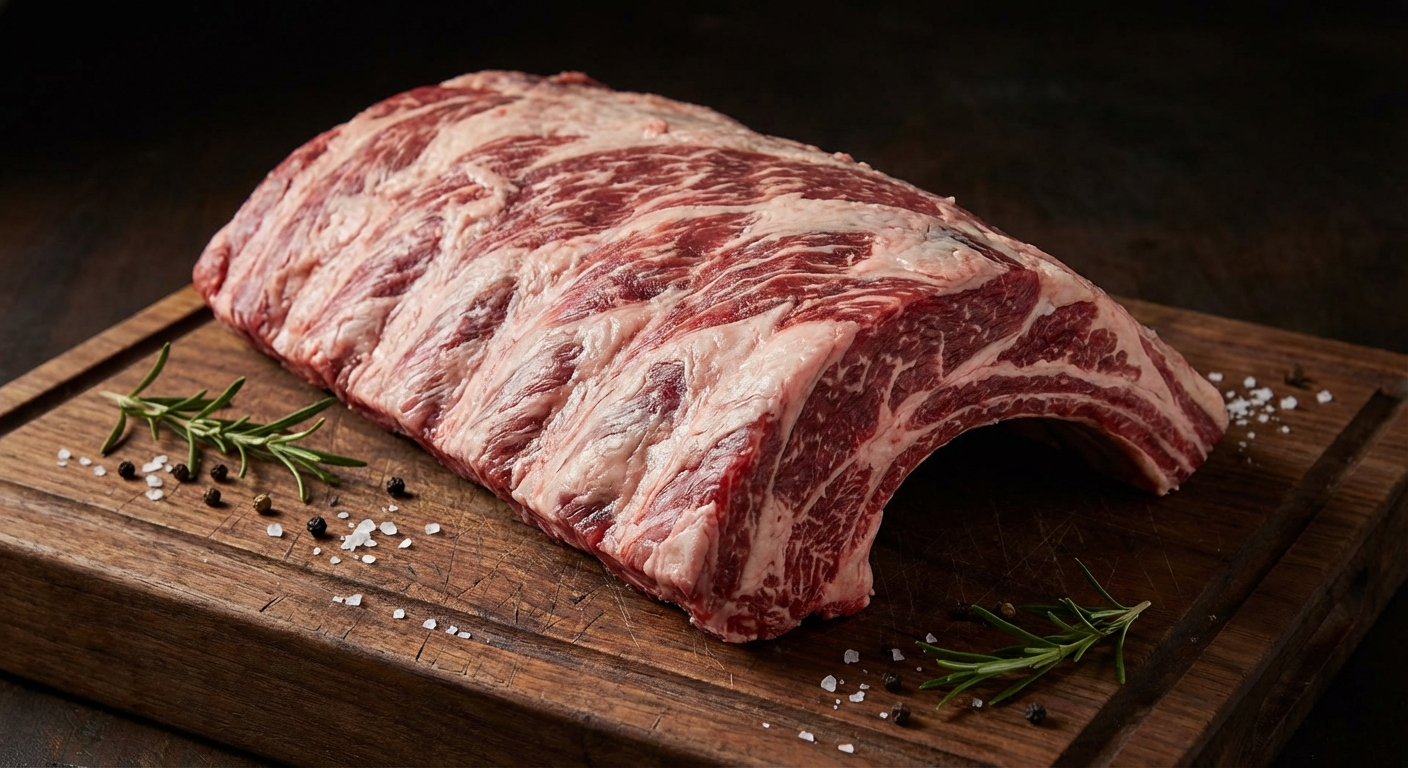
What Are Beef Back Ribs?
Beef back ribs come from the upper portion of the rib cage, specifically ribs 6 through 12 (the same section that produces ribeye steaks and prime rib roasts). They're called "back" ribs because they sit along the back of the animal, attached to the spine — as opposed to "short" ribs, which come from further down on the rib cage, closer to the belly.
When a butcher breaks down a beef rib primal, the first priority is cutting boneless ribeye steaks or bone-in rib roasts. The back ribs are what remain after those premium cuts are removed. This is why the amount of meat on beef back ribs varies so dramatically — it depends entirely on how close to the bone the butcher cuts.
A full rack typically contains 7 bones and weighs between 3 to 5 pounds. The bones are curved and long (usually 6 to 8 inches), tapering from thicker near the spine to thinner at the tips. The meat is found in two places:
- On top of the bones (cap meat): This is the good stuff — essentially ribeye meat that was left attached. The more cap meat, the better the rack.
- Between the bones (intercostal meat): These thin strips of muscle run between each rib bone. They're intensely flavorful but relatively small.
Beef Back Ribs vs Short Ribs: What's the Difference?
This is the most common point of confusion, so let's clear it up. Beef back ribs and beef short ribs are completely different cuts from different parts of the rib cage.
Beef Back Ribs
- Location: Upper rib cage, attached to the spine (dorsal side)
- Bones: Long, curved, relatively thin
- Meat: Variable — depends on butcher trimming. Leaner than short ribs.
- Best cooking method: Smoking, grilling (indirect), braising
- Price: $4–8/lb (cheaper due to less consistent meat)
- Cook time: 3–5 hours smoking, 2–3 hours braising
Beef Short Ribs
- Location: Lower rib cage and plate section (ventral side)
- Bones: Shorter, thicker, blockier
- Meat: Generous, heavily marbled, consistent
- Best cooking method: Braising, smoking (Texas-style)
- Price: $8–15/lb (premium pricing for consistency)
- Cook time: 6–10 hours smoking, 3–4 hours braising
The key takeaway: short ribs are the premium, restaurant-menu cut with thick, reliable meat. Back ribs are the value play — cheaper, more variable, but excellent when sourced well and cooked properly.
How to Buy Beef Back Ribs (Without Getting Ripped Off)
This is where most people go wrong. Not all beef back ribs are created equal, and the difference between a great rack and a disappointing one comes down to how much meat the butcher left on the bones.
What to Look For
- Meat on top: Look for at least a half-inch of meat above the bones. You should see visible red meat across the top of the rack, not just bare bone with a thin membrane.
- Marbling: Like any beef cut, intramuscular fat means flavor. Since back rib meat is essentially ribeye, good racks will show decent marbling.
- Even thickness: The meat between the bones should be visible and roughly even. Avoid racks where some sections are stripped bare while others have meat.
- Color: Look for bright cherry-red to deep red. Avoid gray or brown discoloration, which indicates age or oxidation.
- Weight: Heavier is generally better. A 7-bone rack under 3 pounds likely has very little meat. Aim for 4 pounds or above.
Where to Buy
Best option: A real butcher shop. Ask them to cut a rack of back ribs with "extra meat left on" or "not trimmed close." A good butcher will understand and cut accordingly. You'll pay a bit more per pound but get dramatically better results.
Warehouse clubs (Costco, Sam's Club): Hit or miss. They sometimes carry Choice or Prime back ribs with decent meat coverage. Check the packaging — you can usually see through the cryovac to assess meat coverage.
Grocery stores: Generally the worst option. Most grocery chains sell back ribs that have been trimmed aggressively to maximize ribeye yield. These are the bare-bone racks that disappoint people.
Online meat delivery: Companies like The Meatery offer premium back ribs with consistent quality and proper trimming. You'll pay more, but you know what you're getting.
USDA Grade Matters
Because back rib meat is essentially ribeye, the grade has a real impact on flavor:
- Prime: Best marbling, most forgiving to cook, most expensive
- Choice: Good marbling, excellent value, widely available
- Select: Lean, can dry out during long cooks — avoid for smoking
How to Smoke Beef Back Ribs
Smoking is the best way to cook beef back ribs. The low-and-slow approach renders the fat, breaks down connective tissue, and develops a bark that concentrates beefy flavor. Here's the method I recommend:
Setup
- Smoker temperature: 275°F (135°C) — slightly higher than pork ribs because beef back ribs have less fat and can dry out at 225°F
- Wood: Oak, hickory, or mesquite. Post oak is the classic Texas choice. Avoid fruitwoods — they're too subtle for beef.
- Time: 3–5 hours depending on meat thickness and your smoker
The Process
1. Remove the membrane. Flip the rack bone-side up. Slide a butter knife or spoon handle under the membrane (peritoneum) at one end. Grab it with a paper towel and peel it off in one sheet. This is non-negotiable — the membrane blocks smoke penetration and creates a chewy, unpleasant texture.
2. Season generously. Beef back ribs respond well to simple seasoning. A 50/50 mix of coarse salt and coarse black pepper (the classic Texas dalmatian rub) is hard to beat. Apply it heavily — the bones absorb a lot of seasoning. For more complexity, add garlic powder and a touch of paprika.
3. Smoke bone-side down. Place the rack on the smoker with the bones curving downward. This puts the meat side up, facing the heat and smoke. The bones act as a natural heat shield, preventing the meat from cooking too fast.
4. Spritz every 45 minutes after the first 2 hours. Use a 50/50 mix of apple cider vinegar and water, or beef broth. This keeps the surface moist, helps bark formation, and adds a subtle flavor layer. Don't spritz too early — you want the rub to set first.
5. Check for doneness at 3 hours. Beef back ribs are done when the meat has pulled back from the bones by about a half-inch, the internal temperature reads 200–205°F in the thickest part of the meat (not touching bone), and a toothpick slides into the meat between the bones with little resistance.
6. Rest for 15–20 minutes. Tent loosely with foil. This lets the juices redistribute and makes the ribs easier to cut.
The Optional Wrap (Texas Crutch)
If your ribs hit a stall around 160–170°F (common after 2–3 hours), you can wrap them in butcher paper or foil to push through. Butcher paper is preferred — it breathes enough to preserve bark while still accelerating cooking. Foil works faster but can steam the bark soft.
Other Ways to Cook Beef Back Ribs
Oven Braised
For those without a smoker, braising in the oven delivers excellent results:
- Season the ribs and sear them in a hot skillet or under the broiler until browned on both sides (3–4 minutes per side).
- Place bone-side down in a deep roasting pan. Add 2 cups of beef broth, a splash of red wine, sliced onions, and garlic cloves.
- Cover tightly with foil. Cook at 300°F for 2.5–3 hours.
- Uncover, brush with barbecue sauce if desired, and cook uncovered for another 20–30 minutes to glaze.
The result is fall-off-the-bone tender meat with rich, concentrated flavor. You won't get smoke flavor, but the braising liquid creates its own depth.
Grilled (Indirect Heat)
Set up a two-zone fire on your charcoal or gas grill. Place the ribs over the indirect (cool) side with the lid closed. Maintain 275–300°F. Cook for 2.5–3 hours, rotating the rack 180° halfway through. Finish with a quick sear over direct heat if you want char.
Add wood chunks to your charcoal (or use a smoker box on gas) for smoke flavor. This method splits the difference between smoking and braising — you get some smoke character with a shorter cook time.
Common Mistakes to Avoid
- Cooking too low and slow: Unlike pork ribs, beef back ribs can dry out at 225°F because they have less intramuscular fat. 275°F is the sweet spot.
- Not removing the membrane: The membrane on beef ribs is tougher than on pork. Always remove it.
- Buying bare racks: If you can see mostly bone and very little meat, put it back. That rack was trimmed for ribeye yield, not for rib eating.
- Oversaucing: Beef back ribs have excellent natural flavor. If you use sauce, apply it in the last 20 minutes only. Sauce applied too early burns and masks the beef flavor.
- Cutting between every bone: Serve in 2-bone sections. Single-bone cuts are too small and lose heat fast. A 2-bone section looks better, holds heat longer, and gives a more satisfying eating experience.
Nutrition: What You're Getting
Beef back ribs aren't diet food, but they're a solid source of protein and essential nutrients. Per 3-ounce serving of cooked meat (bone removed):
- Calories: 250–300
- Protein: 20–24g
- Total fat: 18–22g
- Iron: 2.5mg (14% daily value)
- Zinc: 5.2mg (47% daily value)
- B12: 2.8mcg (117% daily value)
The bone-in cooking method also means you're getting trace minerals from the bone marrow that renders during the long cook — calcium, phosphorus, and collagen that converts to gelatin.
How to Store Beef Back Ribs
Fresh (raw): Refrigerate in original packaging for up to 5 days. For longer storage, vacuum seal and freeze for up to 12 months.
Cooked: Wrap individual portions tightly in foil, then place in a zip-lock bag. Refrigerate for up to 4 days or freeze for up to 3 months.
Reheating: The best method is low oven (250°F) wrapped in foil with a splash of beef broth until heated through (about 30 minutes for refrigerated, 45 minutes for frozen). Microwaving works in a pinch but dries the meat out.
The Bottom Line
Beef back ribs are the most undervalued cut in the beef case. The key to success is buying well — look for racks with generous meat coverage, not the stripped-down bones your grocery store is trying to move. Find a good butcher, ask for meaty racks, and apply a simple rub and patient cook.
At their best, beef back ribs deliver everything you love about ribeye steak in a primal, hands-on format. The bones concentrate flavor, the long cook renders fat into tenderness, and the eating experience — gnawing rich, smoky beef off curved bones — is deeply satisfying in a way no knife-and-fork steak can match.
Give them a real chance. You won't go back to ignoring them.
More Expert Guides
What Is Chateaubriand? (Cut, Cooking, & Best Sources)
Chateaubriand is a thick-cut roast from the center of the beef tenderloin, traditionally served for two. Learn what makes this classic French cut special and how to cook it.
14 min readWhat Is Round Steak? The Complete Guide to Beef's Most Versatile Budget Cut
Round steak comes from the rear leg of the cow — it's lean, affordable, and misunderstood. A master butcher breaks down every sub-cut, cooking method, and technique to turn this budget workhorse into genuinely delicious meals.
14 min readWhat Is Eye of Round? The Complete Butcher's Guide to This Lean Cut
Eye of round is one of the leanest, most affordable cuts in the entire beef case — and one of the most misunderstood. A butcher explains how to turn this budget-friendly roast into something genuinely delicious.