How to Store Meat Properly: A Butcher's Complete Guide
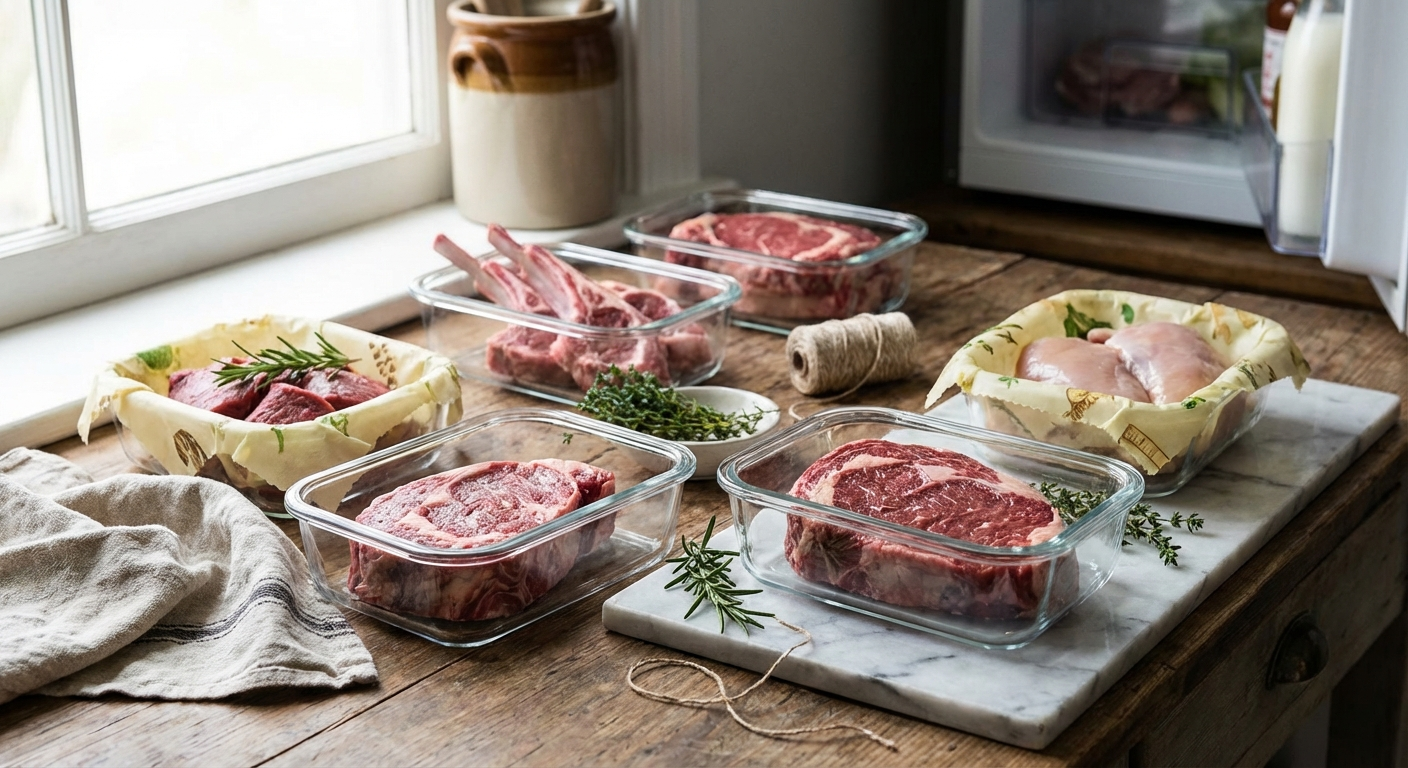
You just spent $50 on beautiful steaks. You get home, toss the bag in the fridge, and forget about it for five days. When you finally pull them out, something smells wrong. That steak money just went in the trash.
Proper meat storage isn't complicated, but it matters enormously. After 40 years of handling meat — and watching customers lose good product to bad storage — here's everything you need to know.
Refrigerator Storage
Temperature
Your fridge should be at 35-38°F. Most home fridges are set warmer than they should be. Buy a fridge thermometer ($5) and check it. Every degree above 40°F significantly accelerates bacterial growth.
Placement
Store meat on the lowest shelf, toward the back. This is typically the coldest part of the fridge. Use a plate or tray underneath to catch any drips — raw meat juices should never contact other foods.
Shelf Life by Cut Type
| Cut Type | Refrigerator Shelf Life |
|---|---|
| Whole steaks (in store wrap) | 3-5 days |
| Roasts (in store wrap) | 3-5 days |
| Ground beef | 1-2 days |
| Stew meat / cubed | 1-2 days |
| Vacuum-sealed (Cryovac) | 2-4 weeks (unopened) |
| Cooked beef | 3-4 days |
Ground beef has the shortest life because the grinding process mixes surface bacteria throughout the meat, dramatically increasing the total bacterial load. A whole steak only has bacteria on the surface; ground beef has it everywhere.
Rewrapping
Grocery store wrapping (plastic on foam trays) isn't great for multi-day storage — it's not airtight and allows oxidation. If you're not cooking within 2 days, rewrap tightly in plastic wrap, then a layer of foil or a zip-lock bag. Squeeze out all the air.
Freezing
The Right Way
Vacuum sealing is the gold standard for freezing meat. A home vacuum sealer ($60-$120) pays for itself quickly by preventing freezer burn and extending quality life. Vacuum-sealed meat can last 6-12 months in the freezer with minimal quality loss.
Without a vacuum sealer:
- Wrap the meat tightly in plastic wrap, pressing out all air
- Wrap again in heavy-duty aluminum foil
- Place in a zip-lock freezer bag, squeezing out remaining air
- Label with cut, weight, and date
Freezer Temperature
0°F or below. At this temperature, bacterial growth stops completely. The quality concern isn't safety — it's texture and flavor degradation over time.
Freezer Shelf Life
| Cut Type | Freezer Life (Vacuum-Sealed) | Freezer Life (Standard Wrap) |
|---|---|---|
| Steaks | 6-12 months | 4-6 months |
| Roasts | 6-12 months | 4-6 months |
| Ground beef | 4-6 months | 3-4 months |
| Cooked beef | 2-3 months | 2-3 months |
Freezer Burn
Those gray-brown, leathery patches on frozen meat are freezer burn — dehydration caused by air exposure. It's not unsafe, but the affected areas will be tough, dry, and flavorless. Trim them off before cooking. Prevention: vacuum seal or wrap airtight.
Thawing
Best Method: Refrigerator (24-36 Hours)
Transfer frozen meat to the fridge and let it thaw slowly. This is the safest method — the meat never enters the "danger zone" (40-140°F). A 1-inch steak takes about 24 hours. A large roast can take 2-3 days.
Faster Method: Cold Water (1-3 Hours)
Place the sealed meat in a bowl of cold water. Change the water every 30 minutes to keep it cold. A 1-lb steak thaws in about 1 hour. Cook immediately after thawing.
Emergency: Microwave
Use the defrost setting. It works, but it partially cooks the edges while the center is still frozen, creating uneven results. Cook immediately after.
NEVER: Room Temperature
Thawing on the counter lets the outer layer sit in the danger zone for hours while the center remains frozen. This is how people get sick. Never thaw at room temperature.
Signs of Spoilage
Trust your senses in this order:
- Smell: Fresh beef has a mild, slightly metallic smell. Spoiled beef smells sour, sweet, or like ammonia. If it smells bad, it is bad. Trust your nose — it's the most reliable indicator.
- Touch: Fresh beef feels moist but not slimy. If the surface is sticky or slimy, bacteria have multiplied significantly. Discard it.
- Color: Some color change is normal — beef oxidizes from red to brown over time. This alone isn't spoilage. But gray/green combined with off-smell or slime means it's gone.
The 2-Hour Rule
Never leave raw or cooked beef at room temperature for more than 2 hours (1 hour if the ambient temperature is above 90°F). After that, bacterial growth enters unsafe territory. This applies to prep time, serving time, and leftovers.
Good meat costs real money. Storing it properly is one of the simplest ways to protect your investment and feed your family safely. It takes 30 seconds of care to save $50 of steak.
More from the Blog
5 Mistakes I See Home Cooks Make with Steak
After decades of hearing customers describe their steak disasters, these are the five mistakes that come up over and over — and they're all easy to fix.
What to Ask Your Butcher (And Why You Should)
Your butcher knows things the label doesn't tell you. Here's how to ask the right questions and get the best meat for your money.
Steak Doneness: A Butcher's Temperature Guide
The definitive temperature guide for steak doneness, including the often-overlooked pull temperatures and why carryover cooking changes everything.
5 Meat Storage Myths That Are Ruining Your Beef (And How to Store It Properly)
After 40 years of seeing customers lose good meat to bad storage, here are the 5 biggest storage myths that are costing you money and ruining your beef.
The Butcher's Guide to Seasoning Beef: Salt, Pepper, and What Actually Matters
After 40 years of watching customers overcomplicate seasoning, here's the truth about what actually matters when seasoning beef.
Why Butchers Wince When You Say "Well Done" (But We'll Still Sell It to You)
Every butcher has an opinion about well-done steak. Here's mine — honest, science-based, and with actual advice for making well-done work.
The 7 Best Cheap Cuts of Beef That Eat Like Expensive Ones
You don't need to spend ribeye money to eat like royalty. A veteran butcher shares seven affordable cuts that punch way above their price point.
Is Grocery Store "Wagyu" Real? A Butcher Investigates
Wagyu has invaded grocery stores at surprisingly low prices. A veteran butcher explains what you're actually buying and whether it's worth your money.
Dry-Aged vs Wet-Aged Beef: What's the Real Difference?
Dry aging and wet aging both improve beef, but they produce fundamentally different results. A veteran butcher explains the science and helps you choose.
Why Grass-Fed Beef Isn't Always Better
Grass-fed has become a marketing magic word. But after four decades of cutting and eating both, I can tell you the reality is more complicated than the label.